At 96, Betye Saar practices self-care through creativity, “whether it’s making a nice breakfast or making art,” she says. The Los Angeles–born artist is lauded for her assemblage technique, which borrows from her fascination with the metaphysical and the magical and reflects on African American identity and global cultures. Her work, including perhaps her most iconic piece, The Liberation of Aunt Jemima (1972), can be found in over 60 museums worldwide, as well as in The Betye Saar Papers, a Getty Research Institute archive that surveys her career in its spectacular entirety. This month, Betye Saar: Black Doll Blues documents the artist’s lifelong interest in Black dolls in book form and features artworks, sketchbooks, and images of toys from her personal collection.

DATE

SHARE

Twitter
LinkedIn
Facebook
Email
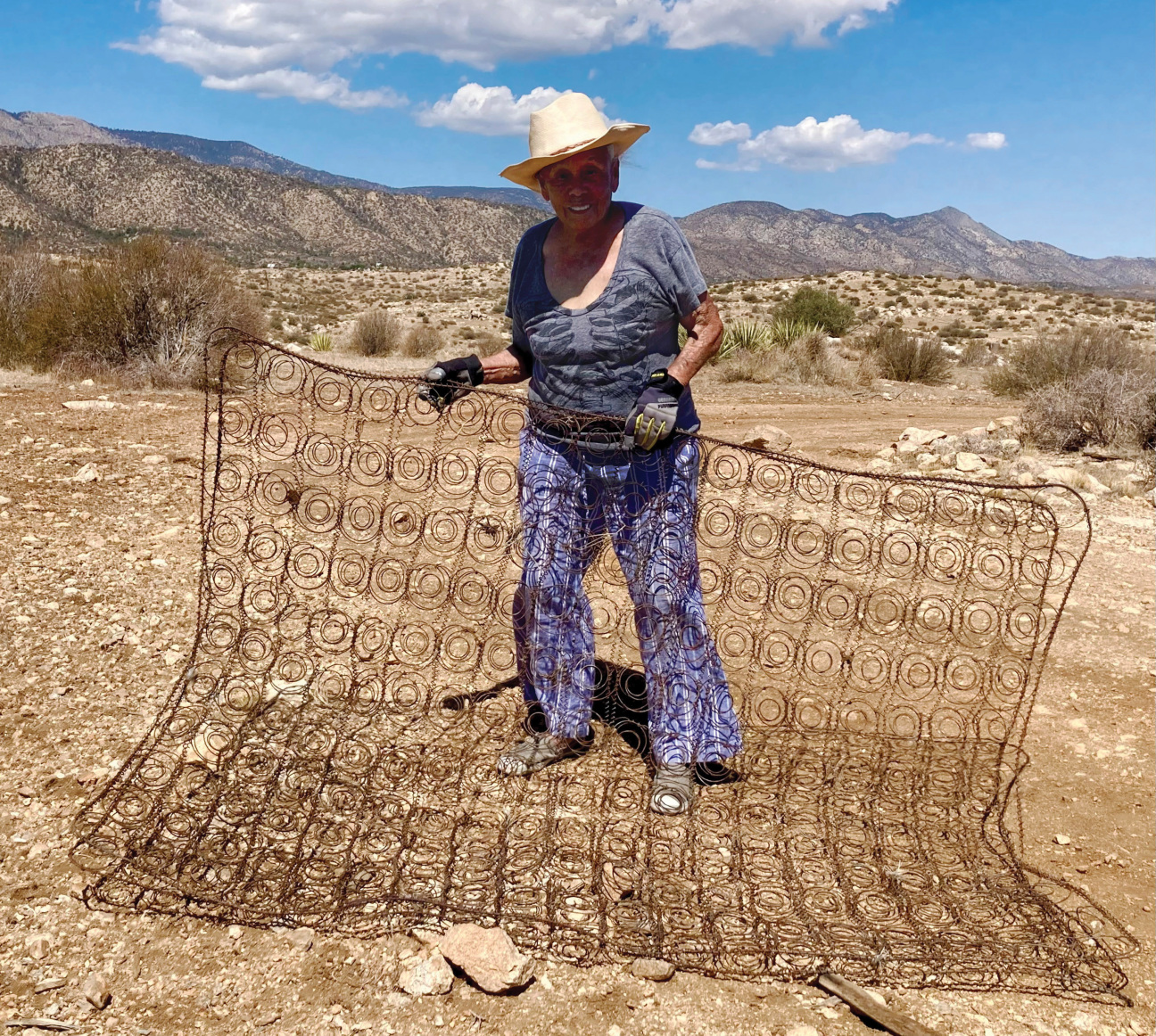
A woman outside holding a wire frame.
96-year-old artist Betye Saar. Photography by Tracye Saar-Cavanaugh.

What does endurance mean to your practice?

When I create an artwork, I want it to have the quality to endure, to have the same meaning or impact years later.

What, if anything, gets easier with time? What gets harder?

What is easy is getting up in the morning, getting dressed, and making art. What is hard is not wanting to wake up. I’m 96 after all.

Do you ever look back on your work?

I usually don’t make judgments on my past work. Then was then and now is now.

What's your relationship to art history? What do you hope it will ultimately be?

I don’t really think about how people regard me or my art. Some people consider me a feminist. Some people consider me a Black artist. Some a printmaker. Some an assemblage artist. These judgments are made by others, usually art historians or journalists. I make art for myself, to satisfy my own personal creative needs.

Related Stories

Get CULTURED. Lead the Conversation.

Join now to get ahead of this year’s biggest moments in art, fashion, literature, and more.

You’ve almost hit your limit.

You’re approaching your limit of complimentary articles. For expanded access, become a digital subscriber for less than $2 a week.
You’re approaching your limit of complementary articles. For expanded access, become a digital subscriber for less than $2 a week.

Already a Subscriber? Sign in Here

You’re approaching your limit of complementary articles. For expanded access, become a digital subscriber for less than $2 a week.

GET ACCESS

Already a Subscriber? Sign in Here

Want more in your life?

For less than the price of a cocktail, you can help independent journalism thrive.

Pop-Up-1_c
Already a Subscriber? Sign in Here
Pop-Up-1_c

Already a Subscriber? Sign in Here

Want more in your life?

For less than the price of a cocktail, you can help independent journalism thrive.

Pop-Up-1_c
Already a Subscriber? Sign in Here
Pop-Up-1_c

Already a Subscriber? Sign in Here

You’ve almost hit your limit.

You’re approaching your limit of complimentary articles. For expanded access, become a digital subscriber for less than $2 a week.

You’re approaching your limit of complementary articles. For expanded access, become a digital subscriber for less than $2 a week.
Already a Subscriber? Sign in Here
You’re approaching your limit of complementary articles. For expanded access, become a digital subscriber for less than $2 a week.

Already a Subscriber? Sign in Here

This is a Critics' Table subscriber exclusive.

Subscribe to keep reading and support independent art criticism.

Already a Subscriber? Sign in Here

Want more in your life?

For less than the price of a cocktail, you can help independent journalism thrive.

Pop-Up-1_c

Already a Subscriber? Sign in Here

Pop-Up-1_c

Already a Subscriber? Sign in Here

You’ve reached your limit.

Sign up for a digital subscription, starting at less than $2 a week.

Already a Subscriber? Sign in Here

Want a seat at the table? To continue reading this article, sign up today.

Support independent criticism for $10/month (or just $110/year).

Already a subscriber? Log in.