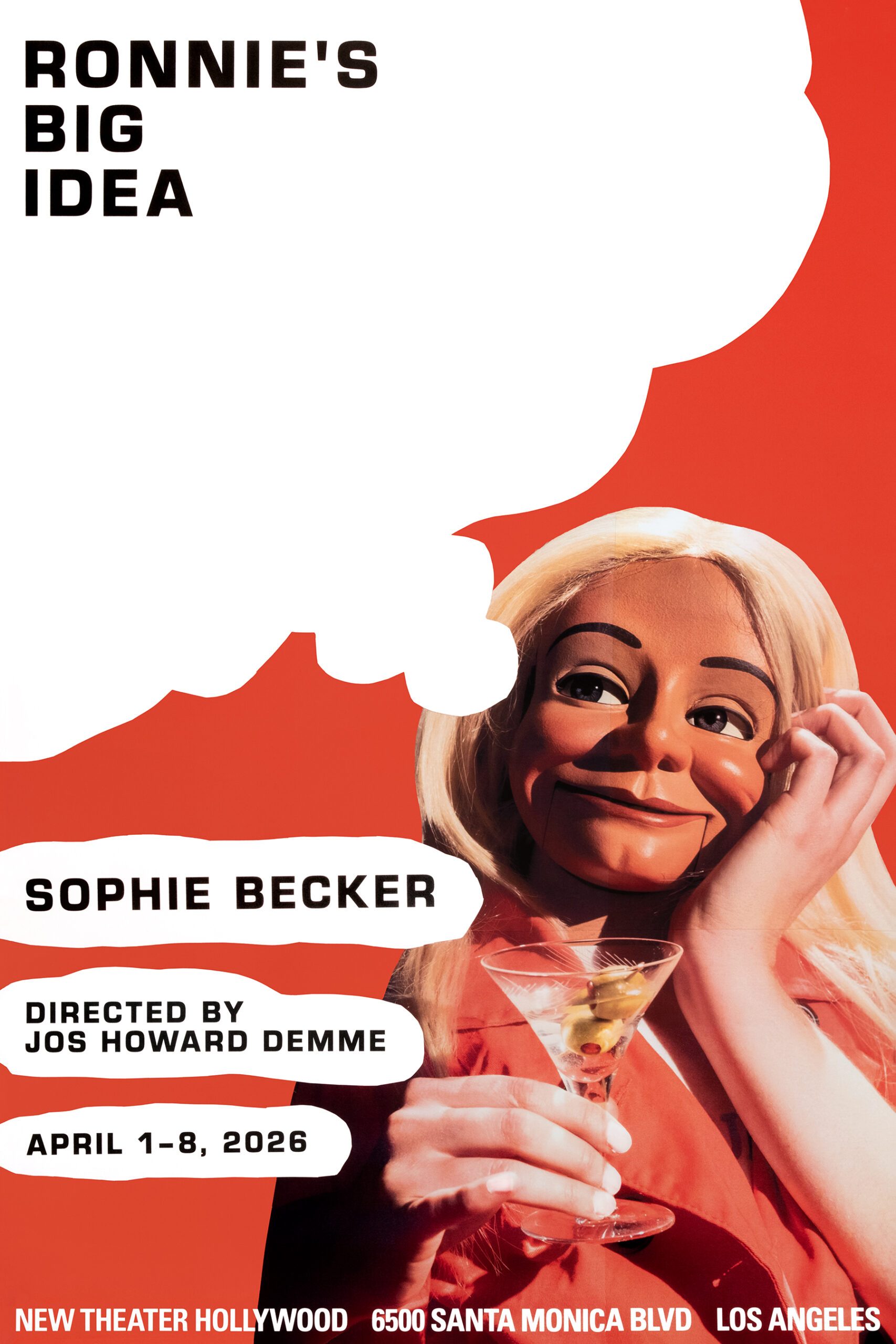
For the first time in my adult life, I saw a live ventriloquist act just a few weeks ago, at the New Theater Hollywood in Los Angeles. Titled Ronnie’s Big Idea, it starred Sophie Becker, heralded by The New York Times as the downtown ventriloquist, in the dual roles of Ronnie Woods, a blonde, fame-hungry wooden dummy, and Sophie, Ronnie’s human assistant.
What unfolded was a classic story of showbiz backstabbing, peppered with vaudeville musical numbers, TikTok videos, stand-up, slapstick and just a soupçon of erotic tension. As the audience filed out onto the sidewalk afterwards to exchange post-performance reviews, the phrase I heard again and again was, “That was actually really good.” We were all very pleasantly surprised.
Expect the unexpected at New Theater Hollywood, the indie playhouse where live performance thrives in our increasingly screen-based world. Artists Calla Henkel and Max Pitegoff, onetime artistic directors of the Grüner Salon in Berlin’s storied Volksbühne theater, launched the space as a nonprofit in 2024, reviving a 49-seat stage on Santa Monica Boulevard’s forgotten theater row. The venue features a concession stand that sells Red Vines and loose cigarettes; a single bathroom lined in floor-to-ceiling gold tinsel, inconveniently located behind the stage; and a cult following of literary, art world, and pop culture types, many of whom were never much into theater before.
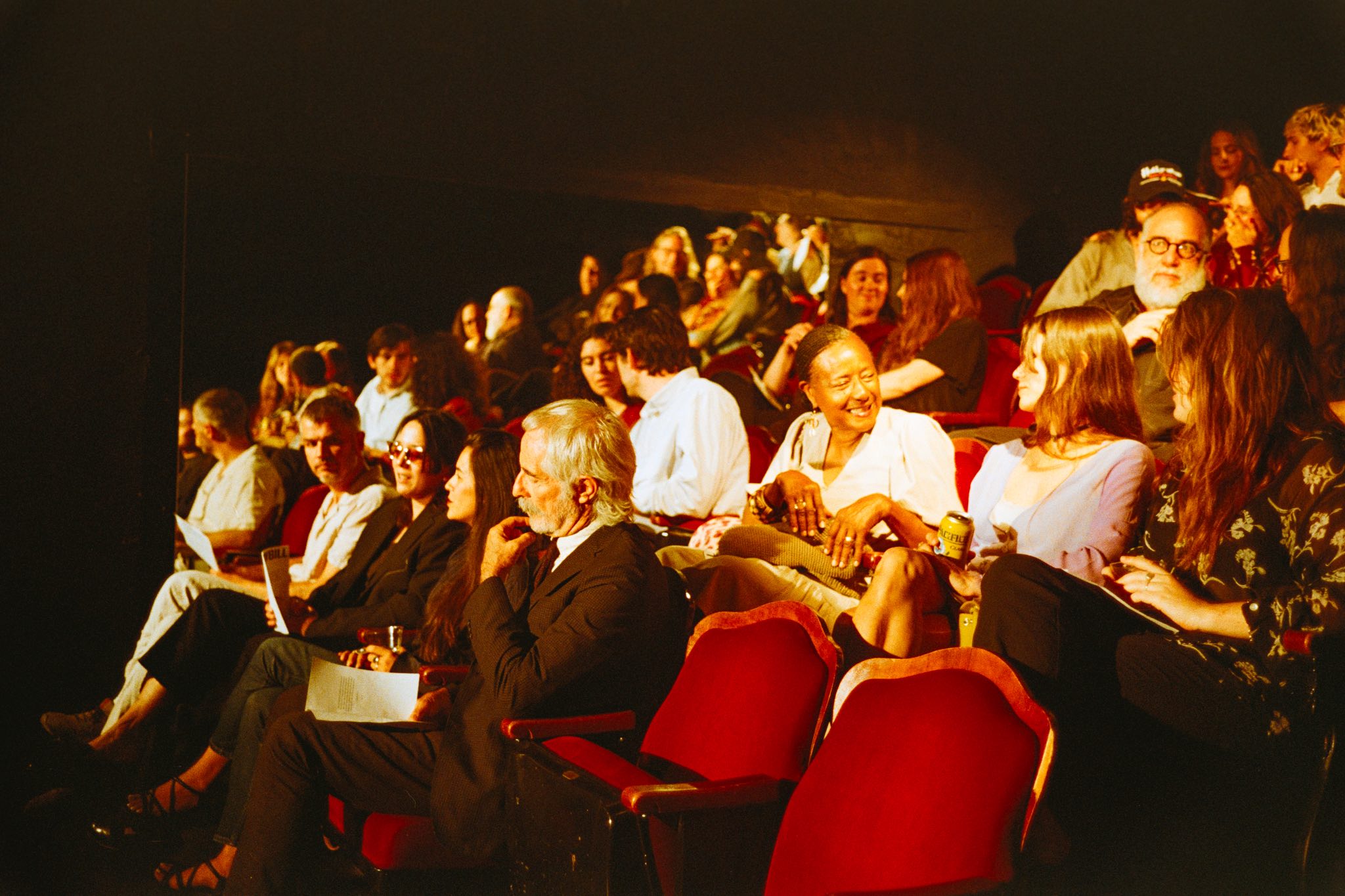
Every performance sells out, and “it’s always a good sign when people want to stay at the end to talk about it,” Henkel says. It’s one way she and Pitegoff measure the success of a show. Noting how the crowd lingered outside Ronnie’s Big Idea a full hour after it ended, they decided to bring the show back for a second run in June.
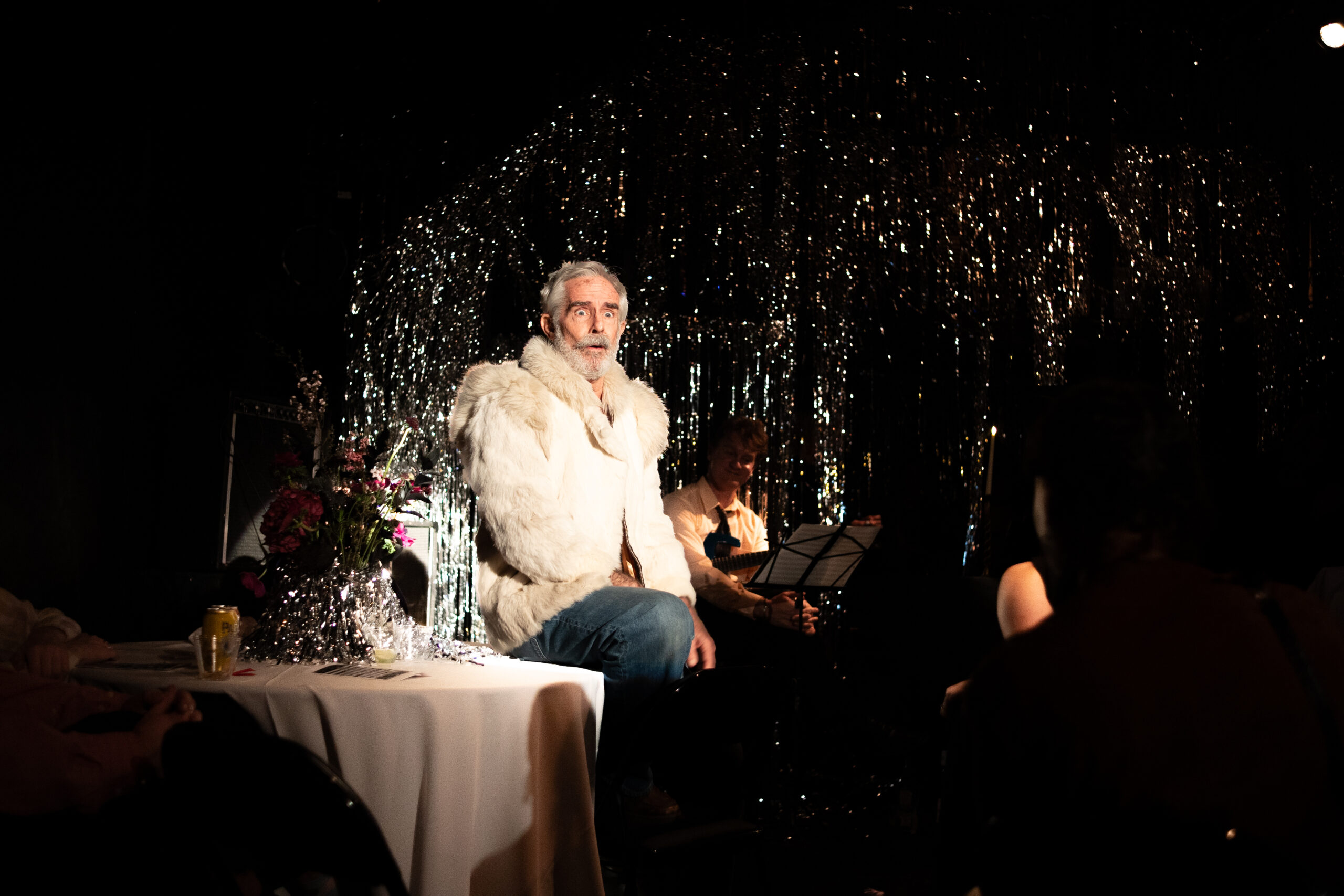
Aspiring to break the mold of theater with a capital T, New Theater Hollywood specializes in genre-defying, comically bizarre, multidisciplinary collaborations. “We find people who have a practice or a form, then the theater challenges that form to make something bigger,” Henkel explains. She and Pitegoff worked closely with Becker to develop Ronnie’s Big Idea after seeing her perform at a wedding, for example, despite the fact that the ventriloquist had never written a play before. They’ve also staged productions by artists, like The Driver, Diamond Stingily’s feminine take on Pulp Fiction; performances on actual moving buses (writer Oliver Misraje’s California Gothic: A Bus Tour); and a Pasolini adaptation featuring supermodel Kaia Gerber in a supporting role (novelist Stephanie LaCava’s Two American Scenes).
On principle, the theater founders won’t be showing their own plays here for its first three years. “You know when you walk into an artist’s project and it’s a vanity space?” Henkel asks. This is precisely what they’d like to avoid. Still, running the theater itself is a natural progression of their longtime artistic collaboration, a multidisciplinary practice that merges elements of performance, photography, filmmaking, and nightlife. When the pair met 20 years ago as undergrads at Cooper Union, they ran Cave, a bar in their Bushwick studio where fellow artists could exhibit and discuss their work. After they graduated in 2011, the concept traveled with them when they moved to Berlin, where they ran different bars between opening the first iteration of New Theater in 2013 and serving as artistic directors for the Grüner Salon’s 2017 season.
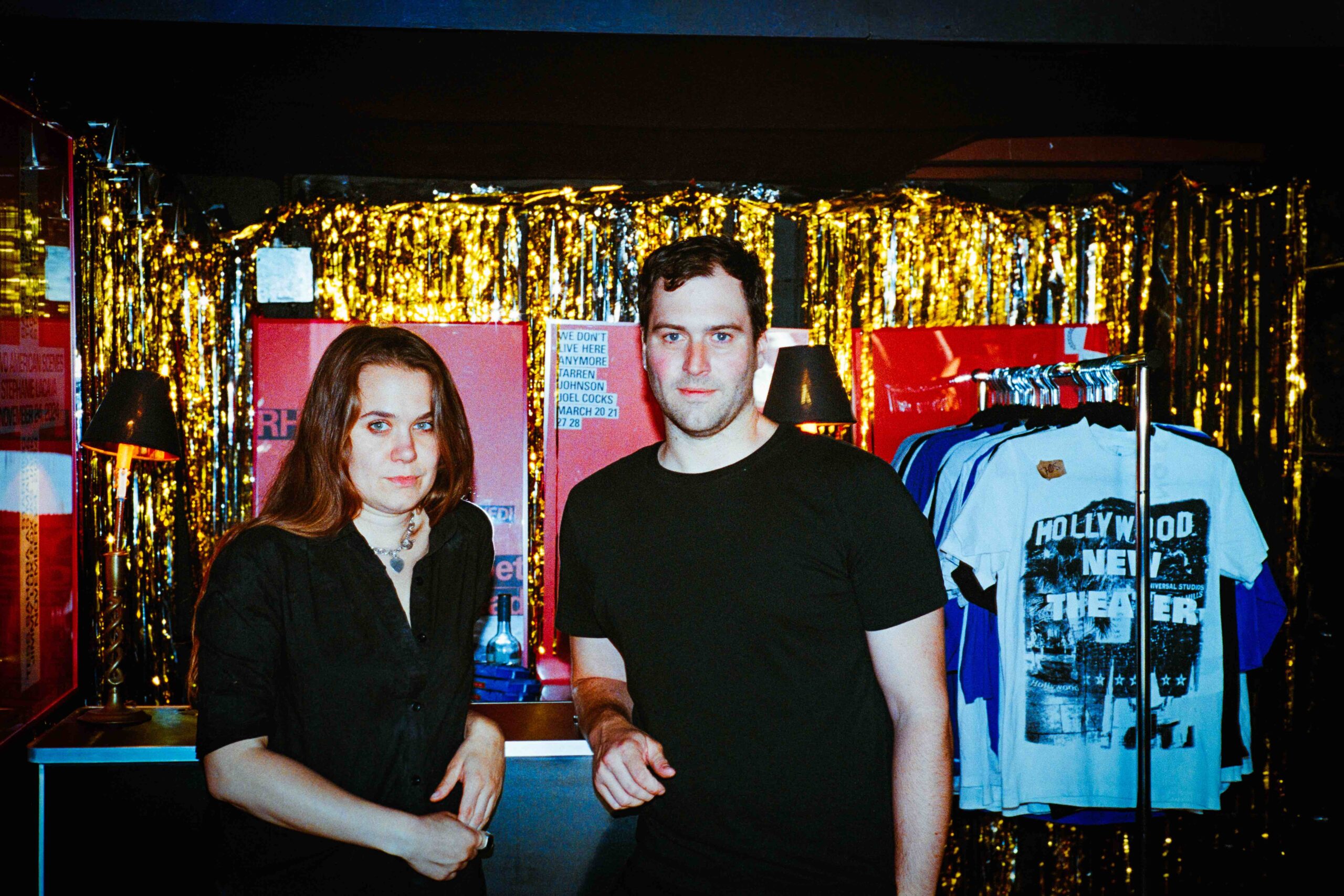
The pair started traveling to LA after a Hollywood studio optioned the rights to Henkel’s first novel, Other People’s Clothes, in 2021. In many ways, they found LA to be the opposite of Berlin. In the German capital, where theater is taken very seriously, criticism is the primary form of cultural participation: “Ja, it could be a little more rigorous,” Henkel says, offering her best impression of German commentary. In the entertainment capital, by contrast, pop culture is taken more seriously than theater, an inversion that presented interesting new possibilities. For Henkel, “It felt like coming from behind the Iron Curtain.”
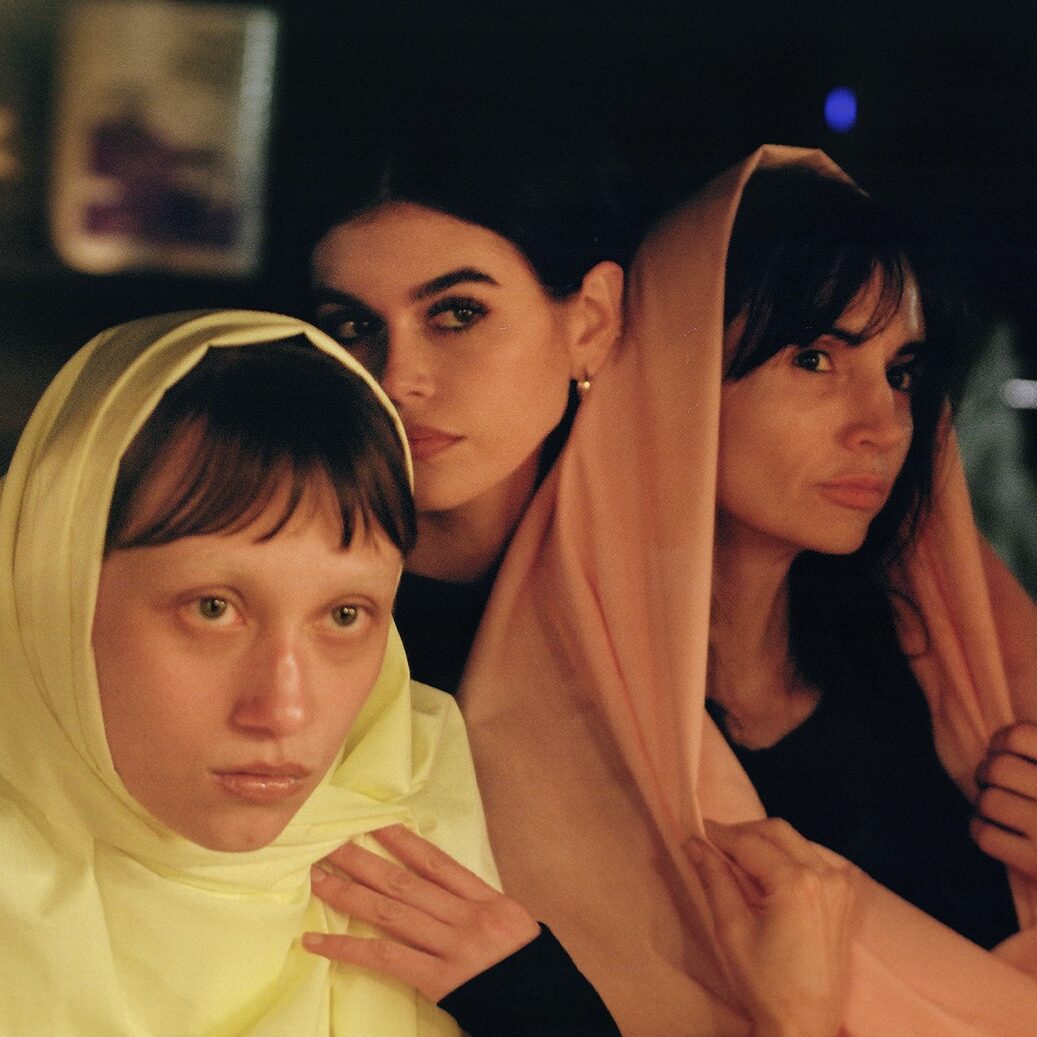
The screen adaptation of Other People’s Clothes unfortunately never materialized, but it did lead Henkel and Pitegoff to shoot THEATER, 2024, a simultaneously romantic and absurd episodic film about opening an LA theater in the shadow of the entertainment industry. Featured in the latest Hammer Biennial, it was shot in the venue that would eventually become New Theater Hollywood. “Once we saw this space, the fantasy of running a theater here really became reality,” Pitegoff says.
Making ends meet through small donations, plus the sale of tickets, merchandise, and their art, Henkel lovingly describes New Theater as a “psychotic undertaking,” perpetually threatening “financial ruin.” But the pair believes in theater as a kind of magic—a collective experience that takes on a life of its own. “Particularly in a place like Los Angeles, where there is no third space, I think theater is really good at inviting people to come in,” says Henkel.
That openness attracts all kinds. For early 2027, the musician and performance artist Mykki Blanco has an adaptation of Luis Buñuel’s 1967 erotic psycho-surrealist drama, Belle de Jour, in the works. Blanco describes New Theater Hollywood as an “intimate, more fringe, experimental space” where “I just innately feel more alive, more comfortable, and that more is possible.” Expanding the possibilities of theater is in fact another way the founders measure a production’s success. According to Henkel, “We always say a piece works when it could only happen here.”
More of our favorite stories from CULTURED
Danielle Mckinney Shares the Advice That Keeps Her Painting Even on Her Worst Days
What Not Having Mental Imagery Implies for Psychoanalysis, Trauma, and Our Sense of Self
Meet the Woman Who Curated the Art on Miranda Priestly’s Walls
Mina Stone’s Guide to Eating, Buying, and Cooking With Chocolate (More) Safely
Can Raising Children Make You a Better Artist? Four Artist Mothers Weigh In.
Sign up for our newsletter here to get these stories direct to your inbox.

 in your life?