Iréne Norén never thought that being an artist could be a job. Paintings were things created by people from the distant past and hung on the walls of the Louvre and the Prado. Growing up in a small coastal town south of Valencia in Spain, Norén was surrounded by creativity and beauty, but had no awareness of galleries, collectors, fairs, or the international octopus of the contemporary art world.
Then, a painful situation made Norén rethink her relationship to herself, her body, and her creativity. The artist, who had recently moved to New York City with her boyfriend, had an abortion. It was a tough time: she had no work visa and little community of her own. In search of any kind of outlet for her feelings, Norén picked up a notebook and a set of acrylic paints. Soon, she had graduated to canvases.
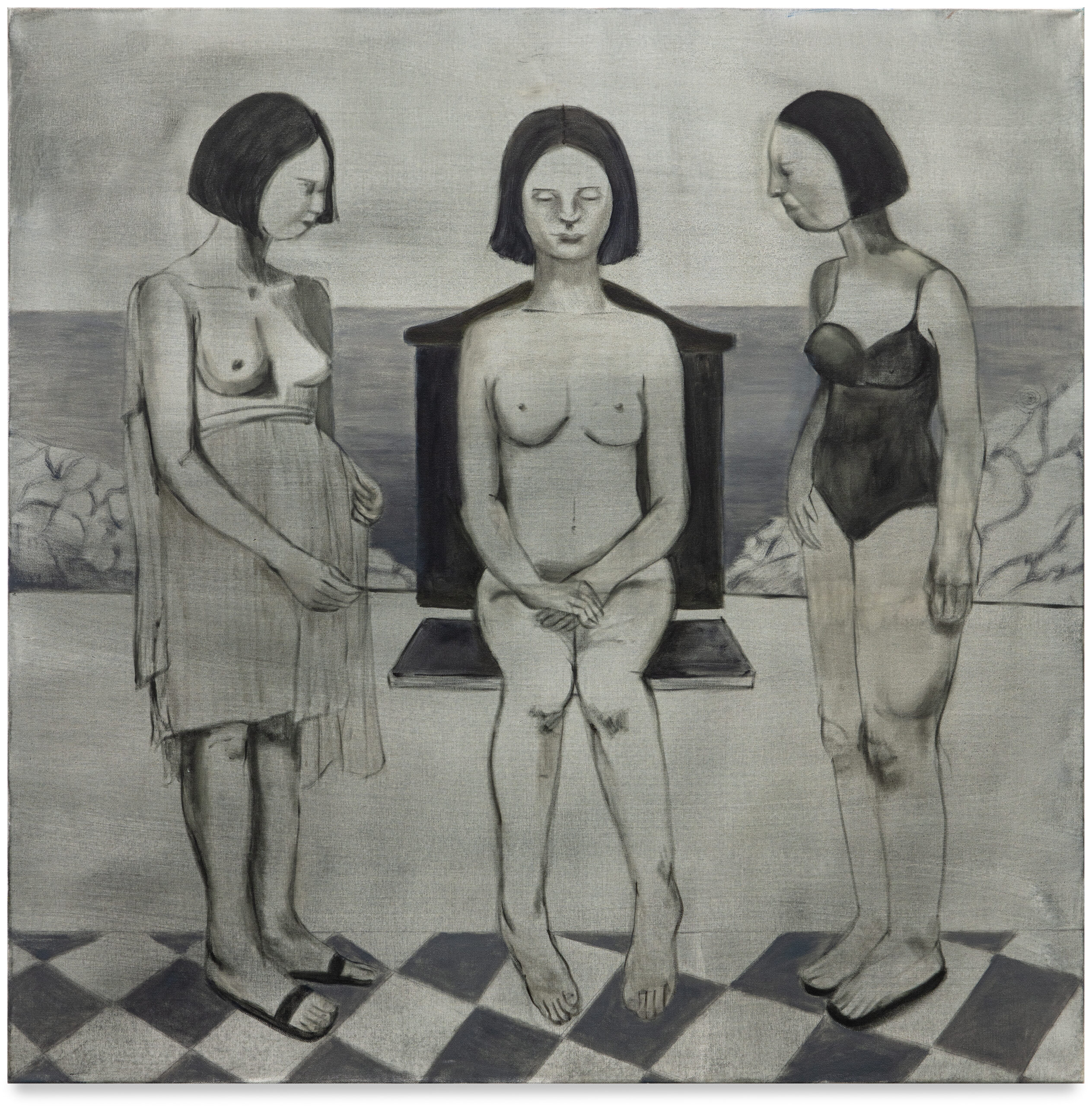
Now, just three years since she first picked up a paintbrush, the 34-year-old is mounting her first solo gallery show in New York City. “Reliquary of the Body: Returning to Eden,” which opens today at Harper’s Chelsea, explores terrain familiar to any young woman: the struggle through shame and judgment to find self-acceptance in one’s body.
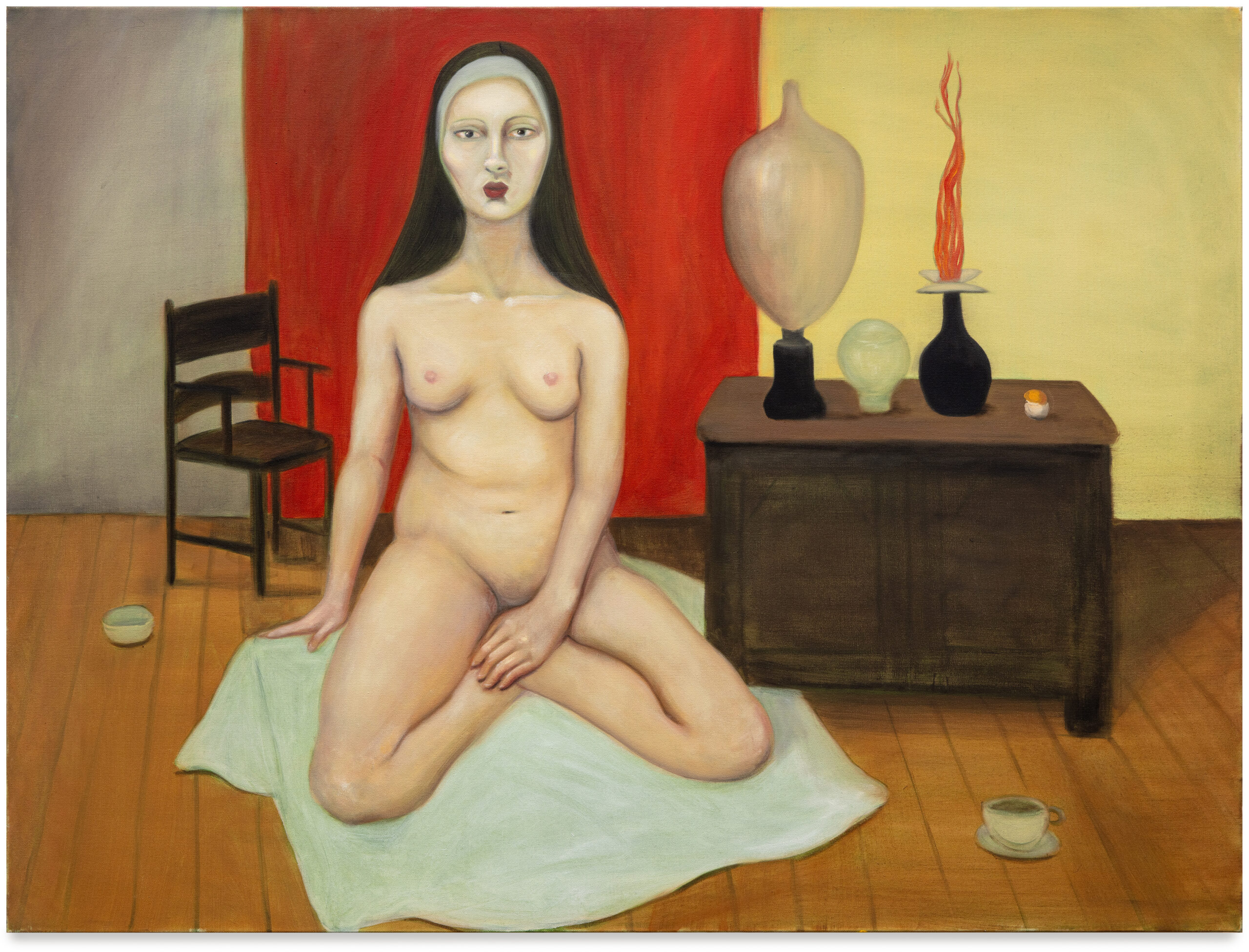
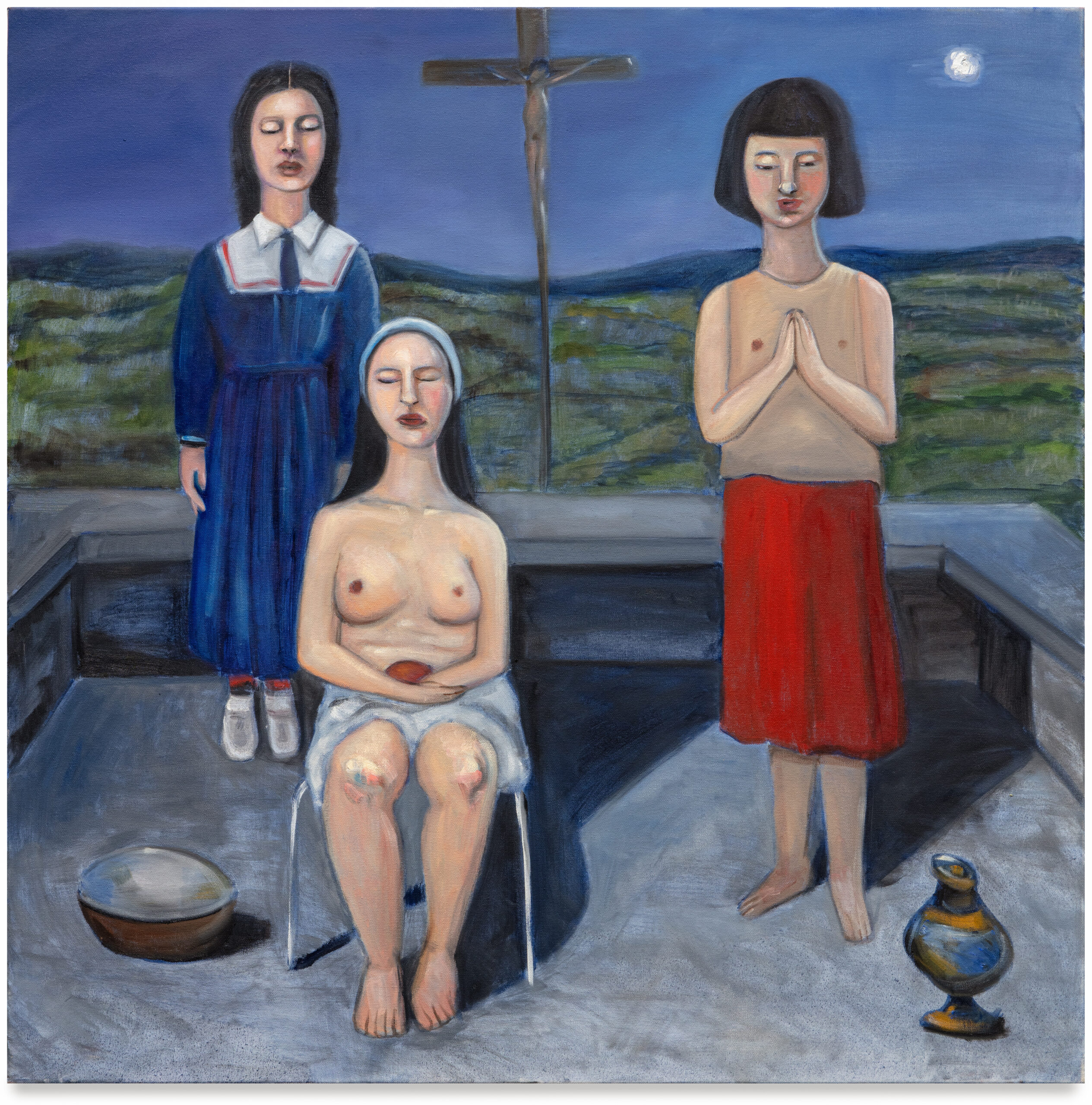
Norén’s paintings are particularly influenced by Catholic art historical imagery. Following the narrative structure of a Renaissance altarpiece, the exhibition unfolds as a spiritual journey. In The Performance and The Exposure, Norén’s characters negotiate their identities with the masks they wear and the stages they inhabit. The grisaille The Judgment and the crimson portrait The Solitude harken back to Jungian archetypes and alchemical constructions in emotional quests inward. Finally, The Ritual and Returning to Eden probe for self-forgiveness and community among women.
Below, Norén opens up about joining an MFA program, the female mentors who shaped her (including her partner’s mother, the designer Tory Burch), and what it really takes to break through in the contemporary art world.
How did you encounter art as a kid?
I grew up in a very small coastal town in the province of Alicante called Altea. They call it the Santorini of Spain. I would go to museums and dream about these artists, but it was never something that I could relate to because all the artists I liked were dead. I didn’t know any contemporary artists. I didn’t really follow any trends in the art world.
Who were some of your early inspirations?
Magritte, for sure. I really enjoy Surrealism. To this day, my work has this mix of the dream world and the structure of the Renaissance. I live by that too. I feel like I’m a free spirit with a lot of structures.
I actually started painting because I had an abortion. It was a very painful time for me. I couldn’t really do much. I was living in New York where I didn’t have a working visa, so I spent a lot of time at home. I found some acrylic paint and a notebook, and I just decided to try and paint. I started to develop a relationship with art that was very much linked to my self-esteem and confidence. I always struggle with the idea of being seen. I never really understood how I could express myself. I was more on the reserved side, and art really gave me this remedy where I could express myself and people would listen. What started as a confidence tool became my career.
What interests me is the connection between women. I always say I paint for women. I know there will be male collectors too, but I derive a lot of inspiration from other female friends or role models that I have in my life. I was raised by a single mom and a single grandma, so females are a big part of who I am. It’s not only about telling my story, it’s about leaving it open for other women to relate to it. I’m much more interested in what connects us than our differences.
What’s your process like?
All my work comes from my imagination. I do Surrealist techniques like automatic drawing. It’s highly intuitive. Now that I’m in art school, I see how other artists plan their work, but I have no plan whatsoever. I just start and eventually the storyline comes together.
Did you plan the narrative arc of the show?
No, that came afterwards. I came to art school because I wanted to have a community of like-minded people. Through my boyfriend, I met a lot of friends, but most of them are guy friends. And I love spending time with girls. But I don’t go out. I don’t drink alcohol. I don’t really enjoy being part of a scene. How do I meet other girl artists? So I went to school. School offered me a lot more things, but the first idea was to create my own community.
Can you talk a little bit about the religious and theological aspects of the show?
I just stepped back and saw how many references to Renaissance altarpieces my work had, how the structure mirrors religious texts. I’ve always been very nerdy about certain things. One of them was theology. I went deep into learning about religion, and not only Christian. I read the Kabbalah. I read Sumerian texts.
God has always been a big part of me. But I grew up in an atheist family. Normally it goes the other way, where kids grow up in a very religious environment and they reject religion. For me, it was the opposite. I was this kid feeling like no one could understand me in my house. So that’s what made me learn about God in the first place. When I started growing older, my relationship with God became much more spiritual, much more connected to psychedelics and psychoanalysis. It was much more about understanding God within myself than outside.
But I still have this connection to my roots: the Catholic roots of Spain, the art I have been nourished by since I was a kid, the Renaissance. I’m not interested in mimicking Catholicism. It’s much more about how I can take those narratives and apply them to a contemporary mindset: the idea of forgiveness, the sacred, all these things are present in me.
What was it like entering the New York City art world?
My partner is an art collector himself. His family, too. It was really hard for me to understand how contemporary artists can build a career until they welcomed me into that world.
I’ve had good mentors in my life, like [my partner] Henry [Burch]’s mom, Tory [Burch, the designer]. She helps guide and motivate me. Jeanne Greenberg is another mentor who really paved the way for me to believe in myself. I’m a big believer that all women need is to feel confident. All it takes is one person to see you to really make things happen.
That’s what it was for me. The help was not even through contacts or networking. It was much more about helping me to see myself and to have the strength to go for something that I believe in. And that’s what I did. I moved to New York. I spent Monday to Sunday in the studio. At the end of the day, it was the work.
Social media can be a tough place to navigate as a young artist, but you seem to be very successful with your presence, including your art history videos. Where does that fit into your practice?
I started doing those videos in November last year. I wanted to learn more about other female artists, and I realized historic ones don’t really have a platform. Contemporary female artists are in a great place right now. I don’t want to play the victim card because we are in a great spot. There’s thousands of female artists, emerging artists, and gallerists.
But when I was starting school, I realized how male-driven our history was. So I started researching historic female artists. I was never thinking that this would get to people and that they would enjoy it.
Was there a particular story that resonated with you or surprised you?
[German Expressionist] Paula Modersohn-Becker inspired me so much. The Post-Impressionist group the Nabis is also one I’m so interested in. Also Gabriele Münter.
More of our favorite stories from CULTURED
Danielle Mckinney Shares the Advice That Keeps Her Painting Even on Her Worst Days
What Not Having Mental Imagery Implies for Psychoanalysis, Trauma, and Our Sense of Self
Meet the Woman Who Curated the Art on Miranda Priestly’s Walls
Mina Stone’s Guide to Eating, Buying, and Cooking With Chocolate (More) Safely
Can Raising Children Make You a Better Artist? Four Artist Mothers Weigh In.
Sign up for our newsletter here to get these stories direct to your inbox.

 in your life?