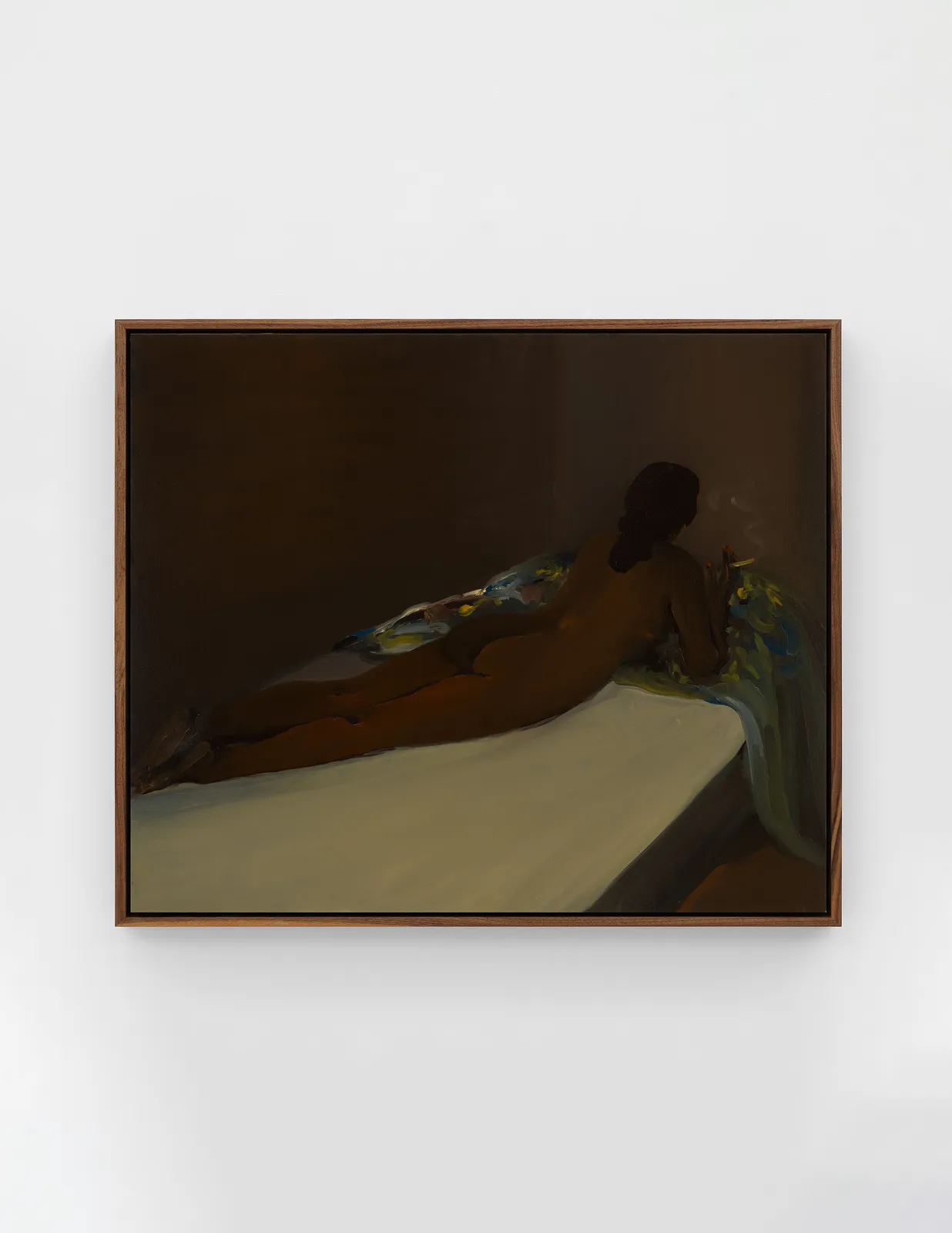
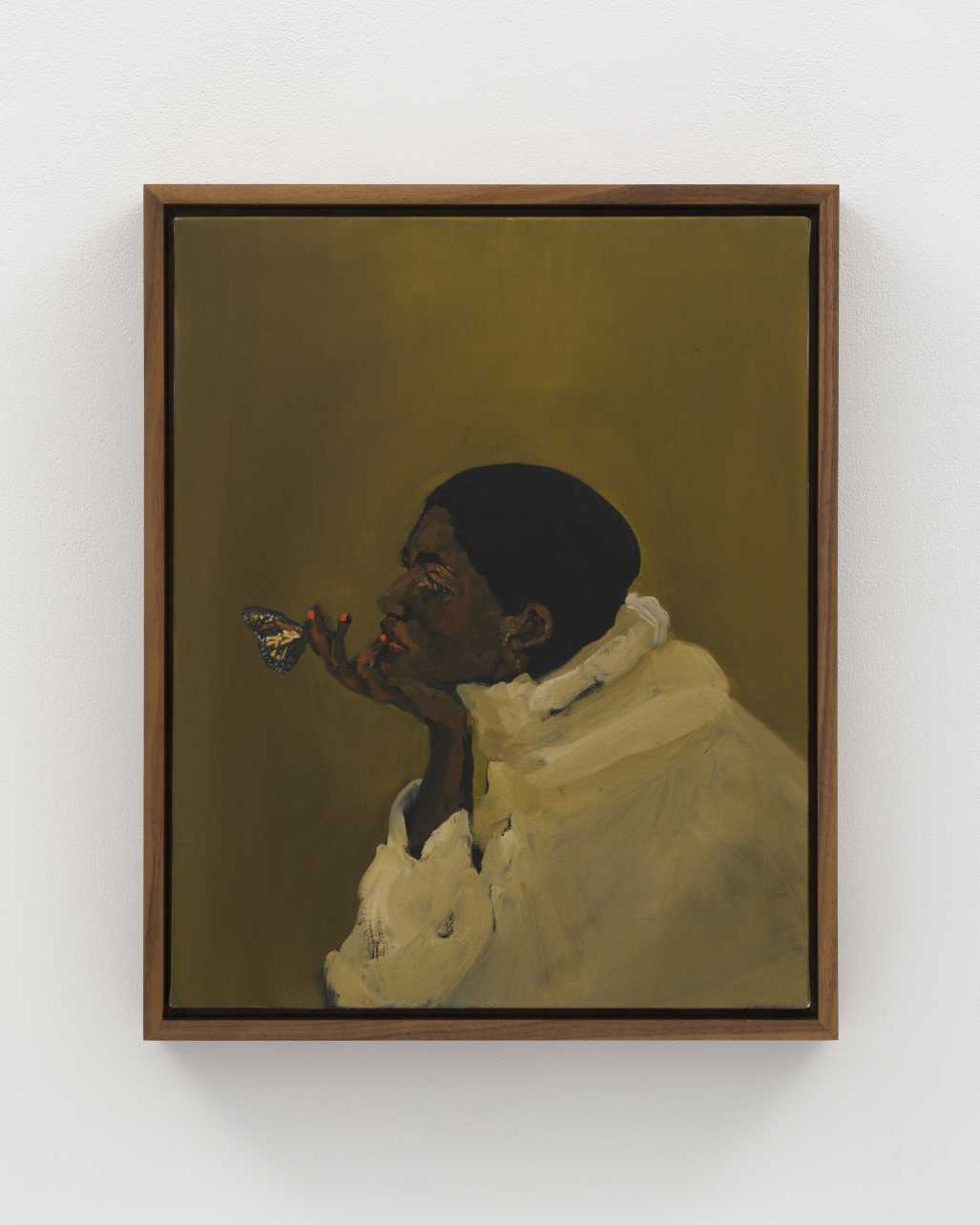
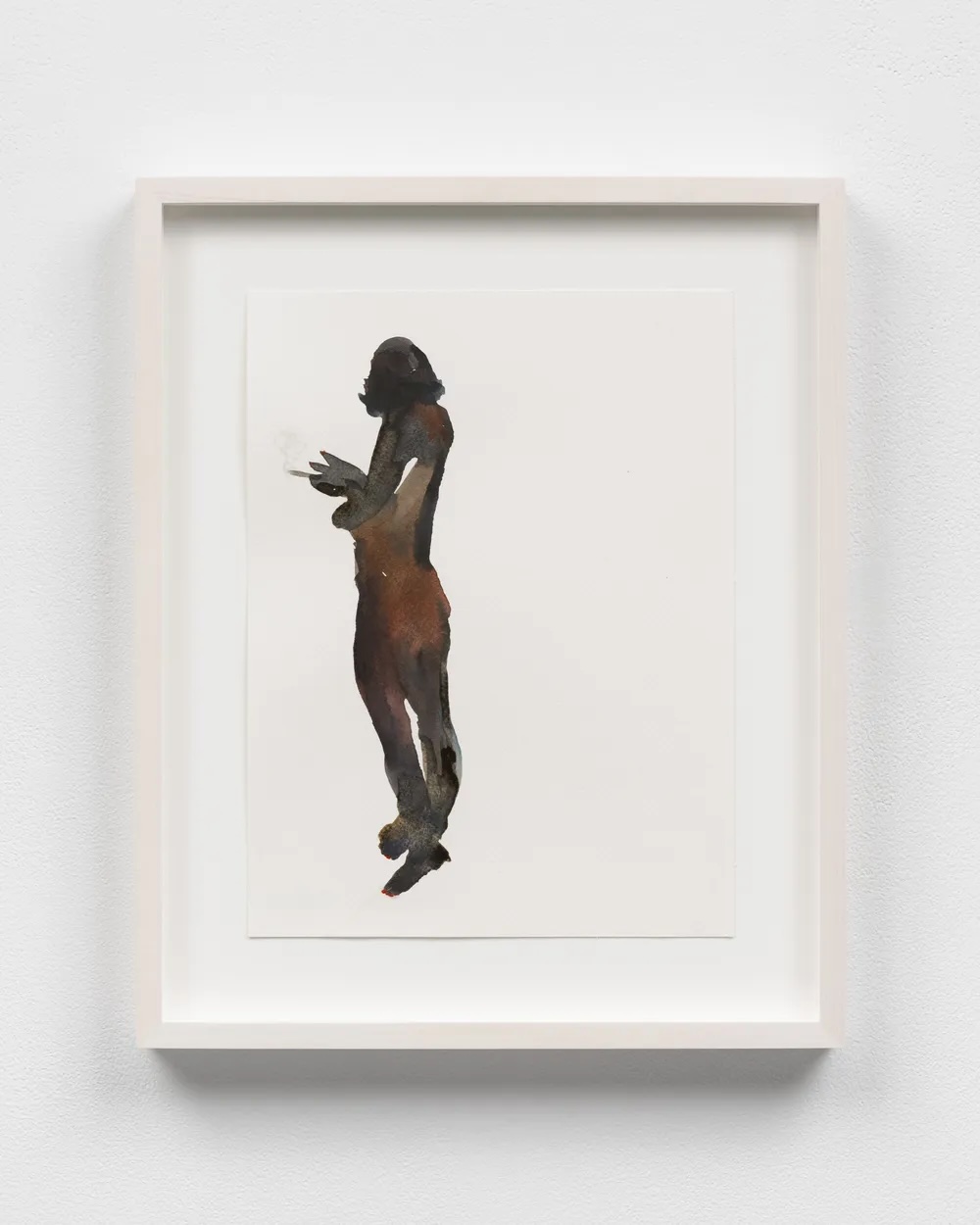
Since breaking out onto the scene in 2021, Danielle Mckinney has become one of the most nimble and sought-after interpreters of female interiority in art. The Alabama-born, New Jersey-based painter’s canvases chart the emotional topography of the Black women she depicts in moments of repose—lost in thought, sprawled onto a bed cigarette in hand, fanning themselves. Mckinney treats these undone interstices not as frivolous or futile, but as the fuel that lets them get on with their lives in the taxing, often merciless world that awaits outside the frame.
In two concurrent exhibitions, one at the Norton Museum of Art in West Palm Beach, on view through Oct. 4, and one at Marianne Boesky in New York, open through June 13, viewers can witness where this exploration of liminal leisure has taken the artist—and where she’s headed next. The Boesky show sees Mckinney further dissolve the boundaries between the figures and their domestic surroundings and present for the first time a series of watercolors.
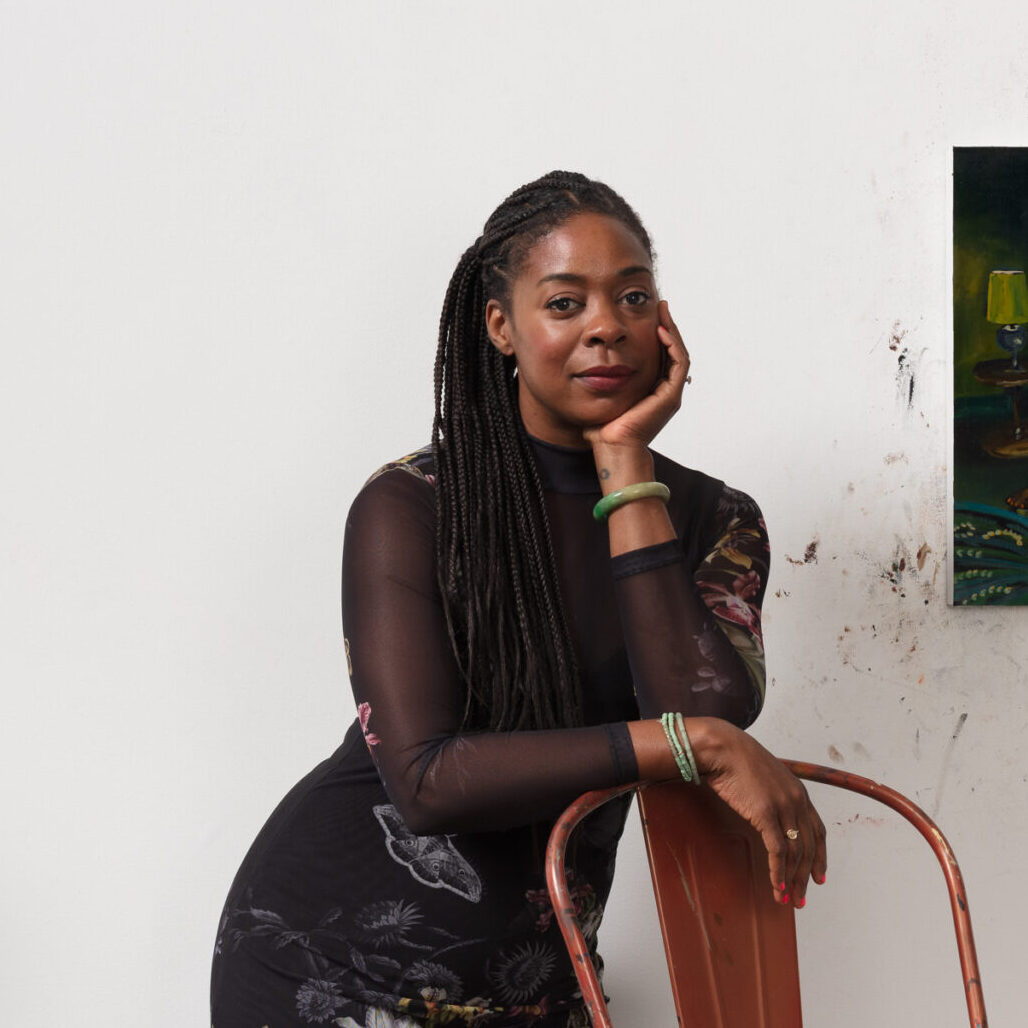
Before the show opened, we caught up with the artist in her own sacred space, the studio.
What’s the first thing you do when you enter your studio?
I begin by quieting myself. I clear the space, both mentally and physically, and create a sense of order. Music or silence helps me enter the atmosphere of the work.
What’s on your studio playlist?
Cocteau Twins, James Blake, Future, Cleo Sol, Aphex Twin, the Isley Brothers, Aaliyah, Boards of Canada, Thom Yorke, Yebba.
If you could do a studio visit with one artist, who would it be?
Jennifer Packer.
What’s the weirdest tool you can’t live without?
Damar varnish.
When do you do your best work?
At night or early morning—the world quiets.
Who is the first person you show your work to?
My daughter.
Do you work with assistants?
No, I work entirely alone.
What is the biggest studio mishap you’ve experienced?
Early on, I didn’t understand the relationship between gesso and oil, or the importance of drying times and mediums. I lost a number of paintings learning that lesson.
There are many costs to being an artist—where do you splurge and where do you save?
I tend to be careful, but I’ll always splurge on travel and experience. I’m a sucker for nature and the sea. Those things feed the work in ways materials cannot.
If you splurge on materials, what are your essentials?
I invest in good brushes. Otherwise, I keep things simple, and I’ve been fortunate to have support from my family at Soho Art Materials.
When was the last time you lost track of time while working?
Almost every time I paint. I work wet-into-wet, so the process demands full presence. Time disappears.
Have you ever destroyed a work to make something new?
Yes. I’ll wipe a painting away, but often the figure remains. Then I have to return to her—work with her again—and rebuild the space around her.
On a scale from hoarder to Marie Kondo, where do you fall?
I’m a minimalist.
Is there a studio rule you live by?
Cleanliness. I reset the space every day—wash brushes, clear surfaces. I need order to think.
When was the last time you felt jealous of another artist?
I don’t feel jealousy. I learn from others. There’s space for all of us.
If you could change one thing about the art world, what would it be?
That more artists are seen and supported. There are so many extraordinary voices—we need more platforms, more visibility. We need more art now than ever.
If you were a studio animal, what would you be?
A barn owl.
What is the strangest thing you’ve done in your studio?
I speak to my paintings. It probably sounds like I’m on the phone, but I’m in conversation with the work.
What is your studio uniform?
An apron—and by the end of the day, paint across my face.
Tell us about the best studio visit you’ve had.
I’m fortunate to work with gallery teams who have known my work for years. Their visits are honest, thoughtful, and collaborative—they help shape the narrative and see the evolution in the work. I rely deeply on that dialogue.
Do you have any rituals before a studio visit?
I prepare the space carefully—the edges of the paintings, the walls, the floors. It comes from critique culture: Presentation matters so the work can be seen clearly.
What book changed the way you think about art?
Recently, I’ve been reading Carl Jung and James Hollis, thinking about shadow work. But Ways of Seeing by John Berger was foundational—it changed how I see images and their meaning.
What’s the best advice you’ve received from an artist?
Paint, even in your darkest days. Those works often become your greatest light.
More of our favorite stories from CULTURED
14 Books Our Editors Can’t Wait to Read This Summer
Inside the Closet of a Revered Stylist Who Has Only Worn Prada For Over 30 Years
Charles Melton Actually Has No Idea Where His Career Goes From Here
Introducing a Play For Every New Yorker Who’s Had More Bad Dates Than Good
7 Commandments for Rookie Collectors, From CULTURED’s Power Art Advisors
Sign up for our newsletter here to get these stories direct to your inbox.



 in your life?