
The question of how women make art while raising children is not new, but it has never been more charged. As the structures that once promised support continue to shift, and the pressure to perform productivity—in the studio, at home, everywhere at once—reaches a fever pitch, four artists share something more vital than advice: a dose of honesty.
Below, Hope Atherton, Jessi Reaves, Sam Moyer, and Sarah Morris speak frankly about fractured time and sharpened instincts, about the guilt that arrives without warning and the power that nevertheless accompanies it. They talk about what their mothers gave them and what they hope to pass forward, the rituals that hold it all together, and what their children have taught them that years in the studio never could.
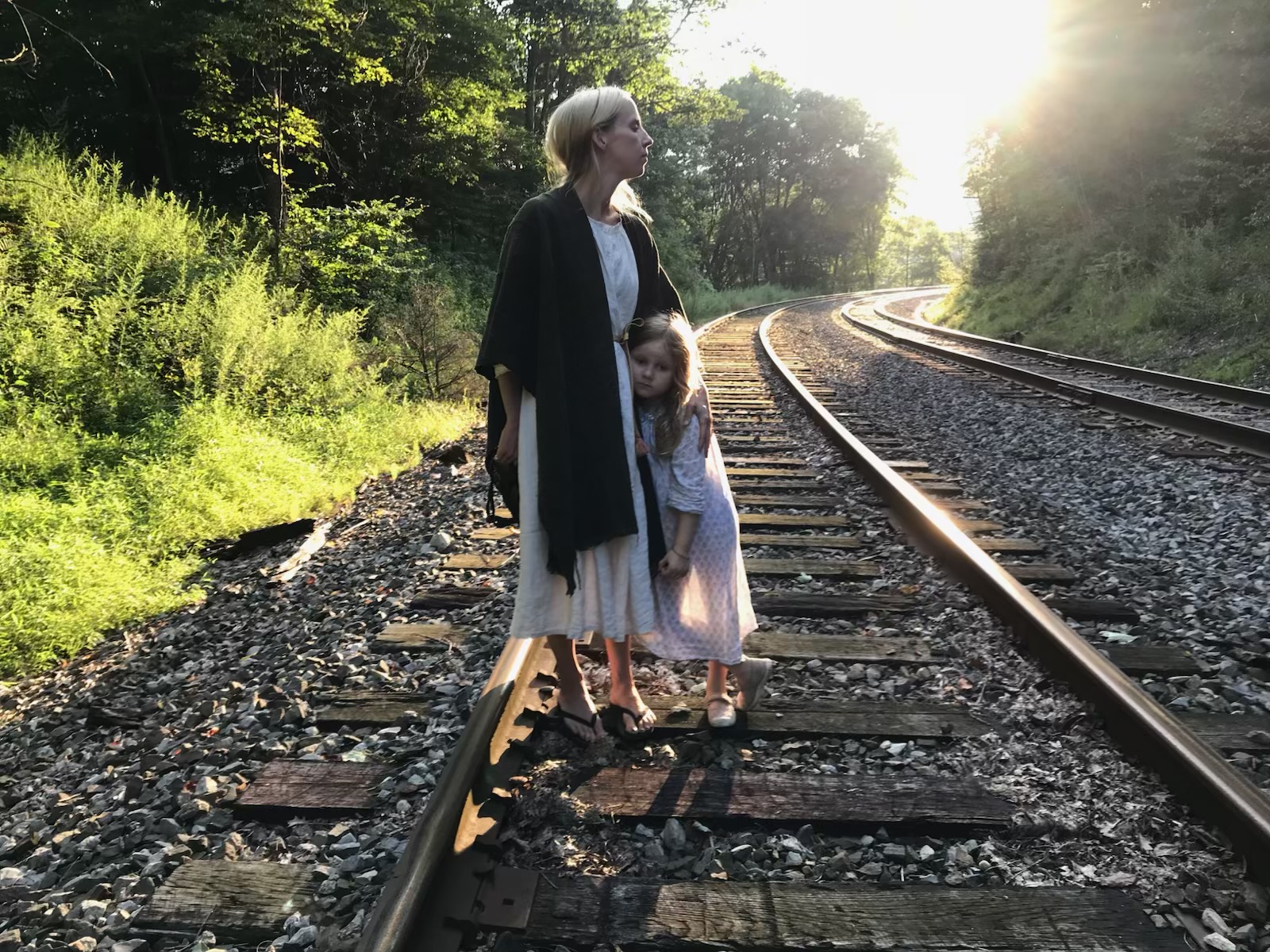
Hope Atherton
What are some unexpected ways that being a mother has informed your art practice?
I have developed a sense of urgency that wasn’t present with the same intensity before I became a mother. For years I lived and worked in my studio downtown and life and studio work were very much integrated. Time was an inexhaustible resource. Decisions and processes unfolded in a luxurious conversation with myself. Now time is fractured, dislocated, and always under negotiation. But this fracture has pushed me to be more decisive. More precise. Just as with my life as a mother, in my studio I have learned the essential value of efficiency.
How have you handled the delicate balance of being a working mother?
This balance is a constant challenge. Each side of the scale, my daughter and my studio, pulls me in its own exquisite direction. My daughter always, and inevitably, comes first. The studio waits for me, and I have learned to trust that. What I once experienced as interruption I now understand as a kind of changing tide of time and focus.
What are your most treasured rituals?
Bedtime reading. That small ceremony at the close of the day, held at the edge of sleep. I have always loved and even found inspiration in the illustrated fairy tales of the early 20th century, those strange luminous worlds and creatures. It used to be me reading these books to her, and now beautifully reversed, she has been reading Mary Shelley’s Frankenstein to me. What began with enchanted woods and rabbits has quietly darkened and deepened, as her little gothic sensibility emerges.
Has seeing art through your child’s eyes changed any of your long-held opinions?
My opinions haven’t been changed, but the fundamental truth of looking with clear and wide eyes has been confirmed to me over and over again. It is always a joy to look alongside my daughter.
What are the lessons you learned from your mother that you hope to also impart to your child?
I have learned kindness, empathy, and a deep love of animals—especially dogs. To spoil them. To carefully rescue a bird that has found its way inside the house. To believe in the spirit of living things. My parents have always had dogs, and in my adult life so have I. Since my late 20s I have always had my familiar. But perhaps the lesson that runs deepest is family connection. I speak with my mother on the telephone every day, and she talks to her mother every day (who is 101!) and my daughter has been aware of this bond, the constancy of it, the tenderness of it. I hope she carries this forward with me.
Can you share a recent story where you struggled between work and motherhood?
I felt this struggle a bit last summer when we were Upstate while I was finishing work for an exhibition in London. I spent each day in my studio, while father and daughter found ways to entertain themselves and each other, archery and other Hunger Games inspired activities. These attempts often ran out of steam, and they would eventually end up in the studio, moping around like two big puppies, pestering me to come outside and play.
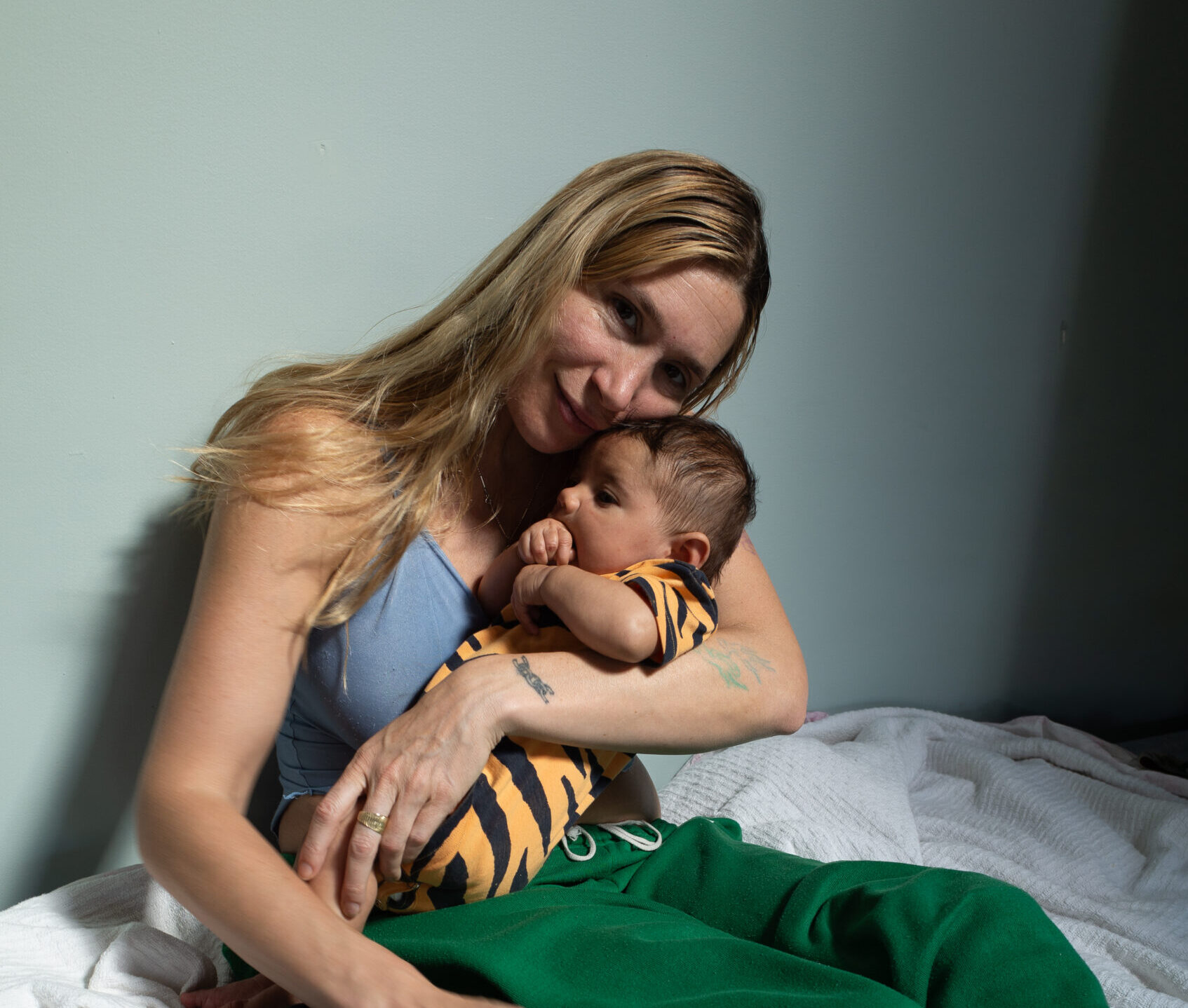
Jessi Reaves
What are some unexpected ways that being a mother has informed your art practice?
I’m at the beginning of my experience as a mother, but I’ve had the past 10 years of making art in one fairly consistent trajectory. Now I feel drawn in a slightly new direction, almost like a sort of rebirth. I feel brand new in many ways, which is thrilling. I guess it’s unexpected in the sense that I didn’t think I wanted to change—I was really scared to become a mother and lose my individual identity—and I didn’t expect to feel so much more powerful. It has also forced me to slow down, sit still, and work through ideas in my mind since I can’t be as immediately physical in the studio. I close my eyes and daydream about the studio and what I want to do when I get in there.
How have you handled the delicate balance of being a working mother? Can you share any particularly triumphant times or, on the flip side, challenging moments?
So far I’ve been taking it easy, which is accidental good timing in life. I was about four months shy of finishing a big body of work when I found out I was pregnant. I had a hard time finishing that work. I had never felt so tired in my life. I would set very small goals for each day and I leaned heavily on my friend, the artist Thomas Barger, who helps me in the studio.
Then I had the pleasure of installing my exhibition twice, first at the Walker and then at the Academy of Arts and Letters, only a few months after I gave birth. That was my first time going back to work. I only brought the baby with me for a few days, but I felt like a superhero—it was actually very cool and empowering to just figure it out. It would not have been possible without the help of Jean’s father, Zach, and everyone at Arts and Letters who made it easy for me. I also loved the feeling of rushing home to see the baby. It was intense and very physical to miss her.
Has seeing art through your child’s eyes changed any of your long-held opinions?
I’m pretty sure that her more focused and clear vision just started. But I appreciate how much she responds to texture, and I’m being reminded how touching, grasping, and interacting precedes seeing in our senses as we come to understand the world. I try to bring her things from my studio like soft carved wooden objects I’ve collected—things that are a little different than the usual bland baby toys.
What are the lessons you learned from your mother that you hope to also impart to your child?
My mom was incredibly resourceful. She valued handmade and used items over the shiny and new, especially when I was little. It’s a lesson I try to keep in mind because I find all of the stuff and the pressure to buy things almost predatory—it can make me really depressed. I try to channel my mom in those moments. When I need to solve a problem, I try to figure out if there is a simple solution, something I can make or modify to get the job done.
What are the lessons and examples you hope your child learns from you?
That she can make her own rules in life, and that she can be strong and feminine simultaneously.
How old is your child? Is your mother still alive?
Jean is four-and-a-half months old and she is named after my mother, who passed away almost four years ago. My sister Liz has two kids (7 and 10) and she has been a great example to me as a mom.
I try to make time to think about my mom and talk to her daily, even in her absence. Typically I make time for that at the end of my yoga practice, when I’m feeling at ease. My boyfriend’s mom, Deborah, is in my life now, and she is an incredible grandmother and shows up often to help with Jean. It has been very sweet to have a new motherly figure in my life.
Have any other artists shared any particular wisdom with you about being a mother?
My friend Susan Cianciolo has always been the ultimate artist-mother blueprint. She has shown me that no matter what happens in life, you have this incredible opportunity for growth and collaboration with your child. Also, my friend Octavia Brugel taught me something really sweet—when she met Jean at my opening in March, she said it reminded her of being a little kid and going to openings with her mom. She reminded me that female artists having children was still taboo as recently as the ’90s, and that ideally, I want to involve Jean in as much of my life as possible. I hope she can see me working and join me if I travel for exhibitions. Obviously I have a lot to learn about what’s possible, but a girl can dream.
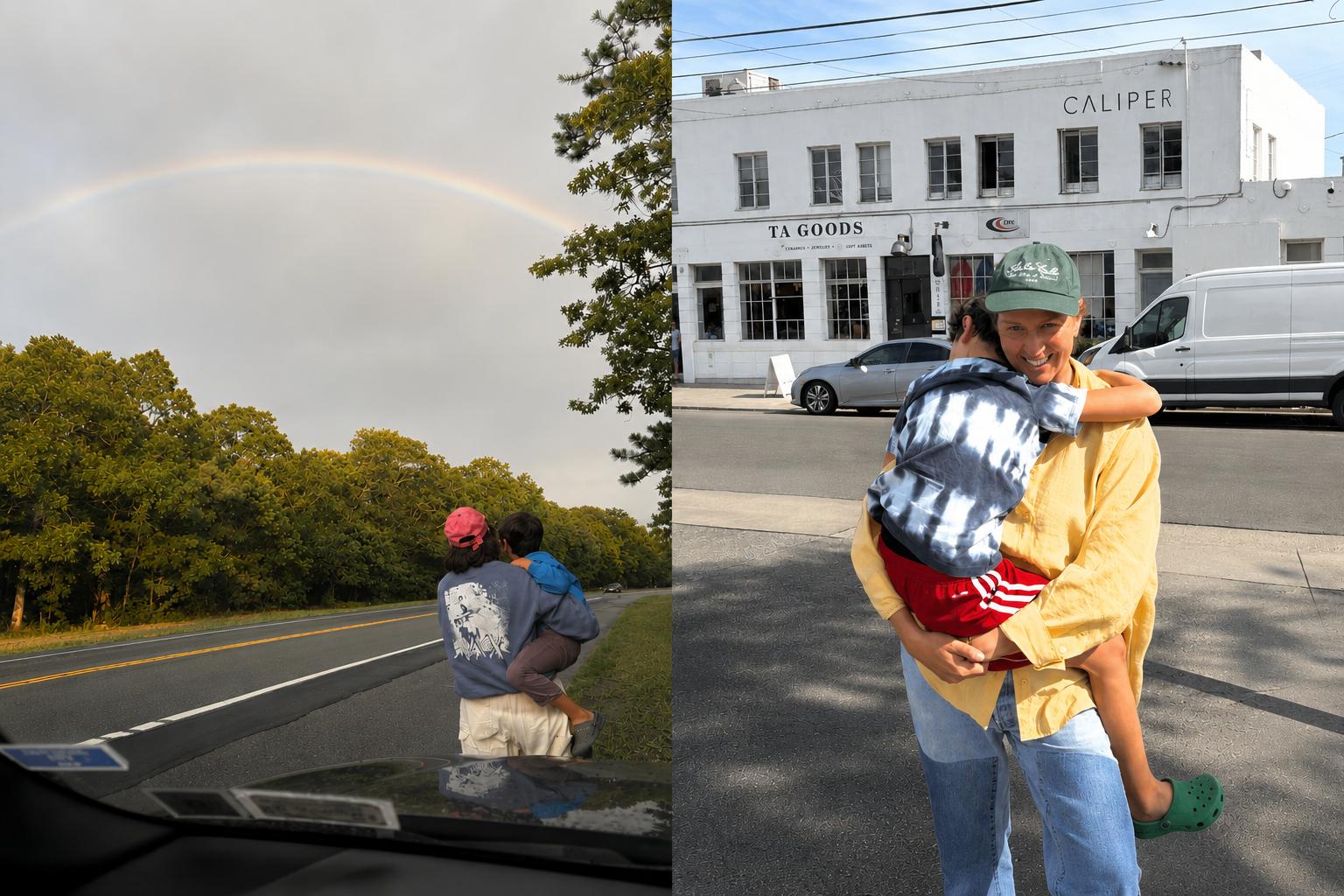
Sam Moyer
What are some unexpected ways that being a mother has informed your art practice?
My ability to work when I feel like my tank is completely empty. I’ve learned to experience my practice as energy-giving rather than energy-consuming—even if I am the same degree of physically exhausted, my brain can switch to a space of growth or curiosity.
What has been the most challenging aspect of being a working artist and a mother?
Logistics. Being tethered and scheduled and carrying the distraction of the great to-dos. Feeling pulled to my kid and guilty, and having to drop into the mind-frame of work regardless.
How have you handled the delicate balance of being a working mother?
I just try my best. I am on a mission to cut myself some slack.
What are your most treasured rituals?
The second coffee I have immediately after the first coffee—the one I can actually enjoy. But this was established well before I had a kid.
Has seeing art through your child’s eyes changed any of your long-held opinions?
I love the immediacy of his reactions to art—he has no need to perform appreciation. From a very young age he could sit through videos I would wander off from, or declare a painting I had walked past his favorite. I’m not sure “change” is the word, but it has been a great reminder of how to look.
What are the lessons you learned from your mother that you hope to also impart to your child?
My mom is an artist. She has managed a flexibility in her own fulfillment that I would love to pass down. Despite life not always allowing her studio time, or having to pivot and change careers, she manages to use those muscles of creativity. She taught me the idea of freedom within boundaries, and how learning to move within confinement is so much more fun and productive than focusing on the walls of the container.
How do you feel the art world supports working mothers?
A lot of the people I love and work with in the art world are full-time working mothers. There is an understanding and community in that. The art world itself is a lawless land with no promises or systems in place, but there is community. And now there is Artists and Mothers—a great nonprofit with an incredible board.
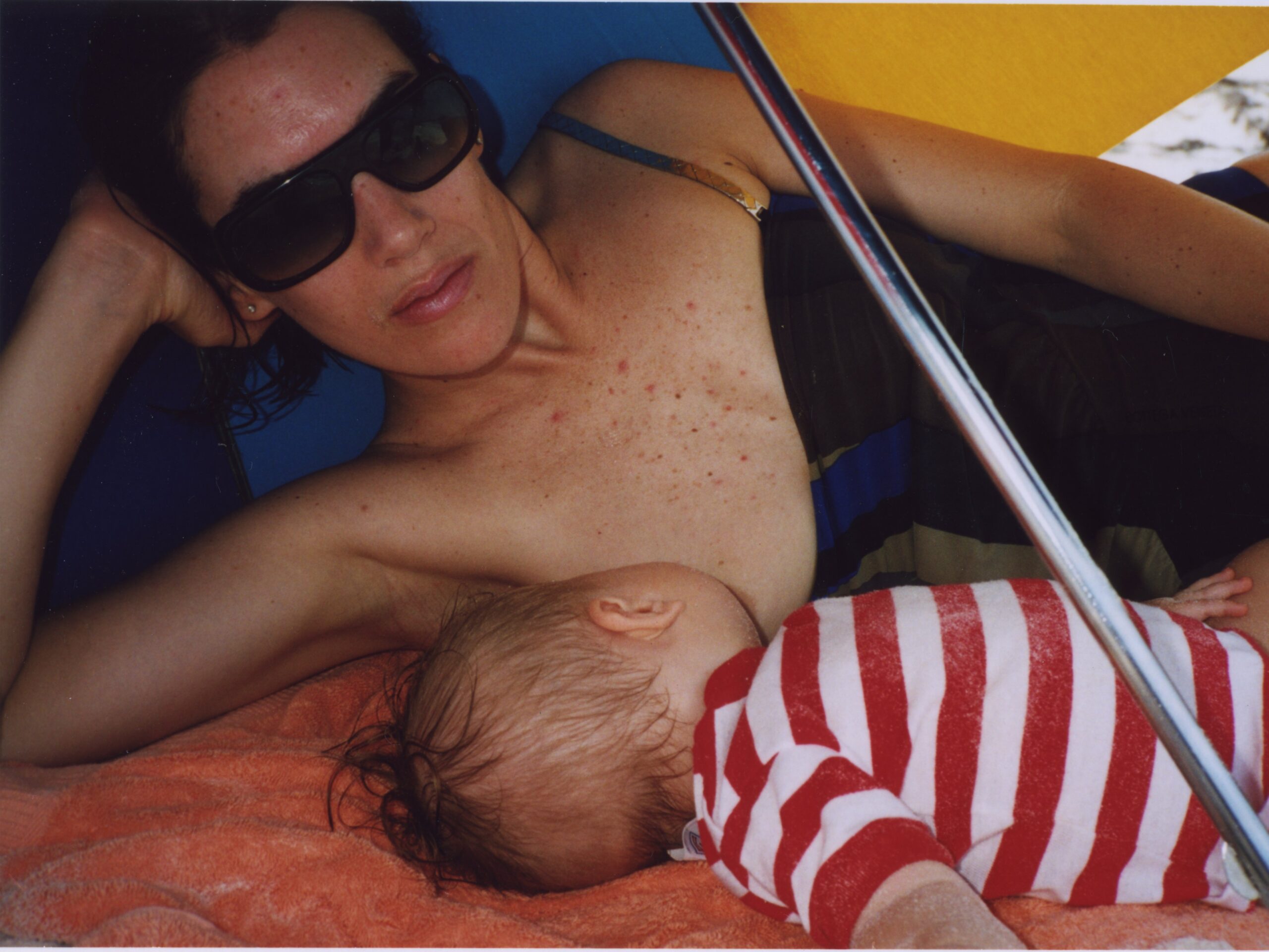
Sarah Morris
What are some unexpected ways that being a mother has informed your art practice?
It has made me accept humor and the sensual nature of being. It has taught me how to read between the lines even more so—intuition is a powerful tool. Part of art is intention, part of it is in its absence, or intuition.
How have you handled the delicate balance of being a working mother?
It’s a structured balance. I have had various forms of help—my parents, my studio, and certainly the school itself. One has to learn to delegate and share responsibility, always. My mother always worked so I understood from an early age that this was completely normal and necessary. Equality is not just an ideal—it’s a practice.
What are your most treasured rituals?
Our most special ritual is either cooking together, traveling abroad, or even the simple act of swimming. The adventure of seeing another country together and sharing the dialogues in art which are all going on simultaneously elsewhere. I love sharing that with Orson.
Has seeing art through your child’s eyes changed any of your long held opinions?
Absolutely. The frankness and opinions of Orson I always listen to with a sharp and curious ear.
What are the lessons you learned from your mother that you hope to also impart to your child?
To be as passionate as you are disciplined. The details all matter.
Can you share a recent story where you struggled between work and motherhood?
There is no struggle—it is one continuum of focus and energy. It all comes from the same source. Struggle is one thing, and definitely as an artist one is constantly dealing with issues. Motherhood is similar but certainly not in opposition to what one is.
More of our favorite stories from CULTURED
14 Books Our Editors Can’t Wait to Read This Summer
Inside the Closet of a Revered Stylist Who Has Only Worn Prada For Over 30 Years
Charles Melton Actually Has No Idea Where His Career Goes From Here
Introducing a Play For Every New Yorker Who’s Had More Bad Dates Than Good
7 Commandments for Rookie Collectors, From CULTURED’s Power Art Advisors
Sign up for our newsletter here to get these stories direct to your inbox.



 in your life?