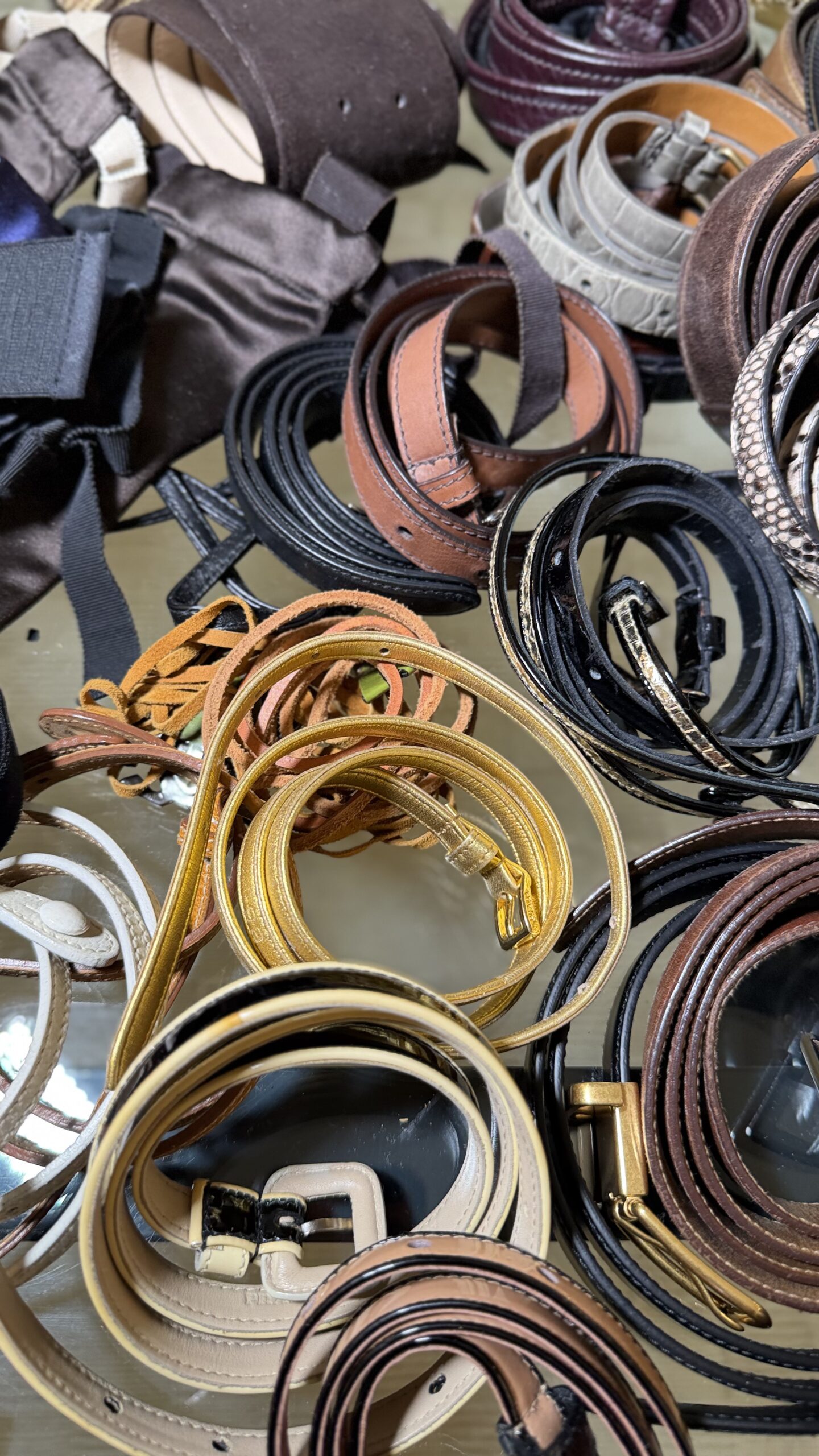
Beyond a lush park in Milan’s Porta Romana neighborhood, and a few stories high, one of the most comprehensive archives of luxury fashion sits tucked away. In meticulously labeled boxes, on hangers requiring a ladder’s reach, and in branded dust bags, stylist and creative director Nicoletta Santoro—a friend of Miuccia Prada and wife of photographer Max Vadukul—has spent years developing a Prada trove that, on first sight, can truly take one’s breath away.
Santoro’s committed relationship with the Milanese fashion house began in the 1990s, when she and Vadukul moved to New York as he started shooting portraits for The New Yorker (as the magazine’s second staff photographer, following Richard Avedon, no less). “Fashion became a form of strength for me as I adjusted to a new life in New York. A quiet, personal power,” Santoro tells CULTURED. As she navigated a fresh path in the city—where her son Alex Vadukul now writes for The New York Times—Prada served as a consistent point of view in the midst of massive life shifts.
Back at home in Milan today, bound volumes of vintage Vogue are stacked against monographs on art and fashion; a wall of portraits featuring celebrities and icons such as Mick Jagger winks down at any passing guest. Everywhere, there is evidence of a life lived inside well-crafted images. Santoro embodies that very sensibility when we meet: precise, instinctive, and deeply personal.
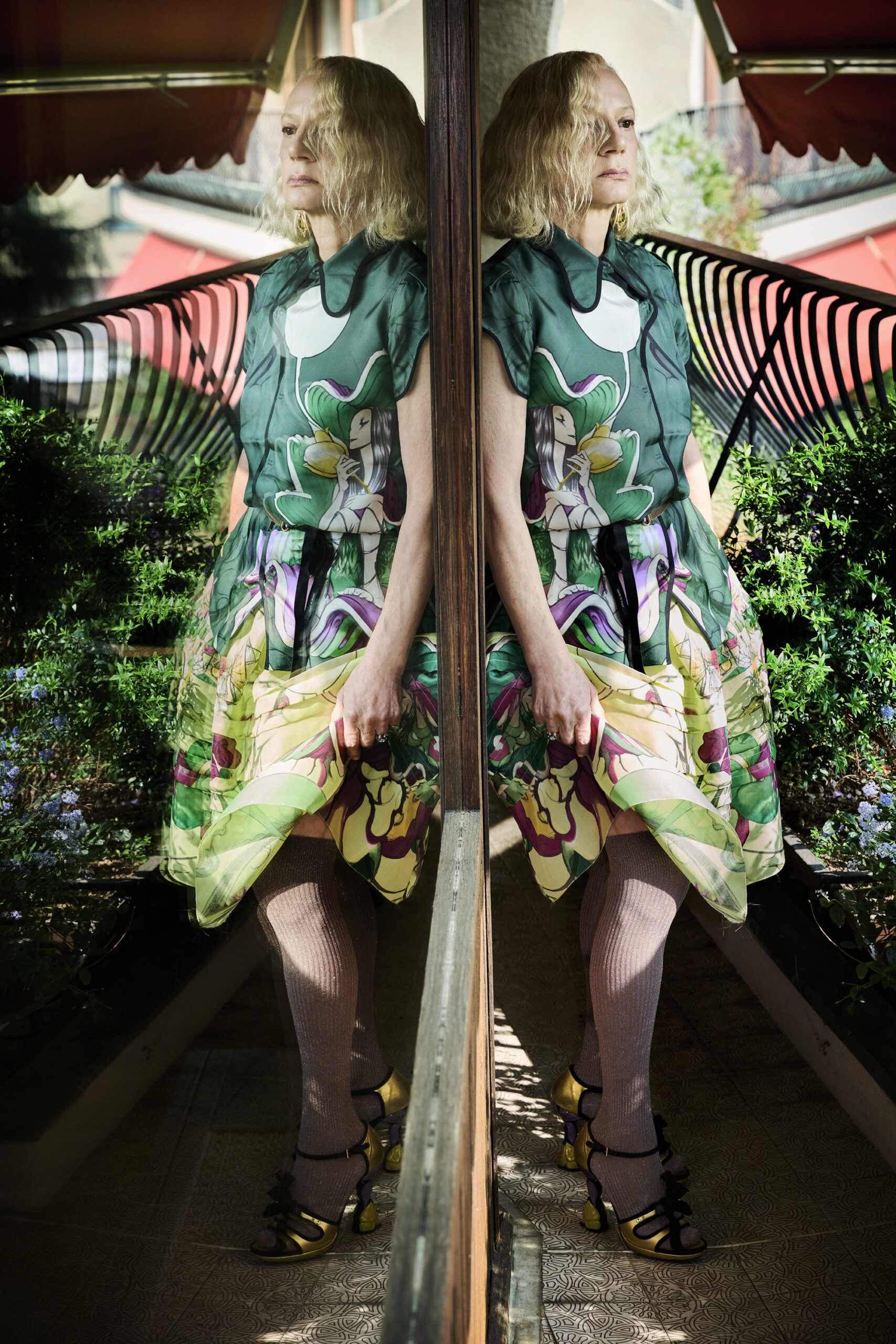
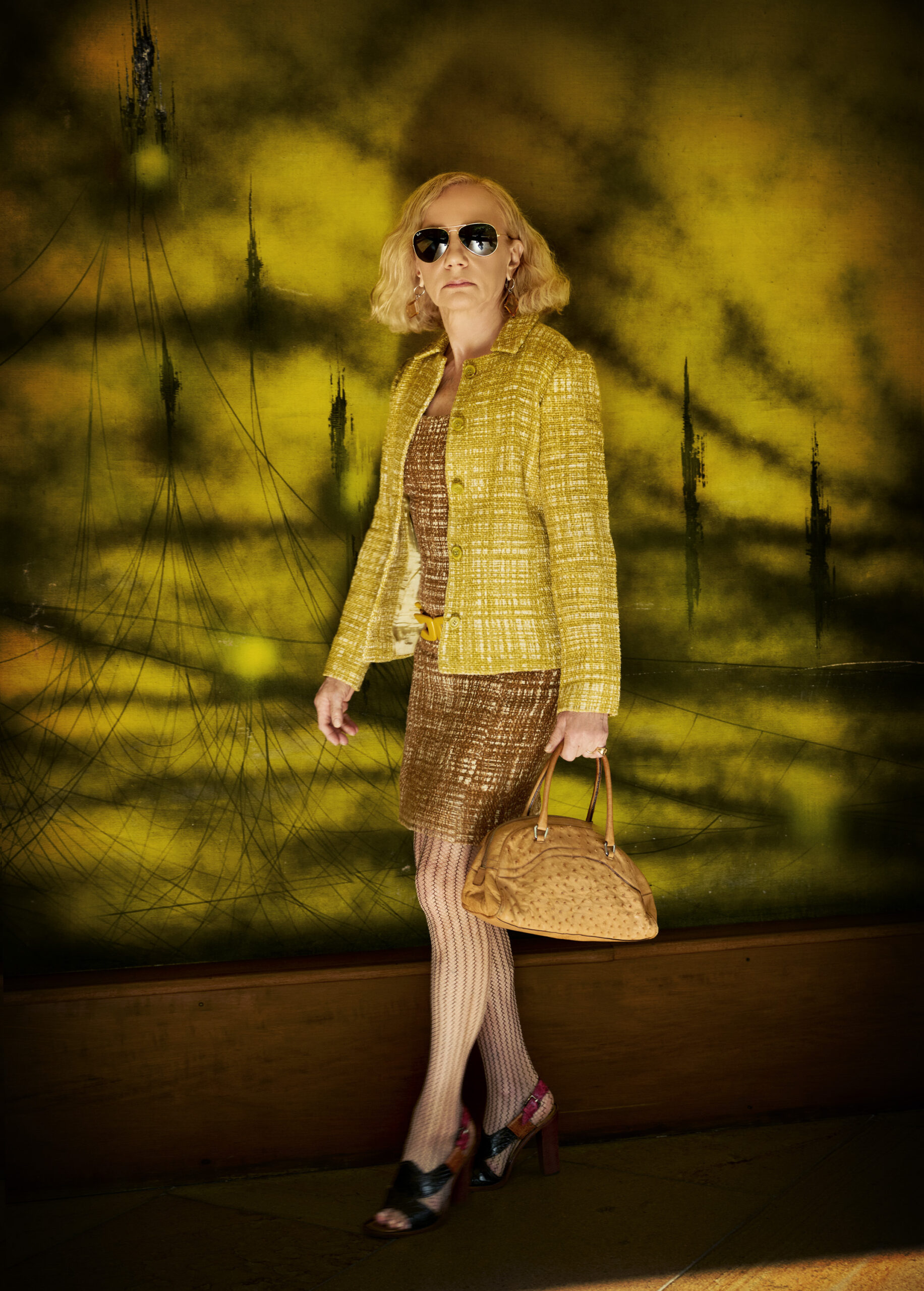
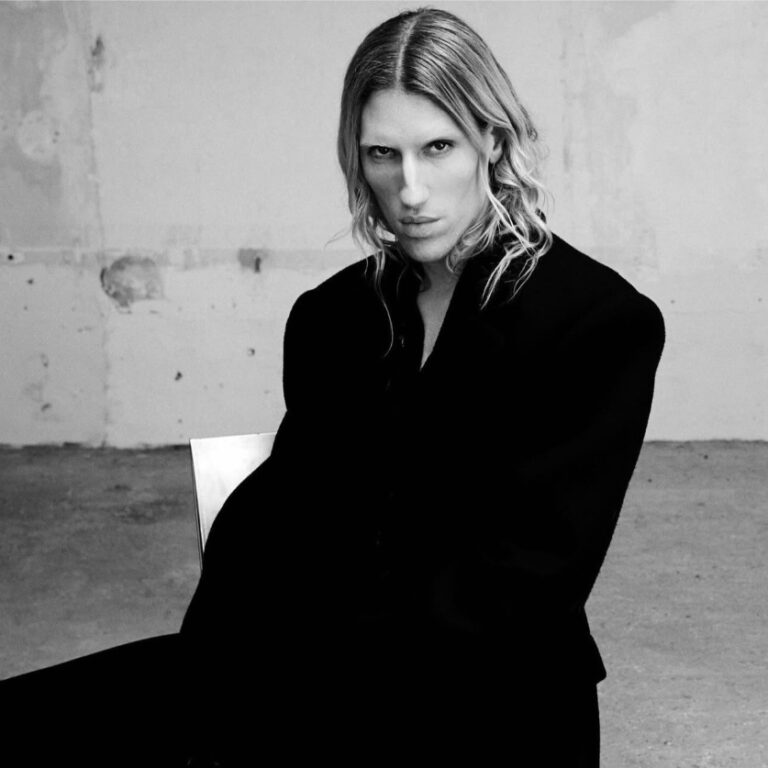
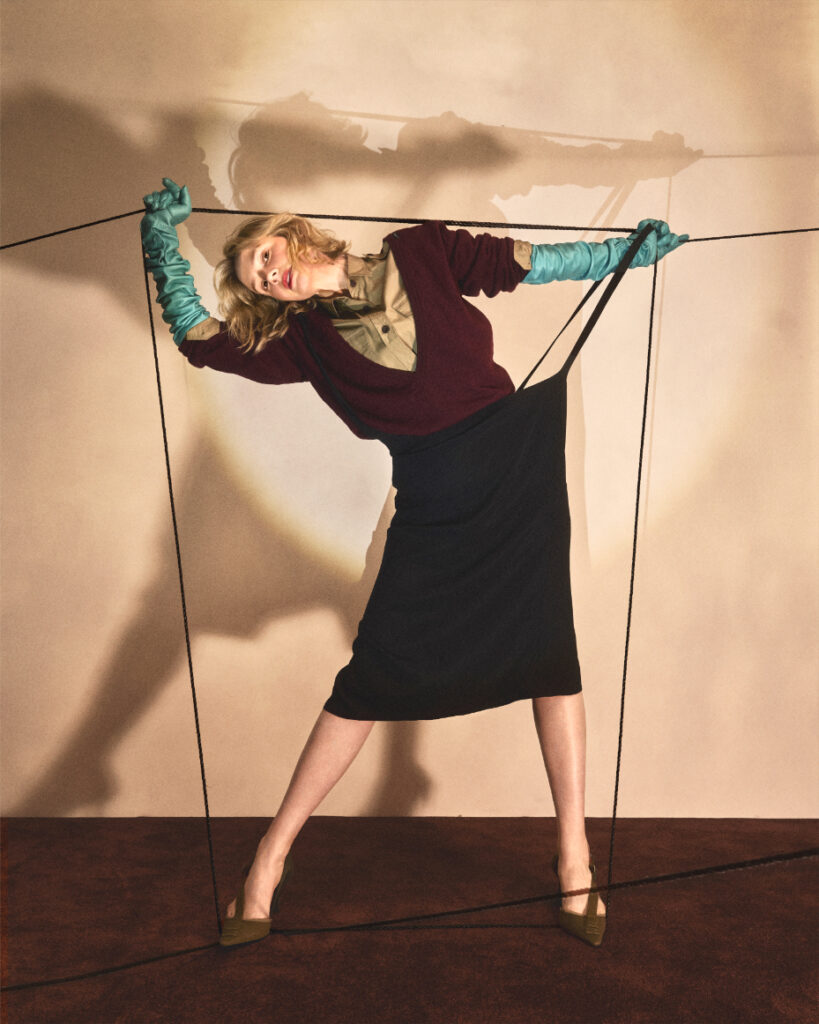
For CULTURED, her husband developed a series of bespoke portraits featuring Santoro in looks from her collection. In conversations spanning email, WhatsApp, and shared glasses of prosecco during Salone del Mobile, she traced how a wardrobe becomes an archive—and why, for herself, nothing is ever really let go.
You’ve been wearing Prada since the mid-1990s. What was the moment you knew it was the only thing you wanted to put on?
It all goes back to when I first moved to New York and felt the need for a different fashion language in which to express myself—one that could interpret my new story, my new life, in a foreign place so distant from Paris and Milano. That’s when I started seriously wearing Prada for the first time in my life, as it let me express my many selves. Before that, I was a Kenzo, Callaghan, and Romeo Gigli girl.
Style isn’t about appearance alone, but about intention. Fashion became a form of strength for me as I adjusted to a new life in New York. A quiet, personal power. Real glamour is not external, it lives inside. It’s how I feel in what I wear, how I carry myself. My style is not fixed. It evolves with me. It reflects my resilience, my contradictions, my freedom. It is my language.
What does Miuccia Prada understand about women that few else do?
Miuccia understands that women are deeply complex, intelligent, and often contradictory. The Prada woman doesn’t dress for the male gaze. She dresses for herself, for her own sense of power and inner life. She approaches fashion as something psychological and even political. Her work reflects how women actually think and feel, not how they are expected to appear. What also makes Miuccia different is that she does not treat women as muses. She treats them as subjects. [They] are intellectual, sensual, ambitious and also insecure, all at once. That tension is what fuels her work.
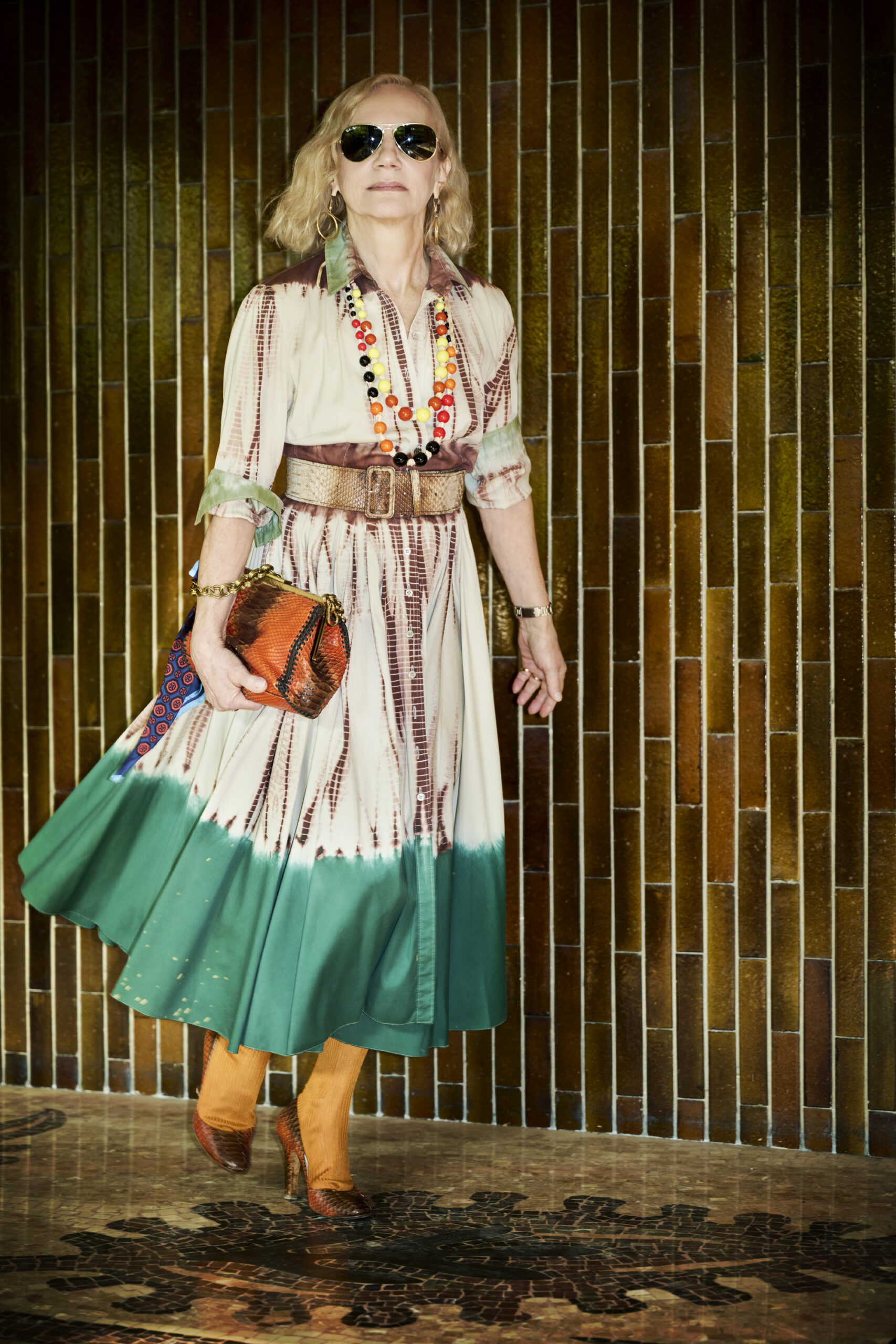
Is there a piece in your closet that you’d describe as a mistake—and do you still wear it anyway?
Not one piece—many. But I don’t experience them as mistakes. For me, clothing is never just functional or aesthetic, it is archival. If something remains in my wardrobe, it’s because it carries a trace of who I was at a particular moment in time. Even the pieces that feel dissonant to me today, those I no longer wear, contain an emotional memory for me, so I’m not interested in editing them out. To call them mistakes would mean denying parts of my own evolution. Instead, I see them as necessary contradictions—evidence of change, of experimentation, sometimes even of uncertainty. I may not wear them anymore, but I keep them deliberately. They are not garments at that point. They become memory objects.
You’ve worked with some of the greatest photographers in the world on major sets. How has living inside images for so long changed the way you get dressed?
Living inside images for so long hasn’t really changed the way I dress. It has only clarified it. My approach to editorial styling has always been instinctive, coming from imagination rather than trend, from a very personal interpretation of fashion. I don’t separate how I dress myself from how I dress others—they come from the same internal language, the same point of view. Of course, working with extraordinary photographers amplifies that vision, whether it was Avedon, [Paolo] Roversi, [Steven] Meisel, or [Peter] Lindbergh, or my husband Max Vadukul, who is now the only photographer I still style for. They bring scale, intensity, even a kind of grandeur to what I do. But they don’t redefine it, just help reveal it.
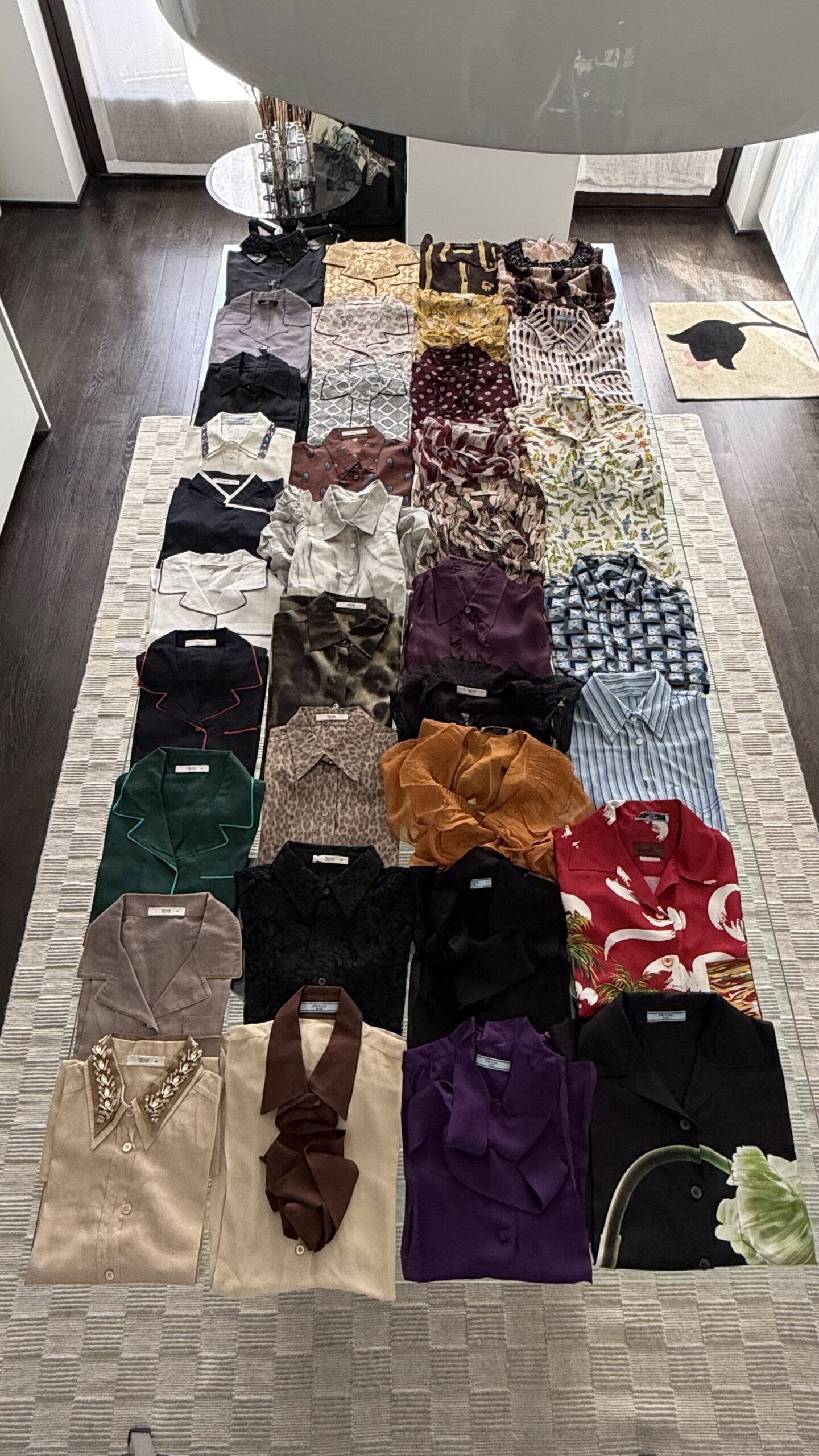
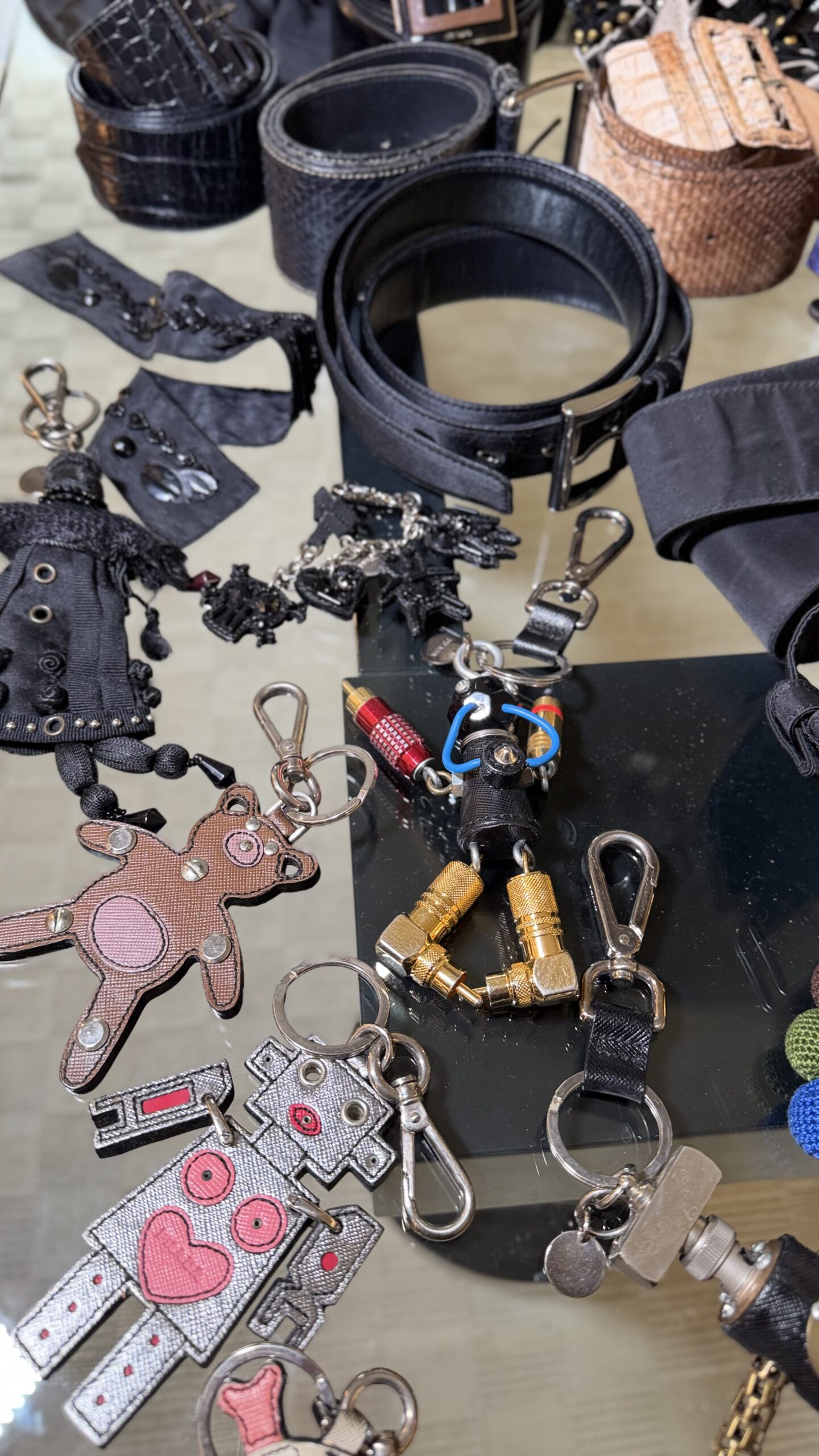
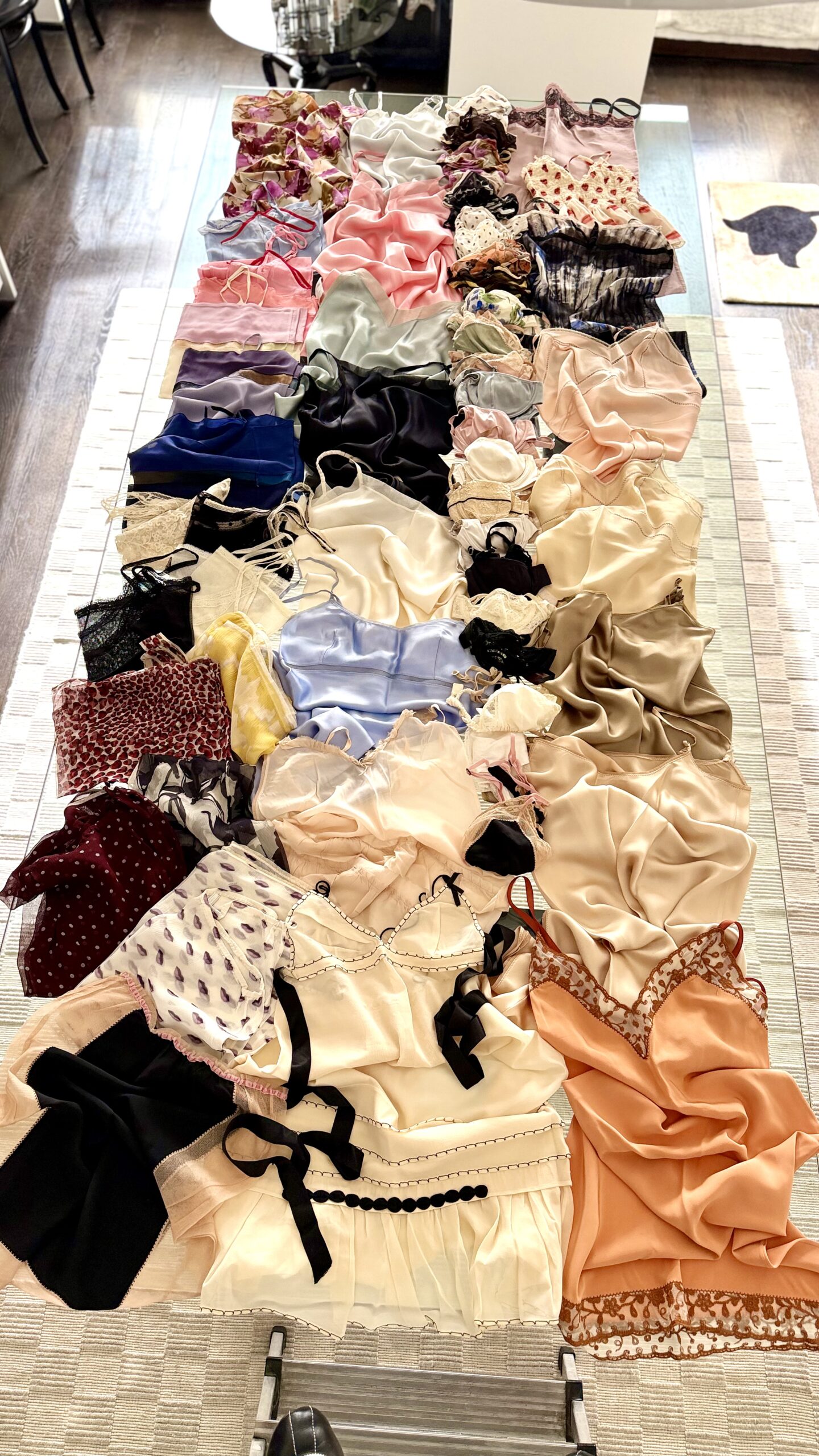
What is the piece you’ve worn the most, and what does it look like now?
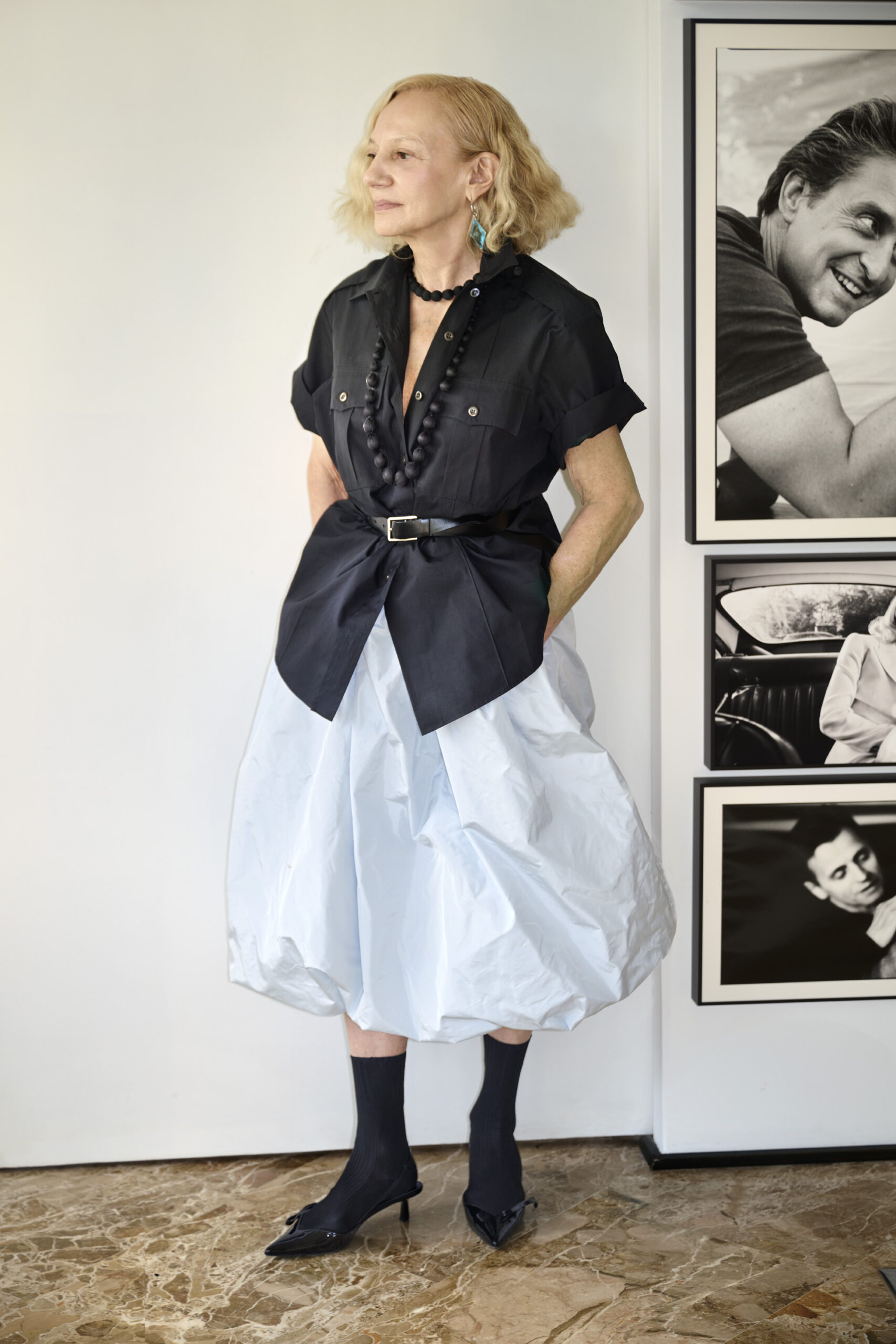
The piece I have worn the most is a long shirt dress from the Prada Spring/Summer 2004 collection, runway look 33. It was inspired by the idea of slightly rumpled 1950s tourist and explorer chic, with a quietly subversive, lived-in quality. Over time, for me, it has transformed. It no longer feels like just a dress, but like a memory I carry. Something that has been buried, then slowly brought back to the surface—altered, softened, made more intimate. There’s a kind of poetry in it now. Not nostalgic in a decorative way, but in an emotional and almost fragile way. The fabric seems to hold time, to absorb experience. It has become, for me, a sacred piece. A fragment of the past that continues to live, to evolve just as I do.
Is there a Prada era—a specific collection, a specific year—that you think was genuinely misunderstood at the time? Is there an era that you always come back to?
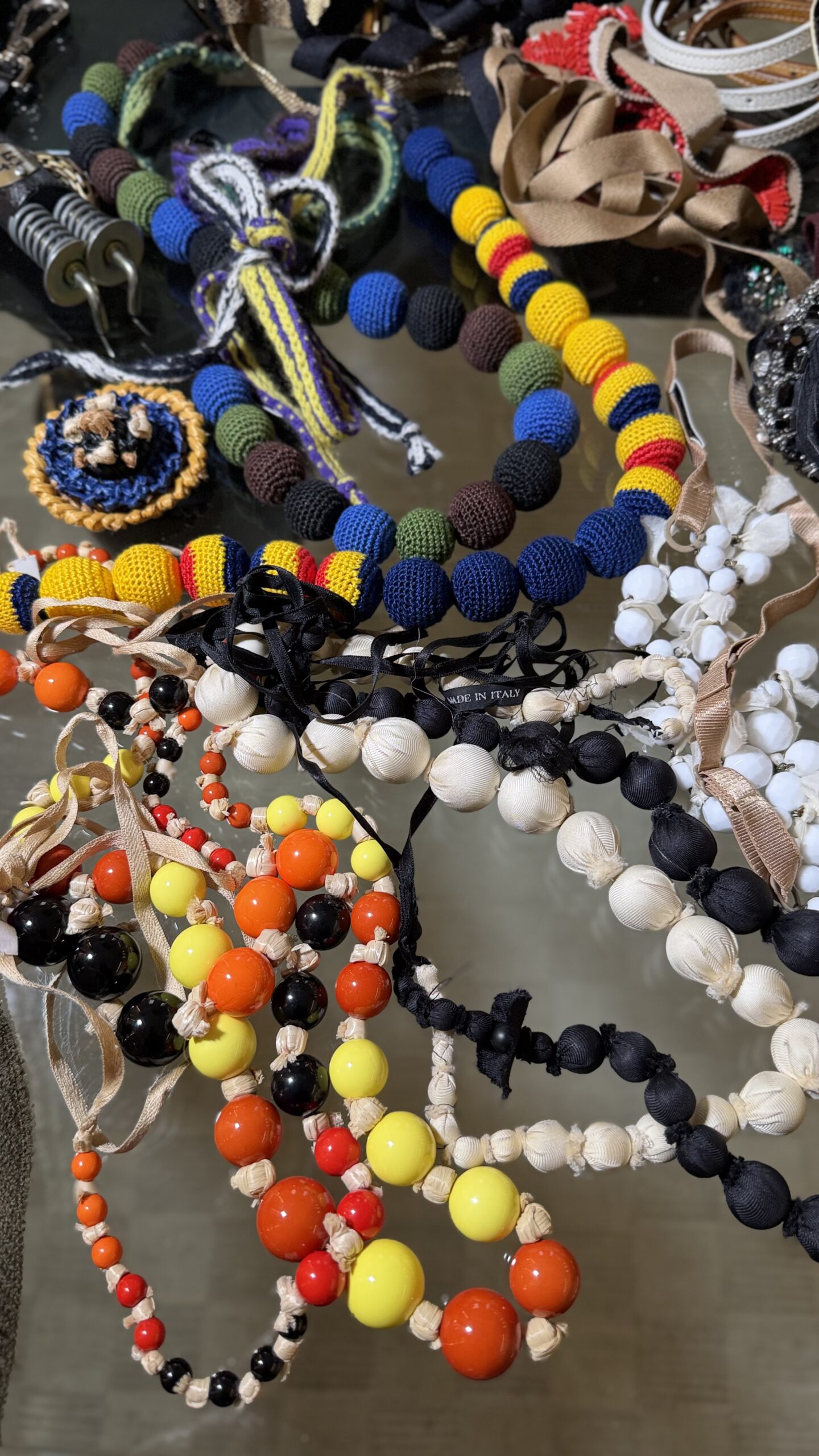
Spring/Summer 2008 is one of those collections people didn’t fully understand at the time, but that today feels iconic. The colors were soft, almost faded, and then you had these fairy-tale prints by James Jean that were beautiful but slightly strange. Nothing felt obvious. Even the accessories had this handmade, almost hippie feeling, but reworked in a very Prada way. At the time, it confused people. It felt too much, too illustrative, especially in a moment when everything was so minimal. But for me, it wasn’t about fantasy. It was something more complex, more emotional, and almost unsettling. Now you can see that it clearly opened the door for a different kind of romanticism that influenced so much after.
What is the strangest thing in your closet, and what is the story behind it?
I don’t usually think in terms of “strange,” but I suppose a piece from my closet that might feel strange from the outside would be a piece that carries a tension: a piece that was really ahead of its time, or slightly outside my usual fashion language. So the “strange” pieces are arguably the most important ones in my closet, as they’re the ones that are still unresolved for me.
How do you decide what to keep and what to let go of, or do you ever let go of items?
From 1995 to today, I’ve kept everything. Letting go is not part of my vocabulary when it comes to my wardrobe (which is ironic, as I’m otherwise fastidious about clutter, and have no emotional hangups when it comes to throwing most objects out). For me, my closet is an archive, not something to edit. Every piece has a reason to exist, even if it’s no longer worn. Luckily, I’m still the same size! That’s how, over time, I’ve built what has become an extraordinary vintage collection.
How has your wardrobe changed across the cities you’ve lived in, between Milan, Paris, and New York?
The shift I made from wearing primarily Romeo Gigli in Milan and Paris, to beginning to wear Prada in New York, was not just about clothes, it was emotional. In Europe, with Romeo Gigli and Callaghan [where Gigli was creative director], there was a softness and romantic intimacy. It was beautiful, but also protective, almost like being wrapped. Then I moved to New York, and something changed. I needed a different language. With Prada, I found it. It was more direct, more intellectual, a little uncomfortable even, but very real. It allowed me to be more exposed and more myself. Less dream, more awareness. That’s when Prada stopped being just fashion for me and it became part of my identity.
What do you want people to feel when they see you walk into a room?
I hope people might feel that I have a signature style, and that I am confident and self-assured. That they might feel I’ve chosen the pieces I wear with the intentionality of a curator, not a shopper. But more than their attention, I’m interested in a certain reaction, a kind of curiosity, a recognition. In the end, though, I am simply myself.
If your closet could talk, what is the first thing it would say?
Not to sound arrogant, but every time I open my wardrobe closet door, it should sing back to me: “Hi, I’m Nicoletta Santoro. What are you going to wear today?”
More of our favorite stories from CULTURED
Marcel Duchamp Obliterated Expectations of What Art Could Be. These 4 Artists Are Carrying His Mantle.
How The Pitt’s Patrick Ball Went From Role-Playing Corporate Trainings to Starring on Broadway
The 2026 CULTURED Power Advisor List: Meet the Art Advisors Shaping the World’s Top Collections
A New Book Unearths the Heated Rivalry Between Artists Peter Hujar and Paul Thek
Speed Round! 13 Critics Review 25 NYC Shows Before You Finish Your Morning Coffee
Sign up for our newsletter here to get these stories direct to your inbox.

 in your life?