A sharp-minded collector never forgets the moment it all began. For Miami real estate developer Craig Robins, it was the excitement of a sketch by Dalí purchased during a Barcelona stint, while for hotelier Steve Wilson, a small Matisse drawing provided a post-traumatic pick-me-up following an art professor’s harsh rejection.
As the calendar year begins again, CULTURED kicked off the season by looking at 10 collectors’ earliest obsessions. From cheeky Raymond Pettibon drawings to Kenyan ebony sculptures, these are the stories of first acquisitions, kismet-driven encounters, and the pieces that galvanized a life of art-world maneuvers.
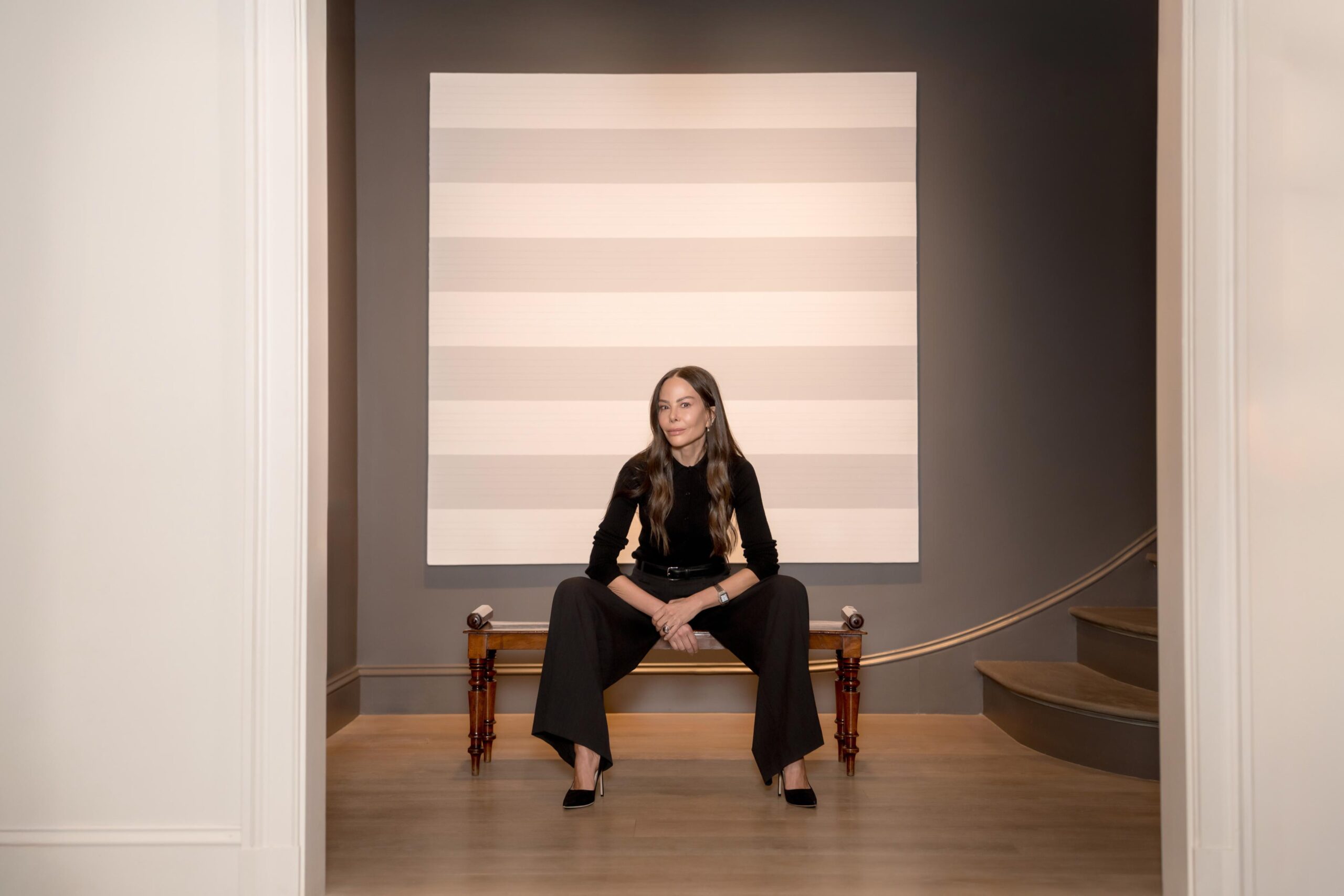
“Well, I could start at the very beginning. I was born in Houston, Texas, and my parents were friendly with Mark Rothko. My father gave my mother a Rothko when she gave birth to me. My mother then generously gave the picture to me on my 30th birthday, which was a huge surprise as well as unbelievably generous. It is a very personal and special piece. [The first piece I bought myself was] an Andy Warhol gold-leaf portrait of Stuart Preston. Years later, my friend Bob Colacello visited and shared a few stories about Stuart and pointed out his initials in the corner, which gave the picture not only context but history.”
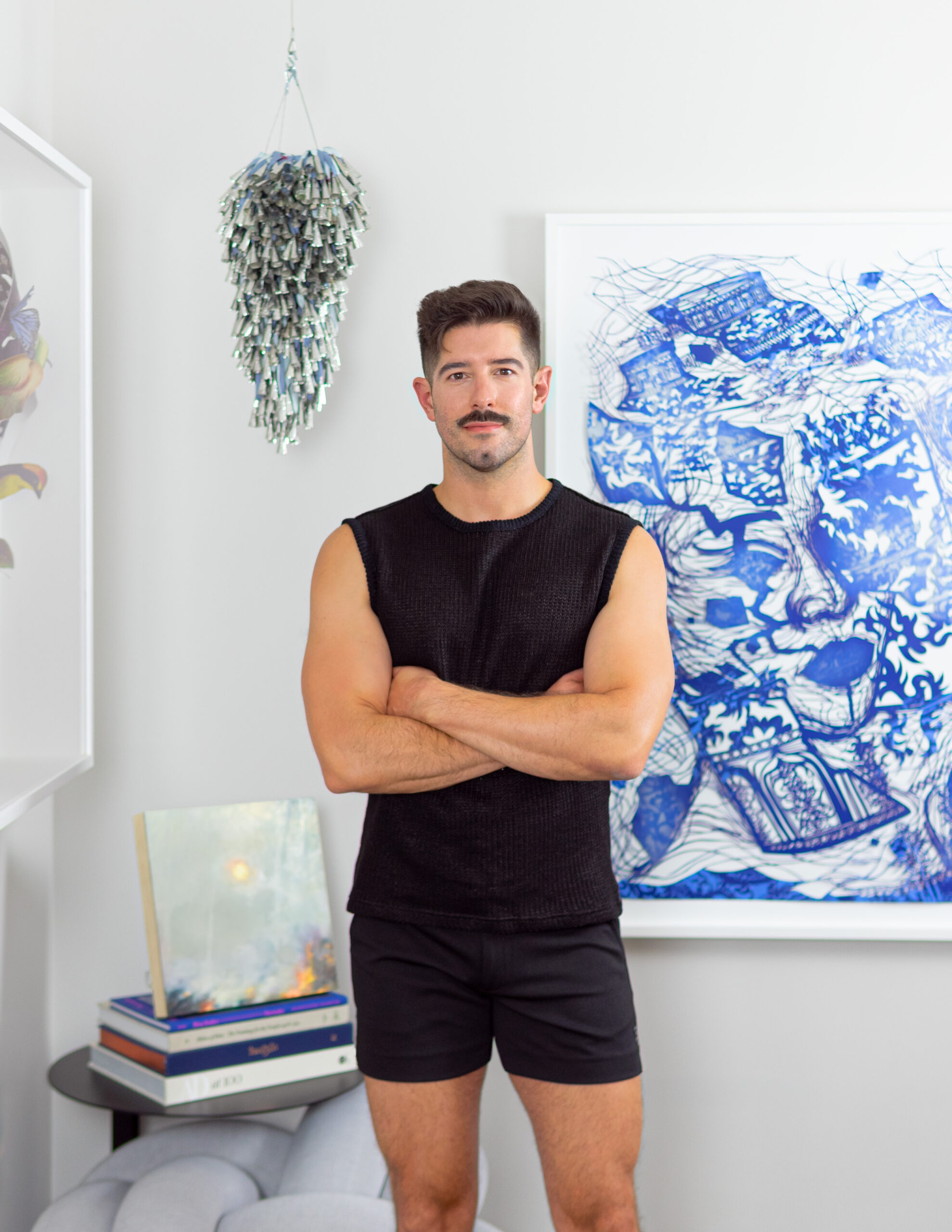
“My collection began with the official rite of passage for a millennial art collector: a late-night Instagram rabbit hole. On a subsequent visit to New York, I went to Marinaro to see the one piece I had cold-emailed about and left with another entirely—an Anthony Iacono that the owner, Lauren Marinaro, pulled from the back room after a conversation was had in her office. That first acquisition taught me the most important lesson of collecting right out of the gate: The real magic isn’t always on the gallery walls—it’s in the conversation with the person who has the keys to the storage room.”
“I have been art-obsessed since I was a kid. I always dreamed of having cool pictures on the wall, and whenever I have had money in my life, I spend it on art. When I was 24, I had a job that paid in cash and required great discretion. I had to do something with the cash. In 1994, laws related to money were very different than they are now, and large cash purchases could be made without government knowledge or interference. The first piece I bought was a Picasso drawing in blue crayon from 1908, and the second was a Matisse drawing of a woman from 1918, both from a well-known gallery that was, at the time, happy to sell art to me for cash. It took awhile to convince the gallerist I wasn’t a cop or a thief.”
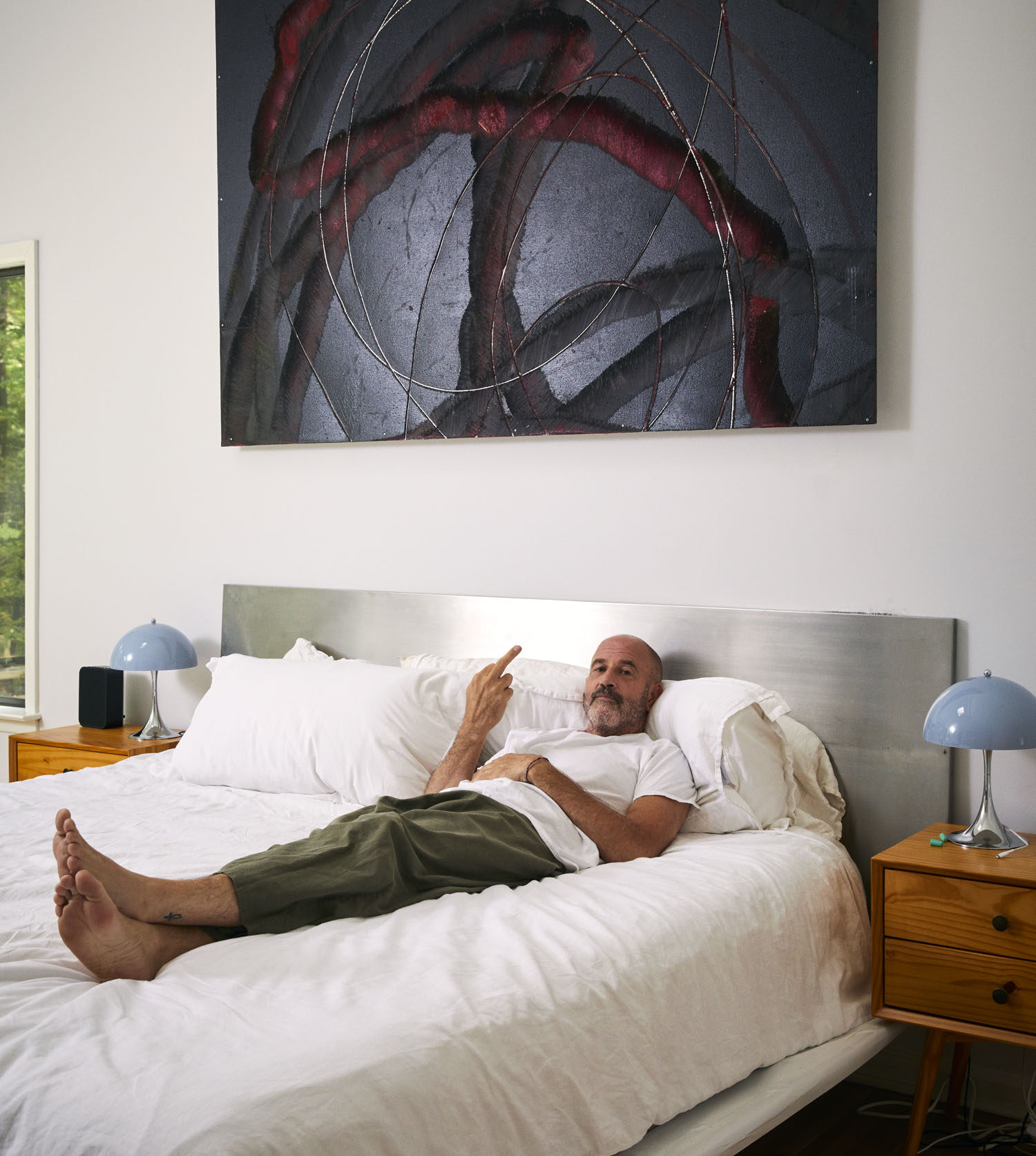
“My journey began when I met Brooke Garber Neidich early in my career while working at Sally Hershberger downtown. She became my client and to this day still is. I am so grateful. She has been deeply engaged in the art world, especially with the Whitney Museum. I remember going with her to the new Whitney building, before it even opened, where she was being photographed. I got to see major pieces being installed. It was a thrilling, behind-the-scenes experience. I told her how cool it all felt, and she gave me one piece of advice: ‘See every show, every fair, go to every museum. See everything.’ I took that to heart. In 2016, when [my partner] Elliott became head of product for the Weather Channel, we moved to Atlanta for three years. We met Veronica Kessenich (then the director of Atlanta Contemporary), and through her we were introduced to a wonderful group of artists and curators. One of the earliest was Joseph Guay, whom we commissioned to create a resin-encased feather painting that currently hangs on top of our bed.”
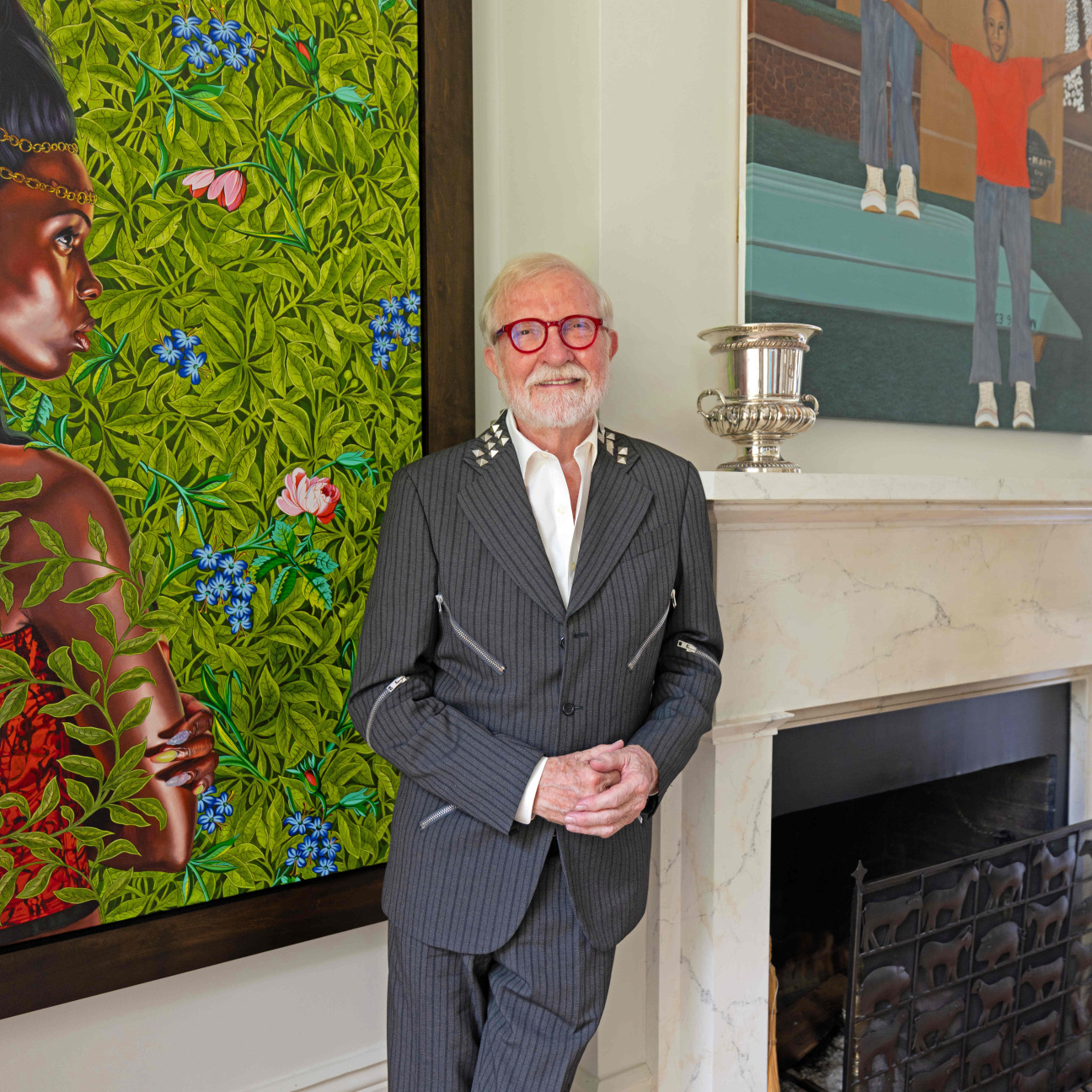
“I was raised on a farm in west Kentucky and attended Murray State University, where I tried to major in art. As a freshman, my drawing teacher tore a drawing off my easel in class and told me I didn’t belong there. Embarrassed and unsure of my talent, I changed my major to psychology, but never strayed far from my creative interests and love of art. That same year, a traveling art dealer came to the university, and I bought a Picasso poster titled Manolo Huguet, which became the first work in my collection. It was a simple sketch of a man with a sad face that reminded me of myself at the time.”
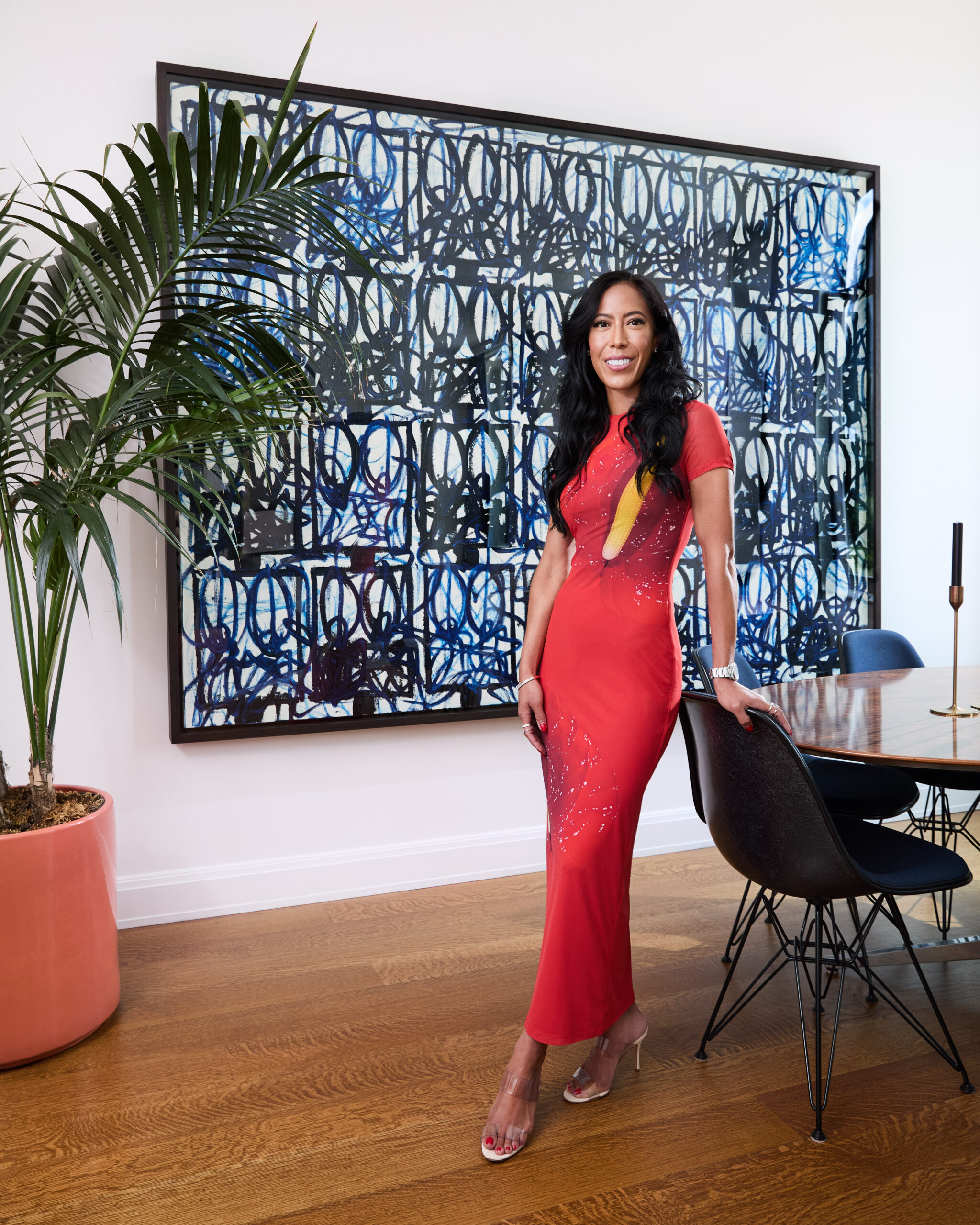
“The first work I collected was Hounds of Hell, 1973, by Mary Beth Edelson from her ‘Woman Rising’ series, which I acquired in 2018. At the time, I was deeply interested in how pioneering feminist artists of the early 1970s like Edelson reclaimed goddess imagery, ritual, and magic as tools of empowerment in both their art and activism. This small but potent piece continues to resonate with me, and it has become the most frequently loaned work in my collection, having been included in exhibitions at the Hamburger Kunsthalle, the Toledo Museum of Art, the Speed Art Museum, and the Minneapolis Institute of Art.”
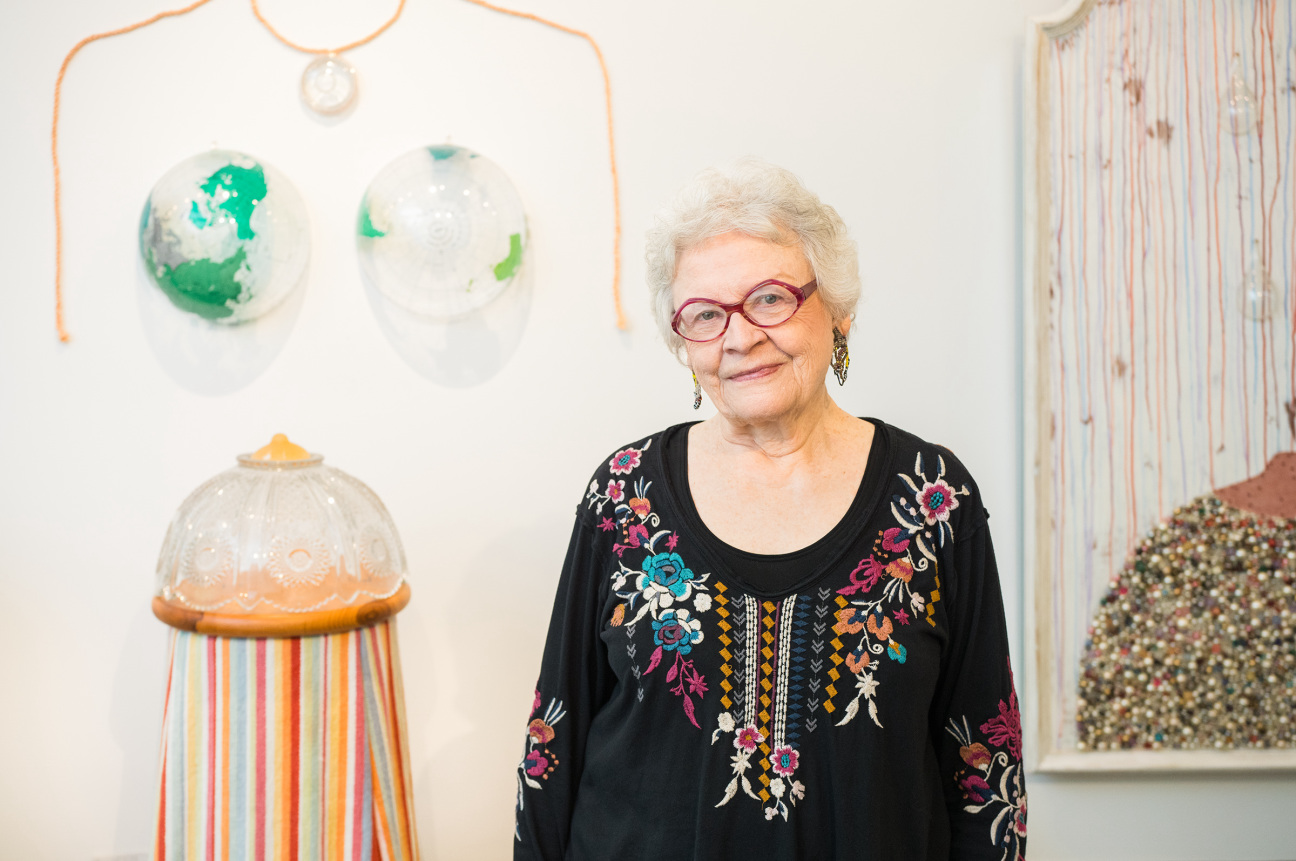
“I purchased my first painting in 1976. It was by Tom Askman, who was teaching art in Thibodaux, Louisiana, and was in a group show at the Masur Museum of Art in Monroe. At the time, I was painting in the carriage house of the Masur with a group of women who used it as studio space. Askman was influenced by the Hairy Who and the Chicago Imagists, and I loved the humor in his imagery. Not long after, in 1979, I had to give up making art because of a divorce and the need to make a living to support myself and my two sons. I didn’t start making work and collecting again until the early 1990s, after relocating to North Carolina, building and selling my software business, and getting remarried. At that point, I started buying work by the artists who had mentored me in the ’70s, like Ida Kohlmeyer and Lynda Benglis. I wanted to collect their work in appreciation for the nurture and encouragement they provided.”
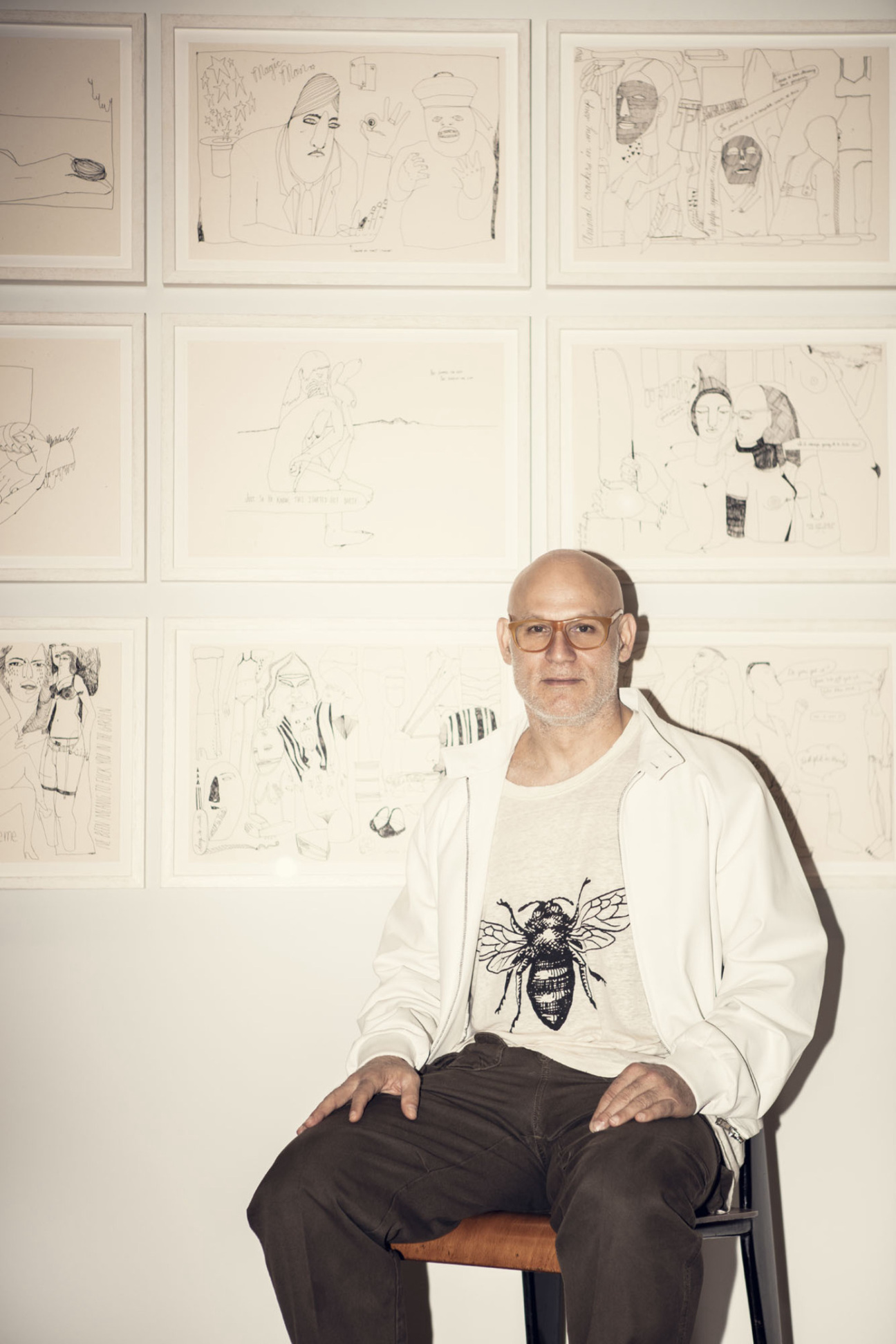
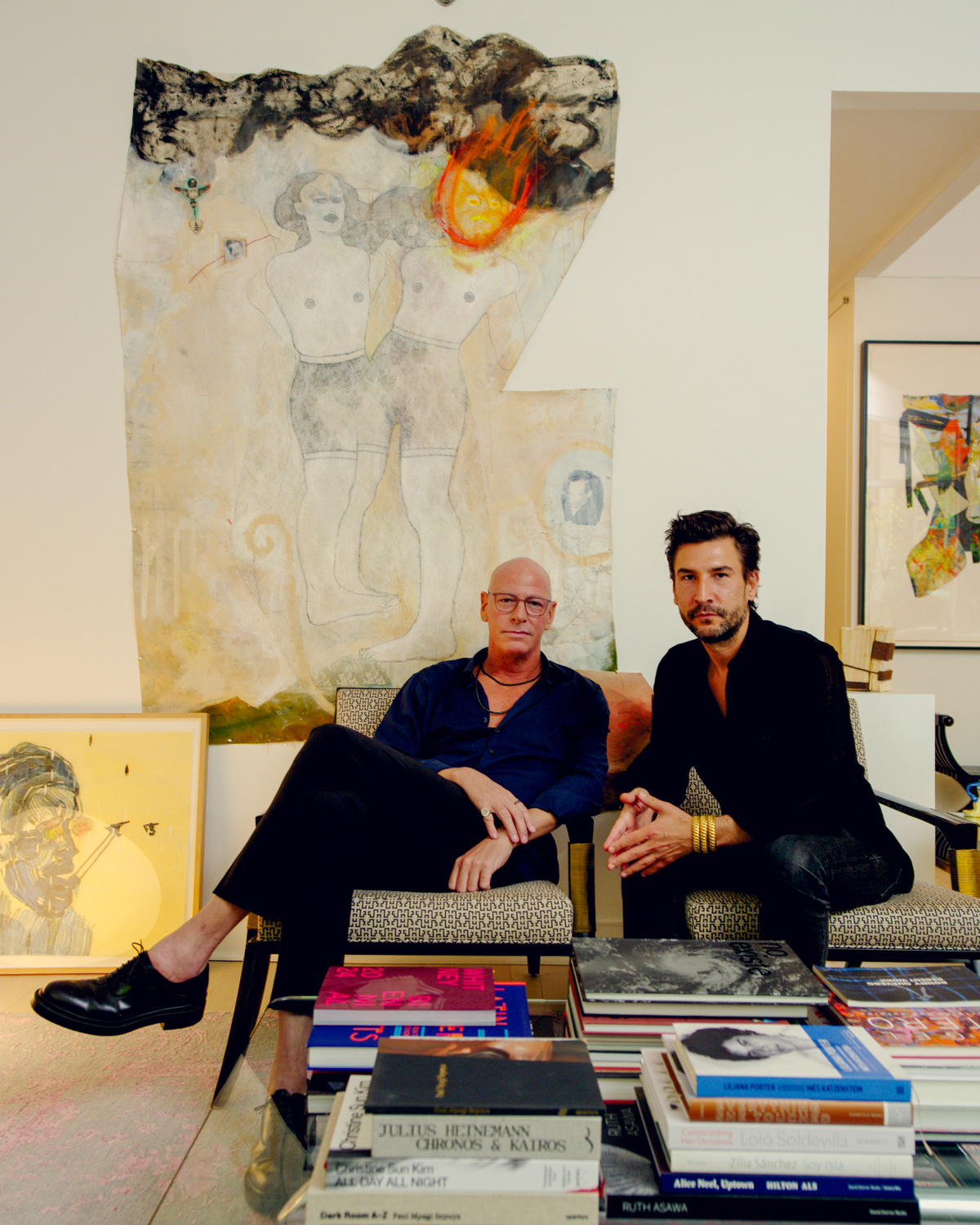
“My journey with art truly took shape when I studied in Spain. Being surrounded by the works of Goya, Picasso, Miró, and Dalí opened my eyes to art’s power to provoke and inspire. Those formative experiences taught me to see art in new ways and helped me develop an eye for pieces that move me. They also informed my approach to real estate development, where I’ve endeavored to integrate art, design, and cultural experiences into the communities I build. My first acquisition was a sketch by Dalí, purchased when I was 19 and living in Barcelona. Dalí was still alive then, and the work had a striking presence.”
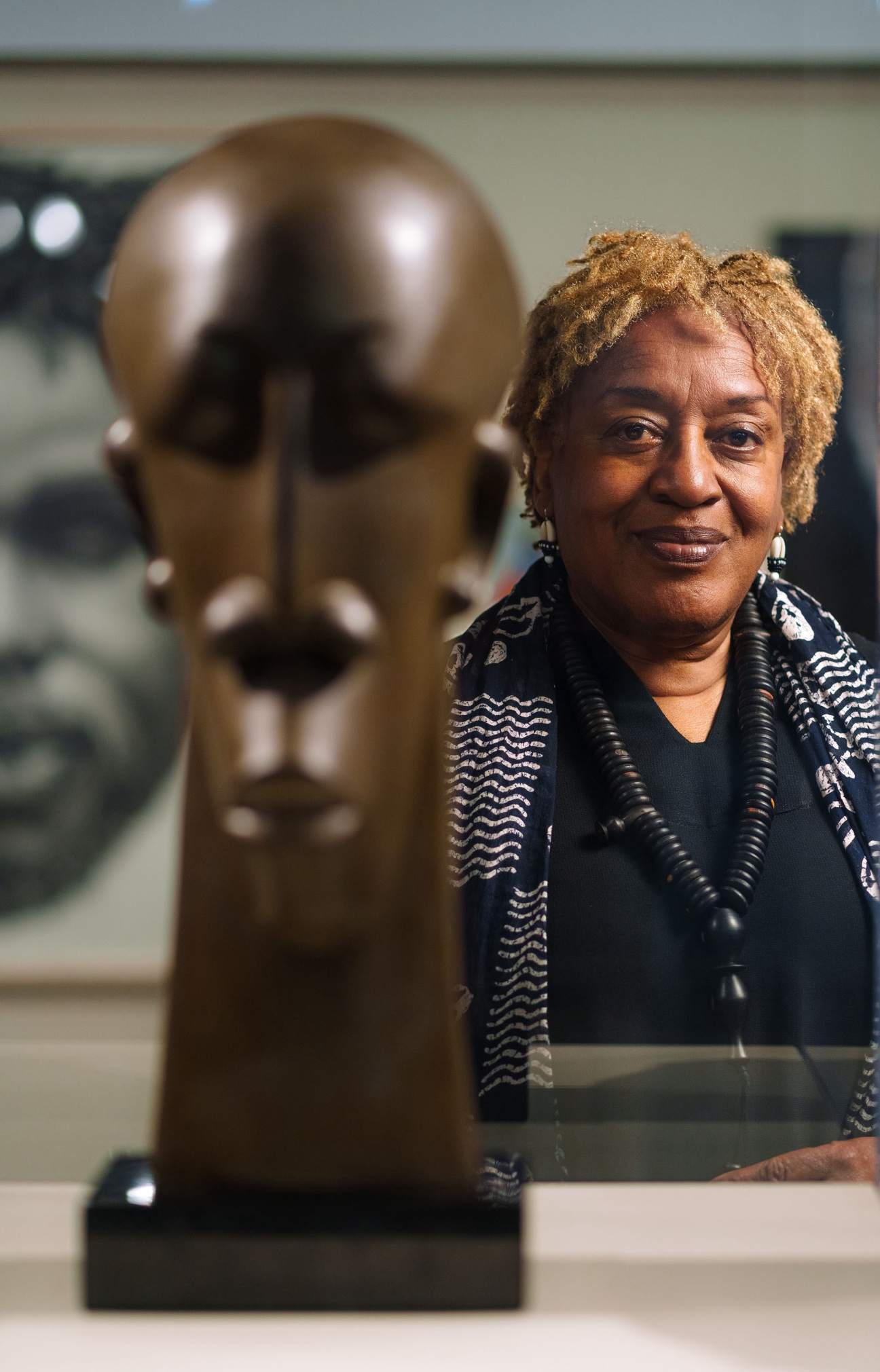
“My father had a collection of Kenyan ebony sculptures, and they were all animals, except for one, a man with a very high plume headdress. It looked like a pope. But on the flip side, it was hollow and my thumb used to fit in it. I used to keep it in my pocket as a good luck charm when I went on auditions. It inspired me to collect functional art—I wanted the things I collected to have a purpose. I had my lucky charm and a series of teapots, then I acquired a series of jugs, chairs, and materials. When I finally fell in love with a painting, somebody said, ‘Well, what’s its function?’ It makes me happy, therefore it has a function. Now, with my extensive collection, I get to be happy a lot.”
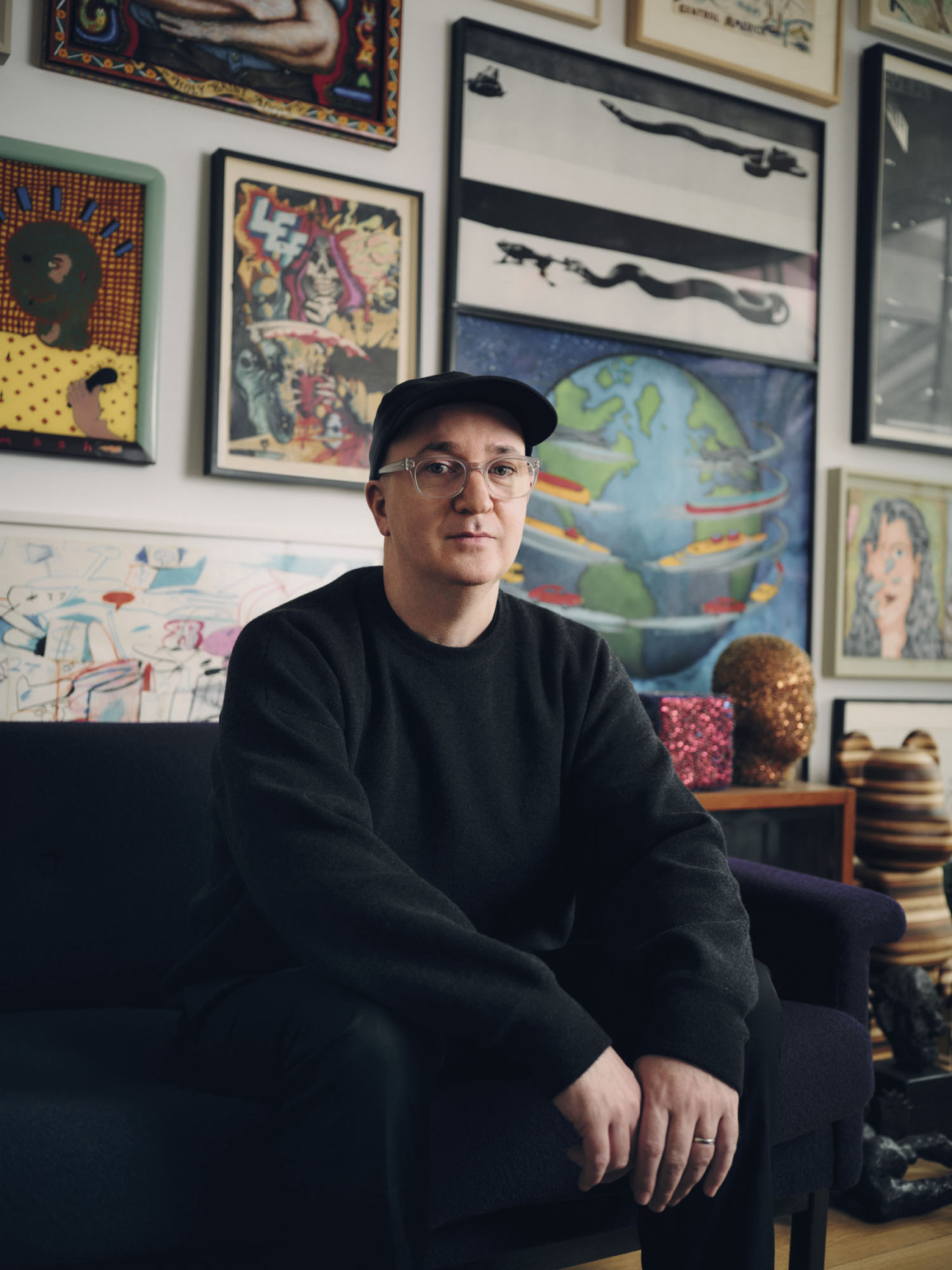
“I always collected things like stamps or trading cards growing up, so I always had that kind of mindset within me. When I was younger and doing graffiti, we would all trade black book drawings and small paintings with other artists and writers that you would meet. That was the first art I owned by other people. The first piece I bought from a gallery was a Raymond Pettibon drawing from David Zwirner in 2000. It was a drawing of a fly with the word ‘SWAK!’ (like the sound of a fly swatter) written on it. ‘SWAK’ being ‘KAWS’ backward, I took it as a sign and bought it as a birthday present for myself. This morning I purchased a painting by Futura 2000 titled World Tour Action, 1984. It’s a painting I’ve wanted for a while and was the invitation image for his show at Tony Shafrazi.”


 in your life?