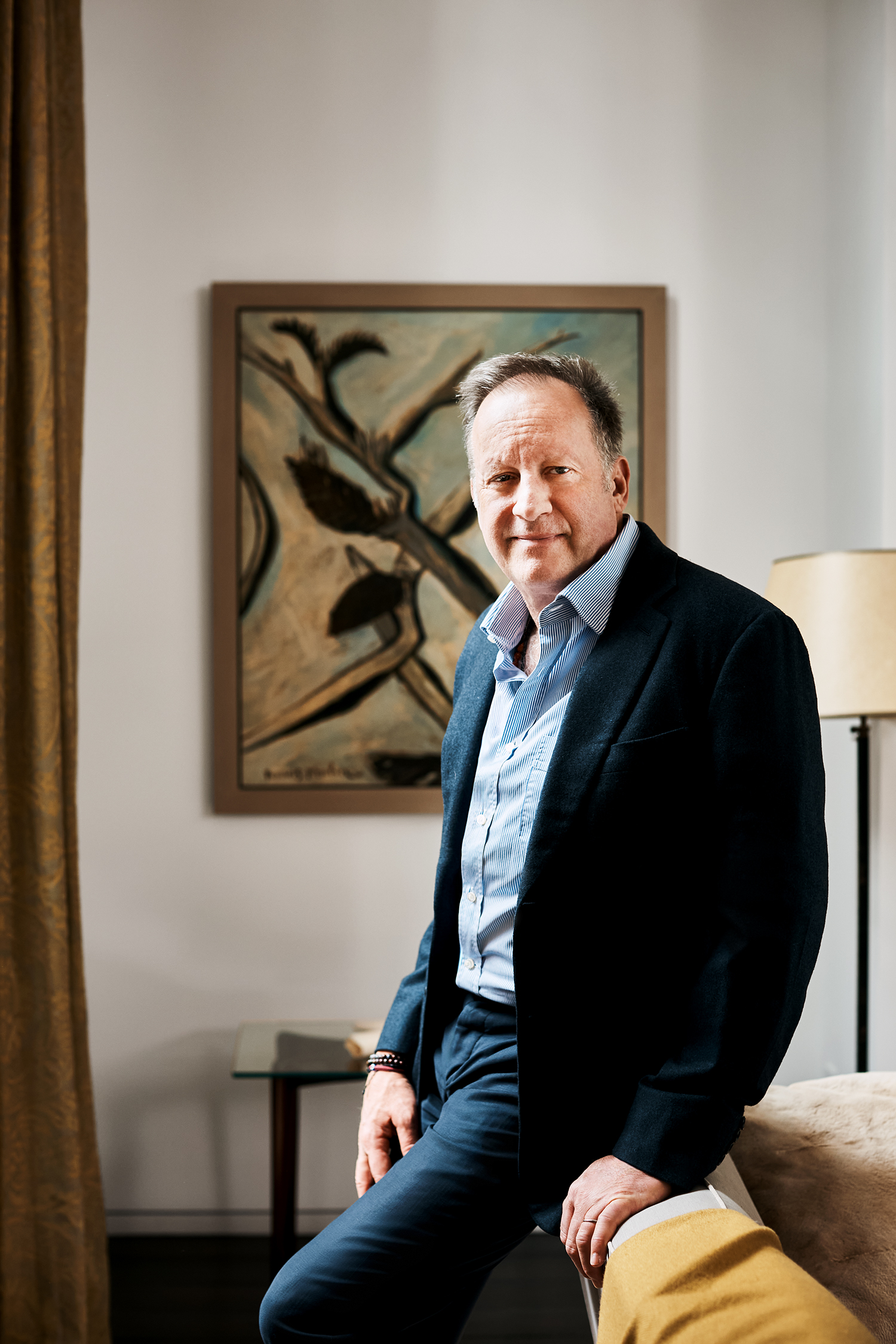
Since striking out on his own at the start of this year, the art dealer Gordon VeneKlasen, Michael Werner’s longtime gallery partner, has kept up a steady pace. The new gallery made its art fair debut at the inaugural Art Basel Qatar in Doha last month. He also took over Werner’s New York and London spaces, which will open under the new VeneKlasen Gallery identity on March 3 and 12, respectively. (Michael Werner’s former Los Angeles location has closed.)
The two locations will debut with twin shows of the late German artist Sigmar Polke, an experimental trickster who VeneKlasen worked with for decades. Over a more than 30-year career as a gallerist, VeneKlasen has developed a reputation as something of an artist whisperer. As he embarks on this new chapter, we caught up with the dealer about his lucky break, how he has learned to build successful relationships with artists—a number of whom are following him into his new venture, including Florian Krewer, Issy Wood, and Sanya Kantarovsky—and how a little magic keeps things interesting.
You’ve shifted into and out of the arts during your career. What first drew you to art?
I joke that I learned about art from Bewitched. There was one particular episode where Endora [the main character’s overbearing mother, also a witch], says something about a Ming vase and a Renoir. I must have been five or six years old, and I thought, First of all, what’s that pronunciation of that word—vahz? And second of all, what’s a Renoir and what’s a Ming vase?
My parents were not unsophisticated, but art was not part of my childhood. We were driving across Texas, and I remember stopping at the Kimbell Art Museum where I saw a Renoir. I ended up going to college to study art history, and I went to Madrid my junior year. It was the first city I’d ever lived in and I went to the Prado every day.
I went from there to London, and I ended up meeting [the art critic] John Berger, who said, “I can get you a position at the Ashmolean Museum.” So I went [to Oxford] two days a week, in the midst of all my other studies, and I worked there doing a research fellowship. They’d give me 100 Turner watercolors to look through.
And at one point you also worked for the Census Bureau?
My sister had gotten a grant from the Ford Foundation to open a women’s organization in Zimbabwe. I went for a month, and I stayed for almost a year. When I came back to New York after that, I needed a job, so I ended up going door to door doing the Census, especially complicated cases. I ended up in Stuyvesant Town with the people that wouldn’t answer a knock on the door. I was very much living in a Paul Auster novel and thinking I wanted to be a writer. And weirdly enough, Michael Werner started calling me. At that point, I had decided there was absolutely no way I was going back into the art business.
Finally, I thought, as part of my novel that I’m working on, why not go meet Michael Werner and see what that would be like? That might be fascinating. I had a suit balled up in the corner of my closet, I shook it out with a certain sort of disdain, and went up to meet him. He was talking about how he was going to change the New York art world, and it was going to more or less come under his spell. And he said to me, “Would you come back tomorrow?” I thought, Oh, shit, if I go back tomorrow, then I might take a job. And if I take a job, then what am I going to do? So I figured I’ll make it as difficult as possible.
I went back and he said to me, “Can I see your resume?” And I told him, “I made a decision a long time ago, I was never going to take a job that required a resume. You can ask me any question you want, but I’m not giving you a resume.” And he said, “What would your salary be?” And the salary [I gave him] was twice what I should be paid. I thought he’d say, “Thank you, goodbye.” But he said, “Okay. Come back tomorrow.” I came back the next day, and he said, “There’s the checkbook. You have one more show. I’m going back to Germany.” And that was the beginning of our relationship. I learned on the job, basically.
And I made these relationships, very early on, with some artists in the program—Sigmar Polke in particular, James Lee Byars, Per Kirkeby. Along the way, he said, “Don’t you think you’d probably want to take on a few artists?”
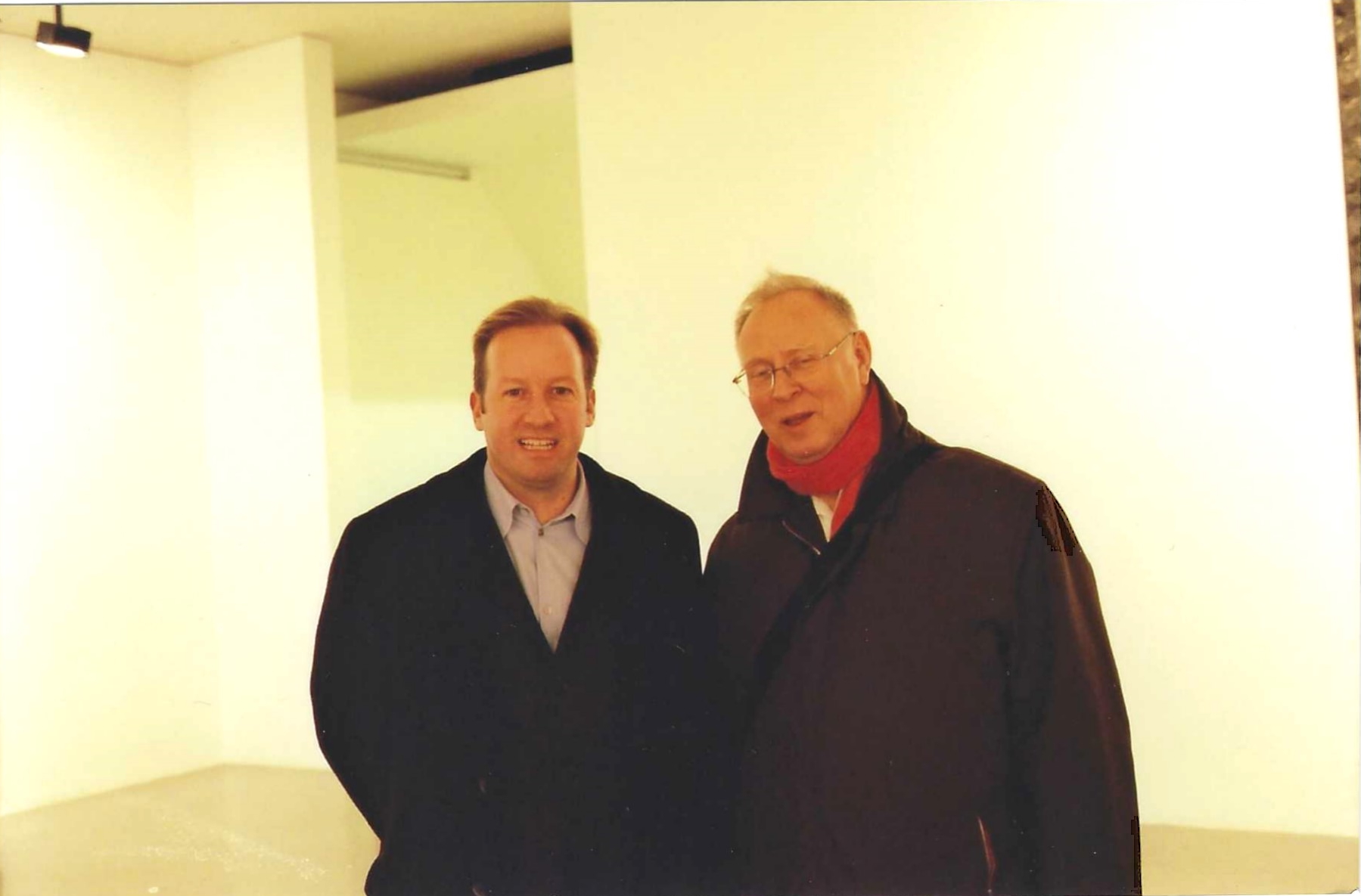
Building relationships with artists seems to be a defining part of your experience as a gallerist.
It’s been the whole reason for my career. Michael had built his gallery with an ethos that there was a hierarchy, with [Georg] Baselitz at the top, and Sigmar didn’t like that. And I chased him all over the world because I just loved his work. He gave me my first real power in the art world. And I was a kid. I started working at Michael’s gallery at 28 years old.
Polke didn’t like technology, he didn’t answer his phone ever, he had a fax machine with no paper that would ring all day, and in order to speak with him, you had to visit him. So three to four days a month, for almost 20 years, I was in his studio. And then as I started to organize shows for him—at the Tate in London and at the Ueno Museum in Japan—we traveled together, I went everywhere with him.
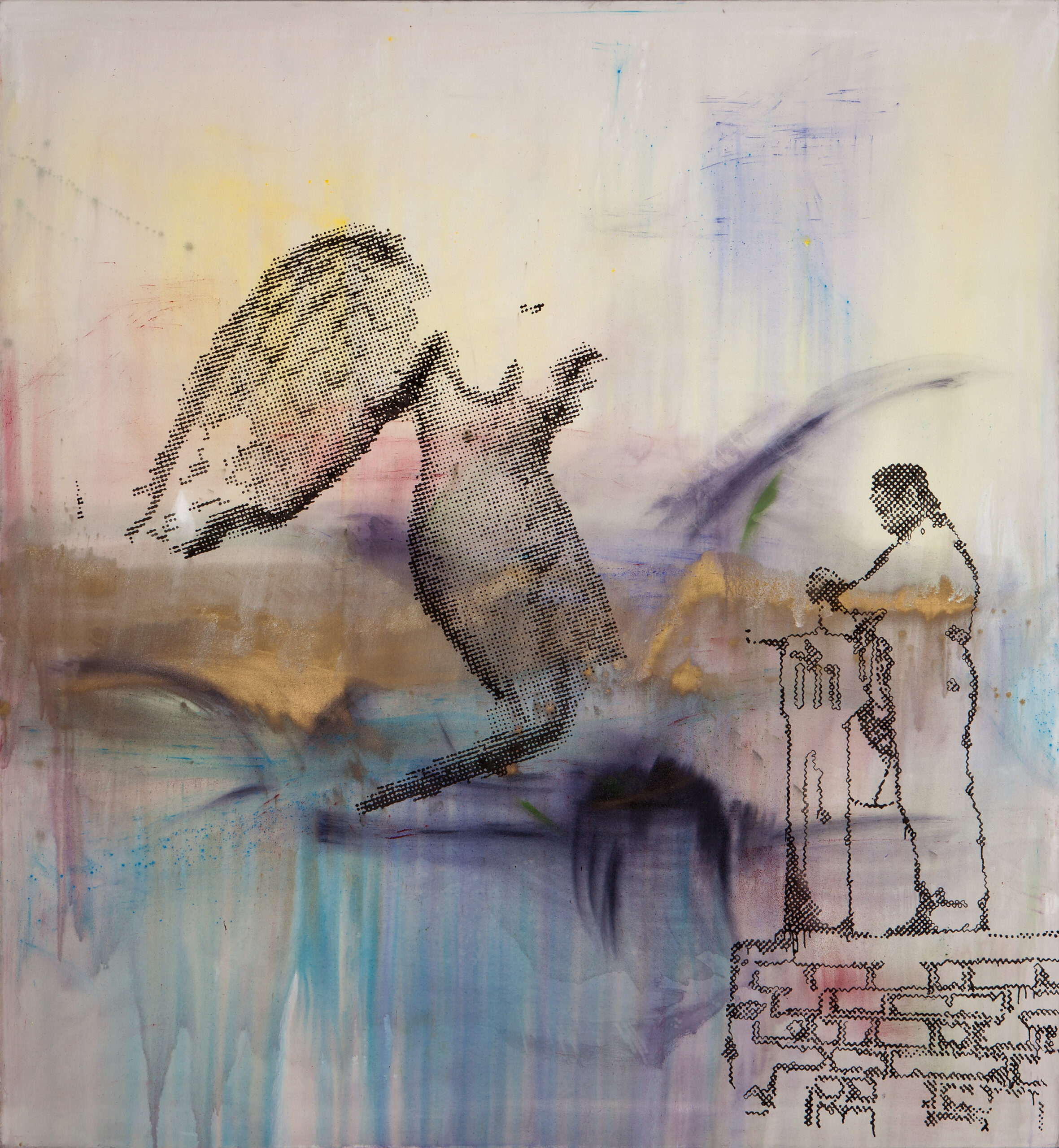
I’m opening my New York and London galleries with Polke shows because I’m acutely aware that I’ve been working with a gallery that has been all about history. And my own history is with Polke. The first show [in New York] has this one inside joke. There’s a small painting called Strange Adventure, which he made for my birthday in 2004. And he photographed it all over, he took the painting and stuck it in a downspout and took pictures with him carrying it and gave me the painting with all the photos. So, aside from this masterpiece four-part painting series called The Dream of Menelaus from 1982, which we’ll show in the first room, in the second room will be this little painting that just says Strange Adventure, with a little inside story about my own history with this man who was so important to me. I’d like to think I was important to him too.
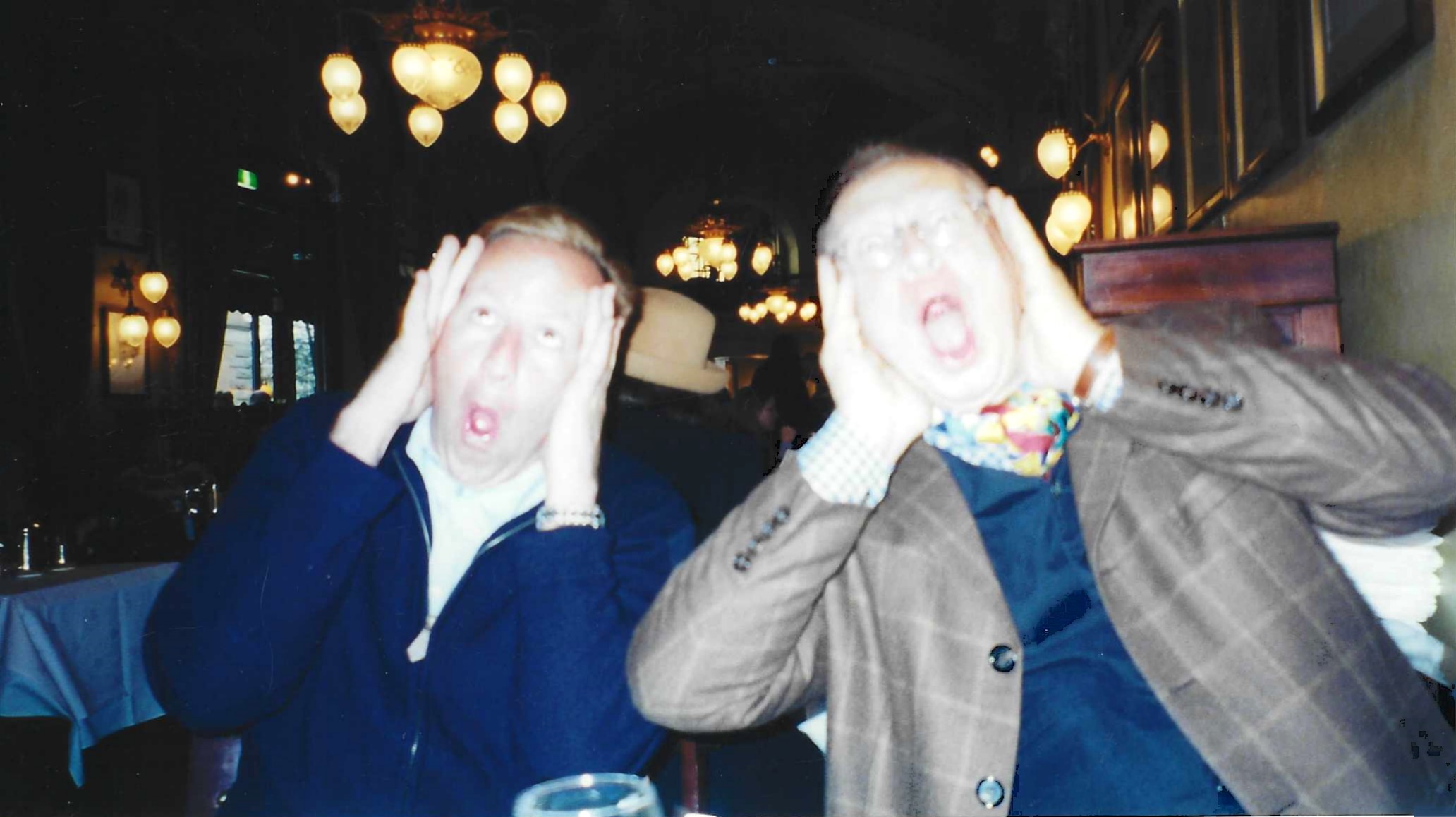
How do you forge those kinds of connections with artists?
It was work. I followed Sigmar to every single show. No matter where it was. I went to Barcelona, I went to Washington, DC. His first big exhibition in the United States was at the Brooklyn Museum, and that went to the Hirshhorn and to San Francisco—that’s when I first started to work with him. And then I got to the point where I was indispensable. I could drive and he couldn’t; we went to LA and I drove him around. I drove him to Goslar in Germany to get a prize. We spent time together, and it was magical. And it was a hell of a lot of work.
Artists are special. That moment between the fingertips or a brush and the canvas is so incredibly magical to me. I have this younger artist, Florian Krewer—I go to his studio every couple of weeks, and I say, “I can’t tell you how to make a painting, but I can tell you when it works and when it doesn’t.”
With most, it’s a long-term commitment. I want to continue that. It’s still exciting for me to go to a studio and see some breakthrough.
More of our favorite stories from CULTURED
A Movie Deal Is a Writer’s Dream—or Is It? 5 Authors Get Real About the IP Machine
Shrinking Actors Sherry Cola and Jessica Williams Talk Therapy (On Screen and Off)
The Pitt’s Shawn Hatosy Is an Emmy Winner, a TikTok Star, and a Secret Literature Nerd
Why Are Artists So Interested in Making Playgrounds?
Sign up for our newsletter here to get these stories direct to your inbox.


 in your life?