“One of the very first goals I had in mind was that nobody leave the building happy.”
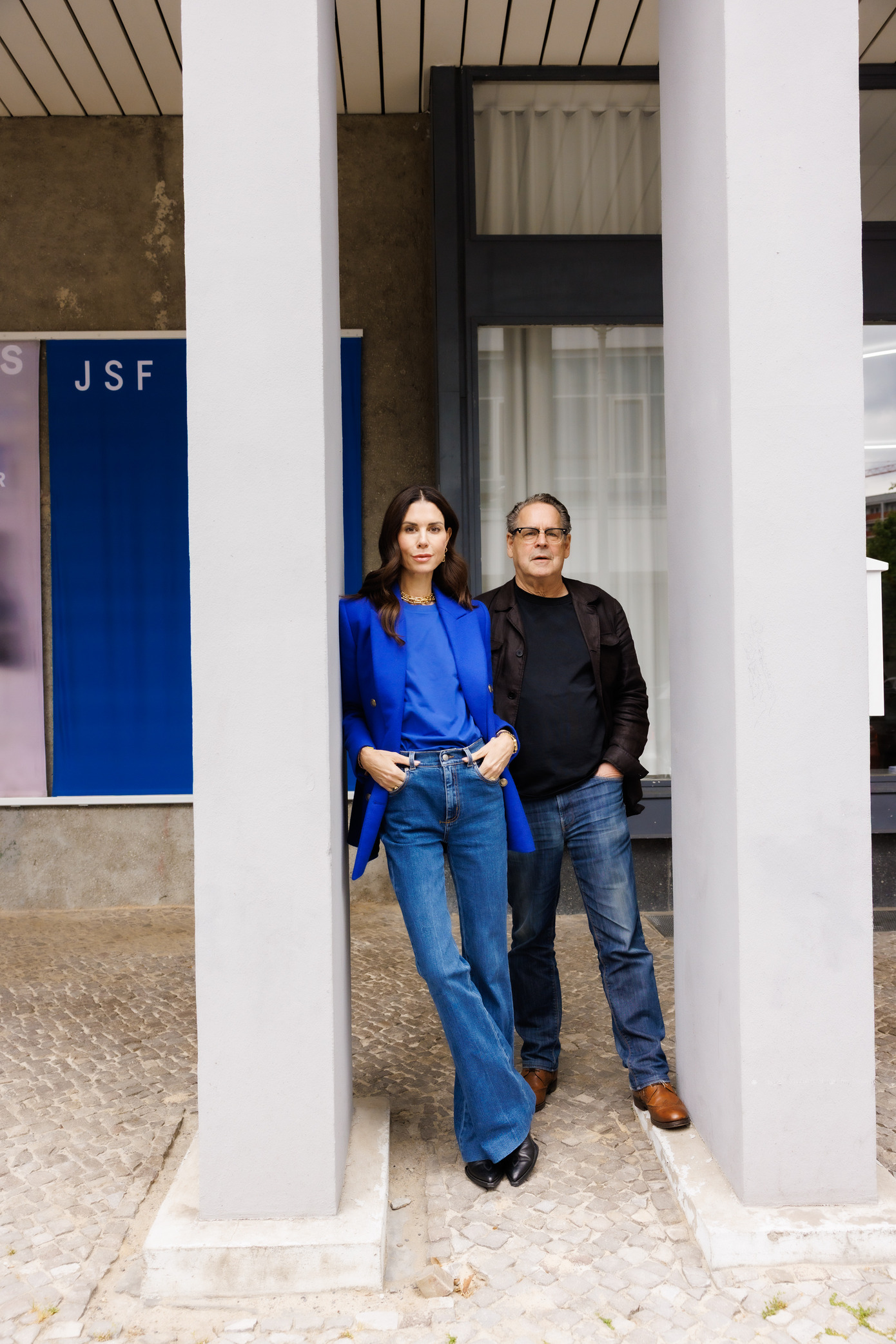
Udo Kittelmann is not organizing a funeral or directing an adaptation of King Lear. The German curator is describing his experience “editing an audiovisual poem” from a sampling of early film entries (think Alice Guy-Blaché, Georges Méliès, Walt Disney) and a cross-section of contemporary video works from the repositories of Julia Stoschek, the leading collector of time-based art.
When on our Zoom in January, I repeatedly make the mistake of calling the resulting “What a Wonderful World” an exhibition, Stoschek and Kittelmann alternately and diligently correct me. Calling their project, on view at Los Angeles’s Variety Arts Theater Feb. 6 through March 20, a poem is the pair’s way of signaling their will to question how we have come to ingest art, moving images, and where they intersect. They hope the dose of re-enchantment this nomenclature convention surfaces will reach the audiences that walk through the five-story parcours, too.
Although featured works from the likes of Lu Yang, Bunny Rogers, and Paul Chan feel particularly indissociable from the technological advances of our era, Kittelmann insists on their shared lineage with Disney’s earliest animations or Buñuel’s Un Chien Andalou; life, loss, love, and the persistent need to make meaning of it all, are evoked over and over again. In a peak screen-time time, Kittelmann asks viewers to reach beyond their desire for entertainment to access a more raw experience of these capsules of humanity. Here, he and Stoschek chart what the process of assembling “What a Wonderful World,” the Julia Stoschek Foundation’s first major appearance Stateside, has shown them.
CULTURED: We’re going to be talking a lot about moving images, so I wanted to ask, what was the last moving image that moved each of you?
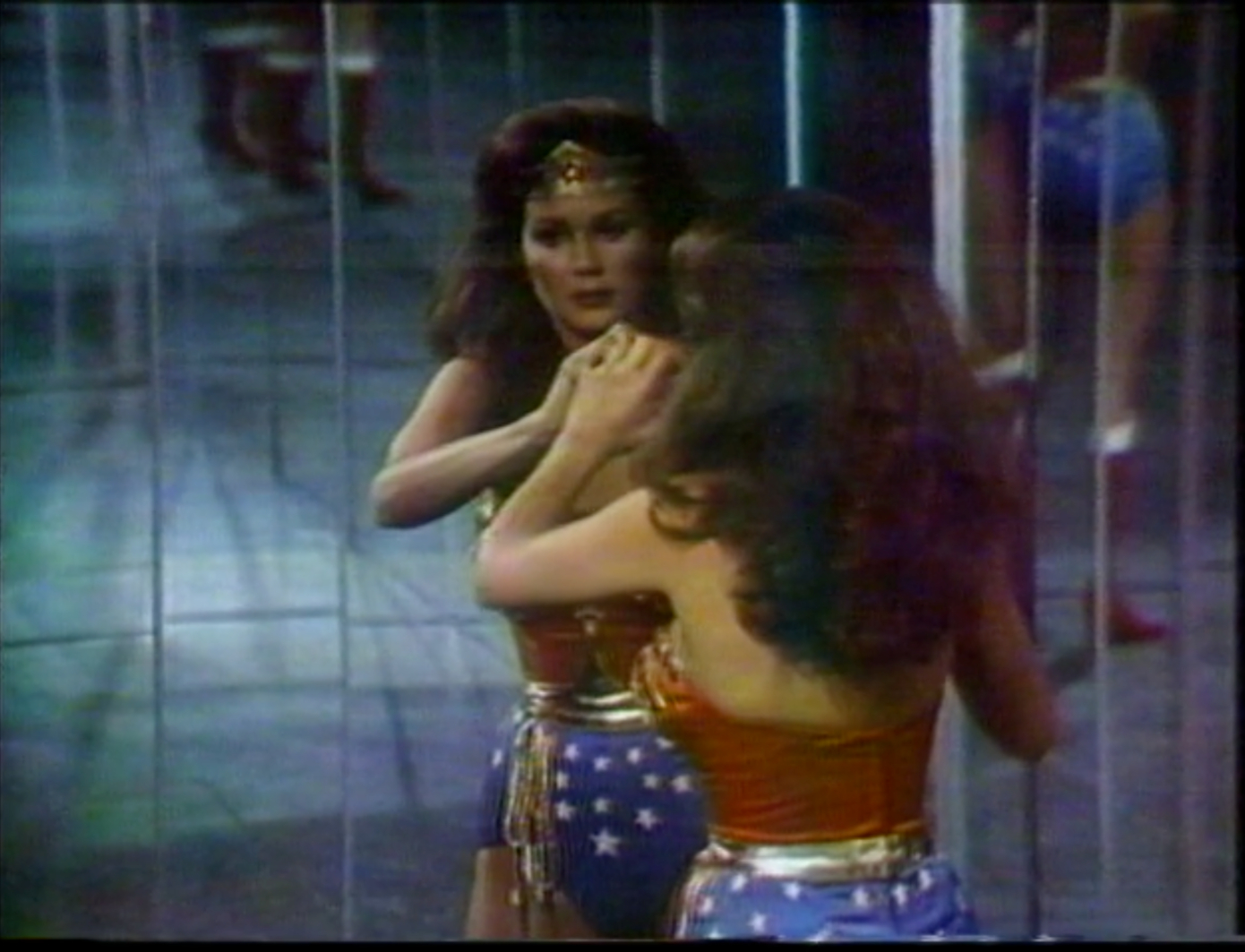
Julia Stoschek: The image that’s stayed with me most recently is Dara Birnbaum’s work, Technology/Transformation: Wonder Woman, 1978–79, which is part of “What a Wonderful World.” It’s my screensaver. We are living in such a challenging world, and the only way we can survive is if we transform all the time. I love the idea of becoming Wonder Woman. [Laughs]
Udo Kittelmann: Just yesterday, my oldest son’s child turned a year old. His mother took, by coincidence, [a video] of him walking on his own for the very first time. To see how proud he got, like, Wow, something is now totally different with my body. You could see him smiling. Then, of course, he fell again on the floor. It was quite touching; it’s a real artwork in a way.
CULTURED: Udo, you’ve been formally associated with the Julia Stoschek Foundation since 2021, when you joined the advisory board. Where did the conversation for “What a Wonderful World” begin?
Stoschek: I’ve known Udo for nearly 20 years. I knew how he curated. My connection to Los Angeles started when I became a member, from 2018 to 2022, of MOCA’s Board of Trustees. The idea was born to show part of the collection in LA, and we started talking about this three or four years ago. Udo, you came up with the idea to connect contemporary video works from my collection with silent movies and early cinema classics.
Kittelmann: For many years, I was working on the idea to put into dialogue not just contemporary time-based art but silent movies and so on—to bring up the idea that the topics have never changed. It’s always about how people behave with each other, how they fall in love, how they fight with each other—whether in a more private relationship or between nations. The first visionary moving images were already filmed by the beginning of the 20th century. What has changed? Only the aesthetics, and the different generations’ experiences of being in love or fighting.
“A project like this, we will do once in a lifetime.” — Julia Stoschek
CULTURED: Julia, were you familiar with silent film and early cinema before this? Did any make a particular impact on you?
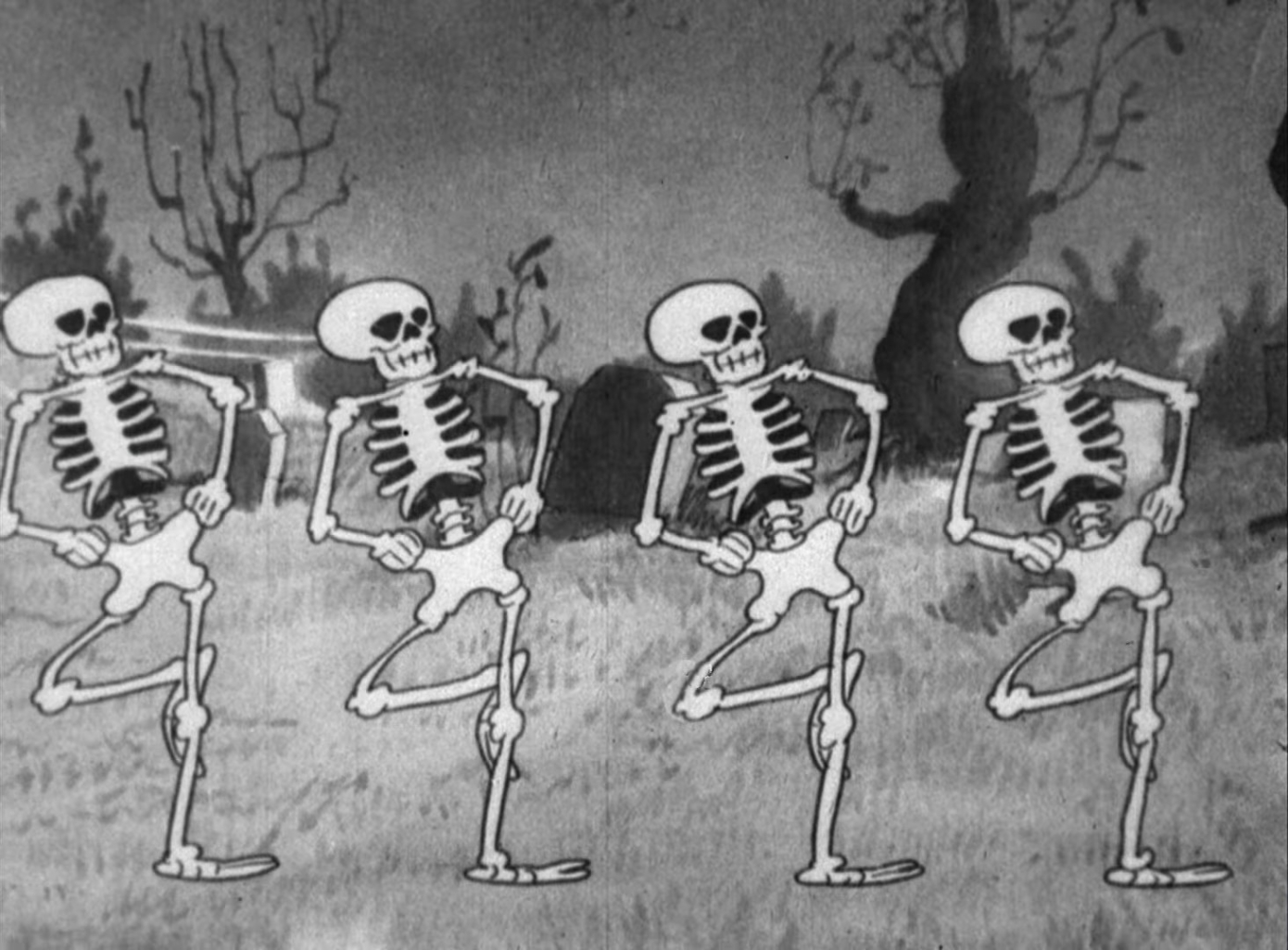
Stoschek: No, not before. But let’s talk about The Skeleton Dance from 1929, one of the earliest animations. You see these skeletons emerge from their graves and start dancing. On the one hand, it seems a bit funny and ironic, but on the other, it’s also brutal and a bit shocking. We placed it at the entrance area, so it’s a welcome, but it’s also a gentle reminder of mortality.
Kittelmann: I very much want to avoid that people—after they take this journey through the building and see these many, many, many thousands of images—leave in the mood to join a party. I’d want them to go home and find a comfortable place to reflect on what all these works were about.
CULTURED: The moving image recently has become almost purely about entertainment or distraction, so that’s an interesting intention.
Kittelmann: Not to entertain, but to come up with something that’s quite provoking about where we are…
Stoschek: …today. This show is holding up a mirror to the state of the world.
Kittelmann: It’s obvious that the title quotes Louis Armstrong’s “What a Wonderful World.” It was first released in 1967, a time when the whole world was quite chaotic. Demonstrations were all over the planet, especially around the Vietnam War. It was a tough, if not brutal, time. And Armstrong decided to come up with this song to give you the message, “Don’t give up dreaming.” This was the thread that led me through the whole collection to find these works. Julia’s collection is very much about these essential video-based artworks. There’s a tiny minority of them that entertain you.
Stoschek: It’s not a massage. [Laughs]
Kittelmann: But we were quite careful not to make it all in all too sad, too frustrating. There is hope, yeah?
CULTURED: Julia, this is the first time the Foundation is having a major showing in the U.S., in the capital of entertainment—Los Angeles. How did you take into account the American audience in organizing this?
Stoschek: I definitely wanted to have it in LA, not in New York, because it’s the birthplace of visual modernity. My collection has this focus on the moving image, starting from the ’60s until today, that speaks directly to this history. I’m sure that the LA visitors grew up with the film industry and with movies. We’ll also have special opening hours from 5 p.m. until midnight. We’re all doing it for the first time; I’m very excited to see how people will react.
Kittelmann: I really believe that the works we selected are quite emotional. I don’t see a big difference in where it will be presented. As long as we all have a heartbeat. People are asked to feel very free in how they walk [through the space]. There is no sign that tells you where to go or what to see. Even with the text in the magazines we’ll give away, we try to avoid interpretation. It’s very much for everybody, not just the art world elite or the discourse-dependent crowd. There is no moral behind it that we want to prove; you may take the moral out of it. [Calling it] an audiovisual poem hopefully already brings you into a different mood.
CULTURED: What has working on “What a Wonderful World” taught you about where audio-visual and time-based art is headed, or what’s missing?
Kittelmann: What we completely left out is something that was built on A.I.
Stoschek: But it’s also not really part of my collection. I never found the right work. Content-wise, there was nothing that really touched me. I’m open to everything, but what I’ve seen until now, I’ve not been too into.
Kittelmann: We really did take this challenge to experiment in times where, in the art world, fewer and fewer exhibitions are experimental. I’m personally very happy that “What a Wonderful World” will be on view at the same time as the “Monuments” show [at MOCA and the Brick]. To have those projects side by side is amazing.
Stoschek: A project like this, we will do once in a lifetime. I hope that as many visitors as possible can see and join the show. It is a pop-up for six weeks with special opening hours, and we have an incredible side program as well. I really hope people enjoy the show.
Kittelmann: We also forgot to say—it’s banal but not banal—is that everybody is asked to take popcorn for free. They can walk around with popcorn. Why not? We are not a museum.
More of our favorite stories from CULTURED
13 Books Our Editors Can’t Wait to Read This Season
With Art Basel Qatar, Wael Shawky Is Betting on Artists Over Sales Logic
Jay Duplass Breaks Down the New Rules For Making Indie Movies in 2026
How Growing Up Inside Her Father’s Living Sculpture Trained This Collector’s Eye
It’s Officially Freezing Outside. Samah Dada Has a Few Recipes Guaranteed to Soothe the Cold.


 in your life?