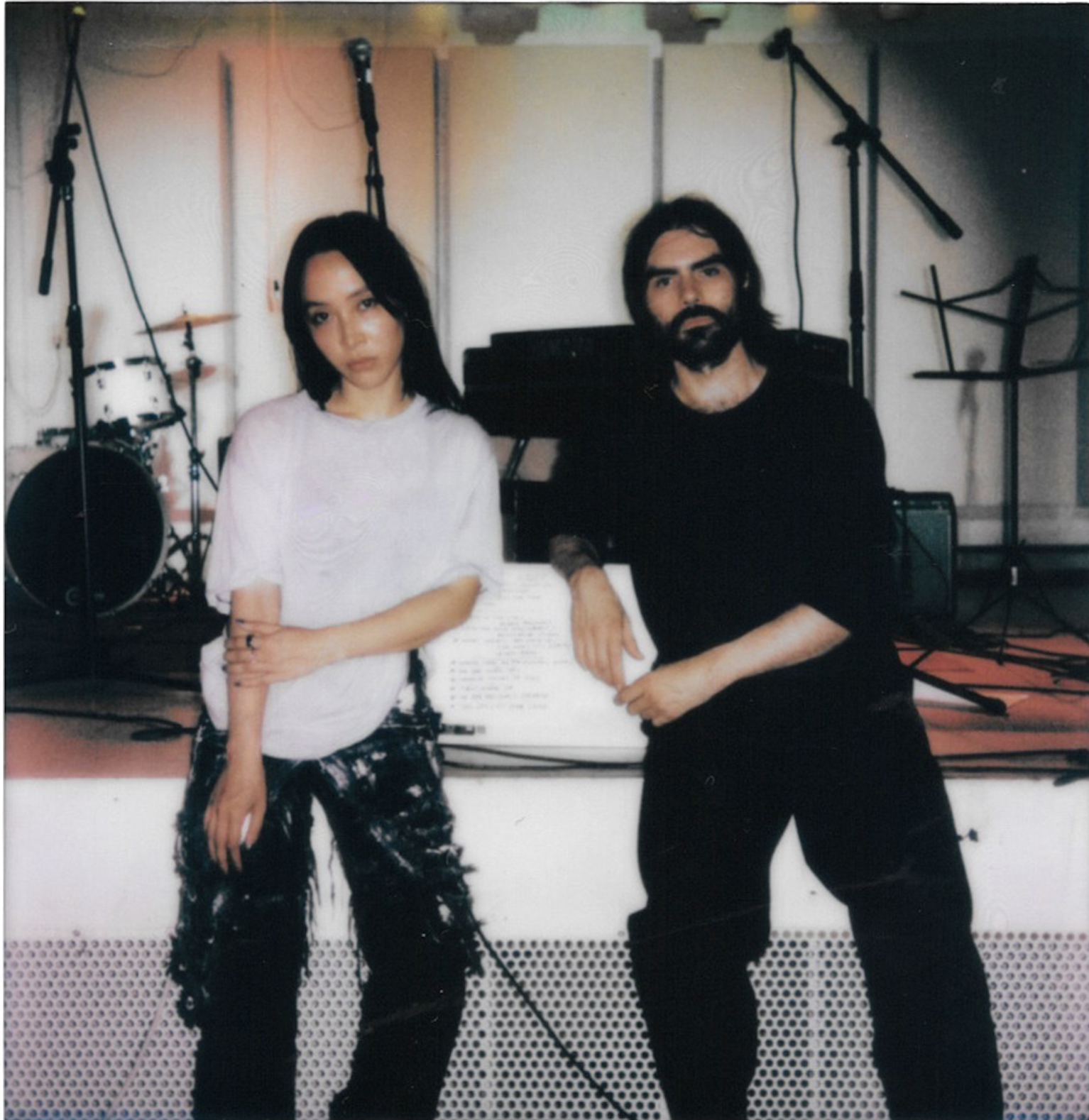
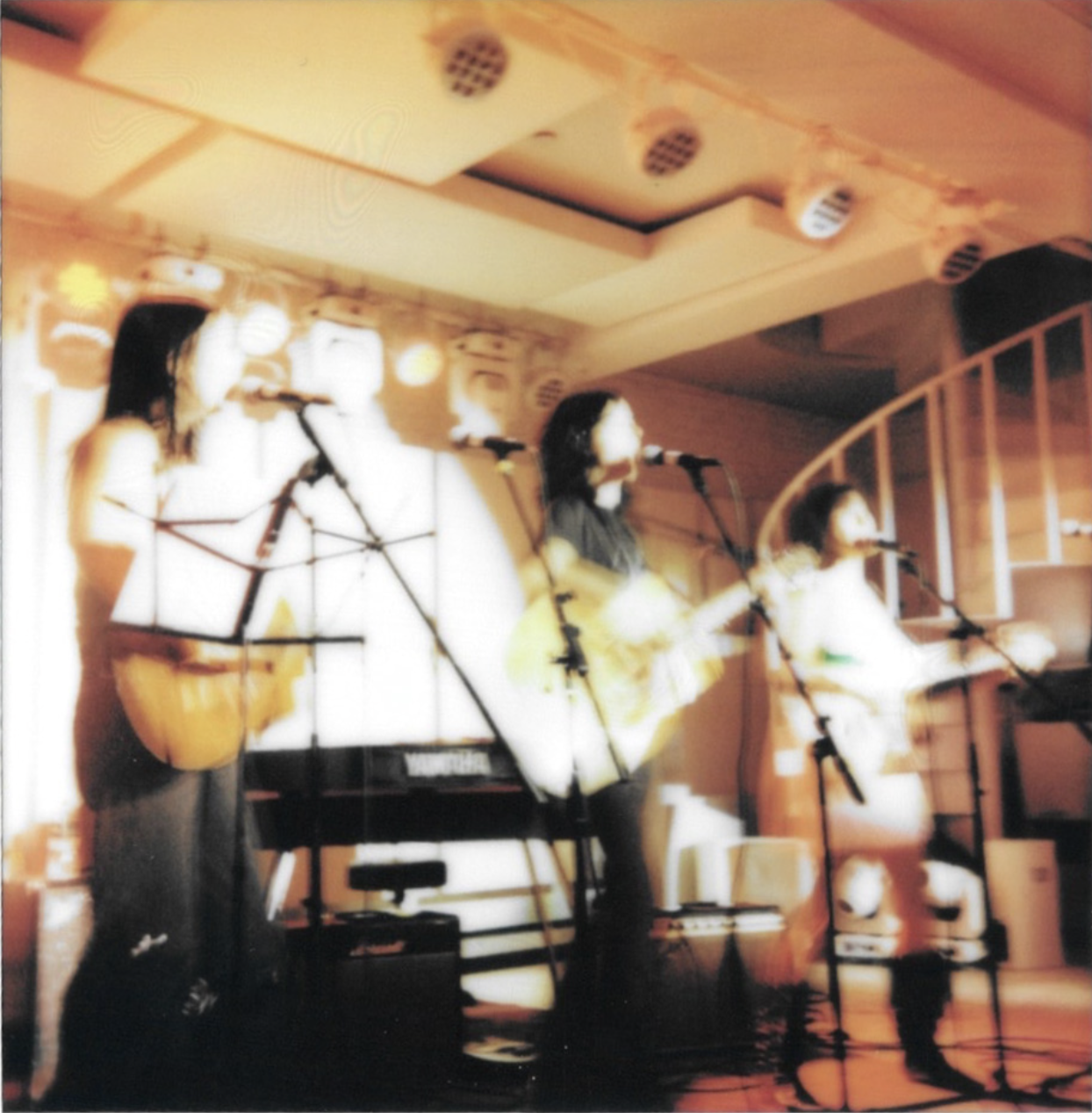
What’s the difference between being in a band and pretending to be in one? What’s the difference between a war song and an antiwar song? In anticipation of this year’s Performa Biennial—which is shaping up to be one for the ages—the Critics’ Table takes a Close Look at what artist-filmmaker Diane Severin Nguyen has been up to, and the dreamy practice-space Polaroids she’s shot with her collaborators in the process.
I’m ushered to the back of a shuttered nightclub, and down a flight of stairs to a basement practice space, where a dozen or so musicians, who look to be in their late teens and 20s, tune guitars, gaze at lyric sheets, and wait. Then, in various combinations, they run through the set, or rather, a succession of vignettes. This isn’t a band practicing; it’s a group of people practicing being a band. The artist Diane Severin Nguyen, her arms folded, is an intent, sometimes smiling, observer, judicious with her between-song comments and instructions as she watches the cast perform a jarring, comic, mournful, sentimental, and dead serious program of protest music (broadly defined), led by Nguyen’s musical director Laszlo Horvath. (Horvath is also the lead performer in many songs.) It’s a wild, panoramic survey, from Woody Guthrie to Black Sabbath, “Party in the U.S.A.” to the national anthem of Vietnam.
The band is far from tight. It’s not even complete; the drummer couldn’t make it to rehearsal tonight and the keyboardist pantomimes the parts to work on blocking. Which is to say that things seem to be right on schedule—appropriately raw, protean, impossible, and full of promise—one month out from the premiere of WAR SONGS. Nguyen’s live-performance directorial debut, premiering at this year’s Performa Biennial, will be staged at BRIC, in Brooklyn, for three evenings, starting Nov. 2. When I visit her and the cast on that early-October night, I feel the clock ticking.
In the artist’s explanations of the piece’s final form (she refers to lighting cues and fake snow, Foley sound effects of helicopters and dropping bombs) as well as in her exacting instructions to the actors (she tells them, for the first act, to regard the crane-mounted camera that will be positioned to face them, stage left, as a friendly presence), I hear a filmmaker’s sense of unfolding action and framing. But a work for stage is perhaps not such a stretch for her (and Performa has an impressive record of successfully pushing artists into new terrain).
“My films have always been about performance, performers. I made a film about a singer, then a dancer, and then an actor—looking back, I unintentionally made a trilogy,” Nguyen tells me when we meet for coffee in New York, where she lives, a few days later. With enthusiasm, but also circumspection, as though reserving the right to expand her explanation later, the 35-year-old artist adds to her explanation, “it’s because I’m so attracted to these people who seem to know they need something else—some other form or additional medium—in order to communicate, to activate their identity.”
Nguyen’s 2024 In Her Time (Iris’s Version), a standout in the last Whitney Biennial, projected in a crimson-curtained and carpeted “bedroom,” offers a fictional behind-the-scenes view of a war film’s making. The production, a depiction of the Nanjing Massacre of 1937 (a weeks-long episode of mass atrocity committed against Chinese civilians by the Japanese Imperial Army), is refracted through the experience of an actor as she prepares for a leading role. Her self-reflections and iPhone footage throw the fake gore and imagery of the period drama into relief to portray—in unsettling and lush visual terms—a complicated reckoning with historical trauma and national memory. (Nguyen shot much of the film at Hengdian World Studios, a massive complex of recreated Chinese historical sites.)
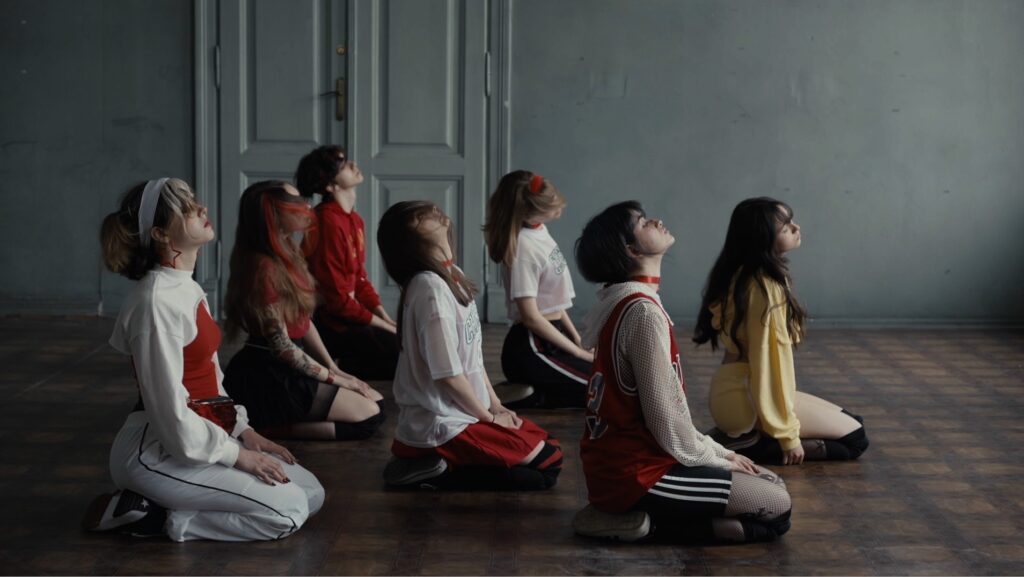

But it’s an indelible scene of girlish pop reverie from Nguyen’s first film, Tyrant Star, 2019, that most clearly anticipates WAR SONGS, showing that the metabolization of American counterculture across continents and generations isn’t a new interest for the artist, nor is the form of the cover song. Shot in and around Saigon, the non-narrative video features, toward the end, a musical interlude for which Nguyen recruited a local aspiring YouTube star to sing a Casio-accompanied version of the 1966 melancholic hit “The Sound of Silence” by folk-rock duo Simon & Garfunkel.
“I’ve always been fascinated by this era of Western culture,” the artist, who was born in California to Vietnamese immigrants, tells me, “because the Vietnam War is always the peripheral subject. Even when it’s not directly addressed, it’s there. If you think of the defining music of the ’60s, or the French New Wave,” she muses, “everyone was staking their authenticity on suffering happening far away.”
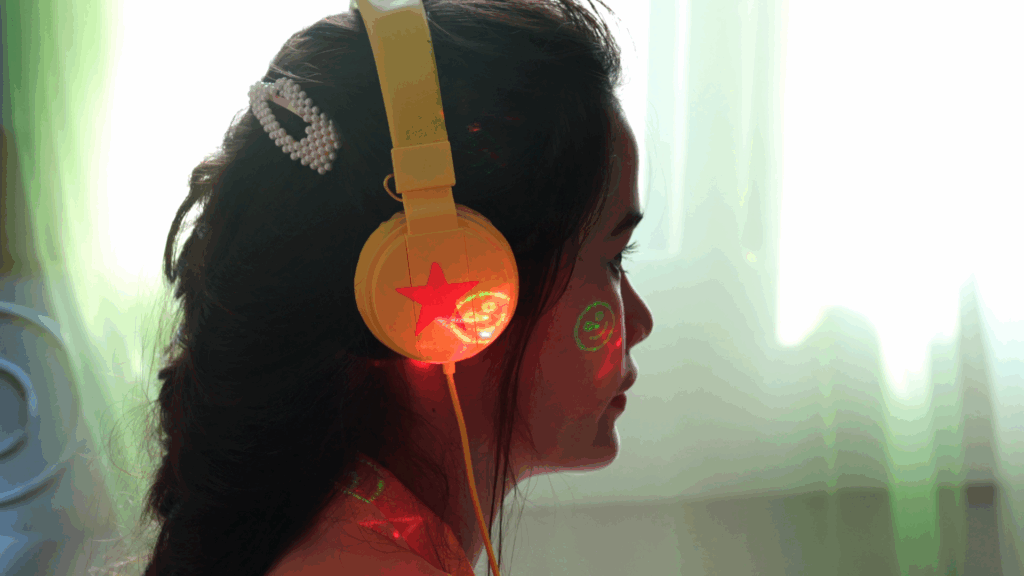
In Tyrant Star, the photo-ready young Vietnamese singer performs the hello-darkness-my-old-friend classic for a laptop. Laser-projected flowers, butterflies, and smiley faces—kryptonite to outmoded notions of authenticity—swirl around, turning the pastel bedroom into a DIY psychedelic set. The contrast between this scene and the male songwriters’ original recording conjures a kind of delirious split-screen experience, or a murkier time-space collision. It’s an atemporal haze that Nguyen tries to cultivate in the subterranean practice space too, a world away from that dreamy bedroom (and the framed, cinematic space of her films). At rehearsal, without the benefit of crosscutting or lighting cues, without even a steady beat, the backbone of the artist’s vision is spotlit: the script, the score, the casting.
WAR SONGS, as a work in progress, disorients not just with its non-chronological, era-jumping set list and its estranging genre mismatches (such as a country-pop rendition of “War Pigs”), but also with its funny or jarring medleys and dueling call-and-response cutups—a channel-flipping effect appropriate to Nguyen’s un-peripheral subject, the “the first televised war” (Vietnam). The intertextual treatment extends to the bandmates’ stage banter. (Nguyen tells me that she cribbed one flirtatious exchange from Bob Dylan and Joan Baez, and I recognize the cancellation-causing moment when Natalie Maines spoke against the Iraq War on stage with the Dixie Chicks in London.)
And, importantly, the decontextualization and recombination work across race and gender: What does it mean when three Asian women sing Dylan’s antiwar anthem “With God on Our Side”? Nguyen sends me her document of compiled—pared down—lyrics to be sung by Van To, Liana Kurogi, and Rachel Jihye Han (with Kara Lu on bass). I laugh at a note in the corner: “Bedroom pop/Mazzy Star/Grimes.”
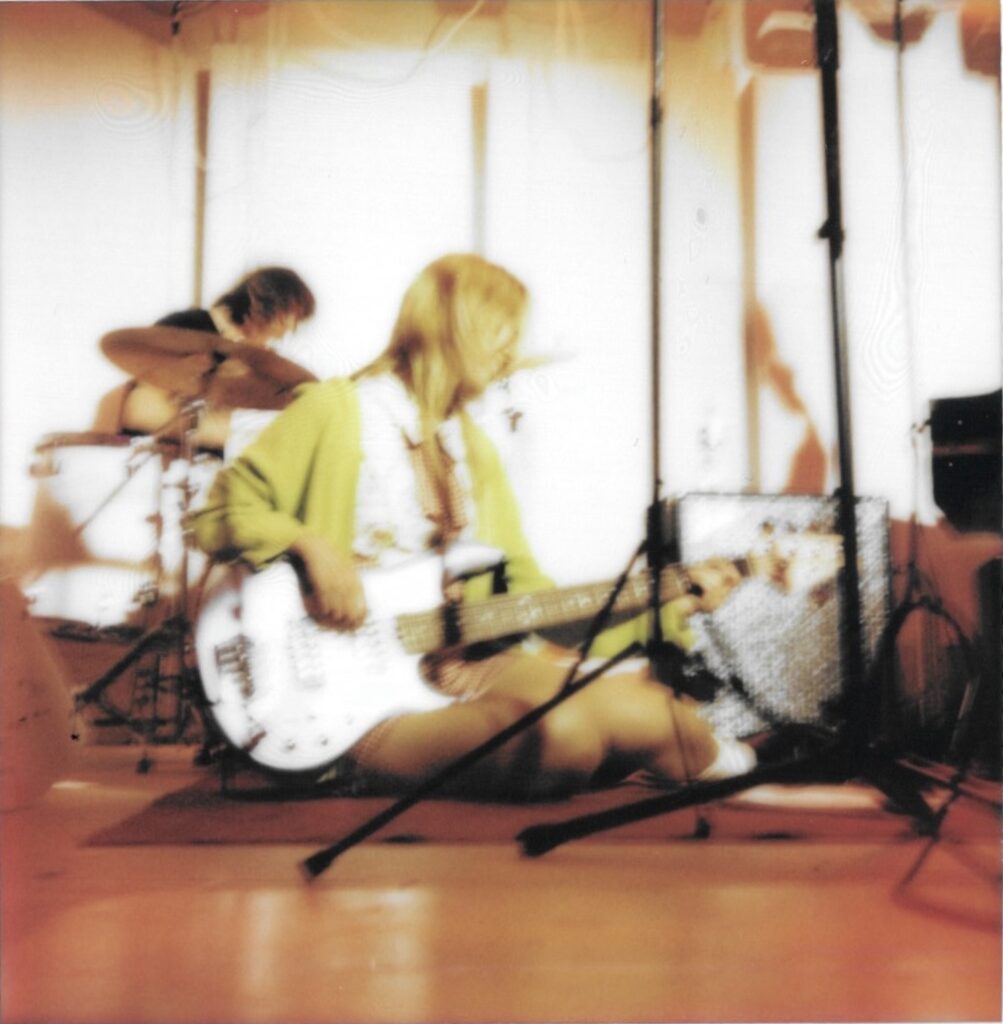
For a fictional and nameless group, conceptual and confected—assembled to act the part as well as to play the songs—Nguyen’s band seems awfully real. Watching the young musicians blaze or fumble through the material, I recognize the fragile momentum and nervous effort from my own life and wonder: What’s the difference between being in a band and pretending to be in one? Nguyen seems interested in the place where the distinction collapses. What’s the difference between a war song and an antiwar song? That slippage is at the core of the work.
Like the lip sync or the karaoke performance, the cover has endless potential as a vehicle for political commentary, facilitating parody, absurdist ventriloquism, and subtler provocations, through its gesture of quotation—its interpretation by the “wrong” subject. Or so it used to be. Appropriation as a strategy in general seems to have lost its bite. When Nguyen and I talk, it’s clear she doesn’t see the device of the cover as a tool for clear-cut role reversals or subversions. When Bruce Springsteen’s “Born in the U.S.A.” can be played un-ironically at a Trump rally, and Creedence Clearwater Revival’s “Fortunate Son” accompanies the president’s birthday parade-cum-military spectacle, we can all see that dad rock’s rebel sound can be conscripted to serve any ideology, every ideology, all at the same time.
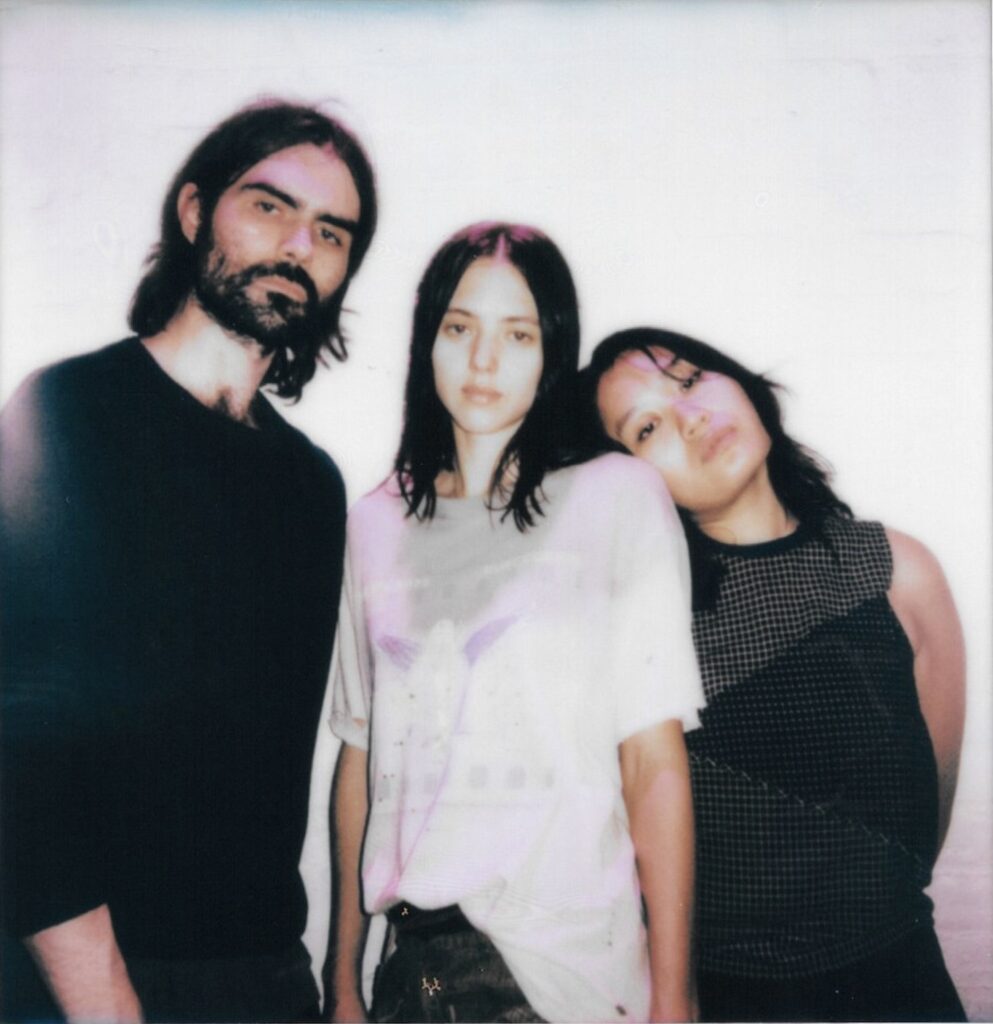
“It’s the logic of the meme,” Nguyen observes. The circulation of customizable images—their ubiquitous presence as templates for opposing messages, with users often oblivious to their simultaneous, contradictory uses—serves as a metaphor for how she wants her work to operate. “The show progresses in three acts,” she tells me, “but I’m not interested in linear structure. I want to know how many concurrent realities can exist on the same plane, or in the same frame.” Her desire to test the kaleidoscopic mutability of cultural artifacts, to empty and refill them again and again, does mirror strategies of a post-content, “nothing matters” world. But in writing that, I seem to be suggesting a bleakness or despondence that I don’t feel in the practice space or our conversation.
Live performance, always unpredictable—and, I imagine, a vertiginous relinquishment of control for a filmmaker—works against the atomizing function of the meme by definition, by bringing people together. When the assurance of a shared reality has been shattered, there’s still hope in shared space, where anything can happen. Exactly how the ambitious experiment will come together in the end, on stage, it’s impossible to say; Nguyen is wisely noncommittal with her predictions, but seems ready to take a leap of faith. For now, WAR SONGS remains one of the season’s most exciting questions.



 in your life?