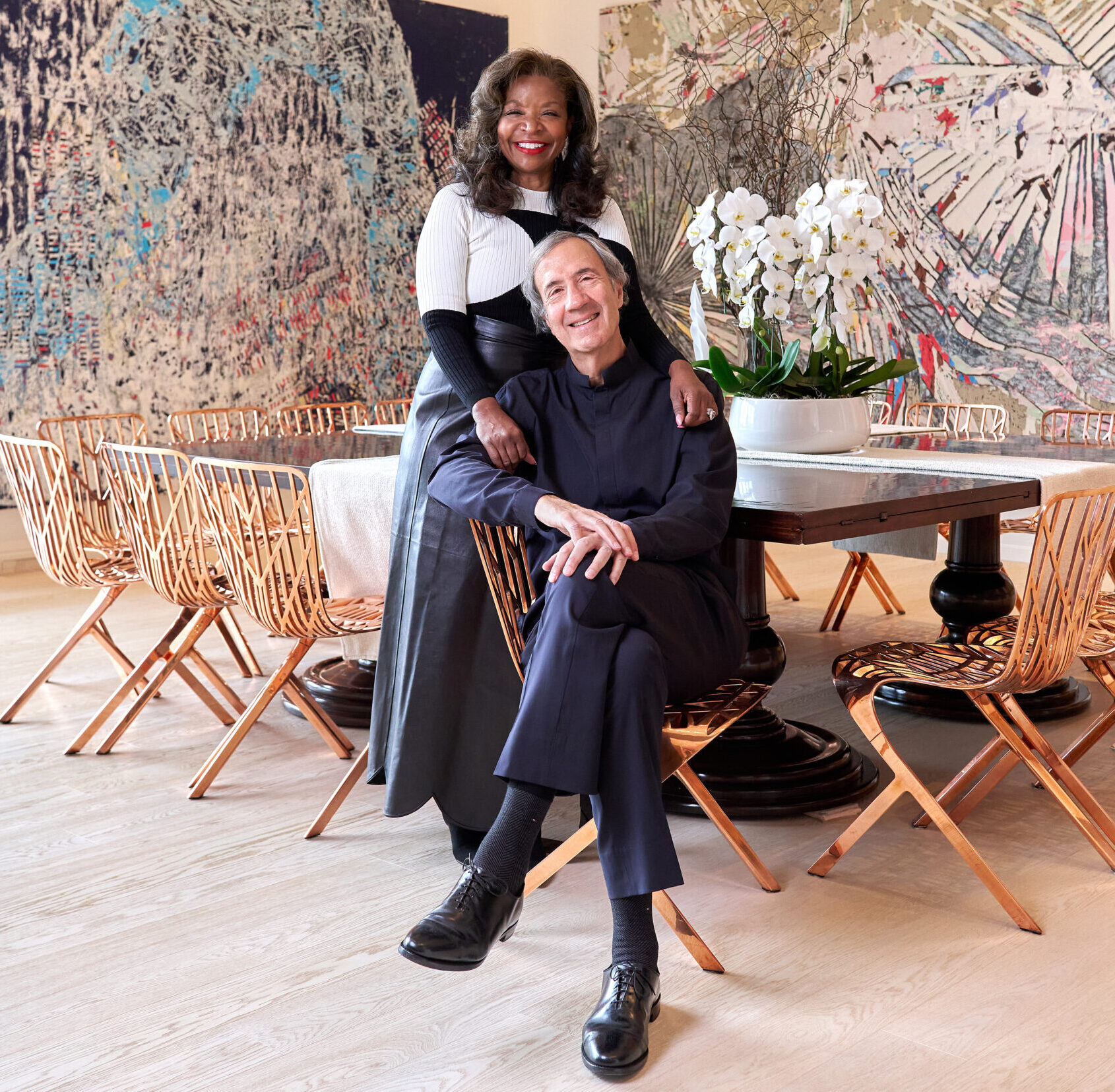
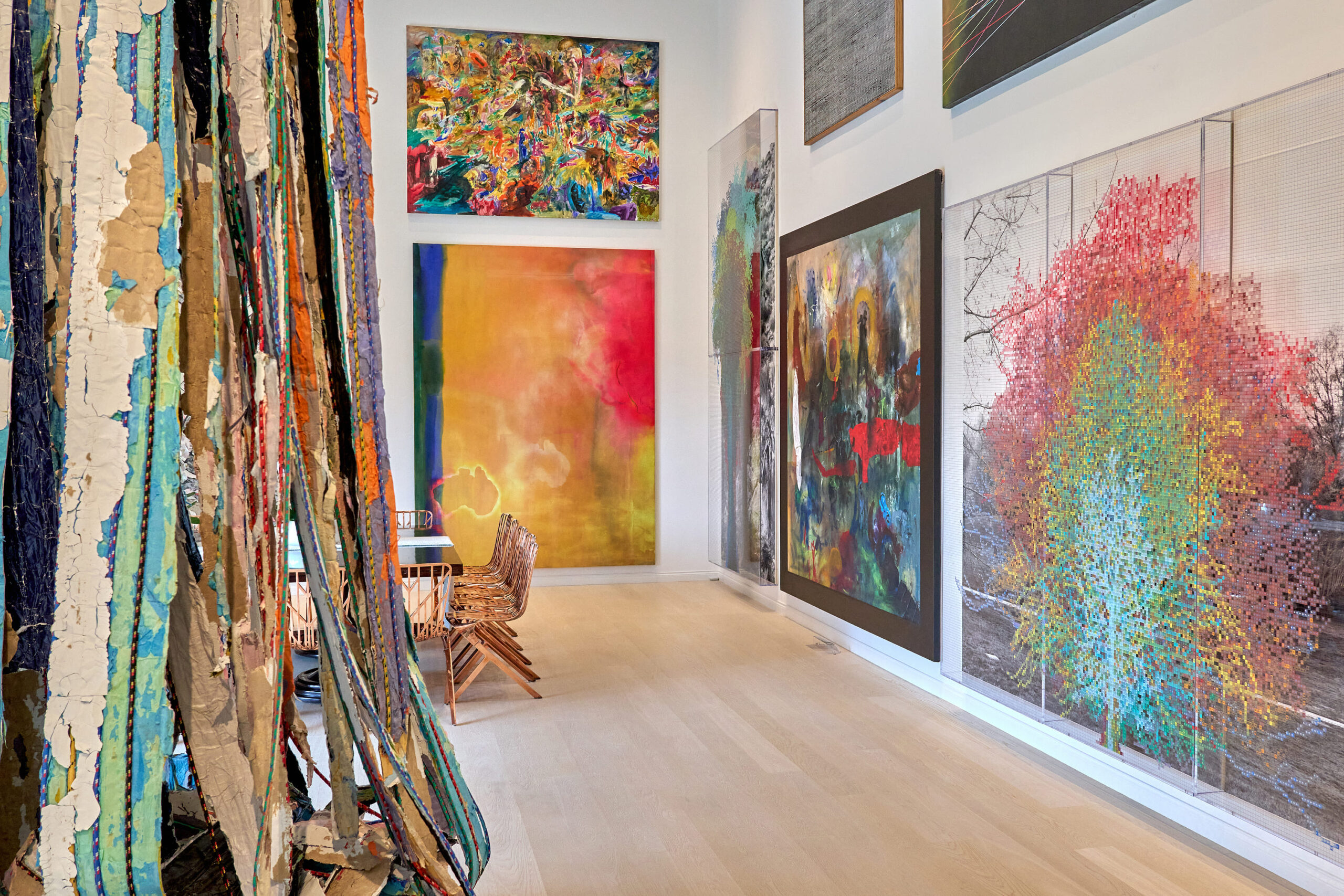
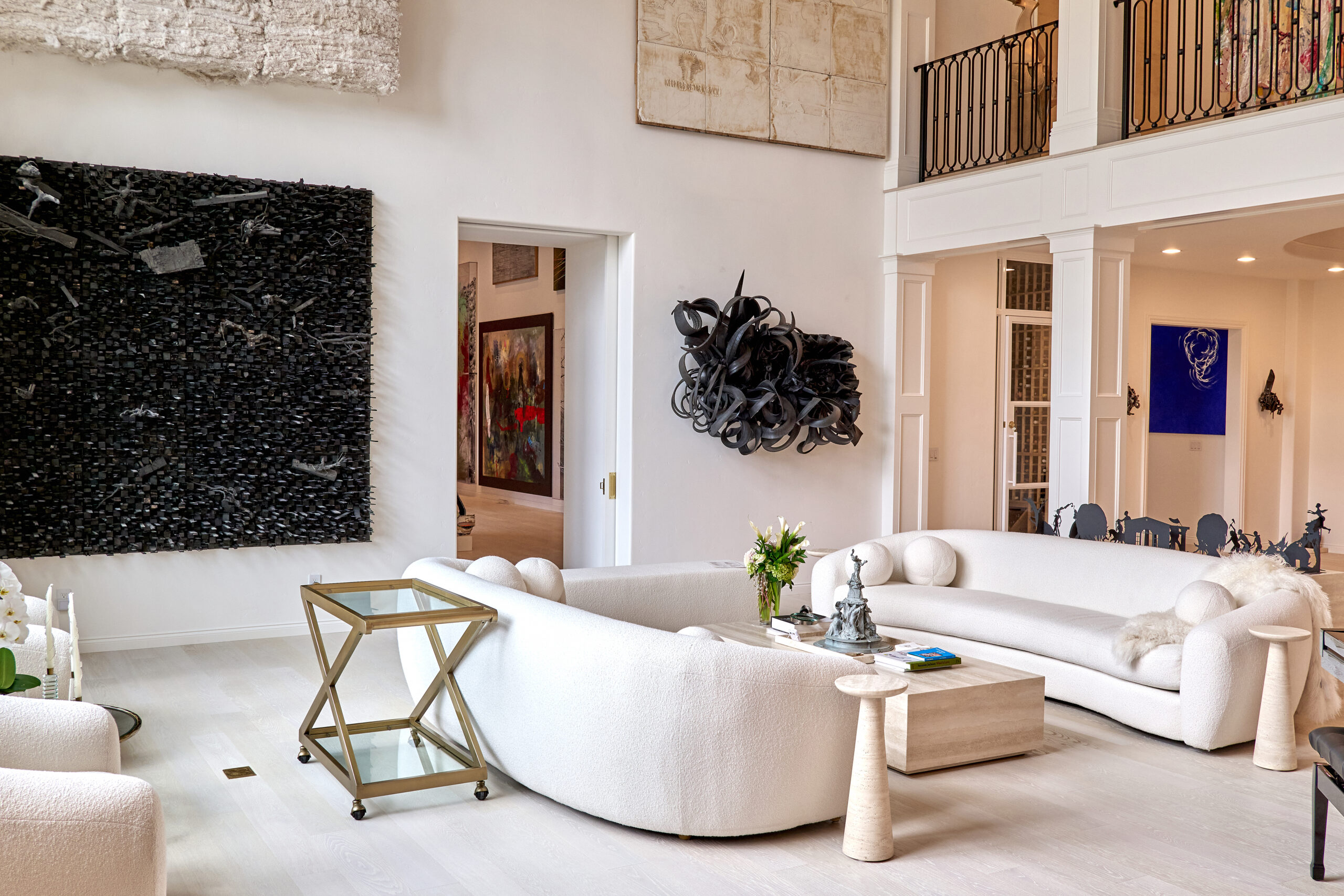
Pamela Joyner’s collection didn’t start in art school or a benefit auction; it began with childhood trips to the Art Institute of Chicago. She was fortunate to have, as she describes, “a childhood spent immersed in the arts.” These days, the patron and her husband, private equity investor Fred Giuffrida, live immersed in their own formidable collection of 20th and 21st century abstraction by Black artists. It covers nearly every inch of wall space in their Lake Tahoe home in Reno, Nevada (and, in at least one case, tumbles down from the ceiling).
A Harvard Business School graduate and founder of management consulting firm Avid Partners, Joyner built her career helping investment firms diversify their portfolios and expand their client bases. She has turned that same strategic eye on the art world as a trustee for the museum she once frequented as a child, chair of MoMA’s Painting and Sculpture Committee, and many other governance and leadership roles. In 2020, she co-founded the Black Trustee Alliance, with the aim of fostering the development of the next generation of Black art patrons and leaders.
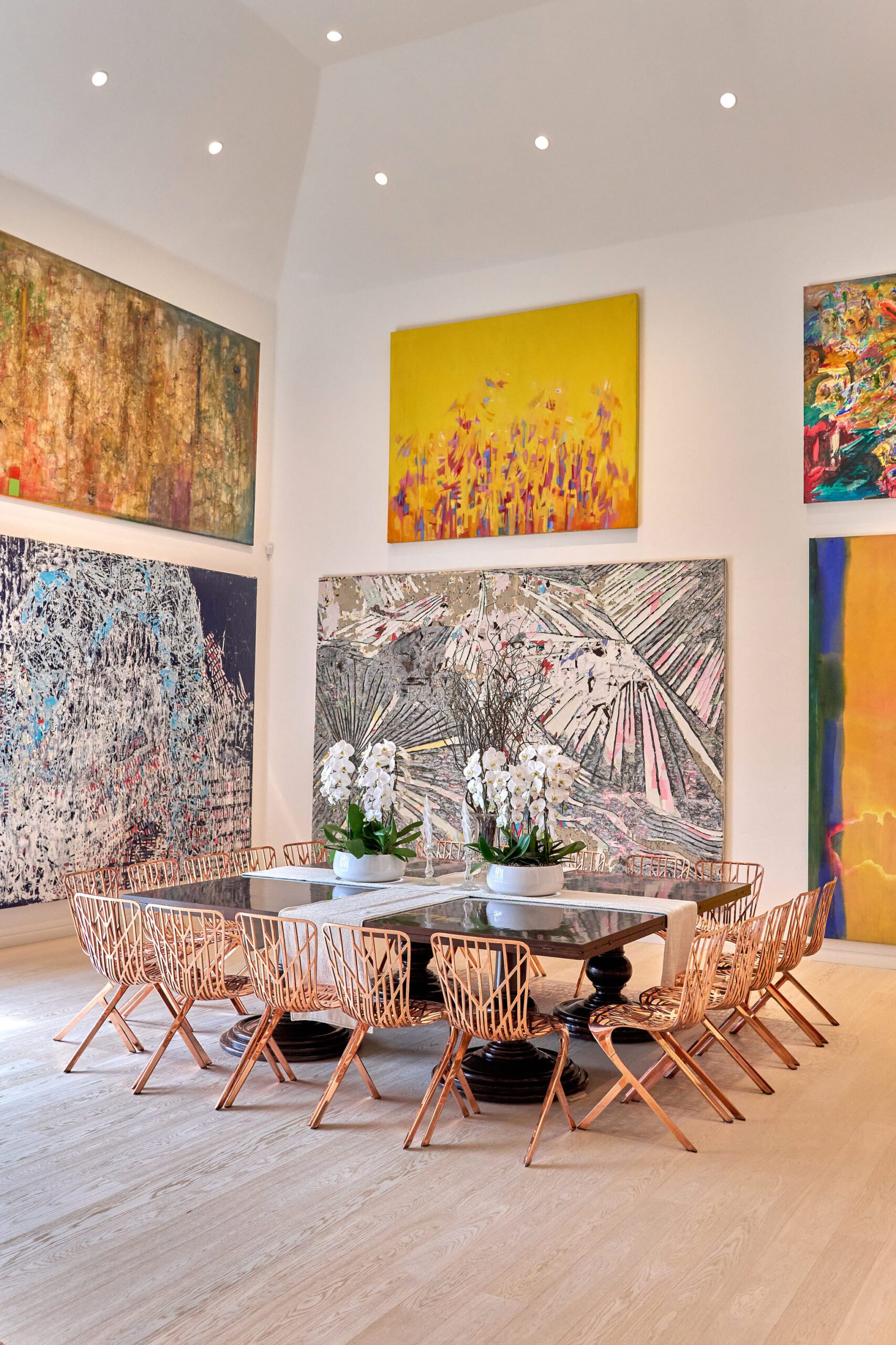
From Richard Mayhew’s Pamela’s Aura, commissioned by her husband as a gift, to Mark Bradford’s 25-foot-tall A Private Stranger Thinking About His Needs, which her Tahoe house was specially designed to showcase, her collection serves as both a personal reflection of her passions and relationships as well as a rich capsule history of Black abstraction. In an interview with CULTURED, Joyner shares a first look inside her Nevada residence, the art market trend she’s glad to see die out, and the advice she’d pass along to those just starting their collecting journey.
Where does the story of your personal collection begin?
Technically, I began collecting a few years after finishing Harvard Business School. Conceptually, the origins date to weekly visits—since the time I can remember—to the Art Institute of Chicago. It was a place of wonder that shaped my imagination and aspirations.
Describe your art collection in three words.
African, diasporic, abstraction.
As the founder of Avid Partners, LLC, you help investment management firms diversify and expand their programs, and better market themselves to clients. That sounds a bit reminiscent of what you do as a museum board member. How does your background in business inform your work in the arts?
The parallels are comprehensive. Building a collection requires developing a set of skills, understanding how an age-old industry functions, and developing and maintaining a network of mutually beneficial relationships with interrelated people and institutions. As a result, when I shifted from simply buying art to endeavoring to build a collection with impact, I felt I was in completely familiar and comfortable territory.
What piece of advice would you give someone who wants to get into collecting?
First, I think it is important to train one’s eye by seeing a lot of art. That is the only way to develop a point of view about what you like, as well as which art is excellent. Collect more books about art before you purchase much and continue adding to that collection as you go. One fascinating and fun aspect of collecting is that it compels you to remain a lifelong learner. Finally, I think it has been especially helpful to me to have an area of focus. This helps to narrow the otherwise vast number of choices. More importantly, being focused enables me to continuously explore new ways to activate the collection so that it might be useful to the art ecosystem and the building of new art histories. For example, we reconfigured our long-standing artist residency program when we moved to Nevada, so that each artist who stays with us is given the opportunity to present work at the Nevada Museum of Art. It’s been a huge success and keeps our collecting journey moving in thoughtful and unexpected ways.
What was the most challenging piece in your collection to acquire?
A Private Stranger Thinking About His Needs by Mark Bradford. This is one of the very few waterfall sculptures he has made. I was able to install it in my home for the first time a few years ago when we moved to Lake Tahoe. The building was designed to house the collection. We were able to make a specific place for the work, which is 25 feet tall and hangs from the ceiling. We love living with it.
Which work in your home have you spent the most time staring at?
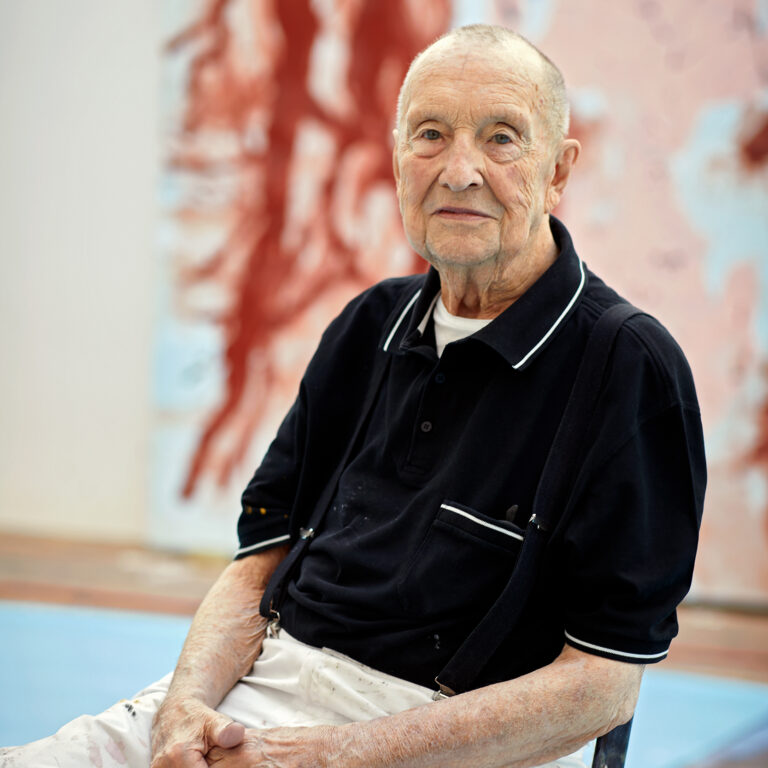
Pamela’s Aura by Richard Mayhew. It is the most personal work in the collection. Richard was the first artist I got to know well. He introduced me to so many artists in our collection and underscored, for me, the importance of collecting with a purpose. He enriched my life immeasurably for nearly three decades until his death at age 100 in 2024. The work appears to be an abstract landscape, but it is actually a portrait of me. It was commissioned by my husband for my birthday and is the most moving gift I have ever received, from two people I love.
Which work in your home provokes the most conversation from visitors?
Leonardo Drew’s 129S. It is one of his explosion pieces installed on a domed ceiling that is 20 feet high. Engaging with the work feels like being in a chapel with a twist. It was a delight to watch Leonardo install it, and I get a palpable sense of glee watching our friends and guests respond to it.
What is the strangest negotiation you’ve ever had with an artist or dealer?
The days of “buy one, give one” always felt prone to producing distorted outcomes. I am glad we are largely past those times and back to a more methodical way of looking and buying.
Which book has changed the way you think about art?
Brooke Astor’s autobiography Footprints. It is a road map for how to build a life that involves transformational philanthropy.
Do you have an art-fair or museum-going uniform?
I have more of a dressing strategy than a uniform. I like flat shoes or low heels. I tried sneakers, but they are too heavy to pack multiple pairs. I carry very small crossbody purses. They don’t weigh much even when full, but must hold my phone, ear-pods, lipstick, notebook, pen, credit card, business cards, and hand sanitizer. I like slacks or skirts with statement tops. This way, I am able to dress suitably for day or evening in case I do not have time to change for dinner. Viewing art properly always takes more time than I tend to allocate. The process keeps one perpetually on the run.



 in your life?