Few cities hold so strong in the collective imagination as Venice. The sea green canals, the arcing gondolas, and the Byzantine façades of Saint Mark’s Basilica linger in the mind, even as the city sinks. Much like Don Delillo’s Most Photographed Barn in the World, an artist cannot approach Venice with unspoiled eyes—it will always carry the weight of its history and the art that came before it. Peter Fraser has spent his entire career traveling the world, searching for ways to see the familiar with new eyes. Now, in collaboration with Bottega Veneta, he turns his lens towards one of Italy’s most visually iconic cities.
Over 40 years, the Welsh-born photographer has focused on the strange and quiet lives of objects. A contemporary of Martin Parr, having both attended university in Manchester in the ’70s, Fraser later traveled to Memphis to live with William Eggleston for seven weeks and photograph alongside him. Both Fraser and Eggleston shared a fondness for vibrant quietude, one that the former foregrounded in his work, even as he traveled extensively across America, Europe, and North Africa. Perhaps what unifies all of Fraser’s work is a deep-rooted emotionality, no matter the subject.
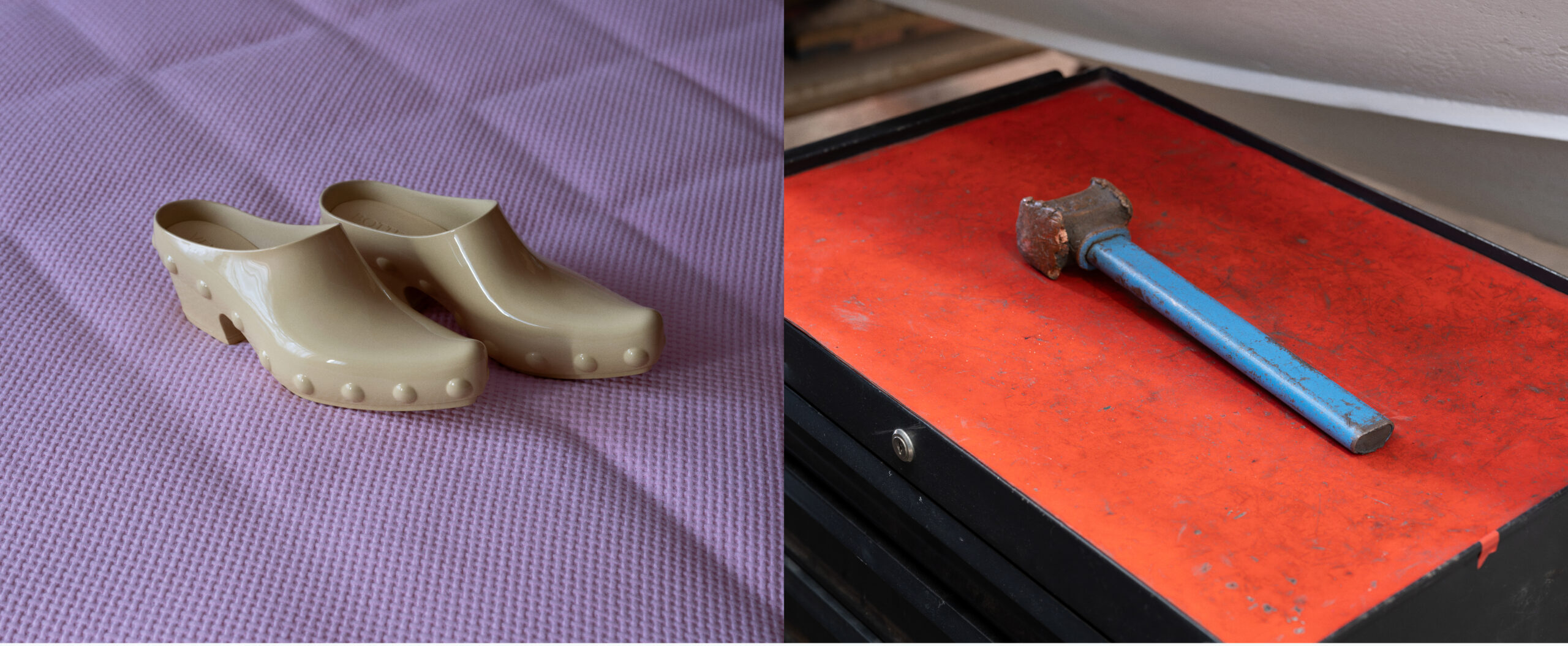
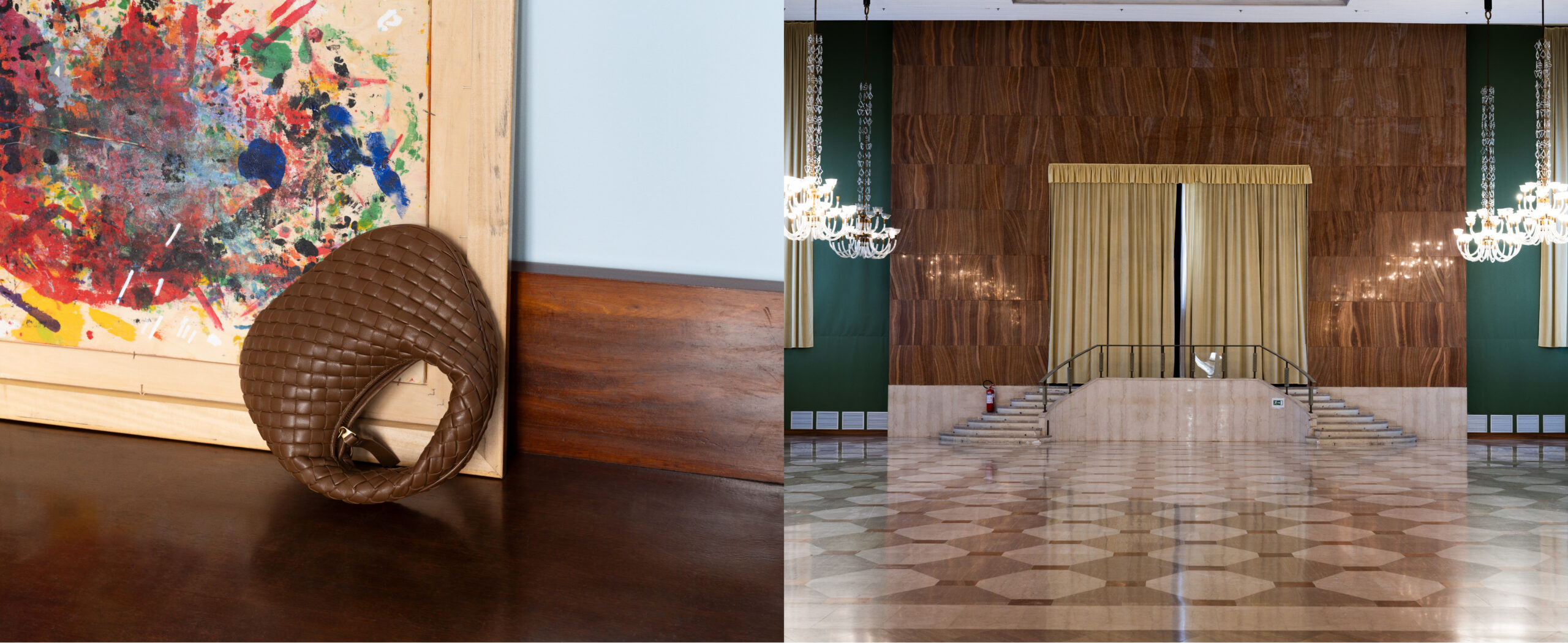
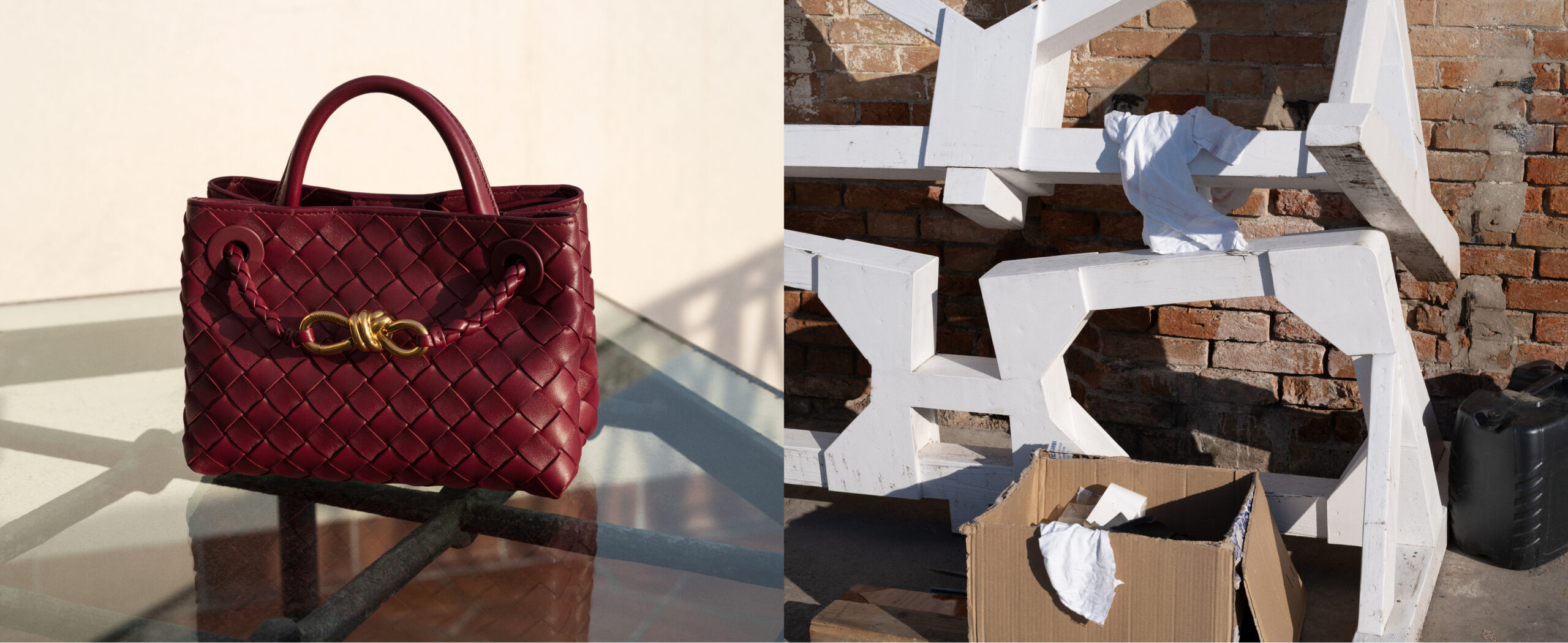
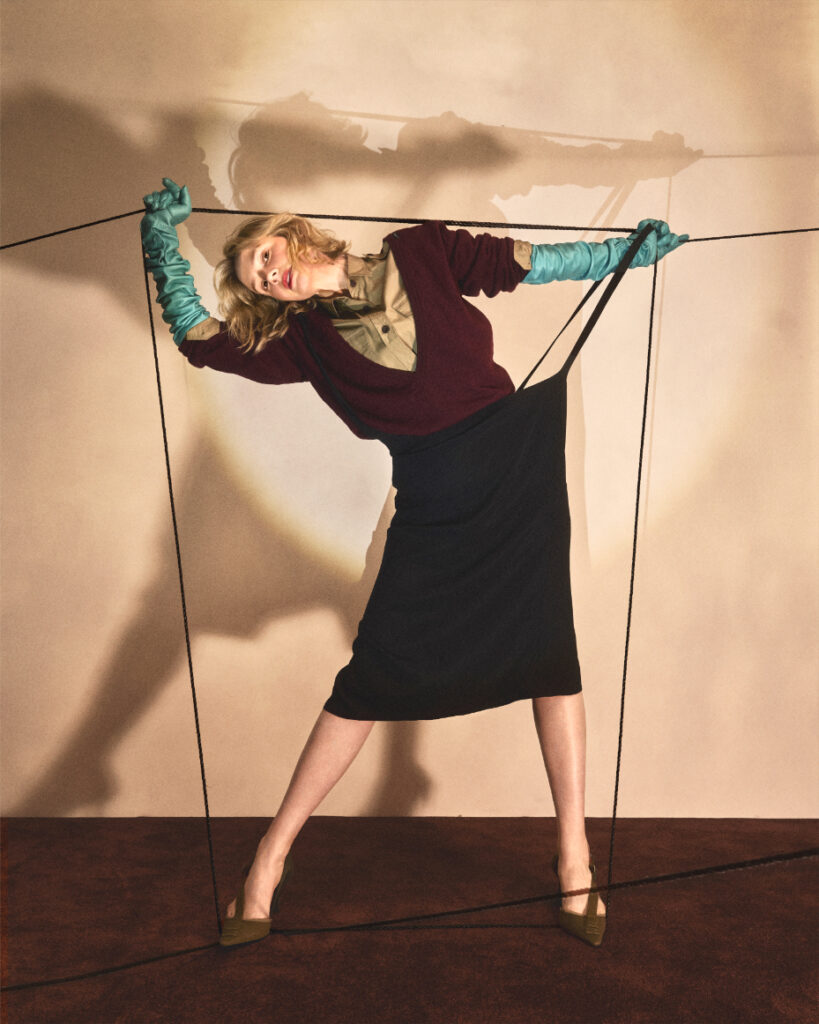
In this latest series, over 27 photographs explore sweeping marble floors and deep blue canals but also construction cranes, discarded plaster casts, and glossy beached boats. Juxtaposed against Bottega Veneta’s intrecciato bags of sumptuous woven leather, pulled from Louise Trotter’s first collection, the images nod to the house’s long history in the Veneto region. It’s a wistful look at a city and an atelier proudly carrying on its history. Here, Fraser takes us behind the lens.
What is your relationship to Venice?
I have photographed in Venice before for very different projects, as well as in Palermo, Naples, Matera, Bari, and Lecce. But Venice is sublime. It floats in the mind and on water.
How do you visually approach a city that carries such a profound legacy and iconography?
By distancing myself from preconceptions of what I might photograph and bringing a mental blank canvas for what might happen.
You’ve traveled globally, photographing disparate environments. How do you get to know a space when you are shooting in an unfamiliar place?
When arriving in a new place to photograph what is essential for me to be excited, to be able to work, is the “shock of the new.”
Do you try to engage deeply with people or operate more as an observer?
There is a moment before each successful image whereby, for a few moments immediately before exposure, the relationship between myself and the subject is so intense that there is no past and no future. Additionally, the tension between the impossible beauty of the world and its irrefutable fact generates significant momentary insight. So, the way I work means that I photograph because of the way I feel, not because of the way things look. Only then do the photographs look the way they do.
More of our favorite stories from CULTURED
14 Books Our Editors Can’t Wait to Read This Summer
Inside the Closet of a Revered Stylist Who Has Only Worn Prada For Over 30 Years
Charles Melton Actually Has No Idea Where His Career Goes From Here
Introducing a Play For Every New Yorker Who’s Had More Bad Dates Than Good
7 Commandments for Rookie Collectors, From CULTURED’s Power Art Advisors
Sign up for our newsletter here to get these stories direct to your inbox.

 in your life?