Directing is a strange job. It’s complicated further in our digitized times by the push and pull between embracing new technology and offering audiences a safe haven from it. For Colm Summers, plays are a tool for defeating the demands of the screen, bolstering crippled attention spans by immersing viewers in the richness of a shared, electric room—if only for a few hours.
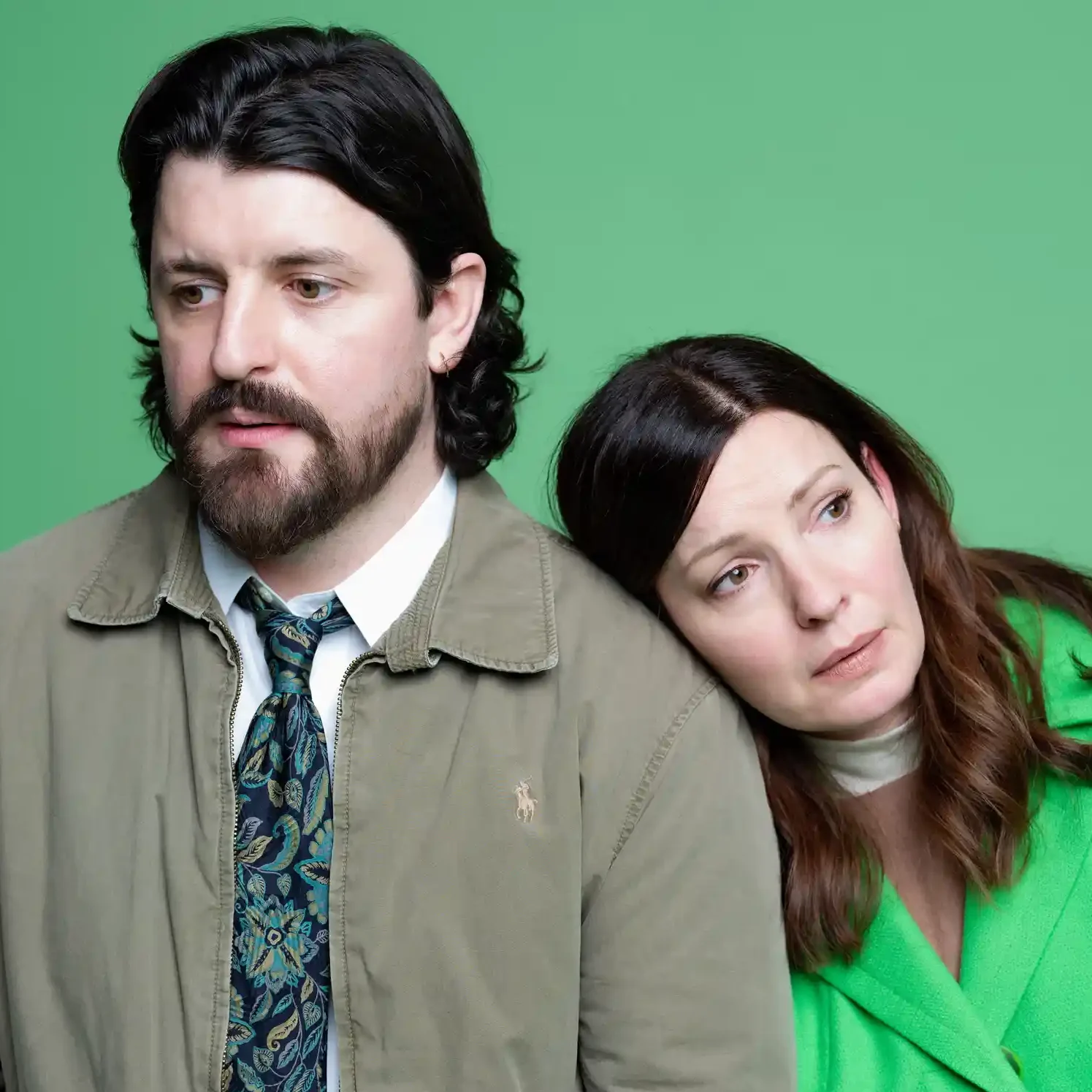
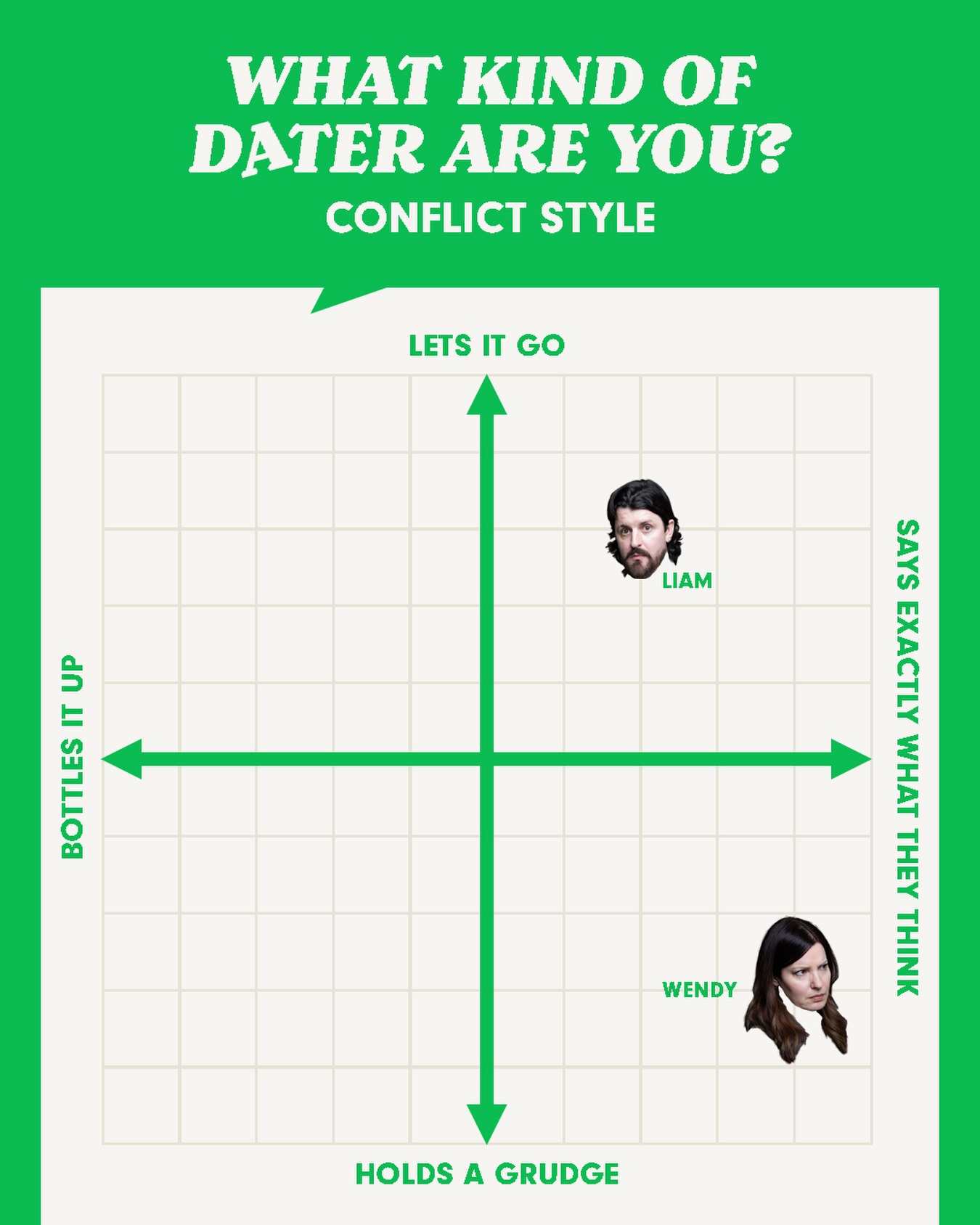
Summers is constantly searching for the human in the wash of the post-human, which might explain why he was drawn to Derek Murphy’s obliquely romantic two-hander, The Bad Daters (starring Kate Arrington of Billions and Mare of Easttown and Shane McNaughton of The Fall and The Equalizer, at Paradise Factory through May 17). In this production, Wendy and Liam—two overtly self-hating individuals—try, over a series of dates, to outfox their own defenses and find something akin to intimacy.
The irony of The Bad Daters is that it’s not really about people who are bad at dating. But rather, people who feel that they are bad at life: too much has happened to them, and dating is only a galling reminder of how much psychic damage they’ve incurred. The story is simple; the existential overtones are complex. Here, Summers wades with us through it all.
What does it feel like to be you right now? Is it scary? Are you living your directorial dream, or are you just beginning?
Recently, I was watching a TikTok about that young skater at the Winter Olympics. Somebody said in the comments, “The medal is not the thing for her.” Since taking the step into artistic directing at the Working Theater two years ago, the medal has ceased to be the thing for me. Satisfaction becomes much more readily attainable when the question is not, “Where am I making the work?” but “Am I working?” With satisfaction, I can do almost anything.
The parameters in which we’re able to work are so limited.
I definitely felt like there was an industry bottleneck I had to break through before I was going to be given “permission” to work. At some point, I just had to reckon with the fact that if I was going to work, I was going to have to make that work happen myself.
You have to be a philosopher of some kind to write or direct. There’s a link between theater and the civic space.
I really agree with that. Artists need to be able to speak back to the industry, need to be in the cultural conversation.
Tell me how you found The Bad Daters.
Shane, one of our two actors, called me in November of last year and said, “I’ve got this play.” My taste runs toward a certain kind of psychological complexity. You know what I hate? I hate a play with a big fat theme that sits up and begs for a round of applause at the end of an evening. I have no interest in a play telegraphing what it’s supposed to be about. When I read Derek’s play, I thought there was something very compelling about two people who wear their grief on their sleeve, but only as a means of finding life after it. Derek’s characters aren’t victims.
What makes this a great piece of dramatic writing in your mind?
Early on in rehearsals, Derek had to fly to Denver to develop another play. While he was gone he texted me, “Just don’t fix these characters too much.” He believes in broken people. So do I. Derek’s great instinct is capturing the chaos of everyday behavior. He has an interest in the little things we get wrong when we deal with each other. Those little things, for him, contain the big dramas of our lives.
There’s a je ne sais quoi to Irish drama; it’s a different deli cut than American theater.
There’s something unrequited about English in the mouth of an Irish person. The language doesn’t serve in the way that Gaeilge does. There are feelings that Irish people are at odds with the English language to express. I think that results in a very ass-backwards way of speaking, and why we’ve got so many poets. We come to our emotions from the outside in. We’ll make a joke where we should cry. It’s how you cope with life.
When you think about directing, what comes to mind?
I always think about the Polonius speech—
He “was accounted a good actor!”
“By indirections find directions out.” Part of what I’m working on in my own practice is being brave enough to get shit wrong. It’s hard, because you’ve got to get shit wrong and also retain authority. But the way to authority, I think, is to humble yourself. If you create an environment where you’re like, “I’m willing to be fucking wrong about this, and here’s my pitch,” then everyone starts to build up a callus for the incorrect.
What does the rehearsal room actually look like for you?
So much of our ability to act well comes from an ability to—like we did when we were kids—really play a deep, imaginative game of pretend with each other. Have you ever seen a child get notes from a parent? I have—they stop playing. You have to resist the parentification of the director, because it creates a weird power dynamic that doesn’t serve anyone. The less you have to say, the less power you have to use, the more you can sort of disappear. I just reread Constantin Stanislavski’s An Actor Prepares. I found his description of his humility before his own inadequacy to be instrumental in my own process. The admission that I know nothing is so useful to me. Every time I do a play, I have this moment where I’m like, do I know what to do? Every time.
More of our favorite stories from CULTURED
How The Pitt’s Patrick Ball Went From Role-Playing Corporate Trainings to Starring on Broadway
The 2026 CULTURED Power Advisor List: Meet the Art Advisors Shaping the World’s Top Collections
A New Book Unearths the Heated Rivalry Between Artists Peter Hujar and Paul Thek
Speed Round! 13 Critics Review 25 NYC Shows Before You Finish Your Morning Coffee
Sign up for our newsletter here to get these stories direct to your inbox.




 in your life?