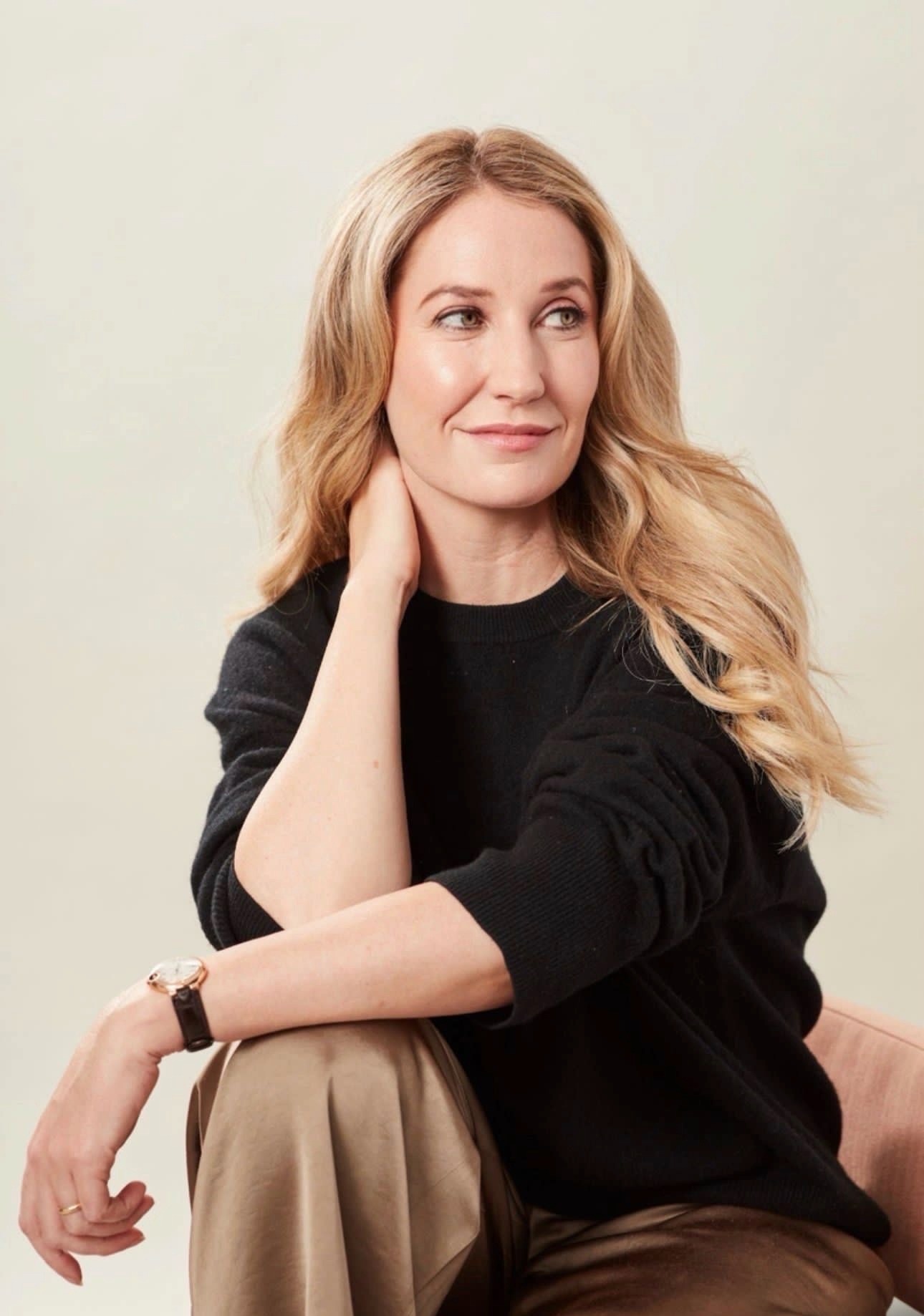
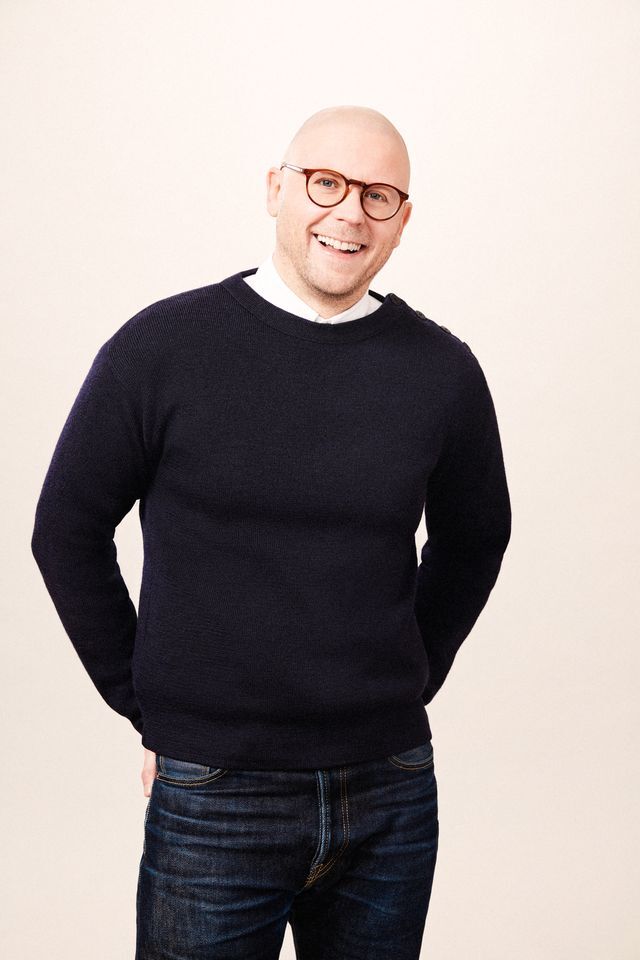
The A.I. wars are in full swing—and Anthropic’s head of brand, Andrew Stirk, and chief communications officer, Sasha de Marigny, are two of its most influential generals. As the architects of Anthropic’s public image, they have positioned Claude as a cooler and more ethical alternative to its competitors.
What do you think is your biggest contribution to culture?
Andrew Stirk: I have been lucky to work for some big companies developing campaigns that have reached millions and, in some cases, billions of people around the world. My sister is an award-winning playwright; when she puts on a play she might reach hundreds or thousands of people with something they might remember for the rest of their lives.
My work is more ephemeral. What motivates me is accessing an emotional truth that may not be obvious—landing a message in a way that shifts how people think and feel about things. In a previous role someone described it as putting the heart in the robot. That has stayed with me.
Sasha de Marigny: Artificial intelligence is rapidly evolving and deeply misunderstood, and the general public can’t make informed choices about a technology they don’t understand. My team and I want to change that by being radically transparent about what’s happening in A.I. research and development. We want to demystify the technology and teach everyone how to use A.I. tools effectively and creatively so no one is left behind. We want to deepen public awareness and understanding of the technology’s risks so everyone is better equipped to manage them for themselves and their loved ones. And we want to be open about the speed at which the capabilities are improving and the potential societal and economic impacts this may have, so everyone can adapt and prepare. Ultimately, I hope we can help our users envision and create a future they’re excited to be part of, where A.I. helps us achieve things we never could have without it.
What keeps you up at night?
Stirk: I hate the idea that the future is something that happens to us. I have to believe that the future is something we can shape. I am a dad with two teenage sons. I’ve seen data that suggests that Gen Z feels less optimistic about the future. They feel problems like climate change are too big to solve and lack faith in the institutions and systems that are supposed to lead. My kids’ coping mechanism seems to be a wicked and weird sense of humor and a focus on their immediate friends and world.
This generation is the future, and they will be the most affected by the transition to powerful A.I. systems. I want them to feel that they have a say, to feel empowered to shape the world. I want the technology we are building to be a reason for them to feel optimistic that they can take on problems that previous generations would have thought were intractable. I want them to feel that their voices, imagination, and creativity matter. The technology we are building has the potential to be the most powerful tool ever created to solve problems, or it could create new ones. I feel that responsibility. It’s why I work at the company I do, and it keeps me up.
What would you be doing if you weren’t working in your field?
Stirk: I would be studying to be a gardener. I know nothing about plants, and I am in awe of those who do. There is something magical about gardeners. It is a special kind of creativity. My role often requires urgency—there is a clear outcome we are working towards, and success is reliant on meeting the moment and mood, which can be fleeting and changeable. Gardening requires patience. The work is to nurture, not force an outcome. I like the idea of being less in my head and more in my body, hands in the dirt.
De Marigny: My dream job would be to restore old homes. I think a lot about the decline of beauty, timelessness, and craftsmanship in contemporary architecture.
When you were little, what were you known for?
De Marigny: I come from a long line of thespians, and from as young as 4 years old, theater and performance always lit me up. Auditions, backstage life, and rehearsals, watching the costumes and sets come together, the energy of opening night and that indescribable, electric feeling of performing live for an audience—I was just completely besotted. It was my whole life.
What is your biggest vice? Your greatest virtue?
De Marigny: Too many vices to name! But I suppose if I had to choose, I am unfortunately not a very patient person, and I’m terrible with routine—my skin starts to itch if things become too predictable and repetitive. On virtues, I’m not a transactional person. Authentic relationships mean a great deal to me. I’m an open book that way, for better or worse.
What’s been the hardest part of your career so far?
De Marigny: I graduated into the recession of ’08. It was a scary time for young people. It felt like opportunities were evaporating, and I viscerally remember how hard it was to get a foot in the door. I had been acting, teaching drama classes, turning my hand to freelance writing to make ends meet. I felt a huge amount of anxiety around whether I would ever get my start or be able to realize my full potential. Eventually someone gave me a chance, and I’ll forever be grateful to them for that. My life would look very different if they hadn’t seen that little spark in me.
What are you looking forward to this year?
Stirk: This is the first year in my life where I don’t know what to expect. Everything feels uncertain right now. That can be paralyzing or galvanizing. It would be so easy to retreat at this moment, but I want to push against that instinct. When things are most unpredictable, that’s the time to show up and step forward. We are listening to different communities—business leaders, developers, artists, school teachers—to understand their needs, hopes, and fears so that we can build toward a future they want step by step, even if it is not always clear what the next right step is.
What question do you ask yourself most often while you’re making work?
Stirk: What will this make people feel? I love stories. They are one of our earliest technologies. Stories are how we make sense of the world and our place in it. Not just by ordering events on a timeline, but at a deeper level, to understand how to feel about things. The message is encoded in the feeling as much as any of the words we choose. Creative rigor means not rationalizing this away but staying alive to it, paying close attention to how people respond to work.
To read more from the 2026 CULT100 honorees, see the full list here.






 in your life?