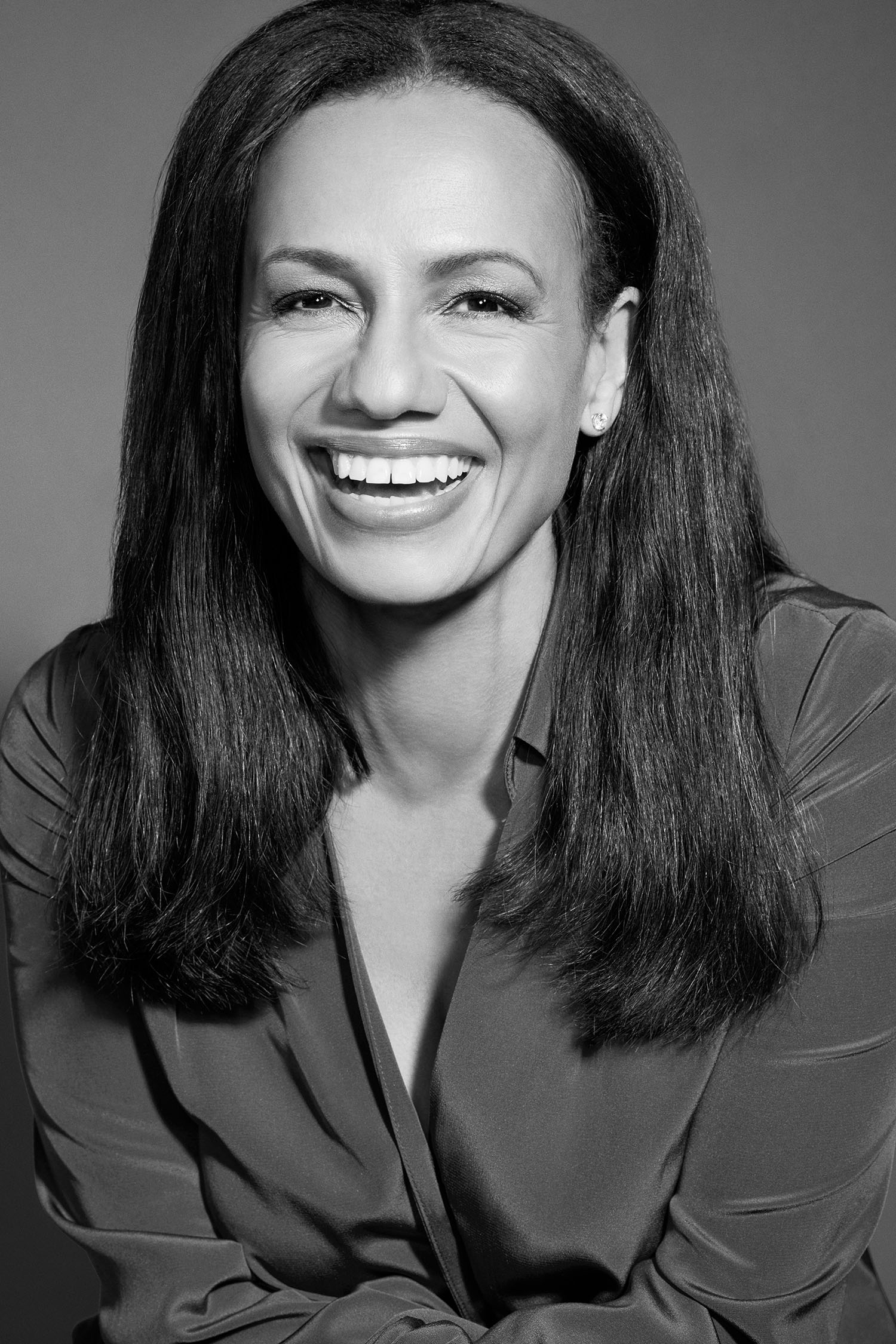
Few people understand the way culture, politics, and public health influence one another more than Alexis McGill Johnson. A political scientist by training, she teamed up with top hip hop artists to launch the “Vote or Die!” campaign in 2004. But her current role—as president of Planned Parenthood in the wake of the Dobbs decision overruling Roe v. Wade—is her most challenging yet.
What’s one work of art that got you through an important moment in your life?
We are in a moment right now. Timothy Snyder’s book On Tyranny is a powerful reminder that democracy is never guaranteed, and that its strength depends on us as everyday people showing up every day to defend it. It requires courage, truth-telling, solidarity, and participation. Today our democracy feels fragile, but we are not.
What do you think is your biggest contribution to culture?
My biggest contribution to culture was turning hip hop’s influence into political power. As a political scientist early in my career in the 2000s, I wrote an article asking how we could turn the hip hop generation into the next NRA—not in ideology, but in discipline, turnout, with a policy agenda for liberation.
Back then, most albums were released on Tuesdays, the same day Billboard charts are updated. The culture had figured out how to drive energy directly through the streets to make hit after hit by leveraging an incredibly well-networked local ecosystem. My research question was simple: If these systems drive turnout every Tuesday, why couldn’t we deliver the same energy on the first Tuesday in November? That premise catapulted me into working with artists, taking over the airways, the streets, the clubs, the barber shops, and beauty salons. We broke down the hustle of democratic politics, no different than power plays in any industry or the streets, and made an urgent case for disenfranchised and disengaged voters to step up to claim our power.
The work worked. In 2004, that work helped Barack Obama get elected to the Senate among others. And youth voter turnout, which hadn’t budged since 1972, increased significantly, largely driven by Black and Latino young people. And the work persists—today, we are continuing to see culture shift policy and politics in powerful ways.
When you were little, what were you known for?
I was a total bookworm. My nickname was “Little Lori from Montessori” (yes, Lori is my government name). My grandmother, who preferred we kids ran around outside all day, found it puzzling. She would say, “All she wants to do is sit in a corner and read a book. It just ain’t natural!”
Name an influence of yours that might surprise people.
When I was a baby organizer in the music business, I had the privilege of being mentored by legendary industry icons, including actor and activist Harry Belafonte, “The Black Godfather” Clarence Avant, and the inimitable political strategists—the “Colored Girls”—Minyon Moore, Yolanda Caraway, Donna Brazile, and Leah Daughtry. They were all leaders who knew that any revolution or movement worth its weight requires moving culture, moving people, challenging processes, and changing institutions—all at the same time.
What do you want to see more of in your industry? Less of?
More racial analysis to centralize the lived experiences of women of color in this fight. Currently, most organizations in the movement for reproductive freedom are led by women of color. It’s a profound shift from a generation ago, when 12 Black women met at a reproductive rights conference and coined the term “reproductive justice” as the necessary framework, strategy, and vision for a liberation inclusive of all women. While their thought leadership has been recognized, the work to operationalize by reproductive rights organizations has been slow. Having a meaningful racial analysis is not a side hustle, it is key to how we rebuild in this moment and reimagine our future. It’s even more important in these times when people are trying to challenge DEI.
I’d like to see less reliance on false equivalencies when we talk about abortion or reproductive rights. The majority of Americans believe in reproductive freedom. Full stop. Let’s talk like it and act like it.
Where do you feel most at home?
Home is anywhere my family and friends are. But I most love being in my kitchen, music playing, entertaining, cooking for family and friends, or curling up on the sofa with my teenagers binging reality TV. It’s the connections, the catch ups, the conversations that fuel my spirit after long weeks on the movement road.
Who do you call the most?
My mom. Well almost. I lost her in October and I am constantly reminded how many times a day I called her because I keep picking up the phone to tell her the most random things. Today, I thought to tell her about our recent college tours, that the forsythia and dogwoods were blooming in New York, and to laugh about the time I accidentally made brownies with a cup of salt instead of sugar and served them to her boss.
What’s funny is that whenever she was visiting, I complained about how much time she spent on the phone. Now I realize she was the one everyone wanted to call the most!
When’s the last time you laughed hysterically?
I laugh hysterically every day. Our mission is serious, but we can’t take ourselves too seriously. Watching my daughters explain “mansplaining” to my husband, and then listening to him un-ironically mansplain his position back to them, had us all on the floor cracking up.
What is your biggest vice? Your greatest virtue?
Coffee, wine, and candy corn are my major food groups. Don’t fight me. Some may consider all three vices, but if it’s wrong, I don’t want to be right! My virtue is that I am a master compartmentalizer.
What would you be doing if you weren’t working in your field?
Writing essays.
What’s been the hardest part of your career so far?
Leading Planned Parenthood is the hardest and unrelenting, yet most rewarding, part of my career. I stepped up to lead during our most challenging era: steadying the organization after a leadership transition, confronting our history during a racial reckoning, Covid, the loss of federal abortion rights protections, and now we are in the middle of a federal “defund.” And yet everyday I wake up, there is someone who needs access to life-saving care and I have a team of leaders and colleagues who are waking up to deliver freedom, no matter what.
What grounds you, and what invigorates you?
As the president of Planned Parenthood, I get to be the keeper of stories. Whether I’m at a rally or the airport, I am always meeting new people who share with me how Planned Parenthood helped them when they needed it the most, or why keeping up the fight for reproductive freedom is personal for them. Their stories are a gift every time.
To read more from the 2026 CULT100 honorees, see the full list here.





 in your life?