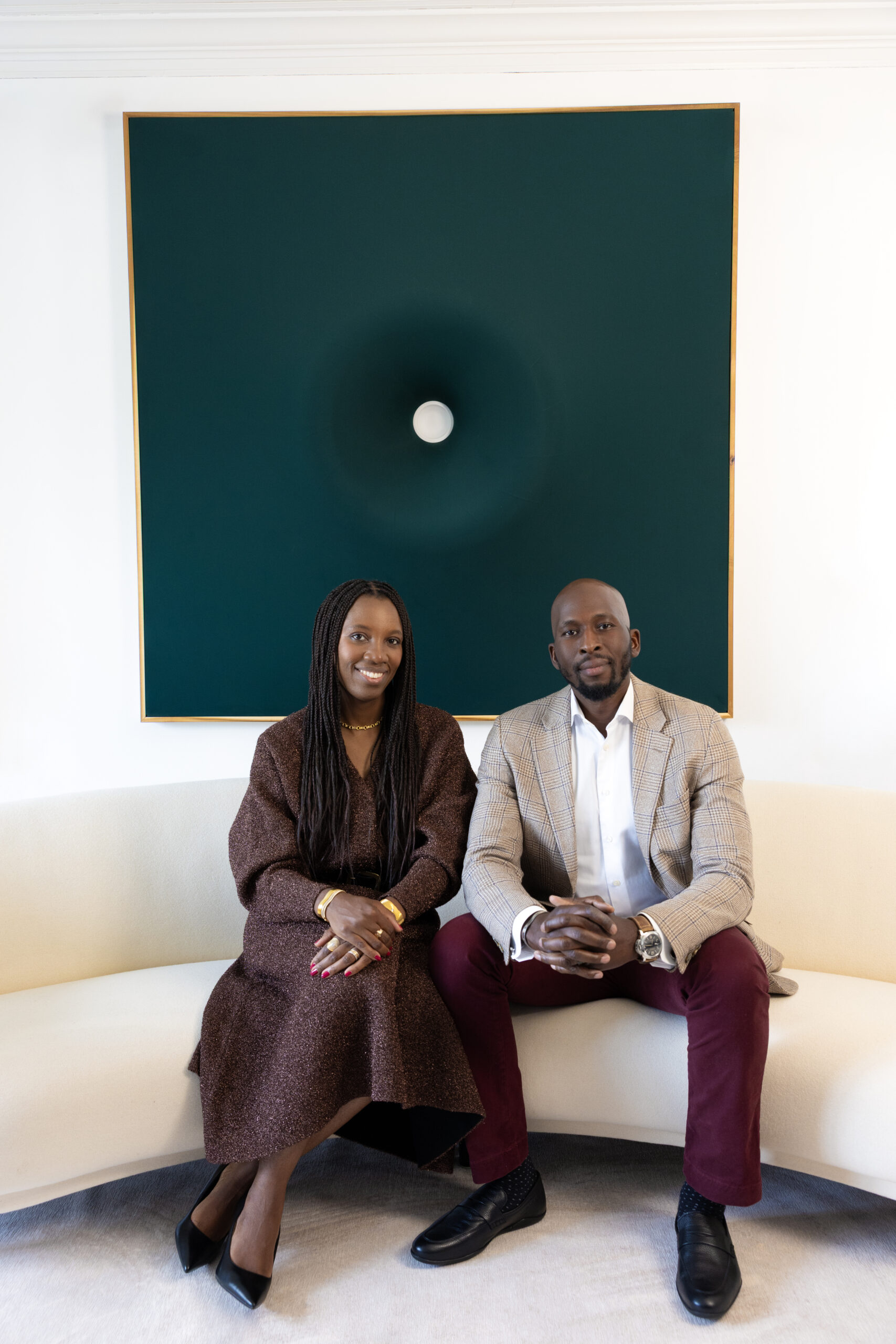
What does it mean to collect with conviction in a market that often rewards status over substance? For Chicago-based collecting couple Mamadou-Abou and Catherine Sarr, the answer is found with patience, the kind it took to amass their Sarr Collection. The duo’s portfolio of works moves fluidly between West Africa, France, and the U.S., guided by their passion for emerging artists and international dialogue. Mamadou-Abou, an investor whose career has sharpened his instinct for long-term value, and Catherine, a jewelry designer attuned to form and material, bring distinct but complementary sensibilities to their joint collection.
That ethos extends outward through the SARR Prize, an initiative supporting three student artists attending Les Beaux-Arts de Paris, with awards including cash gifts and, for one awardee, a month-long residency at French cultural embassy Villa Albertine in Chicago. Given the breadth of the Sarrs’ collection and story, spending time with their works prompts as many questions as it offers answers about their curatorial vision. Here, CULTURED sits down with Mamadou-Abou and Catherine to levy ours.
Tell us the story of how your collection began.
Mamadou-Abou Sarr: My father had a Zenith-E Russian camera from the 1960s and took remarkable photographs. I used to borrow it as a child, composing frames, imagining myself a professional. When I left France, he gave it to me, and that moment coincides almost exactly with my discovery of contemporary African photography. Seydou Keïta, Malick Sidibé, Mama Casset— photographers who understood the studio as a theater of dignity and self-definition. That was a revelation. From there the collection grew naturally outward, but it began as something genuinely introspective, a way of asking who we are, where we come from, what deserves to be kept. That question has never really left us.
What piece of advice would you give to someone who wants to get into collecting?
Catherine Sarr: Collect what you cannot stop looking at, not what you think you should own. The collection reveals itself to you over time if you let it.
Mamadou-Abou: Sleep on it. Do not impulse buy. If a work is right for you, it will still be right after a night. And spend time with artists, not just their work, but their thinking. Understanding what a person is trying to do changes how you live with what they make.
Tell us about the SARR Prize. How was it first developed, and how has it evolved?
Catherine: What has been most rewarding is seeing how these artists continue to grow, and how many of them have become part of our collection. It has become both a platform and a long-term commitment.
Mamadou-Abou: We felt there was a genuine gap between the French and American art scenes, not for established names, but for emerging artists who needed time and context to develop their work. The prize supports France-based emerging artists with both recognition and a residency in Chicago.
Do you see collecting as an extension of skills you have honed in your professional lives, or something entirely new?
Catherine: For me, collecting and making jewelry have always been in conversation. I draw from the collection constantly, not illustratively, but in terms of how I think about form, weight, and meaning. They feed each other.
Mamadou-Abou: Both, honestly. In finance, you are always asking: What do I believe that others do not yet see? That question is not so different in collecting. But the emotional register is entirely different. A position in a portfolio does not live in your home. It does not look back at you.
Your geographic ties include West Africa, France, and now Chicago. Can you tell us about one memorable piece collected across each place?
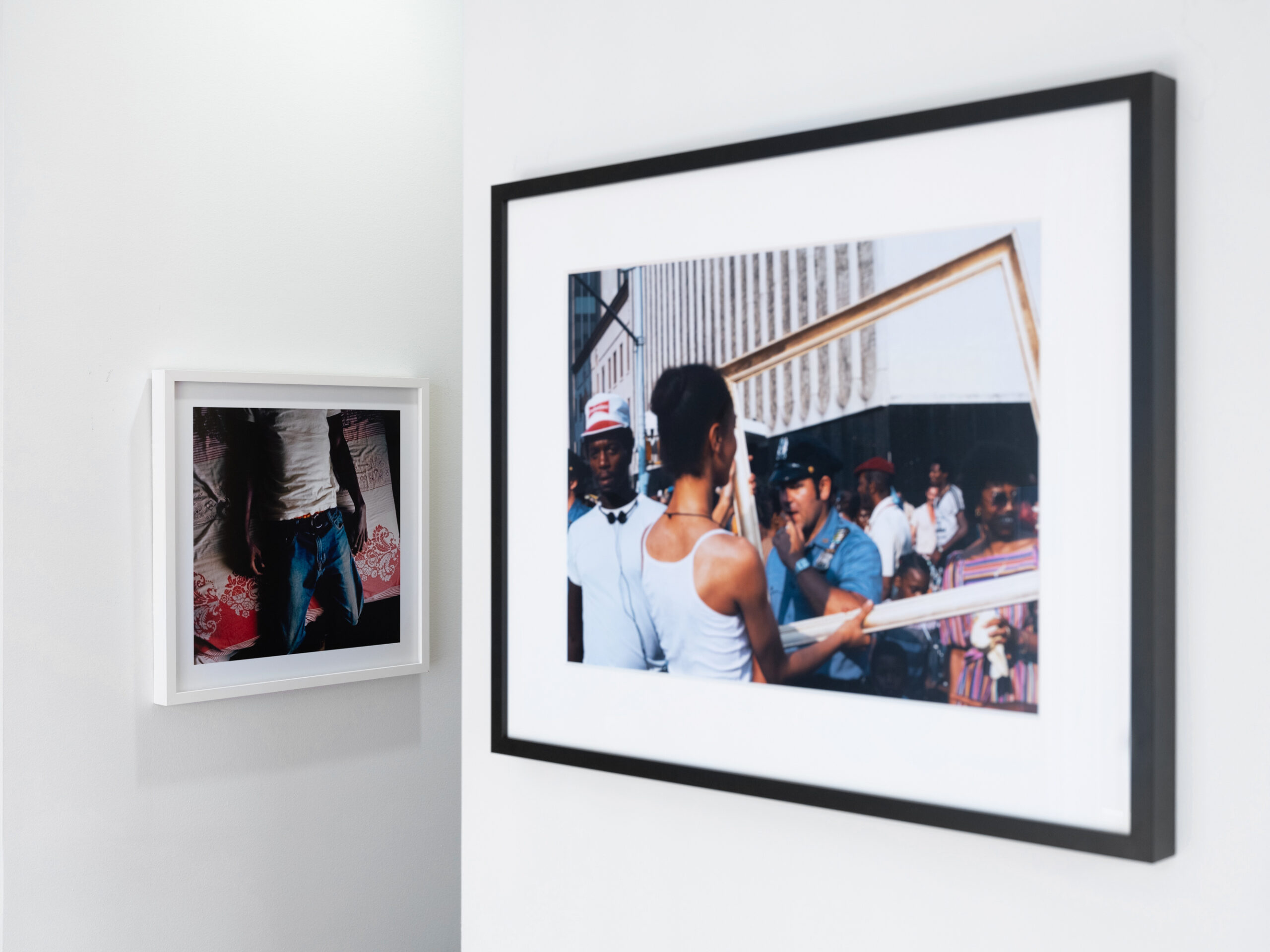
Catherine: In Chicago, Amanda Williams’s Paris is Englewood and Englewood is Paris. Two laser-cut paper works that hold the question in both directions: what does it mean to place a South Side neighborhood in conversation with a world capital? That work tells the story of two cities dear to our hearts in a way we could not have found anywhere else.
Mamadou-Abou: In West Africa, a series by Senegalese early 20th century photographer Mama Casset. There is a dignity in that work that does not age. In France, a commissioned piece by Joël Degbo—a circle made of symbols drawn from both of our families’ histories. He understood exactly what we were asking for.
Which work in your home provokes the most conversation from visitors?
Catherine: Kiah Celeste’s Forest Cloud has an extraordinary presence, something between tension and tenderness. People cannot quite place it and cannot stop looking at it.
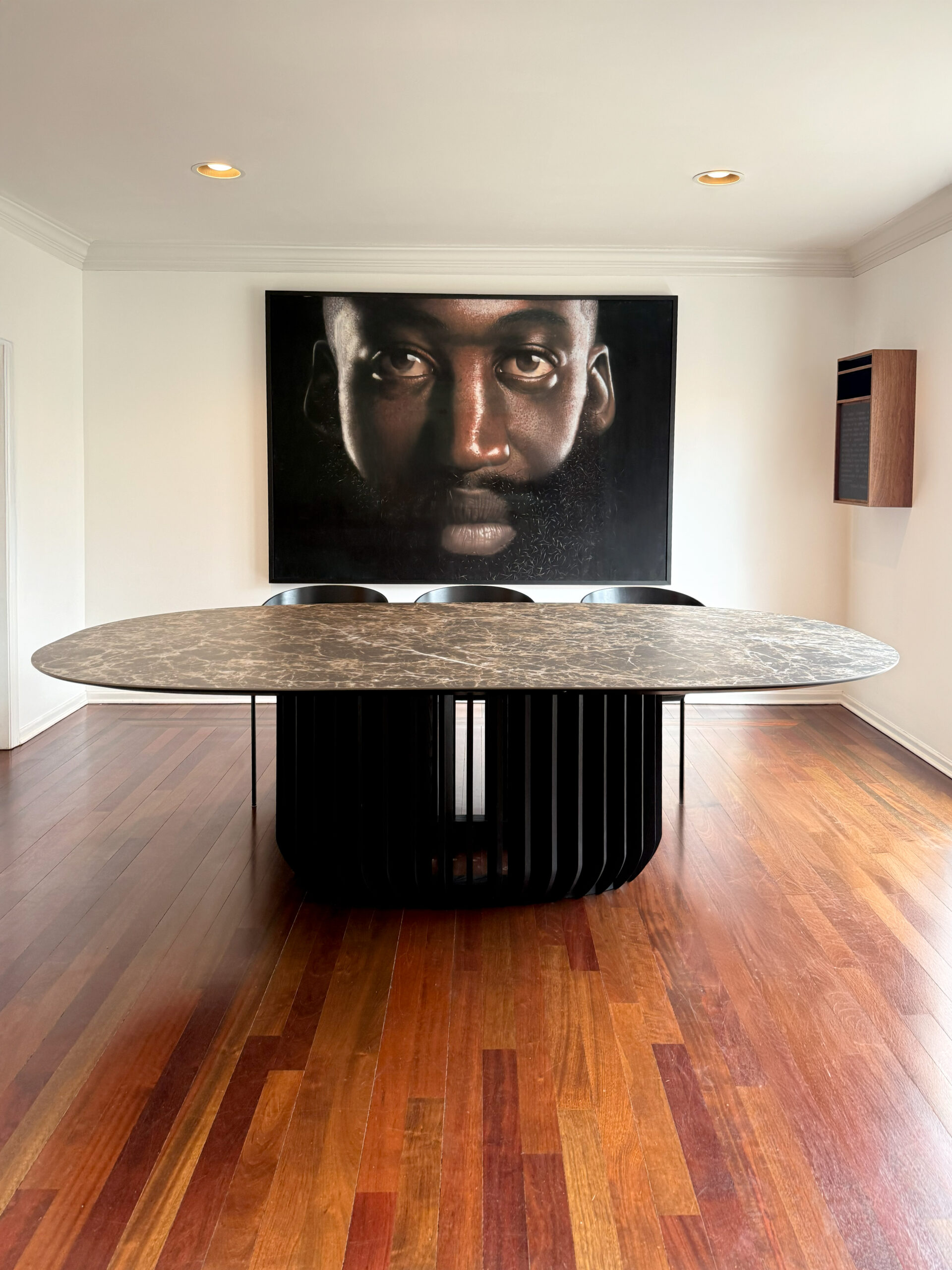
Mamadou-Abou: Babajide Olatunji’s Tribal Marks Series III. It holds a very special place in our home. His hyperrealist pastel portraits carry an entire history of identity, of marking, of belonging, rendered with a precision that makes people stop and look in a way they did not expect to.
More of our favorite stories from CULTURED
Marcel Duchamp Obliterated Expectations of What Art Could Be. These 4 Artists Are Carrying His Mantle.
How The Pitt’s Patrick Ball Went From Role-Playing Corporate Trainings to Starring on Broadway
The 2026 CULTURED Power Advisor List: Meet the Art Advisors Shaping the World’s Top Collections
A New Book Unearths the Heated Rivalry Between Artists Peter Hujar and Paul Thek
Speed Round! 13 Critics Review 25 NYC Shows Before You Finish Your Morning Coffee
Sign up for our newsletter here to get these stories direct to your inbox.


 in your life?