“Greater New York”
MoMA PS1 | 22-25 Jackson Avenue, Long Island City
Through August 17
What says “summer” like a big group show, a packed courtyard at MoMA PS1, and 88-degree weather? The unseasonable spring heat added to the disorienting art-world overwhelm of the past six or so weeks, with several fellow writers at the “Greater New York” press preview yesterday apologizing, in conversation, for being “so out of it.” (I responded in kind.) There’s an astrological connection, of course. The current Aries stellium—the fiery clustering celestial bodies in the sign of the ram—does resemble, and maybe even partially explain, if you believe in this stuff, not just the overlapping runs of the Whitney Biennial and the sixth edition of MoMA PS1’s quinquennial, but also the two exhibitions’ concurrence with momentous local one-offs (the New Museum’s long-awaited reopening and last week’s big event: MoMA’s much-anticipated “Marcel Duchamp”).
And if you’re still reading, let’s factor in, cosmically speaking, the inflamed chatter regarding Josh Kline’s October essay, “New York Real Estate and the Ruin of Art”—that dead horse that keeps resurfacing in the chat—whose bleak diagnosis of conditions on the ground for artists in our city includes the hackle-raising suggestion that they decamp for Philadelphia. While I don’t suggest viewing “Greater New York” as a contradictory referendum on the scene here (after all, every irritated take on Kline’s report begins with the concession that, basically, he’s right), I did find a certain hunkered-down DIY vitality on view, heightened by the classic scuffed-floor allure of the decommissioned public school, that might constitute a different strategic response; I did find a bright side to the Aries stellium heat.
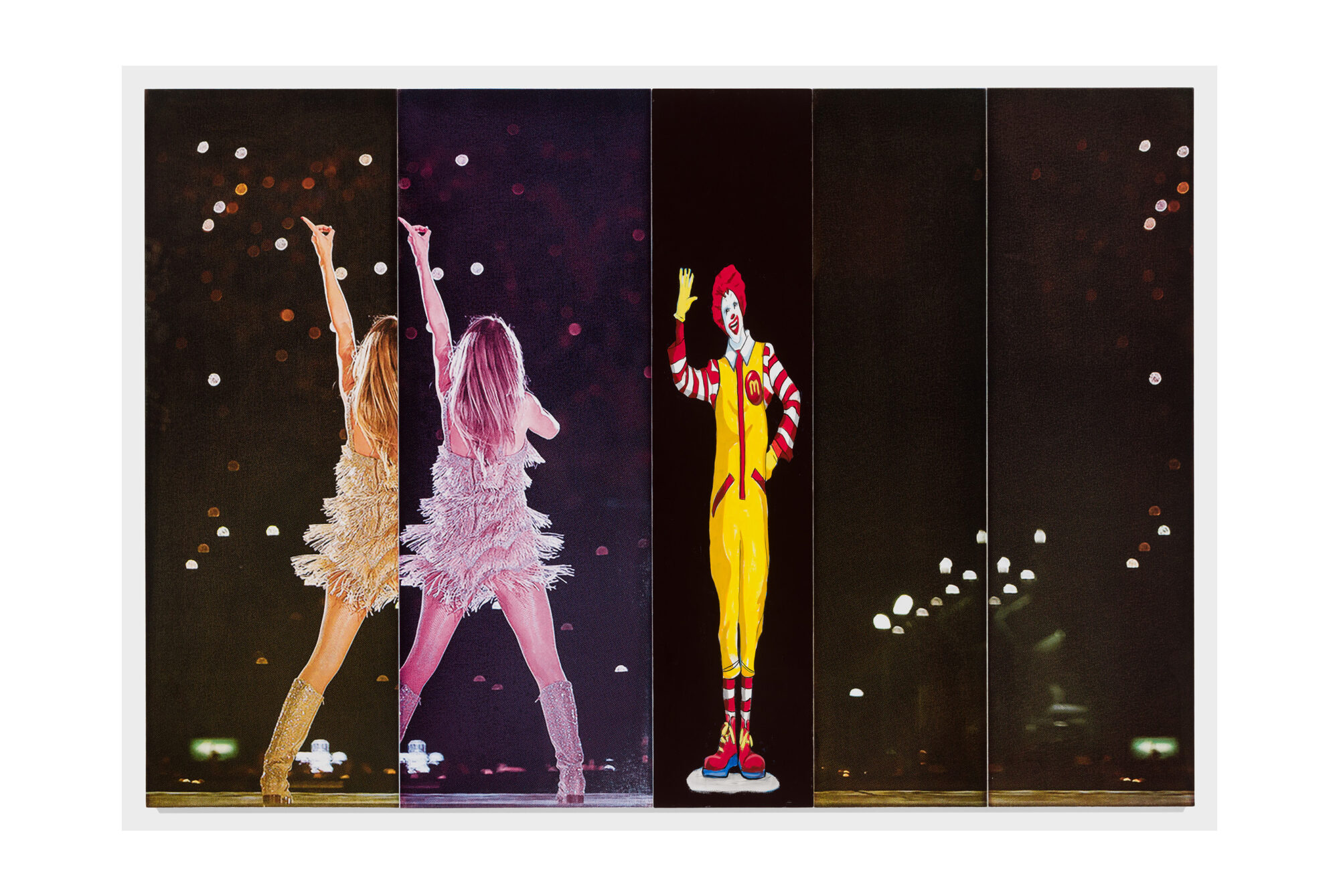
My first impression of the 53-artist show is that, notwithstanding the fantastic paintings to be found here and there (such as Janiva Ellis’s grand, drably dynamic cropped view of the Brooklyn Bridge, Taína Cruz’s urban-elfin scenes, and Julia Wachtel’s hypnagogic altarpiece-like distillations of Internet flotsam), the strongest work seems to be modestly-scaled photography; low-tech expanded-cinema works or very simply presented (rather than slick, “immersive”) video; and budget-friendly readymade or scavenged sculpture. That is to say, it’s art that doesn’t necessarily require industrial-loft studio space, and that isn’t necessarily geared to the warehouse-cathedral architecture of major museums or Chelsea and Tribeca mega-galleries.
Miniaturized environments and vignettes—appealing diorama aesthetics—are everywhere, in works as different as Marc Kokopeli’s trio of tabletop video sculptures, for which cartoony figures deliver monologues in terrarium/television/microwave-evoking boxes, and Dean Millien’s aluminum foil tableau The Cats and the Rats, 2026, which shows the title’s creatures (crumpled metallic sculptures) both embattled and at play. Tom Thayer, whose handcrafted puppets (wire, papier-mâché, found elements) and cozily enchanted installation, featuring a motorized, self-playing instrument set and a light show (hanging reflective shapes sway and rotate in front of a slide-projector lamp), might be a paragon of makeshift basement approaches.
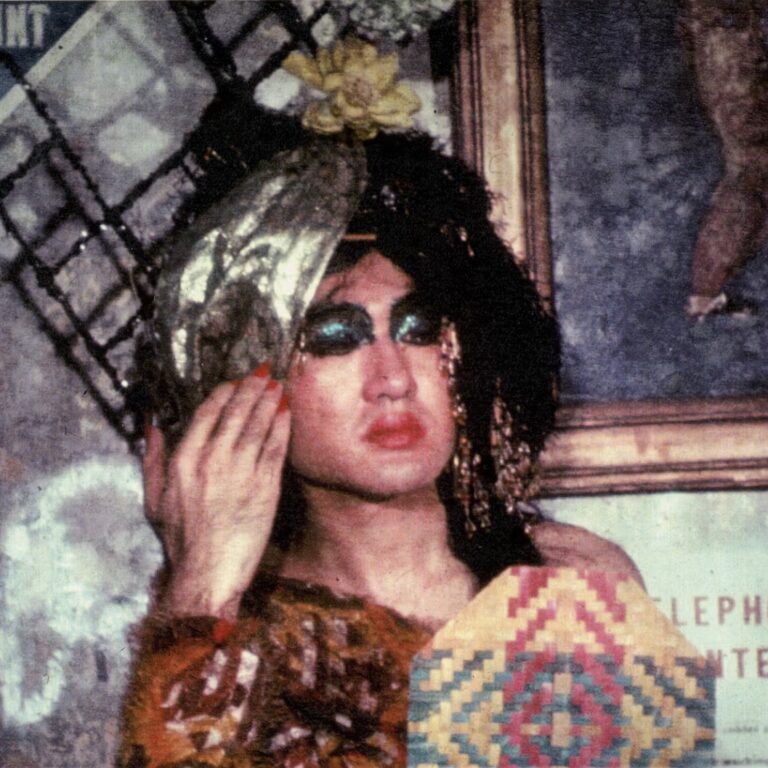
But even the more conceptually-minded multimedia works embrace analogue tricks and simply-realized effects: I loved Cici Wu’s spectral interpretation and extension of the unfinished film White Dust from Mongolia by Theresa Hak Kyung Cha, who died in 1982, for which layered projections of archival footage are paired with what looks like an illuminated, abstracted model village (the floor-based 3-D paper sculptures are derived from Cha’s hand drawn storyboard).
It’s not just regarding installation that many artists favor handcrafted, humble, or seams-showing techniques; those preferences show up in the footage, in their video production. In Farah Al Qasimi’s ostensibly low- or no-budget Sandpusher/Toy War, 2024—an element of a larger, lush photographic installation—a wind-up cow and a commando-crawling Spiderman with a machine gun drag objects behind them. (Affixed to the monitor’s plinth, at the bottom corner, is a souvenir vial of sand, whose packaging claims it’s from “the field of Operation Desert Storm.”) And, while I didn’t have time to see Vijay Masharani’s works start to finish, I was impressed by what I saw. Long takes, a slow-paced edit, leisurely abstract passages, and the clever economy of a nighttime shot: a light clamped to a hose transformed a drinking dog—innocently trying to catch the stream of water—I assume, into the slavering beast of Cujo proportions.
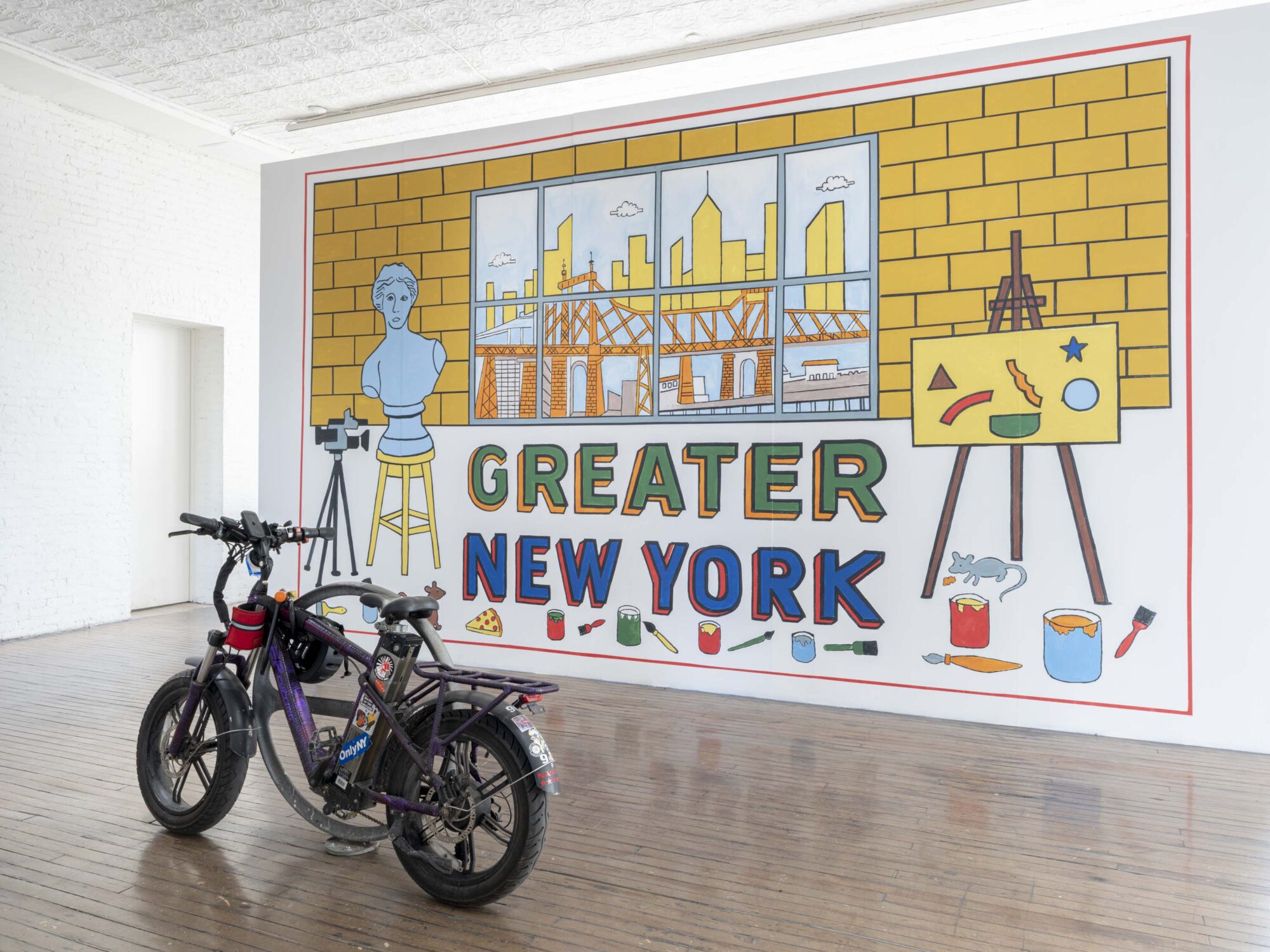
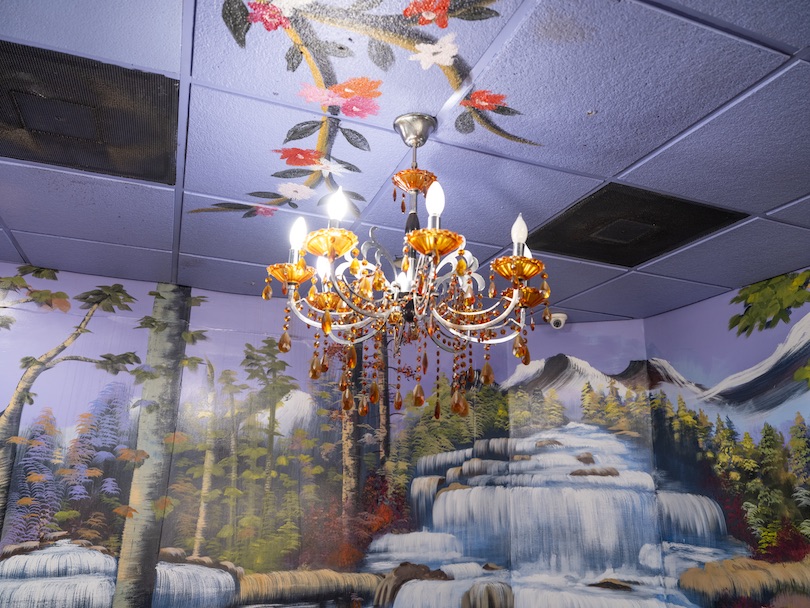
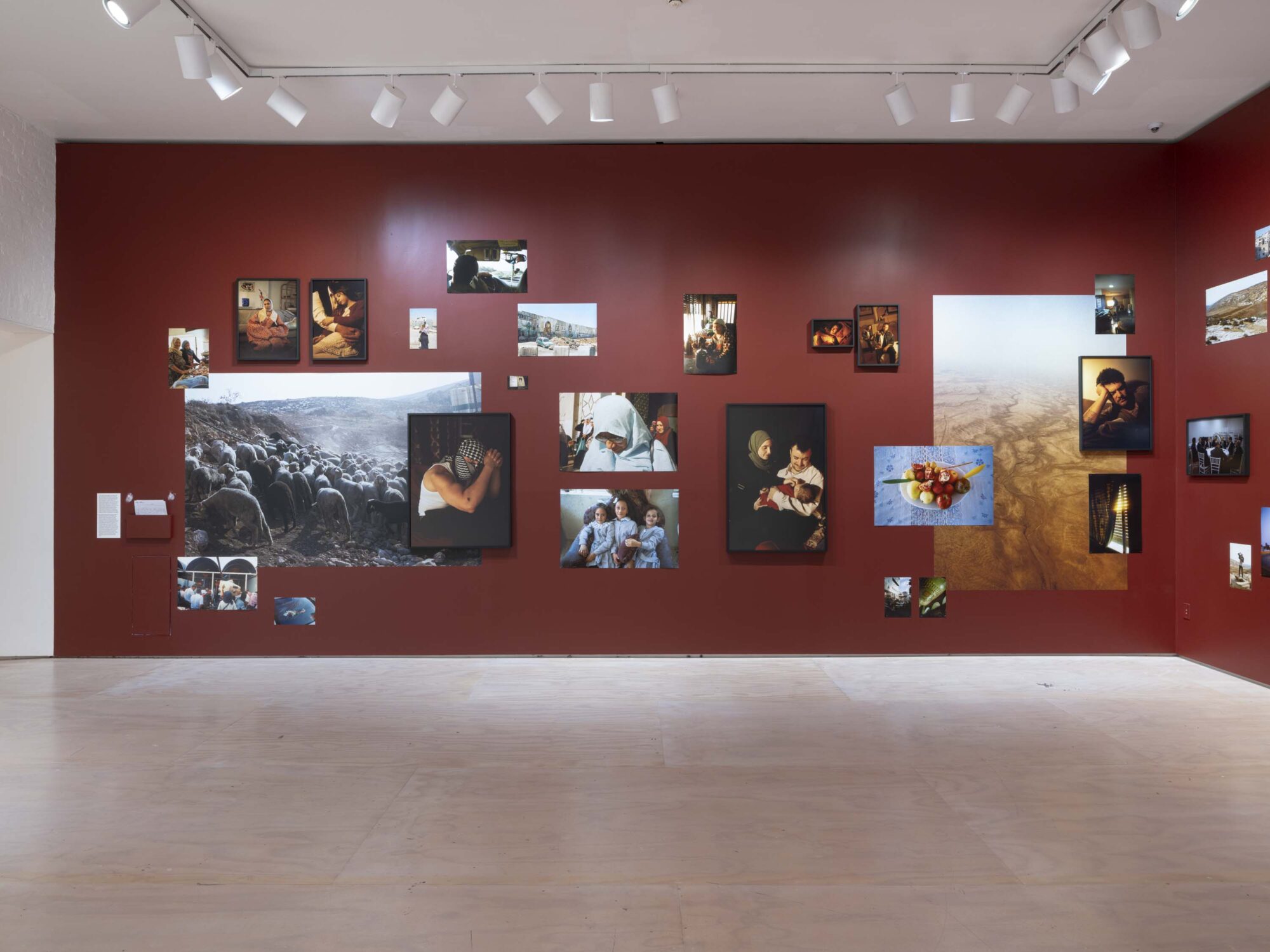
Other highlights situate viewers in the museum’s immediate neighborhood, immigrant communities, activist struggles, and economy. There’s a display of posters from the Ecuador-born Cevallas Brothers’ five decades of work for local businesses, concentrated along Roosevelt Avenue in Jackson Heights (the duo also designed the lobby mural for the exhibition). Dean Majd’s photographs, shot in the West Bank and New York, are printed at various scales and hung on deep red walls, achieving a mood of somber intimacy in a moment of ongoing genocide and repression: The artist’s now-famous portrait of Columbia University student Mahmoud Khalil, with his wife and newborn baby, after his long ICE detainment assumes its place with less-know images of equal gravitas. And fields harrington’s photos of gig workers’ bikes, personalized with colored tape and accessories, draw our attention to an ever-present urban prop and tool of the trade. The related piece Unfree Free Time, 2026, is composed of a rack where a bike will sometimes be locked during the exhibition, its owner paid $21.44 hourly for its time there, which is the delivery-driver minimum wage as of April 1 of last year. (“New York Wealth Inequality and the Ruin of Everything” might be an alternate essay or essay title—though, then there would really be nothing to argue about—right?)
During the preview’s opening remarks, Ruba Katrib, who led the curatorial team along with Connie Butler, noted that this is “Gen Z’s first ‘Greater New York’” and that observation stuck with me as I walked through the show. (After a false start, I followed Butler’s advice, going up to the third floor and working my way down.) Though only one of the artists I’ve mentioned here (Taína Cruz) was born after 1997, the technical cut-off for millennials, a few come very close.
Zoomers, too often associated with the TikTok auteur rather than the flip-phone vanguard, are generally making their presence and priorities felt. I credit that—them—with throwing their weight against tech-inflected trends and A.I. hype, which is noticeably absent in this unruly amassment of sometimes minor-feeling, slightly messy (mostly in a good way) work. But I have to go back to look more closely; truly, I can’t turn a real review around so quickly.
More of our favorite stories from CULTURED
How The Pitt’s Patrick Ball Went From Role-Playing Corporate Trainings to Starring on Broadway
The 2026 CULTURED Power Advisor List: Meet the Art Advisors Shaping the World’s Top Collections
A New Book Unearths the Heated Rivalry Between Artists Peter Hujar and Paul Thek
Speed Round! 13 Critics Review 25 NYC Shows Before You Finish Your Morning Coffee
Sign up for our newsletter here to get these stories direct to your inbox.


 in your life?