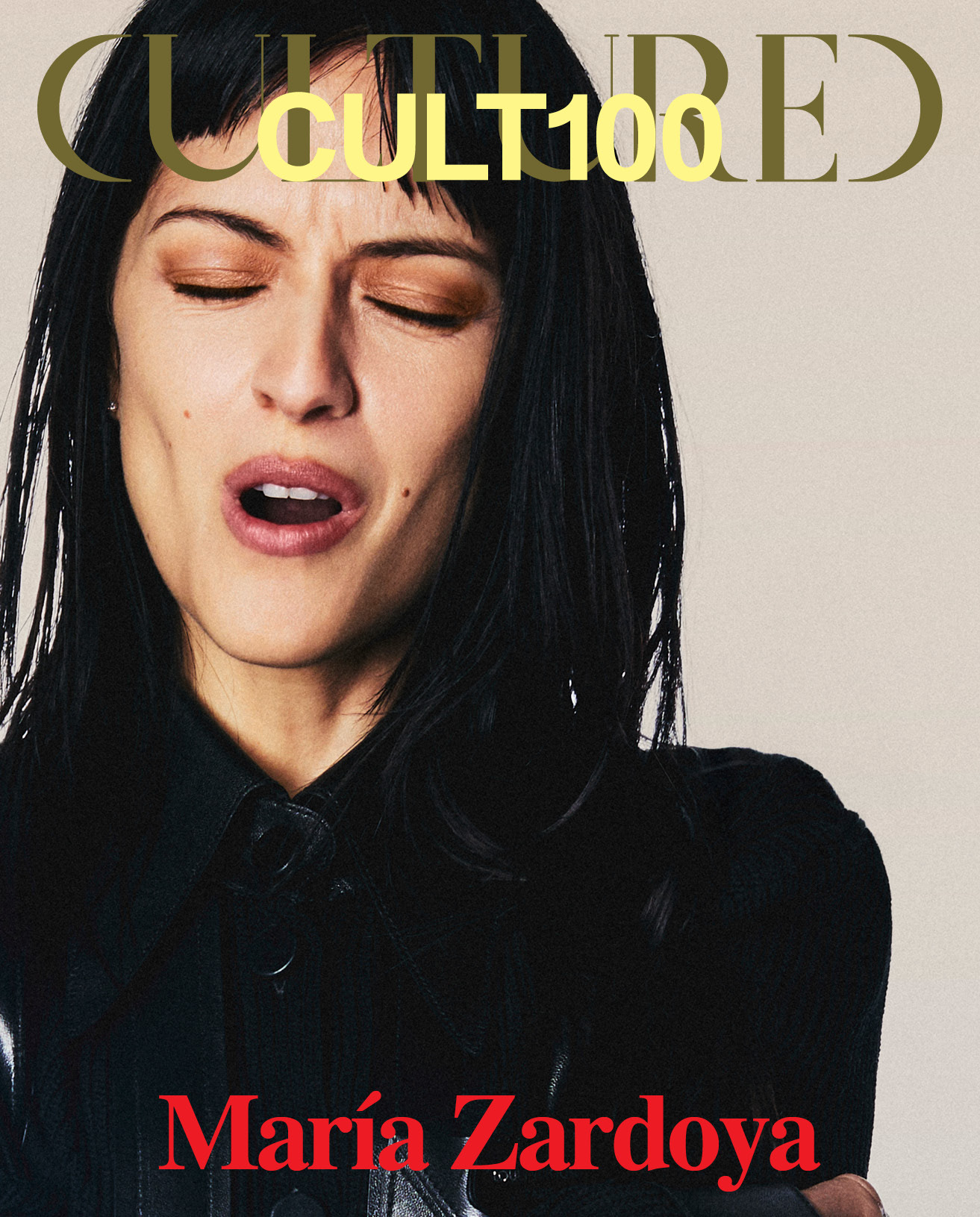
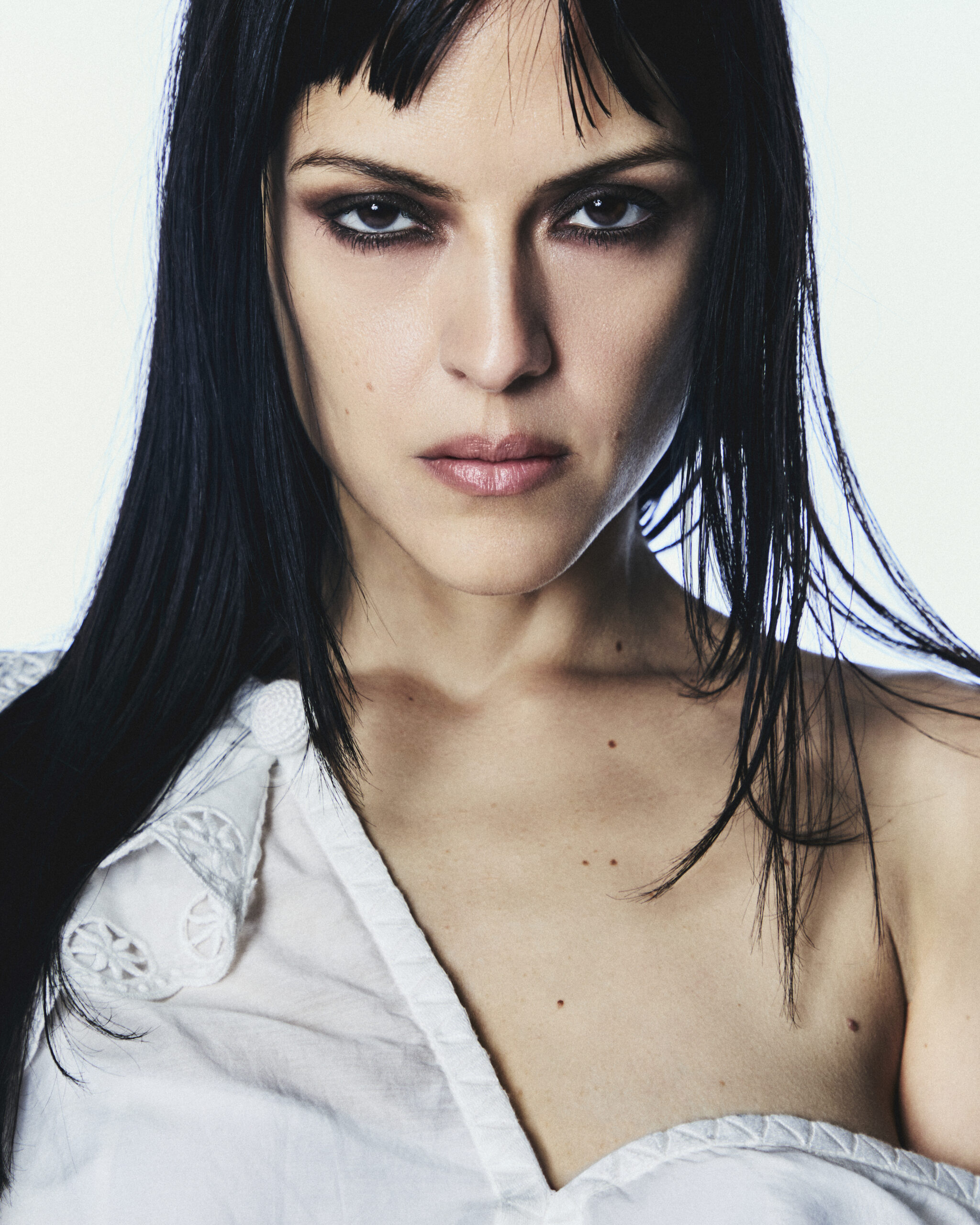
“We never anticipated getting this big,” says María Zardoya. “It takes 10 years to become an overnight success.” The singer, all jet-black hair and puckish grunge, seems teleported from the ’80s heyday of female rockers—thanks in part to the sharp features the YSL Beauty Voice accentuates with a drawer of Make Me Blush and other staples. “It makes me look a little more alive,” she winks. But her rise, alongside the trio of mop-headed boys she shares the stage with, bears the indisputable mark of the digital age.
The Marías came together the same year TikTok launched—if you know the band’s name today, that’s likely thanks to the explosion of the app and its forefather, Instagram. Zardoya met Josh Conway, who later became her boyfriend (they’ve since broken up) and the band’s drummer/producer, at the Kibitz Room, the bar-venue tucked inside Canter’s Deli in Los Angeles, at a gig she played in late 2015, shortly after moving to the West Coast to pursue music. Jesse Perlman (guitarist) and Edward James (keyboardist) signed on soon after. Together, they made the Marías a staple on the indie circuit, accruing a fan base of young romantics with a steady flow of bedroom pop to cry or make love to. Then came “No One Noticed.”
The song—which has since become synonymous with the Marías as a band—boasts a lifespan nearly as long as the group’s as a whole: In 2020, Zardoya posted a quick voice note to Instagram that piqued the interest of her followers. Two years and a debut album later, the singer uploaded the completed version of “No One Noticed” to the Internet—despite label concerns that the song was not “commercial” enough to anchor the Marías’s 2024 album Submarine. Fans responded rabidly, and it ultimately made it onto the tracklist. Within two months, the song became the soundtrack to hundreds of thousands of user-generated clips from around the world—long-distance friends reuniting, monologues on lost love, K-pop fan-cams. Today, it boasts over a billion streams on Spotify.
“We never anticipated getting this big. It takes 10 years to become an overnight success.”
At the Grammys this February, where the group was nominated for Best New Artist, Zardoya captivated the audience with her high, wispy register—delivering an extended verse of the song in English and Spanish, a surprise for those familiar with the track’s 30-second snippets online. Increasingly, Zardoya is finding herself confronted with the gulf between the Marías’s new acolytes and day-ones. “Our fan base has been changing, and our earlier fans are reckoning with that,” Zardoya tells me over Zoom, adding, “but at the end of the day, they’re all yearners.”
For the singer, who writes most of the Marías’s lyrics, that yearning translates to a discography that breathlessly annotates the rhythms of relationships (from intoxicating beginnings to bitter ends) in English and Spanish. Zardoya moved to Georgia from her native Puerto Rico with her family at the age of 4 and made regular trips back and forth, with record-store stops on either end. “Being raised in both cultures and consuming media in both languages, I flip-flop between the two,” she explains. “I think it’s a way of life for myself and for so many other people in the Latin community who were raised in the U.S.”
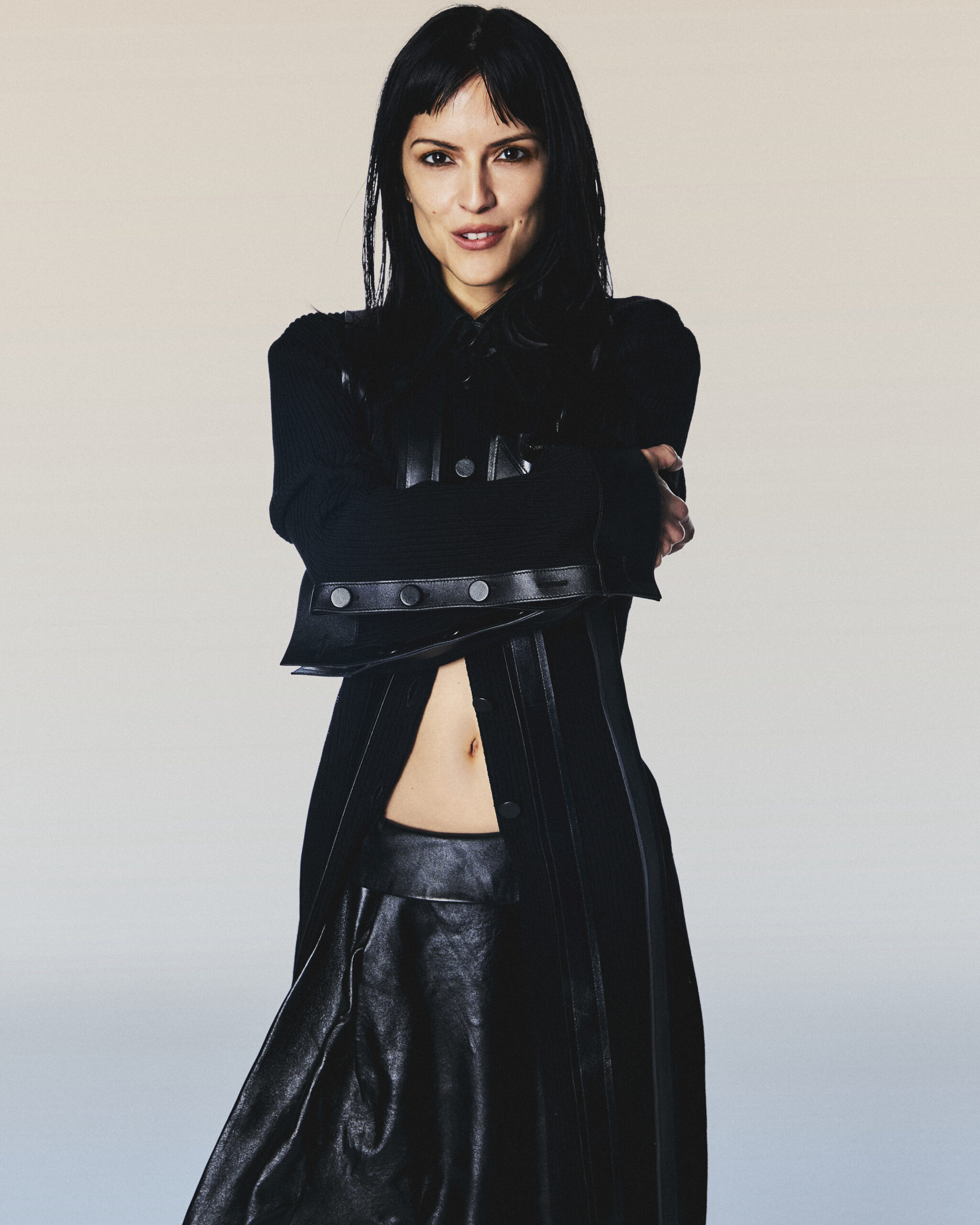
During the pandemic, Zardoya’s cross-cultural sampling caught the attention of fellow Puerto Rican musician Bad Bunny, who was holed up at home with the band’s debut record, CINEMA. He tapped the group for a feature on “Otro Atardecer” from his 2022 album Un Verano Sin Ti. “Not only was that album a love letter to Puerto Rico,” Zardoya notes, “but I think it was Bad Bunny’s way of showing the world all the colors of Latin music.”
The two artists’ oeuvres are, in essence, the sound of the Internet right now: a multilingual, mixed-genre amalgamation of the first three decades of the 21st century—intimate, at times despondent. As much as one vocal minority might like to return America’s sound waves, and by extension the country itself, to what they perplexingly refer to as their “traditional” roots, the music that listeners rabidly consume tells a different story. In 2024, Latin music was the U.S.’s fastest-growing genre, and by last year, its growth outpaced the market as a whole.
The genre’s rapid ascent was canonized when Bad Bunny was awarded Album of the Year the same night that the Marías made their Grammys debut, and then took to the Superbowl stage the next weekend. Researchers declared last year that a record one in five Americans identified as Latin, but even that multitude wouldn’t account for the droves that switched on their TVs at halftime this year, or the many fans Zardoya recalls seeing cry, hold hands, and sing along at her shows.
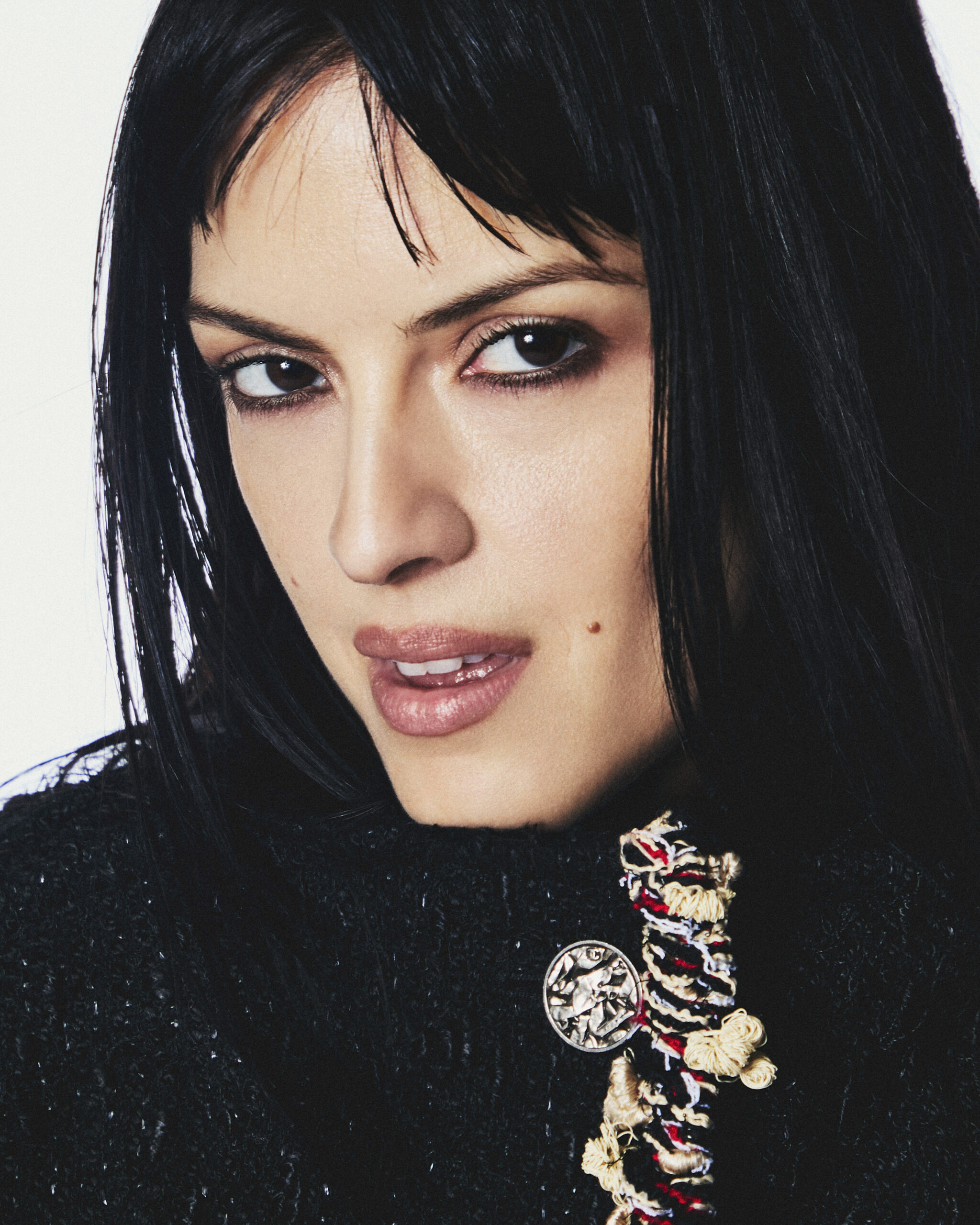
The singer’s latest project and first solo album—Melt, released in 2025 under the name Not for Radio—sees her leaning further into her Latin touchpoints: Over plucked strings, Zardoya sings, “Si te vas, si te vas, ¿qué pasará? / ¿En mi hogar, en tu hogar, nuestra casa?” (“If you leave, if you leave, what will happen? / In my home, in your home, in our home?”) The musician began mulling over the prospect of striking out on her own in 2022, after breaking up with her longtime partner, Conway. With the future of the band uncertain, the foursome agreed to label-sponsored group therapy. (When I ask her how often labels send entire ensembles to couples therapy, Zardoya quips, “We’re probably some of the only ones.”)
“Our fan base has been changing, and our earlier fans are reckoning with that, but at the end of the day, they’re all yearners.”
But following the runaway success of the brutally honest breakup album Submarine, Zardoya felt secure in stepping away for her own project. “I wanted to do something that was a little bit more like me in the forest,” she says. “I think fans will hear [Josh’s upcoming] projects and my solo project and be like, Oh, this is what makes the Marías sound.”
The band is developing its third record with the lessons the members learned touring these projects in mind. “More so than any write-up or comments that you can get online, until you see someone in person, look them in the eye, and talk about the music, it doesn’t feel like it’s actually affected someone,” Zardoya muses. “New or old, we’ve always made music that is honest.”
Hair by Hikaru Hirano
Makeup by Nina Park
Production by Kristen Prappas and LOLA Production
Production Management by Kylie Govinchuck
Order your copy of the CULT100 issue here.
More CULT100 Cover Stories Here
Keke Palmer Never Got to Play the Boss, So She Became One
Salman Rushdie Tells Laurie Anderson the Truth Behind His New Ghost Stories
Vinnie Hacker, the 23-Year-Old Michelangelo of Thirst Traps, Plots a Life After Influencing
An Amateur Psychological Evaluation of Novelist Emma Cline
How Sombr Emerged From Dimes Square Fully Formed as a Pop Star Heartthrob
Sign up for our newsletter here to get these stories direct to your inbox.




 in your life?