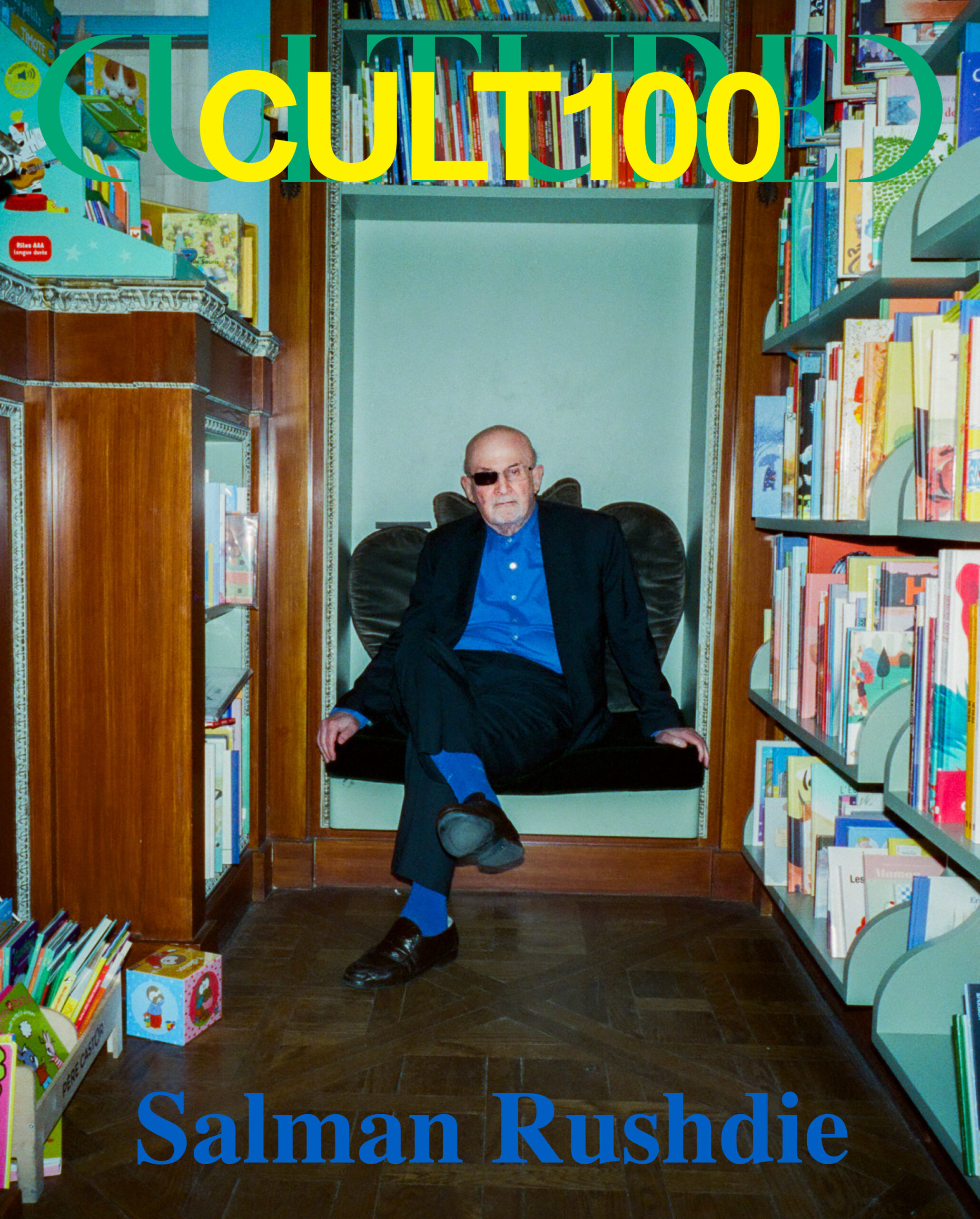
As powerful as his personal mythology has become, Salman Rushdie the public figure has never fully eclipsed Salman Rushdie the writer. He remains first and foremost one of our leading weavers of words and worlds, penning no fewer than 15 novels, two memoirs, and countless essays. At 78, his larger-than-life biography—a childhood in Bombay, encounters with novelist E. M. Forster at Cambridge, and decades in exile Stateside—has most recently informed last year’s The Eleventh Hour, a collection of short fiction that spans the three countries in which he’s lived and worked.
A call for his death by Ayatollah Khomeini in 1989—the year after Rushdie published The Satanic Verses, which reimagined the life of the prophet Muhammad—pushed the Indian-born writer to the U.S. Thirty-three years later, Rushdie was almost killed when he was stabbed in New York. His resulting memoir, 2024’s Knife, was adapted into a documentary of the same name that premiered in January at Sundance. The Alex Gibney-directed production is more personal than polemic, charting his recovery alongside his wife, the poet and novelist Rachel Eliza Griffiths.
Between recent film and literary festivals, at which he alternately promoted projects that recount his singular time on Earth and are inspired by it, he sat down with the artist and experimental electronic music pioneer Laurie Anderson. His fellow legendary New Yorker has also been on the road as of late, touring her new show, Republic of Love, with the band Sexmob. Between public appearances, the old friends let us in on an intimate conversation that touched on everything from cultural boycotts to birthday planning. —CULTURED
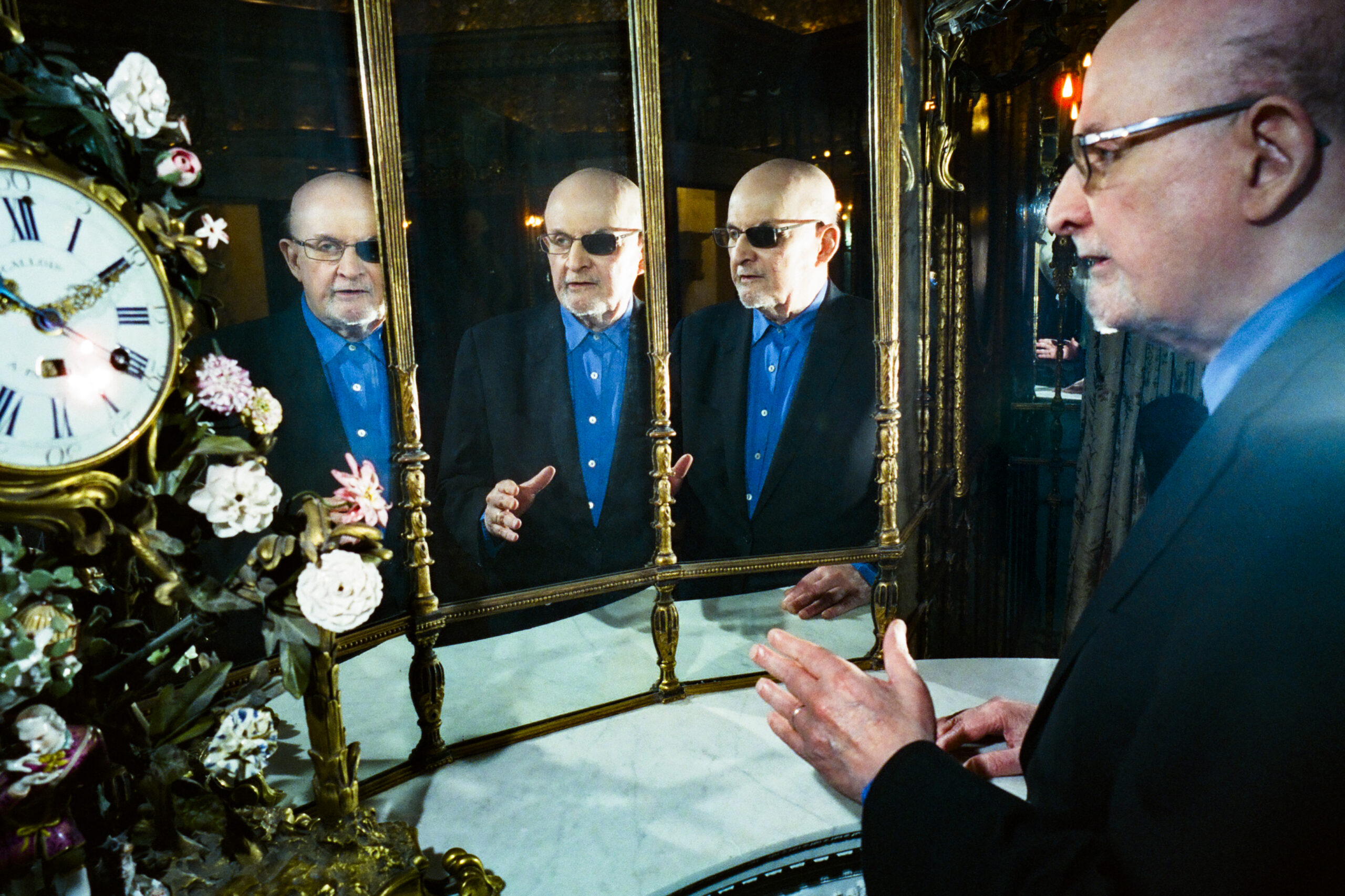
Laurie Anderson: How was Sundance?
Salman Rushdie: Well, Sundance was extraordinary. The film had a wonderful reception. I can only think that the momentum will eventually lead it to whatever streaming service.
Anderson: I really think, in a way, streaming makes more sense for so many things. Maybe I’m just getting lazy. I would rather stream something than go out to a movie for the most part.
Rushdie: One of the big differences between Eliza [Griffiths, Rushdie’s wife] and me is that I love going to the movies, and she would rather stay home and watch it on TV.
Anderson: I went once in the afternoon by myself to see a movie. I was enjoying the movie, and it went to a kind of quiet part. I heard this all this crunching and popcorn, and I’m looking around thinking, Who is eating all this popcorn? I realized it was coming from down towards the front. I walked down, and there were maybe 40 rats chomping away on the corn and candy and all the Coke that just slides down to their territory.
What else do you have coming up then?
Rushdie: I just had a weekend of two festivals. I was in New Orleans and then after that, Tucson, Arizona.
Anderson: The last time I was there was crazy hot. You had to have pot holders in your bag for the door handles.
Rushdie: We went for a drive, and it’s amazing: cactus forests in the mountains outside Tucson. I had this idea that maybe the reason why aliens show up in the desert where all these cacti are is because they look like cacti and they recognize them as their relatives.
“We’re going to get crushed if we can’t at least 50 percent of the time be funny about serious things.” —Laurie Anderson
Anderson: What about those blow-up balloons that you see gas stations, the ones that are waving around around? That’s my cartoon version of an alien.
Rushdie: A Jeff Koons. In Tucson, I was in conversation with Gary Shteyngart.
Anderson: What was he doing out in cactus land?
Rushdie: He’s got his book called Vera, Or Faith. Gary, as you know, is the funniest writer in America, so we had very good chat.
Anderson: Oh, I bet that was fun. What does he make of what’s going on in the world?
Rushdie: He’s Russian. So he has some experience or some knowledge of another kind of extremism. And he’s good at being funny about serious things.
Anderson: Is that a good way to go right now? We’re going to get crushed if we can’t at least 50 percent of the time be funny about serious things.
Rushdie: I think the problem is that daily life is so full of this noise. I think it might be the artist’s business to provide a different kind of sound. I’m just I’m so pleased that this book of stories that came out seems to have been received by people in that way that they find beautiful and joyful—because they’re all kind of about death.
Anderson: That’s a part of life. My little dog Willie is dying, and it’s so intense to be with him now because life is so close to death. Watching an animal who is just pure energy go, you know, it just feels bad.
Rushdie: I remember your previous dog, Lolabelle, who was also a joy, and you made those paintings of her.
Anderson: Lolabelle in the Bardo. I wondered what it would be like to be in bardo as a person or as an animal. I mean, it’s just such a shift of consciousness. You really suddenly are catapulted into another place.
Rushdie: Eliza and I had lost her dog, a border terrier called Hero.
Anderson: I remember her border terrier because mine’s border also.
Rushdie: He was old, like 15.
Anderson: Will’s 14.
Rushdie: But then we lost him just a year and a bit ago. I don’t think we’re going to get another one. I think we’re going to be dogless for a while.
Anderson: I can’t live without a dog. No dog walking, no nothing? I remember so clearly how after Lou [Reed, Anderson’s partner] died, for about two months, every single night we had to do the same thing: Will insisted on going from room to room, looking in every corner. And then after we’d done the whole house, he insisted on doing it again. We always ended up in the closet where a lot of his jackets were hanging. That was a big comfort to Will, to see the jackets for a while.
Rushdie: That’s so interesting. Actually, you know, one of the stories in the book is the first time I’ve ever written a ghost story.
Anderson: Wow. Why did you want to tell that story?
Rushdie: Well, I wanted to write for a long time about having been at Cambridge a million years ago. I graduated in 1968. I was at King’s College, and one of the good fortunes that I had was being there at the same time as E.M. Forster, the author of Passage to India. I was 19 and he was almost 90. He was quite approachable, sitting in the students’ little bar.
When he discovered that I had an Indian background, he became extra friendly because India had been so important in his life. Not only because of Passage to India, but also because the two men he was in love with in his life were both Indian men. So I had a few encounters with Forster, and that became the germ of the story.
I wasn’t actually intending for him to be dead. But then one day I wrote this sentence, which said, “When he woke up that morning, he was dead.” And I thought, What did I just do? That’s what the story became: The reason this old gentleman can’t be at rest is that he needs justice.
Anderson: Do we have to contend with the revenge of ghosts as well as living people? There’s so much revenge going on.
Rushdie: I know. But some of it’s fun.
Anderson: I’m going to try to see the fun side of revenge. Revenge is kind of ridiculous.
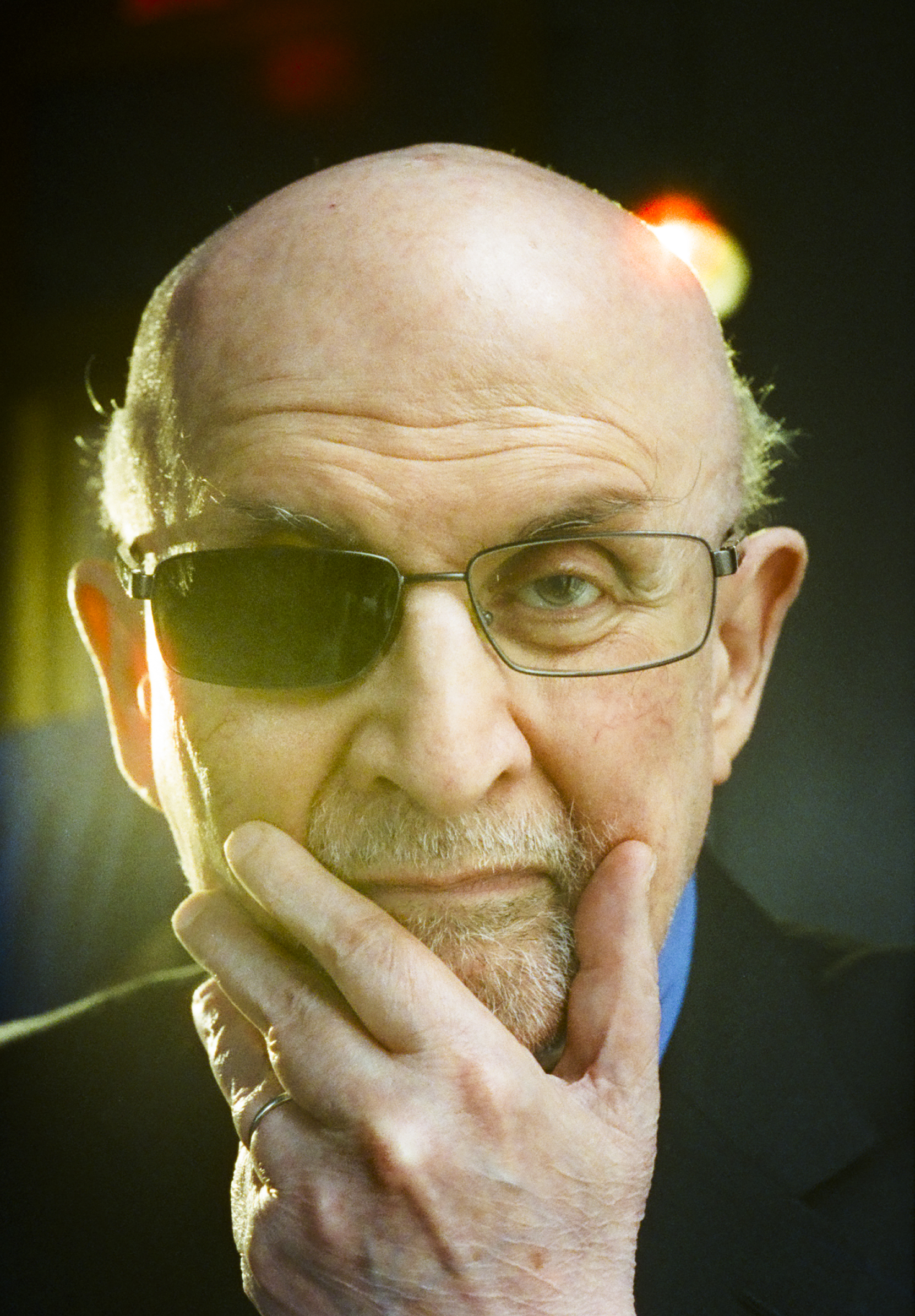
Rushdie: Actually, two of the stories in this collection are kind of revenge stories. One of the others is set in India in my old hometown. It’s about this young musician woman who makes the mistake of marrying into a billionaire family.
Anderson: Oh, that’s a terrible mistake.
Rushdie: They kind of treat her awfully.
Anderson: Of course they do.
Rushdie: But then she discovers that her music contains magical powers, and she uses them to get even. I just thought the billionaires need to have a bad time.
Anderson: They don’t understand music generally.
Rushdie: No, they don’t. Speaking of music, what are you doing?
Anderson: Last year I was part of a big festival in Vienna. The theme was the rise of fascism in Europe, and they asked if I would give a two-hour talk on the relationship of love and government. Now, I don’t usually get assignments. But I thought, you know, I’m going to accept this one. They said it’s going to be two hours at ORF, which is the radio station where Hitler announced the annexation of Austria. It was totally a Nazi place. And I talked for two hours on love and government.
Rushdie: Two hours is a long time.
“I just thought the billionaires need to have a bad time.” —Salman Rushdie
Anderson: It’s a long, long, long time. I started with Cornel West, who said, “Justice is what love looks like in public.” I thought, That’s where I’m going to start.
Rushdie: That’s a great line. Did you publish it?
Anderson: I probably will. But right now it’s a series of talks and songs. I’m doing it with the band, and I’m going around the world.
Rushdie: Speaking about Nazis. I was once in Vienna during the run-up to an election campaign when the kind of neo-Nazi party was actually doing scarily well. There was a huge anti-Nazi demonstration in this famous square called the Heldenplatz. Heldenplatz is famous because there’s a balcony there from which Hitler made one of his most famous speeches, so it was a way of reclaiming the land from that memory. And they said that I should say something. I don’t speak a word of German. So I had to write something in English and they translated it into German for me. I had to learn it phonetically.
Anderson: Jawohl [Yes in German], how did you do?
Rushdie: On the day of the event, it was pouring rain. I mean, just belting down with rain. And everybody was very worried because they thought if people didn’t come then that would give a propaganda vehicle to the far right. But actually, everybody came. The Heldenplatz was absolutely crowded, of course, with young people, soaked to the skin and not caring, wanting to be there. It was actually one of the most moving things I’ve ever been part of. And I managed to get away with speaking my bit of German.
Anderson: I’m sure it was beautiful. It can be a lovely, lovely language. Not in my mouth. It was very clumsy.
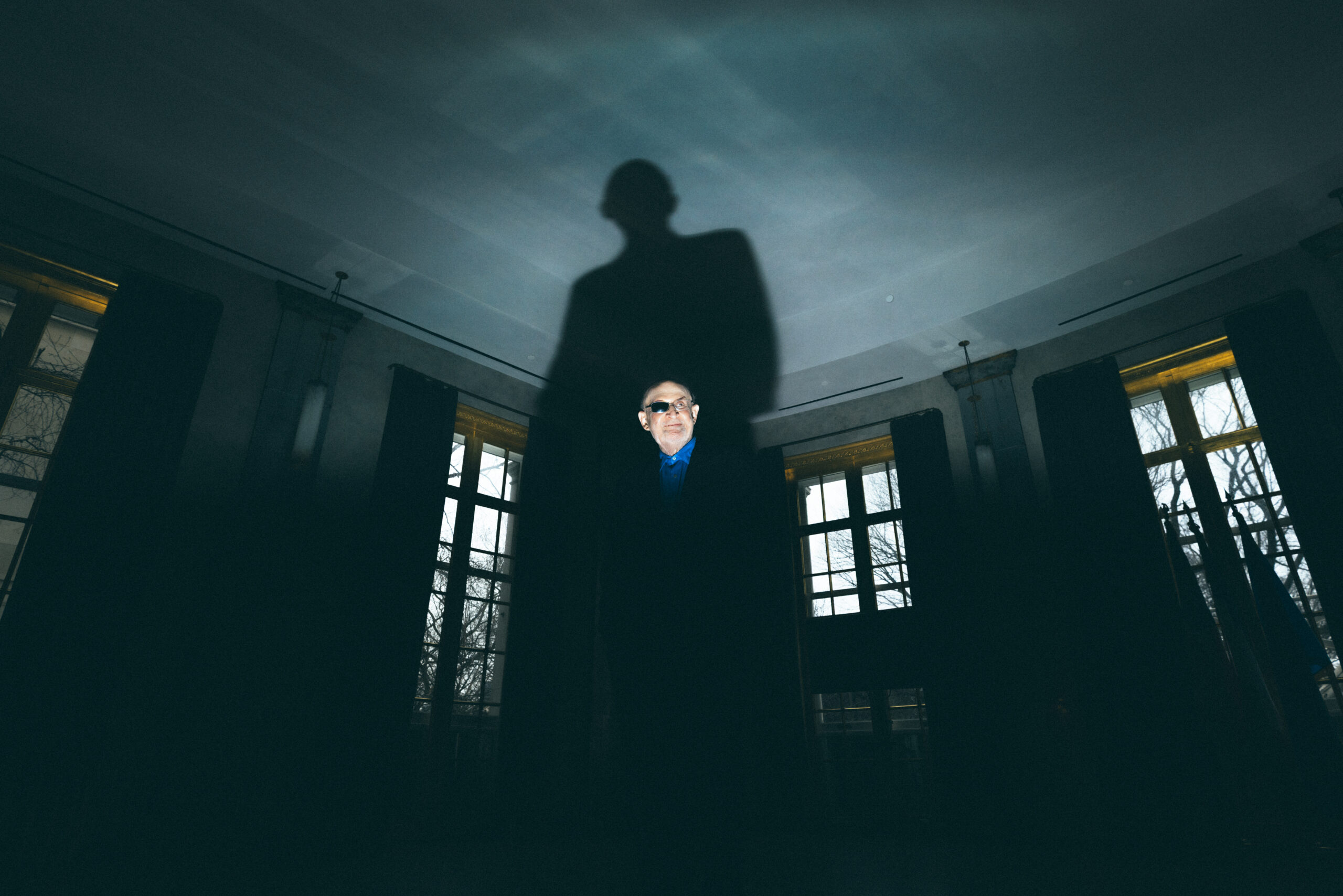
Rushdie: So you’re off on tour where? Europe?
Anderson: Our first stop is Big Ears in Knoxville, which is really a wonderful place because it’s the weirdo fringe stuff. That’s what I love. And then I go on a short European tour.
And then I’m going to Venice because I’m in the Biennale. I’m going to do a big painting of a map of the world [in the central exhibition]. I’m now in the middle of a lot of controversy with other artists in the Biennale because Israel is renovating their pavilion. So they decided we’re not going to look for another space in Venice. We’re going to move into the middle of the Arsenale, which is not where national pavilions are. It’s where different artists from all over the world are, with our security forces.
The controversy for me is I do not believe in cultural boycotts ever.
Rushdie: No, I don’t either.
Anderson: I just think everyone should come to the party. Israel should come. Palestine should come, although right now they don’t have a pavilion and they’re not invited. But that’s not the issue right here. The issue is like bringing police and soldiers into the middle of an international art exhibit and having them stand there.
Rushdie: That’s not good. Actually, I’m a little bit involved with the Biennale this year because there’s this British Kenyan painter who I like very much called Michael Armitage with a big show in the Palazzo Grassi. I wrote a piece about him for the show for the catalogue. Now I’m trying to work out if I can actually go, but I won’t be there at the opening.
Anderson: Don’t come to the opening anyway.
Rushdie: It’s awful. I’ll be later.
You know, I think CULTURED magazine doesn’t know that we have almost the same birthday.
Anderson: Well, what are you doing for your birthday this year?
Rushdie: I have no plan.
Anderson: Me either. I never have plans. Let’s make a plan. I have a nice roof. It’s going to be blooming with peonies.
Rushdie: Well, let’s see if we can have another one of our joint birthday parties.
Anderson: That’s a great idea.
Rushdie: A good way to end this talk.
Anderson: We accept gifts and birthday cards!
Photography Assistance by Brian Karlsson
Location: Villa Albertine
Order your copy of the CULT100 issue here.
More CULT100 Cover Stories
We Gave Novelist Emma Cline a Retro Psychological Evaluation
Vinnie Hacker, the 23-Year-Old Michelangelo of Thirst Traps, Plots a Life After Influencing
Lena Dunham Checked Out of the Hype Machine. Is She Glad to Be Back?
How Sombr Emerged From Dimes Square Fully Formed as a Pop Star Heartthrob
Marcello Hernández, SNL’s Youngest Cast Member, Turns to Jamie Foxx for Advice
Sign up for our newsletter here to get these stories direct to your inbox.






 in your life?