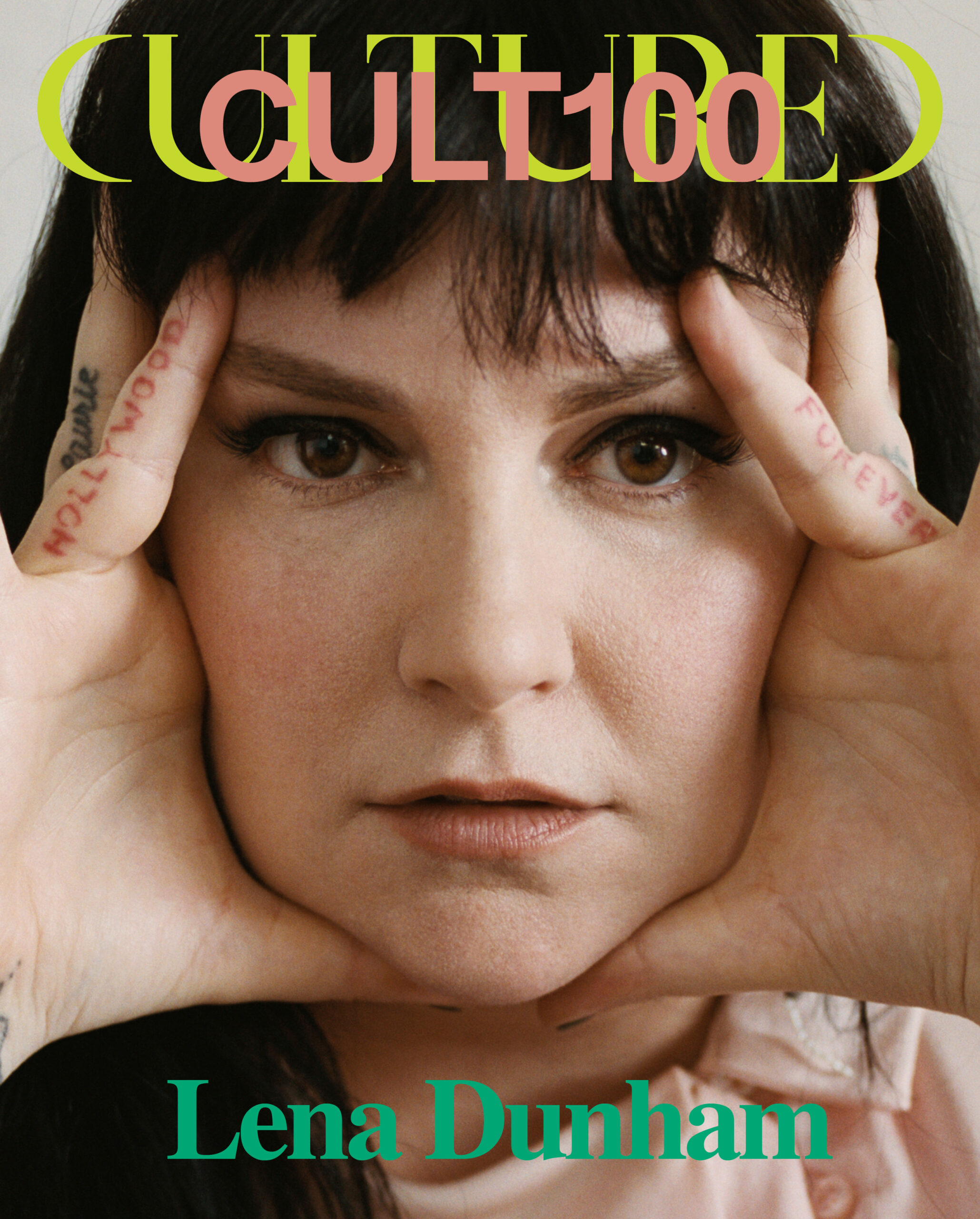
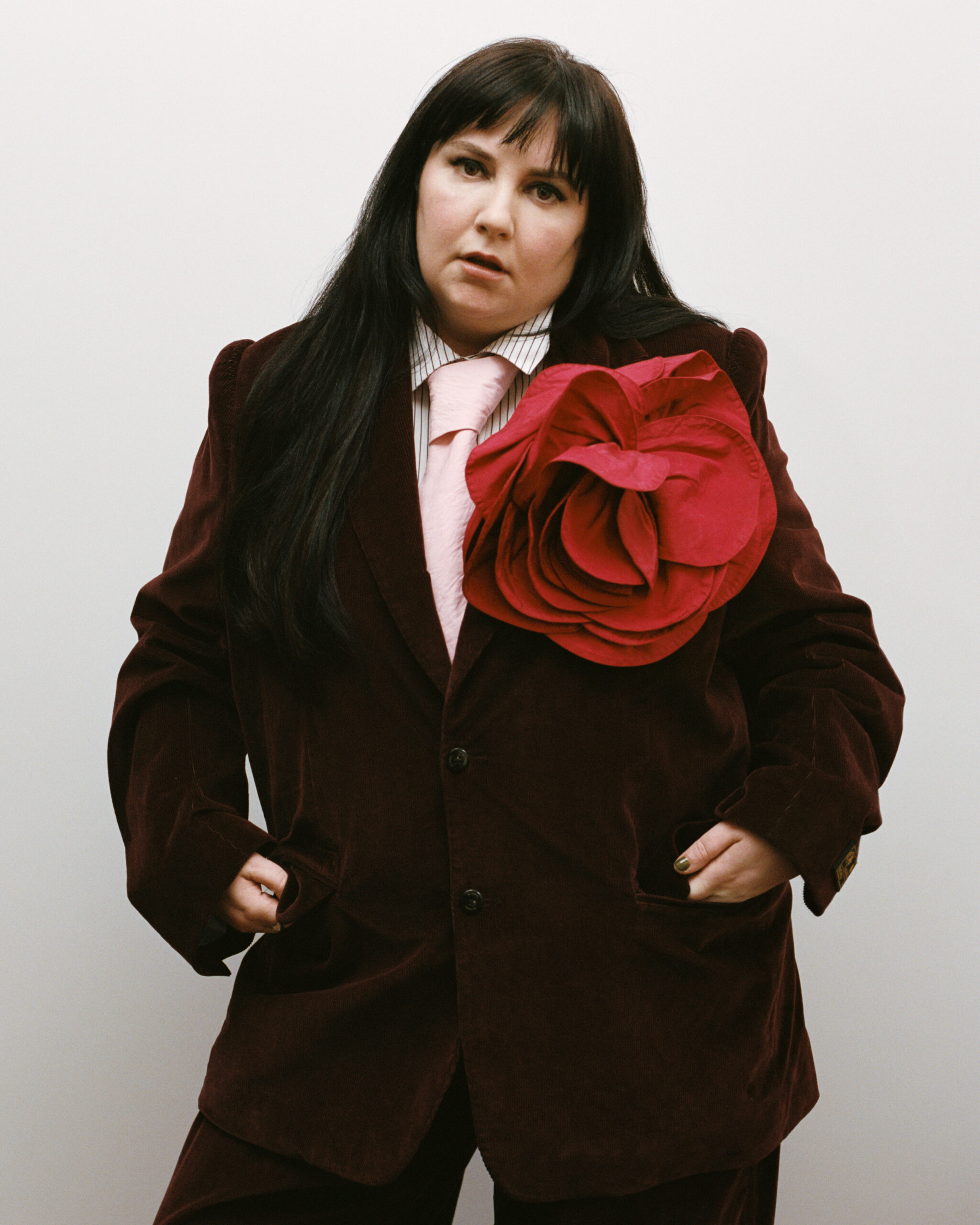
“Last night at the bodega, I saw a 20-something girl who looked like she’d had the worst day imaginable,” Lena Dunham tells me on a recent afternoon in her New York apartment, teeing up the beginnings of a classically Lena Dunham tale. “Her bag was full of crap. She’d been moving from place to place all day. She went to buy a vape, and her credit card wasn’t working. I could see she was about to cry. I was like, ‘Just put that with my stuff,’” Dunham says. “I think she felt like her grandmother just bought her a vape. As I was leaving, she said, ‘I love your pants.’ I went, ‘I’m almost 40, so that’s great to hear!’”
Dunham beams, sweeping her bangs off the enduring baby face that has for more than a decade made her the patron saint of all the big city girlies who are going through it. When we speak, the writer—and director, actor, voice of her generation—is ensconced in a plush sanctuary of pink-patterned curtains, pink shams, and warm woods. Somewhere underfoot, two rabbits named Tammi and Tobi roam free. Dunham wears a zippy orange Hermès sweater and a necklace that resembles a beautiful, bejeweled kazoo. “I feel like I’m getting closer to what my inner persona always was—a weird old woman in knitwear on the street,” she says of her upcoming birthday this May, her relief about reaching life’s fourth floor palpable.
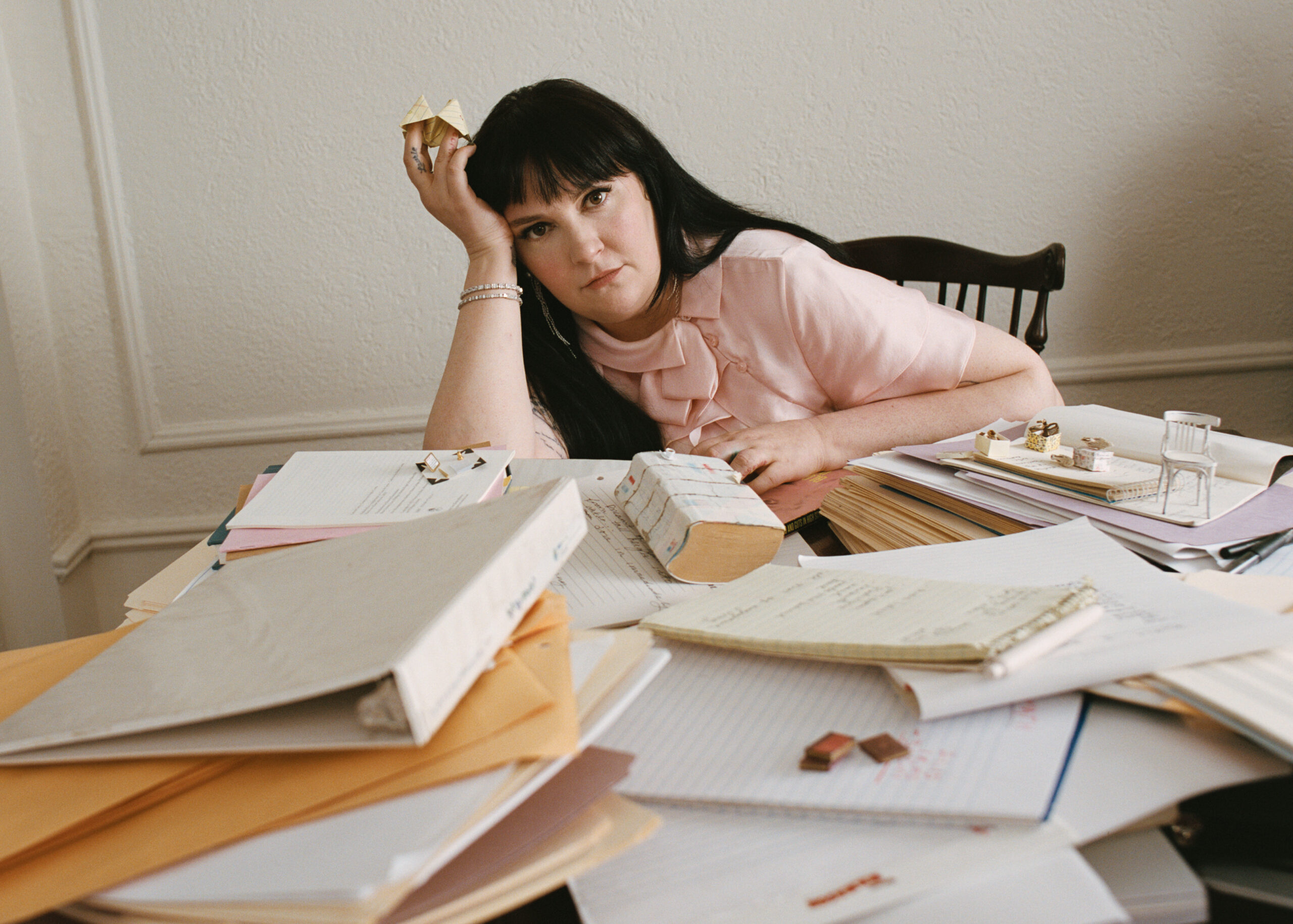
Dunham has operated in a confessional register for as long as we’ve known her, but in her new memoir, Famesick, she reveals the full extremity of the highs—and lows—to which Girls propelled her at the age of 25, detailing the pressure, addiction, and chronic illness tied to her endometriosis and Ehlers-Danlos syndrome diagnoses that ensued.
Trust that if you felt an ounce of exasperation with Dunham’s ubiquity in the 2010s, she was already plenty exasperated with herself and the contradictions of her life—filming her character Hannah and Adam’s goodbye scene with an untreated broken arm, popping out of rehab for a few hours to attend the Met Gala and then climbing into a black SUV to be driven straight back. It’s a portrait of fame and its costs, yes, but also an investigation into how it’s nothing short of excruciating to be young and in possession of a complicated body and complicated relationships.
“I was writing young womanhood in a way that was freer than what I’ve experienced. Less pain-filled, more joyous and raucous.”
“Getting sick is not that different than getting more famous,” Dunham writes of alternating between set and surgeries while under the industrial-grade scrutiny that anyone with a WiFi password in the 2010s will recall with a shudder. Eventually, Dunham got a hysterectomy, broke things off with her first great love, ended the creative partnership (with writer-director Jenni Konner) that practically raised her, and moved to London.
There, she found love again, got married, and kept working. It’s undeniable, more than a decade since her breakthrough, that her knack for portraying young beating hearts has stuck: Cue further Dunhamian investigations of girlhood that arrived in the form of Sharp Stick and Catherine Called Birdy in 2022 and the autobiographic-ish Netflix rom-com series Too Much in 2025. With the arrival of Famesick, Dunham seems to be signaling a willingness to start playing “Lena Dunham” for us again. She is still staying off Twitter, but she did get on Substack last year (“I feel like Hannah would have loved Substack”).
As we speak, it’s clear that Dunham’s interest in girlhood reaches beyond mere personal nostalgia. Sometimes, she admits, she gets confused about what happened in her own 20s versus what she wrote into Hannah Horvath’s. Was it possible that these fictional investigations into the earnestness of youth served as a way of reimagining her 20s and 30s—years that were hijacked by fame and illness? “One thousand percent,” Dunham answers. “A lot of making things for television or film for me is looking not necessarily at my experience, but at what it could have been… I was writing young womanhood in a way that was freer than what I’ve experienced. Less pain-filled, more joyous and raucous.”
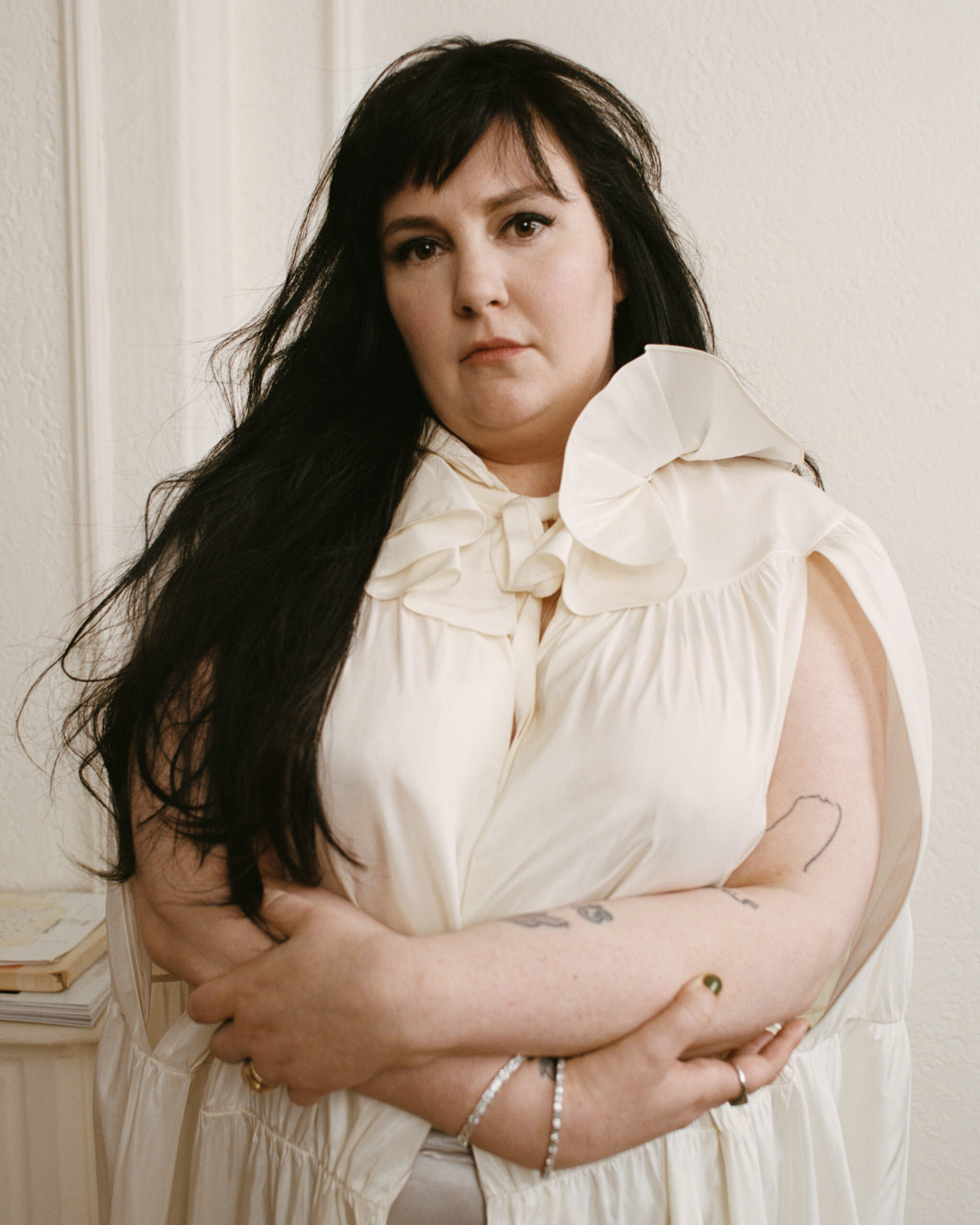
“Sometimes I have a real fantasy about riding this career hard until I’m, like, 55. Then I’ll go live on my pig farm and write romance novels.”
Tickled as she is by the vindication of Girls, which has reentered the zeitgeist with gale-like force amid hipster nostalgia and a lineup of Gen Z would-be successors emulating Dunham’s ethos of chaotic good, Dunham assures me that we, the people, will still have the chance to grow up alongside her. “Some of the projects that I’m working on now are very much about this moment: marriage, the ‘will they, won’t they’ of becoming a mother,” she says. (Her Netflix rom-com with Natalie Portman, who plays a 40-something therapist dating on both ends of an age gap, is currently in post-production.)
Then there’s the pseudo-retirement pipe dream: “Sometimes I have a real fantasy about riding this career hard until I’m, like, 55. Then I’ll go live on my pig farm and write romance novels.” She wonders aloud about starting with a wartime tryst, or something in the medieval world again. But the important thing for Dunham is to keep writing, to keep doing new things, to—in other words—stay young at heart.
Lately, for example, she’s been experimenting with watercolors. She loves them, she tells me, because they’re messy. “In my 20s, I thought if you’re going to make art, you’ve really got to make art,” Dunham says, settling back in her seat. “But now, I’m realizing I can just be a lady who sits in the house and paints. What a dream.”
Hair by Peter Butler
Makeup by Matin Maulawizada
Tailoring by Chloe Boxer
Prop Styling by Bailey Rose Brown
Associate Production by Maya Miro for Noted Collective
Photography Assistance by David Gurzhiev
Styling Assistance by Keanu Mohammed
Production Assistance by Valeria Moreno
Prop Assistance by Max Kotsonis
Order your copy of the CULT100 issue here.
More CULT100 Cover Stories
Keke Palmer Never Got to Play the Boss, So She Became One
Salman Rushdie Tells Laurie Anderson the Truth Behind His New Ghost Stories
Vinnie Hacker, the 23-Year-Old Michelangelo of Thirst Traps, Plots a Life After Influencing
We Gave Novelist Emma Cline a Retro Psychological Evaluation
How Sombr Emerged From Dimes Square Fully Formed as a Pop Star Heartthrob
Sign up for our newsletter here to get these stories direct to your inbox.



 in your life?