“New Humans: Memories of the Future”
New Museum | 235 Bowery
Ongoing
You may have noticed that the geopolitical events and populist rhetoric of the first halves of the 20th and the 21st centuries have begun to rhyme in the most terrifying of ways. So many of us have noticed, in fact, that pointing to the parallels has become its own kind of bland shorthand; dire observation and truism merge as this person or that development maps onto a grotesque feature of a cataclysmic past. Yet, just as I didn’t know how much I’d miss the New Museum until it was gone (or rather, I didn’t realize just how much I had missed it until it reopened last week after two years), I didn’t know how much I wanted to be pulled into the thrilling morass of modernity’s visual culture to find less obvious, less fatalistic symmetries between then and now—I didn’t know until Massimiliano Gioni delivered this absolute banger of a show.
“New Humans: Memories of the Future” inaugurates the institution’s OMA / Shohei Shigematsu and Rem Koolhaas-designed expansion, making use of the new New Museum beautifully with its more than one dozen energetic chapters, each composed of countless smaller conversations between artworks, artifacts, and curiosities from the last 100-plus years. Some 800 objects by more than 200 artists (as well as scientists, designers, and so on) span the three, now-bigger main exhibition floors, variously demonstrating how concepts of the human are transient and morphing, locked in a restless feedback loop with technological innovation. “New Humans” is a centennial debriefing of sorts, staged at the cusp of the A.I. epoch, the end of the platform era, the start of yet another war.
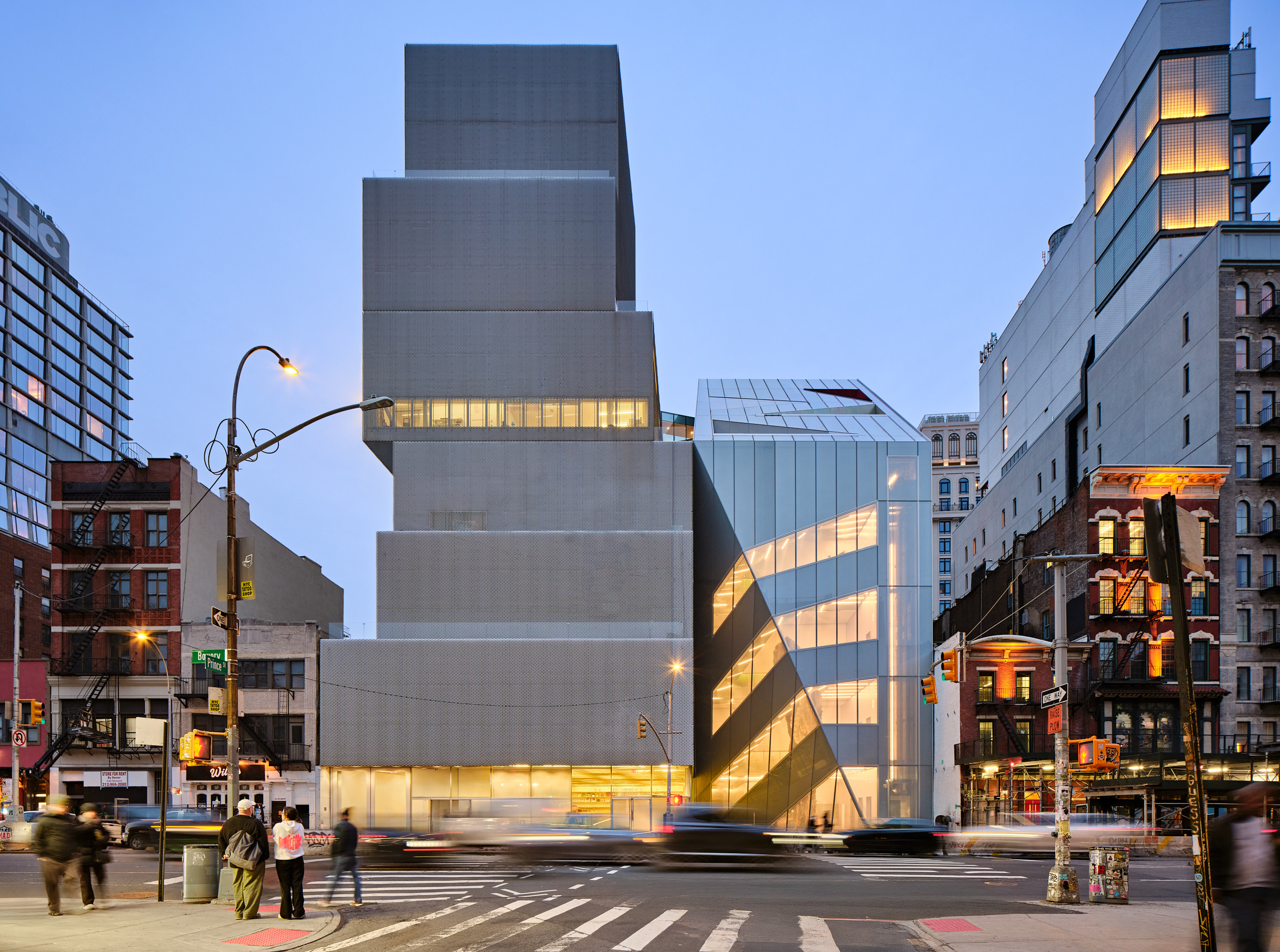
I liked the old New Museum, actually, architectural awkwardness and all, and I didn’t particularly think it needed to double in size (I wistfully recall its even scrappier incarnations, before its 2007 move to the Bowery). But, while it definitely feels like a different kind of museum now, I’m into it. Perhaps I’d be more hesitant to embrace the luxe expansion if the institution did not, right out of the gate, assert its proud traditions of adventurous, thematic shows and unconstrained, theoretically minded wall text, which, for this show at least, I love.
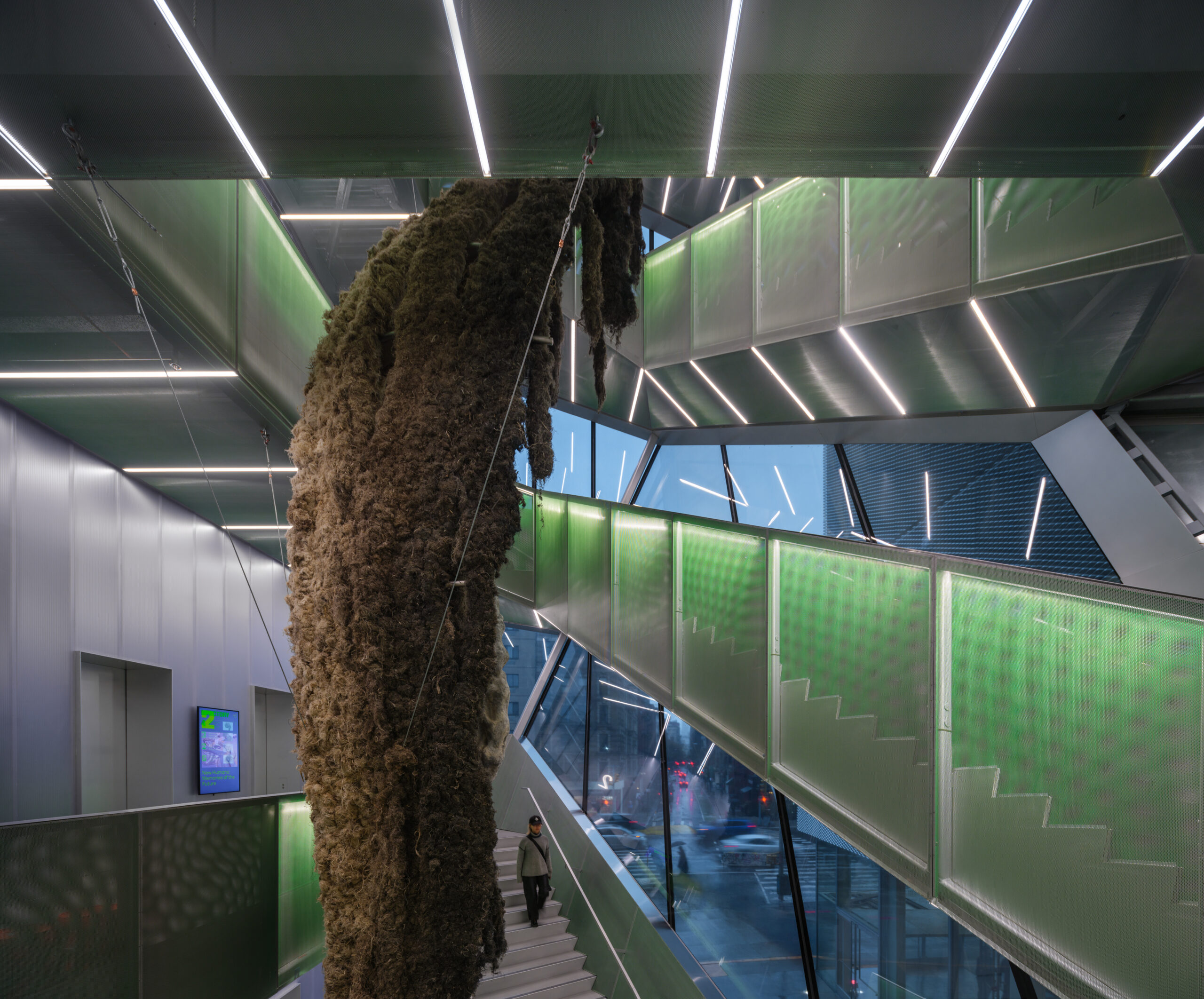
Beyond the additional 60,000 square feet and the undeniable flow, there is the Atrium Stair. Sunlit, vertebral, a little harsh, a real statement, it makes the original building and its addition feel like a single, purpose-built museum, providing walls on the landings for mural-scale works as well as a central void for… anything. Now, in the shaft-like space, a site-specific sculpture by Klára Hosnedlová’s rises from the lobby level to the fourth floor. Shelter, as the work is called, is a curved lattice hung with a shaggy, gloomily devouring textile mass. The Czech-born artist, of the first post-Soviet generation, engages with Brutalist architecture gone to seed, the material legacy of a utopianism long abandoned, and so her towering form—derelict and disorderly as well as, in passages, painstakingly embroidered—is an apt foil to the geometry and metal finishes of the Koolhaasian atrium, which deconstructs Machine and Space Age futurisms while, of course, extending their delirium. It’s also an apt prelude to the defining tension of “New Humans,” which Gioni names as one between “prophecy and archaeology.”
From the ominously titled (and indeed ominous) essayistic cluster “Reproductive Futures,” in the first gallery, on the second floor, you start to get a feel for how this epic undertaking will proceed. In the gray-walled room, the gleaming bronze ovoid of Constantine Brânçusi’s The Newborn (1), 1920/2003, echoes in the backlit embryos and floating fetuses of Lennart Nilsson’s LIFE Magazine photos from 1965. Angelic and alien in their infinite prelapsarian wombspace—divorced from the image of a human host—the images became poster “children” for abortion foes.
There is a less realistic, but truer, in utero form (a fetus in context, nested inside a pregnant figure) in a recent mixed-media work on paper by Wangechi Mutu. Mechanized women of different sorts appear in works by Duchamp and Picabia as well as in a neo-Dada figurative assemblage by Tamara Henderson, from 2018; Jenna Sutela’s glowing upright cylinder HMO Nutrix, 2022, is a synthetic human milk pump; Dalí’s fashy New Man hatches from a giant egg in a work from 1943. And that’s really just the start—even of just this first chapter.
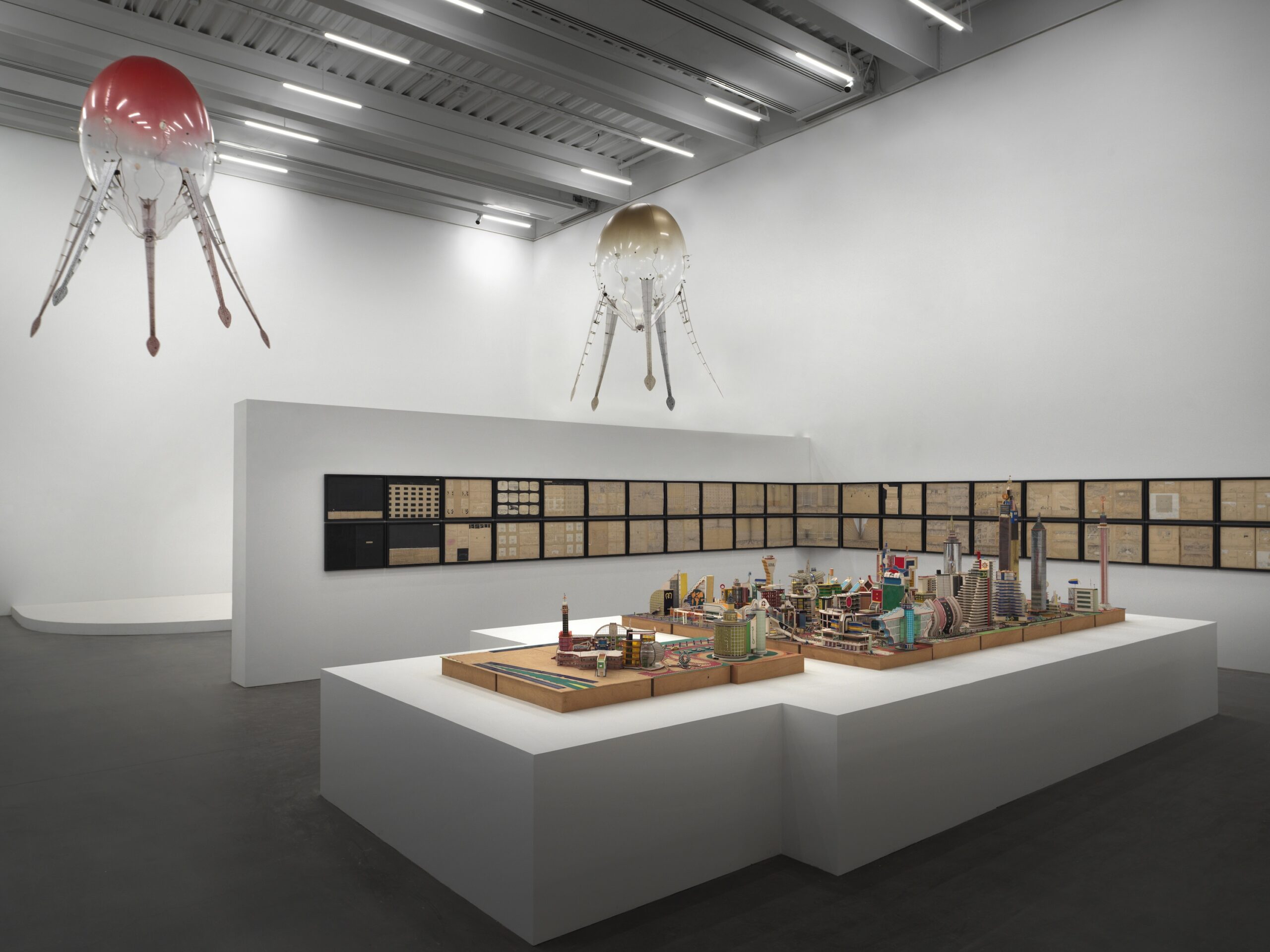
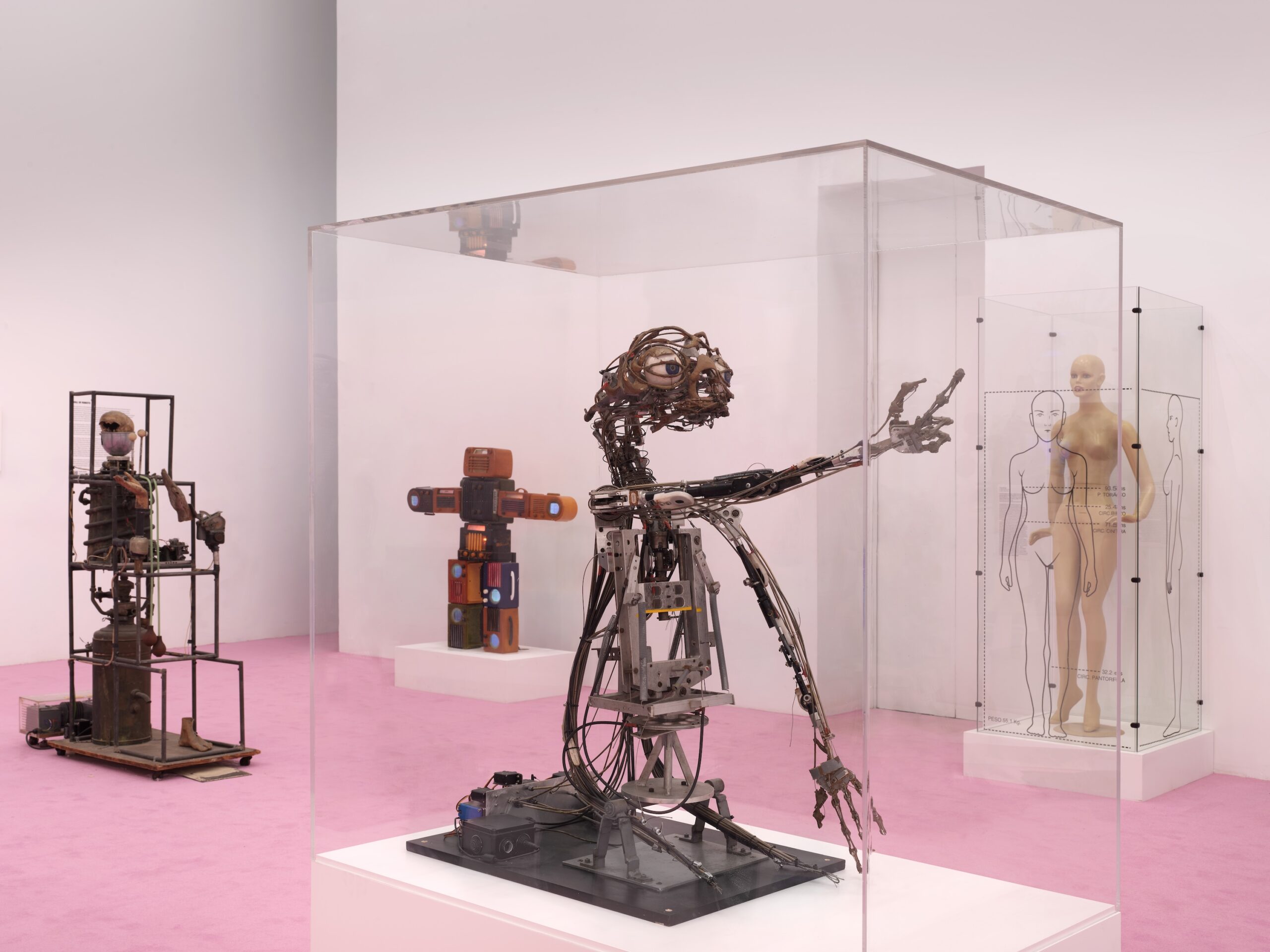
By the time you reach the final, fourth floor of the exhibition, you’ve been primed by other categories, such as “Mechanical Ballets,” “Prosthetic Gods,” and “Animacies,” to conceptually navigate the bubblegum pink carpeted “Hall of Robots,” where anthropomorphs (fantastic specimens by Nam June Paik, H.R. Giger, Lynn Hershman Leeson, Rammellzee, Cannupa Hanska Luger, and many more) are gathered. Adjacent to this gallery, in one of the most Instagram-friendly moments, Anicka Yi’s 2021 large-scale squid-like flying machines, called aerobes, float above tabletop models of imagined cities. These include Bodys Isek Kingelez’s intricate and festively painted Afrofuturist “extreme maquette” Ghost Town, 1996, and a group of buildings by Situationist International founding member Constant Nieuwenhuys from his 1960s automated, anticapitalist New Babylon. For a haunting counterpoint, Arata Isozaki’s images of utopian architecture, projected on top of a mural of a ruined Hiroshima (from Electric Labyrinth, 1968), loom on a wall behind.
In Gioni’s mode of fanciful/assiduous maximalism and open inquiry, quantity takes precedence over quality. What’s “good” here is that which is symptomatic, diagnostic, predictive, or representative, and thus the selection is unhampered by the inhibitions of good taste or even, in a sense, moral discernment. How else to inventory, with steely curiosity, those aesthetics born of totalitarianism and war?
Early 20th-century avant-garde responses to accelerating industrialization and the mass death of World War I—Futurism, Constructivism, Surrealism, Dada, Bauhaus, New Objectivity—are allowed their positions, oppositions, and collective ideological cacophony. But these movements’ artworks are contextualized less by their professed values than by the non-art objects of their time that mirror them.
Anna Coleman Ladd’s facial prosthesis from 1917-20, a sculpted and painted cheek attached to a pair of spectacles (ostensibly to conceal a damaged face), is cleverly and poignantly displayed near Hannah Höch’s collages from the 1920s, linking them as comments on the psychic fracture and physical disfigurement of trench warfare. And the more profound role of the intuitive arrangements in “New Humans” is to upend the timeline entirely with contemporary work that inherits and critiques the technological dreams and nightmares of the past.
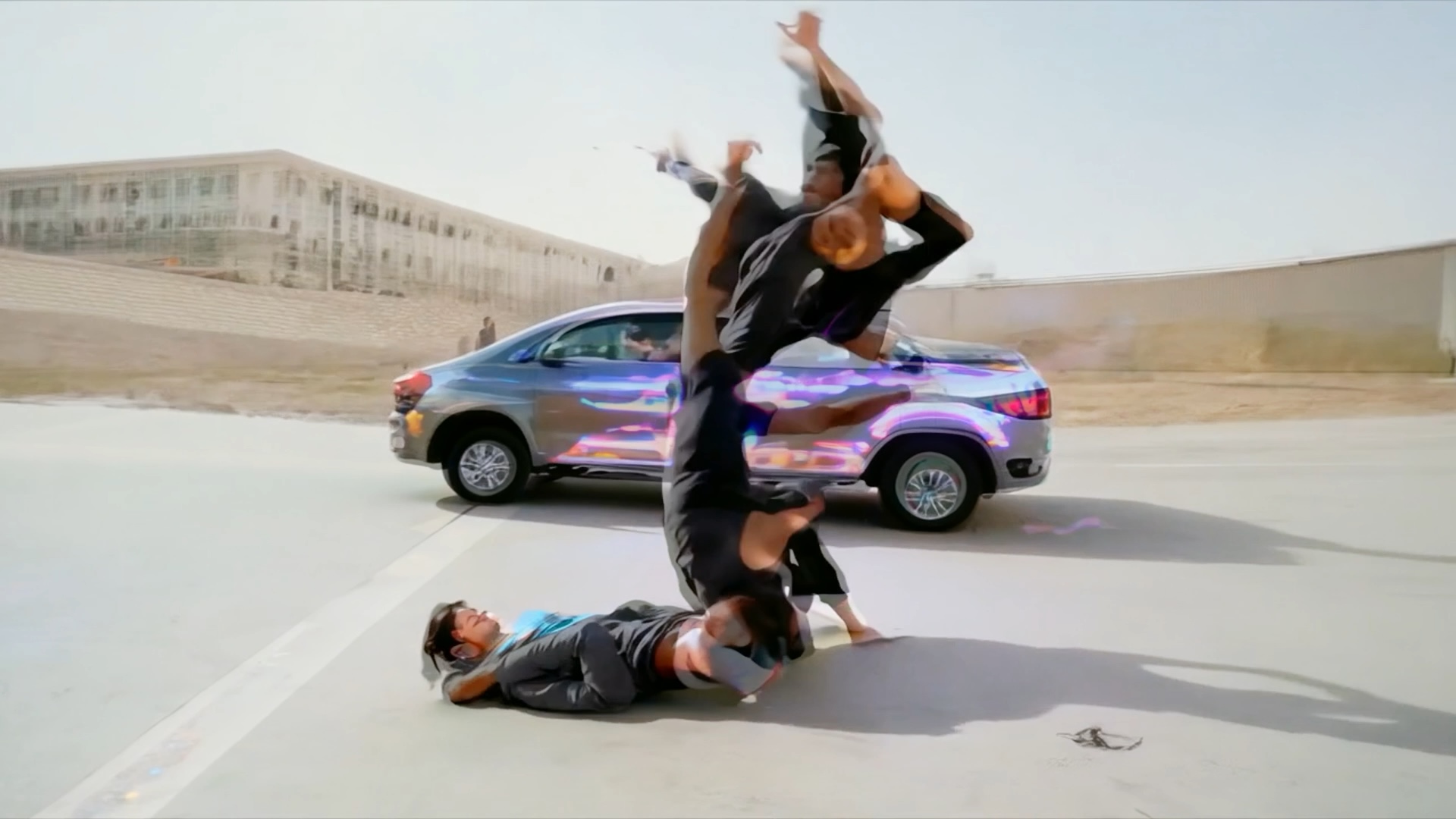
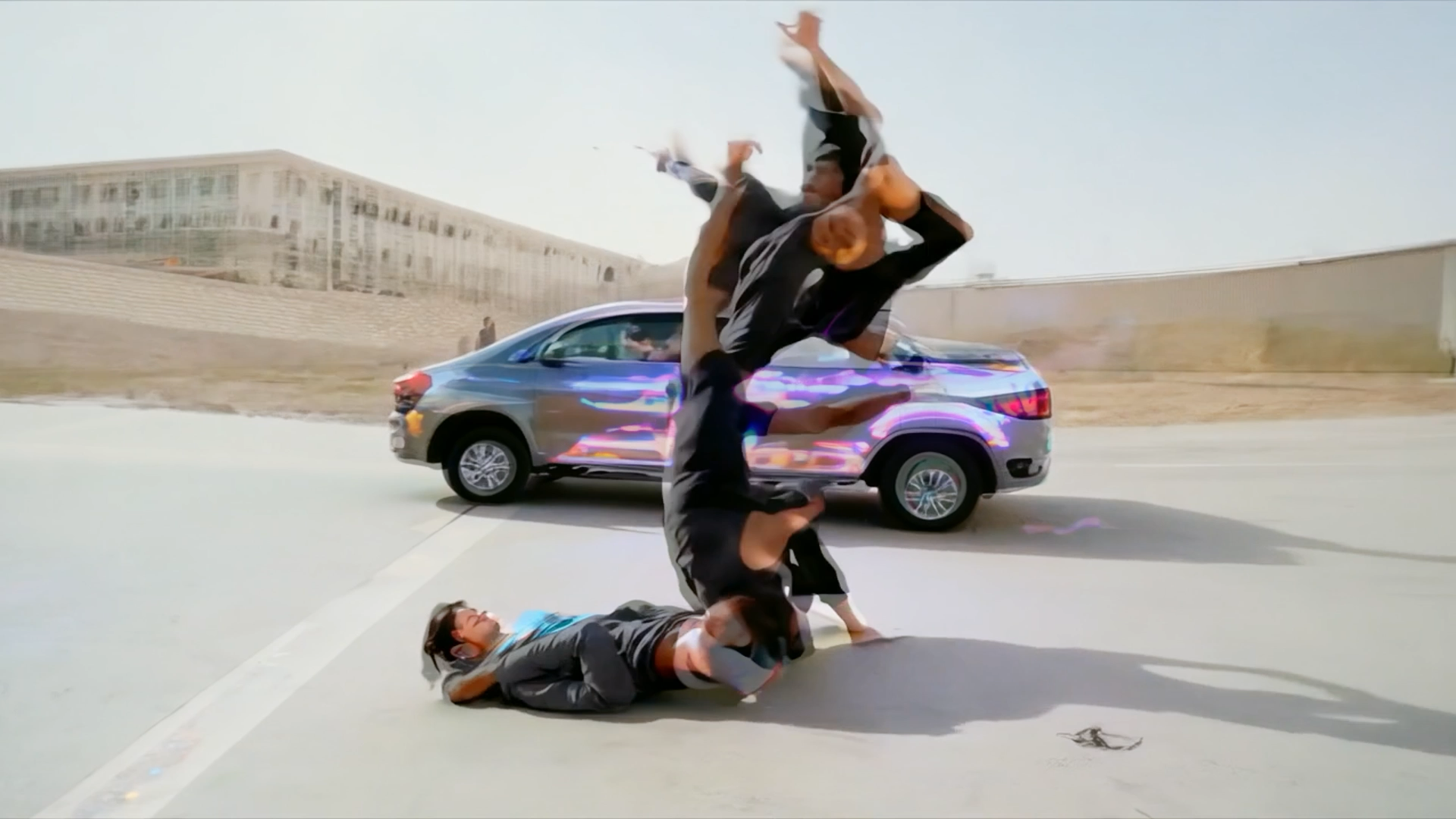
The connection between their remote labor and surveillance-drone technologies is made clear in visually striking terms. And with its imagery and effects, Steyerl’s very-of-this-moment film feels stylistically connected to 20th-century formal approaches (distorted figuration, geometric abstraction, industrial schematics). But these surface similarities come to mind mostly because this Modernist material is so close at hand in “New Humans.” The deeper through line is the concern with the changing nature of work and automation—and the emergence of new workers in response to these radical shifts. While the figure of the robot, kooky or austere, is everywhere here, Steyerl operates in the era of its dematerialized heir, the software bot, highlighting the “invisible” humans performing outsourced labor.
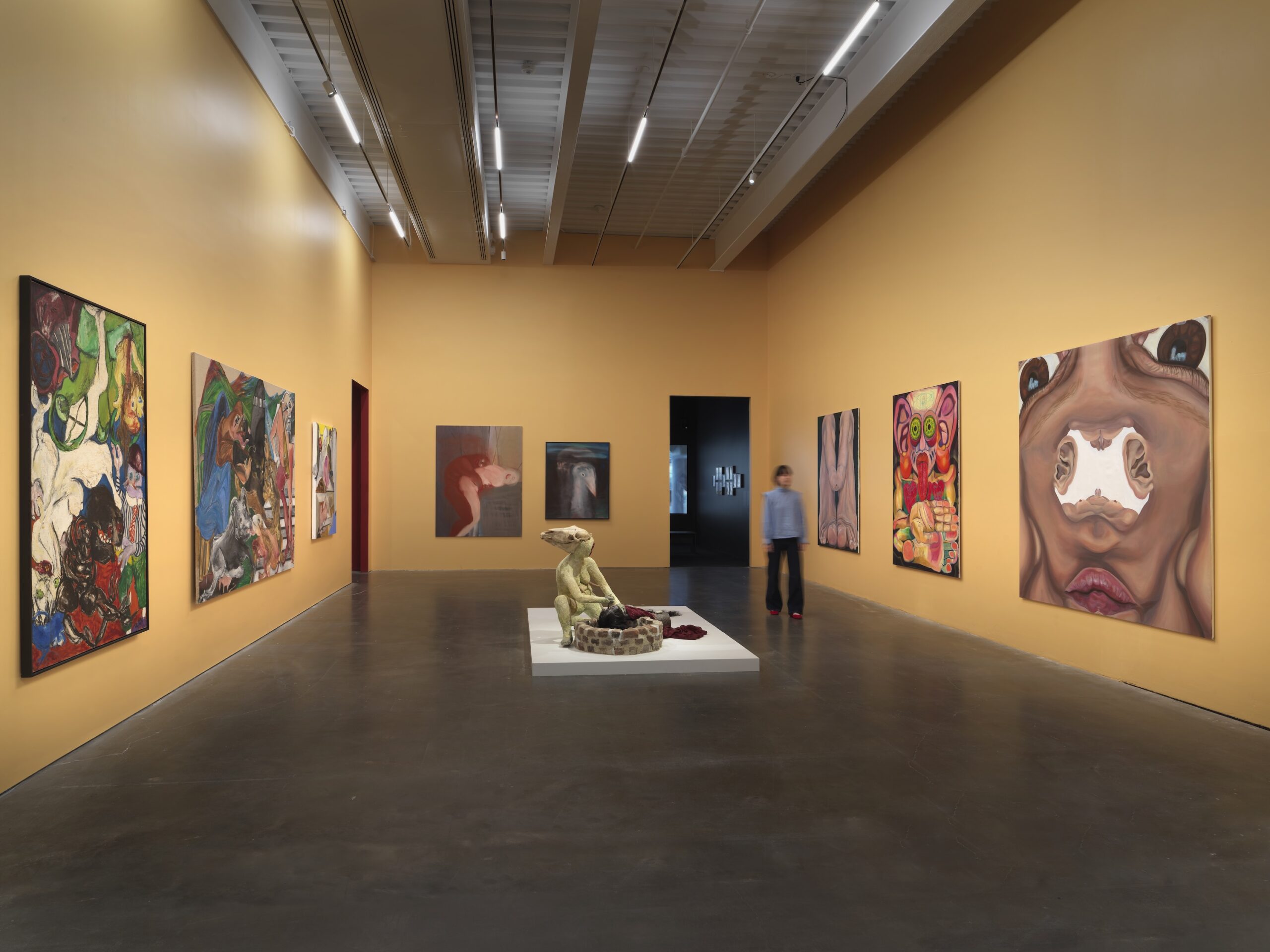
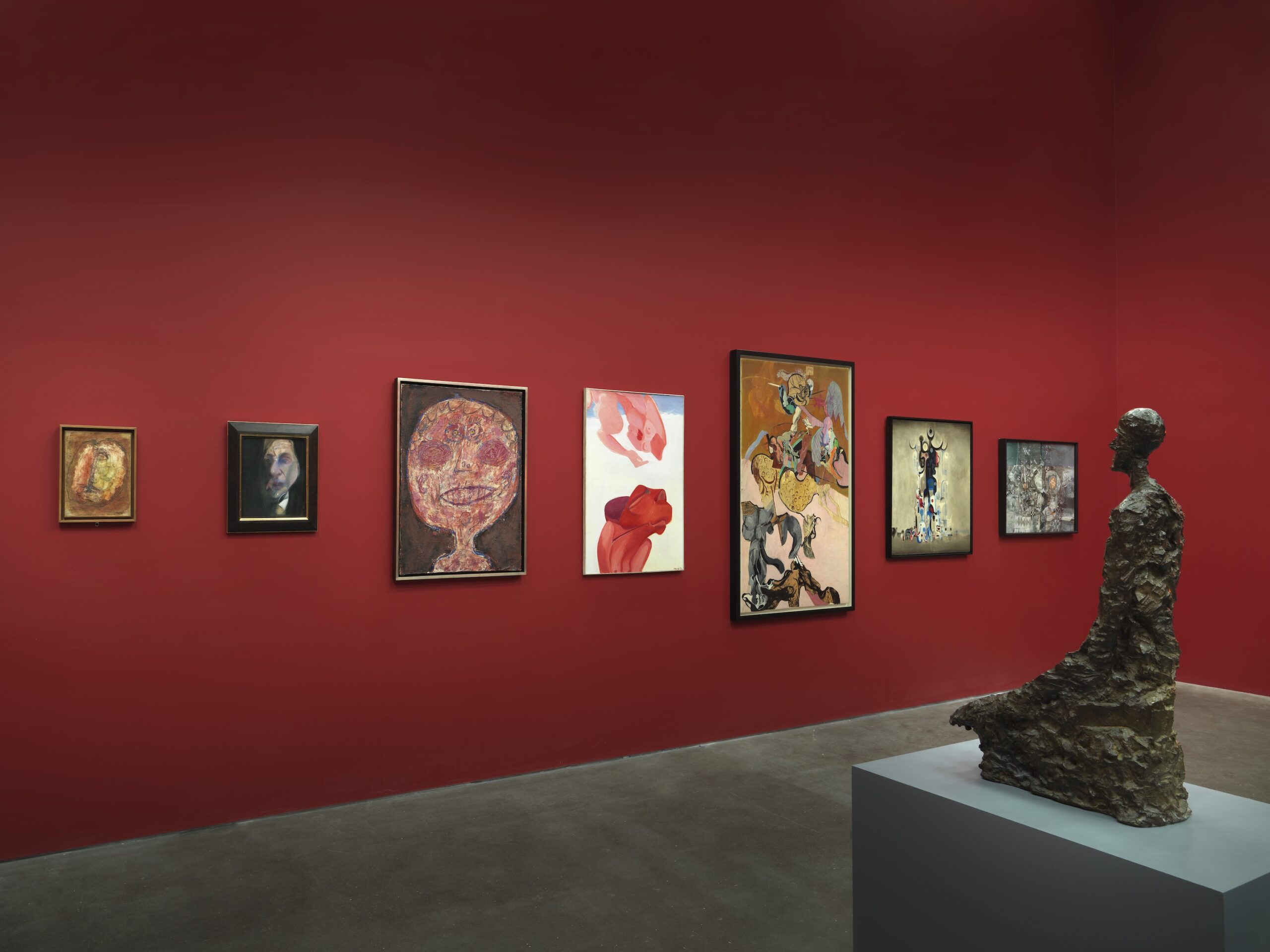
I’d be remiss if I didn’t note that “New Humans” is a great painting show: One of the oldest mediums is used adeptly, often urgently, by artists across the decades to articulate visions of the new. A run of tightly hung paintings on red walls in the chapter “New Images of Man,” a capsule exhibition of postwar work, includes Francis Bacon, Paula Rego, Jack Whitten, Maria Lassnig, and Ibrahim El-Salahi, among others. The installation has a Pinterest-board feel, almost, which may not sound like praise, but the fast-paced excess and its un-precious associative leaps are exhilarating. Likewise, a mustard-walled gallery in “Human Animal,” with a gruesome sculptural vignette by Cato Ouyang at its center (a mythic creature or demon with scissors stabs at the eyes of another figure), appropriately heightens what’s hideous or disturbing in the surrounding paintings—high-key, grotesque or violent canvases by Miriam Cahn, Jana Euler, and Jacqueline de Jong.
The success of this tremendous amassment of work is in its conceptual framing, but also crucial is the more intimate question of the material’s handling. It’s treated seriously, but not gingerly. The work isn’t crowded together, except when there is something important to be gained from a condensed or curatorially breathless effect (which there is sometimes). The liveliness of “New Humans” might resemble optimism, but doomers won’t be turned off. “Hope” here is the agnostic heat of recurrence and rupture; the cumulative light from so many objects and images that, individually, give off sparks. They’ve been chosen because they index dreams, however impossible or ill-fated—and, of course, to announce that, with “New Humans,” the New Museum is back.
More of our favorite stories from CULTURED
James Cahill Saw the Best and Worst of the Art World. His Latest Novel Exposes It All.
Marc Jacobs Doc ‘Marc by Sofia’ Makes the Designer Look Cool. But Is That It?
Margaret Cho Grew Up in a Gay Bookstore. Of Course Her Reading List Is Incredible.
20 Years and $720 Million Later, Michael Govan Takes Us Inside the New LACMA Galleries
Revisit 5 of the Late Legend Calvin Tomkins’s Most Essential Art-World Profiles
Sign up for our newsletter here to get these stories direct to your inbox.

 in your life?