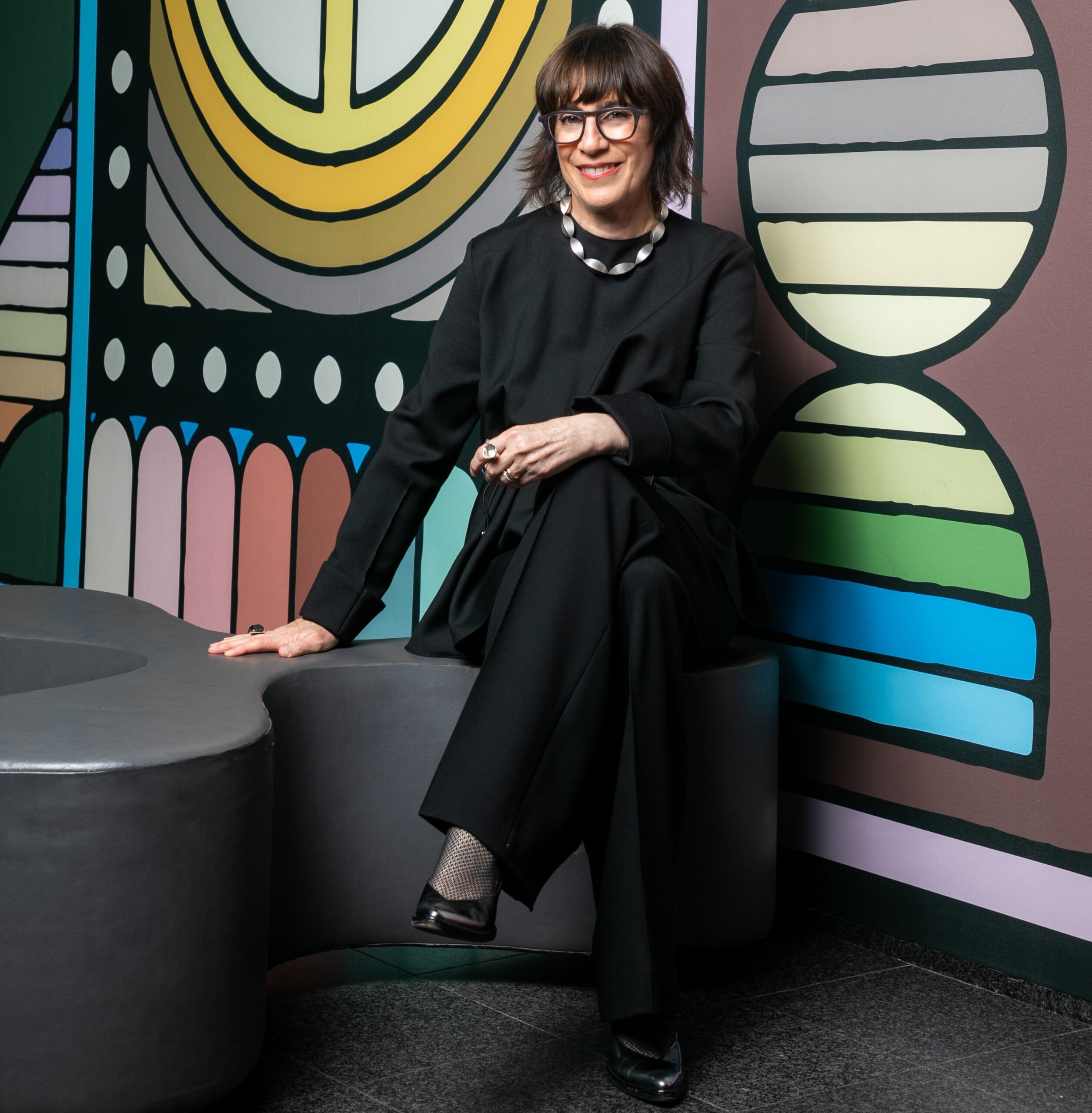
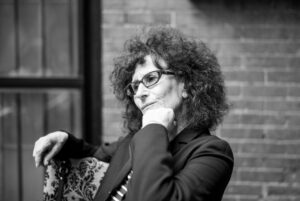
The world looked a lot different when Madeleine Grynsztejn took the reins at MCA Chicago back in 2008. Chicago-born senator Barack Obama was taking the world by storm, and hope was a word uttered not just with sincerity but conviction. Grynsztejn has never lost that hope. Over the last 18 years, the Venezuela-raised museum director and curator steered some of MCA’s biggest and most critically-acclaimed exhibitions, planned and completed an $82 million renovation, set attendance records, and launched a slew of new programming aimed at inclusive collecting and public engagement. Now, at 64 years old, she’s stepping down.
“I’ve accomplished everything I dreamed of,” Grynsztejn tells CULTURED. “When I think about 2027 and the 60th anniversary [of the museum], I ask myself, what would benefit the MCA more: to have the director who brought the museum to that moment or to have the director who will take the museum forward for the next 20, even 60 years?” Grynsztejn will stay on through the end of the year as the museum begins its transition process. Although she has not revealed what her next chapter will be, she says it will involve what she has done her entire career: elevating artists on a local and international stage. (As of yet, MCA has also not announced who will replace Grynsztejn as director.)
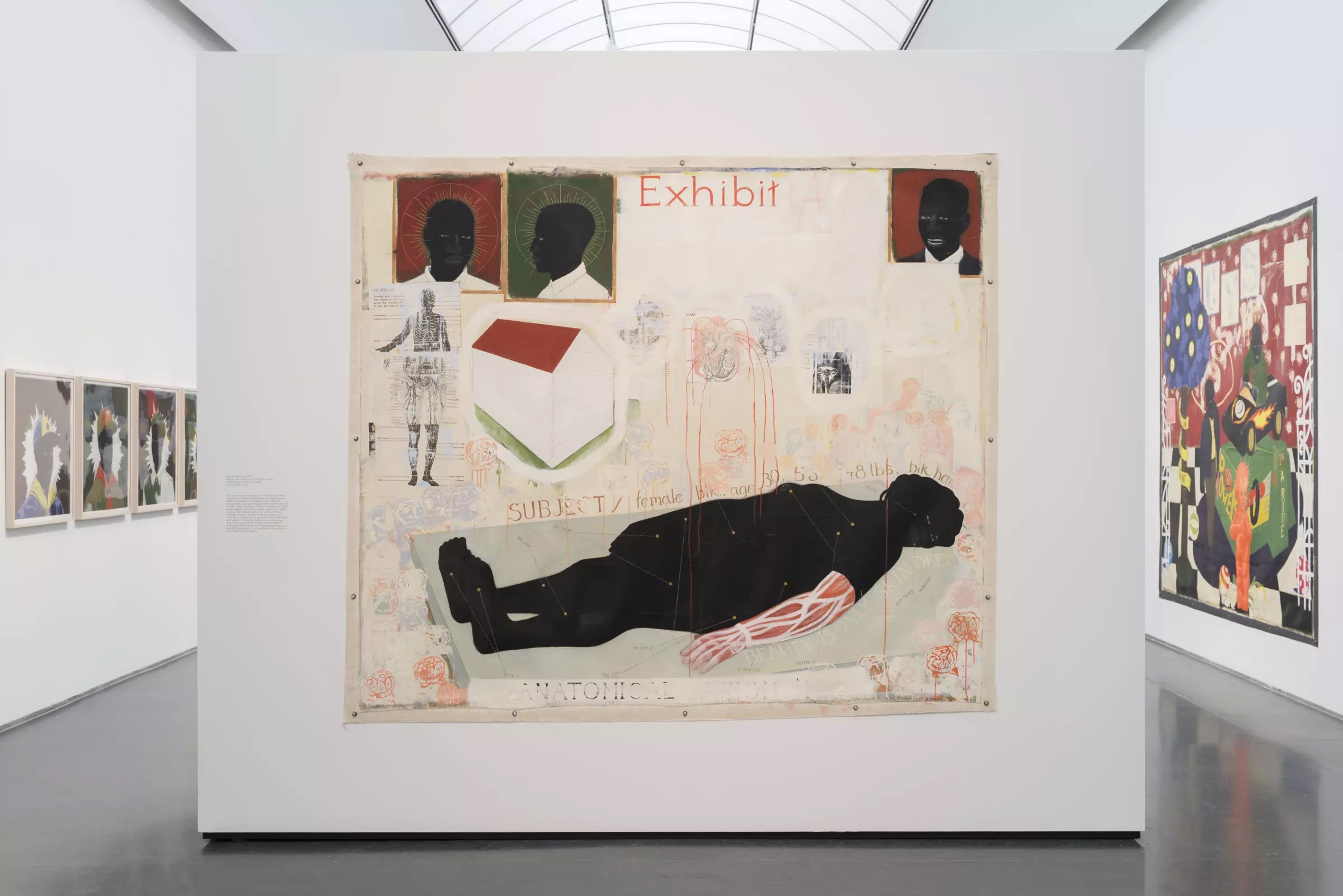
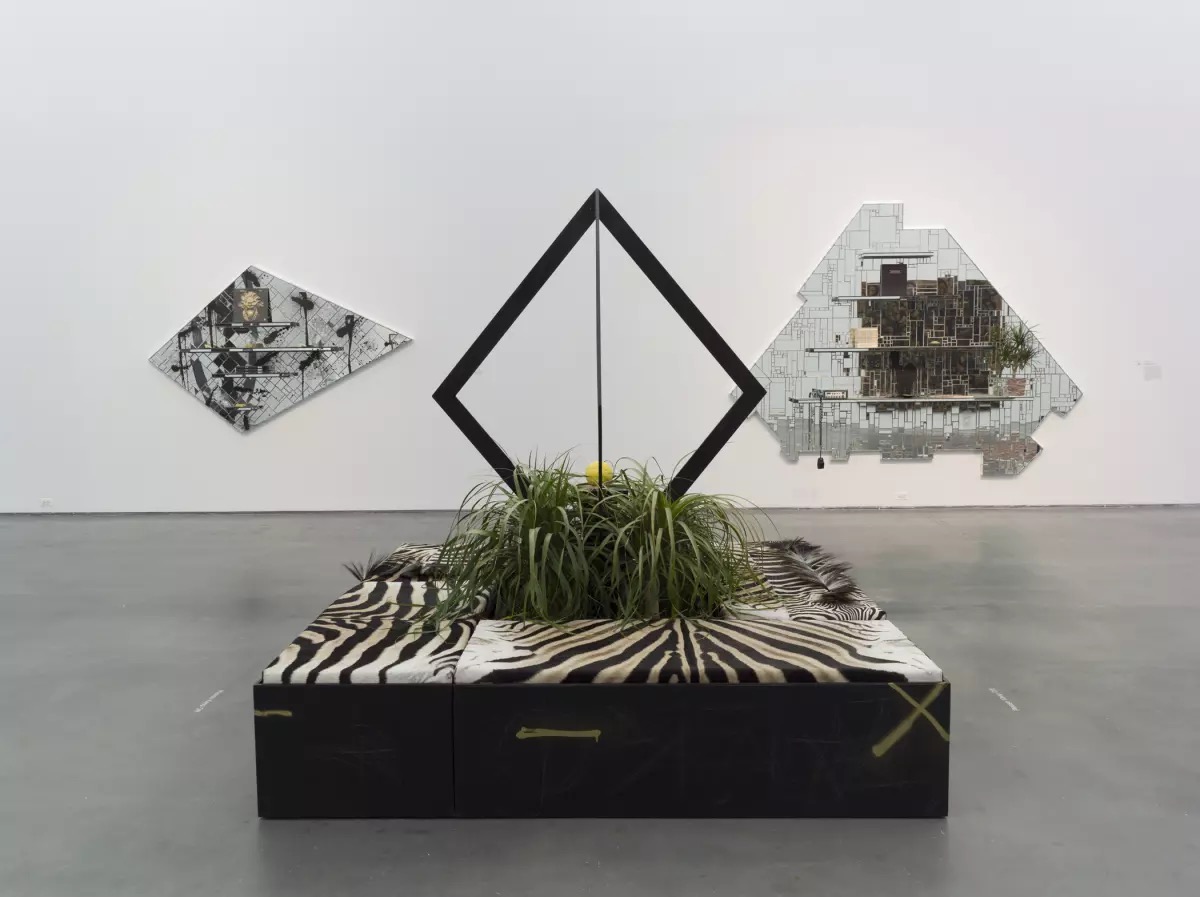
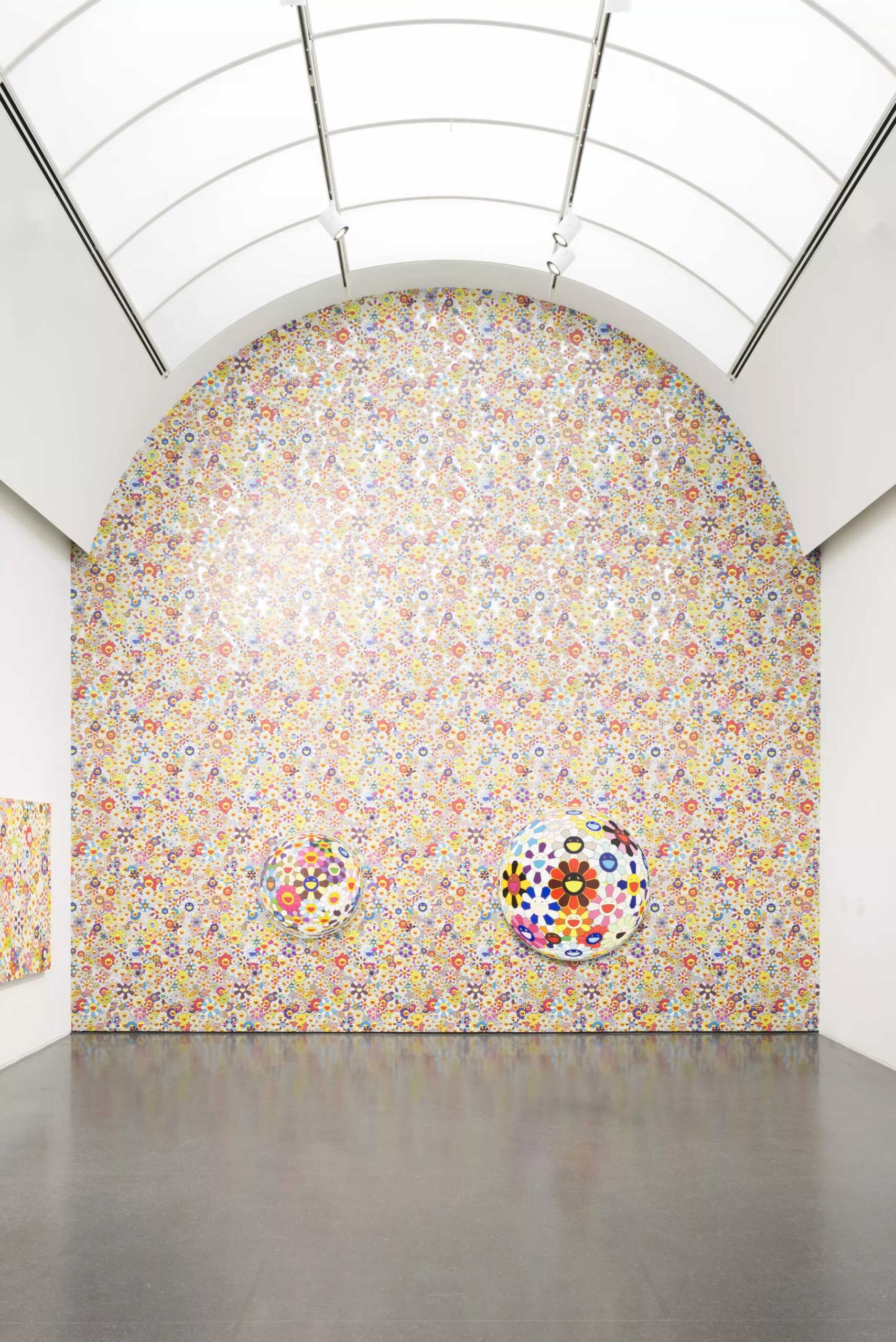
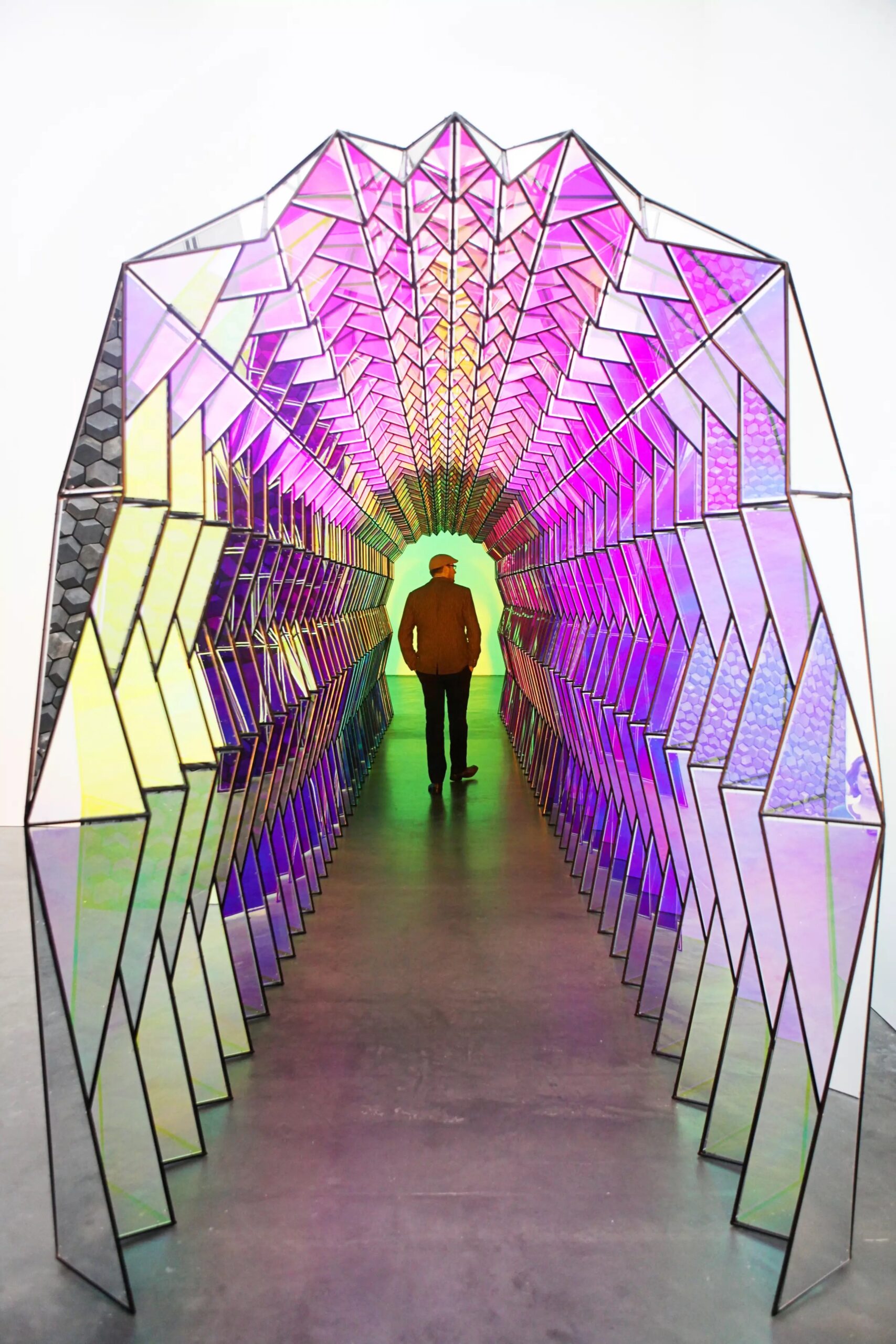
Grynsztejn first came to MCA by way of the San Francisco Museum of Modern Art, where she was the senior curator of painting and sculpture, working on critically renowned traveling exhibitions including “Take your time: Olafur Eliasson,” 2007, and “The Art of Richard Tuttle,” 2005. During her time at MCA, the museum mounted a host of blockbuster exhibitions including Rashid Johnson’s first major solo exhibition in 2012, a Takashi Murakami show in 2017, and Kerry James Marshall’s first major museum retrospective in 2016.
“No one gets to lead a major museum for 18 years who has not demonstrated a commitment to growing the size of both its audience and its supporters while maintaining the highest critical and aesthetic standards,” says Marshall. “An abiding faith, by the museum, in an artist’s desire to present artworks worthy of the opportunity resulted in a meaningful partnership for, myself, the museum, and the visiting audience, alike.”
As the years went by, Grynsztejn continued to champion underrepresented groups through an ambitious initiative aimed at 50-50 gender parity in MCA’s collections and exhibitions. To this day, as many museums have backpedaled the significance of identity and inclusion to their missions in order to protect funding, Grynsztejn speaks boldly about meaningfully reflecting Chicago’s diversity. Part of this is savvy fundraising: rather than relying on government grants, Grynsztejn has built a local and international network of engaged donors. (And it’s paid off too. Over her tenure, the museum tripled its endowment and nearly doubled its operating budget.)
In recent years, Grynsztejn cemented the museum’s commitment to live arts with the Chicago Performs festival, launched in 2022, and the $10 MCA Performance Fund. She had an ambitious collecting agenda including, notably, the D. Daskalopoulos Collection, a significant acquisition held jointly with the Guggenheim Museum, and the complete film archive of Arthur Jafa, acquired alongside the Hartwig Foundation in Amsterdam. The goal, Grynsztejn says, has always been to stand on an international art stage while prioritizing the work of local artists.
Ahead of her leave, Grynsztejn spoke with CULTURED about the last 18 years of her career, the future of equity in the arts, her proudest achievements, and what comes next.
It’s 2008. Paint me a picture. Where were you at: professionally, personally? Where was the MCA?
I was curating exhibitions: Olafur Eliasson’s retrospective and Richard Tuttle’s retrospective, both at the San Francisco Museum of Modern Art. Especially because of my relationship with Olafur, who is an artist whose work is very much engaged with the larger world, I’m becoming more and more interested in the idea of curating, not just an exhibition, but an institution, if you will. And lo and behold, the MCA Chicago comes knocking, and I became their first female director and also now their longest tenured director. I came to Chicago and started the job.
Artists have always been my true north. They are my flashpoint and my flashlight. When I arrived, I started curating the institution, so to speak, and developed this mantra that everybody got behind: artist-activated, audience-engaged in equal parts. And through that we built a fiscal fuel that people call a campaign that eventually delivered a number of really great things.
What were some of the first programs you established?
The first thing I did was bring my Olafur Eliasson retrospective there because I believed very deeply in connecting that art to people. In 2012, we established a series called the Ascendant Artist Series. It’s our version of an emerging artists series and constitutes that artist’s first, let’s call it fully mature, exhibition and catalog. It started with a relatively unknown Chicagoan called Rashid Johnson before moving on to Christina Quarles [in 2021] and Wafaa Bilal [in 2025], every year, twice a year. We wanted to establish this because part of our DNA is that we are a museum of firsts.
And then there was the renovation project as well, right?
First of all, we renovated the interior of the building to deliver on the museum’s 50th anniversary in 2017: 13,000 square feet of free public space, including a Michelin-recognized restaurant called Marisol. It was named after the Venezuelan American artist Marisol, whose work started the collection of the Museum of Contemporary Art in 1974. We also delivered a space that we named the Commons, which is literally in the architectural art of the building designed by a Mexican architect duo called Pedro y Juana, and which very much symbolizes one of our pillars, which is developing social belonging.
Today, of course, the emergency is actually being party to fixing division and divisiveness, and this space was built precisely to create dialogue, community, and communion among different perspectives. The space has been the precedent and also now all the more important.
What kind of thinking was guiding you in those first years?
There’s basically always been three drivers. The first is what we call revelatory art: really intentionally creating collections and exhibitions that are as inclusive and embracing as possible, and that drive society forward. The second is social belonging, which is why we invented this wonderful commons space for social engagement space. The third is purposeful and ethically-driven operations. By that, of course, we mean paying people well, but it also means that we want what we do on the inside to be as ethical as the works and messages on our walls and on our stage because any delta between that is a credibility gap.
It used to be when an artist would walk into the museum in 2008, the first thing they would ask is, Where are my galleries? More recently, when an artist walks into a museum, one of the things they ask is, How do you treat your people? If you follow the artist, you can tell that there’s been a shift here where there’s been a kind of attunement to how the system of the museum operates, not just as a platform for their career.
The other thing that comes to mind is that I always wanted to be hyper-local and globally relevant, in that order.
What shows or relationships cultivated with artists are you most proud of?
The preeminent example is our Kerry James Marshall retrospective in 2016—America’s greatest living painter, according to a recent headline in the Washington Post when an exhibition of his came to the Royal Academy last summer. And that is an instance where we commit ourselves to following the artist and acquiring the work on an arc as they develop. We’ve done no less than three major shows over the course of a year with Kerry.
Arthur Jafa, as well—the MCA owns all of his films in collaboration with the Hartwig Foundation in Amsterdam. There’s a certain commitment to walking this line between being absolutely of one’s place while also being part of a global conversation. I also co-curated our Doris Salcedo retrospective, which traveled to the Guggenheim. Here is an artist who is extraordinarily grounded in the history of Colombia, and yet the work speaks worlds to human fragility.
Just before Covid, we produced the Virgil Abloh retrospective that traveled to the Brooklyn Museum of Art and Doha, Qatar. We organized shows probably three years out, and when we initially invited Virgil, all he had done was his Off-White brand locally. By the time we opened, he was head of Louis Vuitton’s menswear, an LVMH man. That is the kind of crystal ball moment I love to be a part of.
I want to talk a little about how a museum goes about being inclusive and equitable in its programming and collecting. There’s a big difference between talking the talk and walking the walk. What did that look like in practice for you?
This is so meaningful to me. There are two initiatives that were deeply meaningful to me. The first one is the Women Artists Initiative. We are entering our 11th year of committing ourselves to having at least half woman artists in all our exhibitions, acquisitions, and programs—and, as it happens, also leadership. It’s about time. As a woman leader and as a member of 50-plus percent of the demographic of the United States, I felt strongly that there is a structural gender gap, and if you don’t do something about it, it doesn’t get fixed. So we started doing it in 2015.
Today, we are collecting women at a rate of four times the national average. We collected 44 percent women artists versus 11 percent [in the country at large], and we exhibited at over half versus 14.9 percent. And this is so deeply important to me because as a museum and as a 501c3, we’re duty bound to serve our public. How is it possible if we can’t make sure that we welcome and reflect more than half of our population in this country?
When we started doing it 10 years ago, guess what happened? We discovered that doing this is just more expensive. Why? Because the market still favors male artists, and fundraising is reflected in the market. So to support the Women Artists Initiative, we have a dozen wonderful people from all over the world that are giving us funds year to help us fill that gap so that we can continue to be a 50 percent woman artist-represented museum.
The other really important initiative is our Spanish/English bilingual initiative. I was born and raised in Latin America, moved around a lot, and I had the personal experience of being literally out of language on the first day of school. That must have really stayed with me because I am adamant that people never feel left out. That’s one of the reasons I became a museum director.
Meanwhile, in Chicago, Spanish-speaking people are the only growing demographic in the city, so not only is it important personally, it is critical to social belonging to welcome people and reflect where they’re coming from. In fact, it’s a good business decision.
More recently post-Covid, funding has become a real challenge for museums, especially regional ones and ones with culturally-specific missions, as grants disappear and giving trends have changed. How has your thinking around fundraising evolved over your time at MCA?
The first thing I did was internationalize our board of trustees—diversify. We have wonderful board members from abroad and wonderful board members nationally.
But yes, you’re right. Thankfully, contemporary art museums and mine in particular don’t tend to lean on government support, generally speaking. We lean mostly on individual support, and we, like every other museum, are facing challenges on the fundraising front. Frankly, you have to find folks who are compelled by your program, which means that, in turn, your principles in your program need to be crystal clear. They need to be attractive and compelling, not only to the community that you live in but to the larger field. We’ve succeeded in that way.
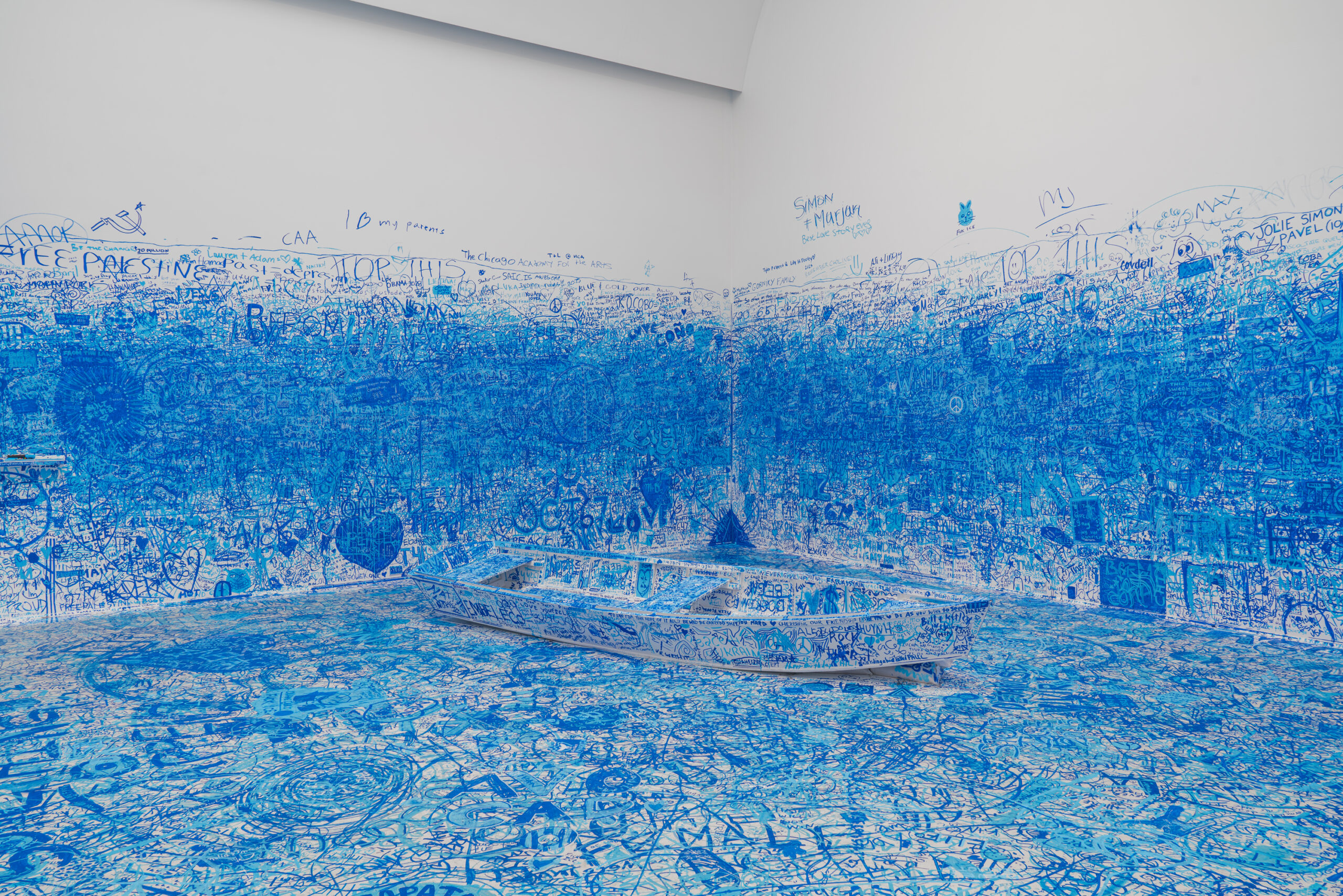
Two weeks ago, we closed the Yoko Ono show, which we brought from London, and it was, happily for us, the highest attended and most popular exhibition since before Covid. I believe that there is a kind of sweet spot where you continue to contribute to your own field, to art history, while also creating spaces for wonder and joy and connection that turned people out in droves.
Of course even with your long tenure at the museum, not everything has been smooth sailing. During the pandemic, the MCA went through a round of layoffs, and a handful of artists dropped out of your post-pandemic relaunch show, “The Long Dream.” Can you speak to some of the biggest challenges that you thought you had to face?
There’s no question that the biggest challenge that I had was during Covid. When your institution’s purpose is to open its doors and welcome as many people as possible and broker an engagement of curiosity and wonder between art and people, and you’re closed for eight months—that is an existential challenge. I believe we came through it as best we could.
We, frankly, were called in, in the best way. There was a lot of learning. There were days that brought me to my knees. There’s no question. There were passionate demands that were made that I interpreted, I think correctly, as a kind of care and ownership of the museum.
You’re talking here about “The Long Dream” show when six artists and one artist’s collective dropped out in solidarity with the 41 museum workers who had been laid off earlier that year.
Exactly. Things like that. What came out of that was understanding very vividly that the line between the museum, its staff, and its community is absolutely porous. The community is the museum and vice versa. The folks who are in the community are also behind the admissions desks and on the walls of the museum.
One of the things that we did coming out of Covid in fiscal year 2022 was a compensation analysis and we brought everybody up to or above Chicago market rate—not museum market rate, nonprofit market rate. That has been actually one of the interesting ongoing challenges since, of course, it raised our budgets. Gladly, because one of our pillars is ethically-driven operations. That’s what is really was grounded in our post-Covid learnings.
I’m curious about what you personally learned from the experience of weathering the challenges that come with equitable collecting or fair compensation, as well as having to deal publicly with members of your community requesting something different from you.
Oh, that’s like a therapist question. I learned that it’s not always about you. And that you really have to listen to what that other person has to say because what that person is saying is their reality and it counts.
Now we’re post-Covid. The needs of a contemporary museum are so different than when you started in 2008. The fundraising strategies are different. The ways we communicate are different. What do things look like for you?
I do believe that museums are here to address the urgencies of society and point us to the society that we wish to be. Having said that, we have to work within our sphere of influence. We’re not a social service mechanism, for example. We have to work with the tools that are at hand, and that is art and culture.
Have you changed the way that you talk about the role of museums with the community and with donors post-Covid?
When we think about the emergencies—of which there are many—one of their primary drivers is division and divisiveness. We’ve committed ourselves, through the selection of collection works, the selection of exhibitions, to using our platform as a space to bridge different perspectives, starting with the artist. We create the conditions—whether it is Spanish and English wall text, whether it is seeing someone who looks like you behind the welcome desk—for brokering understanding. It’s not a melding of perspectives. We’re not kumbaya. But it’s listening and a mutual enhancement through curiosity and wonder, and that is extraordinarily important.
What do you see as the role of a museum in 2026?
At a moment in time when institutions are under question, the data still shows that museums are still trusted places. I witnessed that with the Yoko Ono show. People letting their guard down with each other, resting, taking in art and information. I witnessed them growing, smiling, learning. We are here for citizens, not consumers. We are here to build the citizenship muscle, and we do that by creating exhibitions and experiences that teach you what you didn’t know you loved and help you see the world from another angle.
No museum is a one-woman show. Who were some of your most essential collaborators during your time at MCA Chicago?
Everybody. This takes a village every day and so I won’t call out just the curators. It’s a team of people who show up every day with such passion and compassion for their public. We are here to serve. It’s an incredibly supportive board. The majority of our fiscal fuel comes from our unbelievably invested, impassioned philanthropists who, yes, in this day and time, could take their toys elsewhere, but they don’t because they believe in museums and because they believe in their city. There’s an unbelievable team of staff from the guards to visitor services all the way up to the curators.
I do want to say that one of my points of pride is the incredible mentorship of talent that has been undertaken here over the years. Naomi Beckwith now is running Documenta. Carla Acevedo-Yates is on that team. Julie Rodrigues Widholm is running the Berkeley Art Museum & Pacific Film Archive. Grace Deveney is at the Art Institute of Chicago. These are extraordinary women, cultural leaders, who have come through the MCA under my tenure who I think helped elevate our work, and I’m proud to have had a small hand in that.
Looking back to 2008, what advice would you give yourself?
I didn’t know that October 2008 would happen. The Bernie Madoff scandal happened, and the world fell apart. I would say, You are tied to the world, and the world is tied to you. That is what makes the museum magnificently influential but also vulnerable to societal headwinds. I would tell myself not to take everything so personally.
How has the role of a museum director really changed in that time?
I would say that it has, and it hasn’t. I consider the fundamental role of a museum director to be a storyteller, and to be a storyteller in such a way that you galvanize people to follow you to your promised land—to provide money, to provide the gas, to do and to inspire people to rise to their best occasion, whether it’s an artist who is creating a work that you are commissioning or whether it’s a curator who is organizing something. Because of my long experience in curating, I might make suggestions, and they rise to an even better occasion. The director sets the guardrails, and then their job is to get the best people on board and elevate them.
What do you love best about the Chicago art scene?
Oh my God, the Chicago art scene. You have to come here. Chicago has an extraordinary ecosystem. Know why? First of all, there are 22 universities. So artists come from all over the United States and then they stay. The reason they stay is cheap rent. You can come here, create your network of friends, and make art.
The other part of the ecosystem is that there are so many good artist spaces and commercial galleries that you can then begin to sell a little and have a day job on the crew of the Museum of Contemporary Art hanging pictures so you can actually make a living. Then, when you show your work in those alternative spaces or gallery spaces, one day, someone like me will drop in and say, “This is interesting.” There’s a great community of collectors. And, because of the thriving university system, people stay and teach.
We created a series called Chicago Works dedicated to first time exhibitions of Chicago artists. I have not seen that in any other museum of this scale that also commits itself to local elevation like that. Rashid Johnson, Mike Cloud, Amanda Williams, Theaster Gates, Dawoud Bey: all of them went through Chicago Works.
So will you be staying in Chicago?
Oh, yes. The museum will be entering its 60th year in 2027, and I’ll have been here in Chicago for 18 years. I am really eager to pass the baton to the next great generation of leaders. When I think about 2027 and the 60th anniversary, I ask myself, what would benefit the MCA more: to have the director who brought the museum to that moment or to have the director who will take the museum forward for the next 20, even 60 years?
I want to leave the museum in great hands, and I know that I will. I’ve accomplished everything I dreamed of: a socially engaged audience, a social-forward renovation, the most critically acclaimed exhibitions in the MCA’s history, a world class collection-building program, and a host of initiatives that are about inclusivity.
This is my time. I’ll be 65 next year. Frankly, we have all observed people in other sectors of society who overstay their welcome. We need to make room for a great next generation of leaders.
What is your next chapter going to be?
It will be on a similar scale and much more directly tied to elevating artists, as I have all my life. So that’s really what I intend to do. You’ll see it soon. I’m a great believer in milestone opportunities and for me personally being with artists, elevating artists is a calling. I’m excited to transition into something that at scale that allows me to work more directly with them.
More of our favorite stories from CULTURED
Our Critic’s Favorite Show This Month Is Hidden in a Subway Station
James Cahill Saw the Best and Worst of the Art World. His Latest Novel Exposes It All.
If We’re in the Golden Age of Documentaries, Why Are All These Documentarians So Worried?
Sign up for our newsletter here to get these stories direct to your inbox.

 in your life?