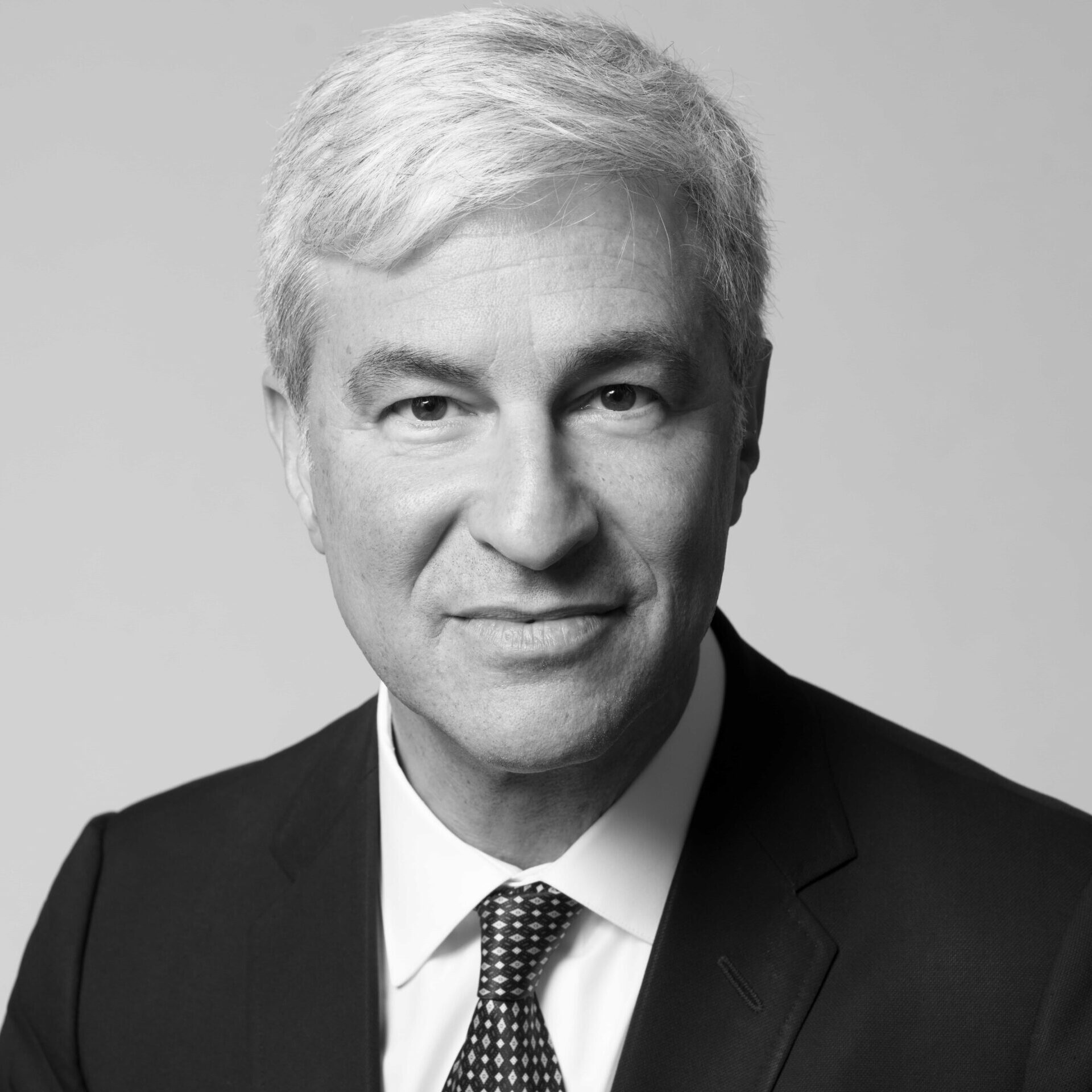
Few students have the privilege of consulting one of the world’s foremost land art experts on a school paper. I am one of the lucky ones. When I was writing my master’s thesis on Michael Heizer’s City, the mile-and-a-half-long sculpture in the Nevada desert, I called up my old friend Michael Govan, the director of LACMA and a close friend of Heizer. I’ve known Govan for more than a decade, including during my time as a global ambassador at the museum.
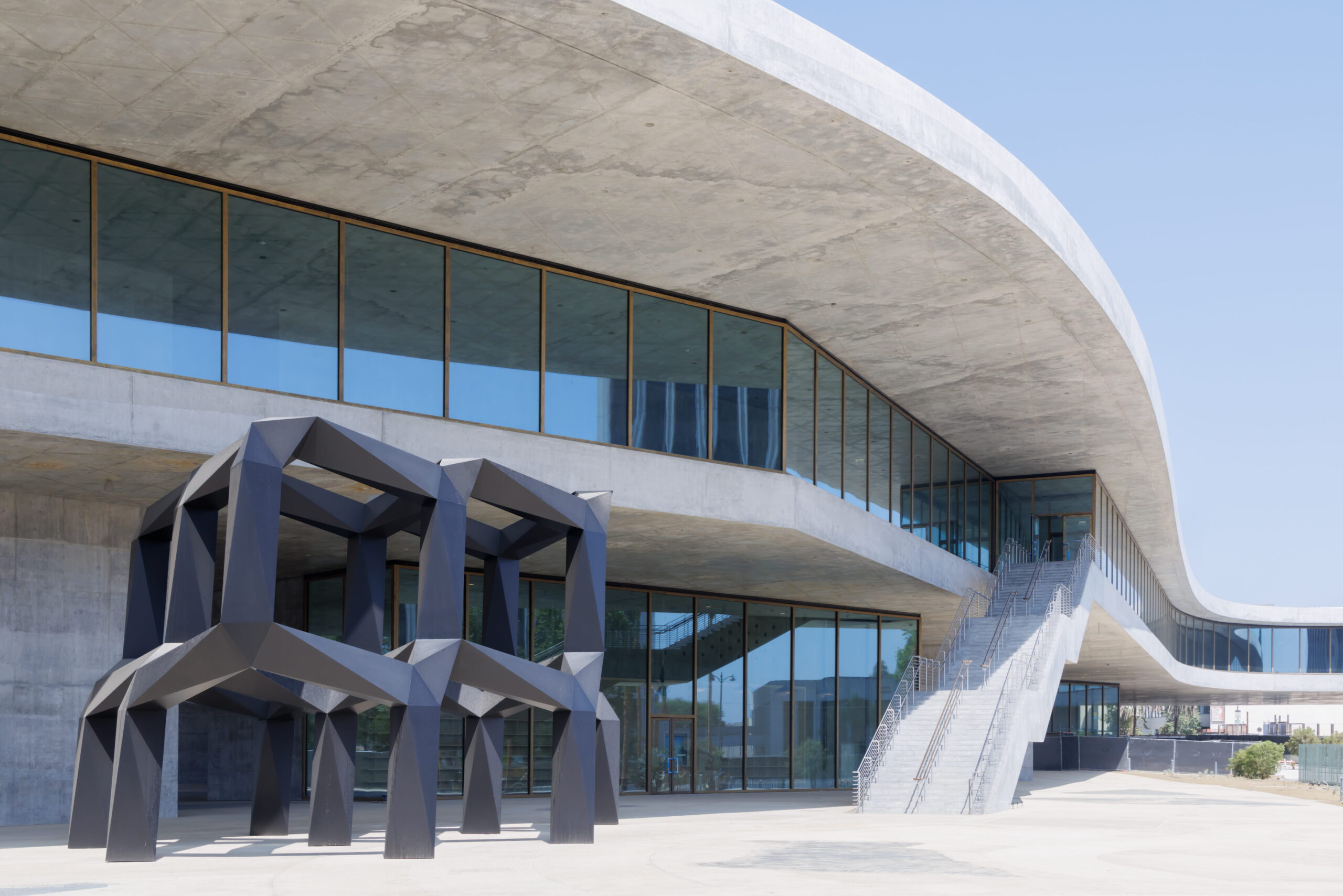
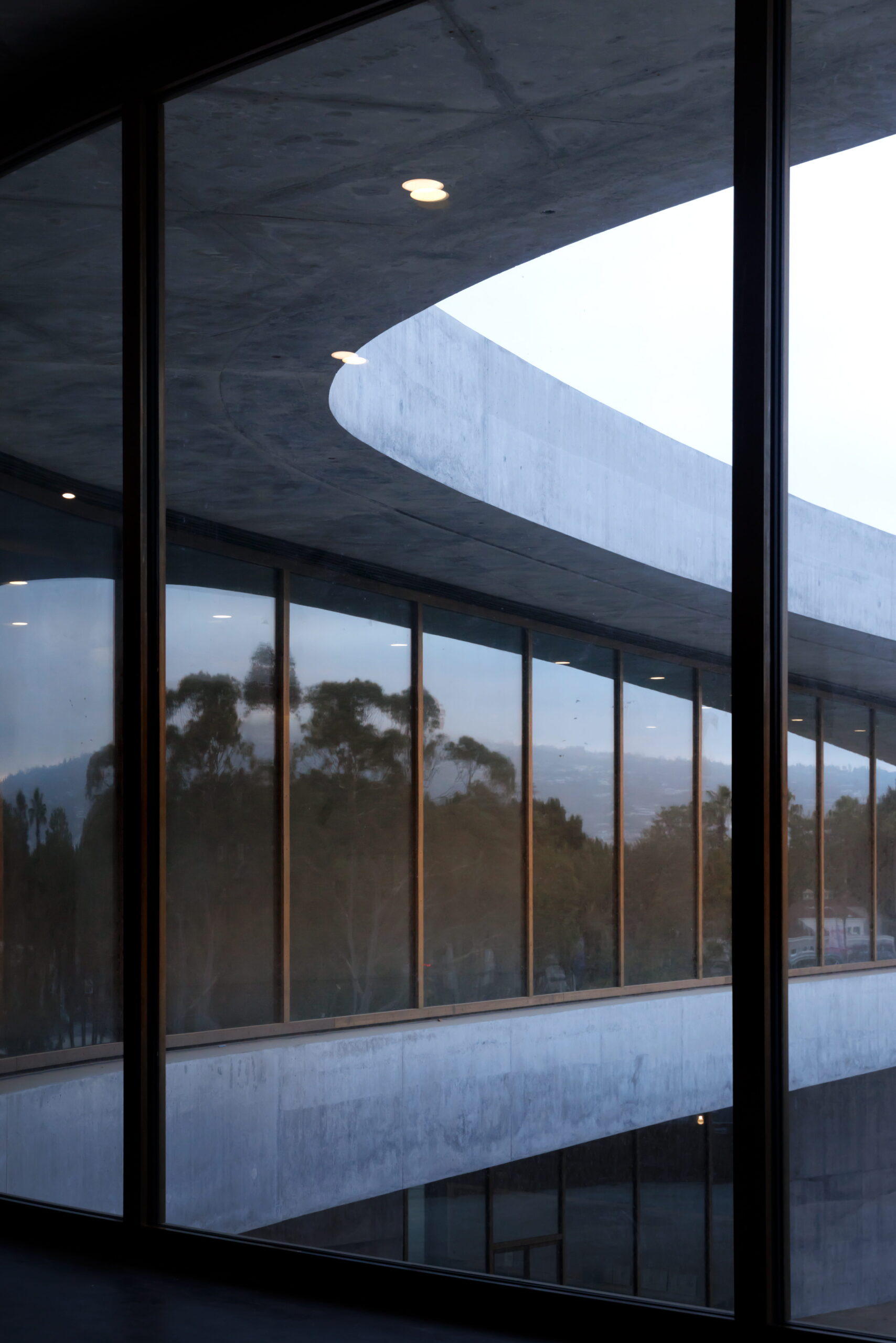
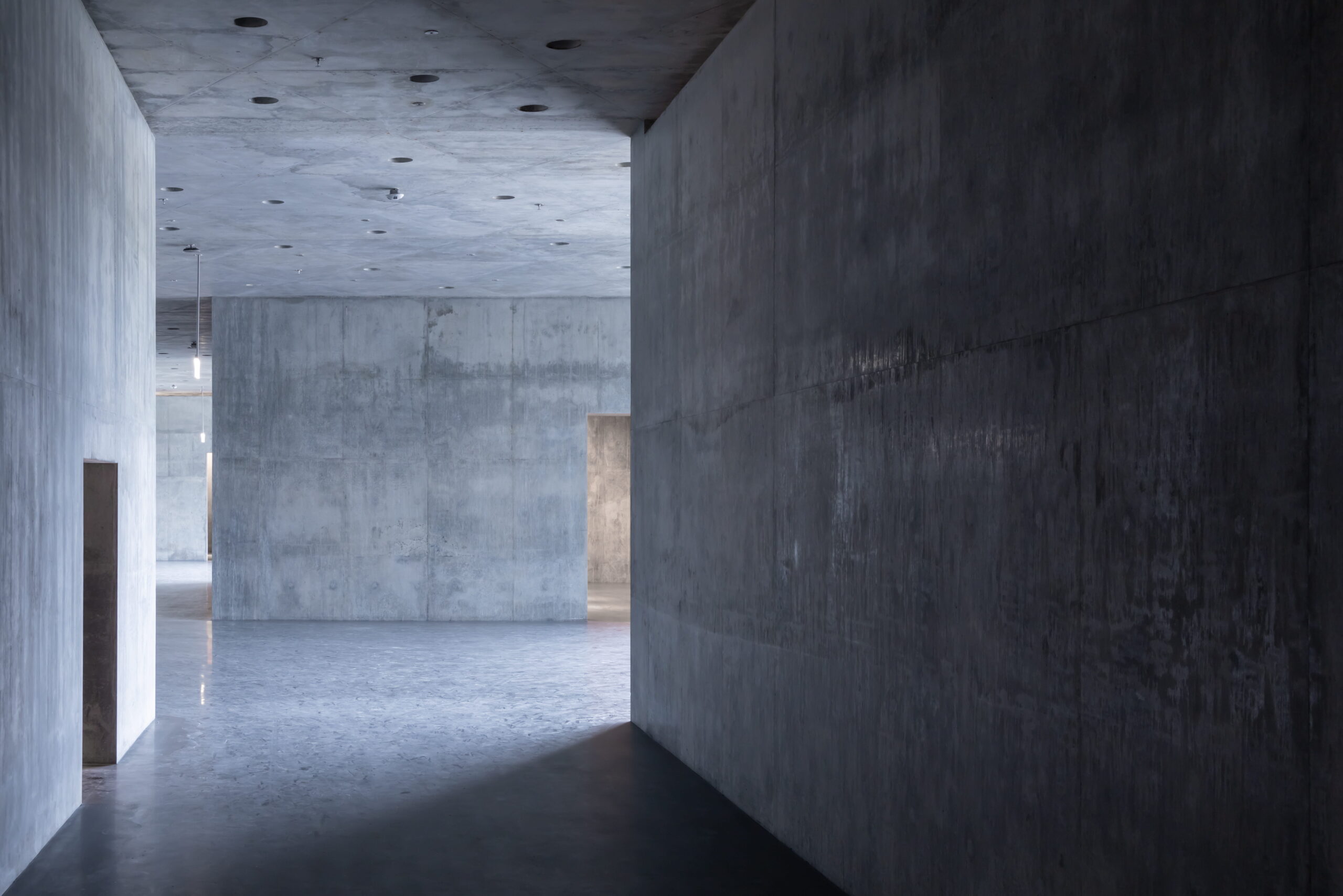
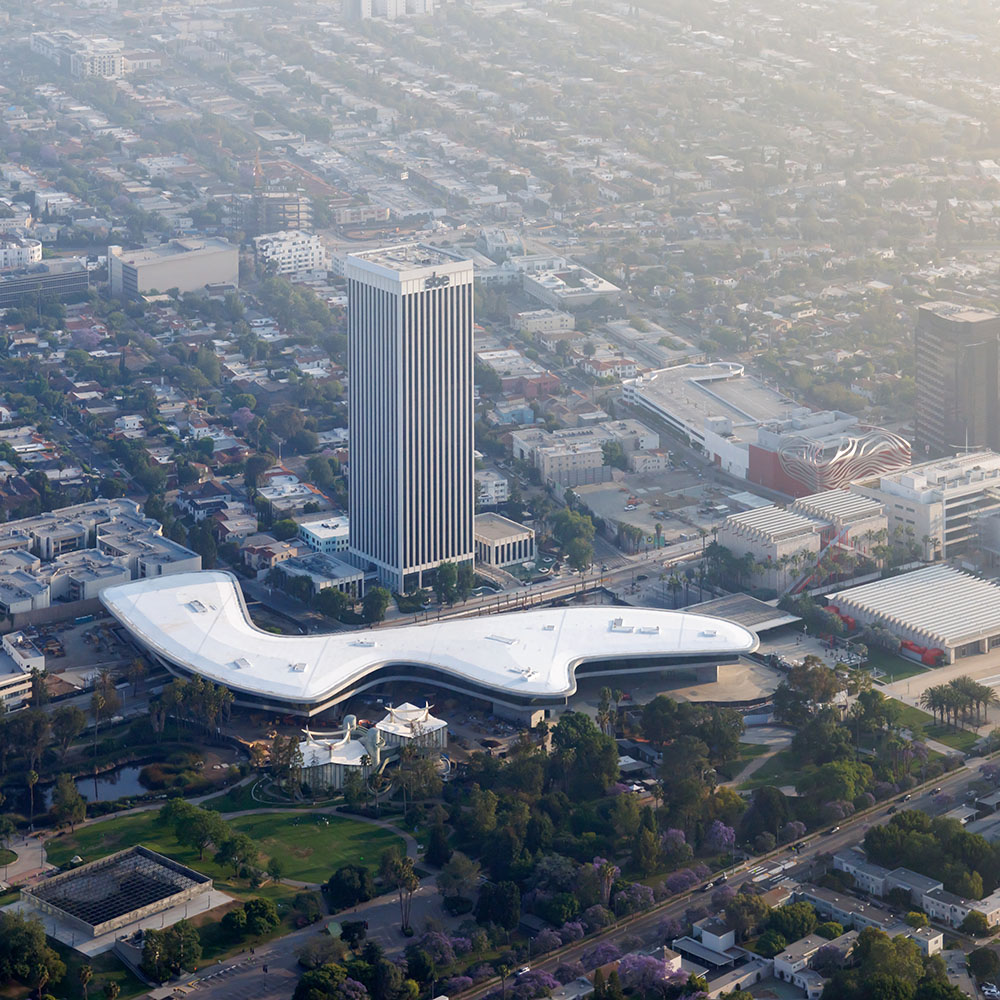
Govan, who started out as an artist and curator, has always had a special talent for helping make the impractical come to life. His latest feat may be the most consequential of his career. On April 19, LACMA will open the new $720 million David Geffen Galleries, designed by renowned architect Peter Zumthor. The 110,000-square-foot gallery space is far from the traditional white cube: There are concrete walls, ample natural light, and a building that stretches across Wilshire Boulevard.
Below, I speak with Govan about realizing the dream he and his team have been working toward for two decades.
What problems with the conventional museum were you trying to solve with this new space?
For many decades, I’ve thought long and hard about museums. When the opportunity came up 20 years ago to rebuild a civic scale art museum, three or four city blocks, with collections that are from thousands of years ago to the present and future. As we’ve talked about, I had a beautiful life in New York. I was not looking to leave, but not only was [LACMA] a once-in-a-lifetime chance, it also felt like a once-in-a century obligation because there wouldn’t be another one of these animals, these encyclopedic museums with art of everything probably made again. They were built with a 19th-century perspective, and times have changed over a couple hundred years. I felt this sense of obligation to take all the learning and thinking of decades of academic research, of artists’ points of views and rethinking histories, plural, of my traveling the world, looking at museums, and try to provide a different point of view.
My view is there is no one point of view for all museums to have. There’s no perfect museum. There’s no perfect building. I wanted to create a more mobile, ever-evolving platform for world art history.
It’s the idea that you’re taking away one art history in favor of multiple art histories, and that the building isn’t architecturally adopting that Eurocentric storyline, but instead, allowing what’s inside to speak for itself.
The title of the little guidebook of highlights we’re putting together is called Wander. The idea is to encourage your wandering because there are many mini stories. It’s like the most awesome playlist you could imagine as you walk through the space. Most 19th-century thinking about museums was, “Well, we’re going to take land masses and nations and we’re going to find the borders and clarify what’s Italian or whatever.” And this is the opposite. This is to say mostly that what we are today is a hybrid of many migrations and interconnectedness. We have to acknowledge that so many of the things we take for granted around us are a process of migration and interconnectedness of cultures. This installation is organized around bodies of water: Atlantic Ocean, Pacific Ocean, Indian Ocean, Mediterranean Sea. People shared ideas and intersected over bodies of water, which are also metaphorically free flowing, like water is free flowing.
Whenever you tell one grand storyline of art history, that’s what leaves people out. I would argue that by opening the exchange of many media, no chronology, and no strict geography, you can tell better stories because those things have been holding us back. How can you tell a true story if you can’t include decorative arts, photography, prints, drawings, painting, sculpture, architecture? You can’t. In order to do that, because you can’t know everything yourself, you have to work collaboratively because the only way to tell a better story is to include, for example, the decorative arts that aren’t your expertise, so you have to go talk to somebody. So it’s the collaboration that’s been the key.
Is there anything about that collaboration that has surprised you, in a good or bad way, maybe the tensions that it could bring up… I do feel like curators and department heads are used to doing things the way they like to do things.
Honestly, the best ideas that came forward in how to use the collection were 80 to 90% very collaborative. So number one, I think the curators themselves were excited that that collaboration yielded better ideas. Another thing about art history is that education changes. I would never talk about how old a person is. It’s about when they were educated and what it takes to be continually educated in new norms as they keep shifting. But you will find that people who were educated recently, and their thesis projects, their interests are already quite hybridized. Right now there’s a demand, I think, from newer scholars to rove and cut through many of these expertises
You’re almost missing something if you’re siloing yourself.
I think so. And it’s not to say there isn’t a place for intense concentrations. What happens is you get both. You get galleries that are connecting across media and time and look very eclectic. And then you’ll go into a place which is all photography, all 20th-century, all artists in this case, the curator selected, who are interested in kind of rhythms and musicality and they picked only photographers who played piano. And so you get this weird, fantastic, compressed immersion.
It also allows in a playful way just to tell people, “We weren’t started in the mid 19th-century, so we don’t have giant things from Egypt when people were doing that in those days.” But on the other hand, I can ask Lauren Halsey to make me a sphinx. [Laughs] It looks amazing in the context of our smaller granite Egyptian pieces, and it’s looking over at South Central LA and taking in those stories and mapping them on the others.
I think being in LA too has a whole different storyline that you can’t recreate anywhere else. But some of the pushback you might’ve gotten is whether this space decreases the amount of art that LACMA can show from its collection itself. What’s your response to that?
It’s actually just not true. When the project to replace the permanent collection galleries was announced, the county required us to not have any more public square footage, otherwise we would’ve triggered unnecessary parking requirements, which would’ve been tens of millions of dollars. So it turns out the gallery space as part of the public space equation is 5,000 square feet less. They said it was 10, we measured it. It doesn’t matter because we built two buildings, which you know well, the Broad and the Resnick Pavilion that are another 100,000 square feet. I would say, 80,000 square feet of that right now is permanent collection today. So actually that makes what we had almost 180% bigger, and that’s what people don’t recognize. It’s just spread over multiple buildings, and it makes each building more accessible and more navigable.
I will say there’s something to that dialogue where some people thought that we weren’t maximizing space for square footage in the sense that we built this building that has open space on the ground floor for dinners and events and outdoor movies and concerts. We pulled the building back from Wilshire Boulevard to create some green space and gardens. We could have done what they did in the old days, which is push everything right to the boulevard, build up many stories, and imagine that someday we would be as big as the Met. I was fiercely against that for many reasons. One is that I think museums have started to get too big in that sense. Wouldn’t you rather have more hours open, more days open than more square footage? Because accessibility now has risen in our value system over ownership and treasure. So the new value system requires that. Also, experience. Now that we have things like the Internet and you have access to lots of information, the reason you go to a museum is because you want to feel it in this analog, deep, emotional way. And so everything we’ve done has been to kind of heighten the sense of the experience of real materials and real art.
What about the building caused the biggest debate internally?
I chose Peter Zumthor [as the architect] in part because of his ability to work with stone, concrete, and the play of light and shadow. You can imagine the questions: “Wait, all the walls are concrete and they’re not movable?” I was like, “Yeah, we already have two buildings of sheetrock and movable walls.” One, that’s a big waste of energy every time you tear down walls and rebuild them. That’s an environmental sin. The Guggenheim is all concrete. You don’t change the walls, you adapt to it. But it turns out over time, I would say 99% of everybody here at LACMA and the curators are now super enthusiastic. And each of the experts loves the way their art looks on the concrete. You’ll see when you see it all installed, it’s just like, Whoa. And my big complaint about museums, one of my many complaints about museums, is that old art doesn’t look good on sheet rock. Sheetrock was invented in the 20th-century. It looks very temporary, commercial, contemporary, ever-changing. Whereas concrete has been around for millennia and you’ll see it just feels better.
And how do you think the new building will impact LACMA’s collecting future?
There’s this idea of collecting into a different set of possibilities. Our collecting already for 20 years has shown that in terms of the diversity of the collecting. I am a big object person. I think people really respond to objects and light and space. Museums of the 19th century are painting-heavy because picture galleries were the norm for 200 years. The natural light and windows and views of LA are so powerful that now people are like, “I got to get my hands on more ceramics.” We commissioned a work from artist Todd Gray, and he printed it with a digital sign photo technique so that it can last for hundreds of years in daylight. There’s going to be a lot of photography in daylight.
Has your perspective of the value of a physical building project changed over time?
In LA, you can’t just fix up an old building. You have to spend millions on seismic retrofit. They say that seismic engineering has hit a certain plateau, that this building could last for hundreds of years, which would be great. The second thing is this idea that if you build confidence, then you will get donations. That has happened. We spent $720 million on a building. If you do the calculation on the Perenchio collection, the Pearlman collection, and how much Elaine Wynn spent to acquire the Bacon triptych of Lucian Freud, the value of that art is pretty much equal to the cost of the building. Those collections came to LACMA specifically because of the building. They were all collectors who would not have invested without this building and in the case of the Pearlman Collection, this new way of thinking. So I’m just going to say, the value of that art is pretty much equal to the cost of the building.
Jerry Perenchio was very direct. He was like, “Well, I’m not giving the collection to those buildings. They’re not even safe. If we build a new building, I will consider that.” Then you think, Where did the money go? It went into the pockets mostly of workers. It fed families, concrete workers, steel workers. Most of it was labor. And then what you get back is an equal amount in art. As a donor you think about giving a dollar, it going into your community, and then somebody else giving you art of that equal value, it’s an incredible deal.
What’s a hidden gem in the museum you want people to not miss?
There are hundreds of those little moments of discovery. There’s this Adolf Loos clock, where it’s glass with a bronze edge and the clock is floating in glass and you’re just like, “Oh my God, that’s the most extraordinary expression of architecture and a new vision of modernity in a clock.”
If you could steal one work from the museum and live with it for the night, which one would you pick right now?
Pieter Saenredam’s Interior of the Mariakerk, Utrecht, 1651. It’s a minimalist painting, but with this spiritual energy. It’s one of my favorite things in the whole museum.
More of our favorite stories from CULTURED
Our Critic’s Favorite Show This Month Is Hidden in a Subway Station
James Cahill Saw the Best and Worst of the Art World. His Latest Novel Exposes It All.
If We’re in the Golden Age of Documentaries, Why Are All These Documentarians So Worried?
Sign up for our newsletter here to get these stories direct to your inbox.


 in your life?