
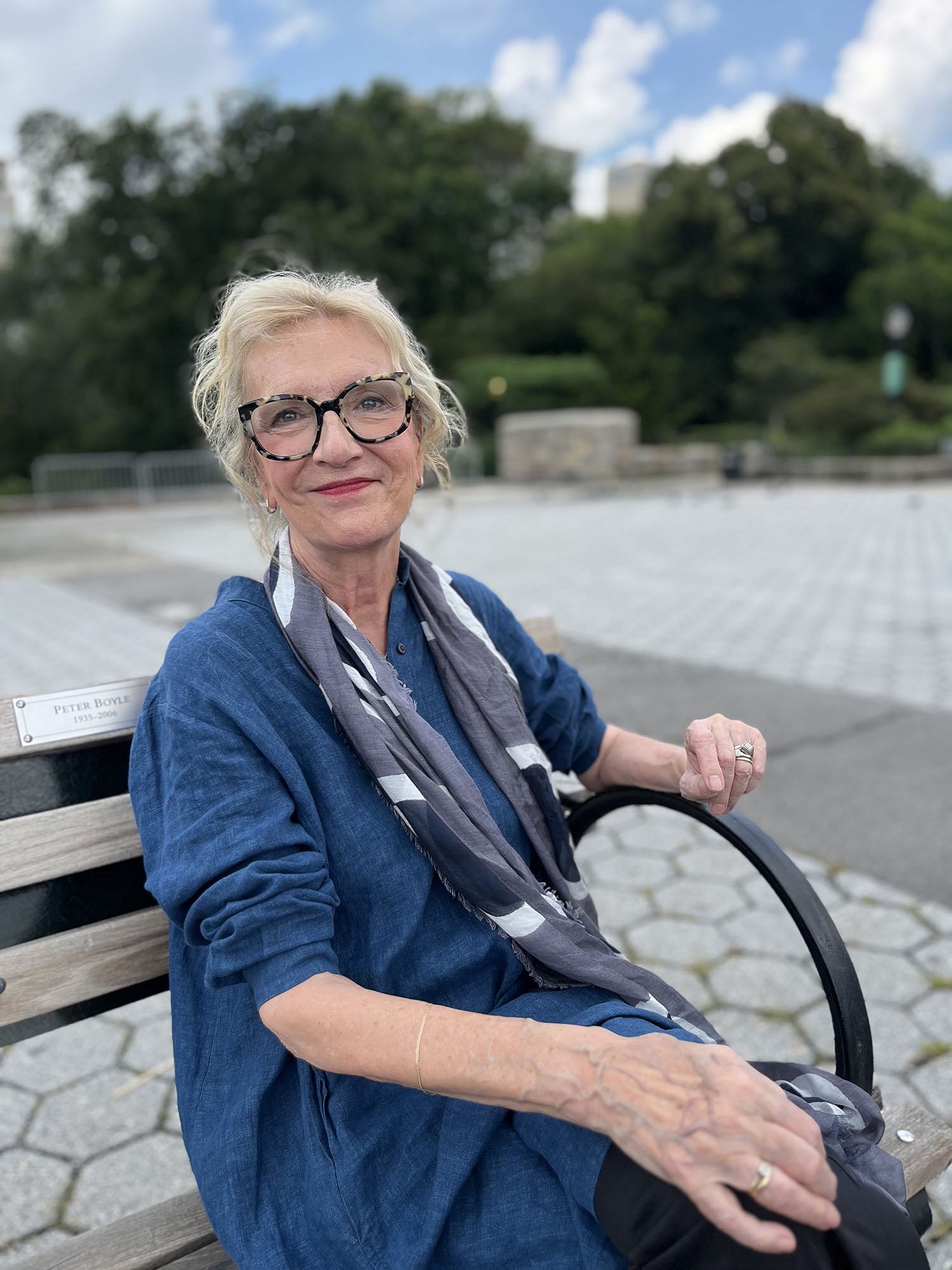
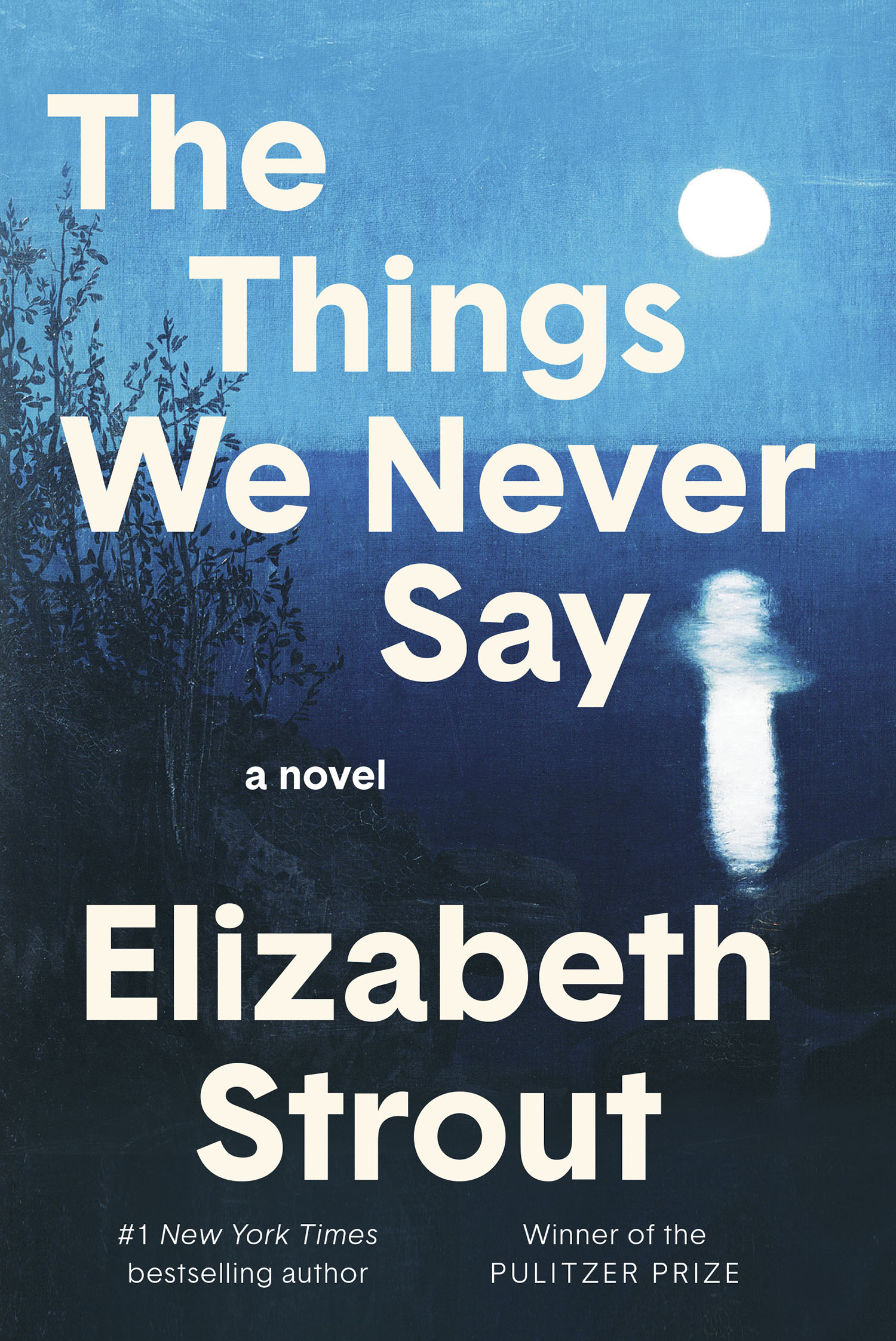
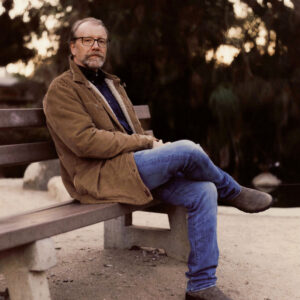
It started with a story Elizabeth Strout caught in passing in a garden. Someone’s father had been out on the water off the coast of Massachusetts and saw a man’s head bobbing above the surface. They pulled him out, took him to shore, “and that was all I heard,” she explains. “I could not get that image out of my head. I kept thinking, What was he doing in the water?” Her latest book, The Things We Never Say, offers an answer.
The Pulitzer Prize–winning author of Olive Kitteridge and My Name Is Lucy Barton follows high school history teacher Artie Dam through a small New England town and out into the Massachusetts Bay as long-hidden secrets threaten to upend his quiet life. Ahead of the novel’s release this May, Strout, now 70, shared why each of her explorations of loneliness and longing reads more liberated than the last.
To start, what’s your writing process like?
For years, I learned to write in scenes because I didn’t have that much time. If I only had two hours every other day, I finally learned, I can’t just go chronologically through because I will write wooden stuff. I would get a sketch or a scene with what I used to call a “heartbeat.” If it had a “heartbeat,” it stayed. If it didn’t, it would go on the floor. I rewrite all the time. I have no problem getting rid of stuff—it makes me happy to get rid of it. A good day for me is to realize what I wrote yesterday is bad. Like, I’m so glad I figured that out.
When you say you only had a couple hours to write, was that while you were working other jobs?
Yes, I was teaching at Manhattan Community College for 13 years. I loved it, actually. It gave me a perspective to be able to write from the teacher’s point of view. Most of the students had gone through the public school systems of New York. They told me horror stories about teachers that would just get up and leave the room. They had really struggled and were often the first person in their family to get beyond high school. I have no idea if I made an impression on them or not. I hope I did.
I was teaching literature and I would be so excited about whatever I was teaching. I do remember a few years after one class, I bumped into one of my students on the subway platform and she goes, “Professor Liz, look what I just bought.” She had bought a collection of Raymond Carver’s short stories. I thought, Thank you.
You open the book with a Carl Jung quote: “Loneliness does not come from having no people but one, but from being unable to communicate the things that seem important to oneself, or from holding certain views which others find inadmissible.” Do you have literature you go to when you’re thinking about themes like loneliness and isolation?
I don’t usually do that at the beginning of a book, but I had been reading a biography of Carl Jung, and I find him interesting. I found it and I thought, This is what I will say at the beginning of the book.
I used to read absolutely everything that rolled off the press. A number of years ago, I started to go back to the classics and reread them and take such comfort in them—the Russians and people like that. I do like biographies if they’re well written. It’s nice to read something very different than what you’re writing. John Cheever’s journals, which had been very important to me when I was younger, I started to reread those recently. Tolstoy and Turgenev and Pushkin, I just find comfort in them, [as well as] George Eliot. For years I kept rereading Virginia Woolf, and then I realized, I don’t think I need to reread that again. That last one was just like the extra cookie that you go, I wish I hadn’t had that. I just overdid it.
You have a few things here that you keep coming back to in your own work, whether it’s this New England setting, the idea of how much you know the people around you, how much they’re able to penetrate who you are. How do you see those ideas developing over the course of your work?
When I’m writing, I’m very character driven and I’m always trying to get inside the character’s head as much as I can, to present it to the reader. I’m always thinking of the reader and the character at the same time. What does the reader need to be able to understand what it is I’m trying to say about the character? I’ve begun to realize over the years, I do seem to have a thematic [thing] going on. One of the reasons I’m character-driven is because I just find people so fascinating. What I’m really interested in, I’ve finally been able to articulate in the last few years. Our inner lives bump up against the outer world, and by outer world I mean any other person. What is our relationship with our inner selves and the outside world? This one really pushes it to an extreme.
Is it strange to go back and read or look at old work and have that realization about what you were doing?
I don’t usually reread my work, but a couple of years ago, I was sitting and I could see Amy and Isabelle over in the corner, and I thought, Do I dare? I picked it up and I thought, Okay, it stands up. I don’t need to be embarrassed. I don’t really reread my work that much, but it seems to be imprinted in me. I practically could have recited Amy and Isabelle by heart, even though I wrote it so many years ago.
But yes, I have begun to understand that what my role as a writer is, is to get from the character’s head into your head and to try and just break down the barriers for a moment so that hopefully the reader doesn’t feel so alone. They can recognize themselves or recognize their neighbor for even just a few moments, just have a more transcendent view of life, just briefly.
I did wonder when reading this book if you thought about how it was going to sit with the reader, or the kind of experience you wanted a reader to have of this very, in some parts, dark internal experience that Artie is going through.
I don’t ever want to write a book that distresses people, but I want to write a book that’s honest, as honest as I can make it. Artie, he’s just a 57-year-old high school teacher who’s sort of schlubby.
There is that experience of reading something dark and finding it kind of comforting, to have that externalized.
I have gotten some feedback like that from readers, which is helpful because I don’t think I’m a depressing writer. When I’m on the road with a book, to have readers say that they actually take great comfort from my work, I’m so glad to hear that. It’s not that I’m writing to comfort them, but I’m hoping that the connection itself will somehow bring some sort of comfort.
Just walking up the stairs this morning, I was thinking about Tolstoy and one of his pieces. He writes sad stuff, yet I always feel comforted by him. Also the writer William Trevor. He was an Irish writer, he passed away a few years ago, probably more than a few now, but I guess time goes fast at my age. He would write stories that were so sad, yet I loved them. It was like being surrounded by a blanket and a cup of hot chocolate to read these incredibly sad stories, and I realized it’s because of his perception of them. He wasn’t trying to depress you, he was just trying to say, “Here’s the story of a man in Western Ireland who had to go back and take care of his mother and was never able to leave the town.” Well, that’s true, there are people like that. He was just lovely like that, just absolutely lovely.
In this book, you’re talking about the pandemic, the election, there’s a political undertone. Do you feel at this stage in your career that there’s new things you’re able to tackle, or ways that you’re able to push yourself as a writer? What do you feel like you’re working on at this stage?
I’m just continuing to try and write as honestly as I can for an ideal reader, and the older I get, the more experiences I get. One of the benefits of being older is that you don’t, in the right way, care as much. There’s a freedom. I can push myself in different directions. I can’t tell you specifically what those directions are, but I just have the sense that, I can do this.
More of our favorite stories from CULTURED
14 Books Our Editors Can’t Wait to Read This Summer
Inside the Closet of a Revered Stylist Who Has Only Worn Prada For Over 30 Years
Charles Melton Actually Has No Idea Where His Career Goes From Here
Introducing a Play For Every New Yorker Who’s Had More Bad Dates Than Good
7 Commandments for Rookie Collectors, From CULTURED’s Power Art Advisors
Sign up for our newsletter here to get these stories direct to your inbox.






 in your life?