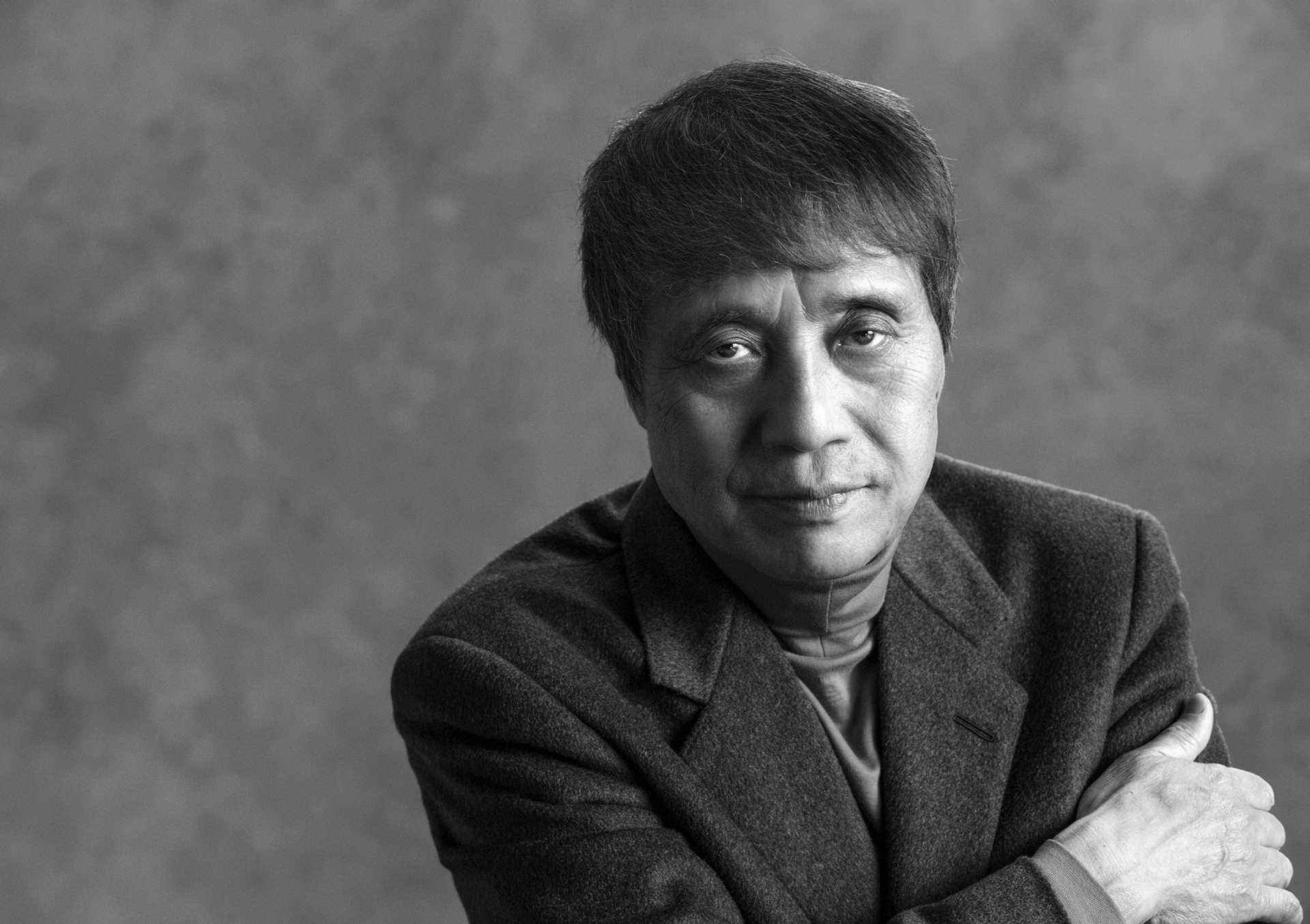
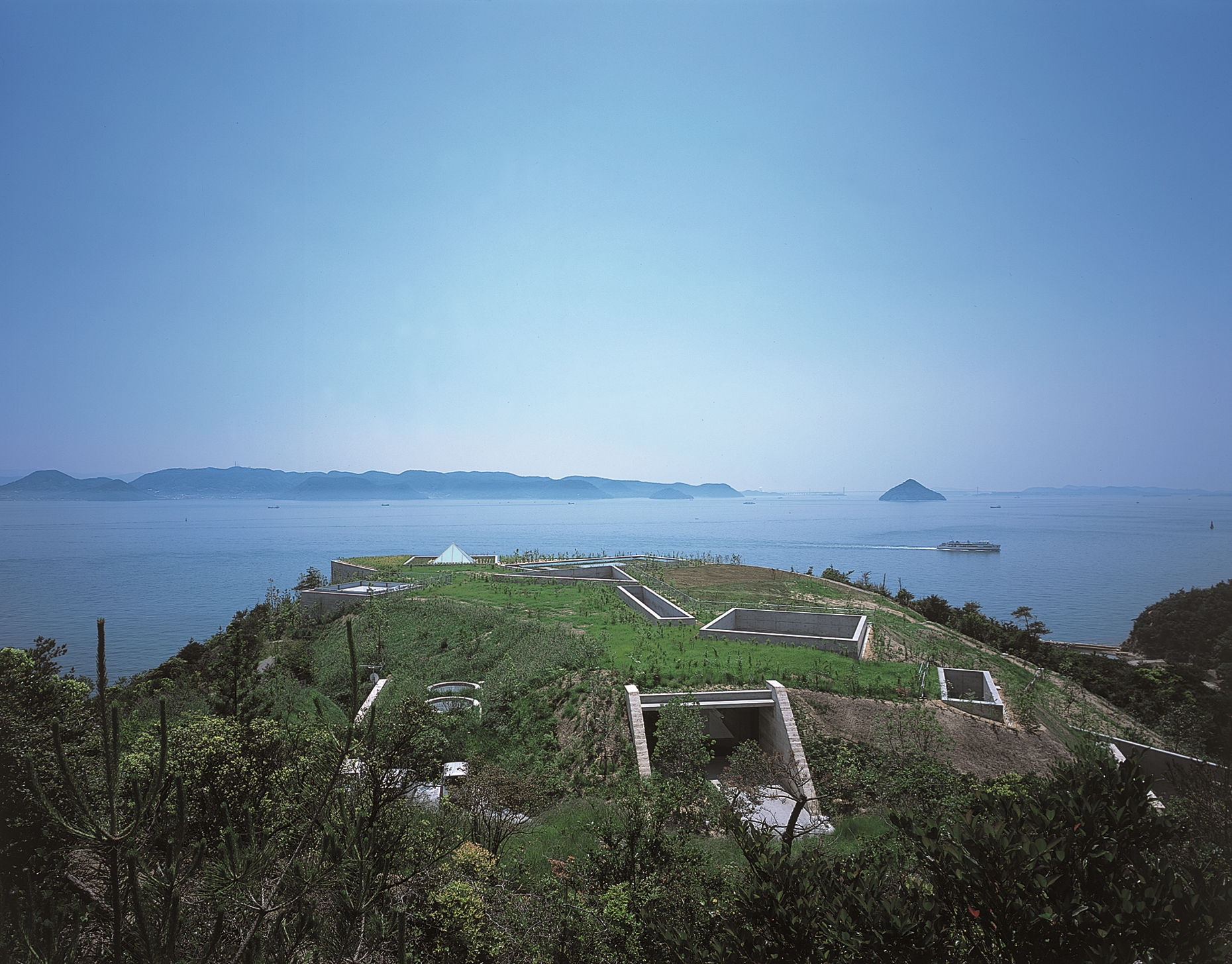
There’s something about encountering Tadao Ando’s work in person that permanently shifts your understanding of space. I first felt it on my honeymoon, traveling through Naoshima, a Japanese island where the 84-year-old has built 10 museums over the course of 33 years. As we moved between buildings, the concrete corridors seemed to hold both silence and light in equal measure. Ando’s architecture shapes how you move, pause, and even think.
I remember being struck by how intentional everything felt. There was an otherworldly way light entered a room and a synchronized way the landscape and architecture blurred into one another. The experience gave me a deeper appreciation for the kind of restraint and discipline behind his work, and a lasting fascination with the mind of the architect himself.
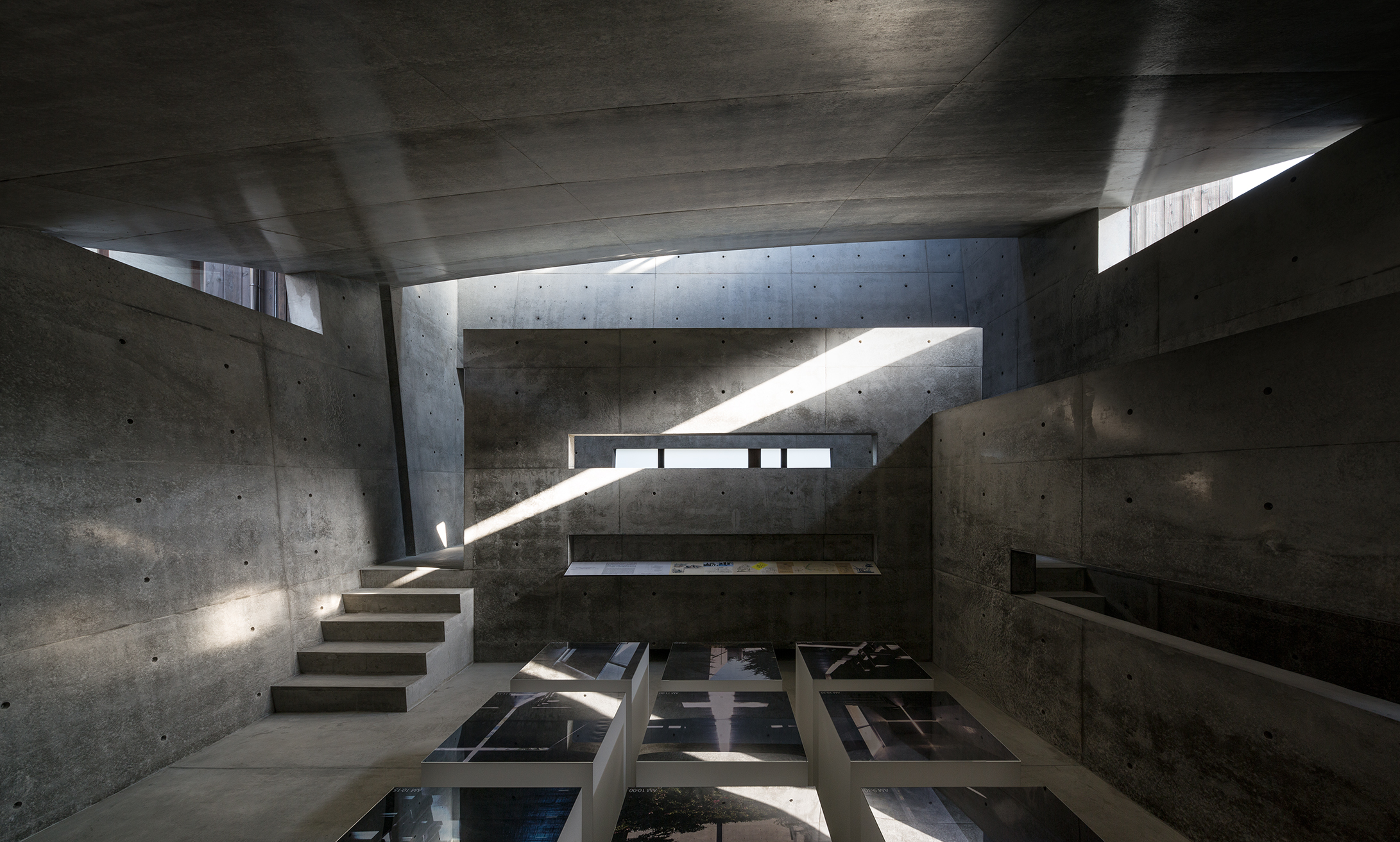
After experiencing his buildings in person, I knew I wanted to feature Ando in “In the Know.” The winner of the 1995 Pritzker Prize for Architecture, Ando has designed celebrated projects including the Pulitzer Arts Foundation in St. Louis and the Church of Light in Osaka. (The building Adrien Brody’s character designs in the Oscar-winning film The Brutalist bears a striking resemblance to the latter.)
In his own words, Ando often returns to the idea of “light within darkness,” a sensibility rooted in his early life and carried through his practice. It’s a philosophy that not only defines his buildings, but also reveals how deeply architecture, for him, is intertwined with memory, emotion, the act of seeing, and the art of living.
Tell us about the home you grew up in. How did it inform your ideas about space, light, and structure?
I grew up in a traditional wooden row house (nagaya) in a working-class neighborhood of Osaka. It was a long, narrow two-story house, about two bays wide and eight bays deep. Far from the kind of bright, comfortable homes people imagine today, it was a place where darkness was simply part of daily life—cold in winter, hot in summer—and we accepted that as natural. At the back of the house, there was a small, west-facing garden. For only a brief moment each day, light would enter from there and illuminate the interior. I still remember the beauty of that light. I lived in that house until my late 40s. The instinctive desire I have for “light within darkness,” and my inclination toward cave-like spaces—not uniformly open, but gradually revealed through depth—may well have its origins in those years.
Before you became an architect, you trained to become a boxer. What do boxing and architecture have in common?
Of course, an architect who holds a pencil and draws, and a boxer who steps into the ring wearing gloves, are entirely different professions and ways of life. Yet for me, they are fundamentally the same in one respect: both are struggles in which one must confront inner fear and move forward with courage.
In boxing, you endure rigorous training and repeated weight cuts, only to pour everything into a single, fleeting match. In the end, you have nothing to rely on but your own body. It is an intensely stoic and solitary sport. But it is precisely in pushing both body and mind to their limits that a certain kind of strength is awakened.
Architecture is no different. When working under severe constraints—tight programs and limited budgets, with little freedom in design—you are forced to ask yourself: what is truly necessary, and what is it that I must create? It is through this process that “light” begins to emerge. The Church of the Light in Osaka, completed in 1989 on an extremely limited budget, is a work that could only have been realized under such extreme conditions.
You are self-taught. If you were to design a curriculum to help other autodidacts study the craft of architecture, what five buildings would you tell them to see in person?
To be self-taught means deciding for yourself what to learn and how to learn it. In that sense, the question is somewhat beside the point. Anyone who sets out to study architecture through travel will, without being told, seek out great works on their own.
Instead, I would offer this advice: At the same time that you look at architecture around the world, experience the earth itself. Its vastness, and the diversity shaped by different regions and climates, cannot be grasped unless you encounter them with your own body.
How have your collaborations with artists—like working with Lee Ufan on the Lee Ufan Museum—challenged you or made you think differently?
Collaborating with artists often becomes a clash of egos. In particular, the closer an artist’s sensibility is to mine—as with Lee Ufan—the stronger their will, and the less they are willing to yield. Such tension can give rise to a force in the space that exceeds one’s original intent, while also prompting me to reexamine my own thinking. The process is not an easy one. But that is precisely what makes it compelling.
Can you think of a situation where the artist wanted to go in one direction, you wanted to go in another, and you ended up finding a resolution that surprised both of you?
The column standing in the forecourt of the Lee Ufan Museum was introduced at Mr. Lee’s suggestion, at a stage when the architectural framework had already been largely completed. The space had been resolved through a series of horizontally extended concrete walls, yet he proposed inserting a vertical element to set the space in motion. It was not part of my original conception; rather, it was a proposal that called into question the very order of the space. In the end, the addition of that single column brought a new sense of depth and tension, allowing the architectural composition to acquire a different meaning. Collaboration with artists, in this sense, is an act of unsettling established frameworks and discovering unforeseen relationships through that process.
You are known for designing buildings that cut into the earth or burrow underground. So many architects seek to build towering monuments.
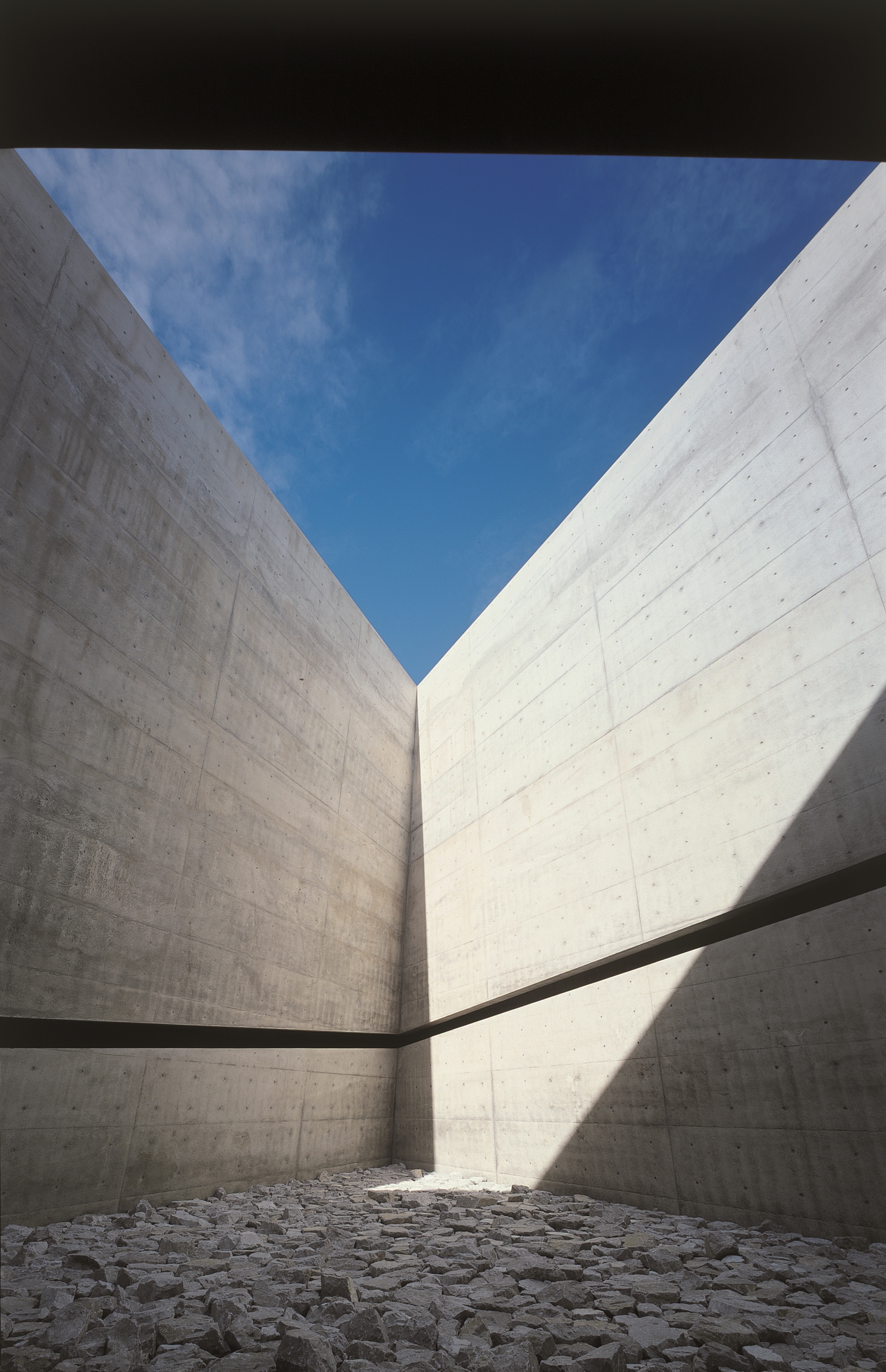
It is not that I reject towering monuments; in fact, although not many, I have designed such buildings myself. Yet, as you suggest, the idea of underground space holds a particular fascination for me. The underground is a “site” that cannot be grasped from an external viewpoint; the form of architecture disappears, leaving only the space as perceived by those within. In that condition, I sense the possibility of approaching a space of pure and essential force, and whenever the opportunity arises, I take it as a challenge.
At the same time, beyond such conscious intentions, I seem to have an instinctive attraction to cavernous, vertically charged subterranean spaces. When I reflect on my own spatial memories, what remains most deeply etched are experiences such as the stepwell in Ahmedabad, the Mogao Caves in Dunhuang, and the cave dwellings of Cappadocia. As one descends, the light is gradually reduced, and the body is enveloped in a dense, silent darkness—the space begins to permeate the mind.
Such images of space, independent of given conditions or rational thought, suddenly seize me and come to shape the project itself.
Despite the fact that many of your buildings are below grade, you still manage to let in lots of natural light. In fact, sometimes it’s difficult to know whether you are on the first floor, ground floor, or underground. In as simple terms as possible, can you explain how you achieve this sense of openness?
What I seek to create is a space that emerges through the flow of air and the presence of light. By stripping away the many conditions imposed on architecture, one by one, and reducing it to its most fundamental form, I aim to approach a space that is pure and filled with essential force.
In underground spaces, where external points of reference are lost, the presence of light becomes more acutely felt. As one descends, the atmosphere of the ground level gradually fades, and a quiet darkness deepens. When light enters from above and strikes the walls that shape this darkness, space finally reveals itself.
Guided by light, and unfolding with a certain rhythm, this sequence of spaces is what I have long pursued—an invisible architecture.
Some of your buildings have complex paths of circulation that can leave people disoriented. What draws you to this approach? How do you feel if people get lost?
I believe that the value of architecture often lies in deliberately stepping outside the bounds of functional rationality, even after pursuing it to its fullest extent. For that reason, I sometimes design labyrinthine paths that encourage people to wander. At first glance, this may seem to contradict my architectural approach, which is grounded in limited materials, geometric composition, and a pursuit of clarity. Yet it is precisely this tension that is essential to my work. In 1987, upon completing the Kidosaki House, I wrote an essay titled “The Overlapping of the Abstract and the Concrete.” In it, I described architecture as a dialogue between abstraction and concreteness, referring to Josef Albers’s Homage to the Square as a symbol of abstraction, and Giovanni Battista Piranesi’s Imaginary Prisons as an embodiment of physicality and experiential space. I concluded that my ongoing challenge is to embed a Piranesian labyrinth within an Albers-like structural order.
What matters to me is not minimal form itself. Rather, through simplification, I seek to clarify the intent of construction, and through abstraction, to more fully evoke the vitality of nature that lies beyond.
You’ve said you approach designing homes in the same way you approach designing houses of worship. Why?
Architecture is a medium through which people enter into dialogue with others and with the world at large. The home is the origin of this dialogue in everyday life, while the place of prayer represents its non-ordinary form. What matters is how to make this dialogue rich and meaningful—this has always been my constant pursuit.
You’ve signed some of your buildings in the same way an artist signs their paintings. In your mind, where does architecture end and art begin?
When people speak of my “signature,” I understand it to refer to elements such as exposed concrete or geometric compositions—forms of expression that run consistently through my architecture.
For me, architecture and art are quite different. Architecture, which is inevitably tied to society and the economy, is always caught between ideals and reality, between abstraction and the concrete. The intensity of the energy spent within this tension determines the vitality of what is built. Yet with experience, one can easily, and often unconsciously, drift toward compromise. Art, on the other hand, exists in a constant struggle to remain free. It is in the purity of that freedom that architecture and art ultimately belong to entirely different realms.
What is a building you didn’t design, but wish you did?
It’s not a question I care much to answer, but if I had to, it would be the projects I fought for in competitions—and did not win.
There’s been a lot of discussion in the architecture and design world about concrete’s carbon footprint. Are you adapting your design approach or use of materials to address climate concerns?
I am fully aware that human activity has expanded to a scale that significantly impacts the global environment, and I understand that a certain degree of control is necessary to address this. However, I find it problematic to reduce the issue to the simple conclusion that “concrete is bad.”
Technological updates—such as the development of alternative materials to replace cement, enabling both lower cost and lower carbon emissions—are essential. At the same time, I do not believe that concrete itself, which has brought great possibilities to modern architecture through its rationality and versatility, should be dismissed altogether. If a new form of concrete were to emerge, I would be the first to take on the challenge. To create something that no one else can replicate using means available to all—this is the reason I have continued to work with concrete to this day.
You opened the 10th museum you’ve designed on Naoshima, dedicated to Asian art, last year. At this stage in your career, how are you balancing the desire to look ahead and complete new projects with the desire to look backward and secure your legacy?
Architecture, at its core, is the act of creating forms of the future that do not yet exist before us. Once you begin to speak of your “legacy” and look back, it is already over. That is how I see it.
What do you hope will be the fate of your firm, Tadao Ando Architect & Associates, 25 years from now?
I’ll think about that 25 years from now.
More of our favorite stories from CULTURED
14 Books Our Editors Can’t Wait to Read This Summer
Inside the Closet of a Revered Stylist Who Has Only Worn Prada For Over 30 Years
Charles Melton Actually Has No Idea Where His Career Goes From Here
Introducing a Play For Every New Yorker Who’s Had More Bad Dates Than Good
7 Commandments for Rookie Collectors, From CULTURED’s Power Art Advisors

 in your life?