When the trailer for Michael dropped last fall, it broke the record for views on a musical biopic or concert film teaser, surpassing Taylor Swift: The Eras Tour. That’s not a data point about the movie—it’s a data point about Michael Jackson, about the grip the mythic popstar still has on audiences the world over. Whether the film itself appropriately satisfies that appetite is a more complicated question. Ultimately, the answer will depend on where viewers stood with Jackson to begin with and how they engage with the perennial question: Can you separate the art from the artist?
Directed by Antoine Fuqua and partially financed (and likely heavily shaped) by the Jackson estate, Michael functions above all else as a lavish testament—let’s call it tribu-tainment—to Jackson’s singular gifts and outsized celebrity status, which had no precedent. Rather than excavating anything especially unique on the subject of Jackson’s talent, however, the film does the opposite. As its 130 minutes elapse, Fuqua layers on more gloss, more spectacle, and more familiar iconography until the man in the mirror recedes almost entirely.
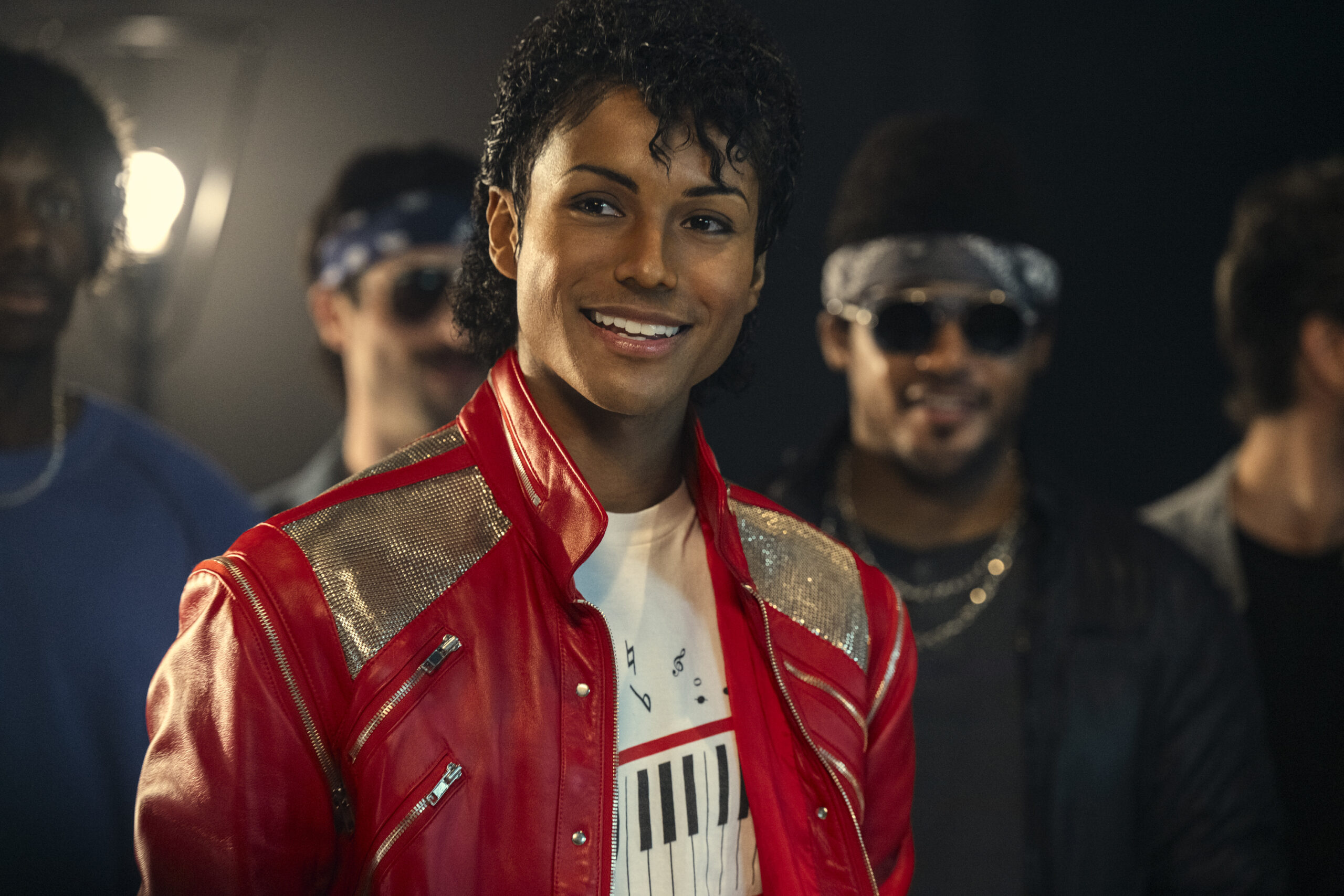
Nevertheless, the film is, occasionally, fun—thanks to the music and the actors tasked with embodying Michael. Jaafar Jackson—his nephew and the son of Jermaine—disappears competently into the role of adult Michael. Jaafar doesn’t sound or move like his uncle, but he emulates him preternaturally: the featherlight speaking voice and the cultivated fragility. (Jaafar’s vocals are blended with Michael’s for a handful of musical sequences.) Juliano Valdi is irrepressibly adorable as young Michael, while Colman Domingo lends a sense of menace to Joe Jackson, the family’s abusive patriarch.
Other supporting figures drift in and out: his mother (Nia Long); his agent, John Branca (Miles Teller); Berry Gordy (Larenz Tate); and Quincy Jones (Kendrick Sampson). The film doesn’t spend much time differentiating the Jackson brothers; this is, without ambiguity, Michael’s movie.
Michael spans Jackson’s early life in 1960s Gary, Indiana, gingerly charting his rise with the Jackson 5 and his Off the Wall, Thriller, and Bad eras. Notably absent are any mentions of the early solo albums from his adolescence, which have been replaced by sugary scenes of eccentric arrested development in the Jackson family mansion: Michael retreats to his bedroom to play Twister with his pet chimpanzee or reread a Peter Pan picture book, while his brothers go on dates and move onto something like normal adolescence. This streamlines the narrative and significantly narrows the dramatic sweep of Jackson’s creative arc. Michael offers viewers the what (polished brilliance, childlike eccentricities) and leaves most of the how and why notably untapped—unlike the way, say, Love & Mercy did for Brian Wilson. That’s a profoundly squandered opportunity for a figure as impossible to pin down as Jackson.
It makes sense when you realize the film was produced by Graham King, who was behind the heavily awarded (and quite bland) Freddie Mercury biopic, Bohemian Rhapsody. Like that film, Michael is mostly recreated performance footage that privileges spectacle over inquiry—an efficient excuse for a singalong. You get the hits, but what you don’t get are scenes that risk tarnishing the polished persona—there are no mentions, for example, of sexual abuse. The film offers less insight than you’d glean from reruns of early-aughts specials on VH1 or the E! Network.
While the film reveals little that isn’t already part of the public record, there’s still plenty worth paying attention to, for fans and skeptics alike. Here’s what to know.
More than a third of the movie was axed.
Michael has been in development with Lionsgate since 2019, and delayed several times. It finally wrapped in 2024—then things really went sideways.
In 2024, after initial photography shoots for Michael were largely complete, attorneys discovered a clause buried in Jordan Chandler’s civil settlement with Jackson: a legally binding agreement that barred any film from depicting or even mentioning Chandler or the sexual abuse allegations he made against Jackson in 1993, when he was 13 years old. The original script not only depicted those events but reportedly opened with Jackson staring into a mirror as police car lights flashed behind him at Neverland Ranch—the raid that set the investigation in motion. All of it had to go. (The estate’s co-executor, John Branca, has been blamed for missing the clause—though notably, the 1994 agreement was negotiated by Johnnie Cochran and Howard Weitzman, both of whom are now deceased.)
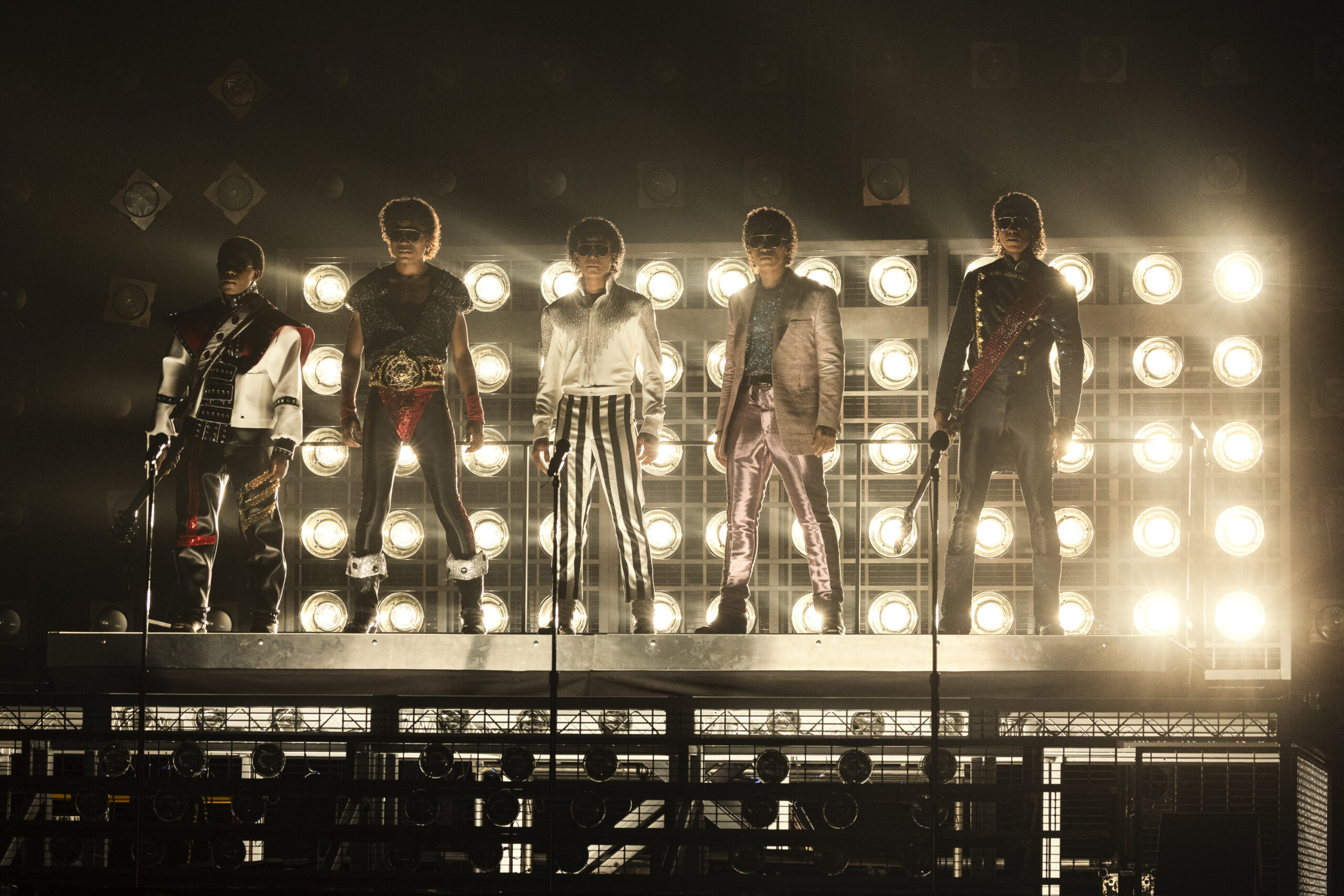
So, the cast reconvened for three weeks of reshoots—what you see onscreen now ends not with scandal but with triumph: Jackson in 1988, defying his father on-stage by performing “Bad” at Wembley Stadium to what was then the largest solo audience in concert history. The final title card unceremoniously reads: “His story continues”—three words that do a lot of heavy lifting for a story that, in real life, did not end so cleanly.
It’s possible that the leftover footage might be reconstructed into a sequel, as many involved in the production have suggested, but there’s no word from Lionsgate on this yet.
Joe Jackson fills the void.
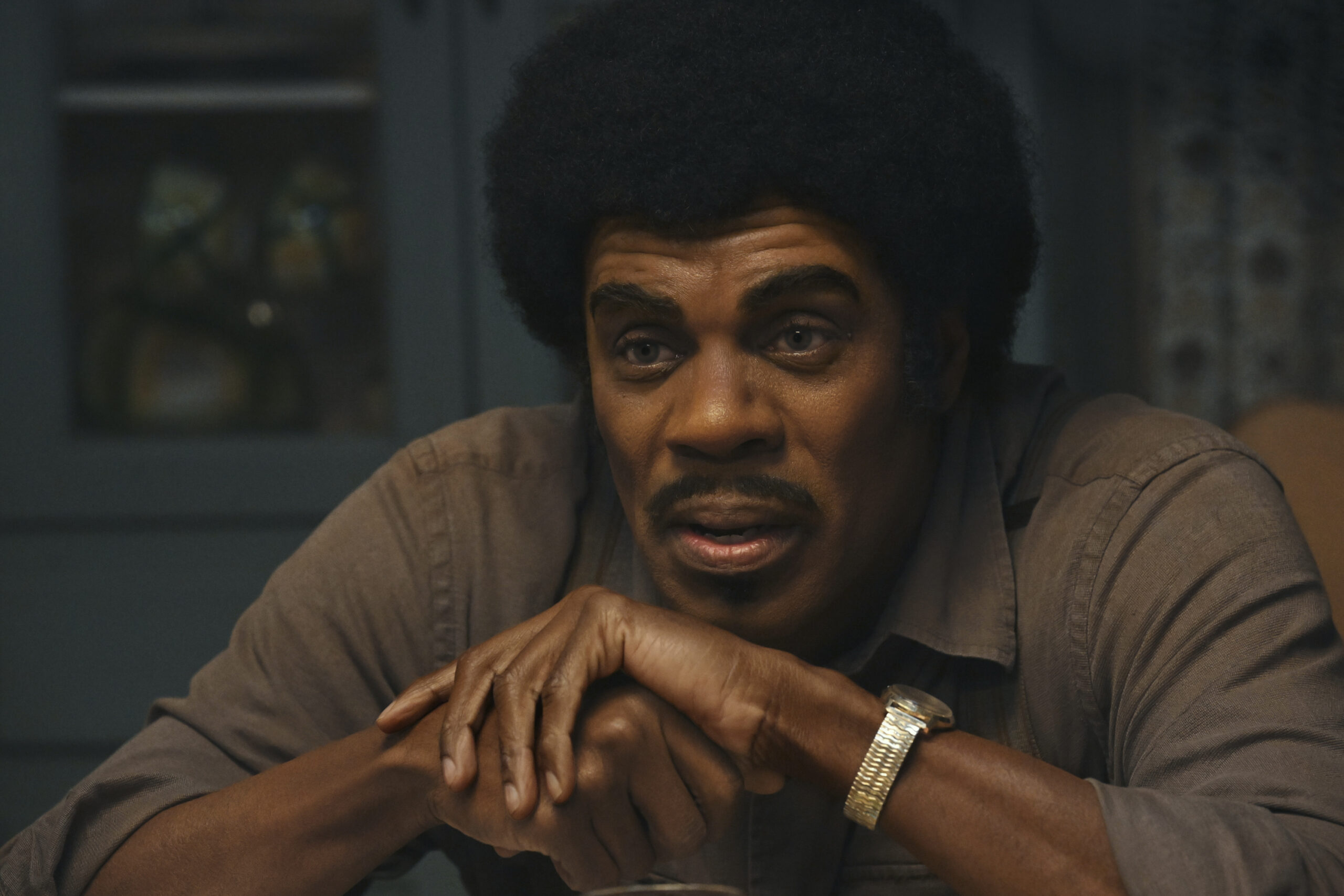
The first words uttered in the film are Joe Jackson’s: “Mike, get back in line.” It’s an apt encapsulation of all that follows. The tension between Joe’s iron grip on his sons and Michael’s push toward a solo identity becomes, in the restructured film, the skeleton on which the rest of the story hangs.
This is worth sitting with for a moment. Joe-as-villain isn’t just a narrative choice—it’s also nearly all that was left after the legal complications eroded the original narrative. Domingo is compelling, so you may not mind, but it does raise a question the film isn’t prepared to answer: Does focusing on the domineering father as the explanation for everything Michael became a rather convenient form of exoneration?
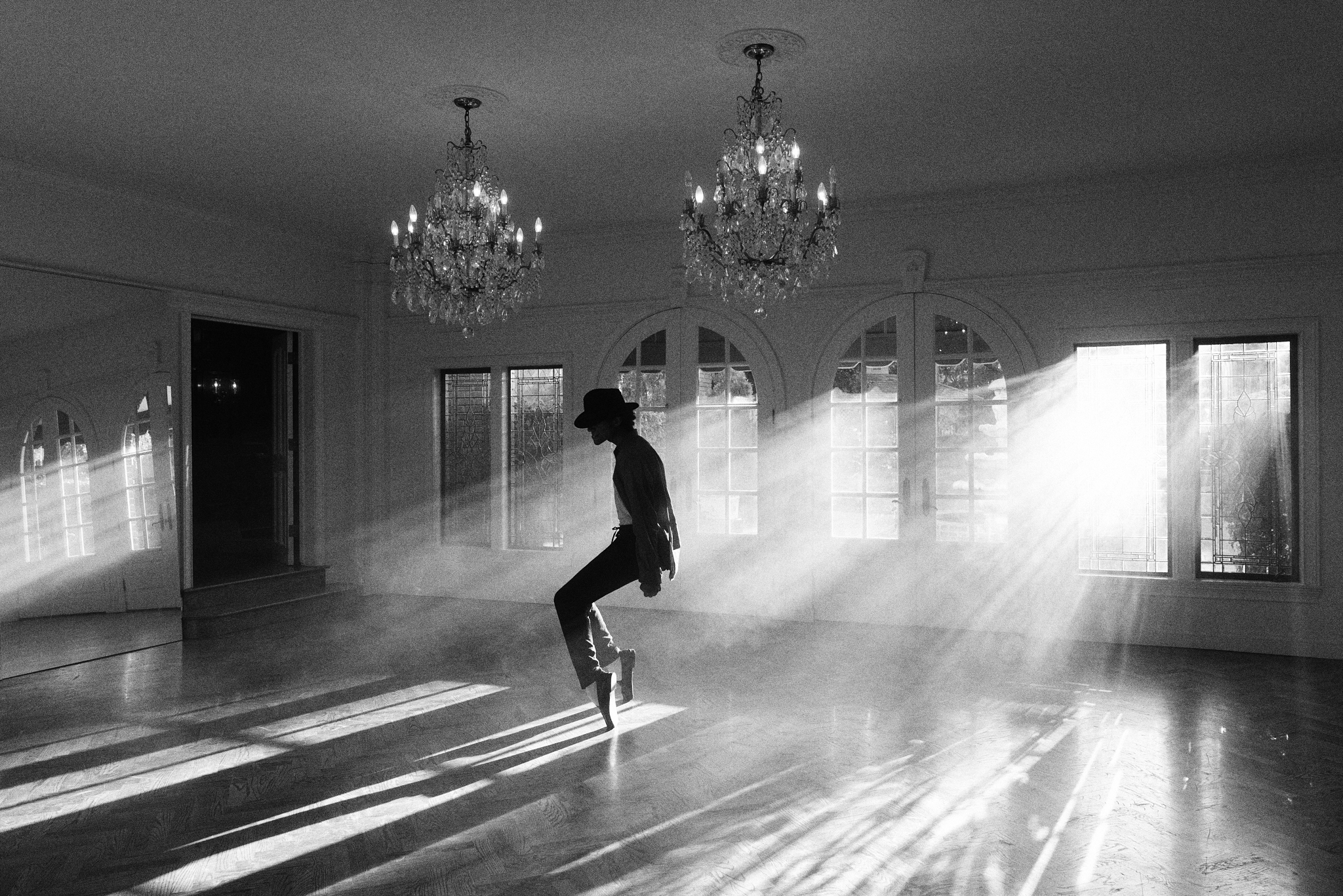
Neither Janet Jackson nor Paris Jackson has anything nice to say about Michael.
The Jackson family’s relationship to the film is as complicated as the family itself. Janet, the youngest Jackson sibling, is entirely absent on-screen, and in real life has been cool on the project. She is said to have been enraged after a private screening for the family. Paris Jackson, Michael’s daughter, has also expressed distaste, calling the script dishonest and saying it appeals to a “very specific section of my dad’s fandom that still lives in the fantasy.” (Her brother, Prince, by contrast, is an executive producer on the project.)
Janet and Paris’s rejection is worth noting, given that the film positions itself as an official account. The estate’s cooperation, it appears, doesn’t equate to the entire family’s blessing.
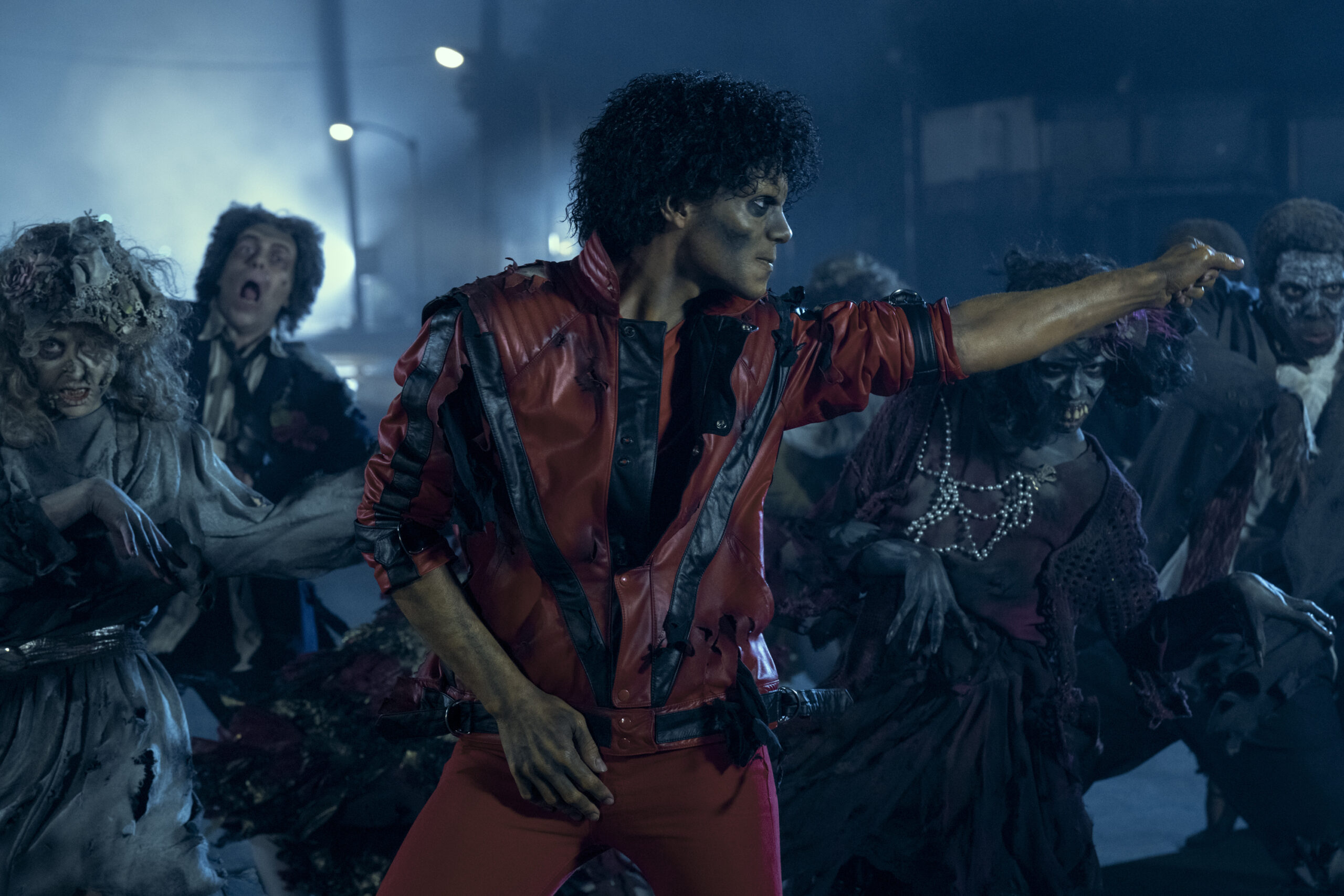
The film’s editing does the very thing MJ fought against.
One of the more interesting instances of Michael flashing his creative intuition in the film is when he insists to his director and crew that the “Thriller” music video focus on the feet, on the actual dancing.
(MJ heads can debate whether this exchange actually happened; the film presents it as proof of his rigor.) Too bad that Antoine Fuqua chose not to follow his lead; the film rarely lingers long enough on any dance sequence to let the choreography unfold for longer than a moment.
That restlessness reflects the director’s instincts. Best known for kinetic, forward-driving films like Training Day and the Equalizer series, Fuqua approaches the material with momentum in mind. The result is often exhilarating—but it can also feel impatient, as if the magic is never given a real chance to unfurl.
There may also have been practical reasons for this: Jaafar Jackson is a remarkable physical performer, but maintaining a prolonged similarity to his uncle across long takes would be a feat.
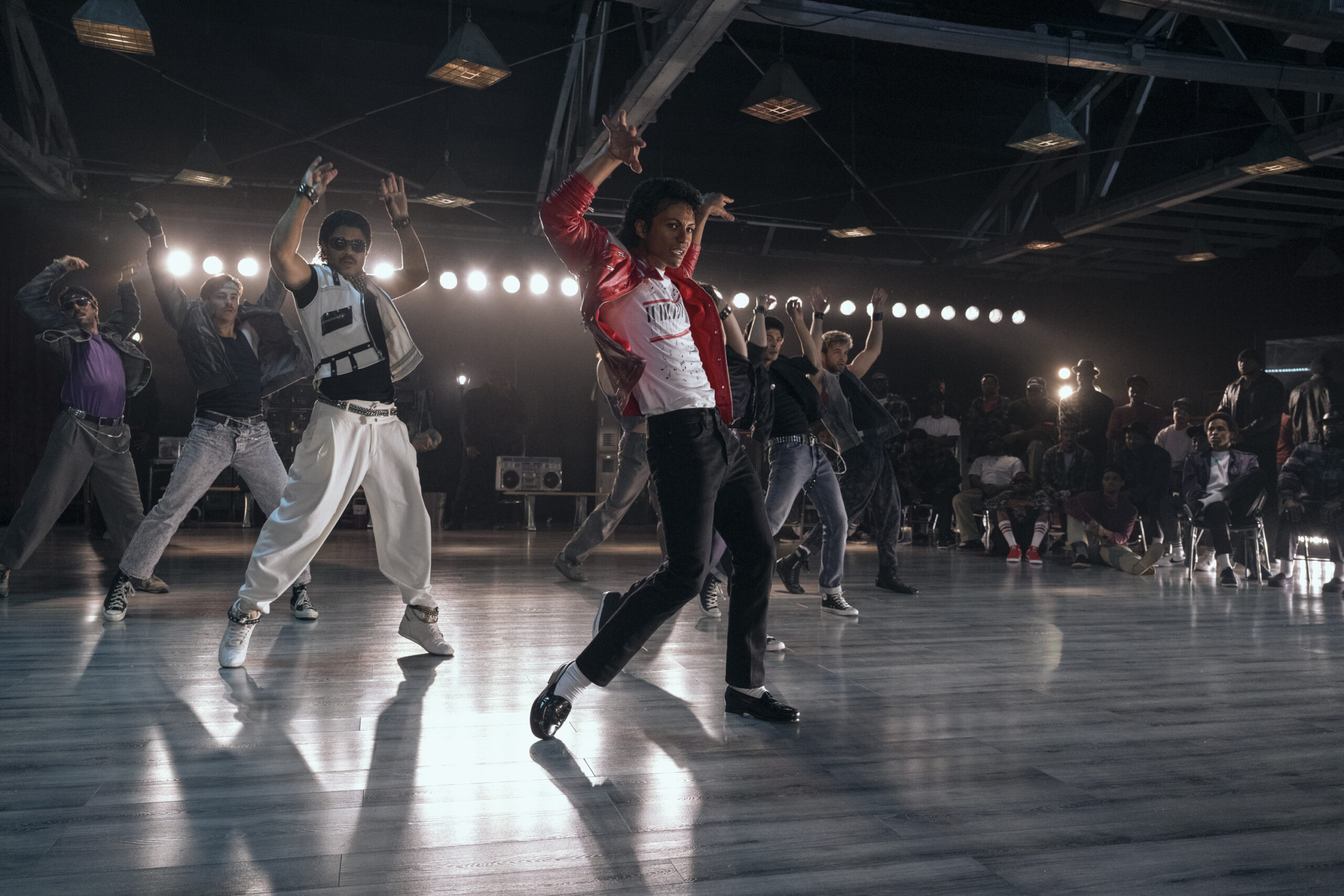
Yes, that’s Mike Meyers under there.
Barely recognizable behind an elaborate makeup job, Mike Meyers plays Walter Yetnikoff, the CBS Records president who famously forced MTV to air “Billie Jean” in 1983. The stakes were real: MTV at the time was programming almost exclusively white artists, and Yetnikoff threatened to pull the label’s entire roster (artists like Cheap Trick and Billy Joel) if the network refused. Jackson got the airplay.
The effects were substantial: In the months following the release of the trio of Thriller videos in 1983, MTV posted its first quarterly profit after years of losses. Michael didn’t just break a barrier—he kept a network afloat.
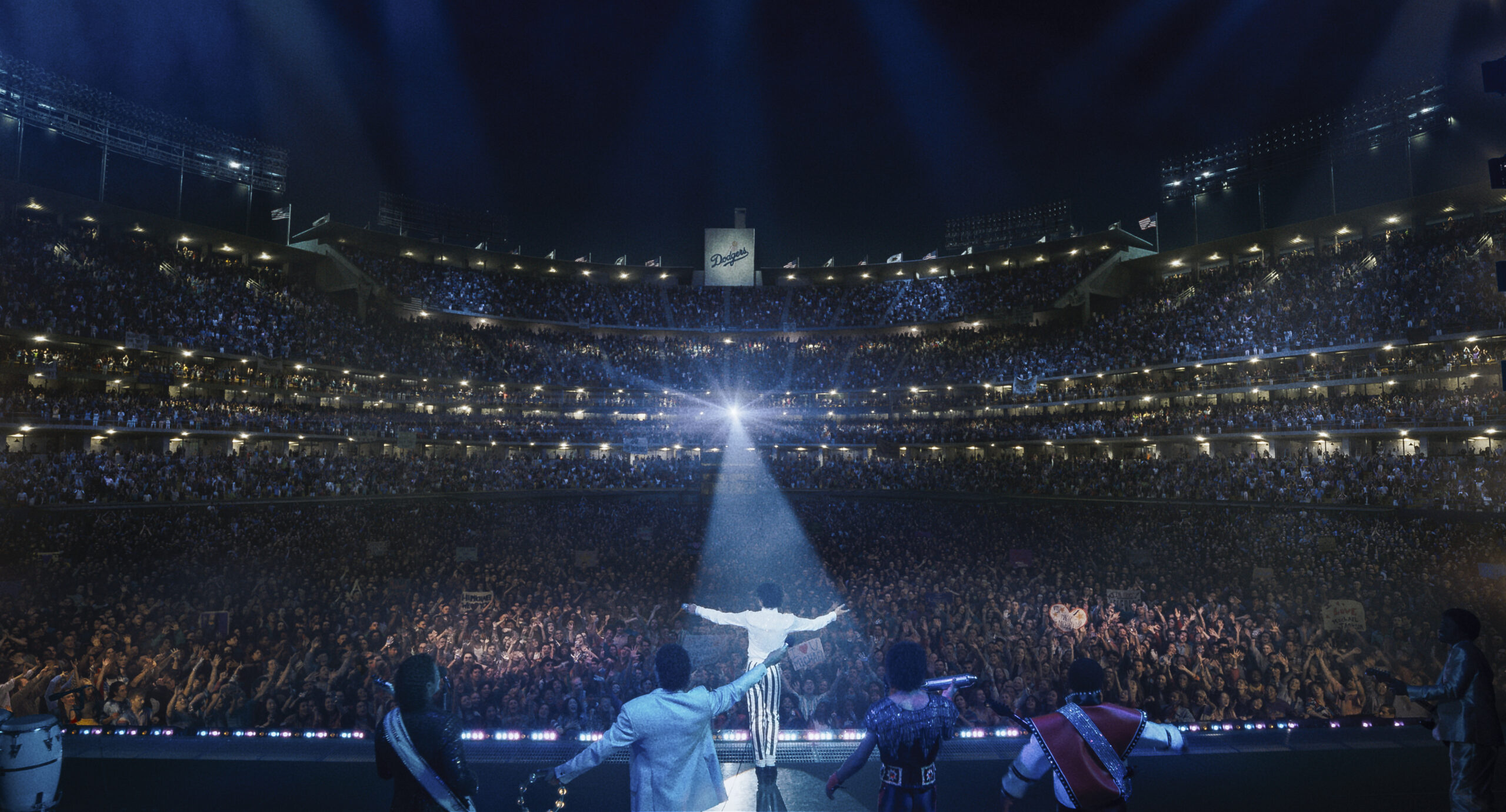
The armband that broke Twitter appears.
At the Los Angeles premiere, Prince Jackson showed up in dark suit and red armband—a tribute to one of his father’s signature accessories. To those less versed in Michael’s wardrobe, the armband looked uncomfortably close to a Nazi one, and the comparisons spread before the context did. Jackson began wearing one in the 1980s, reportedly as a symbol of solidarity—he said on multiple occasions that he would continue to do so as long as there were children suffering in the world. By the time of his 2005 trial, the accessory took on an ironic and sinister implication. Michael wore it to court each day as a declaration of his innocence and his commitment to protecting children rather than harming them.
What to watch next, or instead:
The Jacksons: An American Dream, 1992
Man in the Mirror: The Michael Jackson Story, 2004
Michael Jackson: Searching for Neverland, 2017
Bad 25, 2012
Living with Michael, 2003
Love & Mercy, 2014
Any actual footage of Jackson’s live performances!
More of our favorite stories from CULTURED
14 Books Our Editors Can’t Wait to Read This Summer
Inside the Closet of a Revered Stylist Who Has Only Worn Prada For Over 30 Years
Charles Melton Actually Has No Idea Where His Career Goes From Here
Introducing a Play For Every New Yorker Who’s Had More Bad Dates Than Good
7 Commandments for Rookie Collectors, From CULTURED’s Power Art Advisors
Sign up for our newsletter here to get these stories direct to your inbox.


 in your life?