![kekahi wahi (Sancia Miala Shiba Nash and Drew K. Broderick), 20-minute workout [WIP], 2023/26](https://culturedmag.nyc3.digitaloceanspaces.com/uploads/2026/03/04133755/WMAA98097_kekahiwahi_01_lpr.jpg)
“Whitney Biennial 2026”
Whitney Museum of American Art | 99 Gansevoort Street
Through August 23, 2026
The “Whitney Biennial 2026” is incoherent. Across the 56 participating artists and collectives, the curators—Marcela Guerrero and Drew Sawyer—don’t even attempt a unifying theme or title (unlike in the past two iterations). And this is for the better, as if the curatorial team has rightly posited: America itself is an abstraction—irrational, violent, and unable to adhere to its own boundaries or act civilized within the international order. Why should the country’s longest-running art survey, especially now in war time, pretend to be any different? Let the crowd offer its many voices. Or so the thinking seems to go.
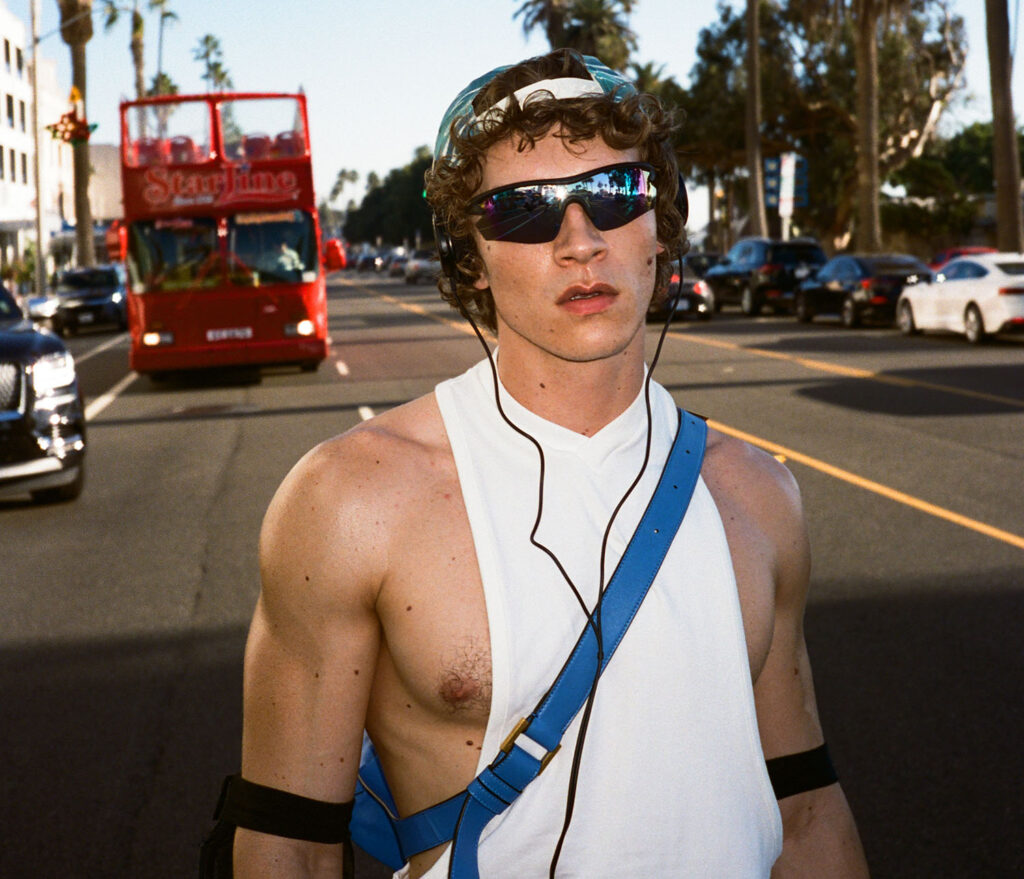
You needn’t even open your eyes to catch the essence of this year’s Biennial. Clanging percussion, ominous drones, discordant strings and woodwinds emanate throughout from installations and videos that sonically establish the mood. And it smells. (Not unpleasantly—at least two stand-out works cleverly feature scent, most prominently the sensorium of Oswaldo Maciá’s Requiem for the Insects, 2026.) A knock-off Björk croons overtop electronica, with a voice-over cameo by Peter Thiel, in the standalone, apocalyptic Zach Blas installation on the ground floor. (I pity the security guards, subjected to Blas’s soundtracked black-box theater slash altar slash dungeon of A.I.-as-cult dystopia, with its placards of bad poetry glowing in nearly illegible fonts.) The general tenor of this year’s Biennial is of unease that is careful—often too careful—not to slip into discomfort.
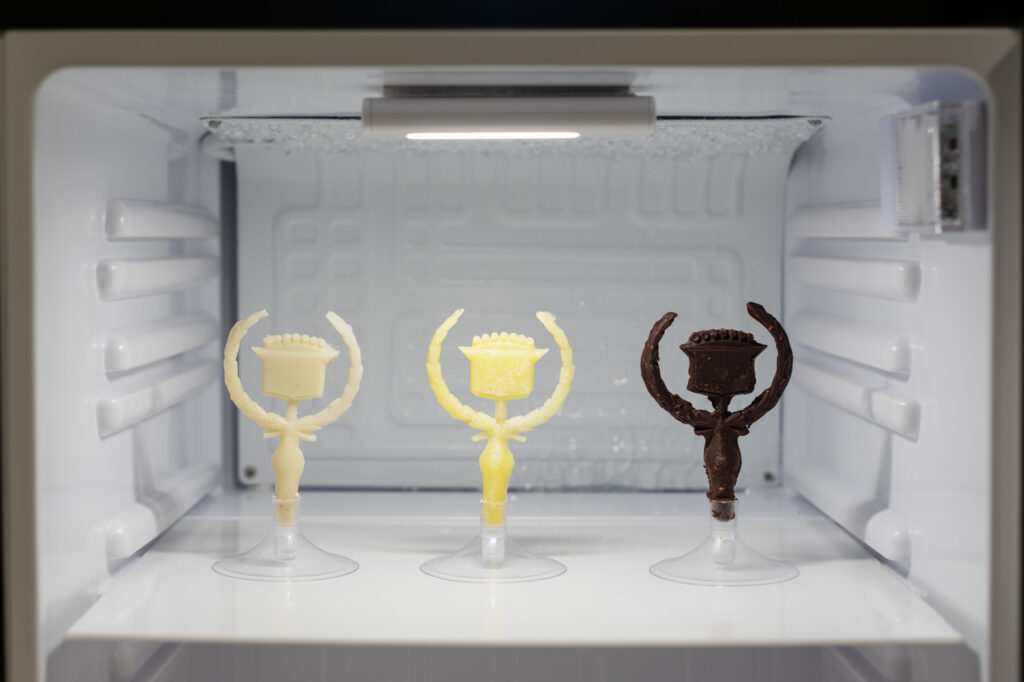
There are, of course, thematic threads to pull on. Animal and human relationships in the drawings and iterative Kong Play painted ceramic sculptures that Emilie Louise Gossiaux, who lost her sight in an accident, made for her deceased guide dog. Themes of ecology and urban infrastructure appear throughout, including in the cryptic but compelling multimedia sculptures by Detroit-based Ash Arder. Her Consumables, 2023, displays three Cadillac hood ornaments cast in butter, chocolate, and shea butter, within a refrigerator powered by a solar-powered battery linked to the Whitney’s rooftop outdoor space. (Her late father worked for General Motors.) The even more mysterious, Broadcast #4, 2024, incorporates brass pipes, soil, paper, and seeds within wooden boxes wired to a mixer, drum machine, and speakers. (On opening day, it smelled amazing, but the tang of fresh soil soon dissipated.)
Given recent events, the provocatively titled work, For a Just War Against America, 2026, can serve as a point of entry. The diorama-as-altarpiece, by Enzo Camacho and Ami Lien, includes hinges that allow for the sculptural contents to be presented in alternate views. Within the boxed structure, a military jet, depicted in the background, flies above the central scene of a pastoral catastrophe involving a water buffalo. A risograph-printed handout explains how the work neatly collapses a century of American colonial violence by overlaying the 1901 anti-colonial resistance of the Philippine-American War (including a scene of fighters cross-dressing as mourners to massacre occupying troops) with a 2025 crash of a U.S. surveillance plane that killed a Filipino farmer’s carabao.
The Whitney Biennial is a showcase of American art, after all. Guerrero and Sawyer, with their expansive curatorial framework, have included artists from Vietnam, Japan, Latin America, and elsewhere to underscore the link between U.S. military force (or empire more generally) and the cultural exchange involved in art making. This potent theoretical framing, in practice, yields mostly well-mannered results.
The delightfully unruly video by the Hawaiian collective kekahi wahi, titled 20-minute workout [WIP], 2023/26, provides an exception. (Much of the most vital work in the show is made by duos and collectives.) The work stages “resistance” by means of a 1990s style workout routine taking place on the shore of Kealakekua Bay, in front of the Captain James Cook Monument. Five figures in hot pink and black spandex stretch and preen in sync—their disciplined bodies call to mind 1980s and ’90s exercise icons and Saved by the Bell’s Hawaii episode, Michel Foucault rendered through a Lisa Frank aesthetic, undercut by a magic realist Mentos commercial. White tourists splash and snorkel nearby, serving as unwitting extras in this high camp deadpan drama: Sweatin’ to the Oldies at the site where the 18th century circumnavigator was killed after attempting to take a Hawaiian chief hostage. I never wanted to stop this insanity.
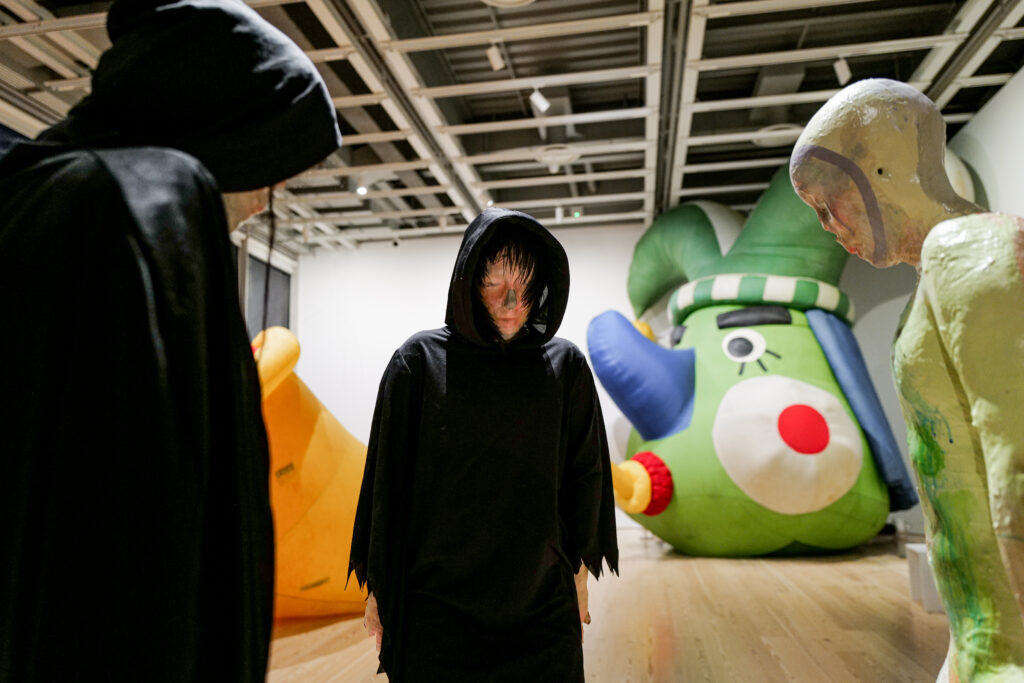
A nostalgia for the ’90s to the early aughts permeates the show, especially pricking at this moment of Gulf War folly redux. Jordan Strafer’s nearby video TALK SHOW, 2026, also reaches for camp and a David Lynchian dream logic to send up Oprah and Sally Jessy Raphael’s chat shows, alongside the dramatization of the fatal plane crash of John F. Kennedy Jr. and Carolyn Bessette Kennedy (a neo-Surrealist contrast to Ryan Murphy’s recent glossy TV melodrama). Isabelle Frances McGuire’s life-size witch and demon sculptures, in their series “Satan in America and Other Invisible Evils: Experiments in Public Sculpture,” 2026, look like props from the 1980s and ’90s horror movies, while recalling the era’s “Satanic panic” (which resonates eerily with today’s Epstein Files spectacle).
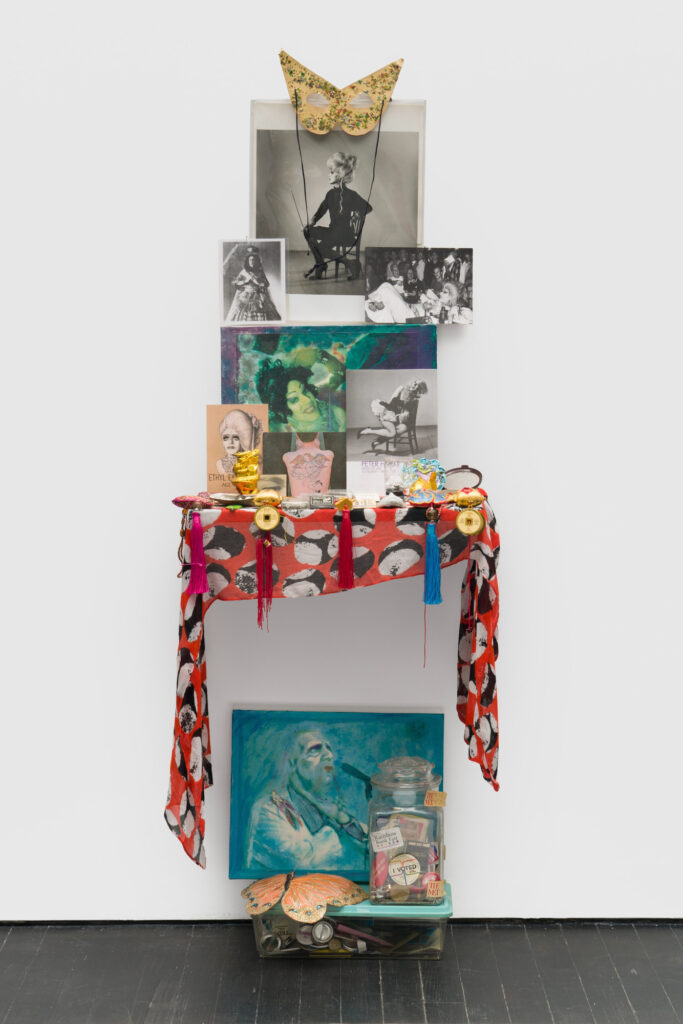
With the altars of Agosto Machado, nostalgia is swapped for elegy, as the artist gathers objects and ephemera in memory of a lost era of downtown New York, and to lost icons, many who died of AIDS-related illness. Ethyl (Alter), 2024, which includes jewelry, a matchbox, a shell, and more along with an original photograph by Peter Hujar, memorializes Ethyl Eichelberger, the famed drag-performer and playwright. A reference to Jack Smith in one of the shrines reinforces the nexus of kinship in Machado’s “glamorize your messes” practice.
Why this era? And why now? Several of the technology-infused works offer a clue, toggling across the faded dream of an Internet that would democratize information and forge human connection to today’s A.I. race to mass surveillance and autonomous weapons systems. Gabriela Ruiz presents Homo Machina, 2026, which borrows early Windows-era and Trapper Keeper aesthetics to create a “self-portrait” capable of watching the viewer. Similarly, Cooper Jacoby’s multimedia installation gives narrative voice to the dead: He has harvested past social media posts to feed A.I.-models so that they can continue to speak through door intercoms, while retro-styled LED screens count the time elapsed since their deaths.
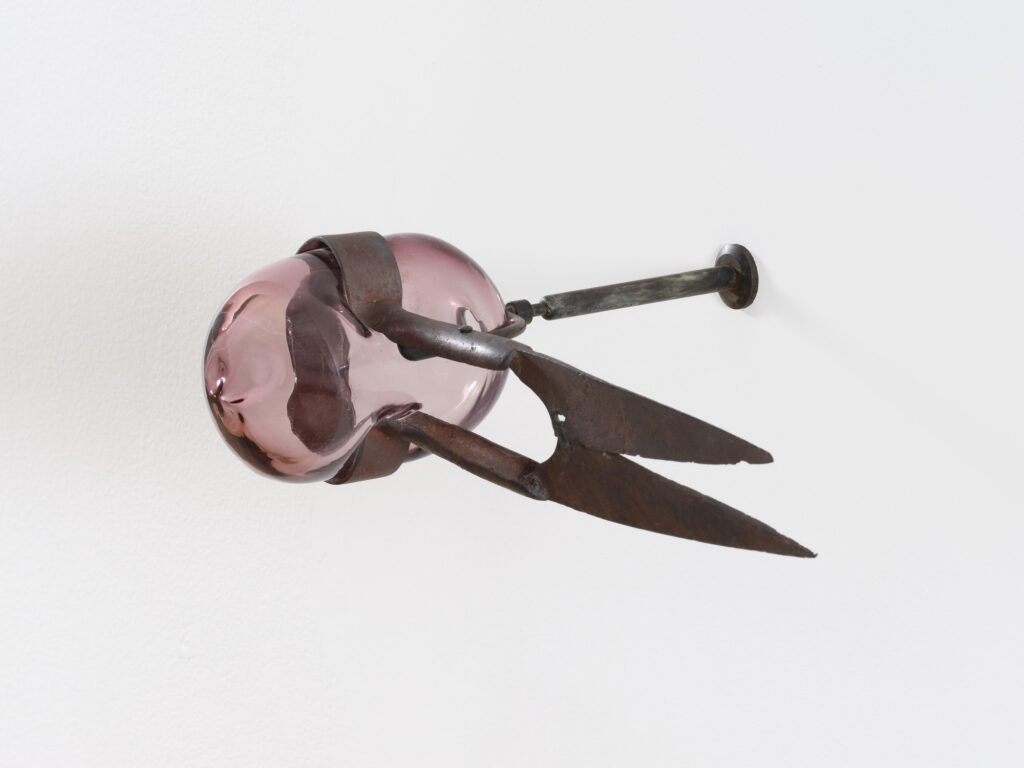
This is a strong Biennial for sculpture. Paintings—along with drawings and textile works—largely fade into the background here, or are of interest for how they relate to other work. Carmen de Monteflores’s shaped canvases from the 1960s are enlivened by their proximity to works by her daughter, the conceptual artist Andrea Fraser, who shows vitrine-enclosed sculptures of soft wax in the shape of sleeping toddlers (a bit too sleepy for an artist famous for institutional critique, although I appreciate the recovery here of a neglected artist mother, which nods in this direction). A concern with childhood, the role of the mother, as well as desire and the unconscious, permeate much of the fifth floor, with many works recalling aspects of Louise Bourgeois’s oeuvre. (In my reading, the fifth floor reinscribes the French expatriate, by influence alone, as one of our greatest American artists.) From the epoxy resin works of Nour Mobarak that abstract the female form to the tightly wound sculptures of Sula Bermudez-Silverman that combine the brutality of iron animal traps with delicate hand-blown glass—superb.
There aren’t any spectacular failures this year (and the boring bits are easy to pass over). The work that I find myself still thinking about the most in the aftermath of the show, was one of the least visually striking. (It made no sound and had no discernable smell.) David L. Johnson’s Rule, 2024-ongoing, instead documents a project of strategic theft and civil—or is it corporate—disobedience: The artist (or someone on his behalf) removed codes-of-conduct signs from privately owned public spaces. These POPS are the result of a 1961 zoning resolution that allowed for the construction of higher buildings if corresponding parklike spaces were created. As the accumulation of postings makes clear, these spaces, as enforced, are not truly public at all. With the removal of the rules, people are left to coexist with others, negotiating their shared proximity. (The first sign in the set originates from Zuccotti Park, recalling the site of 2011’s Occupy Wall Street encampment.)
And therein might lie the logic of the curatorial resistance to thematizing what is always, we hope, an unruly and heterogeneous group show. In the shared space of this year’s Biennial, artists have much to say about the commons, the collective, empire, nostalgia, and the stories we tell one other as we watch history repeat itself.
More of our favorite stories from CULTURED
A Movie Deal Is a Writer’s Dream—or Is It? 5 Authors Get Real About the IP Machine
Shrinking Actors Sherry Cola and Jessica Williams Talk Therapy (On Screen and Off)
The Pitt’s Shawn Hatosy Is an Emmy Winner, a TikTok Star, and a Secret Literature Nerd
Why Are Artists So Interested in Making Playgrounds?
Sign up for our newsletter here to get these stories direct to your inbox.



 in your life?