
How to account for a year? The January ritual of replacing the old calendar with a new one is one way of marking the year gone by and the start of another. Reflecting on 2025, while preparing for the season ahead, I want to reach back for the one that got away: my favorite exhibition that I didn’t manage to write about (until now), Yuji Agematsu at the Judd Foundation.
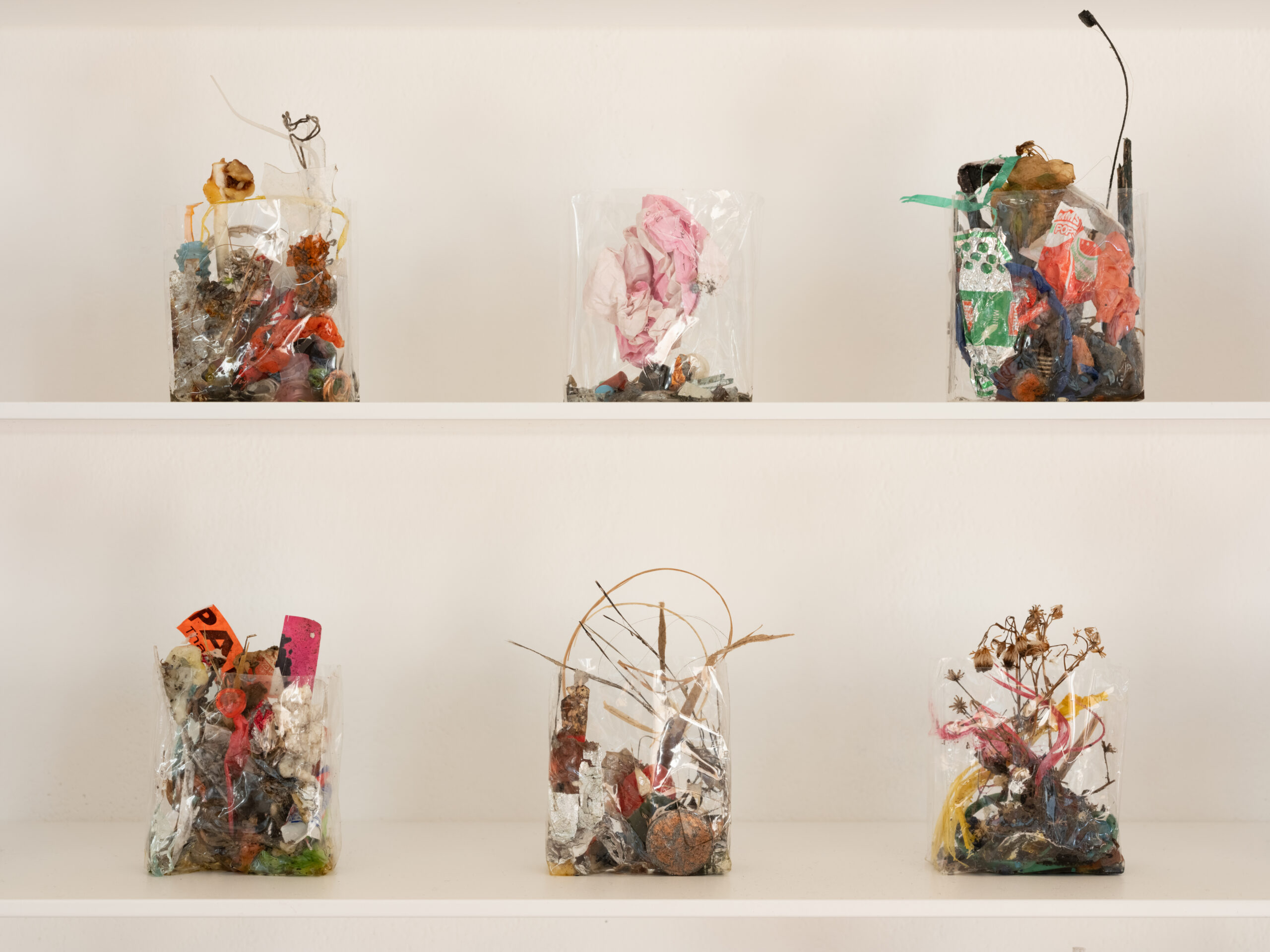
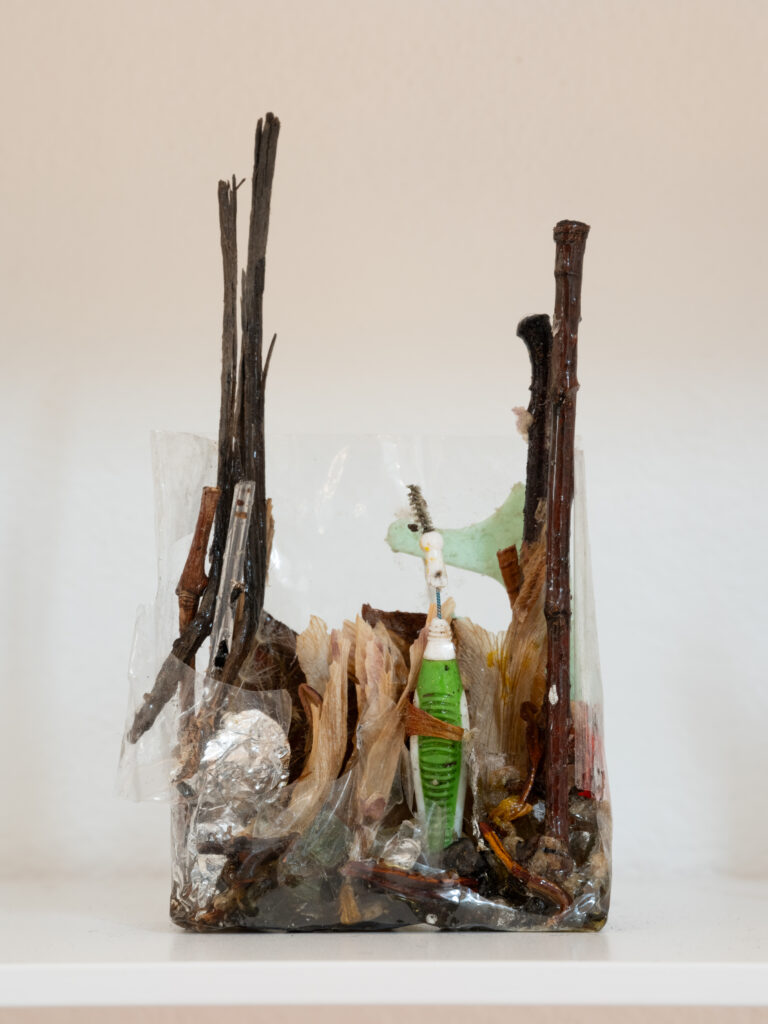
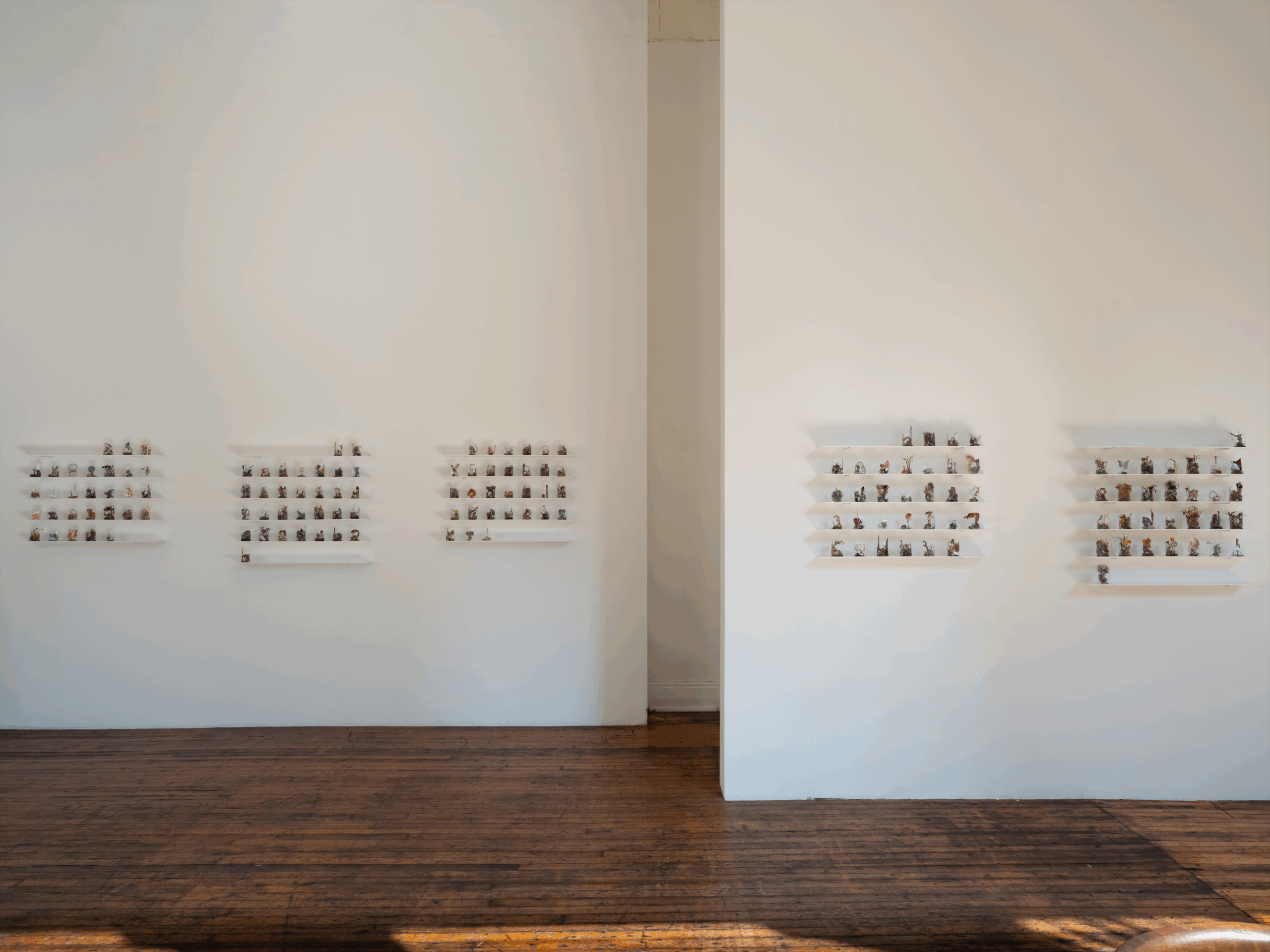
In his art, Agematsu literally both marks years and makes calendars. This past summer, at the former home and studio of the artist Donald Judd on 101 Spring Street, the long rear wall of the first floor was lined with 366 of Agematsu’s “zips,” arranged in 12 grids, one for each month of 2024 (a leap year). Zips are collections of small objects that the Japanese-born, Brooklyn-based artist collects during his walks and then arranges in the cellophane sleeve from his daily pack of cigarettes, turning these fragile rectangles into miniature sculptural vitrines.
The resulting accumulations most immediately recall Ikebana, the Japanese art of flower arranging, which translates to “making flowers come alive.” Agematsu gives the otherwise forgotten or neglected remnants of the day new life. In his assemblages, lollipop sticks mix with plant matter; candy melts and congeals into gooey pools of stained glass-like color.
I had never before seen Agematsu’s zips displayed on open shelves. From what I can recall, when I saw them previously at the gallery Miguel Abreu, they were protected and enclosed within clear acrylic wall-mounted cases. At the Judd Foundation, the calendar-grids of zips were displayed on aluminum shelves painted white and left exposed—made part of the viewer’s space rather than cloistered off into their own. A fan circulating air within the gallery blew the bits of plant life extending from the upper limit of the cellophane, causing them to slightly sway or dance. I knew I loved this work, from seeing it before, but here it was even more alive and in the present.
I see from my camera roll that my visit was on the final day of the show, Aug. 30, 2025. Another 365 zips were displayed at Gavin Brown’s Harlem house, representing each day of 2023. I never made it uptown to see it.
I began the 2025 fall season by writing for the Critics’ Table that I hoped to see art that could meet the urgency of the political moment. While some of my top shows of the year partly did this (like Cady Noland at Gagosian and Nicole Eisenman at 52 Walker), other shows that seemed to directly answer my call haven’t stuck with me, like Robert Longo’s “The Weight of Hope” at Pace—a good show that, I remember thinking at the time, would have played even better in a Milwaukee museum, where it had been shown before coming to Chelsea in New York. At the end of the season, and the beginning of another, one of my favorite shows was instead about the quotidian and commonplace, an intimate and almost private poetics of looking. It would seem to be an apolitical show, but the deeply personal is always political.
Maybe it is the turning of the calendar to a fresh year that has me thinking back to Agematsu, but I am grateful for this reminder. A year is just an organized sequencing of days, a structuring of seasons. Agematsu makes you zoom in and see time differently. (The next opportunity you have to see a set of zips, try and guess the season or corresponding month by the contents of the grid alone.) Each day can offer its rewards through walking, looking, and paying attention to the fragments of interest and beauty that others might pass over and ignore. This is what I will take from Agematsu into 2026.
Among all the other exhibitions of 2025, the show also stands out for me, because Agematsu worked as the building manager of the Judd Foundation site for more than two decades. The place where he labored for all that time as an art worker to preserve the legacy of Donald Judd or show the work of others, eventually—with great care—showed his own. More of this art-world-role border crossing in the year ahead, please.
I’ll conclude with my own top-ten list for 2025 (the star of this list is Ebony Haynes, Senior Director of 52 Walker, with three of her exhibitions making my final cut):
- Jack Whitten at the Museum of Modern Art
- Yuji Agematsu at the Judd Foundation
- Julius Eastman & Glenn Ligon at 52 Walker
- Nicole Eisenman at 52 Walker
- Cady Noland at Gagosian
- Laura Owens at Matthew Marks
- Salman Toor at Luhring Augustine
- Kenneth Tam at Bridget Donahue
- Ali Banisadr at Olney Gleason
- EJ Hill at 52 Walker



 in your life?