Alberto Pitta and Elian Almeida were born three decades apart, but they’re both riding career highs this year. A new show thousands of miles from home revels in their intersections—and contradictions.

WORDS

DATE

SHARE

Twitter
LinkedIn
Facebook
Email

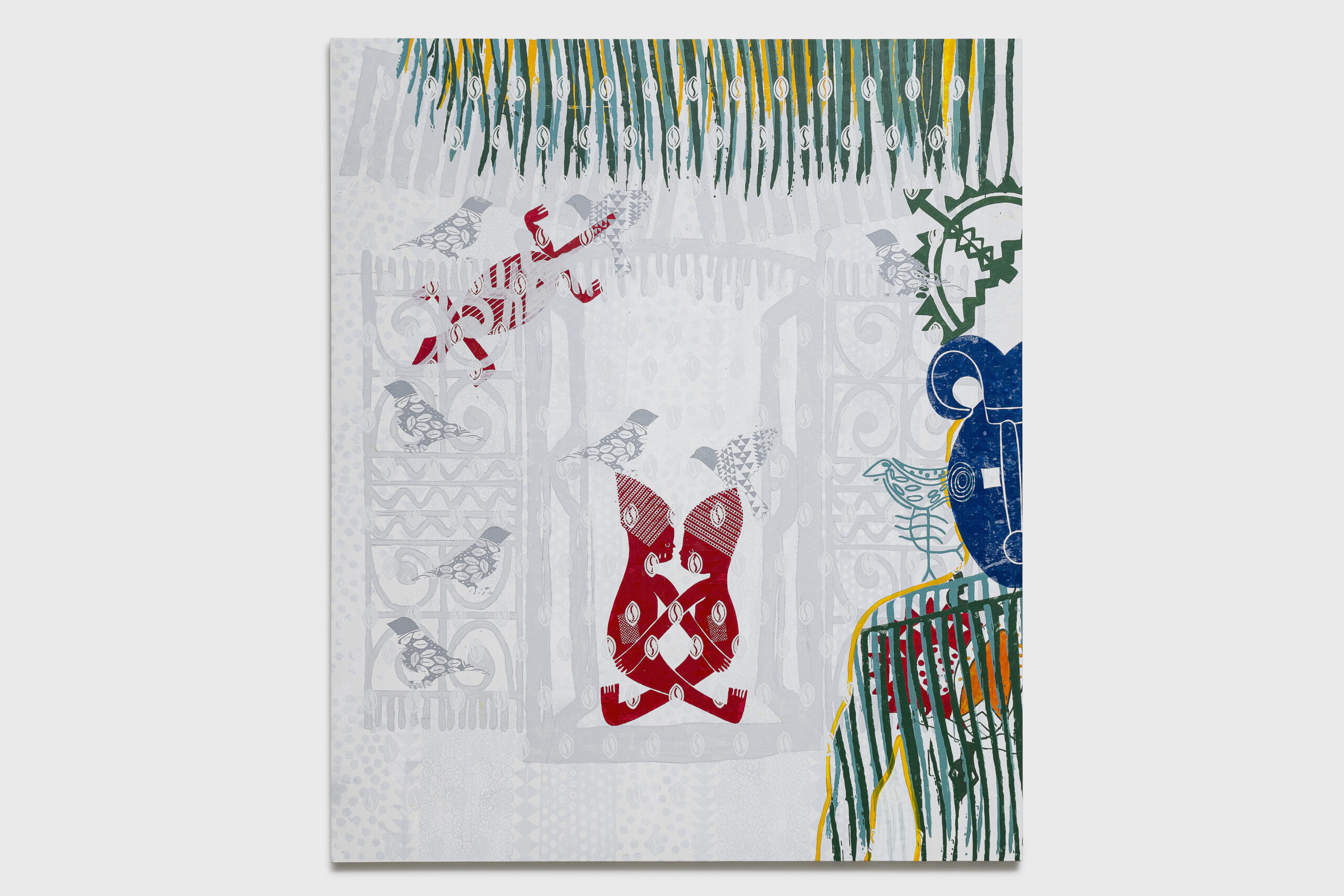
Alberto Pitta, The one who brings abundance to the home, painting, silkscreen, canvas
Alberto Pitta, The one who brings abundance to the home, 2025. All images courtesy of the artists and Nara Roesler.

Unlike many of his peers, Luis Pérez-Oramas is not interested in separating artists by generation or medium. “We can be the contemporaries of whoever has existed, yesterday or today,” the Venezuelan art historian and curator says. “It is a matter of existential and intellectual decision.”

At Nara Roesler’s New York outpost, he has paired the Afro-Brazilian artists Alberto Pitta, 64, and Elian Almeida, 31, in a show that collapses those very boundaries. On view through early January, Pitta’s layered canvas silkscreens add symbolic folk flair to Almeida’s colorful yet uncluttered explorations of Brazil’s history in paint. (The former’s work is “an impressive catalytic force,” notes Pérez-Oramas, and apparently inspired Almeida to try his hand at screen printing during a studio visit between the two, arranged ahead of the show.)
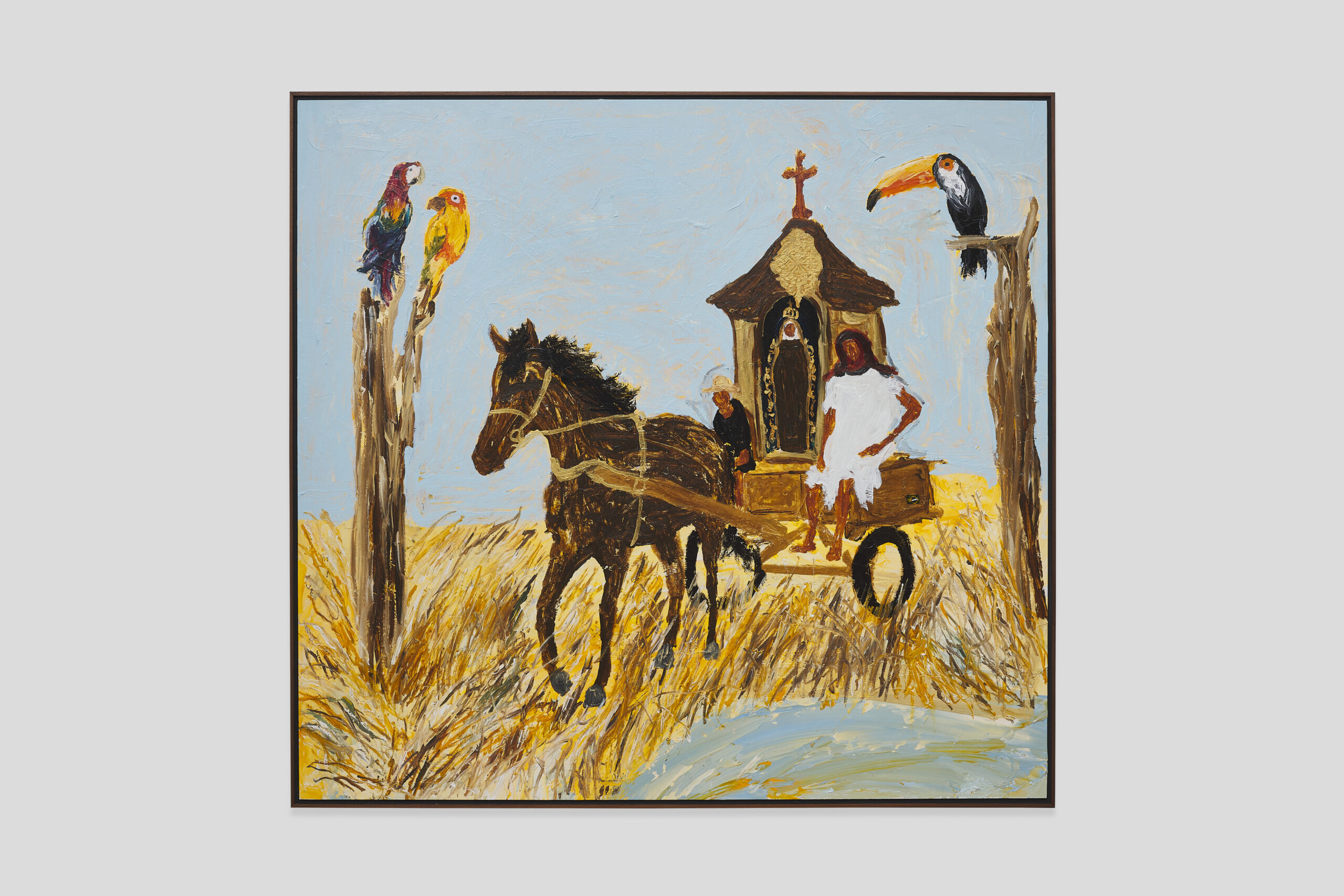
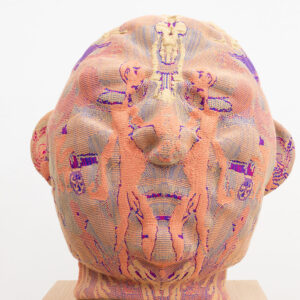
Elian Almeida, “Farewell, Our Lady to God. If time allows, I shall return here again. Come renew me. Farewell, Our Lady to God. Help my people. Help me to say goodbye. Until the day of judgment. Farewell, Our Lady to God. Farewell, home. Farewell, longing. Where the birds grew sorrowful. Come renew my longing. Farewell, Our Lady to God,” acrylic paint, canvas.
Elian Almeida, Farewell, Our Lady to God. If time allows, I shall return here again. Come renew me. Farewell, Our Lady to God. Help my people. Help me to say goodbye. Until the day of judgment. Farewell, Our Lady to God. Farewell, home. Farewell, longing. Where the birds grew sorrowful. Come renew my longing. Farewell, Our Lady to God, 2025.

Though Pérez-Oramas would argue for the atemporal nature of each practitioner’s work, the exhibition is particularly well-timed. Pitta is coming off of a sustained wave of intercontinental attention; four decades into his career, he was featured in last year’s Biennale of Sydney, a choral group show at the Palais de Tokyo this spring, and in the Bienal de São Paulo, which runs through January. Meanwhile, Almeida’s canvases have been cropping up in shows across Brazil since his debut solo with Nara Roesler in 2021, also curated by Pérez-Oramas. Artists of his age “have taken the courageous path of symbolically questioning the underrepresented presence of Black bodies and stories within the dominant art system in Brazil,” says Pérez-Oramas, who has enjoyed seeing the concurrent rise of Pitta’s profile. “This circumstance makes them contemporaries,” he says.

“Afro-Brazilian culture is an axis, not a margin for Brazilian culture,” continues Pérez-Oramas, “even if an elite-driven dominant form of representation has, until recently, lacked its monumental significance.” As visitors filter into the Chelsea gallery this winter, they’re greeted by a decidedly quotidian object, a functioning carrinho de café, or coffee cart, elevated to artwork status through Pitta’s polychrome lens. The teetering trolley cannot literally transport gallery-goers to Salvador, where the artist is based, but a sip of coffee may be all it takes to have them linger and see the work with fresh eyes.

We’ve Waited All Year For This…

Our 10th annual Young Artist list is here, comprised of 27 names you need to know ahead of 2026.

You’ve almost hit your limit.

You’re approaching your limit of complimentary articles. For expanded access, become a digital subscriber for less than $2 a week.
You’re approaching your limit of complementary articles. For expanded access, become a digital subscriber for less than $2 a week.

Already a Subscriber? Sign in Here

You’re approaching your limit of complementary articles. For expanded access, become a digital subscriber for less than $2 a week.

GET ACCESS

Already a Subscriber? Sign in Here

Want more in your life?

For less than the price of a cocktail, you can help independent journalism thrive.

Pop-Up-1_c
Already a Subscriber? Sign in Here
Pop-Up-1_c

Already a Subscriber? Sign in Here

Want more in your life?

For less than the price of a cocktail, you can help independent journalism thrive.

Pop-Up-1_c
Already a Subscriber? Sign in Here
Pop-Up-1_c

Already a Subscriber? Sign in Here

You’ve almost hit your limit.

You’re approaching your limit of complimentary articles. For expanded access, become a digital subscriber for less than $2 a week.

You’re approaching your limit of complementary articles. For expanded access, become a digital subscriber for less than $2 a week.
Already a Subscriber? Sign in Here
You’re approaching your limit of complementary articles. For expanded access, become a digital subscriber for less than $2 a week.

Already a Subscriber? Sign in Here

This is a Critics' Table subscriber exclusive.

Subscribe to keep reading and support independent art criticism.

Already a Subscriber? Sign in Here

Want more in your life?

For less than the price of a cocktail, you can help independent journalism thrive.

Pop-Up-1_c

Already a Subscriber? Sign in Here

Pop-Up-1_c

Already a Subscriber? Sign in Here

You’ve reached your limit.

Sign up for a digital subscription, starting at less than $2 a week.

Already a Subscriber? Sign in Here

Want a seat at the table? To continue reading this article, sign up today.

Support independent criticism for $10/month (or just $110/year).

Already a subscriber? Log in.