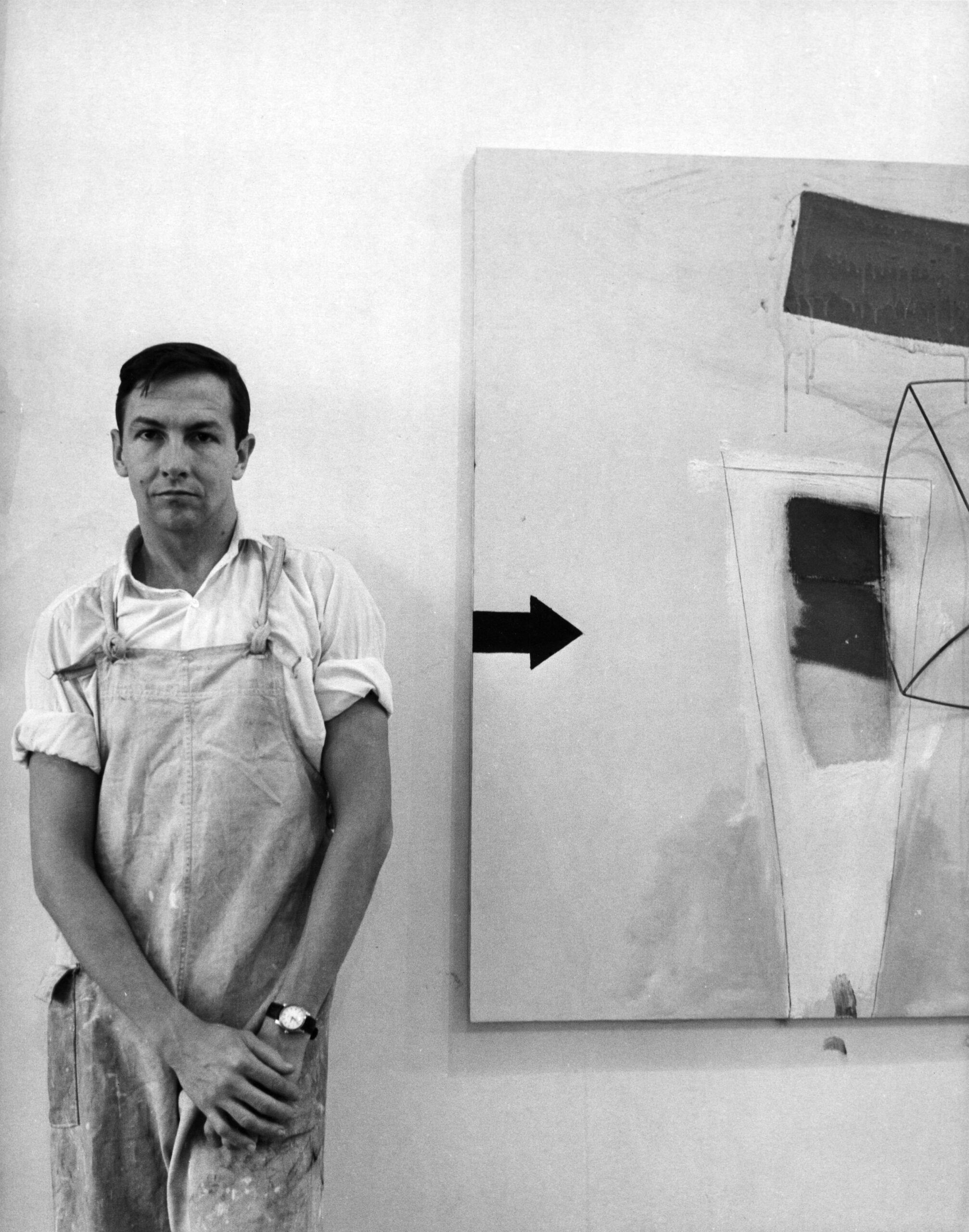
Jasper Johns once said that Robert Rauschenberg “invented more than any artist since Picasso.” Rauschenberg, who was born in Port Arthur, Texas, on Oct. 22, 1925, was a voracious traveler who refused to limit his artistic output to a single medium and relished collaborations with choreographers, dancers, designers, and scientists. Through his “Combines,” he collapsed the boundary between painting and sculpture and brought real-world objects—ranging from a pillow to a stuffed eagle—into his art.
The celebrations of the artist’s centenary, which began this fall and stretch into 2026, are just as interdisciplinary, sprawling, and ambitious as his oeuvre. There are no fewer than eight major institutional presentations of the artist’s work around the world, a book of the artist’s writings published by Yale University Press, and a national tour of the Trisha Brown Dance Company and the Merce Cunningham Trust, featuring Rauschenberg’s sets and costumes.
To explore the artist’s wide-ranging influence, CULTURED asked artists across disciplines to reflect on his legacy.
Jeff Koons
Jeff Koons (b. 1955) is an artist, based between New York and Pennsylvania, who is best known for turning ordinary objects into monumental icons of American life. He has created sculptures of basketballs floating in tanks of water, larger-than-life stainless-steel balloon dogs, and a 40-foot-tall puppy made from soil and flowers.
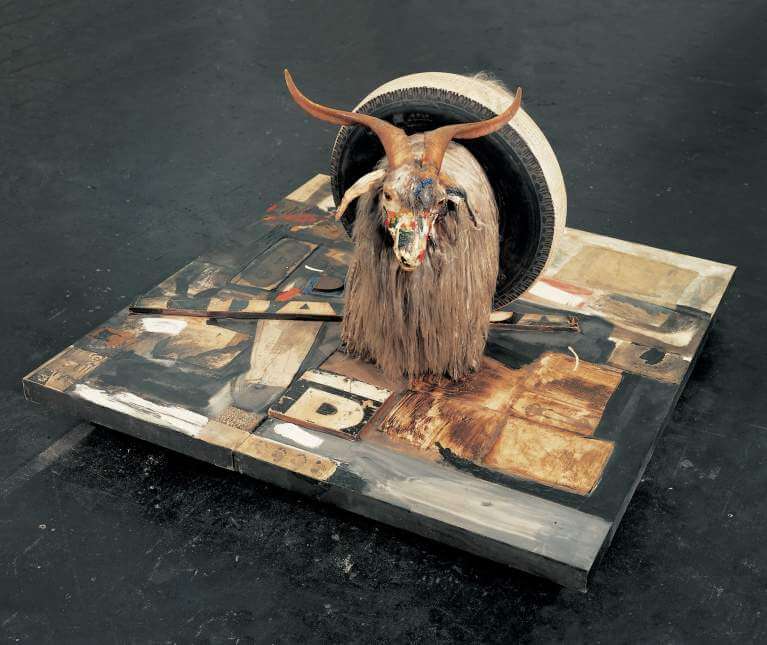
“Bob Rauschenberg, for me, was a giant—a great artist, an amazing human being, and a foundational figure in contemporary art today. When I think of American art or the international art world since the mid-20th century, it’s hard to envision it without Bob Rauschenberg. He’s an absolute giant in the development and continuation of what art can be and how art can serve the greater good. His work has been a foundation for the continued development of conceptual art. One of the most monumental contributions Bob made was through his own personal involvement in bringing together art and technology, and connecting artists with the scientific community, especially material scientists. This, I think, is a tremendous contribution because it enables artists to see that in their work, they can realize anything they can envision. With the rapid development of new technologies in our current moment, his impact is felt even more deeply every day.”
RJ Messineo
RJ Messineo (b. 1980) is an artist who does not make paintings so much as build them. The artist, born in Hartford, Connecticut, is best known for a distinctive process that involves attaching plywood rectangles to the surface of the canvas with magnets, shifting them, and leaving marks behind. Their work is in the collection of the Dallas Museum of Art, among other institutions.
“Rauschenberg’s interest in unlatching material and forms from the authority of convention and accepted meaning is the charge and the lesson to me. I think of his 1951 White Painting [seven panels] while I prepare my canvases with gesso (something I am doing in my studio as I write this). He intended that panels could be repainted and remade and I like to think that they are, if inadvertently, made again every time a painting is begun. I like to think of my paintings as starting out there. Not as a space for a picture circumscribed and delineated from the world but instead as a surface in the room with the world ready to reflect, collect, and help me to notice what else might already be there. The question of what I already start with when I begin a work is on my mind—especially now as I seek to ground and hold steady. Hal Foster writes about how the negation implicit in Rauschenberg’s gesture (the white painting and in many others) is an opening to other possibilities. I like the idea that after, and beside Rauschenberg—the whites of my ground could mean this too.”
![Robert Rauschenberg, Untitled [Merce (III)], 1953](https://www.rauschenbergfoundation.org/sites/default/files/styles/767x/public/2025-02/53.P024_00.jpg?itok=U6pWiIuZ)
Elizabeth Streb (b. 1950) is a choreographer who has spent her career testing the limits, and the potential, of the human body, whether diving through glass or allowing a ton of dirt to fall on her head. She founded the dance company Streb Extreme Action in New York in 1985 and SLAM, the STREB Lab for Action Mechanics, in 2003.
“Robert Rauschenberg is a mystical, stunning changemaker. I’m an extreme action choreographer and I don’t use the vocabulary of canvas and paint, heartbreaking as it is for me. All I had to invent with was my machinery, my ‘canvas,’ and my action heroes, my ‘paint.’ Therefore, I was drawn by jealousy every time I saw his work, because of the magic of his vision.”
![Robert Rauschenberg, Untitled [Cunningham dancers], 1961](https://culturedmag.nyc3.digitaloceanspaces.com/uploads/2025/10/20175500/rauschenbergdance.png)
Stephen Petronio (b. 1956) is a choreographer, dancer, and artistic director. Before he founded his eponymous dance company in 1984, he was the first male dancer in the Trisha Brown Dance Company. He has collaborated with artists and musicians including Cindy Sherman, Narciso Rodriquez, and Leigh Bowery.
“I had no idea who Bob was when I first met him as a young dancer in the Trisha Brown Company. He was without pretension and in full form at all times, but was so warm and inclusive. I never got the feeling that I was less around Bob in ANY situation, though he was obviously MORE. Bob had a very specific way of framing objects in the world that called them into relationship. He could point to objects in the landscape that seemed to magically converge. They were RR’s way of seeing the world, and after spending time with him over the years, those ‘random’ relationships, found by chance or accident, were vividly clear. They were Rauschenbergian. You could see it on any of his canvases—seemingly random objects in a field created a conversation of depth, rhythm, and space. Somehow their assembly tripped them into motion. Because of this, one could look at a work every day and it never really seemed still or the same. There’s a kinetic charge to his work that was singular and that spoke directly to my somatic self. He really was a choreographer at heart.”
Nina Katchadourian
Nina Katchadourian (b. 1968) is an interdisciplinary artist who has mended spiderwebs and created genealogies for rocks and airplanes. She uses modest materials and surgical interventions to create playful and clever meditations on contemporary life. Her work has been exhibited at the Venice Biennale, the Metropolitan Museum of Art, and the Serpentine Gallery.
“Bob’s Bed
I slept in Robert Rauschenberg’s bedroom for five weeks. I was in residence on Captiva Island, Florida, on the property that was his home, his studio, and eventually a small world that he built—an island within an island. He bought the beach house, where I stayed, in 1968, the year I was born. It was his first of many properties on Captiva and it became his permanent home two years later.
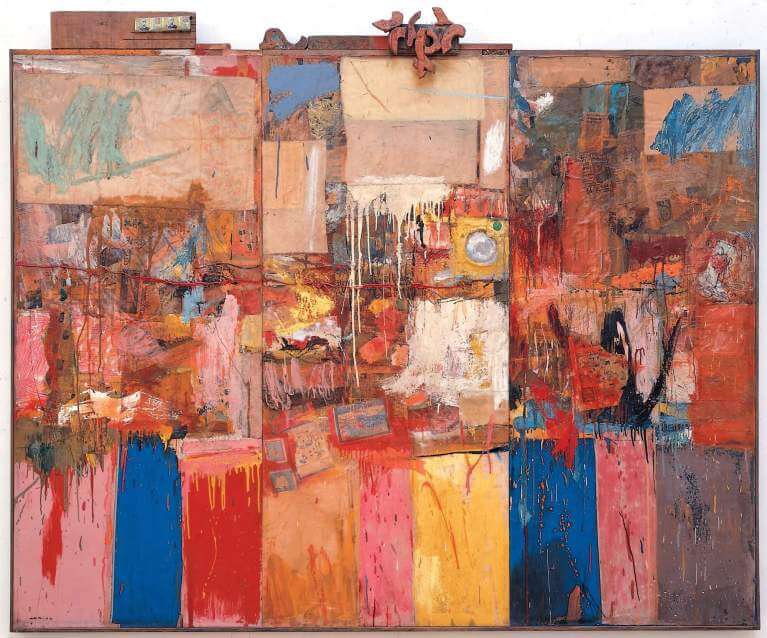
All of the artists-in-residence began referring to him as ‘Bob’ after just a few days. There were staff at the residency who had known him very well, and there were so many Bob stories. We heard about how he drove his VW Beetle from his properties on one side of the narrow island to the other in order to make a ‘road.’ I imagine this renegade bush-whacking as a performance that left a combine painting of foliage in its wake. I felt closely in touch with his life on Captiva; his enormous studio, perhaps the largest I’ve ever seen, still had shelves with his cans of printmaking inks. He clearly had an appetite for hosting and sociality, but also for solitude. The Fish House, standing on spindly legs in the bay, was connected by a jetty to land. It also had a drawbridge, so he could isolate himself from others—or maybe sometimes with others—uninterrupted.
Bob really believed in artists, and giving this place to the likes of us seemed perfectly in keeping with his openness to collaboration, exchange, and experimentation. His influence on me has been about this faith and the generosity of his gift. It has gotten me thinking about what I might be able to leave behind on a smaller scale, but in a similar spirit.”
Mark Bradford
Mark Bradford (b. 1961) is an artist best known for his large-scale abstract paintings created out of paper, from tissue papers used in hairdressing to maps and movie posters. He is also the co-founder of Art + Practice in South Los Angeles, a nonprofit that supports foster youth and organizes art exhibitions. Bradford represented the United States at the Venice Biennale in 2017.
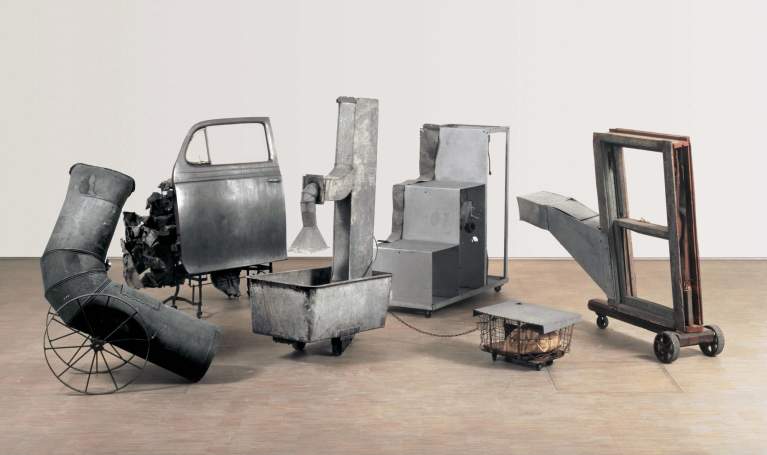
“Rauschenberg is a big inspiration to me. The messiness, the activism, the sheer relentlessness of his practice. His work really opened the door for me to find my own way into abstraction. With his ‘Combines,’ he was always pulling the real world in, not keeping it out. That was radical, the way he drew in elements that seemed foreign to the art world at the time. It gave me a model for how to work with the materials around me, to see social realities as inseparable from aesthetic ones. He always dealt in pluralities, and I love that. He made, he protested, he experimented, often all at once. He could work from this formally rigorous place while allowing different histories to float in and out—art historical, social, personal, you name it—without tidying them up or sanitizing them first. That’s what I take from him: art as something alive to its surroundings.”
Susan Cianciolo
Susan Cianciolo (b. 1969) is a visual artist, designer, and healer based in New York who uses personal objects and archival material to create collages, garments, textiles, installations, publications, and performances. She is the founder of the fashion label RUN, which produced 11 collections between 1995 and 2001.
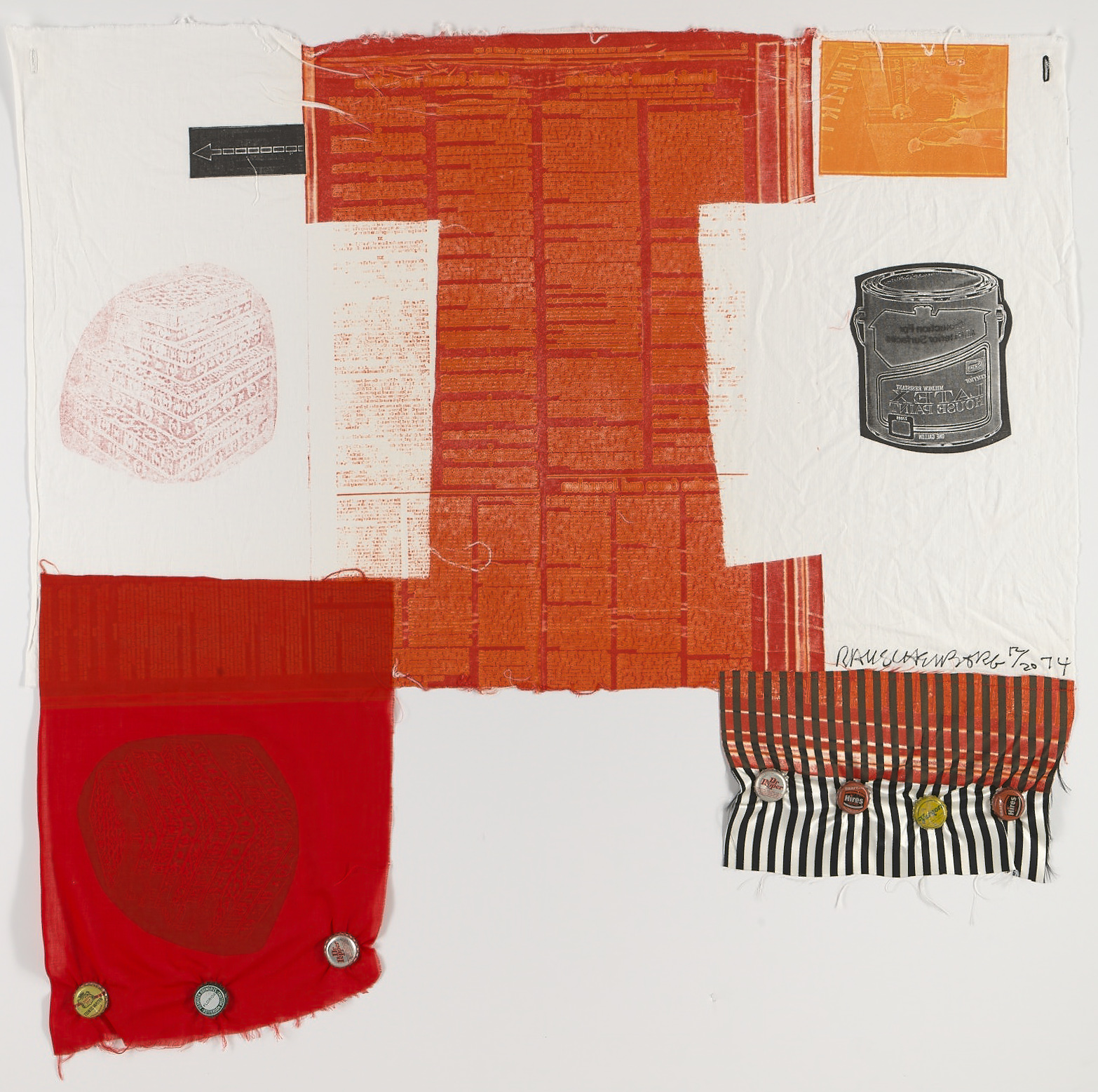
“A few times, an old friend and patron mentioned to me that she saw Rauschenberg in my work. I would look more closely from time to time, to try to see what she was talking about. Probably the day before you wrote to ask me this question, ironically, I was at the Whitney Museum with my class from Pratt, looking closely at the piece called Satellite. There was such a rough type of urgency in the collaged large painting, what to me takes on freedom, abandonment in a way of working with instinct, becoming this perfectly beautiful composition. Through textile, I feel that way of expression within the imperfection of scale and color tones.
Taking an aerial view upon his work is to see his belief in life, the everyday mundane, to show a sacred way to value and merge everything into art. That each moment in a sense is beauty in art—what may have been looked at as not so beautiful if it was old or garbage.”
Jason Wu
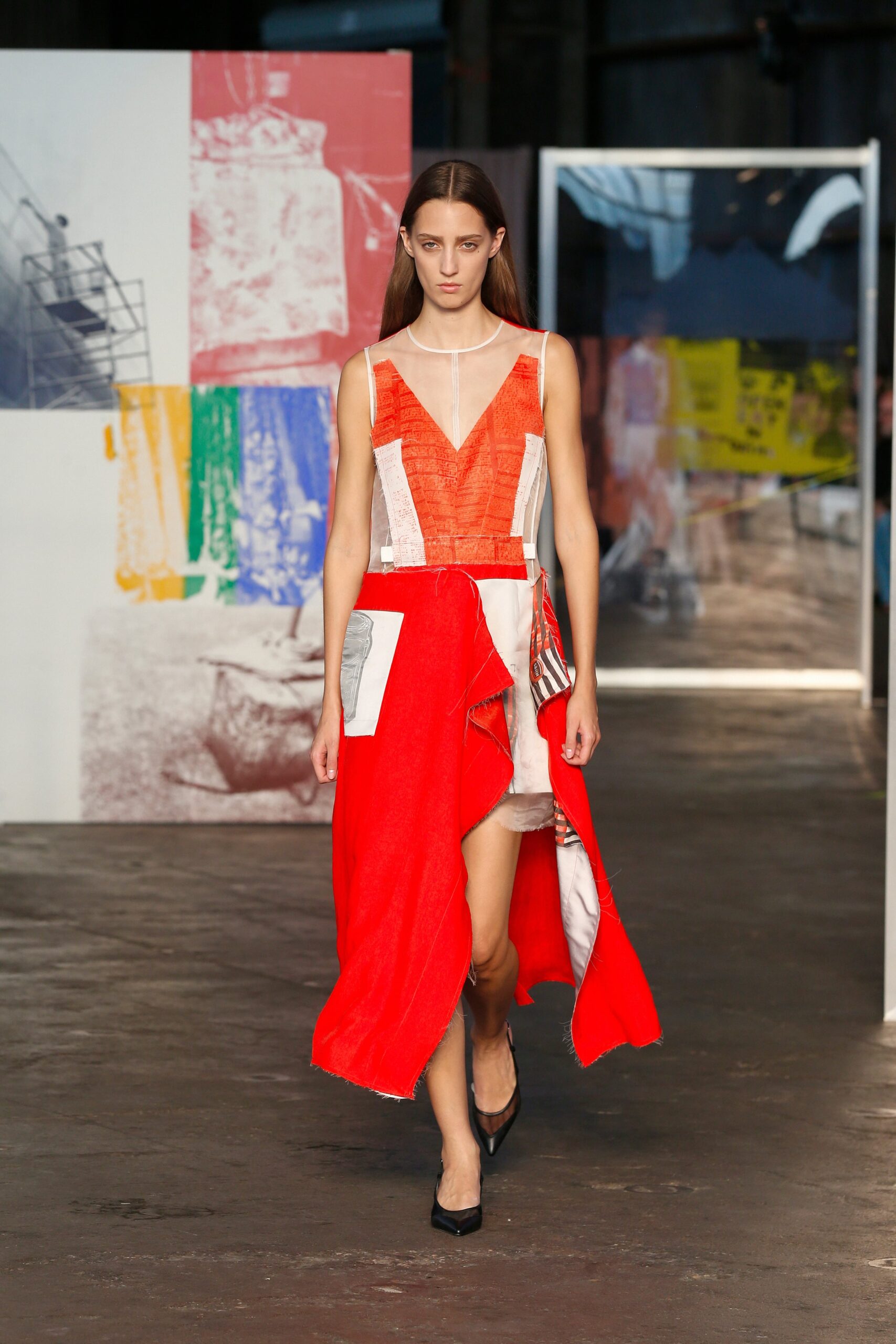
Jason Wu (b. 1982) is a fashion designer known for merging classic American sportswear with global sophistication. He launched his eponymous label in 2006 and served as creative director of Hugo Boss from 2013 to 2018. The dress he designed that First Lady Michelle Obama wore to the 2009 inaugural balls is now in the collection of the Smithsonian Institution. Wu collaborated with the Rauschenberg Foundation for his line’s Spring 2026 collection, which is inspired by the artist’s work.
“Rauschenberg’s work has influenced me in many ways. What makes his work so special is that he took seemingly disparate items and transformed them into beautiful works of art that also reflected the time period in which they were created. I am deeply inspired by his methodology and dedication to his craft.”
Pam Tanowitz
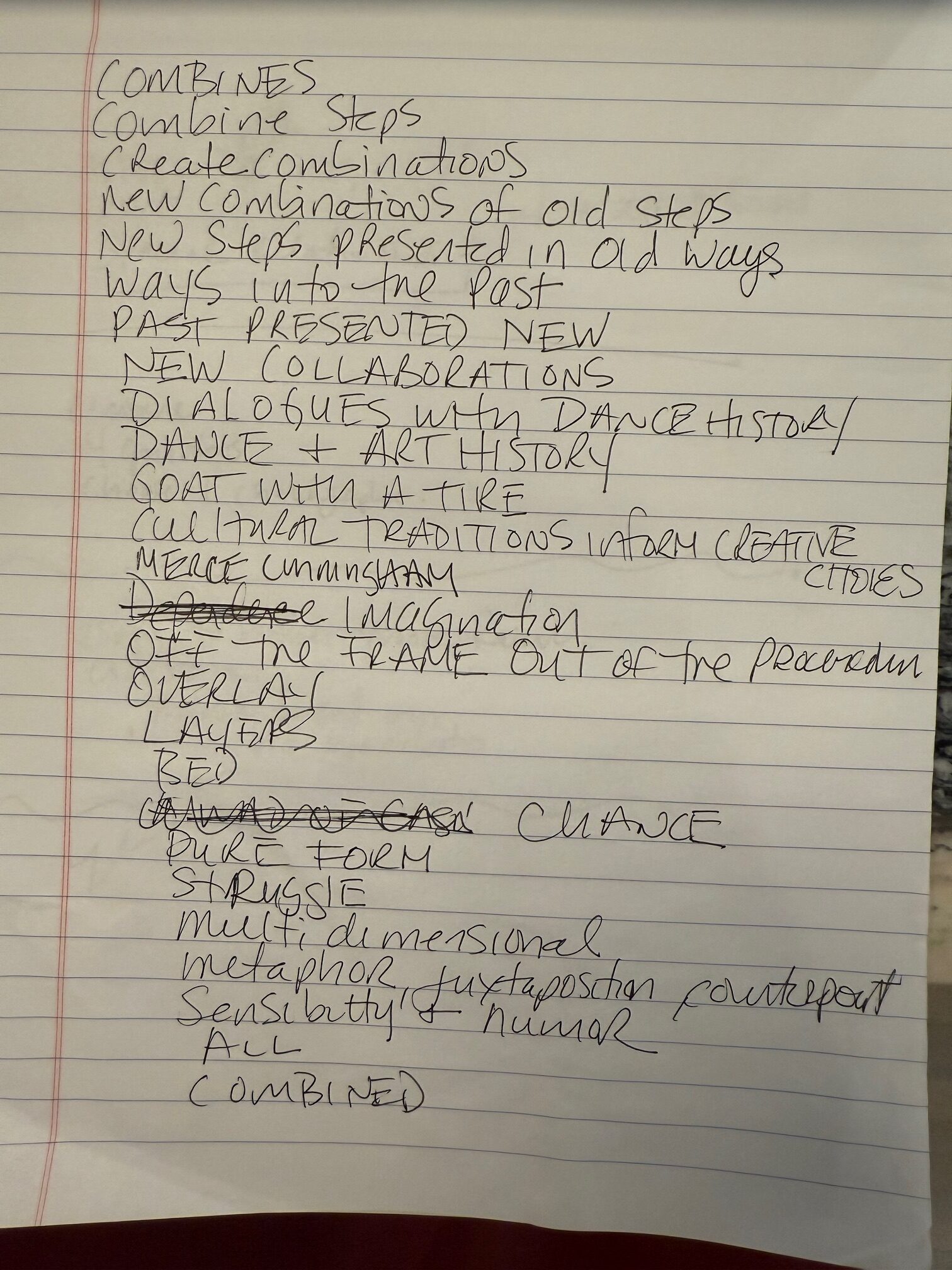
Pam Tanowitz (b. 1969) is a choreographer and founder of Pam Tanowitz Dance whose work is built on decades of research into dance history. She is an assistant professor at the Mason Gross School of the Arts at Rutgers University and the first ever choreographer in residence at the Fisher Center at Bard. In response to CULTURED’s query, she submitted the hand-written text above.

 in your life?