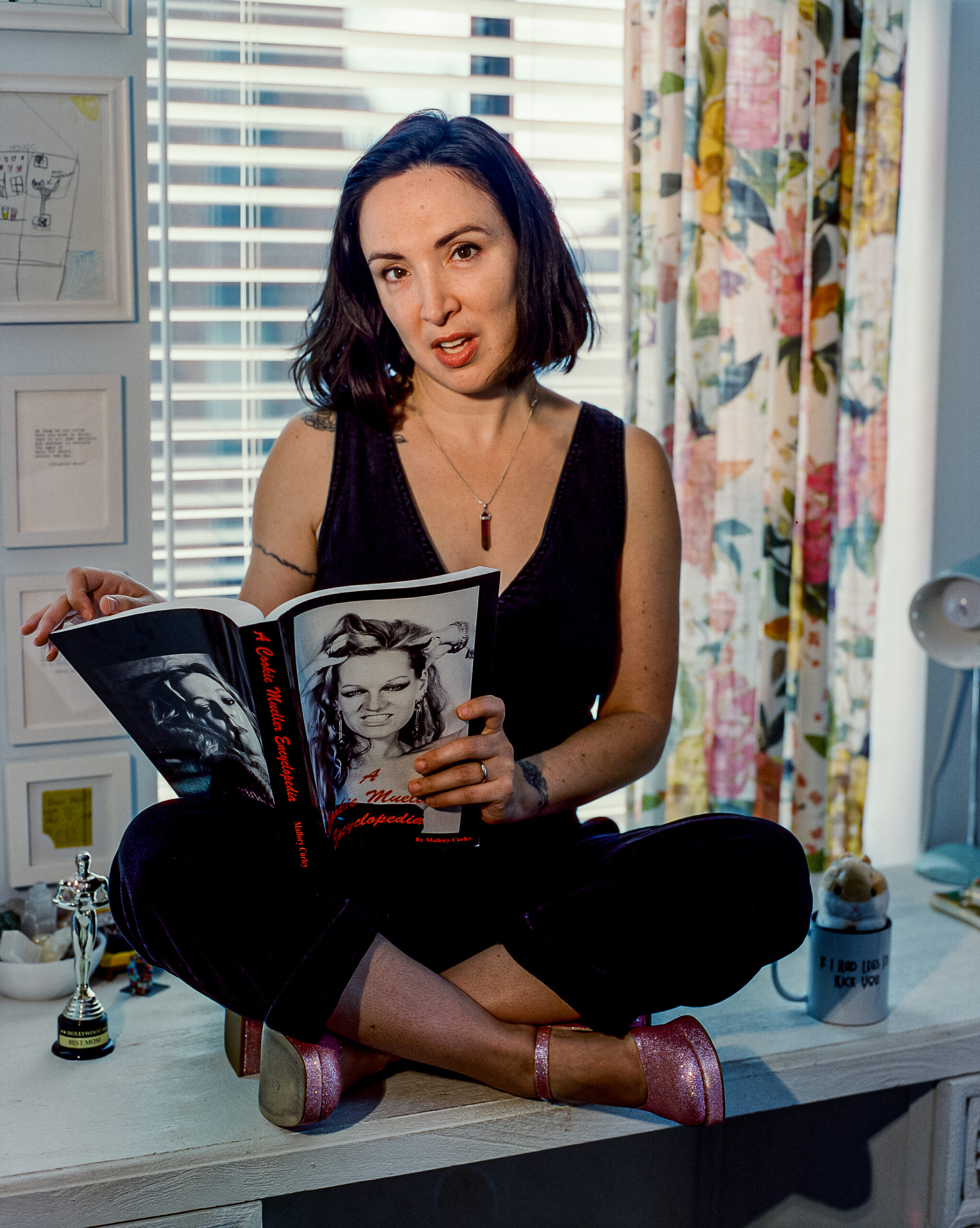
Mary Bronstein is an actor’s director.
Perhaps that’s why her pulse-pounding, skin-crawling motherhood drama, If I Had Legs I’d Kick You, has already drummed up buzz for a sensational performance from Rose Byrne. But Bronstein, who trained as an actor before taking over the director’s chair, is a force in her own right, tapped into the inner and social dynamics of prickly women who are unable to connect with the people around them, despite their best efforts. Bronstein’s micro-budget debut, Yeast, an intimate character study about the slow dissolution of a post-college friend group, spotlit early contributions from Greta Gerwig, the Safdie brothers, and Sean Price Williams (Ronald Bronstein, director of Frownland and Mary’s husband, has been a longtime collaborator of the Safdies. Mary jokes that the family’s Chelsea apartment is “the house that Uncut Gems built.”)
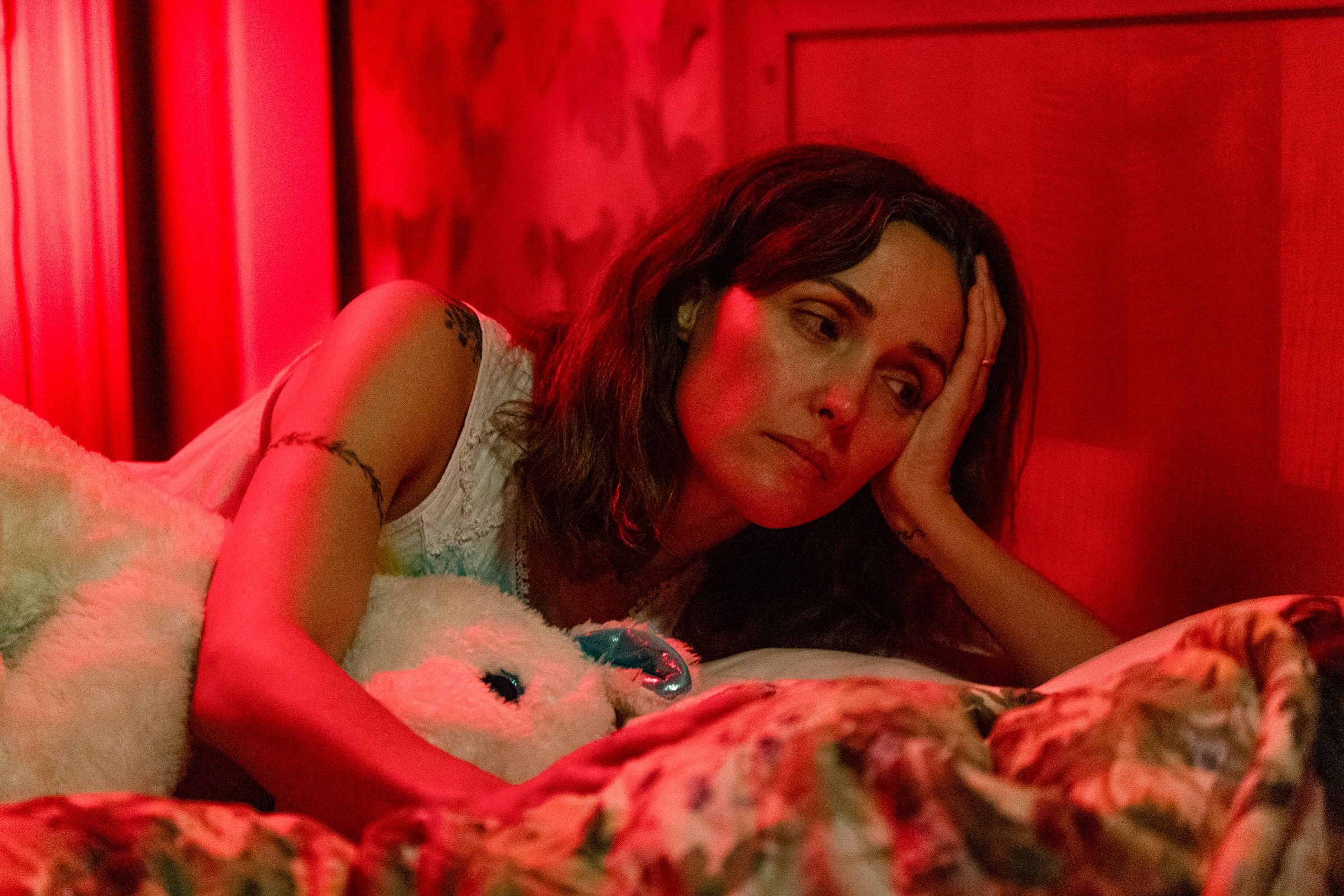
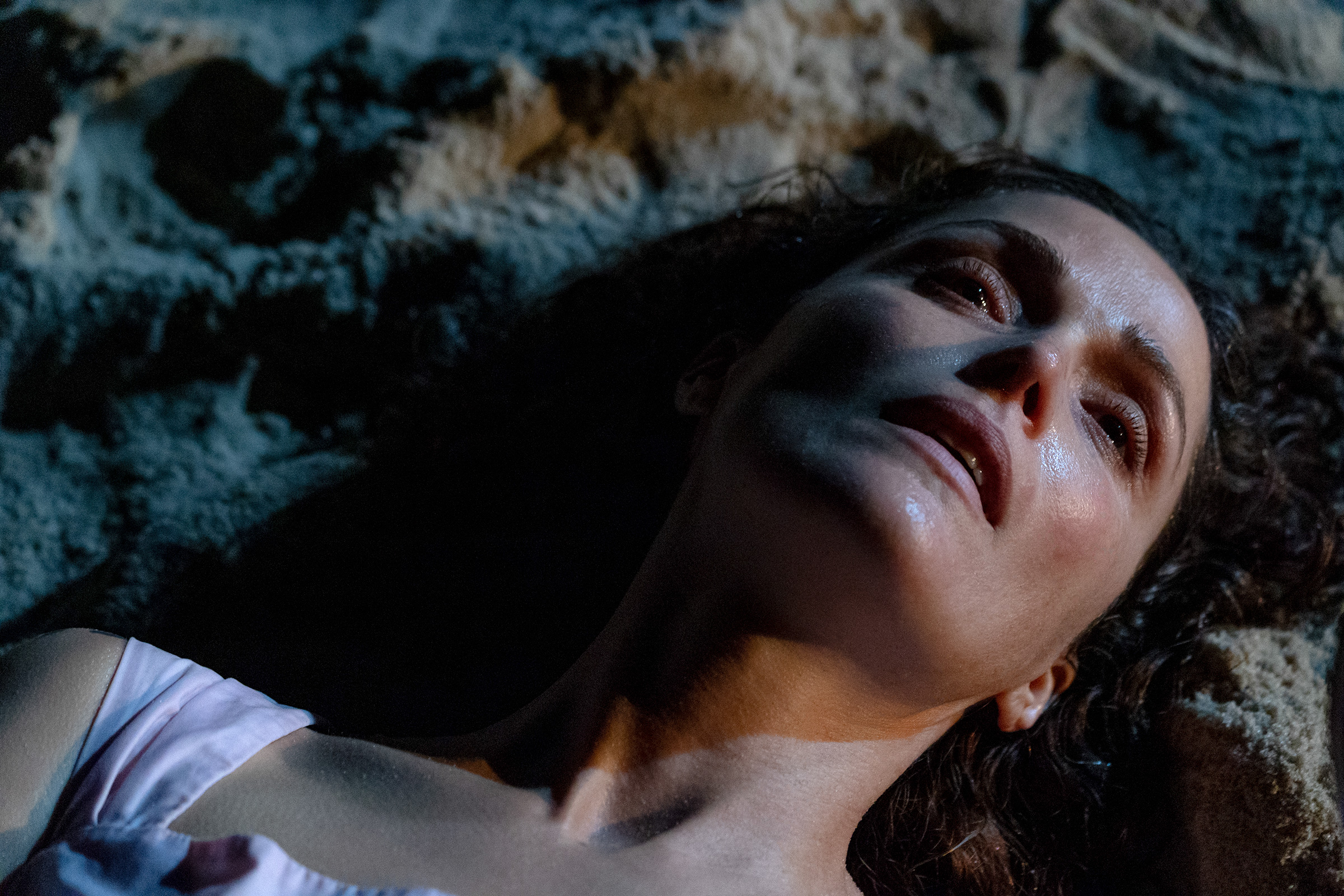
That was 17 years ago. Since then, Bronstein’s writing has only gotten sharper, her direction more confident. Byrne’s character, Linda, a Montauk therapist on the verge of a nervous breakdown, struggles to care for her sick daughter at a run down motel after their roof caves in. Along the way, A$AP Rocky surfs the deep web, Ivy Wolk stands defiantly between Byrne and her soothing nighttime glass of cheap wine, and Linda’s own therapist (played by Conan O’Brien in his dramatic debut) gives a truly terrifying monologue about lab rats. It’s a film of fraying nerves for anyone who’s felt like they’re screaming into the void—and a resounding calling card for a director to keep watching.
Why was now the moment for this story and your return to feature length filmmaking?
I first opened that dreaded blank document to start typing eight years ago. It was a challenging movie to write, and it was a challenging movie for somebody to take on. I was so lucky that A24 read the script and said, “No notes. Let’s go.” They let me do my thing. The reason why it’s now is because I had something that I urgently needed to say. The film is not autobiographical. I did not do the things that Linda does in this film. However, it’s emotionally true. My daughter, who’s 15 now and doing great, became very ill when she was 7. To get the specific treatment that she needed, we needed to go from New York to San Diego. My husband at the time was making Good Time in New York and couldn’t leave. So my daughter and I were roommates in this tiny, shitty motel in Del Mar, California, which is a beautiful place, but when you’re there, not on vacation, it’s kind of hell. The beauty of the place and the sunshine and the people running on the beach and having fun felt oppressive to me.
Linda does a lot of things to escape literally and figuratively during the film. Those are abstractions and almost fantasy fulfillments for me. Think about it: When I was in the same position, my daughter was 7, so it’s lights out at eight o’clock. I’m in a pitch black motel room at 8 p.m. What do I do? I would go into the bathroom, shut the door, turn the light on, binge eat Jack in the Box, and drink cheap wine. I was having an existential crisis. I felt like I was disappearing. I had to put my whole self into caring for my daughter, trying to get her better, and getting back to New York. I felt a real dread. But then I realized that the dread wasn’t about what was going on at that moment. The dread became, She’s gonna get better and we are going to go back to New York—and then what? Who am I? What am I going to do? I literally started writing the film in that bathroom.
When you have a sick child, your feelings and your issues with it and your trauma with it are not what anybody cares about. And on one level, they’re right. The focus is on getting the child better. But on the other hand, Linda is a human being, and there’s only so much that a human being can take. In our culture, there’s no space for a woman to say, “I can’t do this right now. I am at my breaking point. I need someone else to take over. I need someone to tell me what to do.” I wrote the script with that energy, that urgency. I believe strongly that movies should only be made when somebody really has something to say.
Your first film, Yeast, also deals with people who are frustrated and constantly talking past each other. Do you see any other connections between the two films?
Both films involve characters who are not literally alone. In my new film, there’s an abundance of people surrounding Linda who are purported to be helpers: doctors, therapists, people that are offering her friendship, her husband on the phone, the other moms in the program. But she feels unheard and misunderstood by all of them. No matter how many times she literally says, “Help me,” nobody is hearing her. In Yeast, the character I play is literally yelling, “Be my friend. Don’t leave me,” but she’s not being heard. No one wants to hug a porcupine, right? But sometimes a porcupine needs a hug.
You initially studied as an actor and you have a small part in this film, so you really pay attention to the acting process. How did you and Rose Byrne prepare for the role?
I consider Rose a true creative partner in this film. Without her, there would be no film. It’s her face. And that’s a lot to contend with as a performer. The movie got pushed a year for reasons that were beyond our control. So I used that year to work with all the principal actors, but especially Rose. I called this the kitchen table days. For six weeks, three times a week, for three or four hours, Rose would come to my apartment, sit at my kitchen table, have tea and snacks, and we would go through the script page by page. When we first opened the script, Linda was only an idea. The question was how do we make her a person?
Rose was my emotional avatar in the film, which she took really seriously. I gave her my journals from the time that contained things I wouldn’t even share with my husband. We had these conversations for hours and hours about motherhood, about our experiences as children with our mothers, and all kinds of things. She and I could talk about things that you’re not supposed to talk about, which is the movie itself: Sometimes maybe my kid annoys me or sometimes I don’t wanna be a mom or I just wish I could go away and do whatever I wanted. We wanted to pinpoint those feelings to make Linda represent all of those things.
What’s your favorite way to start the day?
If I don’t have to get up, I love to sleep in and stay in bed.
If you could revive any artist’s career—actor, writer, musician—who would it be?
Janeane Garofalo. She was so pivotal in my personality and humor development as an adolescent. In the ’90s, it was all about who’s a sellout and who’s not a sellout. She never sold out, so I don’t know where the fuck she is, but she’s somewhere and I would love to work with her.
What’s your syllabus for someone that wants something similar to your film?
The Yellow Wallpaper by Charlotte Perkins Gilman. Virginia Woolf’s A Room of One’s Own. She also has a pivotal essay called “Shakespeare’s Sister” where she talks about the erasure of women’s work in creative fields. bell hooks is my favorite thinker; I would recommend all of her books. And Sylvia Plath’s The Bell Jar.
What is the last thing you had to start over?
My life. That’s why there’s so much time in between the two films. I was running away from the fact that I’m an artist and I’m a filmmaker. I was doing all these other things until I radically said, “No. This is what I’m meant to do.” I clawed my way back, and here I am.
Are you working on a new project?
I have two scripts that I’ve written that I would love to do. I always say ideas are cheap. I’ve got a million of ’em. It’s like having a lot of pots on the stove filled with water. Which one’s gonna boil first? That’s what’s going to be the next thing. But it’s not gonna be 17 years later, I can tell you that.
Mary Bronstein’s Starter Pack
- A high quality silk sleep mask
- Chai tea
- Broken-in Doc Martens
- A work space that’s all my own
- A bicycle


 in your life?