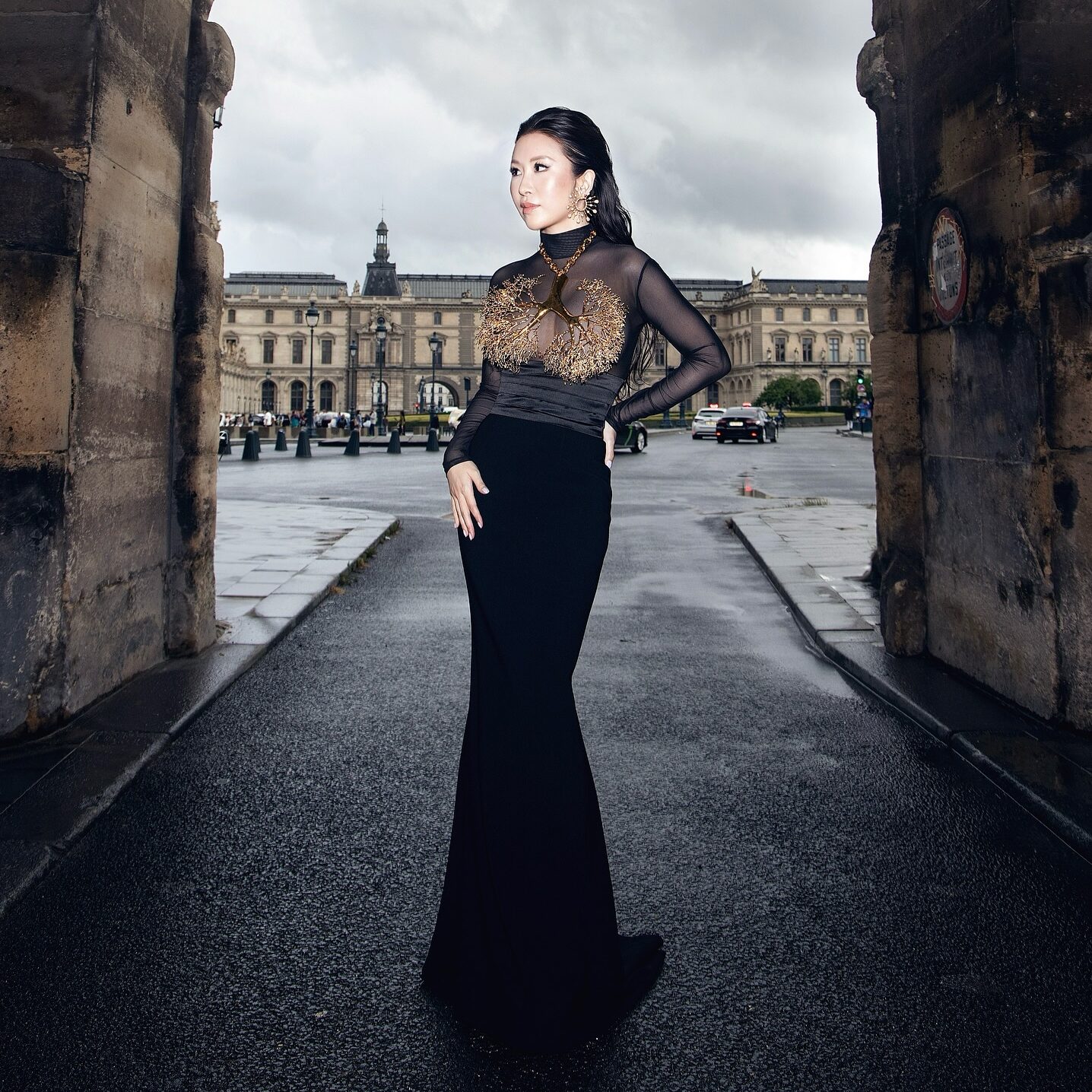
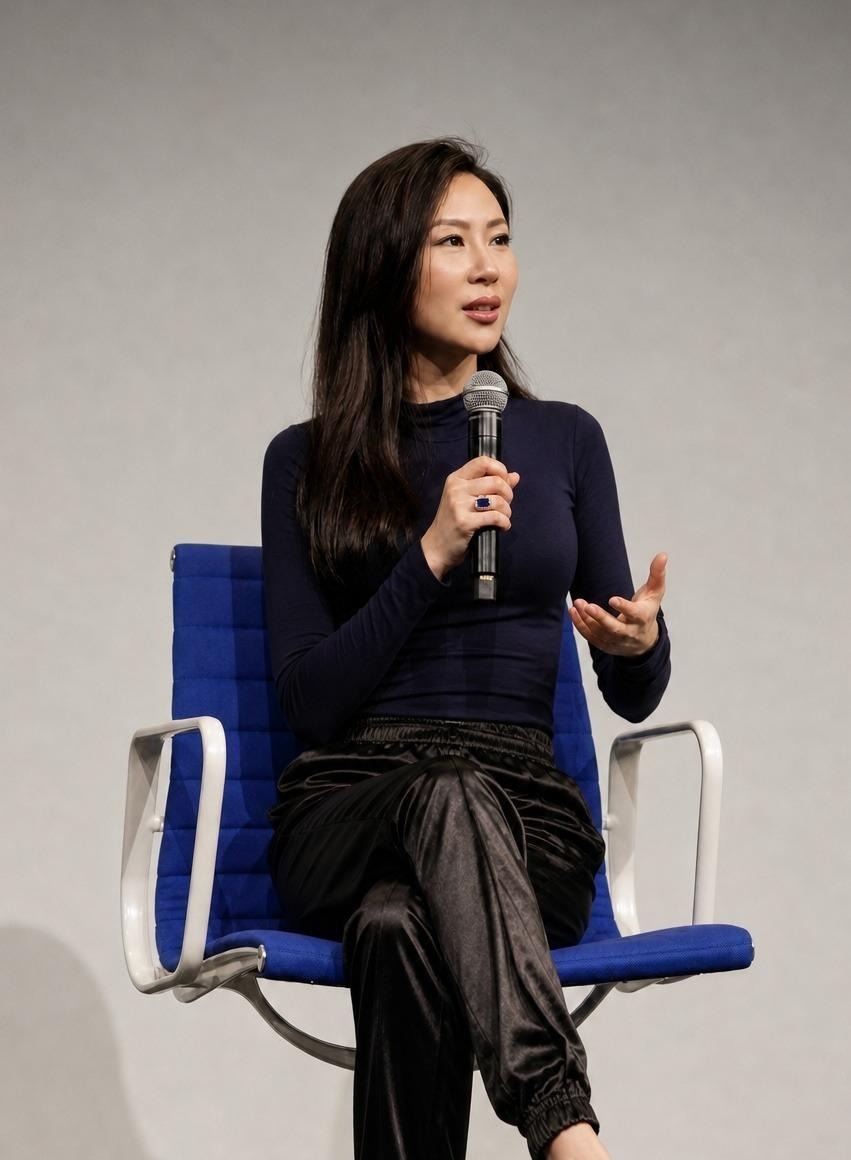
Yu-Chi Lyra Kuo has a theory: technology can enhance human creativity in ways the art world hasn’t yet imagined—she’s betting on it. “The possibilities are endless: individualized artworks that change in real time molded to the viewer, autonomous works the artist sets in motion and then surrenders to chance, robots performing alongside dancers, art that shows you other lives that you could have lived,” she tells CULTURED.
The entrepreneur, investor, Harvard-educated lawyer, former Princeton academic, and one of the Shed’s youngest board members has spent over a decade at the frontier of tech, poised at the intersection of technology and culture (before most institutions knew there was an intersection to find). To grasp where Kuo is steering the frontier tech-in-art revolution, it helps to understand where she started. Her earliest collecting instincts were shaped not by galleries but by the museum of Asian carvings and antiquities that her grandfather co-founded.
Her first acquisition was a jade gourd he gave her as a child. “You can see the carved insects,” she says, “when I hold it, I can feel the layers of human cultural meaning imbued in it.” The beauty of the artistic process, the hours upon hours of human labor that went into the carvings, and the extraordinary attention to detail are etched in Kuo’s memory.
It informs how she thinks about what technology can and cannot replace—the value of a human hand, the cultural meaning tied to an object made before machines could approximate it. Frontier technologies like artificial intelligence and robotics are advancing at a pace so unprecedented that people fear they risk dwarfing human potential, but Kuo is not afraid; she’s excited. These technological marvels, she proposes, will serve as new tools for artists to shape and expand—not replace—cultural meaning.
Kuo has a history of embracing new inventions long before the mainstream. She was one of the first entrants into blockchain in 2011, and later co-founded OpenSea 2.0, where she designed a cross-chain trading system and drove strategic vision alongside her husband, CEO Devin Finzer. “She was an early part of the industry, deeply connected to the people who built this space when it was still mailing lists and hackathons,” blockchain and fintech leader Rick Dudley says. “She’s one of the smartest people I know.” In the process of this professional pioneering, Kuo became embedded with aligned industry peers.
Jeremy Rubin, founder of MIT’s Digital Currency Initiative notes, “She was always incredibly generous with her time and expertise, and had this unique ability to actually solve any problem you might be struggling with. She spent hours and hours and hours talking me through how to advocate for myself. Not for any benefit to herself. That’s how she’s maintained and built trust and respect with almost everyone in the tech community.” Kuo is also a strategic advisor to numerous frontier tech companies, including Orchid Health, which is behind the first whole-genome embryo screening test. “Yu-Chi understood the long-term and global benefits of what we were doing before most people did,” Orchid founder Noor Siddiqui shares. “She is passionate about helping to advance the science and broaden access.”
It’s this knack for spotting the next big innovation and ability to embrace the frontier—despite risk—that has led to Kuo’s success. Something particularly buzzy began brewing last year when Kuo joined the board of the Shed, the Bloomberg-backed cultural center in Hudson Yards. Board chair Jonathan Tisch notes the fit: “The Shed is an institution of and for the 21st century, recognizing the disruptive force that technology has on the way art is created and consumed. Yu-Chi intuitively understands this. Her experience and insight will help us imagine new possibilities for artistic creation.”
Founding artistic director Alex Poots continues: “Yu-Chi contributes a rare synthesis of intellectual rigor, entrepreneurial vision, and creative curiosity—deep tech expertise combined with a genuinely forward-thinking approach that opens new possibilities for artists and audiences alike.” And Kuo’s collecting practice is its own form of patronage-in-action. She writes letters of support for young artists applying to the Fédération de la Haute Couture and has donated personal acquisitions to the Metropolitan Museum of Art.
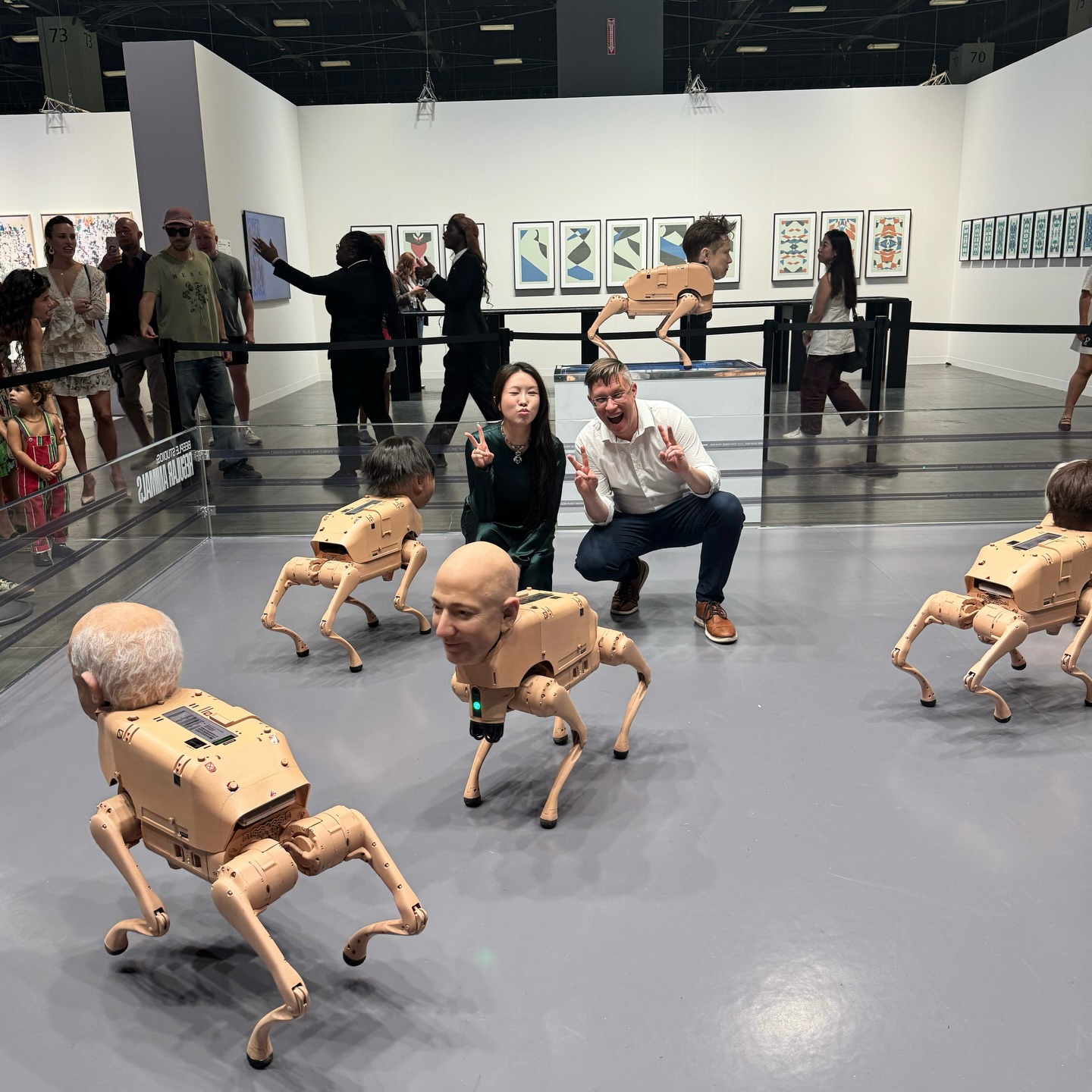
Beyond collecting, Kuo has partnered with a number of institutions to launch new exhibitions melding tech and creativity. Last December, the patron and her husband joined forces with Art Basel on a new digital art exhibition, including some rather provocative new commissions. The centerpiece of that show, an edition of robot dogs sporting the faces of familiar tech founders like Elon Musk and Mark Zuckerberg, by Beeple (Mike Winkelmann), sold out within hours and achieved viral acclaim.
To a certain kind of skeptic, it would be easy to disregard the moment as a stunt. Kuo refuses that framing. “What looks like a gimmick to some people is in fact a successor to a tradition,” Kuo says. “To me, Mike is Warhol 2.0 with the added complexity of the digital era. Warhol’s silkscreens were dismissed in his early days. The robot dogs are part of a serious dialogue about what counts as a work, who gets to make one, and what kinds of objects can carry meaning in the social media age. Historically, new and profoundly disruptive works of art were not always immediately embraced by everyone and yet entire movements have been born from them.” Beeple shared that he was “honored to have Yu-Chi supporting this space and championing digital art. Her commitment to pushing forward digital art is very much needed to help educate on the importance of what this medium can do to engage new audiences.”
In fact, looking forward, Kuo has a long-term vision for what she likes to call “Frontier Tech in Art.” This year, she donated $1 million to support new frontier tech, creativity, and commissions at the Shed (as well as an additional $500,000 over time to support staff and admin). Additionally, she’s co-chairing a secret Frontier Tech in Art project—forthcoming in 2028—at a top arts institution that she’s keeping mum for now, but lights up about when discussing. People on both the art and tech side tell us she is uniquely positioned to bring frontier tech and art together and push the creative community forward.
“When I first met Yu-Chi, our conversation and immediate rapport had me reevaluate what my image, and expectations, of tech people had been until that moment,” LACMA Global Ambassadors Founding Co-Chair Princess Alia al-Senussi says. “We connected over our shared backgrounds as academics, and wound up discussing Walter Benjamin’s ‘art in the age of mechanical reproduction’ and having a lively debate over how that does and doesn’t apply to art in the digital age.”As for Kuo, she hopes more people come to see the opportunities that frontier tech may bring for enhancing human agency, and therefore human creativity. “My perspective is that even though there is a climate of fear and uncertainty during these times of transition, I personally am so deeply, unspeakably excited to be alive,” she enthuses. “I can’t believe that of all my ancestors, everyone throughout human history, I’m the one who gets to live during this time when frontier technology has skyrocketed, and it’s now created this unprecedented inflection point in human history.”
“The possibilities for human agency, if stewarded responsibly, are beyond human imagination. For the art world, it’s an opportunity to usher in a new cultural renaissance,” Bryan Pellegrino, CEO of leading blockchain protocol LayerZero, adds. “Yu-Chi is one of the most brilliant people I know. Though she’s intentionally flown under the radar in a super noisy space, in the background she has been one of the earliest presences who is always driving invention forward. This will also be the case in the creative space because she blends art and technology in a way that very few do.”
The thread running through all of Kuo’s work is a single, animating conviction: the art world is only just beginning to reckon with what frontier technology makes possible, and someone must build the bridge before the moment passes. “Art is supposed to push boundaries and move society forward,” Kuo asserts. “Tech is transforming the world in ways you can’t avoid—so why not in art?”
More of our favorite stories from CULTURED
14 Books Our Editors Can’t Wait to Read This Summer
Inside the Closet of a Revered Stylist Who Has Only Worn Prada For Over 30 Years
Charles Melton Actually Has No Idea Where His Career Goes From Here
Introducing a Play For Every New Yorker Who’s Had More Bad Dates Than Good
7 Commandments for Rookie Collectors, From CULTURED’s Power Art Advisors
Sign up for our newsletter here to get these stories direct to your inbox.

 in your life?