After a federal commission gave the go-ahead to the president earlier this week to construct a gargantuan gold-spangled triumphal arch to himself near Arlington National Cemetery, the question of the government’s investments in public art is back in conversation. What projects do our governments fund, what organizations does it support, and what communities get a say?
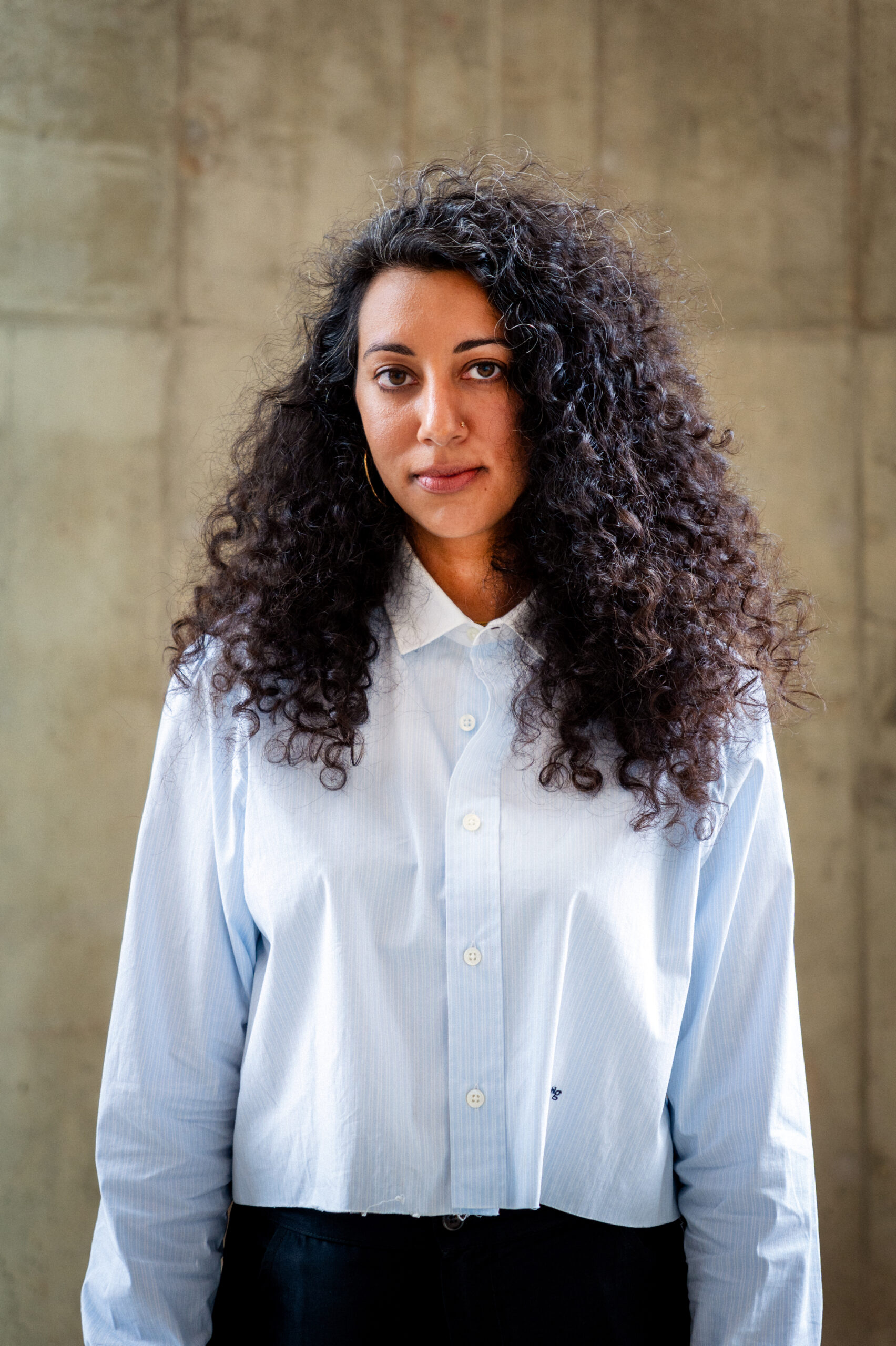
Diya Vij, the newly appointed commissioner of New York’s Department of Cultural Affairs, has answers—as well as experience in curation and arts administration across museums, nonprofits, and city government (notably including the Department of Cultural Affairs itself nearly a decade ago). She’s at the helm of the largest municipal funder of culture in the country, which sustains artistic communities across the five boroughs with grant funding (this February, it announced more than $74.3 million to 1,171 organizations).
When Vij, now 40, first worked for the city from 2014 to 2018 under the leadership of then-commissioner Tom Finkelpearl, public art was a flashpoint. Amidst mounting cultural tensions surrounding race and gender, monuments became “visible again,” as Vij puts it, “a placeholder for a lot of historic inequities or historic battlegrounds.” The push to construct more inclusive public works drove criticisms from both sides of the ideological divide. For some, they were revisionist history. For others, proposed designs weren’t inclusive enough. At meetings about the projects, tempers flared. In 2019, Finkelpearl stepped back in the wake of the controversy. Vij, on the other hand, left a more celebrated legacy with her Public Artists in Residency program, pairing artists with different municipal programs to offer creative solutions to the city’s challenges. Previous program participants have included Tania Bruguera, Tatyana Fazlalizadeh, and Mary Miss.
In 2026, the question around government funding for the arts is more existential. It’s no longer a question of how inclusive an artwork may be but whether art that speaks to the diverse identities of New Yorkers can find funding at all. With the rollback of major federal grants for the arts through the NEA and NEH, Vij and her 50-person agency are finding their own creative solutions to operating at a diminished capacity.
In line with Mayor Mamdani’s larger goals, Vij says that affordability for artists and the city’s many cultural workers is her top priority. As an alum of Powerhouse Arts, the High Line, Creative Time, and the Queens Museum, Vij has spent decades on the ground alongside artists, curators, and other arts workers watching studio rent, materials costs, and other operating expenses skyrocket. Indeed, the city’s artist population has dropped for the first time in decades, down 4.4 percent since 2019. Supporting the arts in New York is itself an ambitious approach to economic justice.
I caught up with Vij this week to discuss her priorities for the Department of Cultural Affairs, what economic justice looks like for artists, and how to expand our idea of public art.
You were part of the art and culture transition committee, and now you’re moving into this new role. Is that really all that different?
It’s completely different. The transition committee was a group of stakeholders in the field pretty broadly, some individual artists, folks from the library, and from cultural organizations big and small. We had a meeting with the Deputy Mayor of Economic Justice, Julie Su, and the appointments team, and from there we individually submitted policy proposals and ideas for the commissioner. They really used that space to gather information for who the commissioner should be and what the key priorities should be.
So now I run New York’s Department of Cultural Affairs as commissioner. We’re currently a 50-person staff with a $300 million annual budget. So it’s the difference of advising—saying, “This is where we see the need, this is what we think should be done with the capacity that you have”—versus actually making it happen.
And when you took that meeting, what was your proposal? What are your biggest priorities right now?
My mandate coming on with this administration under Mayor Mamdani and the Deputy Mayor of Economic Justice, Julie Su, is addressing the affordability crisis as it pertains to arts and culture. To frame art and culture under economic justice is an excellent prompt for us. For me, that means rethinking our policy to center on the worker: the artist, the cultural worker, and the everyday New York worker who needs time and resources to access arts and cultural activity across the city. To live a full and vibrant life in the city should include arts and culture. I always say that’s the bread and the roses: They need a good job and economic stability, but they also need the space to imagine, to be curious, to find community, inquiry, beauty, joy, and leisure time with their loved ones through arts and culture.
Arts policy as an extension of economic justice policy can be a really different way of thinking than a lot of people are used to. But it’s actually built into the history of the city. For instance, there’s Westbeth House, affordable housing that had been reserved specifically for artists. What does addressing the affordability crisis for artists look like in the city today?
First and foremost, artists are workers. And cultural workers—like art handlers, theater production crews, security, and maintenance—have similar needs. And so to address the needs of artists, in a lot of ways, is to address the needs of all workers.
Right now at the Department of Cultural Affairs, we primarily support nonprofit arts and cultural organizations across the city. And then through our local arts councils, we have a re-granting program where they give grants to individual artists. That’s the way the city directly touches individual artists—through all of these incredible organizations that work with artists every day. I’m thinking about what it looks like to ramp up those local arts councils and ramp up support for individual artists.
I’m thinking about affordable workspace. Not only do artists need to live here, they need to make art here affordably. And we are losing those spaces for rehearsals, for studio practice, for recording music. That’s a really crucial kind of space to preserve and increase.
Last time I was here at the Department of Cultural Affairs, about 10 years ago, the then Commissioner Tom Finkelpearl commissioned a social impact of the arts study, which gave us a lot of really important data and began to reframe this agency’s work around the social impact of the arts—making the argument that art in every community has these really positive correlations to other indicators of social wellbeing like health, safety, education. It allowed the agency to really start thinking about funding equitably across the five boroughs and thinking about the kind of community-based organizations, with the same level of rigor as the large institutions, as having an equal impact on the city’s daily life. It really allowed us to reframe in that moment. Now is the moment to reframe our work as rooted in economic justice and in affordability for the worker.
When you last worked at the department, things looked really different. The city’s in a completely different place, and so are conversations around equity and art. In your view, what has changed most in that time?
Having been on the receiving end of DCA funding and also fundraising for my own programs, working with artists to realize big experimental projects in public spaces, I still feel in my body the stress of what that kind of production work and curatorial work and nonprofit work feels like. I was on the board of several other organizations—the Laundromat Project, Poetry Project, A Blade of Grass—so I’ve been really rooted in a lot of different cultural organizations over the past 10 years. That’s given me a very deep understanding of what it looks like to run and maintain these spaces.
Number one, there’s a rising cost of things. The cost of doing business has just increased due to many factors. There’s an uneven post-Covid recovery, and there’s also this incredibly tense and rising atmosphere of censorship in our country that I think is really alarming. In some ways, it’s coming from the federal government, as we know. In some ways, it’s just coming from a cultural tightening of what it means to take political risks or have conversations that might make somebody with power uncomfortable. That feels like an even more of a risk for cultural organizations because of their financial precarity.
If we figure out how to strengthen this historic public infrastructure that supports arts and culture here, then maybe we’re able to allow cultural organizations or give them more leeway to take risks.
One of the aspects of this culture of censorship is the federal government canceling all of these grants through the NEA and NEH. Suddenly, it’s now up to the city to step in where these organizations have lost funding. But obviously you can’t just magically conjure more money to fill those gaps out of thin air. How do you plan to address those needs of these organizations that no longer have the support they were expecting?
You’re right, we can’t. Because the way that we fund is also really specific, there’s not a lot of wiggle room for us to come and step in. When we’re able to increase our budget, we’re already filling gaps in people’s fundraising bottom line from the organizations that we’re supporting.
What you’re talking about is really real. But I would also venture to say that between private philanthropy and public philanthropy, we can’t make up the difference. The funding from the federal government is really essential. It’s not just the NEA, but the NEH, the IMLS. Our science organizations, like the Museum of Natural History or the New York Hall of Science get a lot of federal funding from places like NASA or the National Foundation for Science. When you start to total up what that looks like, it’s really significant.
And the way that we address that, I would say to people wondering what to do, is advocacy. It’s calling your representatives. It’s figuring out how to make that kind of change on a federal level to restore some of these really vital funding sources. In the meantime, unfortunately, organizations have to figure out how to make their budgets work in the interim, which for many of them might mean having to stop programs or having to put things on pause while they wait for funding to come back. It’s really significant, and it was done really suddenly. It’s a problem that no single entity can step in to solve.
We’re hearing a lot too from museums and organizations with culturally-specific missions, because the federal government has taken such an issue with DEI and language that is specific about race, ability, sexuality, gender, etc. Is that something you’re seeing an increase of in terms of need?
It’s really complicated because it’s not just baked into the mission, it’s how they’ve been programming for decades. It’s rethinking the collections that they are stewarding and presenting them differently. It’s thinking about everything from their internship programs to leadership development to their curatorial programs to the way that they organize education programs. For many organizations, it’s through and through part of the way that they work, which is a very great thing.
As somebody deeply engaged in the field, I know that language is really powerful. And when we give it up, we give a lot more up than just a few words. So how do we do the work? What’s the new tactic that we need? And for every organization it’s different. It’s a level of comfort. It’s who their funders are. It’s the conversations they’re having with their boards.
It’s a total travesty, and it’s really hard to watch, having been committed to these exact values for my whole career. But there’s also lessons to learn from other countries and other cities, and it’s never about shying away from the work.
When you say lessons from other countries or other cities, does something come to mind?
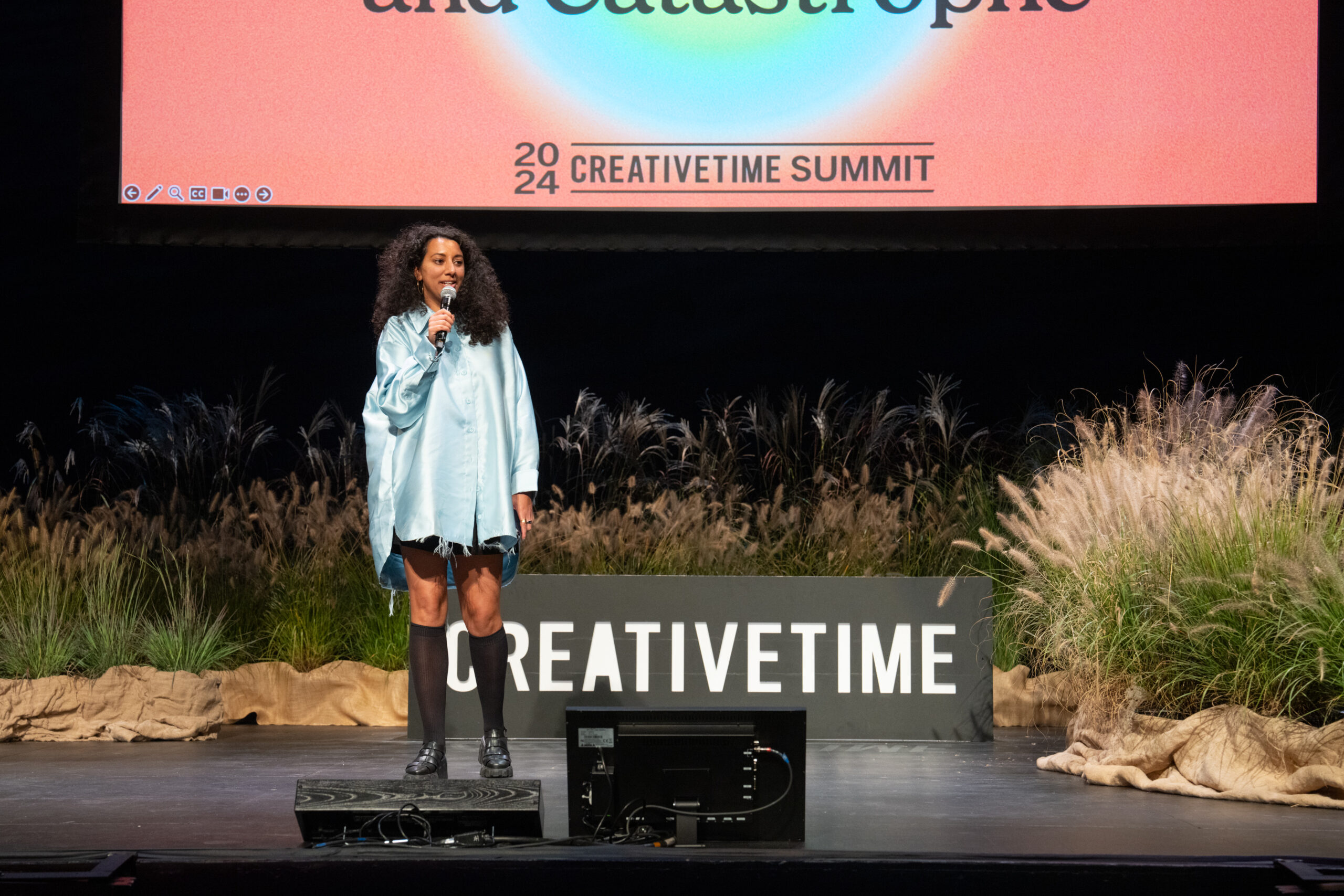
At Creative Time, we started this gathering space, CTHQ. It was a 1,500-square-foot loft space where we did weekly programs, and it was a way to have intimate spaces for artists to be in community together and to gather around some of the big issues of our time, to try out ideas, to experiment. While there, I met an artist from Hong Kong during open hours where anyone could come in and work. He was doing a residency down the street, and he was telling us how much has changed from the protests in Hong Kong in 2020 to today. Having those kinds of smaller spaces to be in honest dialogue together as artists is a tactic.
Another time, I was at a curatorial conference for the Armory Show a couple years ago that Lauren Cornell organized. There was a curator from China talking about the difference between wall text and the work that actually goes into the show, which really stuck with me. We always have the opportunity, being in such an international city, to zoom out from American exceptionalism and learn from our peers across the world whose diaspora communities are right here.
Your previous time at the Department for Cultural Affairs, working with the monuments commission, was really colored by strong and emotional public response to public art, and specifically the way to make monuments diverse and representative of their communities. What do you think you learned from that experience? And what will you take from it moving forward?
I also started the Public Artists in Residence program during that time, which puts artists-in-residence with different city agencies to think about their practice on a systems level. It was one way that we were expanding what it looks like to be a public artist in New York City and offering other ways for artists to engage civic bodies. It still exists today. I am very excited about that program.
Back in the mid-2010s, monuments came up across the country as this really big topic because, as a lot of research shows, when temperature is rising around an issue, monuments become visible again. Oftentimes in your day to day you don’t see them. But then all of a sudden, they become a rallying cry, and they take on a lot of emotions. They take on a lot of histories of disenfranchisement that goes well beyond what that figure is, what that place is. They become a placeholder for a lot of historic inequities or historic battlegrounds. And I learned that very well during that period of time.
We were talking to New York residents, to artists, to stakeholders about what the purpose of a monument is. That conversation has been had, and organizations have emerged to address that topic. And it always remains important and relevant. But something I’m really excited about moving forward is thinking about all of the artists that engage these complex ideas, histories, contemporary conditions outside of monument-making and other forms of public art that are thinking differently formally and pushing those boundaries. The Percent for Art program does it so well already, so so I’m excited about amplifying other forms of public art and thinking about contemporary conditions that offer a different kind of view.
Is it tough going from work that’s much more curatorial and directly engaging with artists to something that’s more structural?
No, it’s really not. That’s why I left Cultural Affairs the first time. I was really craving the opportunity to work with artists and help realize some big ideas and wild projects, most notably, the project I did with New Red Order on “The World’s UnFair.” I could never do that for the city, for many reasons. The way we fund, what we can fund, its duration, its location—it’s not the way that curatorial work can happen here.
But after working with artists and organizations for the past 10 years, I’m acutely aware of the inflection point we’re in as a field. I feel deeply honored to get to make this kind of citywide impact. These days, I’m actually craving working this way and having this bird’s eye view.
It’s policy. And it’s systems. It’s structural, and it’s process. It’s having to synthesize a lot of data, thinking about a lot of different needs of different communities, and figuring out what those patterns are and what solutions might address most of those, or many of those problems at once. The Public Artists in Residence program rests on this idea that all kinds of people are policy makers, or could be, including artists. There’s a lot of ways to apply what I know from working with artists in the field of this kind of work.
The framework that you’re presenting—this idea of art policy as an extension of economic justice—is probably resonant with a lot of artists who live here. But, I think a lot of people, both advocates and naysayers, are wondering what that actually looks like in action. Do you feel pressure to prove that it can be done in a way that’s effective?
Totally, but also that’s the job. That’s what I signed up to do. I’m committed to making sure people know that the government can work for them. That there already is excellence and we can really show up for people in the everyday. It’s daunting, but I think it’s possible, which is why I’m here.
More of our favorite stories from CULTURED
How The Pitt’s Patrick Ball Went From Role-Playing Corporate Trainings to Starring on Broadway
The 2026 CULTURED Power Advisor List: Meet the Art Advisors Shaping the World’s Top Collections
A New Book Unearths the Heated Rivalry Between Artists Peter Hujar and Paul Thek
Speed Round! 13 Critics Review 25 NYC Shows Before You Finish Your Morning Coffee
Sign up for our newsletter here to get these stories direct to your inbox.


 in your life?