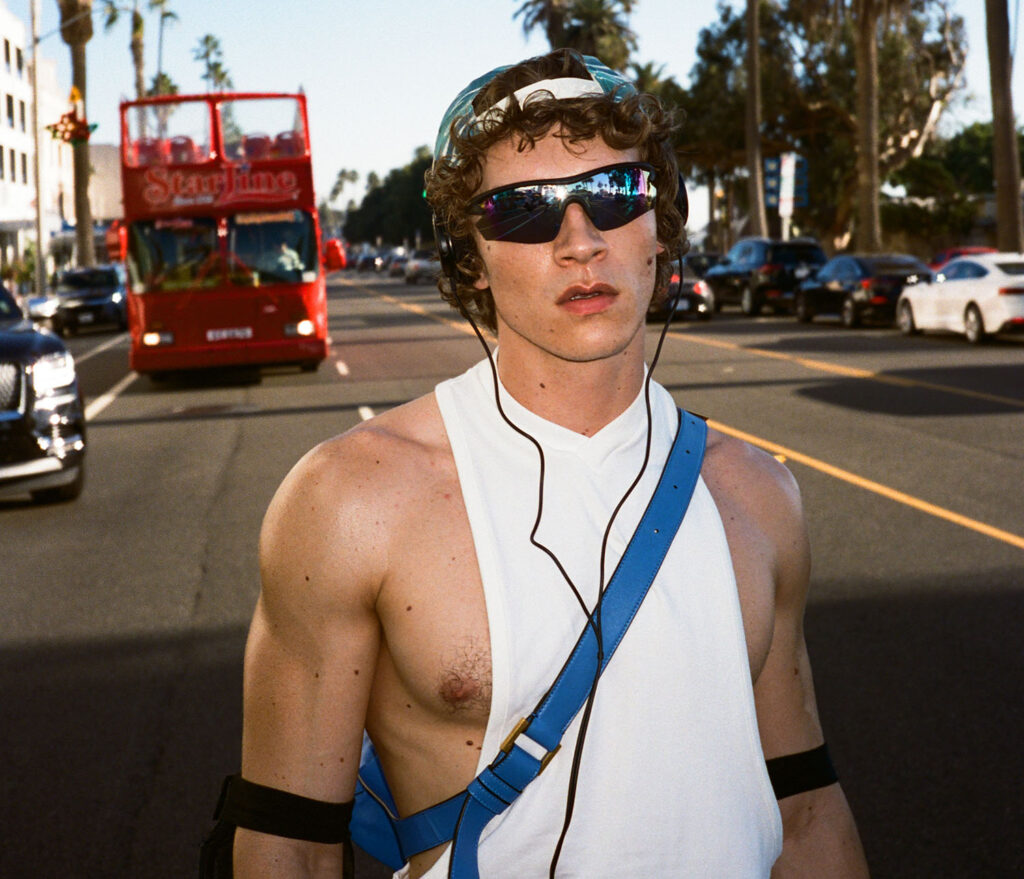
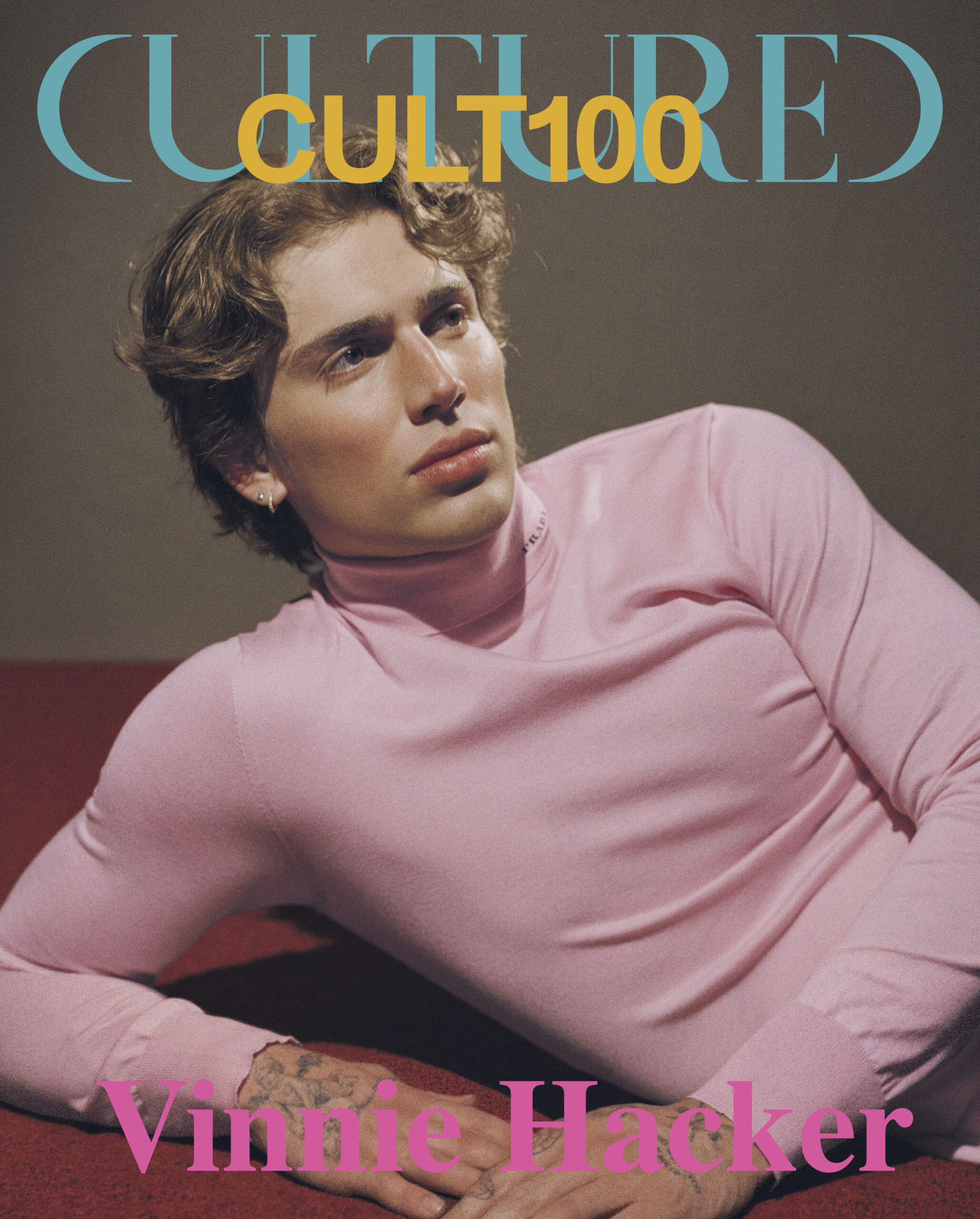
The doors flew open, and there he was: Vinnie Hacker, the social media personality, the thirst-trapper par excellence. One is wrongfooted upon meeting TikTokers. Somehow you must disguise in your expression that you’ve devoured much of their content. I threw out my hand and said, “Vinnie?” as if I was uncertain, and he played along, saying, “Oh, yeah. That’s me. I’m sorry if I got the time wrong.” He was late, but that was okay. The weather in LA that day was gasp-inducingly pretty—a vast eye-blue afternoon with a spread of Keatsian clouds. We were at Mitsuwa Marketplace, a Japanese grocery store on the western edge of town, and it was a location deliberately chosen, since Vinnie had recently wrapped a voice-acting gig for Sakamoto Days, an anime whose first season was currently streaming on Netflix, and created a new manga, The Escape, for Attack on Titan publisher Kodansha.
In some sense, Vinnie was going the way of Jake Paul and Addison Rae, social media behemoths who had converted their massive online followings into more “legitimate” forms of fame (Paul, with celebrity boxing, and Rae, with bad top 40). For Vinnie, this meant modeling and acting. He’d recently landed a role in the third season of Euphoria, HBO’s teen melodrama, a move that had been described to me as transcending his reputation as a thirst trap. And yet because Euphoria features well-complected twentysomethings in the throes of carnal passion, I couldn’t quite see how this amounted to a deepening of his ambitions. It seemed the entertainment equivalent of a weed dealer becoming a drug rep.
Vinnie possesses an Abercrombie-handsomeness (think: meaty jaw and cheekbones, think: ample iliac crest). He’s got the eyes of a Labrador Retriever—wet and brown and sad. One is helpless against them, sort of the way one is helpless against Thin Mints or OnlyFans. I teach at a university, and two weeks before my trip, a couple of my female students confessed to having “come across” his thirst traps. Jealous of these girls’ attentions, one male student got all huffy and petulant, professing not to know Vinnie but resolving to look him up. “Okay,” he said finally, “low-key, if I’m being honest, he’s actually kind of hot.”
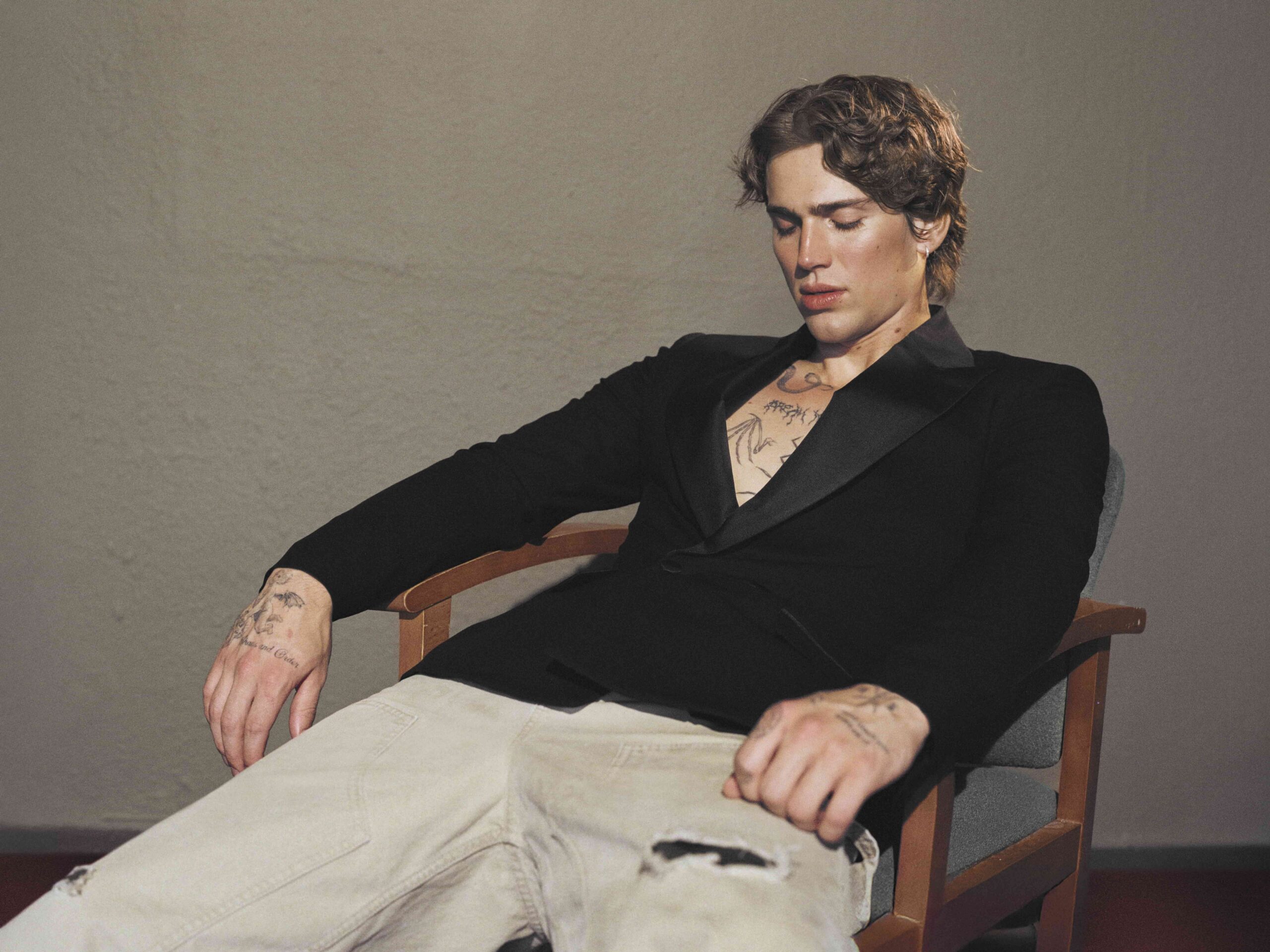
His obvious physical precursor is Ryan Gosling or Justin Bieber—same ursine eyelashes, same hey-girl affect. But there’s teen darkness here, too, perhaps owing to his childhood in Seattle, the same lugubrious backdrop that birthed Soundgarden’s Chris Cornell. Standing next to Vinnie in the dairy aisle, I couldn’t help feeling devastatingly average, easily mistaken by passersby for his stepbrother or his bagman. If this was especially upsetting, it’s because, in my heart and mind, I, too, am a sensitive bad boy. But I guess, at this point, the rugged façade of youth has been replaced with the grim physique of middle age, and so all that is left for me is my floundering sensitivity.
Vinnie set me straight. He suggested that people of any age could post successful thirst-traps. “Honestly, the biggest thing is confidence. I know that sounds cheesy. But I mean, I see a lot of older guys posting on TikTok, like lip-syncing to the song or whatever, and the comments go crazy. Because if you’re a confident man and a conventionally attractive guy, they’re gonna be like, Oh, he’s feeling that, and I like that.”
“Do you think there’s an art to thirst-trapping?”
“I do. I do think there’s an art to thirst-trapping.”
“What is it?”
“You gotta know your angles,” he said. “Like, do you look better from down here like this? Or do you look better over here like this? Or do you look better from up here like this? [Here, he held the phone up, in a Lady Liberty-type arrangement] I find I look better if it’s right here, straight on. Or looking down at the camera like this. [Here, he abruptly assumed a receiving-fellatio-type posture] So, it’s just like you gotta know your angles. And like I said, lots and lots of confidence.”
“That can’t be it.”
“Angles and confidence and consistency.”
“Nothing else?”
“Oh, and lip-syncing. You gotta get good at lip-syncing. Because if you mess up a word, you’re kind of screwed because all the comments will go, He doesn’t even know the song!”
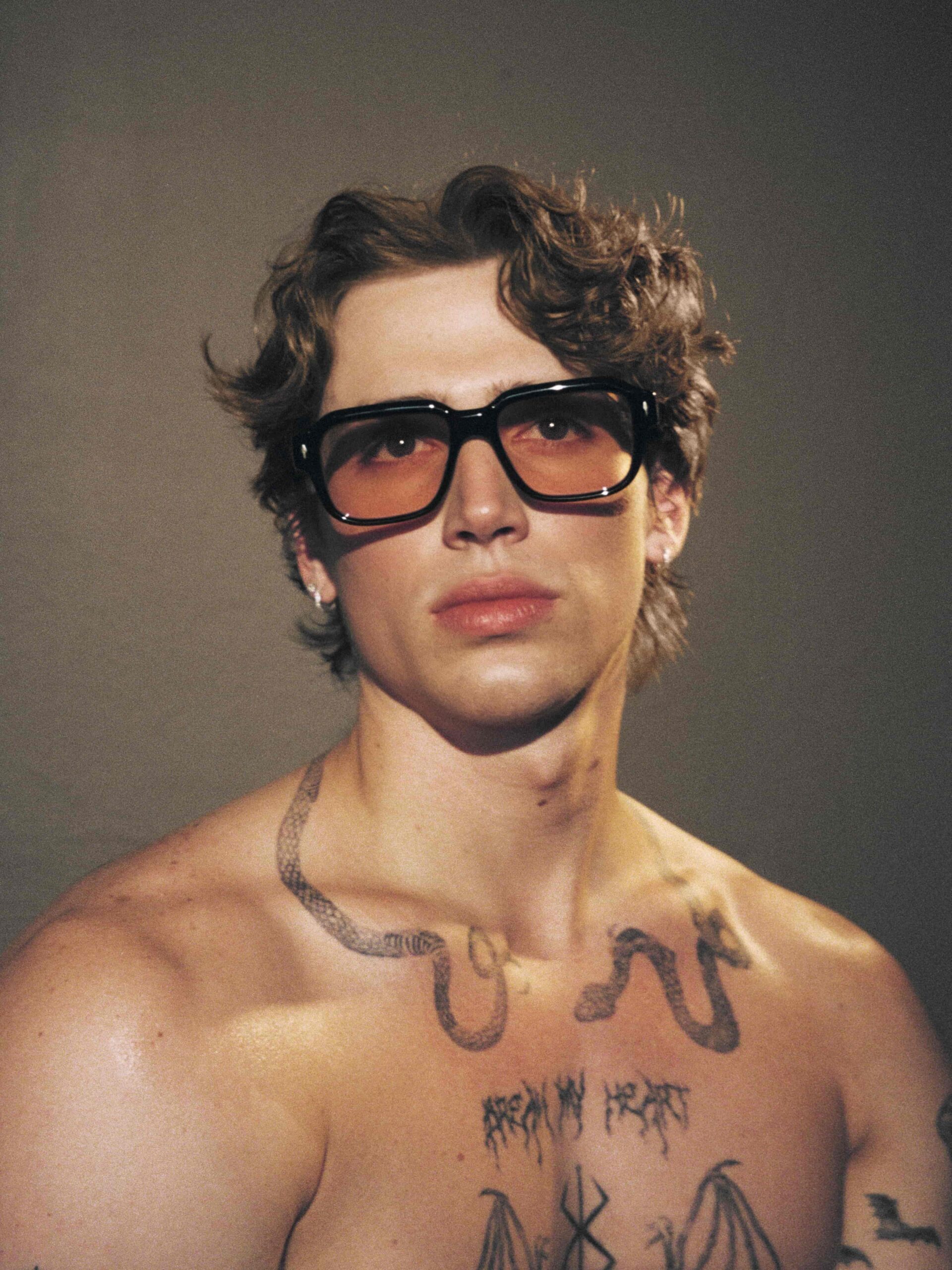
I liked Vinnie. At 23, he was humble and self-effacing. Unlike other young celebrities I’ve spent time with, who are boastful and hyperbolic, speaking in a slurry of lobotomized phrases drawn from Reddit and TikTok—“Chat, I can’t even!” or “Bro, come on, what in the actual fuck?”—Vinnie had an assured disposition, suggesting that, as an infant, he’d had sufficient eye contact with his mother.
It turned out she works as a 9-1-1 dispatcher. “She deals with everything,” he told me. “She gets a lot of suicides at the airport, because that’s where the Port of Seattle police gets called. So people threatening suicide or people calling up and saying, Hey, there’s a guy on top of the roof, and it’s looking like he might jump! So she’ll talk to that person or people who are dying on the phone. Anyways, she loves helping people … and is the most emotionally intelligent person I know.”
Vinnie’s got the eyes of a Labrador Retriever—wet and brown and sad. One is helpless against them, sort of the way one is helpless against Thin Mints or OnlyFans.
He drifted off, seeming haunted and abstracted, like maybe he’d come to this interview with something more to discuss. We were no longer in the snack aisle, with its wasabi-flavored KitKats, but were loitering in the food court, bird-sipping our Smartwaters. If he noticed the trio of young women who kept swiveling past us, trying to get his attention with an elaborate little mating ritual of furtive, lash-batting glances, he didn’t show it. Or maybe he did but didn’t care. Either way, it didn’t register.
In one of Vinnie’s bios online, I’d read about an incident in which he smashed up a mirror, back in the early days of his career, when the creation of all those thirst traps—with their carefully curated angles and tensed, wasp-like abs—had lifted this poreless adolescent into the Icarian realm of virality and the frenzied clutches of his fans. The gesture reminded me of Film, a movie written by Samuel Beckett, in which a character played by Buster Keaton develops a Nixonian paranoia about perpetually being observed. In a futile attempt to obliterate his image, he rips up every self-portrait and covers his mirrors with rugs. The scene was channeling the anxieties of the Romantics, who worried that the spectacle of sociality would result in utter self-loss.
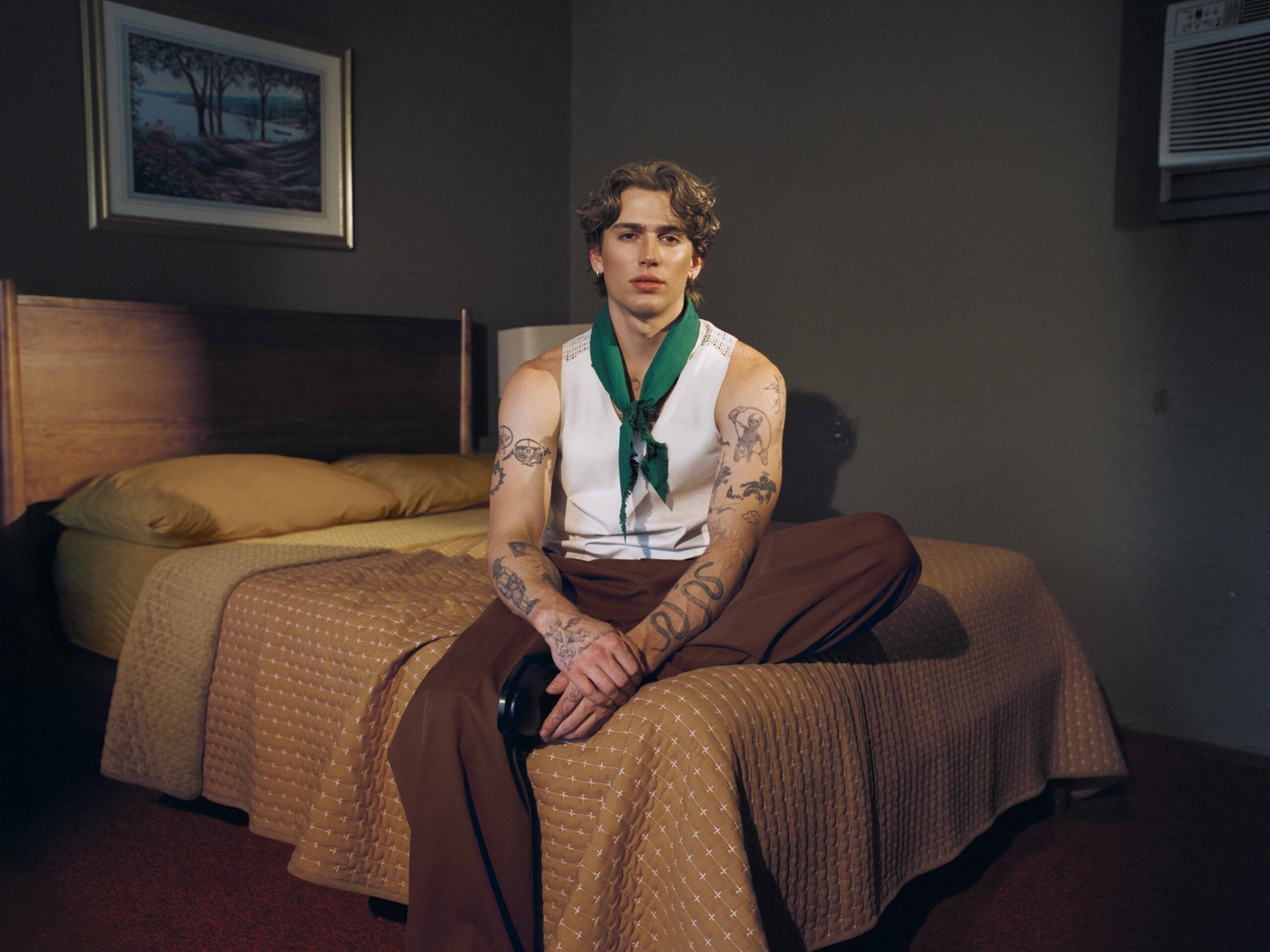
I was trying to bring these ideas into harmony with the young man across from me. Influencers, after all, are athletes of exhibitionism. Their existential nourishment comes from the steady gaze of millions, the succor of being watched. In some sense, influencers are Andy Warhol’s stepchildren, believing that a self is indistinguishable from audience, that a person is more or less an ad. They are the secular disciples of the God of Bishop Berkeley, whose theology presupposed that esse est percipi or “to exist is to be perceived.”
Maybe, but for the generation coming up, the one I teach every day, I couldn’t help thinking that the constant production of self-image comes at a brutal cost. I asked Vinnie about this.
“You know, I’m obviously posting what I’m posting—and sure, it’s a little bit sexual—but regardless if you’re doing it for that reason or not, it can get to a point where you’re like, Wow, I feel like that’s the only thing people really see me as … in the end, when I was 16 and 17, I was doing it because I wanted attention. I went to an all-guys school and had never talked to girls before. You know, it does turn into something where you’re like, Do these people even care?”
I asked him about the mirror. He was quiet for a moment. Then he looked up. He told me a story about high school, when he befriended a couple of guys, Dennett and Chad, two Ukrainian brothers who were both a little bit older [both of these names have been changed to protect the subjects’ privacy]. It was Chad whom he looked up to, whom he thought of as an older brother. They played on the football team together, and Chad was the unrepentant hype man, the Ukrainian Knute Rockne, always exhorting his teammates toward echelons of higher effort.
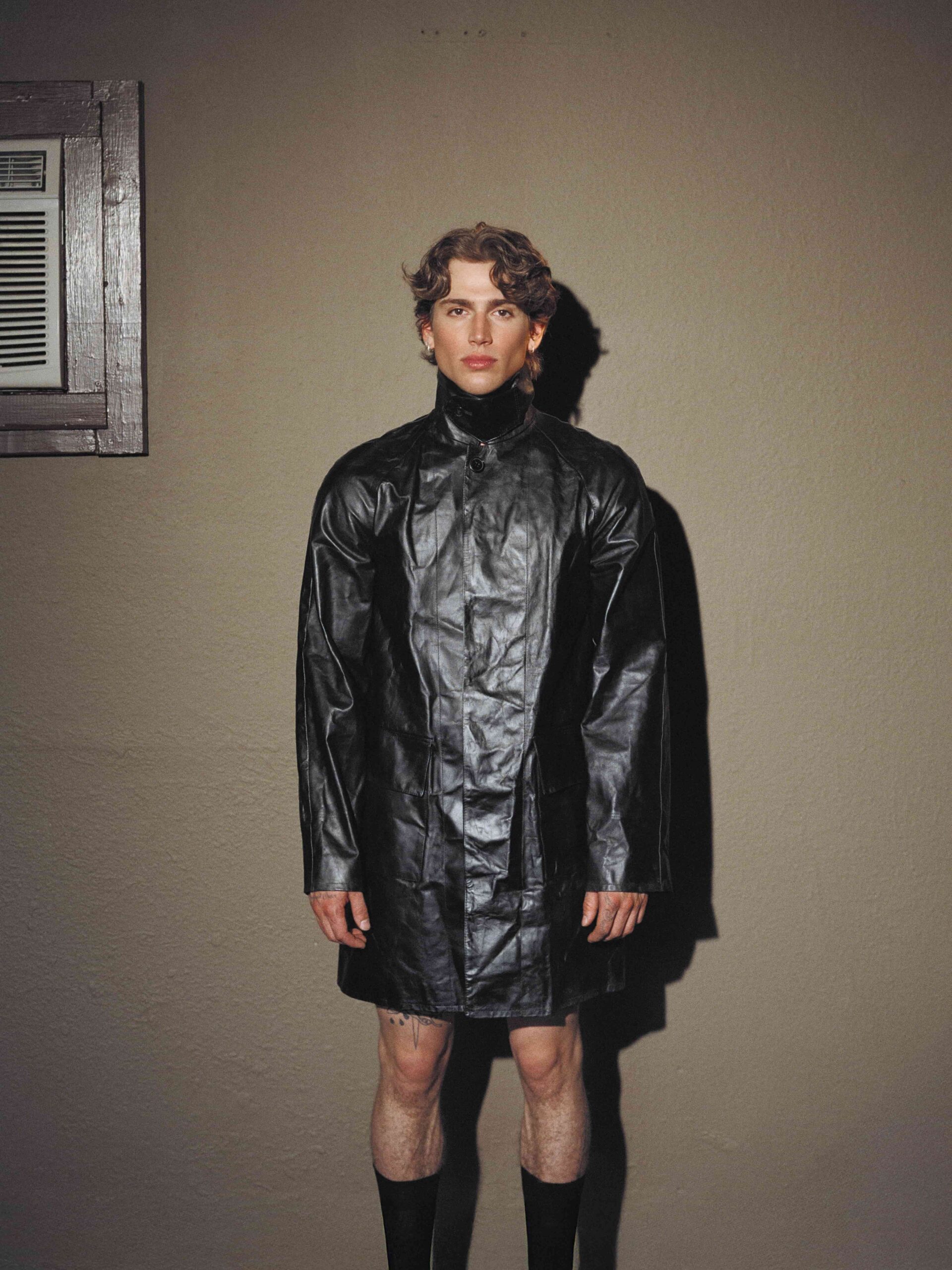
On most days, Chad drove Vinnie to school, but one day, “My mom is like, I’m driving you to school.” This struck him as odd, and when she dropped him off, she gave him this look, a steely penetrating stare, edged with a ruined sadness that was beyond maternal expression. “I was like, Okay, that’s weird. So she sends me off, and it’s first period, and this is how I find out: there’s an announcement over the PA, telling everyone to come to the auditorium.” Imagine all these Catholic boys filing into the gymnasium, the blinding varnish of the hardwood, the honks and trills of adolescence. “So I get down there and am sitting in the literal front row, and they didn’t tell us how he died, but they said Chad isn’t here today because last night he passed away. Then I just go white. I start putting all the pieces together, like why my mom dropped me off, why all the teachers are looking at me. And it hits me all at once, and I just get up and walk out.”
Eventually, Chad’s mother told Vinnie how she found him. Around sunset the night before, Chad hung himself from a tree on the top of the school library. “The worst part about it was that I couldn’t see that side of him, the side of him that was so sad, you know? It actually made me feel like I didn’t do enough. I learned the hard way: You gotta check in on everybody, even if they seem like the happiest person in the world. And I would know, too, because I had dealt with depression for a while, and I always put this face on, and nobody … nobody knew.”
“For a while, it was like I was a little bit emotionless, like I turned myself into a statue.”
After Chad died, Vinnie started acting out. He’d pummel walls and break mirrors to cope with his emotions. “When I broke the mirror, I told my parents it was an accident. Like Whoops, I slipped and elbowed it.” Did he break it because he was upset about his appearance? “No, I was more pissed about what I was feeling, like, Am I doing this because I want attention, or am I doing this because I’m missing something? A lot of it was just being perceived by so many people at once and not feeling like I had a private life. But that was just an add-on to what had happened with Chad. Because I felt like I couldn’t get the tears out, and that made me feel even worse. For a while, it was like I was a little bit emotionless, like I turned myself into a statue.”
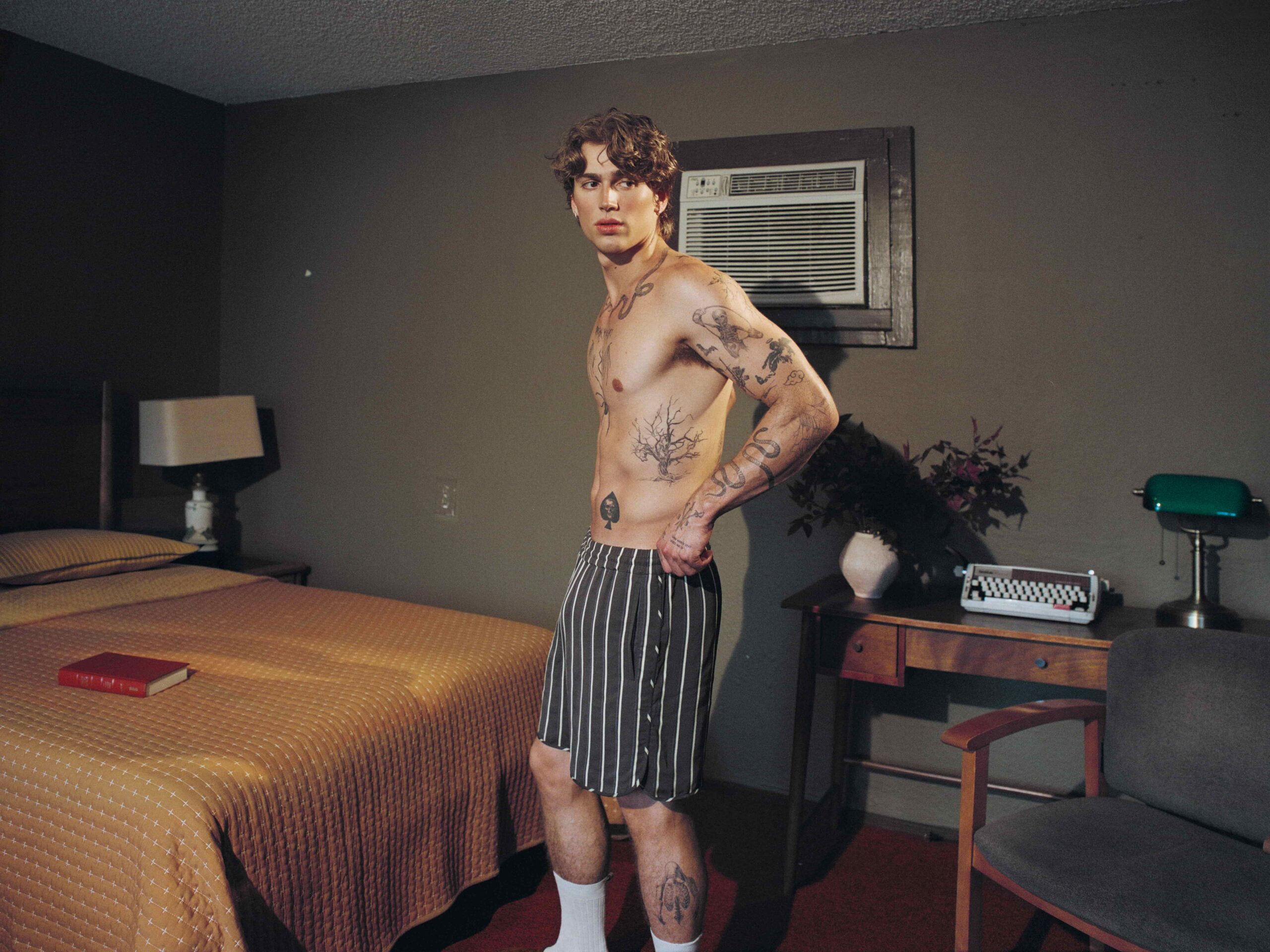
Forgive me, but I’m an English professor and couldn’t help thinking of the mythology of Medusa, the mortal Gorgon with venomous snakes who turned her victims to stone. Aren’t we—the followers—performing a similar petrification? Aren’t we the ones who misperceive these influencers as mere images for our consumption? For those of us who market ourselves online—which is to say, for all of us—perhaps the genuine trap is thinking that our thirst is finally quenchable, that the endless digital production of our self-image might reconcile what is ephemeral with what is eternal. If Vinnie had taught me anything that day, it was that we all long for water but increasingly taste only salt.
I asked Vinnie if he still felt the burden of vicariousness, if he felt, in some sense, he was living now for Chad.
“One hundred percent,” he said. “Chad always wanted to explore. And he was such a big personality. And I feel like I carry him with me through everything I’m doing. Like when I went to the Super Bowl, I thought about how much he would’ve loved to see that. And I think about how happy he’d be seeing me going to all these events. Or about how many questions I’d still ask him. That’s still how I make a lot of my decisions, like: Would Chad laugh at me for this? Would he tell me to pursue this?”
“It’s interesting to me,” I replied, “that you got famous for your body, for your appearance, but you’re really thriving as a voice actor, which has nothing to do with your looks and everything to do with your spirit.”
“Back when I first started out, I was so confused with where I was going with life, so I was like, I’m just going to make use of what I have, so I’m going to post all these thirst traps. But I always thought I could be better. And that’s what kind of ate at me … My end-all goal, honestly, is to be the opposite of what I started out as. Like if I could, I would voice-act, model, and act. I’d have my own place on a green hill in Seattle with a dog. I’ve had visions of this. I honestly just want to extend my interests as far as I possibly can.”
Grooming by Kristin Shaw
Executive Production by Caroline S. Hughes
Production by TJ O’Donnell and Dunwell Production
Photography Assistance by Gustavo Soriano and Nathan Seabrook
Order your copy of the CULT100 issue here.
More CULT100 Cover Stories
How Sombr Emerged From Dimes Square Fully Formed as a Pop Star Heartthrob
Marcello Hernández, SNL’s Youngest Cast Member, Turns to Jamie Foxx for Advice
Lena Dunham Checked Out of the Hype Machine. Is She Glad to Be Back?
Adam Scott, Unlike the Disaffected Characters He Plays, Wants to Get Caught Trying
Meet David Jonsson: the Actor Frank Ocean, Colman Domingo, and A24 Can’t Get Enough Of
Sign up for our newsletter here to get these stories direct to your inbox.





 in your life?