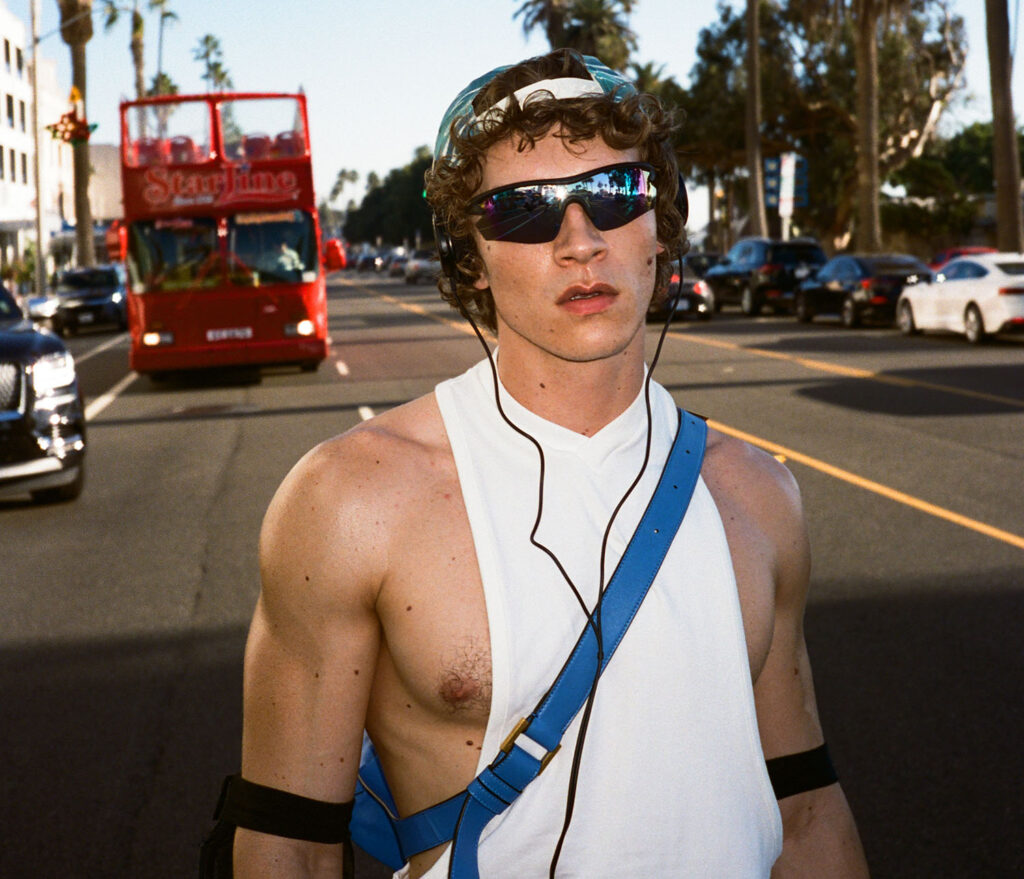

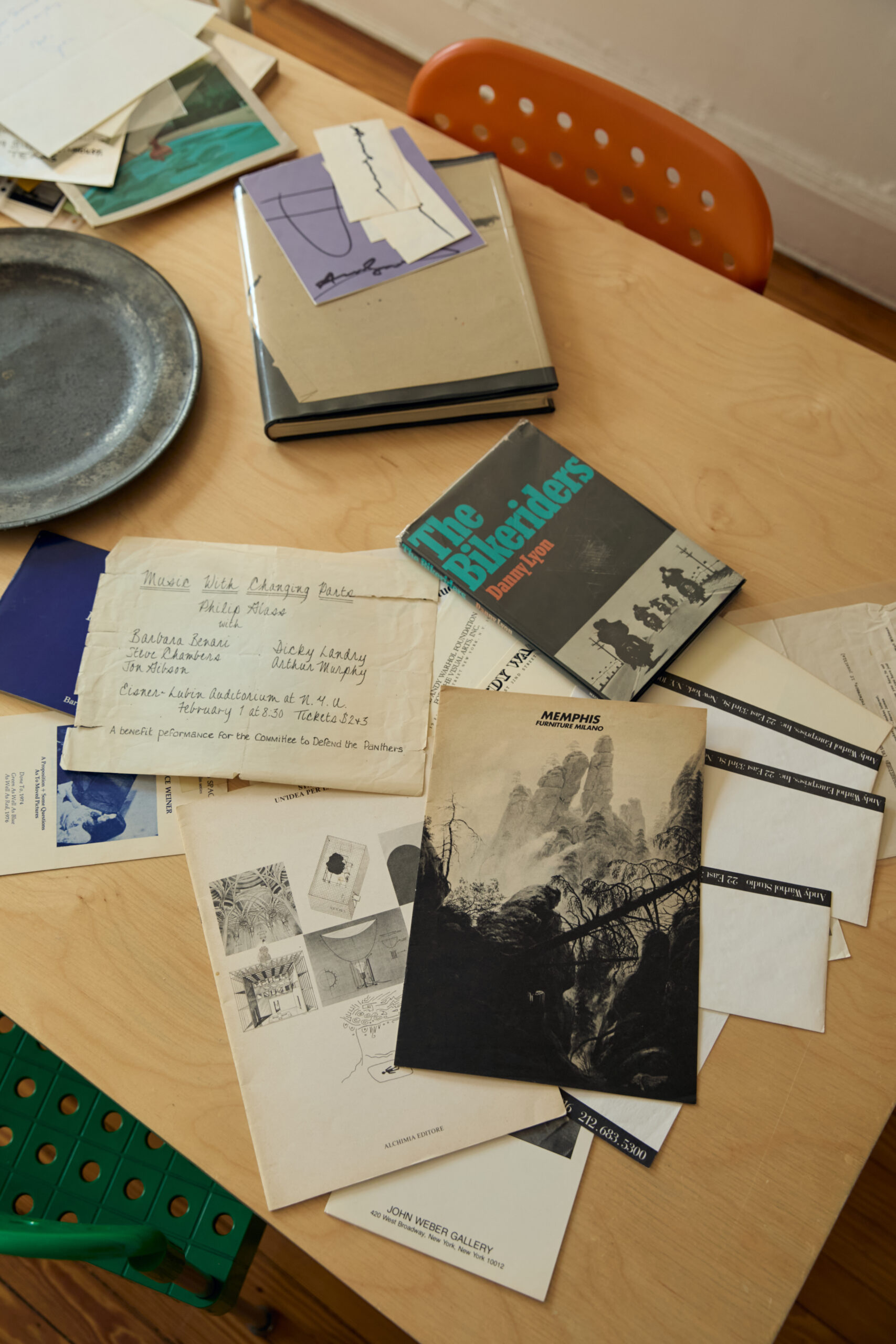
A rogue Uber ride to a forgotten Miami bookstore brought Geoff Snack face-to-face with Andy Warhol’s legacy. An exceptionally rare, signed copy of the artist’s first book of photographs, Exposures—likely offered in lieu of payment—captures the credo that underpins his collection: look where other people don’t. Between sidewalk boxes, one-off performance flyers, and portfolios pulled from long out-of-print runs, the brand strategy director and paper dealer has built a life out of his commitment to the hunt.
Through his consultancy Wrong Answer—an approach to design that “got it wrong in exactly the right way”—he works with fashion clients including J. Crew and Stone Island, translating cultural references into retail environments layered with vintage literature and Easter-egg finds. He also co-runs Available Works with Something Special Studios* at downtown cultural space WSA, visualizing a book fair which gathers rare print material into a tightly edited landscape of stalls and pop-ups. For CULTURED, Snack opens up his collection across printed matter and design, revealing how the most surprising finds are often just one instinctive decision—or one Craiglist scroll—away.
Where does the story of your personal collection begin?
I grew up in a super small town in Canada, and hockey cards are one of the things that I would collect. I would always go with my dad to the flea market and we would look for hockey cards or Nintendo games. That’s where the habit of collecting started. Then in high school, I found that books were very interesting to me and acted as a way to connect with culture, growing up in a small town.
I used magazines and books to connect myself with the world. When I was old enough to move into the basement, that felt like a big deal. I remember clipping ads from Wallpaper magazine and putting them on my walls, along with images of bands and other things that interested me. I was really drawn to paper ephemera—the way it can transform a space, remind you of who you are, and connect you to culture. That’s really where it started, and it continued through records as well; I bought a lot of those. The interest in books was always there. Eventually, I moved to Toronto, where there weren’t many great bookstores, but I kept looking for art and design books. Later, in my adult life—once I started working and had a bit more money—I began collecting paper ephemera and books more seriously.
What factors do you consider when you’re expanding the collection?
I have a few rules that I follow. I typically don’t deal in anything before 1950 and I tend to focus on work from roughly the 1950s through the mid-1990s. That’s the range where I feel most fluent. I also have a few other criteria, but I really try not to think about it too much. If it’s a piece of work that gets me excited, I’ll pursue it. I try to keep it as intuitive as I can, and then run it through my filter of taste and what it offers.
Tell us about your sourcing process. Do you look to proprietary contacts, the secondary market, auctions, or otherwise?
I mean, I’m everywhere. That’s really the through line. A big part of being able to do this well is simply being present. I spend a lot of time in bookshops, and in conversation with dealers, private collectors, and people with deep libraries and archives. A lot of what I source ultimately comes through those relationships. But I’m not above looking on eBay every now and again. I’m not precious about where things come from. I’ll stop into bookstores around New York just to see what’s there. If I pass a box of books on the street, I’ll go through it. I try to stay open and responsive to whatever might surface—I’m a bit of a truffle hound in that sense, always sniffing around for something unexpected. For me, it’s primarily about contacts and building up great relationships with collectors and dealers. I’ve also been surprised by finding stuff in unexpected places.
You oscillate between collecting printed matter and design objects. Are the two related or independent streams?
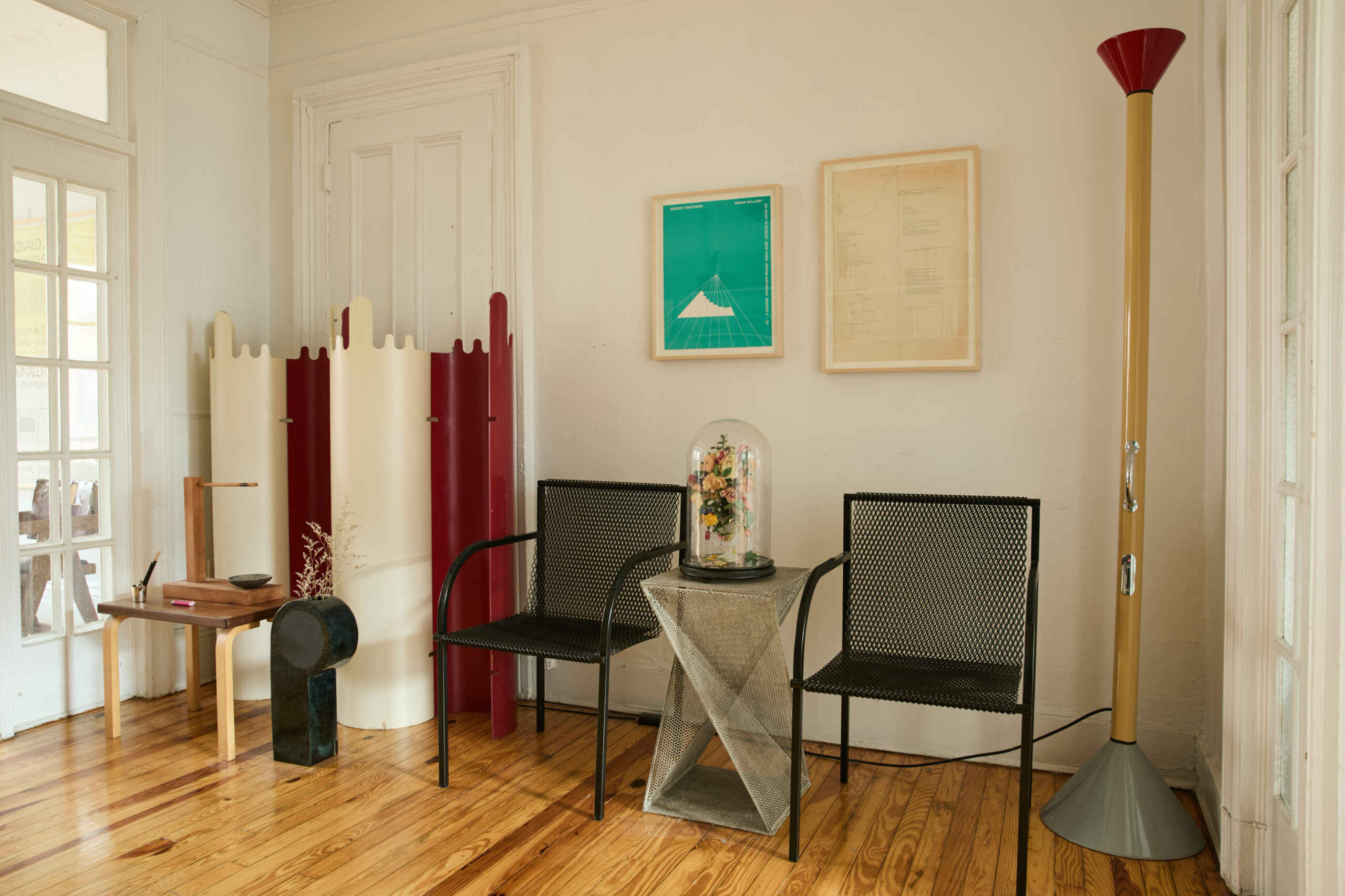
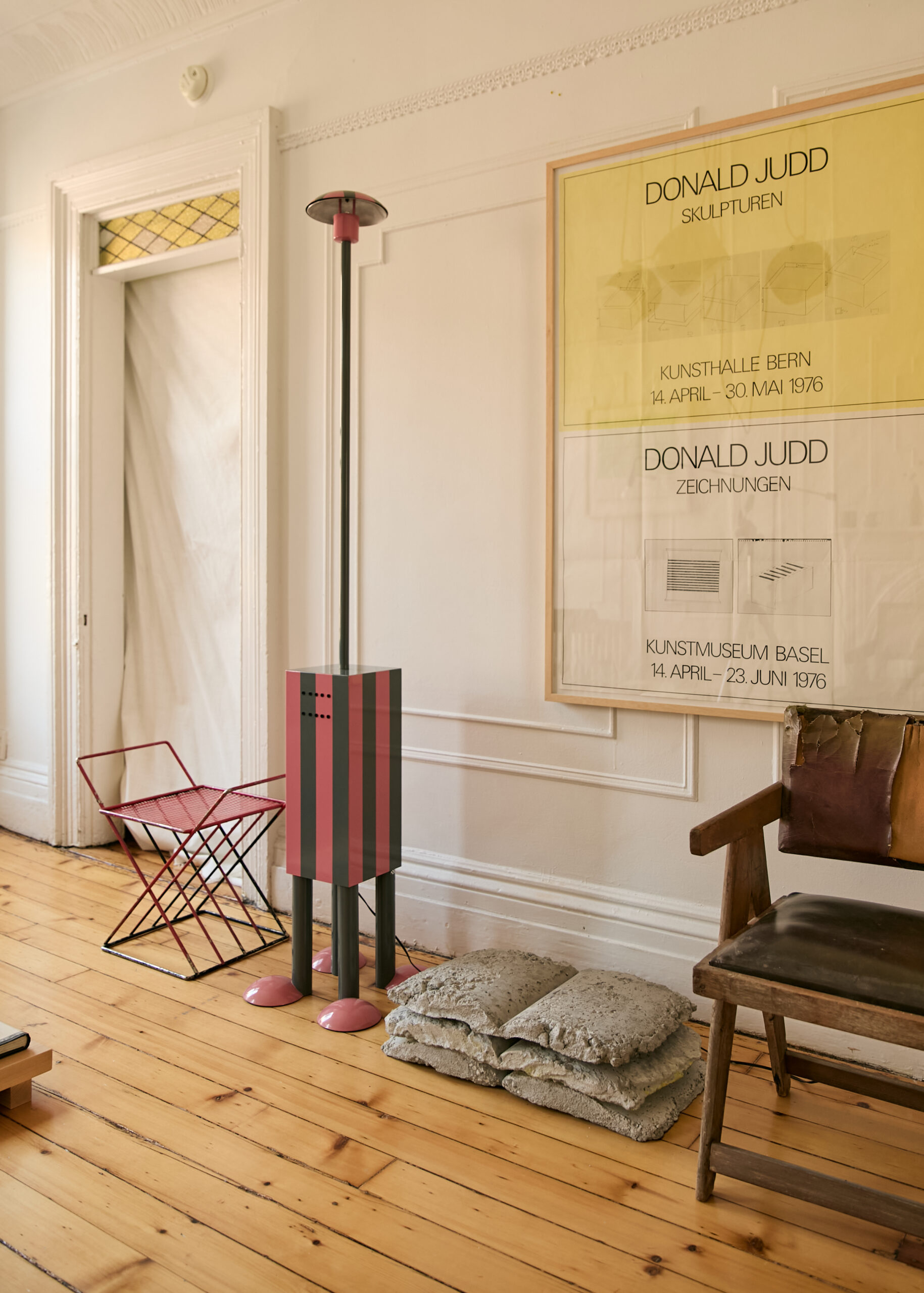
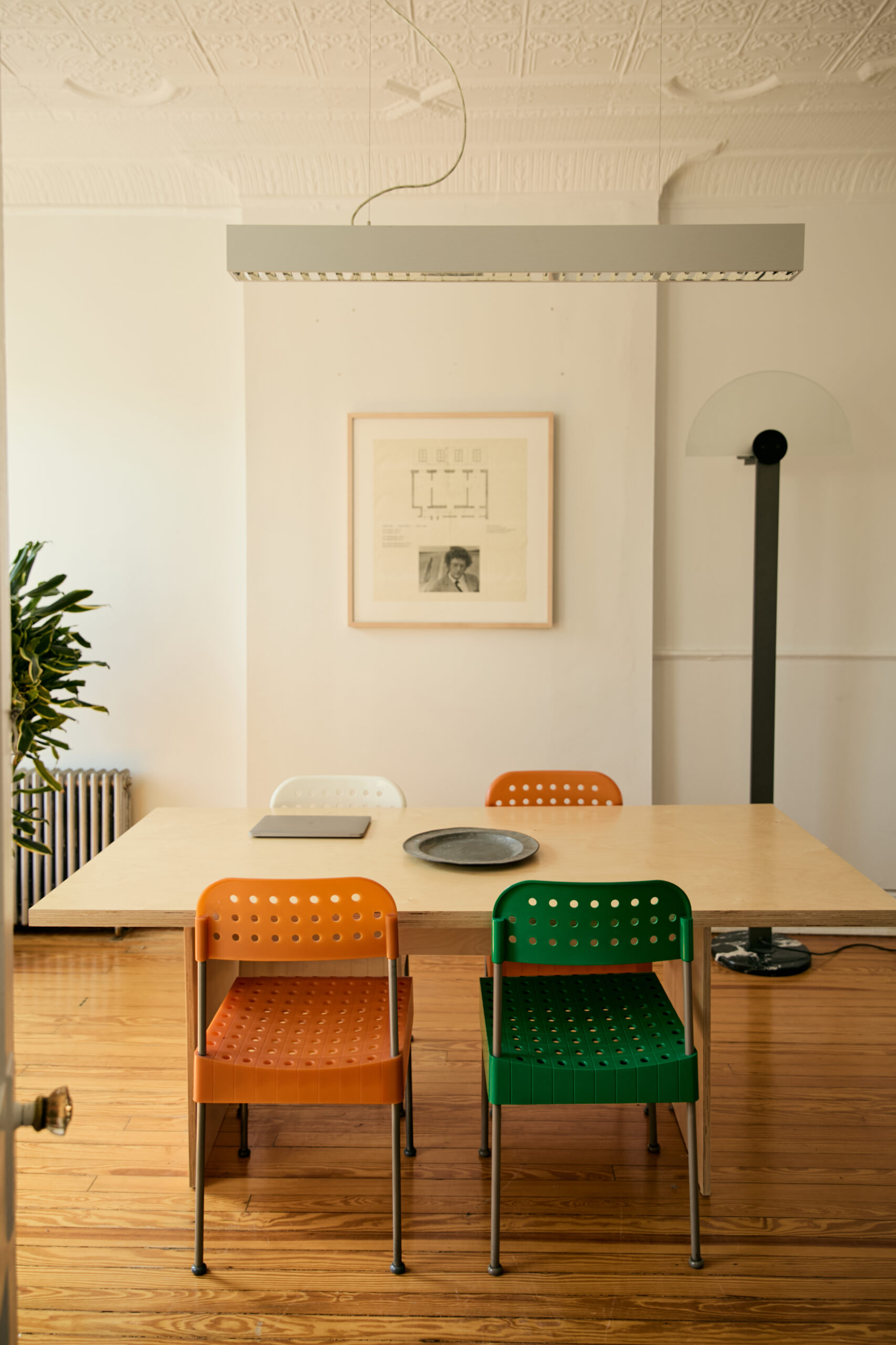
For me, it’s all the same instinct—I just like stuff. I like the act of looking, of finding, of shopping, even if it’s operating at a slightly different level. What draws me in, whether it’s printed matter or design, is the way objects carry meaning. I’m interested in the stories they tell and how they function as cultural signifiers—how they hold associations, and how those associations ripple outward. That’s true whether it’s a piece of paper, a book, or a chair. A lot of the furniture I live with, for instance, is Italian from the 1970s—a moment when designers were actively pushing against traditional forms. Or take pieces from Chandigarh, which carry this utopian, civic ambition in their original context. Even more idiosyncratic designers took radically different approaches to form and function. What connects all of it, for me, is how these objects sit within a broader cultural narrative.
So I don’t really see these as separate streams. It’s one continuous line of interest—across art, furniture, paper—rooted in the same questions about context, meaning, and impact. The only category I’ve had to draw a line around is clothing, purely for self-preservation. I love it, and I do buy vintage, but it scratches the same itch. A band T-shirt or a perfectly cut button-up can carry the same kind of cultural weight. At a certain point, it just becomes about setting limits.
If you could snap your fingers and instantly own the collection of anyone else, who would it be and why?
I’d say either Richard Prince or Glenn O’Brien.
Richard Prince has, from what I can tell, an extraordinary book collection. What’s interesting is the way he approaches collecting almost as an extension of his art practice—very singular, very intentional. That perspective, where collecting itself becomes a kind of authored act, is compelling to me.
Glenn O’Brien is the other. He engaged with culture in a really fluid, embedded way throughout his career, and as a result had access to and relationships with primary sources of art and objects that are pretty remarkable. His collection reflects that kind of proximity to culture—less about accumulation for its own sake, and more about being inside the ecosystem where these things are produced and circulate. So it would be one of those two. And in general, people in this space tend to share a certain obsession—we’re all a bit freakish about it in the same way.
What have been your most surprising finds?
There’s this really wonderful book, Word Rain by Madeline Gins. It’s a very meta object, too—almost like fiction as artwork, with a cover of a book on the cover. I found it in a box of books on the street in Brooklyn Heights, just a pile of whatever. This one book is wrapped in plain white paper, so you can’t even see what it is. I open it, and I’m like, holy shit—it’s Word Rain. I already knew the book because I’d been looking for a second copy, so I clocked it immediately. And then I realize it’s inscribed by her to a friend. That kind of thing just doesn’t really happen.
Then there was this Tegolo screen by designer Giovanni Offredi—this wild Italian room divider. I found it on Craigslist, which is kind of insane given how few of them are out there. I went back and forth with the seller forever, just negotiating, trying to land somewhere that made sense. We eventually got there, but it was hard-won. Still, even finding something like that in the first place, on Craigslist of all places, was surprising.
I also found a copy of Exposures by Andy Warhol that was signed and inscribed to a catering company, I’m pretty sure in lieu of payment. I literally took an Uber out to the middle of nowhere and found this bookstore in a plaza on the side of a highway. So it’s just this weird little artifact of how he operated.
It’s really just about being everywhere and being open to things. I’ll go through a box on the street, I’ll check Craigslist, I’ll go into a store I know is overpriced, because once in a while, something shows up.
Can you tell us your top negotiating tool?
Honestly, I just enjoy interacting with people. That’s a big part of it—it’s fun. Over time, you start to understand who you’re dealing with. Since I’m buying to resell, I try to ground the conversation in the reality of the market—especially the reality of my customer base. My clients tend to be younger and very informed. They’re not buying blindly; they’re researching, comparing, and thinking critically about what something is worth. I have to respond to the actual market. A lot of the job is gently pushing back on inflated expectations—helping people understand that just because something feels rare or special doesn’t automatically make it valuable at any price. The world is full of “one-of-a-kind” objects. So I try to arrive at a number that reflects reality. It really comes down to understanding the seller’s position and responding accordingly.
Do you see collecting as an extension of skills you’ve honed in your professional life, or something entirely new?
In the beginning, I kept the two pretty siloed. I don’t know why, but it just didn’t make sense for them to merge. There’s actually a huge amount of crossover with the work I do as a strategist. With brands, I’m essentially helping them choose one direction over another, then justify that direction—helping them understand where they fit in culture and the vocabulary to communicate that. With so much of my collecting, I’m communicating the cultural relevance of these things and why they’re important, whether it’s the career of an artist or within a cultural context, then convincing people to give me money for it. So at its core, it’s not that different. It’s placing them in context, framing them within culture, and justifying certain directions to move in. I also try to be sure that what I’m dealing in feels culturally relevant, or has the potential to remain relevant over time.
Which works in your home have you spent the most time returning to?
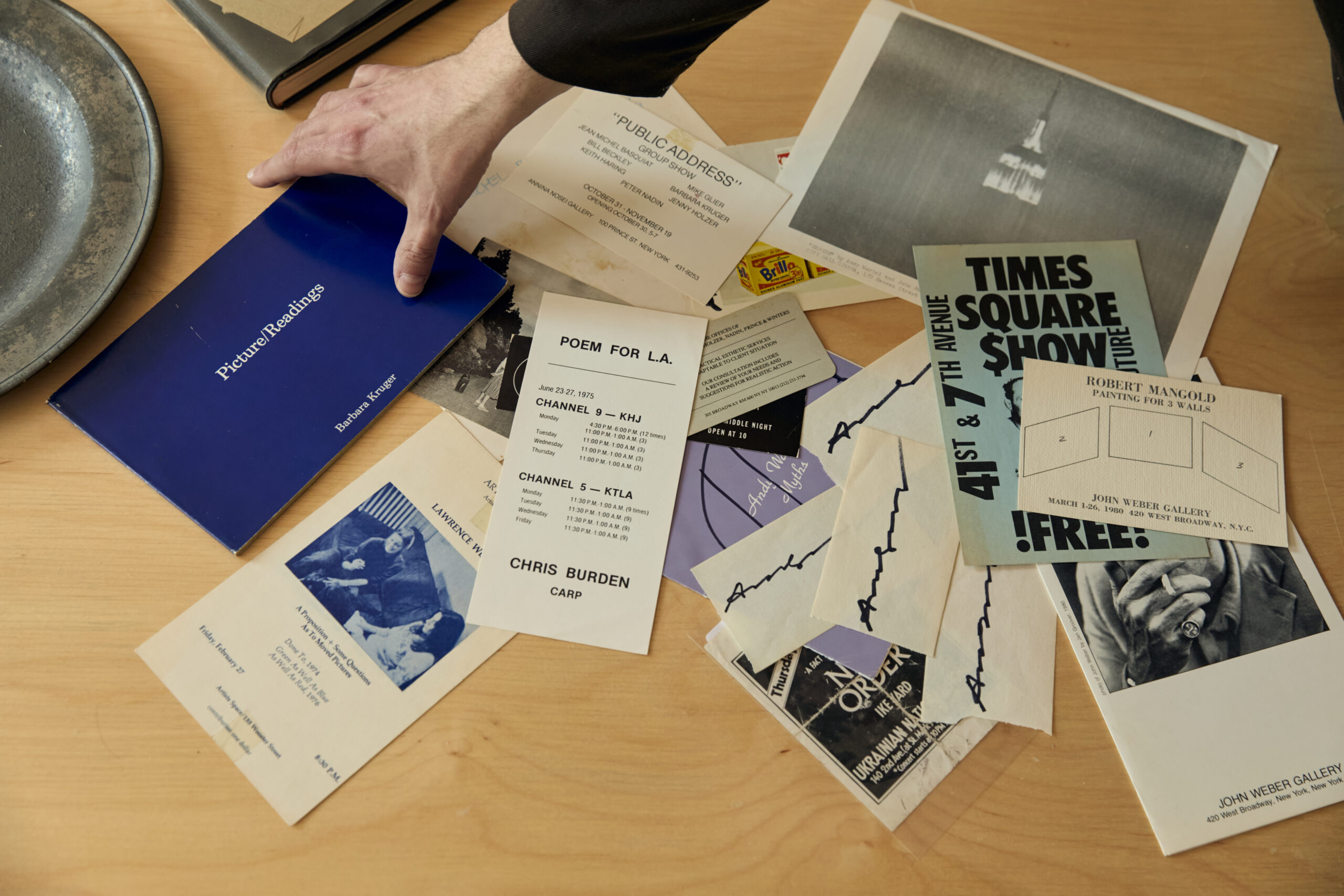
On the design side, it’s a Pierre Jeanneret sewing stool. It’s maybe a little cliché at this point—but I don’t really care. The sewing stool specifically just does it for me. It has this very clean, almost Judd-like geometry, but it’s a little softer, a little more human. And the patina is incredible—you really feel its life. On the paper side, one of my favorite things is a business card from The Offices, the short-lived collective that included Richard Prince and Jenny Holzer, along with a few others. They were essentially operating as a creative agency, but applying an art-world sensibility to commercial problems. I have a few things from that group, but the card is perfect—it’s so deadpan, so funny, just totally straight in tone but conceptually sharp. One line reads, “We’re sorry we missed your call, we were on an extended vacation,” and then just drops into their tagline. It’s such a concise example of how those practices overlapped at that moment in the ’80s. Super short-lived, very specific, and just kind of brilliant.
Is there a book that changed how you think about collecting?
Early on, it was a I Want to Spend the Rest of My Life Everywhere, with Everyone, One to One, Always, Forever, Now by Damien Hirst. I asked for it for Christmas when I was a teenager, and I remember being completely blown away by it. It’s huge, really heavy, and it doesn’t just document the work—it feels like an artwork itself. You open it and it’s almost interactive in moments. At that age, it kind of flipped a switch for me. I realized you could own something that felt like art— something substantial, something real—without it being completely inaccessible. It wasn’t just reproductions in a magazine; it had presence. It made collecting feel tangible, like there was an actual entry point into it.



 in your life?