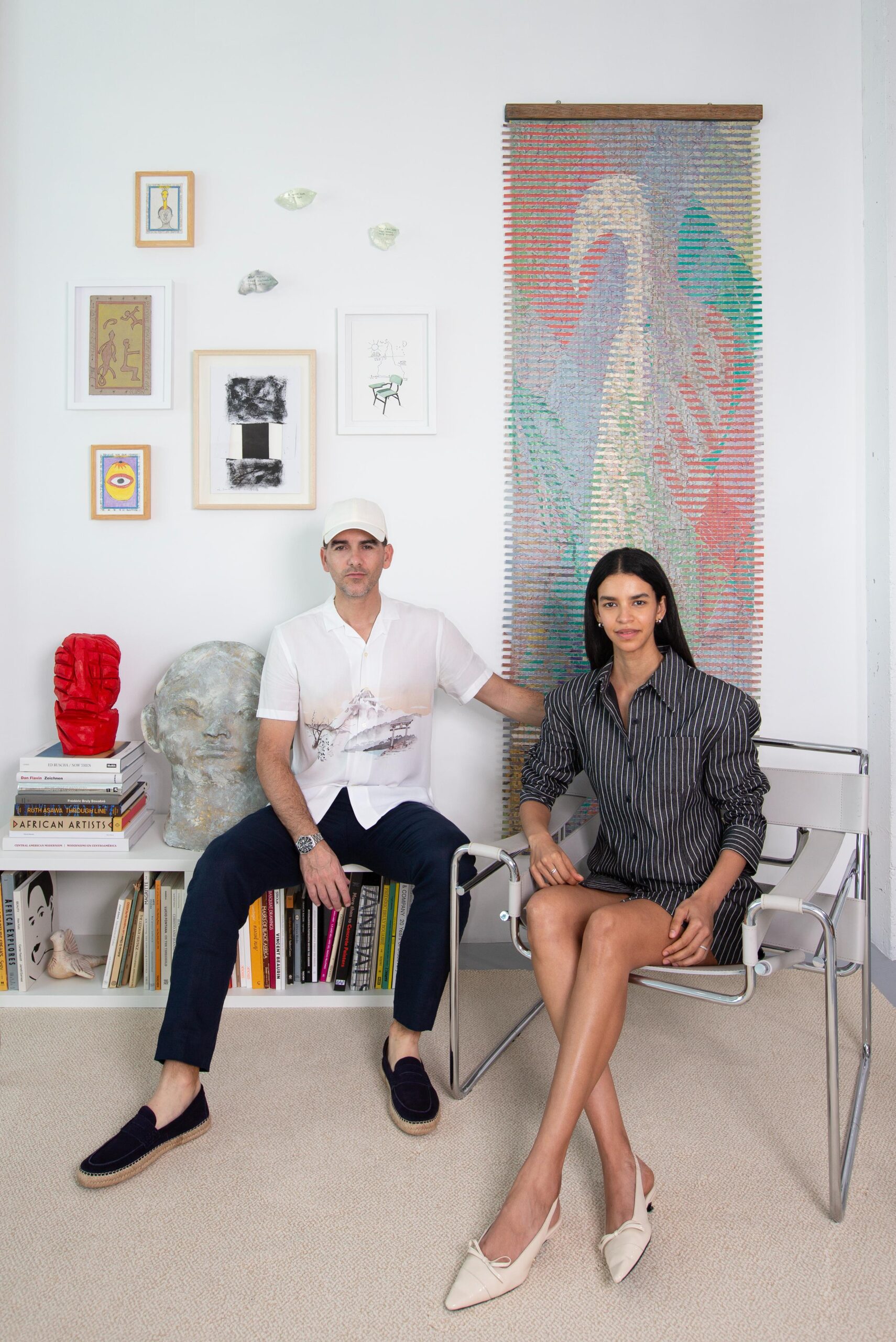
For Miami-based couple Javier Martin and Austria Ulloa, the story behind each work in their collection is all-too-easy to conjure—a studio visit in Tokyo, a late-night gallery stumble, a friend’s off-hand recommendation that turned into a life-changing discovery. Under the umbrella of the 404 Art Collection, the couple offers a variety of outward-facing services, including consulting, educational programs, and curatorial planning. But the collection itself is just as diverse, spanning from mid-20th century Ivorian artist Frédéric Bruly Bouabré’s drawings (which they’re donating to the Boca Raton Museum of Art for an upcoming show) to Indianapolis-born contemporary artist Ryan Schneider’s sculptures.
Pieces by emerging talents like Augusta Lecaros and Lucas Pereira Elias hang alongside historic heavyweights at the couple’s home, creating an eclectic mix that stands out against the crisp, white walls the artist-model duo leave as a minimal backdrop for their curation. Here, the collectors sit down to discuss the varied levers of their acquisition machine, and how two sets of eyes can be far better than one when it comes to spotting the hidden gem.
Where does the story of your collection begin?
Austria Ulloa: Our collection began as a shared passion that naturally evolved into a mission, turning into 404 Art Collection. Both of us have always been closely connected to the art world through our respective fields, so collecting became an authentic extension of how we live. Every piece we acquire is tied to an experience, a place, or a moment from our journeys. During our travels, we make it a priority to visit artists’ studios, support emerging voices, and study the approaches of different institutions.
We also value the insights and recommendations of our friends; their perspectives often lead us to unexpected discoveries. Each encounter, each conversation, has expanded the collection and also deepened the way we see the world. We’re especially drawn to preserving art history, championing works that hold historical significance or have been overlooked, and giving them visibility within a contemporary context.
How would you describe the spirit that connects the works you live with?
Ulloa: It comes from the convergence of our worlds and experiences. Javier, who is from a Spanish city in North Africa, and I, from the Dominican Republic, both share lives shaped by movement across cultures, continents, and histories. Having lived in different parts of the world from a young age, including Asia, we instinctively look for echoes between places and stories. Our collection reflects that sense of continuity and conversation: it brings together where we come from and the traces of everywhere we’ve been.
Which piece tends to provoke the most conversation from guests or visitors?
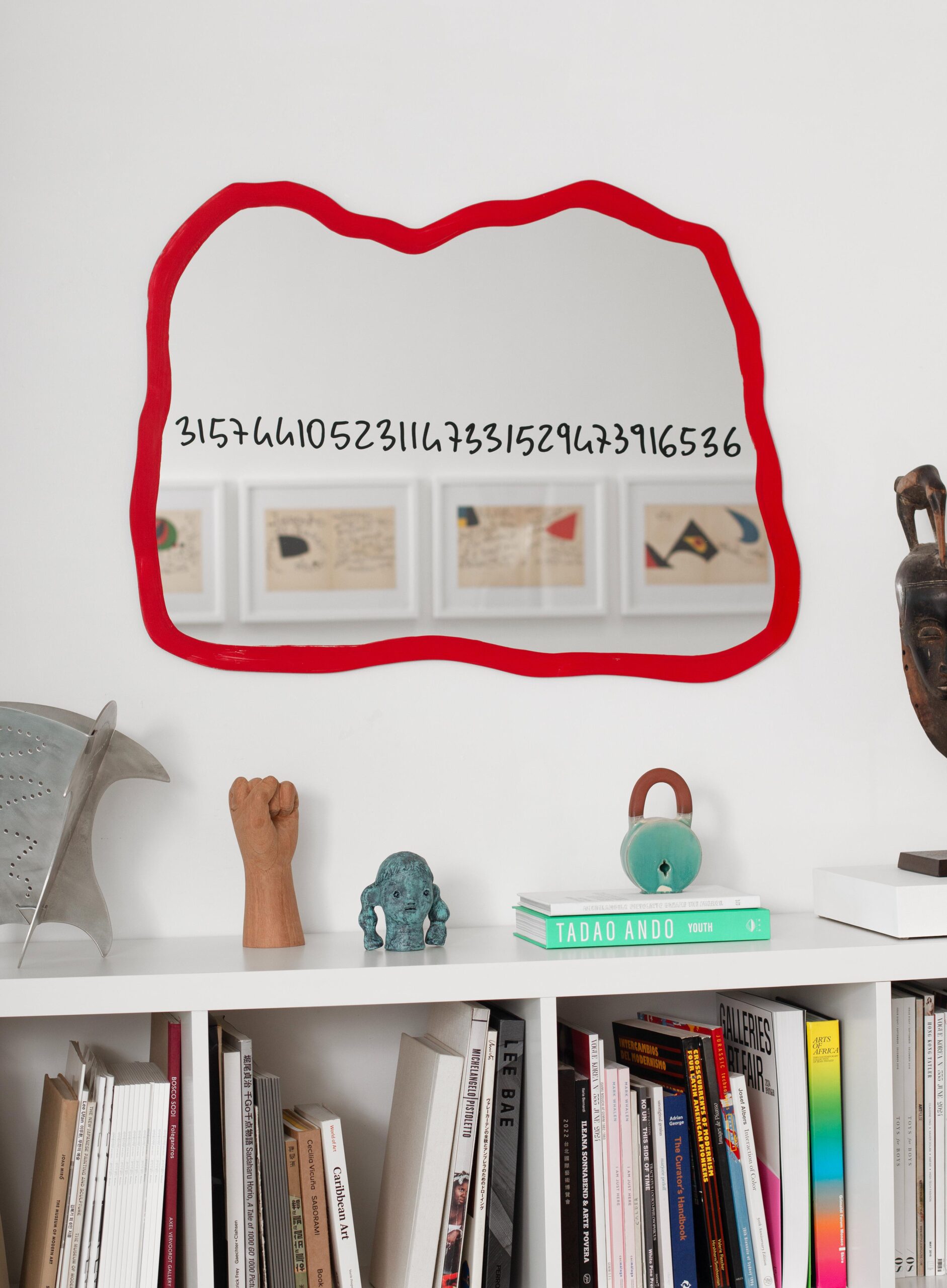
Ulloa: A rare figurative painting by the Japanese artist Waichi Tsutaka from 1984, better known as an abstract painter who appeared in MoMA’s “New Japanese Painting and Sculpture” exhibition. The face in the painting is gently, subtly scratched, which turns the work into a quiet enigma of identity and presence. That subtle disruption is what usually draws people in, opening up deeper conversations about visibility, memory, and questions around identity.
How do you discover new artists or bodies of work that speak to you?
Ulloa: Discovering new artists for us always starts with people. We value direct conversations with artists and the relationships we build with certain galleries and institutions that really care about the dialogue with collectors. We appreciate being close to their programs and curatorial thinking. We also organize trips centered around discovering new artists, where we visit studios, get to see works in person, and learn about new practices.
How has your eye or approach to collecting evolved over the years?
Ulloa: Over the years, our approach to collecting has become more intentional and research-driven. We’re deeply drawn to different art movements, Arte Povera, for instance, with Michelangelo Pistoletto among our favorites, which often serve as starting points for new explorations. Each time we learn more about a movement or bring a new work into the collection, it opens our eyes in a new way and naturally leads us from one discovery to the next.
In the beginning, we collected smaller works, often finding them at art fairs and galleries during our travels. Over time, our focus has shifted toward pieces that bring a new concept or dimension to our home. We’ve started incorporating more sculptural works, like our piece by Ryan Schneider, which adds a strong physical presence and deepens the dialogue within the collection.
If you could instantly own the collection of anyone else, whose would it be—and why?
Ulloa: The Herbert and Dorothy Vogel Collection. Their story embodies everything we value: passion, sincerity, and a belief in supporting artists for the right reasons. They built their collection slowly, with curiosity and integrity, driven by genuine connection and understanding. That approach, collecting with heart, resonates with us.
How does collecting intersect with your work? Do the same sensibilities apply?
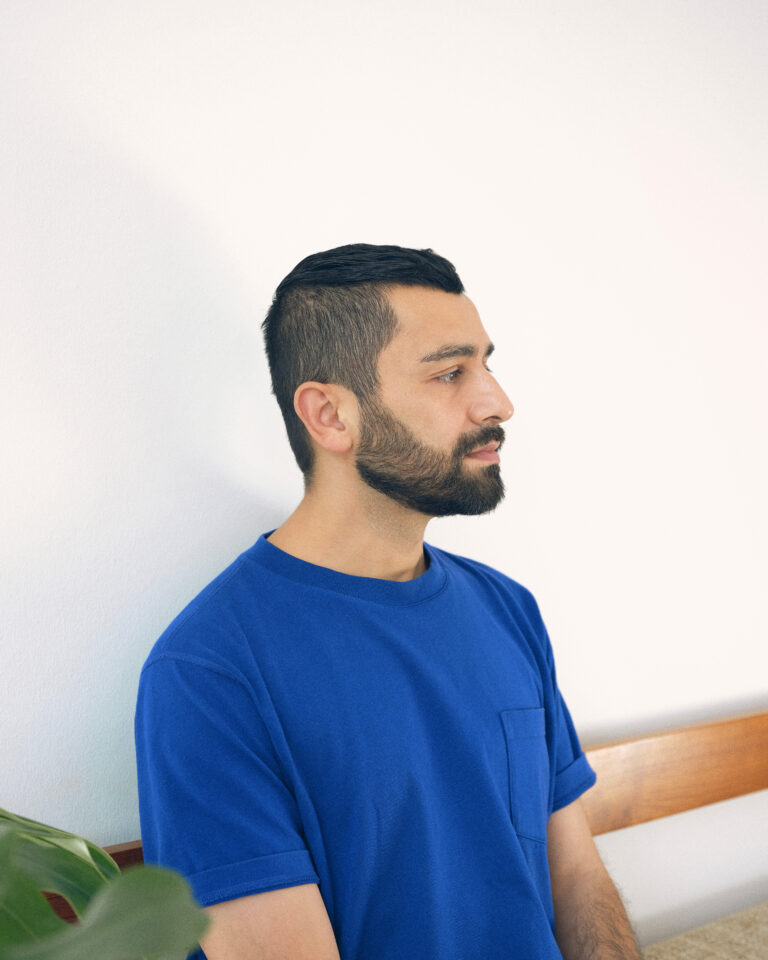
Javier Martin: I have been a contemporary artist for the past 20 years, and my understanding of materials, process, and artistic intent deeply informs how we approach the works we acquire.
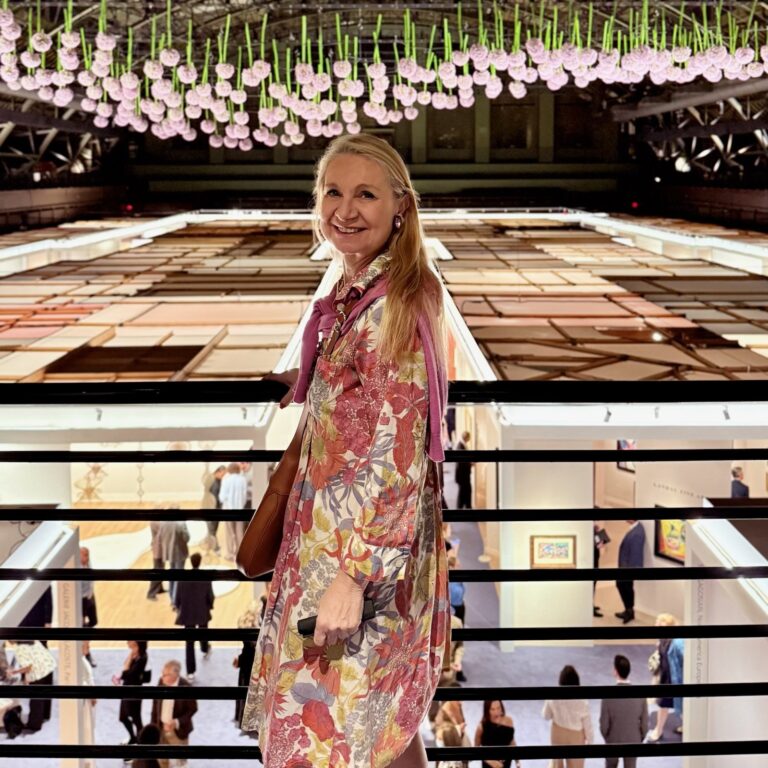
Ulloa: I began my career in the fashion world and have more recently become an art curator, bringing a strong sense of composition and storytelling to the way we look at art. The same sensibilities that guide our work also shape the collection: attention to detail, curiosity, and a genuine appreciation for the arts.
What’s the most unexpected or serendipitous experience you’ve had acquiring a piece?
Ulloa: Once, during an afternoon in a small gallery, we saw a ceramics installation on a table, which we thought wasn’t for sale, but the moment we saw the piece, Keyless by Elsa Mora, it held something magnetic. After an honest conversation about what the work meant to the artist and to us, it somehow became part of our story. It still feels like it chose us, not the other way around.
Tell us something about your collection that might surprise people.
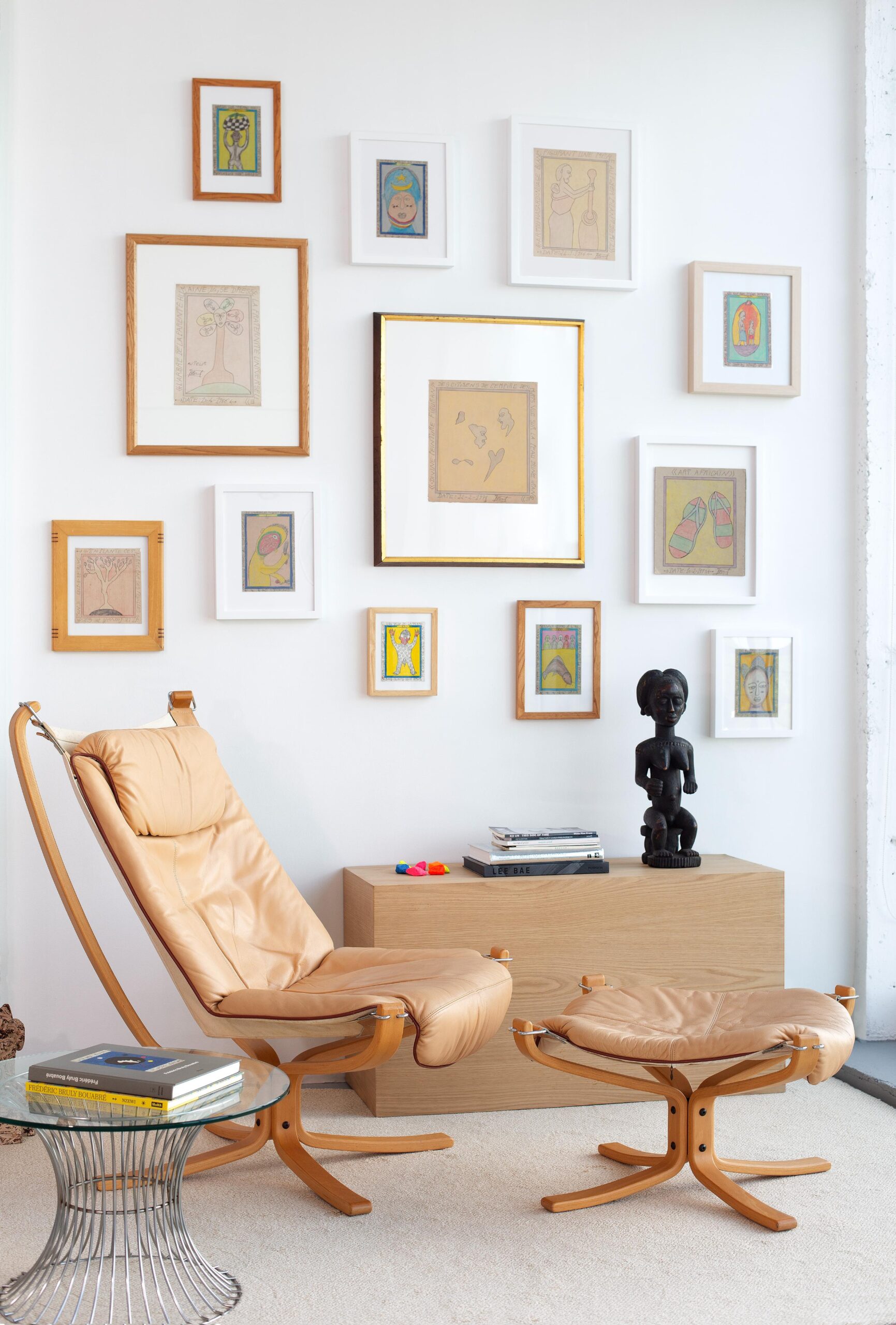
Ulloa: Something that often surprises people is how deeply our collection is connected to the work of Frédéric Bruly Bouabré. The moment we first encountered his drawings, we both felt an instinctive pull that we couldn’t fully put into words, but we knew we wanted to help preserve his vision. We loved the work so much that we continued acquiring pieces from different periods of his practice, and today we hold one of the largest collections of his work in the U.S., with over 300 pieces.
We’ve become very involved as patrons of the Boca Raton Museum of Art over the last two years. We’ll be donating a suite of works to the museum that will be included in their upcoming exhibition curated by Dr. Ross Karlan, our dear friend, colleague, and the museum’s curator-at-large. The show is an amazing opportunity to highlight some of Bouabré’s works in our collection and share our love for his work with the South Florida community.
Which emerging artists are you most excited about right now?
Ulloa: There are a few emerging artists we’re really excited about right now. Augusta Lecaros, who won the MAVI UC Young Art Award at the Museum of Visual Arts of Chile, is one of them. We’re looking forward to seeing how her practice continues to develop. Samuel Sarmiento is an artist we’ve been following for some time, and it was meaningful to see his work at Art Basel Miami Beach. We are also eager to follow the path of a young Brazilian artist, Lucas Pereira Elias, who’s just getting started internationally.
What book (or other media) changed the way you think about art?
Ulloa: One book that genuinely changed the way we think about art is The Shape of Time by George Kubler. It opened up a way of seeing artworks not as isolated objects, but as part of long chains of ideas, forms, and problems that artists respond to across generations. It made us more attentive to connections between works, to how an artist is in dialogue with both past and future, and to the idea that a collection can trace those hidden continuities rather than just assemble individual pieces.
Do you have an art-fair or museum-going uniform?
Ulloa: We don’t have a strict uniform, but we do tend to gravitate toward a similar mood: neutral tones, clean lines, and always comfortable shoes. Art fairs can be so overstimulating that I shy away from overpowering looks (even though they are really fun), and I usually carry a notebook; it’s my tool for really seeing.
Martin: I like to blend in quietly and focus on observing, so I keep it simple, and there’s almost always a camera in my hand; for me, documenting everything is fundamental.
More of our favorite stories from CULTURED
Our Critic’s Favorite Show This Month Is Hidden in a Subway Station
James Cahill Saw the Best and Worst of the Art World. His Latest Novel Exposes It All.
If We’re in the Golden Age of Documentaries, Why Are All These Documentarians So Worried?
Sign up for our newsletter here to get these stories direct to your inbox.


 in your life?