
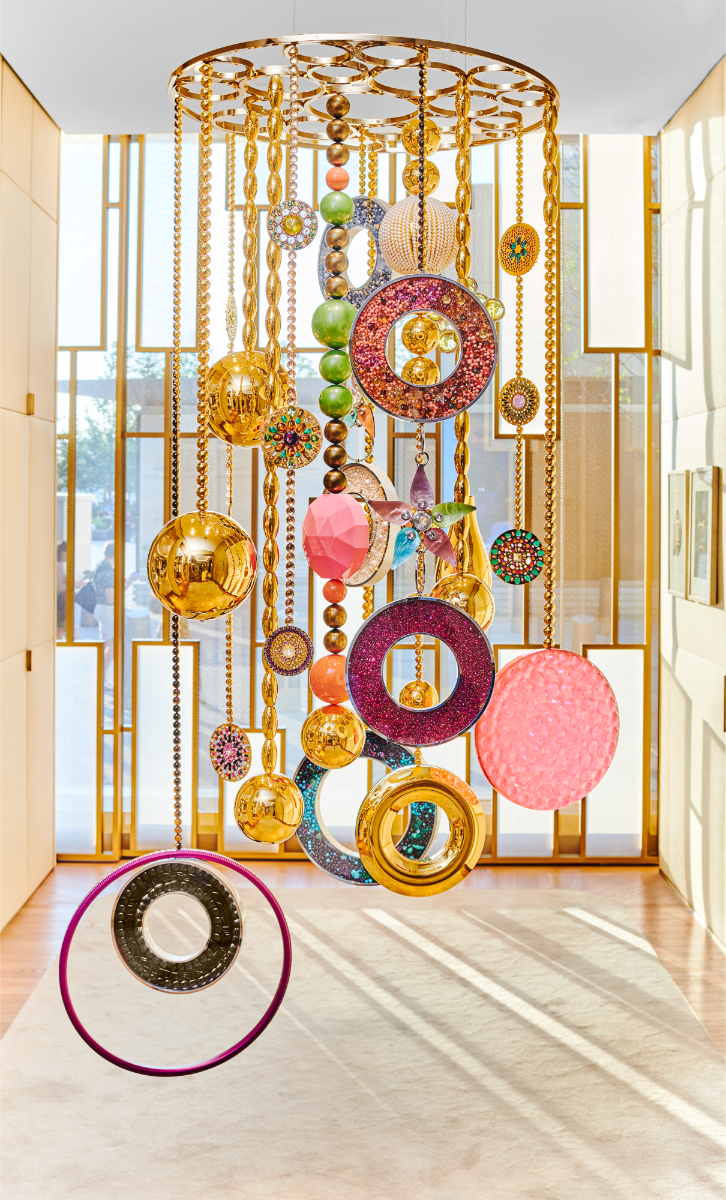
As if peering through a looking glass into the ocean, Beatriz Milhazes‘s bejeweled sculpture appears like a school of shimmering fish. The suspended sculpture—aptly titled Aquarium—glimmers as it sways, each strand of precious Cartier stones catching light like scales beneath water. The work translates the Brazilian artist’s unmistakable visual language into three dimensions: a field of color and ornament that moves freely rather than remaining fixed on canvas.
Milhazes, born in Rio de Janeiro in 1960, is widely recognized for her vivid paintings, punctuated with orbiting bursts of color and floral shapes. Over the past few decades, she has become one of Brazil’s most celebrated artists, with exhibitions worldwide, from the Venice Biennale (2003 & 2024) to the Guggenheim in New York (2025), featuring her dense, rhythmic compositions.
For Aquarium, Milhazes partnered with Cartier, as part of the brand’s Artist meets Artisan project, to craft a sculpture from unused precious, semi-precious, and ornamental stones. The work, first realized in 2010 as part of the second edition of Artist meets Artisan, transforms jewels—from diamonds to Akoya pearls and black jade—into a hanging composition that echoes the layered circles of her paintings. The work will be installed in Cartier’s Boston boutique at 28 Newbury Street on March 25 and reveals another dimension of Milhazes’s practice: one where color, movement, and craftsmanship converge to dance in space. Ahead of the occasion, we caught up with the artist.
Can you tell us about the inception of this piece?
The departure point was an invitation from Hervé Chandès, the Director of the Fondation Cartier pour l’art contemporain from 1994 to 2023, for a project called Artist meets Artisan that was about a close collaboration with Cartier’s artisans.
Every stage of development was a really fascinating learning process alongside the highest level of professionals who were very generous and engaged in the project. I was given access to all their files of information, including a variety of techniques and possible materials within the large field of jewelry design and development. And of course, the encounter with such a sophisticated group of artisans. That was very unique! Definitely an unforgettable experience that I will keep forever in my heart.
Can you speak a little bit about the materiality of this piece and how you went about translating your signature motifs through new mediums?
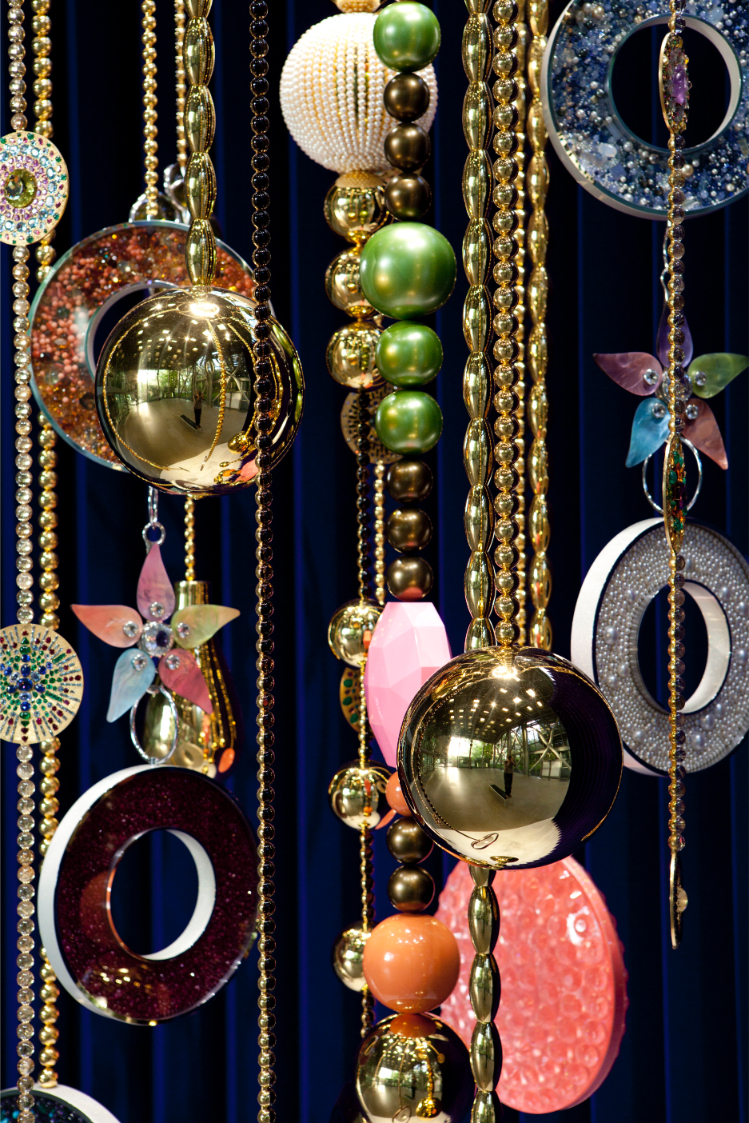
The concept was about working with Cartier’s treasures like precious stones, pearls, crystals—an amazing wealth of materials not used in their earlier design collections—as well as metals like gold and some high-end varieties of resins, etc.
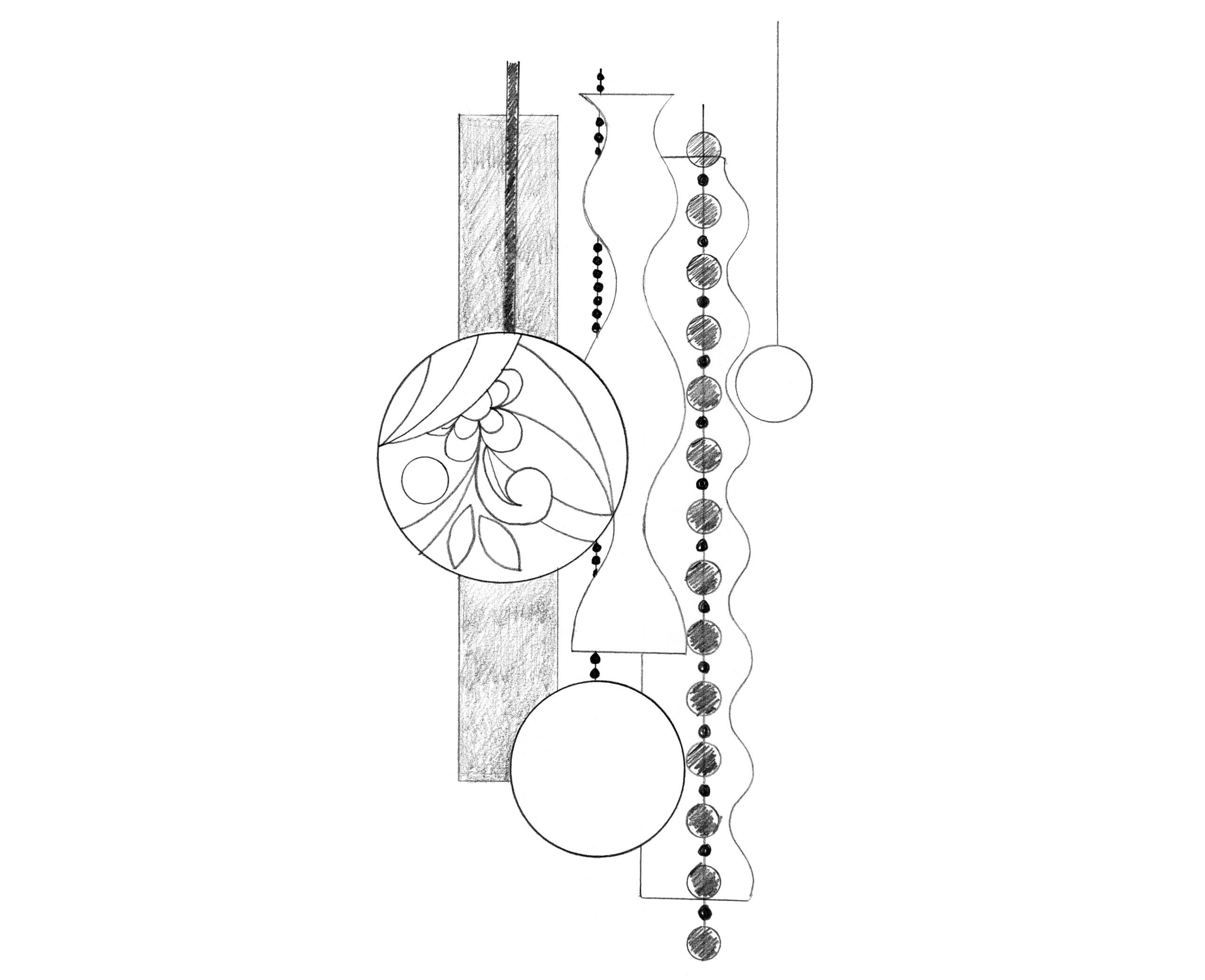
The applied arts have always played an important role as a reference for how I develop my paintings, and jewelry design is a part of that. My initial drawing was based on the idea of a mobile, where some of my signature elements would be hanging from a disc in different positions, weights, balances, shapes etc.…so in this way some of my paintings’ motifs were translated into a 3D world.
It was a very challenging project that, apart from the artistic decisions that I had to make, required a profound technical knowledge and ability to create viable solutions provided by Cartier’s excellent team.
How has your relationship to sculpture evolved since you first received this commission and eventually realized the piece?
Everything started with the set designs I do for my sister’s dance company, Marcia Milhazes Dance Company. In 2004, my design for the stage was a kind of mobile hanging in the center of the ceiling above all the dancers. This performance, titled Tempo de Verão (Summertime) opened up new possibilities for my studio practice. This piece, developed for the stage, also had strong references to my motifs and color rhythms including a dialogue with Carnival props and craft objects.
Later, in 2008, it was transformed into my first sculpture piece, Gamboa, a mobile that occupied the space, changing format, size, and intensity according to the venue where it was installed. Gamboa is related to Aquarium, although it is a totally different visual and conceptual experience with a different result, but both magical!
What are your associations with mobiles? Who were your influences for the project?
Making sculptures is more than a challenge. It is about opening new doors of development for my practice and creative process. Mobiles hold elements that are free in space yet respect their autonomy. They are lyrical, musical, and construct a “nomadic space” that changes with the movement of the gaze. Mobiles are also about architecture, which I increasingly want to explore as an artist.
More of our favorite stories from CULTURED
Our Critic’s Favorite Show This Month Is Hidden in a Subway Station
James Cahill Saw the Best and Worst of the Art World. His Latest Novel Exposes It All.
If We’re in the Golden Age of Documentaries, Why Are All These Documentarians So Worried?
Sign up for our newsletter here to get these stories direct to your inbox.



 in your life?