When Marcia Tucker founded the New Museum in 1977, the city of New York was barely emerging from bankruptcy. Music bolstered the weary metropolis—that year alone saw the birth of hip-hop during an infamous 25-hour summer blackout, the opening of Studio 54, and the golden age of punk. Art too was changing. Artists who’d lived in lofts since the 1950s and ’60s saw a gallery scene emerge around them in Soho, Jean-Michel Basquiat’s SAMO tag began to crop up across Manhattan, and the Heresies Collective and A.I.R. Gallery injected feminist critique and concerns into a still all too male-centric ecosystem. The New Museum arrived onto the scene as quite the novelty—it was the first contemporary art institution to open in New York since WWII and a distinctly downtown one at that.
In the almost five decades since, the museum has continued to serve as a counterweight to its loftier Uptown peers, giving both early exposure and historical resonance to an ever-morphing avant-garde. The institution settled into a permanent home in 2007, its SANAA-designed tower like a futuristic ship anchored on the Bowery. On March 21, the New Museum will re-open with double the footprint: a 60,000-square-foot expansion courtesy of OMA has shot up next door.
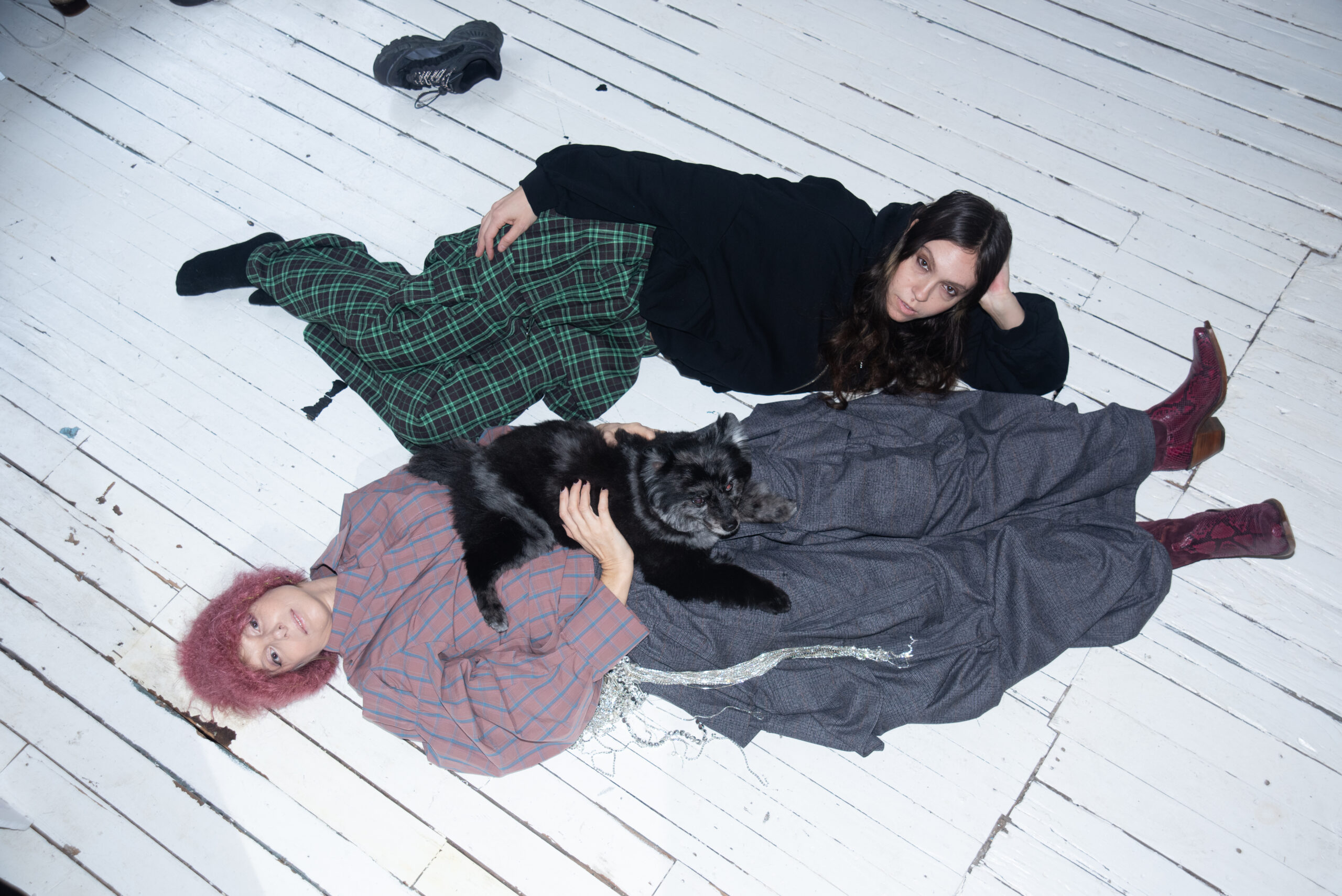
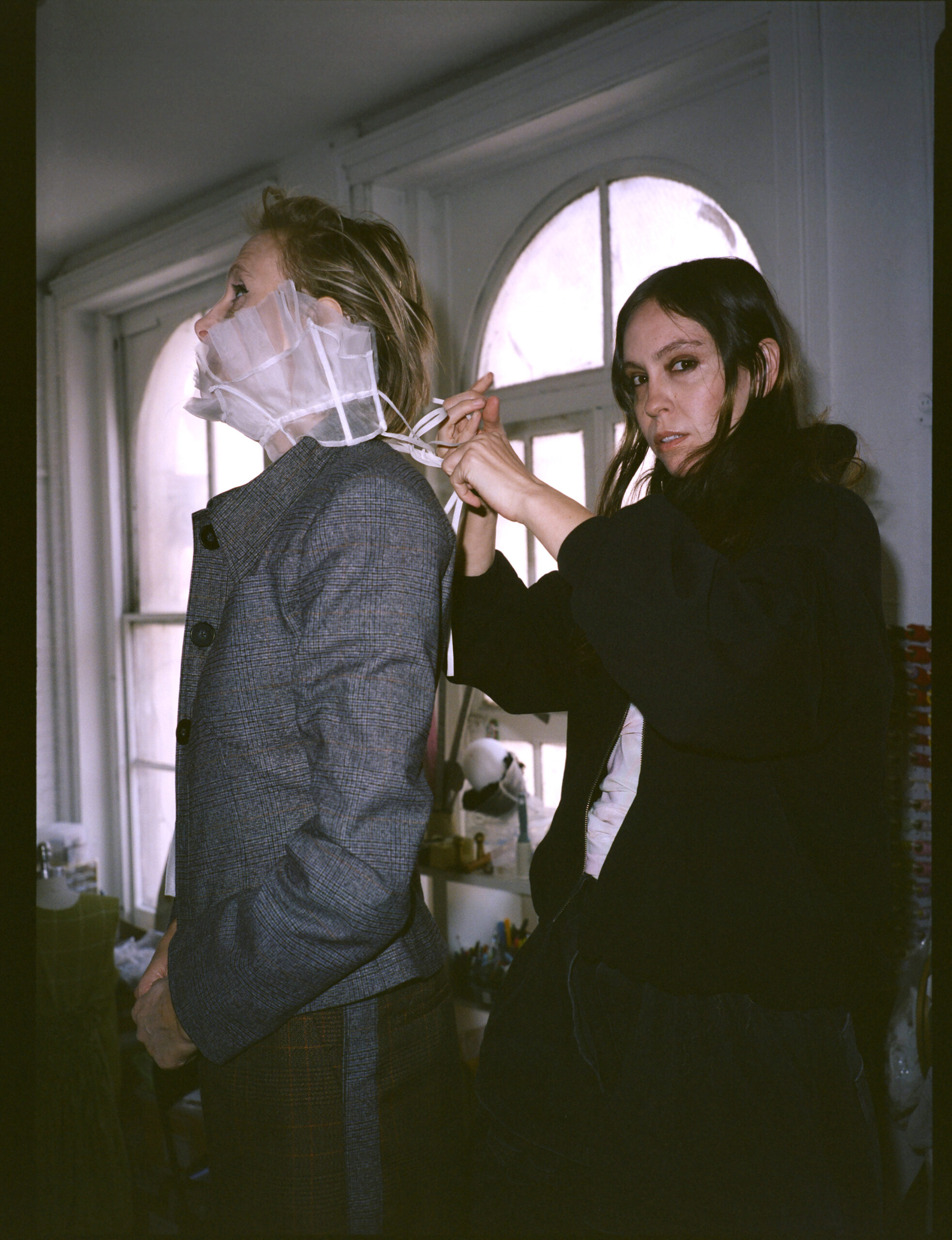
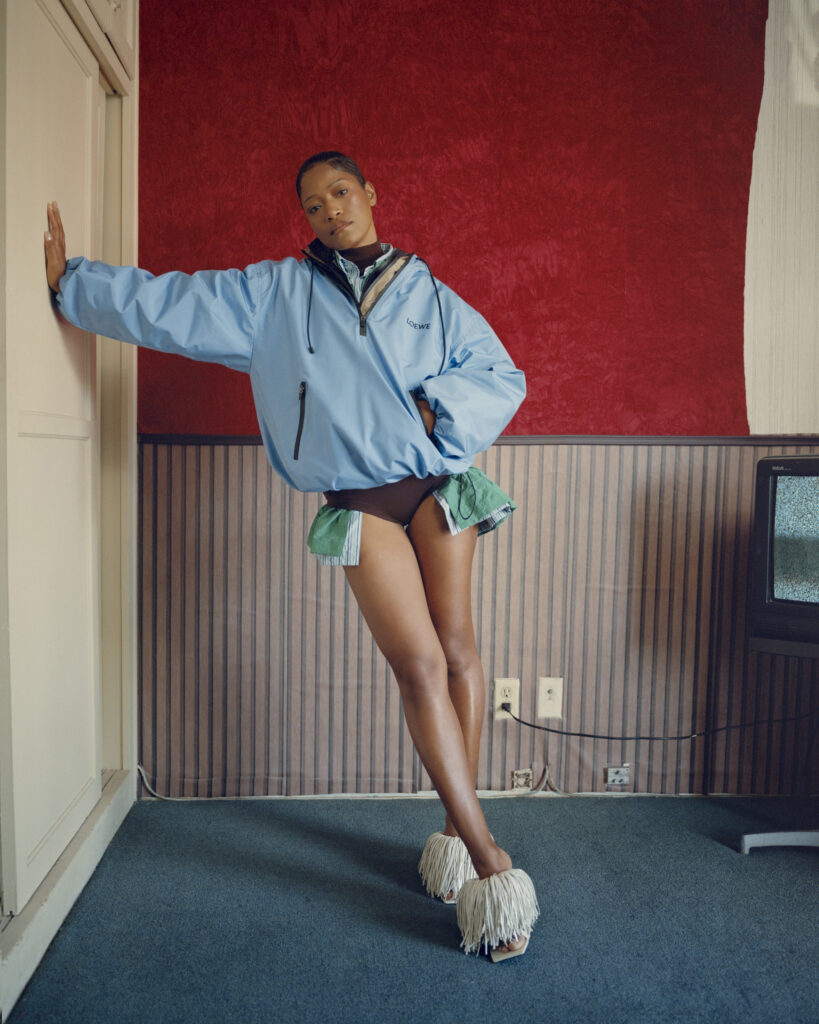
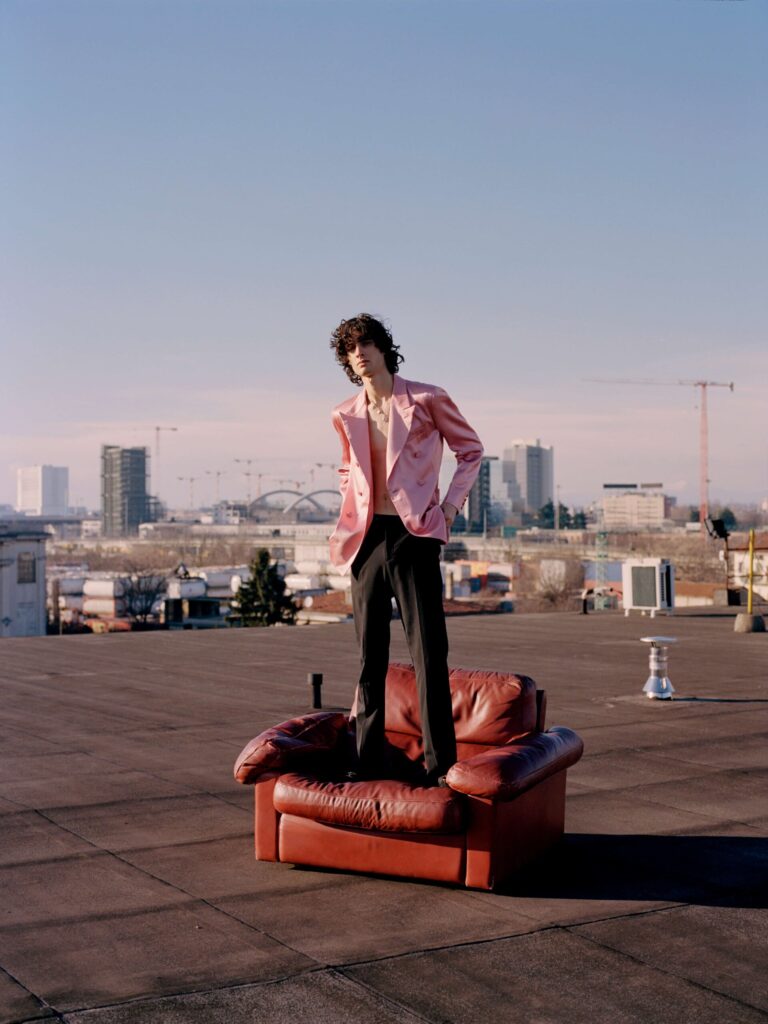
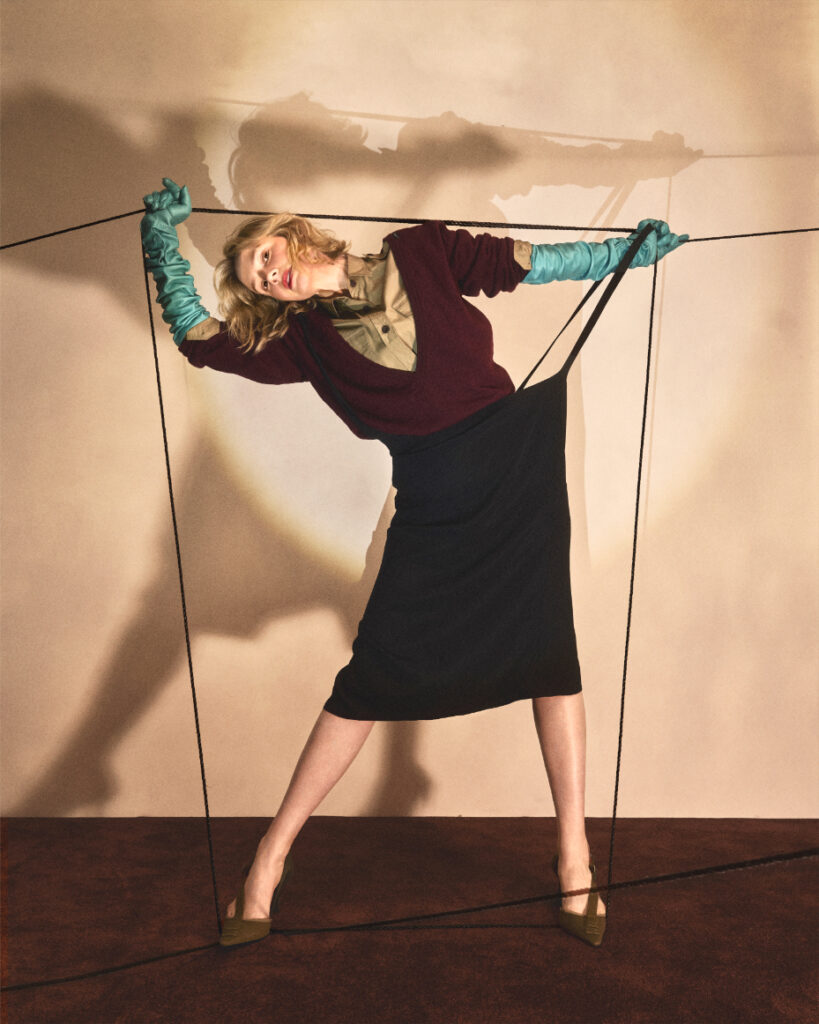
To mark the occasion, we paired three artists featured in “New Humans: Memories of the Future”—the first exhibition to unfurl over the entirety of the new New Museum and the latest in a history of choral group shows that act like temperature checks on the time (this one grapples with the living legacy of technological change)—with three members of another industry that’s indissociable from downtown New York: fashion. Over the last few weeks, independent designers Hillary Taymour of Collina Strada, Claire Sullivan of Miss Claire Sullivan, and Zoe Gustavia Anna Whalen welcomed Camille Henrot, Ivana Bašić, and Cato Ouyang into their studios for a fitting. The freewheeling conversations that followed zigzag from eulogies to bygone downtown eras to the city’s affordability crisis, becoming intimate referendums on what making a life—and a living—as a creative in New York looks like in 2026.
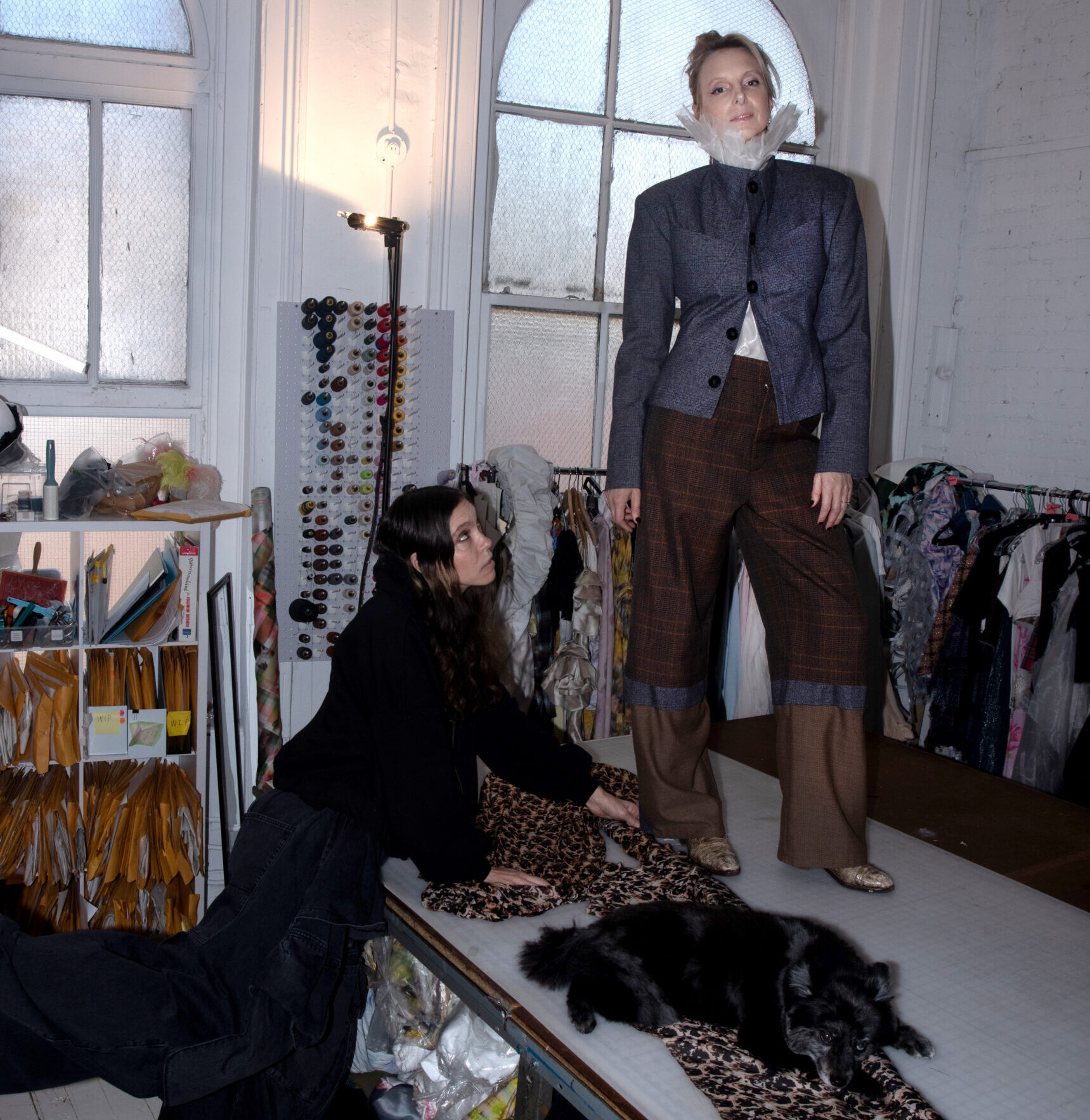
Below, Hillary Taymour, who founded Collina Strada in 2008 and has molded the brand into an irreverent and evolving experiment in sustainability, meets Camille Henrot, a multi-disciplinary artist whose interventions across sculpture, film, and soon performance playfully but poignantly interrogate our relationships to each other and the planet. Her film In the Veins, premiering in “New Humans,” centers on the experience of parenting children in a time of climate apocalypse. Henrot’s first play, Commedia dell’Arte, will premiere at the Aspen Art Museum’s AIR Festival this summer. It uses anthropomorphic animals to unravel the trials and tribulations of paying rent in New York.
What are your New York origin stories?
Camille Henrot: Mine’s a bit of a dramatic story. In 2011, I was in Japan during the big magnitude 9.0 earthquake for a conference. It was at that moment I thought, Wait, I can’t die because I want to live in New York; I want to have children; I want to show that I care about all these things, but I haven’t achieved them.
I decided to rent out my apartment and find a place in New York. I found a very small apartment in the East Village; I wanted to be in Manhattan, to be in the heart of things. I met Massimiliano Gioni, and during my fellowship at the Smithsonian Institution, he invited me to produce work for the Venice Biennale, which became my work Grosse Fatigue, 2013. I received much more interest for my work than I got in Paris, or France in general. I felt very welcomed by the art community.
Hillary Taymour: I was living a little outside of Los Angeles when I started making handbags. My goal was to be a designer, but you couldn’t really achieve that there. So in 2010 I moved to New York and became a fashion designer here. Like you Camille, I moved into this tiny Lower East Side studio apartment. But I thought, I can’t fit in here. My clothes can’t fit here. So, I moved to Williamsburg. I’ve only ever lived in three apartments in the city. Since 2013, I’ve been living in the same apartment in Hooper Grove on South 2nd Street.
What’s something you’d love to tell yourself back then?
Henrot: “Calm down, you’re going to make it.” I would also say, “Sleep!”
Taymour: To not design for what she thinks people want to see but for herself.
What did downtown New York mean to you at the time? How has your relationship to it changed?
Henrot: I was partying a lot when I was young. The film Party Girl really captures the spirit of that time, even though it was shot way before I arrived in New York. It was funny to me because she loves going out, but she’s a nerdy librarian during the day. She is into books and systems during the day but is really messy at night. I could really relate to the intensity of this character. If I had grown up in New York, I would’ve 100 percent been like her.
Anyways, I moved to the Lower East Side from the East Village very quickly because my first apartment was just too small. The LES was really miraculous. I was in front of Seward Park. Even just going to get coffee, I met so many people that I became really close friends with. The artist Elizabeth Jaeger was my direct neighbor. There were other art people in the neighborhood too. Like Eliza Ryan, for example, who is a curator at large at the Aspen Museum. And Josh Kline and DIS Collective was around the corner.
Then during Covid, I was sort of violently removed from New York. I couldn’t stay in the U.S. because my visa was expiring and the government offices were closing down. Then, financial problems made things more difficult. My gallery Metro Pictures closed as well. Since returning, I’ve lived on the Upper West Side, which is so morally, ethically, fashionably, and geographically the opposite of where I used to be. But you know what? I like the UWS’s spirit, the proximity to the river. The big houses and all my windows face the park and the river. My neighbors are all psychiatrists, writers, and poets. There’s even a sex therapist. Most of my friends here are over 75 [laughs], but I really, really love it.
The Lower East Side is truly my youth, but somehow I don’t have that much nostalgia for it because it has changed a lot. It’s more luxurious, less punk and grunge. What I miss is just being able to see my friends without any plans.
Taymour: For me, downtown New York was just the coolest place to live in the world. I remember, I would have my friends just buzz my apartment and be like, Come on, we’re going here. No one would even text or call you, just buzz. It was a completely different life. You could do fucking everything.
Like you, I was also such a party girl. My best friend at the time was Ben Detrick. He used to write about parties in The New York Times when we were in our 20s. So I would go to places and tell the people at the front door, “I’m meeting Ben Detrick here,” and they would be like, “Come on in.” I was like a party monster.
I took dressing very seriously. I wouldn’t leave the house without being in the most bizarre look. I feel like people stopped dressing for New York. Back then, I really thought about my outfit each day. It wasn’t about being comfortable or dressing for the weather. None of that mattered. When I was younger, New York really meant extravagance—being totally over the top. It made me into an artist. Now, because everything is so expensive, things have changed.
Where do you go now to feel inspired in the city? And where do you go to feel seen?
Henrot: I love to walk. I find a lot of inspiration just walking in the streets of New York. In fact, my very first artwork here was very inspired by books that people were selling on the streets which they don’t sell anymore. People would also leave furniture, like a door or a chair or a broken lamp, on the street, and I would bring that to the studio. I did a series called “Is It Possible to be a Revolutionary and Like Flowers?” where I was making ikebana flower arrangements using, in part, a lot of discarded elements from the street as sculptural elements in the works.
I still feel inspired by New York museum shows: MoMA, the New Museum, the Guggenheim, SculptureCenter, the Studio Museum in Harlem. For all the change New York has been undergoing, the museums are still giving and giving.
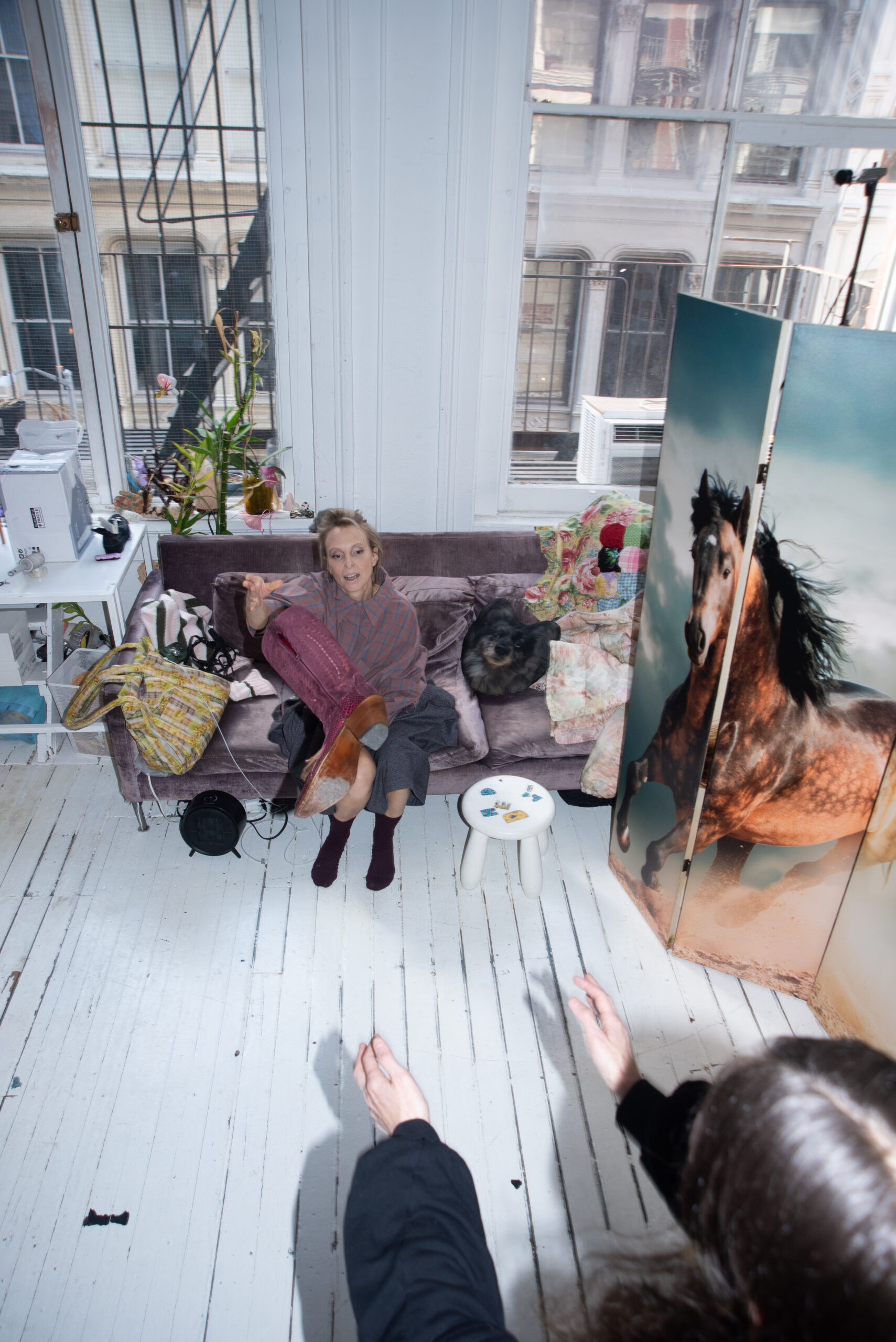
Taymour: I go somewhere in nature to get inspiration because I really need to touch grass to reset. I either go Upstate or to the dog beach in Prospect Park. My dog prefers the real beach though. He just got back from Miami. I also enjoy going to see friends’ exhibits. I like to go see art when no one’s around. Sometimes they’ll let me into the Met when it’s closed. I don’t really get inspired in crowds, unless I see a really nice outfit. And I just go to fashion shows to be seen.
What New York texts resonate the most with you?
Taymour: When I first moved here, there was that Alicia Keys song “Empire State of Mind” that everyone would play. That was like my alarm clock.
Henrot: It’s not actually a song about New York, but I associate it with New York. When I first arrived, I was living like a teenage boy and listening to Bryan Ferry’s “Avalon” all the time. That song is very connected to my first few years here.
How has the spirit of the city made its way into your practices?
Henrot: New York is very present in my work. Saul Steinberg is the reason I moved to New York in the first place. There was a poster in my kitchen growing up from The New Yorker where Ninth Avenue is pictured as the center of the world (View of the World from 9th Avenue, 1976). I took this poster very literally as a child. I decided that if New York was the center of the world, I was going to be there.
A lot of my drawings are inspired by Steinberg. Every person in this city looks like they’re coming from a different world. For me, that sense of individuality was so freeing and liberating, because the way I draw figures is sometimes very varied; one figure might be very realistic and the other very minimal. This inconsistency or absence of a singular genre in my work was something I felt judged negatively for when I was in school in Paris.
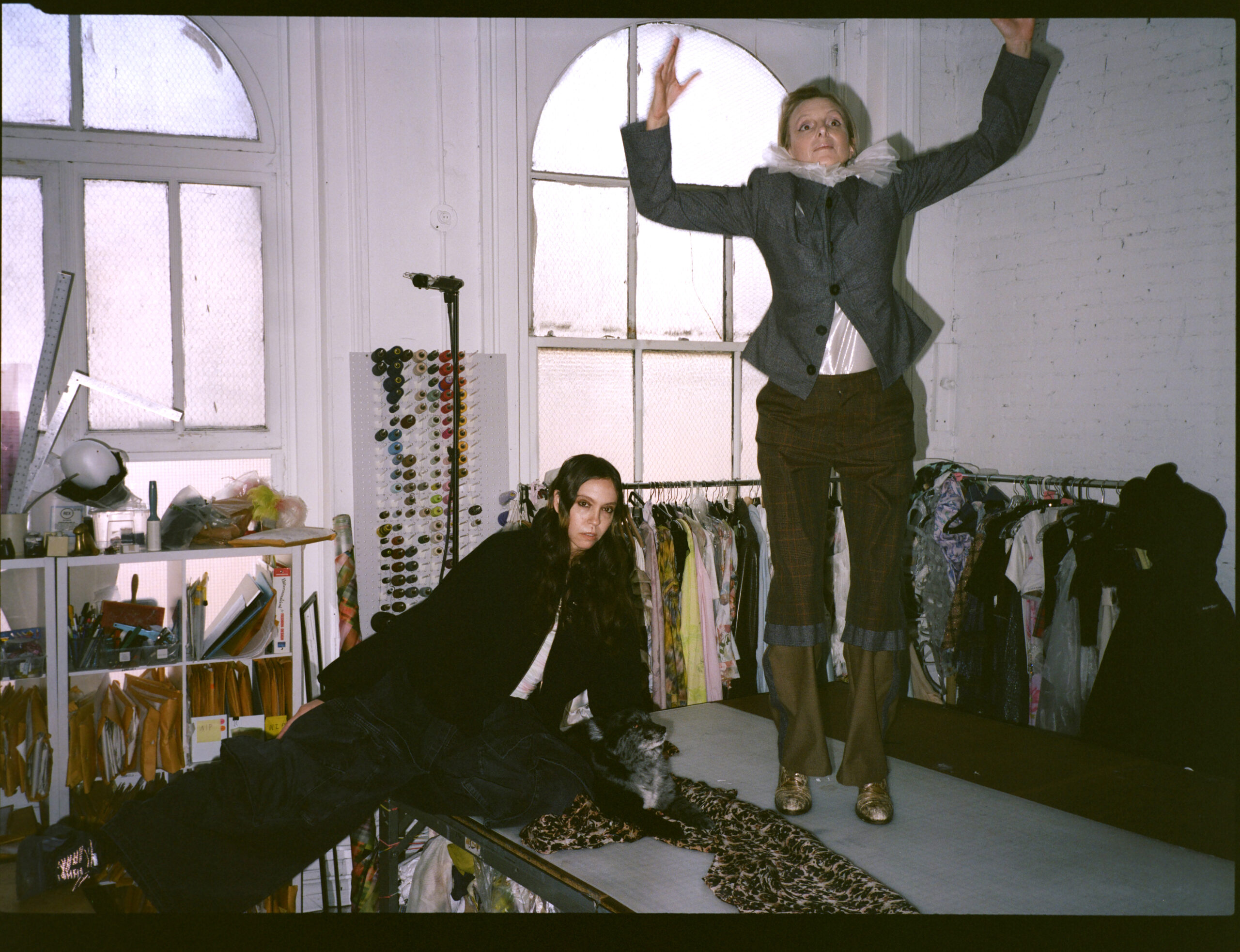
Taymour: I have such a core group of friends who are all very unique. I’m drawn to all types of creatives. My family is very normal, so I don’t have any normal friends. I would like to have more doctors as friends so I can call them with questions. So when I design collections, I’m thinking, What is this person, this artist, going to wear to her gallery opening? What is she gonna wear on a date? What are you wearing to Miami? I always joke with some of my other designer friends that they dress the people who collect the art, and I dress the artist. I guess I’m drawn to the more eclectic crowd of New York.
What is the greatest challenge of working as a creative in New York today? And the greatest privilege?
Henrot: The greatest challenge is rent. Zohran Mamdani needs to absolutely change this. Right now, landlords get a tax cut if the space is not occupied, which allows them to keep elevating the prices higher and higher, even if that means spaces are left vacant for years. The prices in New York are not suited to the market. They’re artificially inflating it. Changing that would create a much healthier relationship to real estate because right now landlords are basically subsidized. It’s the creative people who need to be supported and subsidized. Without them, New York wouldn’t be New York.
Taymour: The greatest challenge is being able to pay your team, pay your rent, pay everyone, and also live in the city. It’s this constant give, give, give, and no one’s actually getting the money at the end of the day. The greatest privilege is to be able to create the type of shows that I do and that some of the biggest editors and critics in the world actually understand what I’m doing. They understand the humor behind the brand, and they respect it. I feel the greatest privilege is being respected within the industry.
More of our favorite stories from CULTURED
Dries Van Noten Opens Up About His Next Chapter: ‘We Didn’t Stop to Have a Quiet Life’
Psychoanalysts Jamieson Webster and Adam Phillips on How to Get the Life You Want
The Best Oscars Red Carpet Looks of All Time, According to 14 Very Opinionated People
Love Story’s Costumes Could Have Tanked the Show. Then Rudy Mance Stepped In.
Is the 82nd Whitney Biennial Weird Enough to Match Our Chaotic National Mood? John Vincler Thinks So
Sign up for our newsletter here to get these stories direct to your inbox.



 in your life?