
As guests streamed into the Metropolitan Opera on Monday evening for the opening night of Tristan und Isolde, one question hung in the air: Can opera match this moment?
The centuries-old art form’s relevance to contemporary life was suddenly back in the cultural conversation this week when a glib interview comment from actor Timothée Chalamet, who said that “no one cares” about opera and ballet, raised some hackles. In short order, a wave of dissenters—including Jamie Lee Curtis, Doja Cat, and ballet star Misty Copeland—rose out of the woodwork.
The Metropolitan Opera is also determined to prove Chalamet wrong. As the country’s largest performing arts organization, it enjoys the patronage of some of New York’s most powerful residents, including Joan Granlund, ex-wife of Bill Koch, and Ray Berry, founder of Fresh Market, who once purchased a penthouse from Donald Trump for a cool $21 million. On the other hand, the opera house has been in dire financial straits due to dwindling ticket revenues—leaders have even considered investments from the likes of Saudi Arabia and Elon Musk to ease the burden. In late January, the organization announced plans to auction off a pair of beloved Chagall murals, which grace the opera’s entrance, in order to shore up funds.


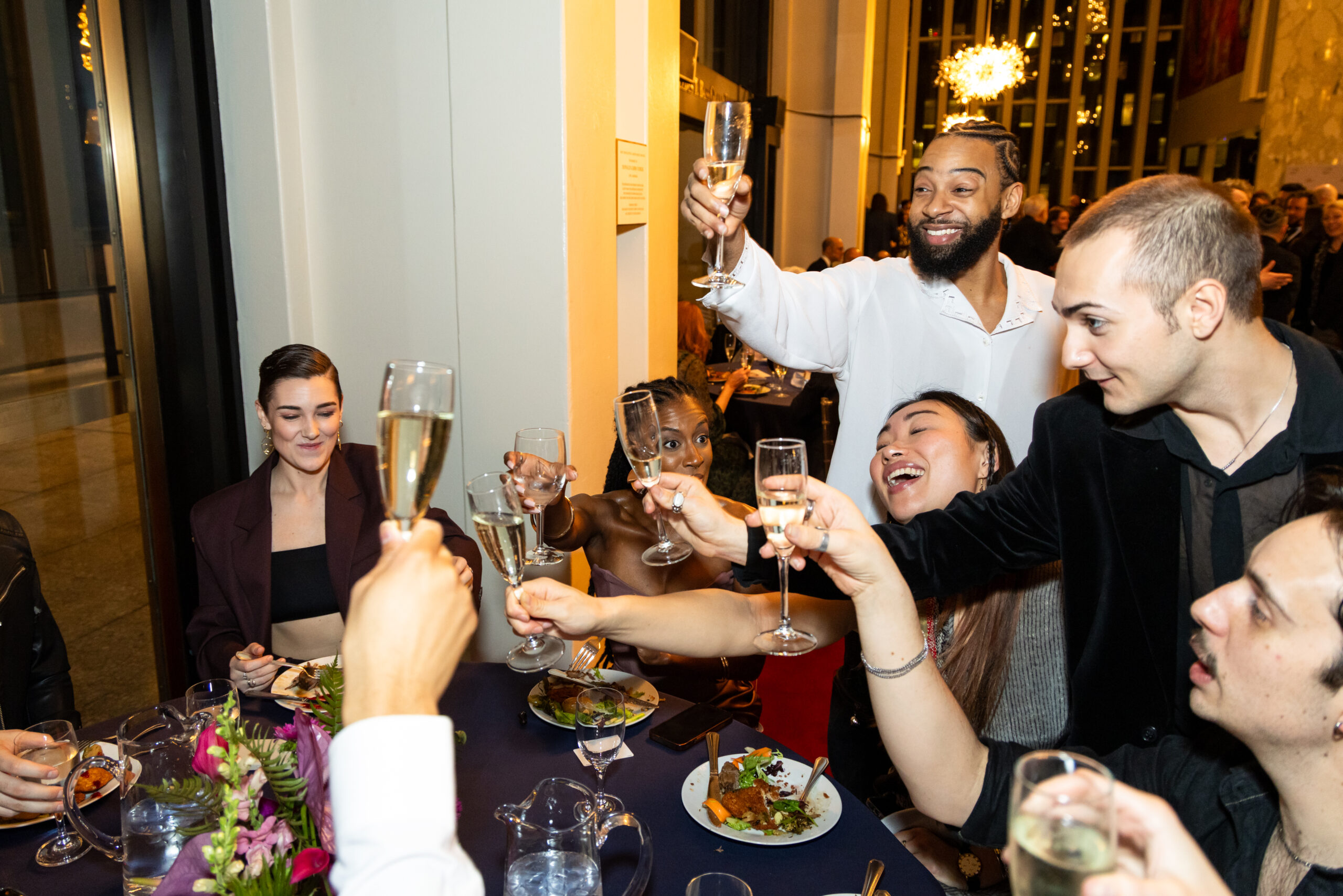
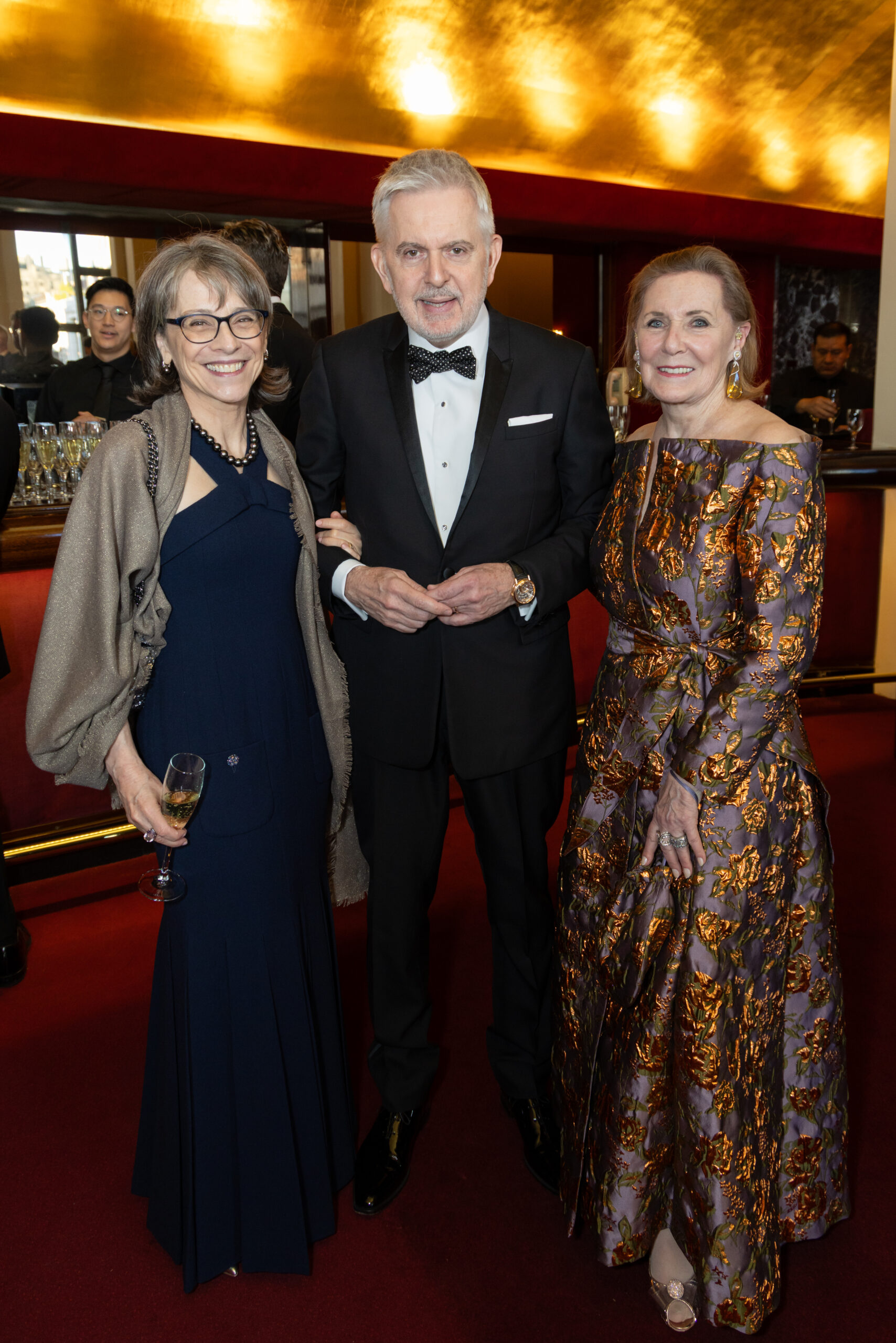

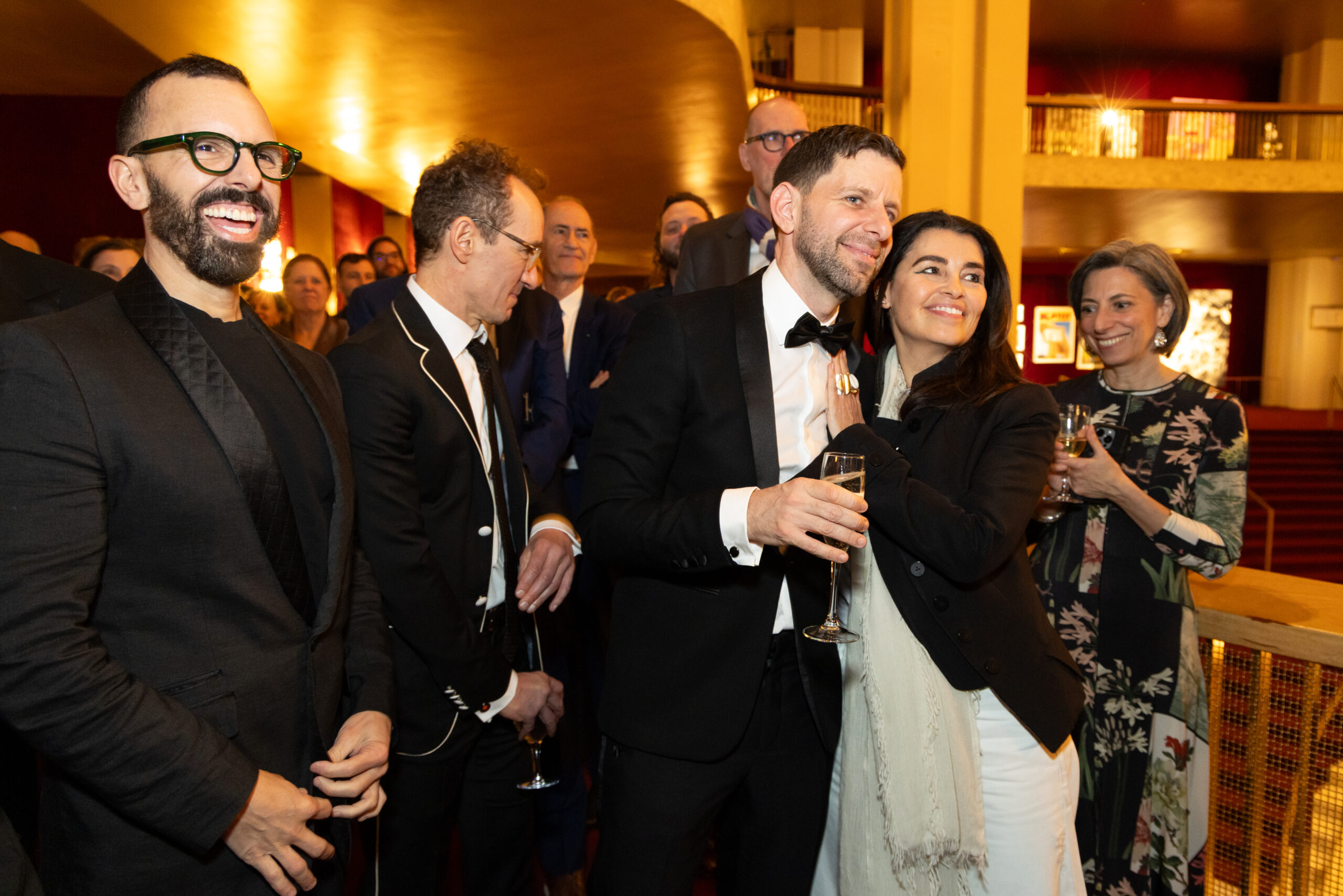

All in all, Tristan und Isolde, a Yuval Sharon production that has been in the works for years, opens the season during a do-or-die moment for the Met. Sharon is a boundary-pushing director who literally wrote the book on contemporary opera, urging his peers to “unsettle the audience” in order to inject new life into productions. He’s known for a radical approach: His 2020 production of Puccini’s La Bohème at the Detroit Opera staged the show’s four acts backwards. A 2015 opera from his company, the Industry, took place beneath underpasses, atop roofs, and inside 24 cars whizzing across Los Angeles. His version of Wagner’s tale will test just how ready Met audiences are for a progressive version of opera.
Although the Met has mounted productions of more contemporary fare in recent years, including 2025’s rendition of The Adventures of Kavalier and Clay, Tristan und Isolde is one of the canon’s best-known and best-loved shows. Several members of the cast and crew referred to the two leads, an Irish sea witch and a Cornish knight, as the “Mount Everest” of roles. The Met has made a point to make the show feel like a blockbuster as well. Soprano Lise Davidsen, a six-foot-two maven with a bone-rattling voice who stars as Isolde, is one of the biggest opera stars in the world. (If you miss her here, she’s also slated to star in Verdi’s Macbeth and Wagner’s four-part Ring Cycle at the Met over the next three seasons.) The choice appears to be working: Most showings of Tristan und Isolde are sold out, and the institution has added an additional performance next month.

“It’s a love story,” says Davidsen, nodding to the show’s universal appeal. “We, or I, never get tired of a good love story. It’s what we want to have in our own life: a love that has no boundaries and is filled with no one else but ‘us.’”
That doesn’t mean Tristan und Isolde is light fare. Wagner’s music is notoriously difficult, ratcheting up tension just when you think it might resolve. (The composer’s raging antisemitism and subsequent influence on the Third Reich has further complicated his legacy.) And with a run time of five hours and change, including two 30-minute intermissions punctuated opening night with halibut and spongecake, the show is a marathon for both performers and audience. Those that view opera as an antiquated art form might find it hard to imagine a time in which Wagner’s compositions were cutting edge. Set designer Es Devlin says that part of her goal was to remind us of just how contemporary he was.
“I believe that if Wagner had been born today, he probably would have been a generative A.I. filmmaker,” Devlin told me ahead of opening night. Back in the 1800s, the composer was on the forefront of theatrical technology, going as far as to design and build his own opera house in Bayreuth, Germany, to host his Ring Cycle.
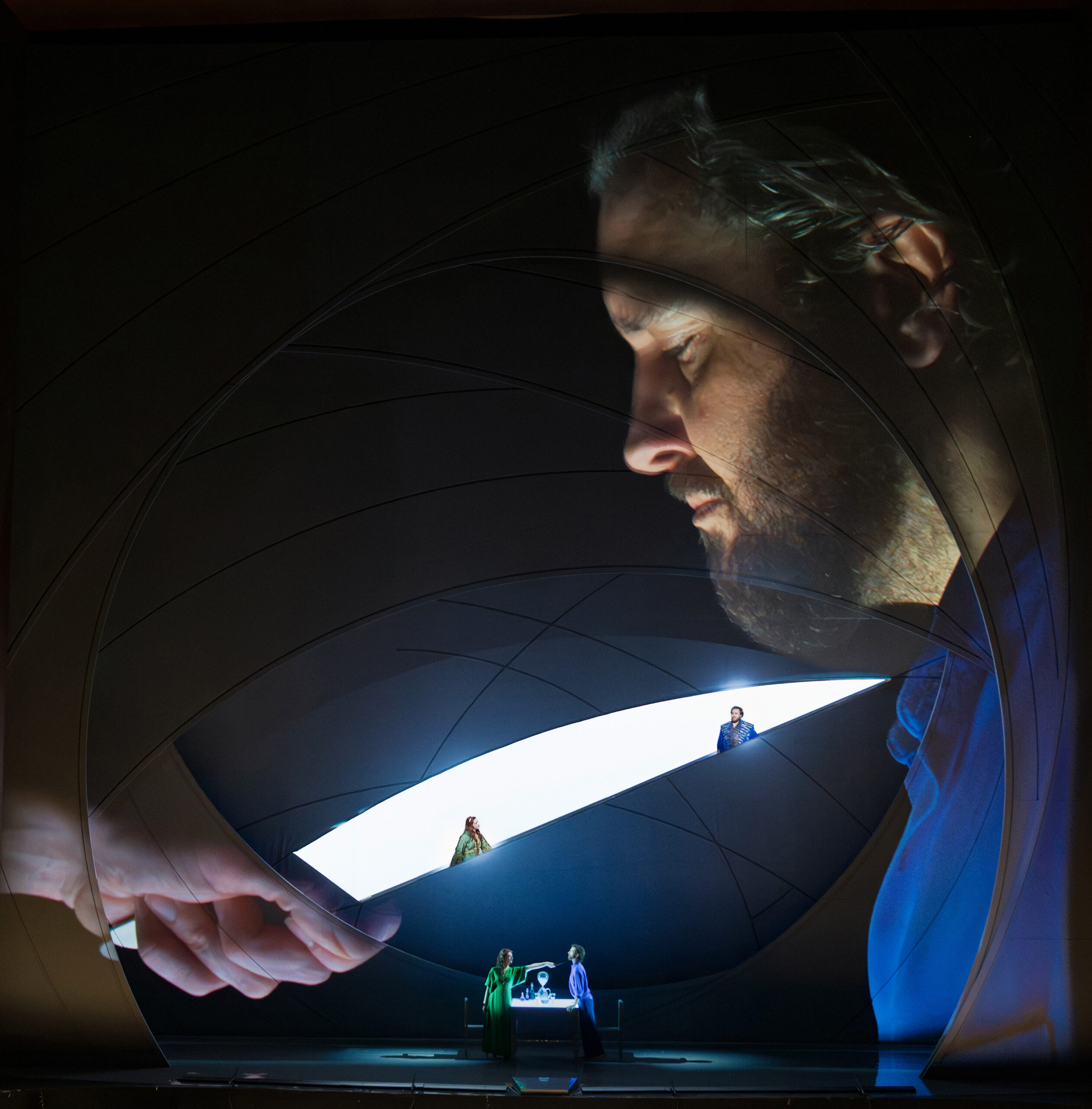
Devlin’s scenography, a 54-foot kinetic collection of tunnels and projection screens shaped like a camera shutter, literalizes the abstractions of Tristan and Isolde’s doomed journey. As Isolde recalls a moment when she held a knife to her lover’s throat, the set shifts to resemble that very knife. A series of projected videos from Ruth Hogben, best known for her fashion films, situate the performers within the vast expanse of the ocean and the swirling sands of time. As Tristan, played by tenor Michael Spyres, hovers between life and death in the third act, the tunnel at the center of the stage resembles a void and then a womb, underscoring the cyclical nature of his journey. The symbols of death and rebirth, which culminate in a striking reinterpretation of Tristan und Isolde’s final act, are deeply felt by the cast: Davidsen is a new mother to two baby boys and spends most of her time not performing with them.
Themes of interconnectedness, even ego death, suffuse the opera, growing from Wagner’s obsession with Schopenhauer and Buddhism (not the typical set of influences for a German musician back in 1865.) Devlin points to Wagner’s interest in non-Western religion and his technological advancements in stagecraft as a response to the Industrial Revolution, which was remaking Europe at the time. In 2026’s new era of paradigm-shifting technological change, Sharon’s rendition of Tristan und Isolde makes a case for the existence of the sublime—if only we’d pay attention for longer than the length of a 10-second video.

“This piece is incredibly relevant for a time where we seek to overcome boundaries between ourselves and others—those who are different from us, those who have a different point of view. We seek to erase boundaries between ourselves and the rest of the planet,” says Devlin.
This new production instead suggests that communing, phone off, for hours with thousands of strangers while masters of their craft fill the room with their voices, is in some ways the most avant-garde way to spend a Monday evening in New York. For Devlin, whose installations at art fairs and pop concerts draw thousands of young people, it’s the kind of space and experience that satiate a specific appetite she’s witnessed across the globe.
“There’s a great thirst amongst people—especially younger people, but also people my age—who are looking for ritual,” says Devlin. “They’re looking for spaces in which they can gather, commune, that aren’t a shop. How many places are there on the planet which are not a shop?”
Ritualistic is just the word for Sharon’s staging. The performers hold aloft swords and chalices with steady deliberation. They heave under the weight of their own choices. As the notes of Isolde’s last monologue ring out, finally resolving hours of melodic tension, it is clear that, for now, the opera endures because we make the choice to be here.
More of our favorite stories from CULTURED
The Substack Stars: 21 Newsletters That Your Favorite Writers Can’t Get Enough Of
In Wayne Koestenbaum’s First Novel in Two Decades, Gay Lust Incarnate Is a Rabbi With a Dad Bod
Eva Victor Made the Breakout Indie of the Year. Now, They Have to Do It All Over Again.
What Is It Really Like to Work at a Black Art Institution Right Now?
In Paris for Fashion Week? Catch These 11 Must-See Exhibitions While You’re There
Sign up for our newsletter here to get these stories direct to your inbox.


 in your life?