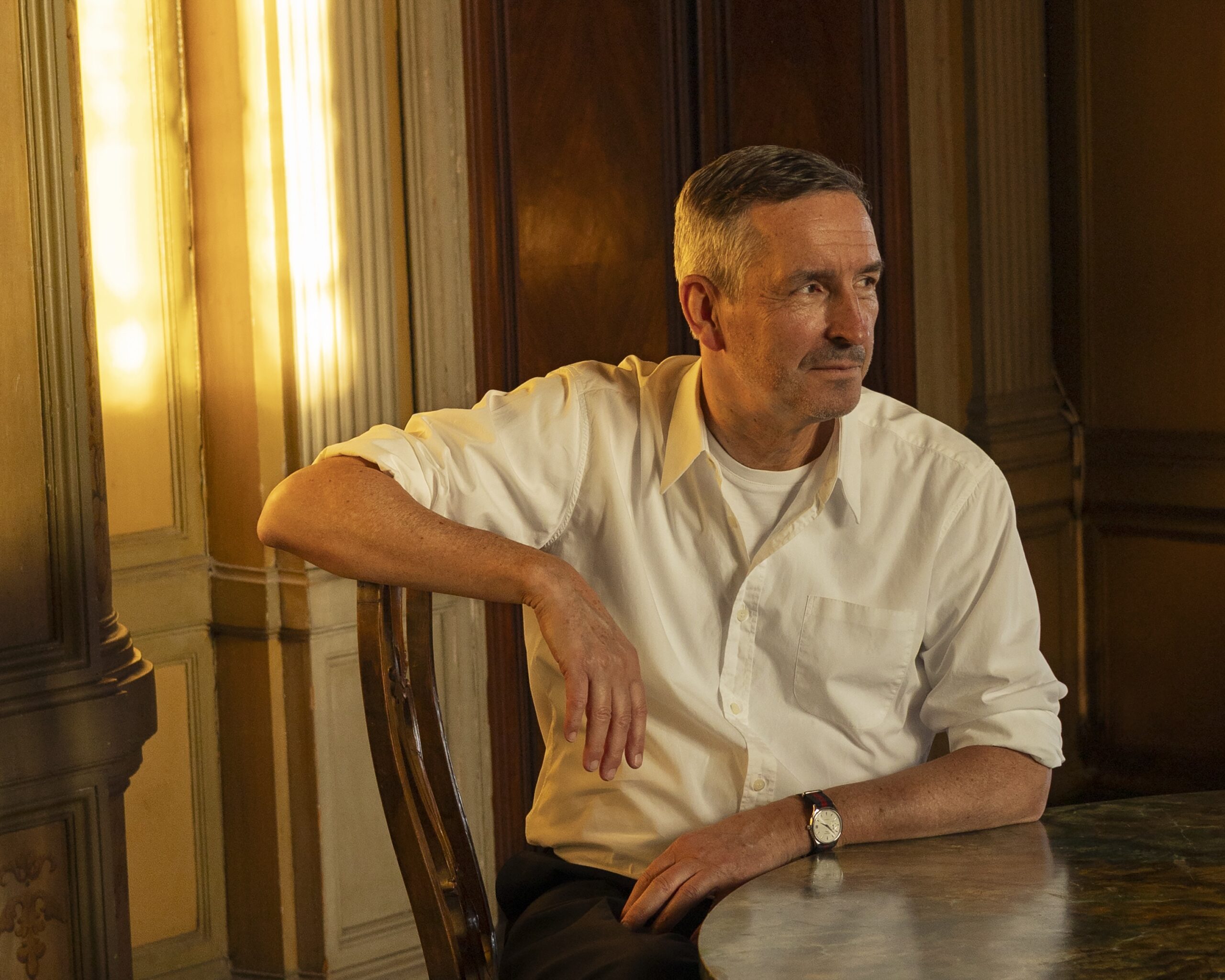
In a way, the 129 fashion shows Dries Van Noten staged as the creative director of his eponymous brand from 1986 to 2024 have prepared him for this moment. But the Belgian designer, now 67, is the first to admit he’s also in entirely uncharted territory.
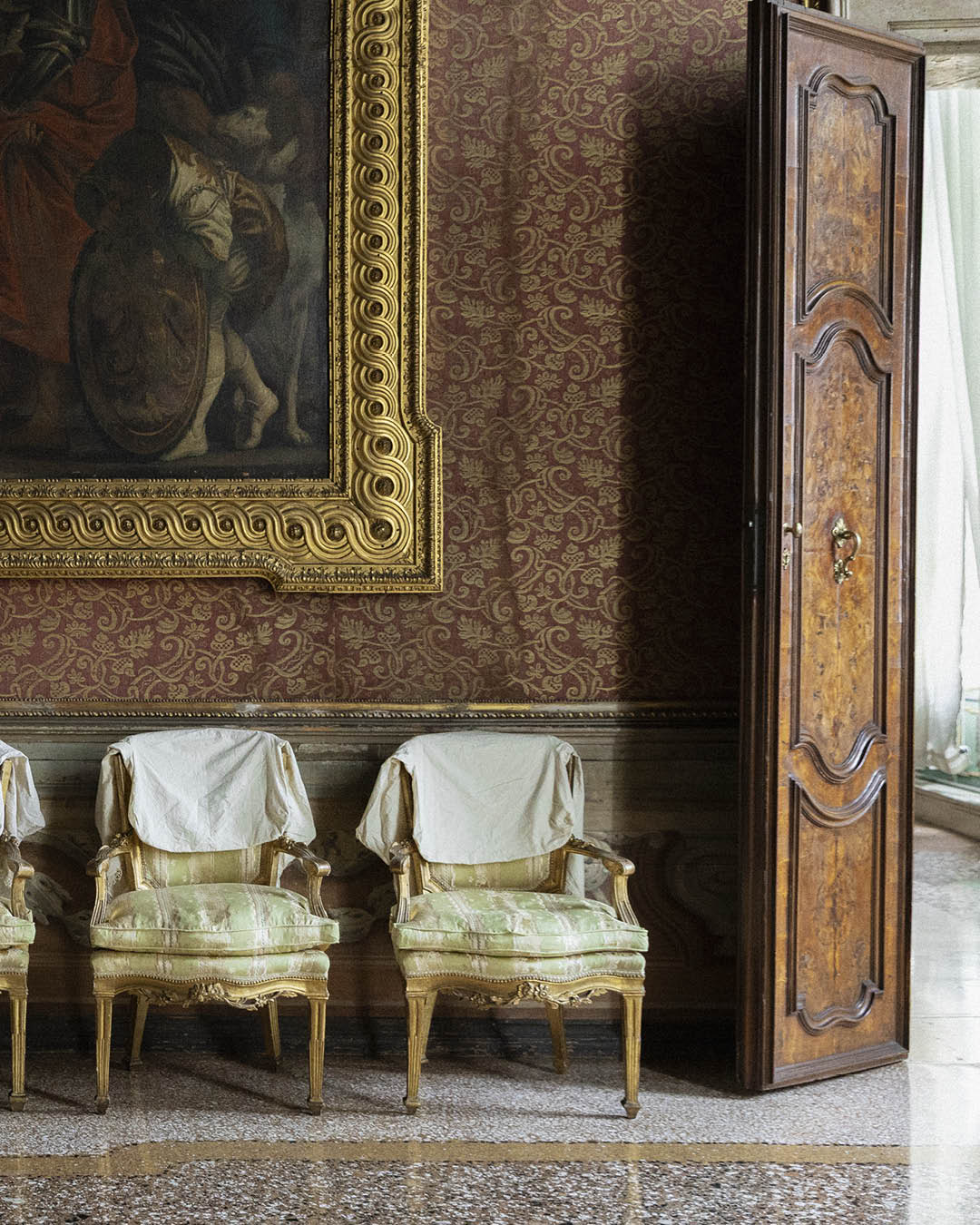
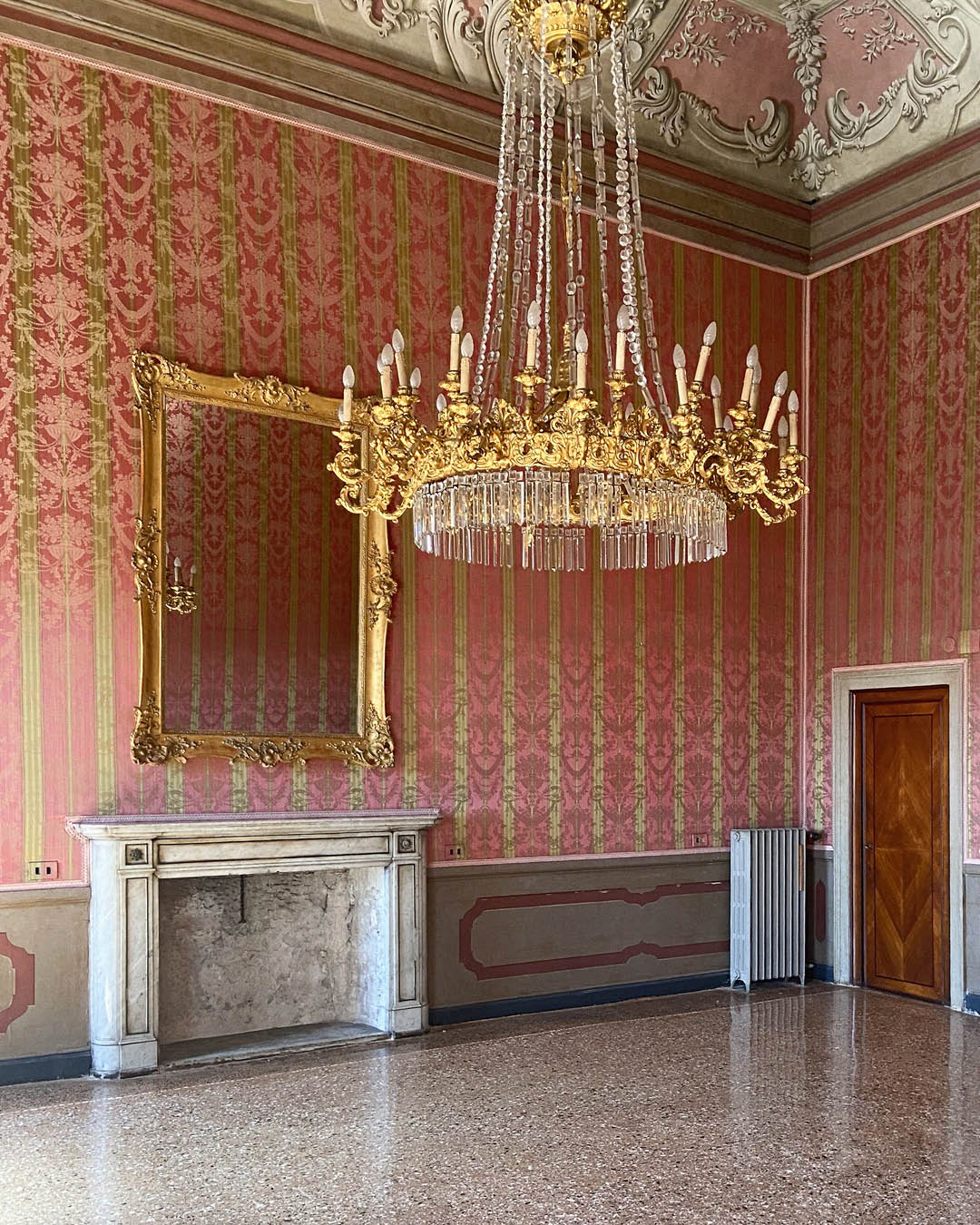
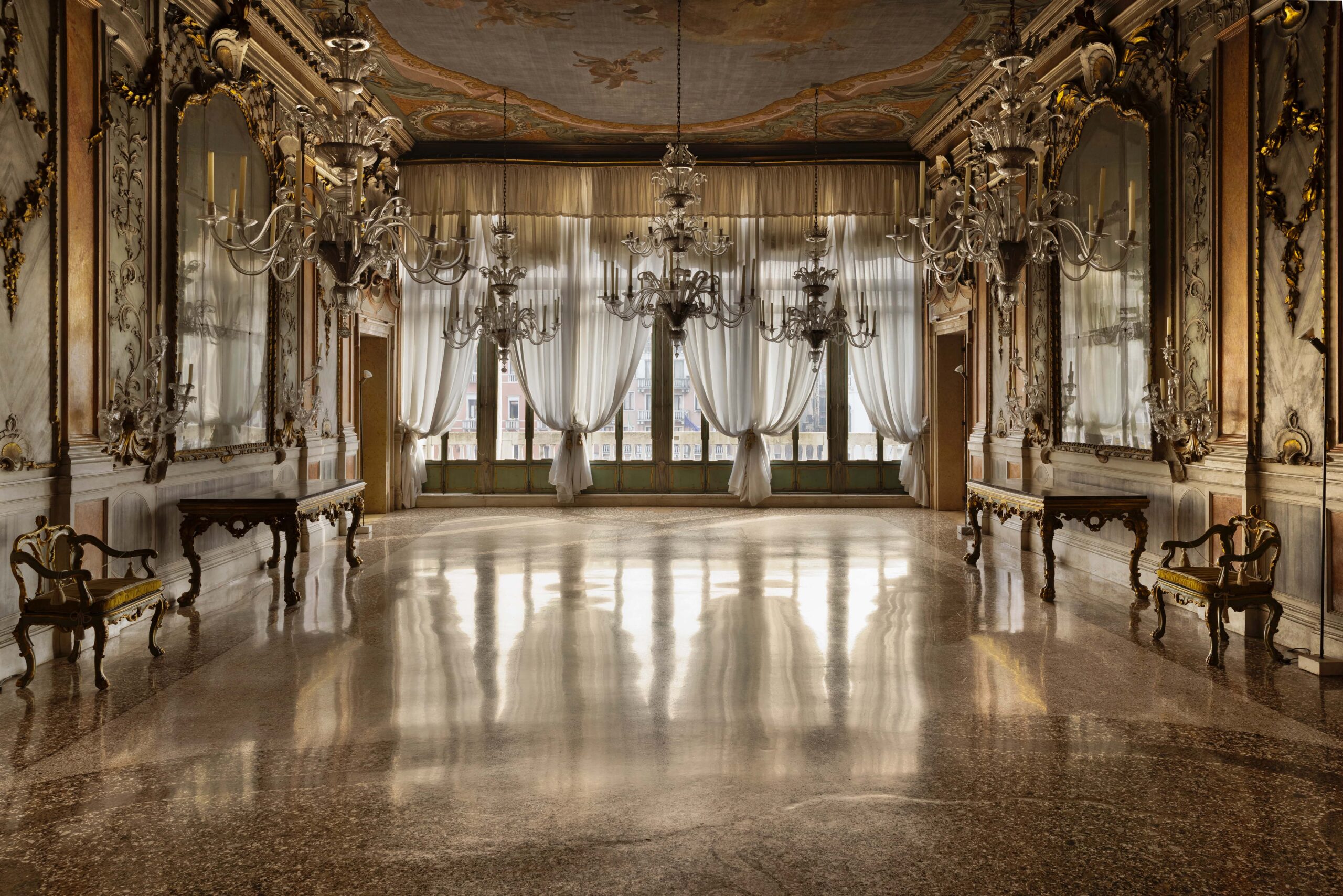
Van Noten is calling me from the Palazzo Pisani Moretta, the 15th-century Venetian palace he and his partner Patrick Vangheluwe acquired last year. When sketching out the possibility of opening a foundation in Van Noten’s name, the couple had first envisioned staying in Belgium, the country where they had always lived and done business, and finding a space that could serve as a blank slate—“neutral, not too big, and not too complicated.” The palazzo, with opulent interiors dating from the 18th century, is neither.
But Van Noten is finding joy, freedom even, in the challenges the setting imposes. “We can only blame ourselves if we have a lot of work now,” he admits. “We didn’t stop to have a quiet life—that was what scared me most.” Indeed, although he handed the reins of Dries Van Noten over to Julian Klausner in 2024, the designer still handles the brand’s beauty arm and supervises store design with Vangheluwe. And the Fondazione Dries Van Noten, which will open its inaugural presentation on April 25 before planned renovations in the fall, is certainly keeping him occupied.
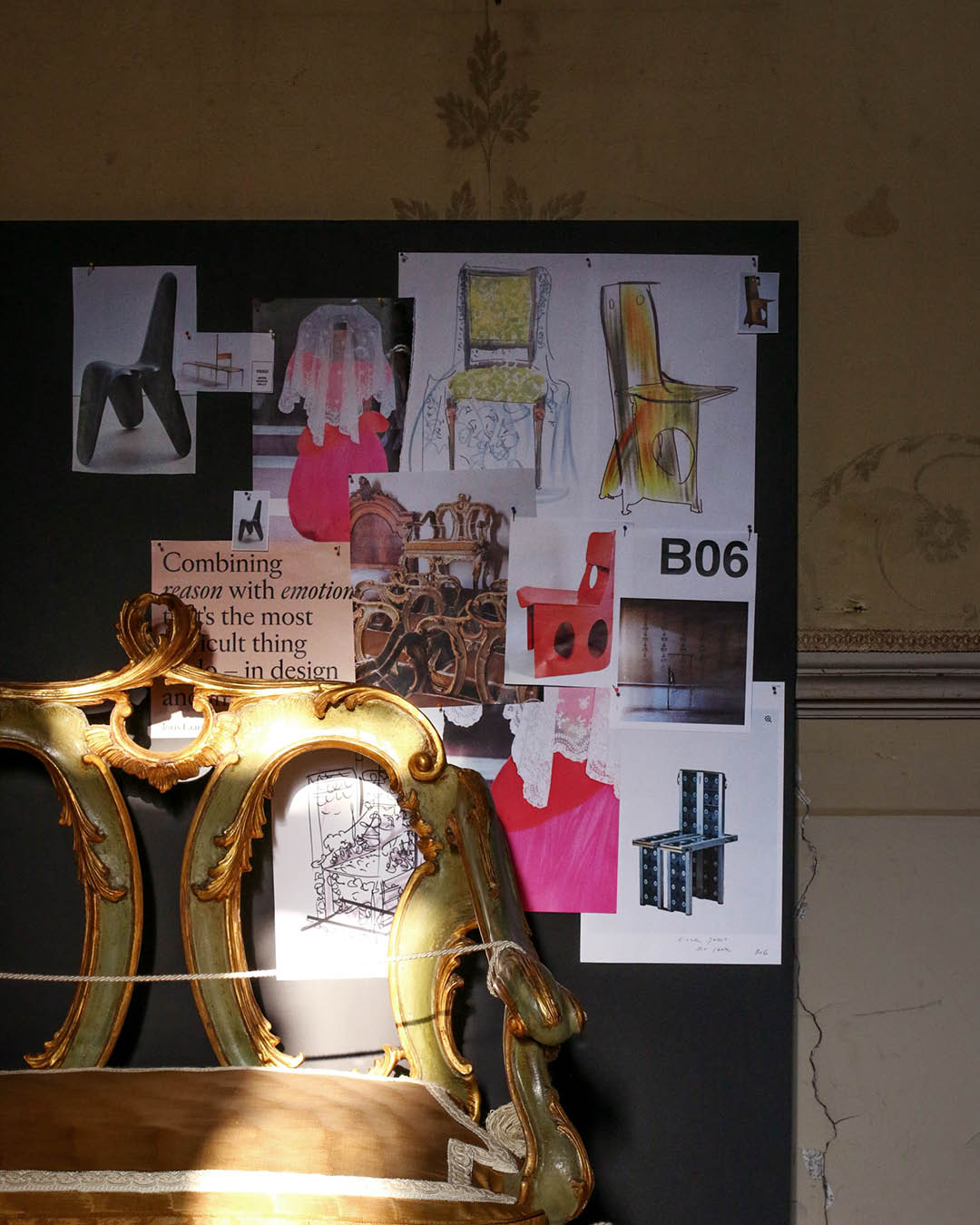
“The Only True Protest Is Beauty,” curated in partnership with Geert Bruloot, will take over 20 of the palazzo’s rooms with more than 200 works. (Bruloot has also organized an exhibition opening March 28 at Antwerp’s fashion museum MoMu on the Antwerp Six: the now-mythical constellation of Belgian designers Van Noten belongs to.) The through line of the show, and of the foundation, is craft. Over the last quarter century, the designation has become a loosely applied buzzword, linked both to the fetishization of the handmade in algorithmic times and the growing cachet of collectible design. In the presentation, Van Noten reclaims its latitude, orchestrating a free-associative parcours through his own rolodex of favorite makers—from artist Steven Shearer and sculptor Peter Buggenhout to ceramicist Kaori Kurihara and designer Christian Lacroix.
Like the clothes that made Van Noten famous, the foundation promises to be ebulliently eccentric and thought-provoking without feeling pretentious. As the countdown to its unveiling narrows, the designer sat down for a candid conversation about his next chapter.
When you were at the helm of your brand, you were known for these terrifically organized days—biking to your office, listening to Studio Brussels radio on the way in, ordering the dish of the day at dinner. It’s a kind of structural rigor that was also reflected in your uniform of the dark blue sweater and khaki or dark blue pants…
Let me take the blue scarf off so you see… It’s a dark blue sweater.
I love it. Since retiring in 2024, are you allowing yourself a bit more freedom with how you spend your days, or are you still very structured? You obviously have taken on this massive new initiative with the Fondazione opening in a few weeks.
It’s busy! I just came back to Venice yesterday evening. It was our fashion show in Paris, and I still have to be present there and look with one eye at what’s happening. My partner Patrick and I still do the stores and beauty and perfume. It would be difficult to let it go completely, but this is just like three or four days a month—a perfect quantity. Then of course, we have this new adventure, which forces us also to be quite structured because a lot of things are happening. We made our life not easy by saying, “Okay, in a few months’ time, we’re gonna change a palace into a museum-level exhibition venue, where you have air conditioning, lighting, etc…”
It’s intense, but we really enjoy it. Some people said to me, “Oh, you’re gonna be so happy now that you’re retired. You have so much time for your gardening, your flowers.” I already saw myself only meeting people of 70 years old and talking about flowers and gardening and what you have to prune, and I said, “No, this is definitely not for me.” I need young people around me, I need that kind of creativity and busy-ness and problems for which you can find an answer. It’s structured, but the nice thing is we don’t have that terrible rat race of four fashion shows a year, ready or not. Now we can decide our own rhythm. Nobody obliges us to do so many exhibitions, presentations, and talks a year—it’s our own choice. And I have to say living in Venice also gives you a lot of space in your head.
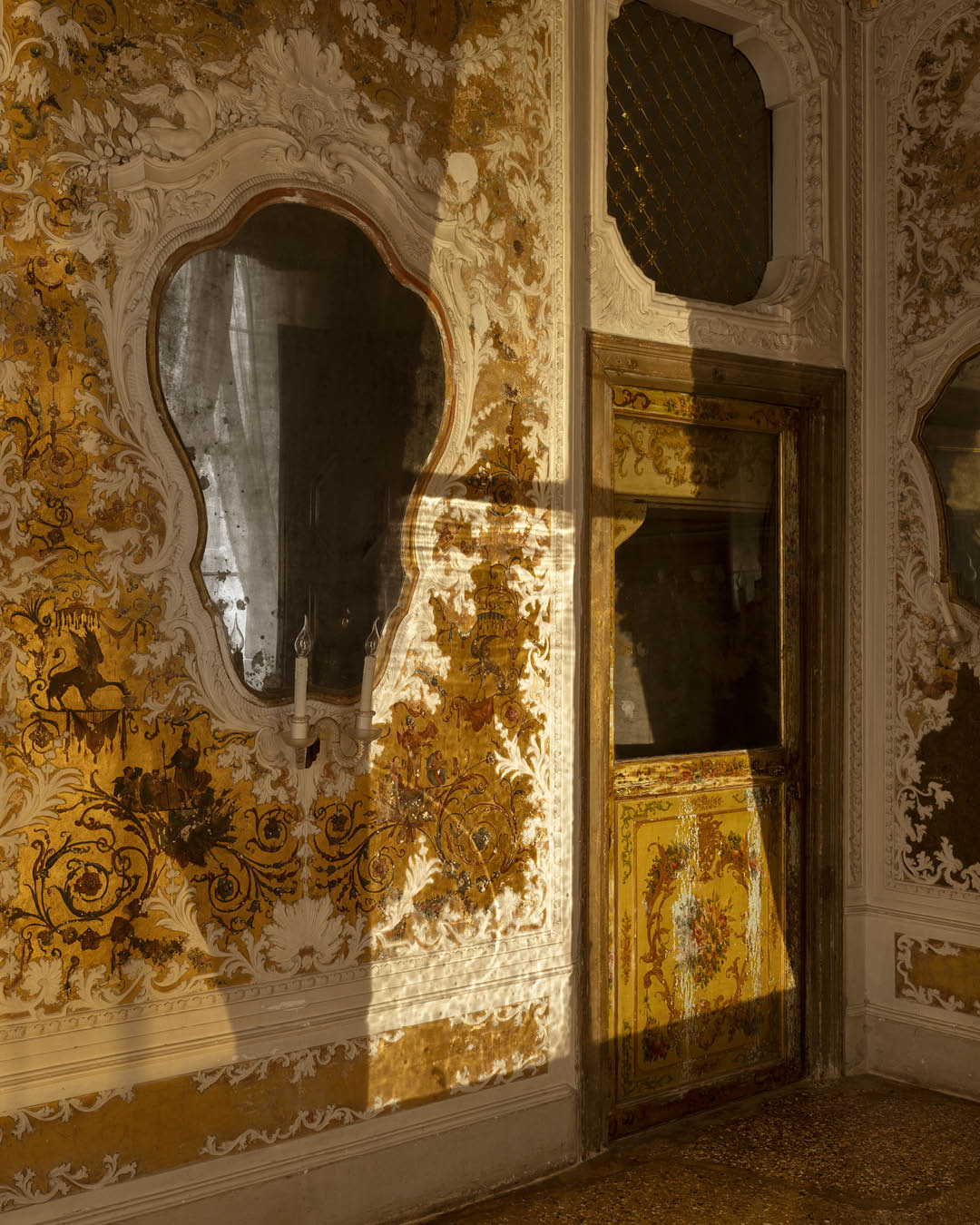
I’m curious about the choice of Venice. You’re so deeply associated with Belgium, and Brussels and Antwerp, and you’re choosing Venice for this next chapter of your life. You’ve spoken about it as a “living city,” which is interesting since so many people see it as a postcard or associate it with the past. You also chose to acquire a pre-existing building instead of going with a clean slate.
We took the decision seven or eight years ago that I would stop [working as creative director] at 65. Covid happened, so it delayed that until 66. We had time to think about what exactly we wanted to do and where. Originally the idea was to do it in Belgium; I was very open to that. Then we said, “Why don’t we try to live in another country? We lived our whole life in Belgium, it would be nice to experience something else.” We’ve always loved Italy—we have our summer house here in the south of Italy. So we said, “Okay, let’s discover a few cities here.” We went to Rome, to Florence, to Venice.
Venice was really a surprise. Everybody thinks they know it because you go every two years for three days to Venice. You say, “Oh, there’s a lot of tourism, but it’s beautiful.” You see interesting exhibitions, and you’re off. We had the chance to stay in the apartment of friends for 12 days, and we discovered a really different city. You see that Venice is also a living city, a working city. There are really good schools, a lot of young people. There is really something bubbling.
In the past, young people very often left immediately after their studies to Milan or Rome because Venice was too expensive. Now Milan and Rome have become far more expensive than Venice, so some people also stay here. I found it really intriguing because of course you have that confrontation of people from all over the world coming here, buying a palazzo, and just living here a few months a year, and the more underground scene with small galleries and grassroots situations. The combination is really interesting. Where you have a big machine, like the Biennale, you automatically have also those small things disturbing it.
What has living in Venice brought out of you?
You have no idea what difference it makes that there’s no cars, no traffic lights, no bikes. It’s super cliché but it creates so much more space in your head. You can focus more on things which are important in life. In Belgium, I was easily traveling two hours a day to the office and back. You count what you can do in those two hours here in Venice, and it’s really fantastic. And there’s the mentality of course—I was working like crazy in fashion. My partner and I always worked nearly seven days a week. But in the year, year and a half that we’ve been in Venice, we already have many more friends. People are very open—there is a mentality of sharing and having nice moments together.
Going way back, can you speak to me about your earliest relationship to craft and making? I know your family was steeped in the garment industry.
My mother and father always were looking at how furniture was made, how embroidery from tablecloths were made… And growing up in [a fashion store], you look at how fabrics are made, you see how garments are made. It was a part of my education. And I think having had the career of a fashion designer, I was spoiled because you have the possibility to look at beautiful things to use for your own creativity. And doing a fashion show is like a piece of theatre. You’re talking with people who are doing lights, with people who are doing music, makeup, hair… so many different disciplines. You’re talking with fabric developers. It’s a very technical thing. And we always lived in listed houses where restoration was always a challenge. So craft has always been part of me.
Have you ever thought about picking up another craft?
I never had time to do that. When there was a little bit of time, we were in the garden, which also helped me to stay in balance as a human, because fashion is so hard and so fast that it was necessary to have something which literally puts you with your two feet on and in the ground. That kept me alive. The other passion I have is food and cooking and making jams. Again, it was really a counter-reaction to the job of fashion designer, because it’s a kind of instant gratification. You work one or two hours, then immediately you have 36 pots of jam or a nice meal which you can share with people. In fashion, it’s always mid- to long-term.
I wonder if in your fascination with other forms of craft there’s a connection to your choice to make prêt-à-porter only, and not couture. To make the everyday poetic, not just the special occasion.
The reason I wanted to do prêt-à-porter, not couture—although we made quite a lot of pieces which were nearly couture-like—was really because I don’t like to make things which are theoretical. I like to make things you can wear. I always compare my job to a good baker—if you make a beautiful cake but nobody eats it, what’s the point? With the foundation, we have the intention to show all different aspects of craft. You have a lot of craft which gets very close to collectible design, to the point where collectible design has gotten on the same price level as contemporary art. It’s very good because a lot of people can live from it and it can push things very far. On the other hand, I appreciate as much people who make a simple chair that you can sit on. And even a comfortable chair, not just a beautiful chair you look at. In the presentation, I know already that I took a little too much from the gallery-level of design. I really want to create my own network of people who are doing things which are daily things, which you actually can use.
You have to see this presentation as an exercise. We don’t know yet exactly what our voice is going to be. I want to see where we can use our resources, what would be the most helpful and most important. The idea is not only to put up beautiful exhibitions in the future, but also really to support. Is it with organizing talks? Is it just inviting young artists and artisans here as residents? We don’t know yet. We started the whole project in the beginning of September, so it’s already going really fast. In the meantime, we are working on the restoration of the palazzo, which is going to start in October.
The Dries Van Noten voice in fashion was so singular. I think it’s interesting that you’re saying that with this foundation the voice is still becoming. You’re still understanding the DNA of it.
I think it would be pretentious to say, now already, “I know exactly what I’m going to do.”
I’m sure you also researched and visited other foundations. Maybe you don’t know yet what it will be exactly but was there anything where you felt like, “I don’t want it to be this.”
The last thing I want is to do only exhibitions and presentations, although we’re starting with a presentation. But between April and the end of September, when the restoration starts, we knew that we only had time to do this type of presentation. It’s a starting point; from that, we’re going to do talks with schools, we’re going to organize meetings, we’re going to do something around music. We’re going to invite a bunch of young winemakers from the Veneto to tell their story, and the wine is going to be served in glasses made by young artists and artisans in Murano. Those types of things. Not everything has to be prestigious, beautiful, chic, complicated, and expensive. We can also do very simple things.
It seems like an insistence on life. It can be a little more ephemeral and not necessarily go down in history. Can you tell me how you discovered the artists and makers featured in this inaugural presentation?
I always look very attentively. I have a very visual memory. Of course I also use my phone. I have a huge quantity of pictures of things I like, and they’re all mostly in my head. In the evening you see something quickly on Instagram, you buy a magazine, you see something there, and you start to collect. Then you have things from the past, which you’ve known already for a long time. It will be very interesting to see how everything comes together because in my head I’ve really created a kind of narrative between the pieces we’re showing and with the palazzo.
How does the process compare with putting on a runway show? Do you feel like it’s prepared you for this, or do you feel like the challenges are very different?
Of course you have to be organized. But the creative part—putting things together—is a different way of looking. It’s not only your own work—you’re putting together the work of others. A fashion show is your own collection, and the only person you have to be happy with at the end is yourself. Here you have to work with people who created something. We have the responsibility, on the one hand, to respect the vision of the designer or the artist or the craftsman, but also that it makes sense in the totality. This has sometimes been a little bit more difficult—to convince artists and artisans to trust us. It is going to be a kind of confrontation. Seeing an artwork in a white cube in New York and in a palazzo here in Venice are two completely different ways of looking. We will have to learn a lot, I think.
Are there any exhibitions that you and the team have seen recently that have been inspirations for you? Especially ones that engage with a site.
I went to the Fondation Cartier in Paris, where you also see the combinations of all different things, which is very interesting. Of course there is also Homo Faber, which I thought was very inspiring. Although I know that the last one—“The Journey of Life”—by Luca Guadagnino was kind of controversial… Some people really liked it, some people thought that craftsmanship was too much on a pedestal, that it was too beautiful and that the production was sometimes overwhelming the pieces.
You’re mentioning beauty in the context of Guadagnino’s Homo Faber exhibition. The title for your inaugural presentation is “The Only True Protest Is Beauty.” I know that it’s based on a song by Phil Ochs, but I wonder how you see the place of beauty right now in a world that is honestly filled with ugliness.
The full sentence of Phil Ochs is: “In such ugly times, the only true protest is beauty.” But we asked for permission to use only the second part, because I said, “I don’t want to work nearly one year around a sentence which starts with something so negative.” Of course, beauty can also be kind of an escape. But pure escape is not right either, because you have to be realistic. In that way, the word protest is also very good. Beauty for me is so much more than just prettiness. The concept of beauty is so universal; for me, to use this as protest, to survive the ugliness of the world, I think is a very good thing. And this presentation is kind of a search. [The sculptor] Peter Buggenhout, for example, was really surprised that we dared to call his work beautiful because he wants to make people feel uncomfortable. But I think it still results in something beautiful. It will be the first thing you see when you come into the palazzo.
Can you tell me a bit about your relationship to optimism? Optimism can sometimes be seen as naïve, but I think it can also be a form of protest—to progress, to move forward, to continue. Do you feel like this exhibition has taught you anything about that?
For me it’s about looking forward. Beauty is also moving forward. Beauty is not standing still. I always look to the past; I respect it enormously. But I always try to do things looking toward the future. I always tried to make beautiful clothes, but when they were not different from the ones before, I was kind of unhappy, because I wanted to challenge myself to stay relevant by moving forward. Sometimes big steps, some seasons smaller steps.
Can you tell me about the rationale behind the fashion pieces you’re including in the presentation? You have Comme des Garçons, Christian Lacroix, but also the Palestinian designer Ayham Hassan.
Lacroix is really one of my loves. I did the collaboration with Christian Lacroix, and I had the frustration that the collection we did never really came alive because of Covid. So I knew I still wanted to do something else, because I think he really deserves to be put in focus—to show the pieces and the way that he made them, the kind of madness, the craftsmanship… The end of Lacroix was also partly because of this: He couldn’t stop sometimes. What was interesting was that Lacroix, of course, is more traditional beauty. And at a certain moment I saw some outfits of Comme des Garçons, especially from after 2015, when Rei Kawakubo decided not to make outfits anymore for the catwalk that were meant to be worn. They became more theoretical, nearly sculptures of fabric, movement, and emotion.
It’s two completely different starting points—one based in a historical, nearly costume world, and the other really starting from a very theoretical approach. But at a certain moment they grow toward each other. It’s surprising how much they reinforce each other. And with Ayham, I loved what he was doing immediately when he came out of fashion school. I think he’s one of the best examples of what we are saying here, with the “Only True Protest Is Beauty.” You can’t only mourn in your life. With what is happening in Gaza, you can’t only mourn. You also have to think about tomorrow. Fashion in that way is the best escapism. It feeds your dreams for tomorrow by creating something beautiful.
Can you tell me what it’s been like to observe the fashion world with a bit of remove over the past two years? Do you like what you’ve been seeing? Who are you following?
I follow it the same way that I follow all other crafts because for me it’s also a kind of craftsmanship. I also have several people who follow things for me—especially the young designers. We are building our network also to go out to even the young people who are not really so visible. But I’ve never really been part of the fashion world. We were always very happy to be in Paris or London, and maybe go to one or two parties. But I was even more happy to go back to Belgium, to my garden and my dog, and start working on the collections. Of course, fashion the last few seasons has been super complicated with all the changes of designers. But also nice things are happening now. Meryll Rogge is doing a good job [at Marni], I’m very happy for her. I’m very happy for Julian, who’s doing a fantastic job with our brand.
And speaking of beauty, what was the last thing you saw that you found beautiful?
The moon yesterday when we arrived in Venice. That’s enough for me.
More of our favorite stories from CULTURED
The Substack Stars: 21 Newsletters That Your Favorite Writers Can’t Get Enough Of
In Wayne Koestenbaum’s First Novel in Two Decades, Gay Lust Incarnate Is a Rabbi With a Dad Bod
Eva Victor Made the Breakout Indie of the Year. Now, They Have to Do It All Over Again.
What Is It Really Like to Work at a Black Art Institution Right Now?
In Paris for Fashion Week? Catch These 11 Must-See Exhibitions While You’re There
Sign up for our newsletter here to get these stories direct to your inbox.

 in your life?