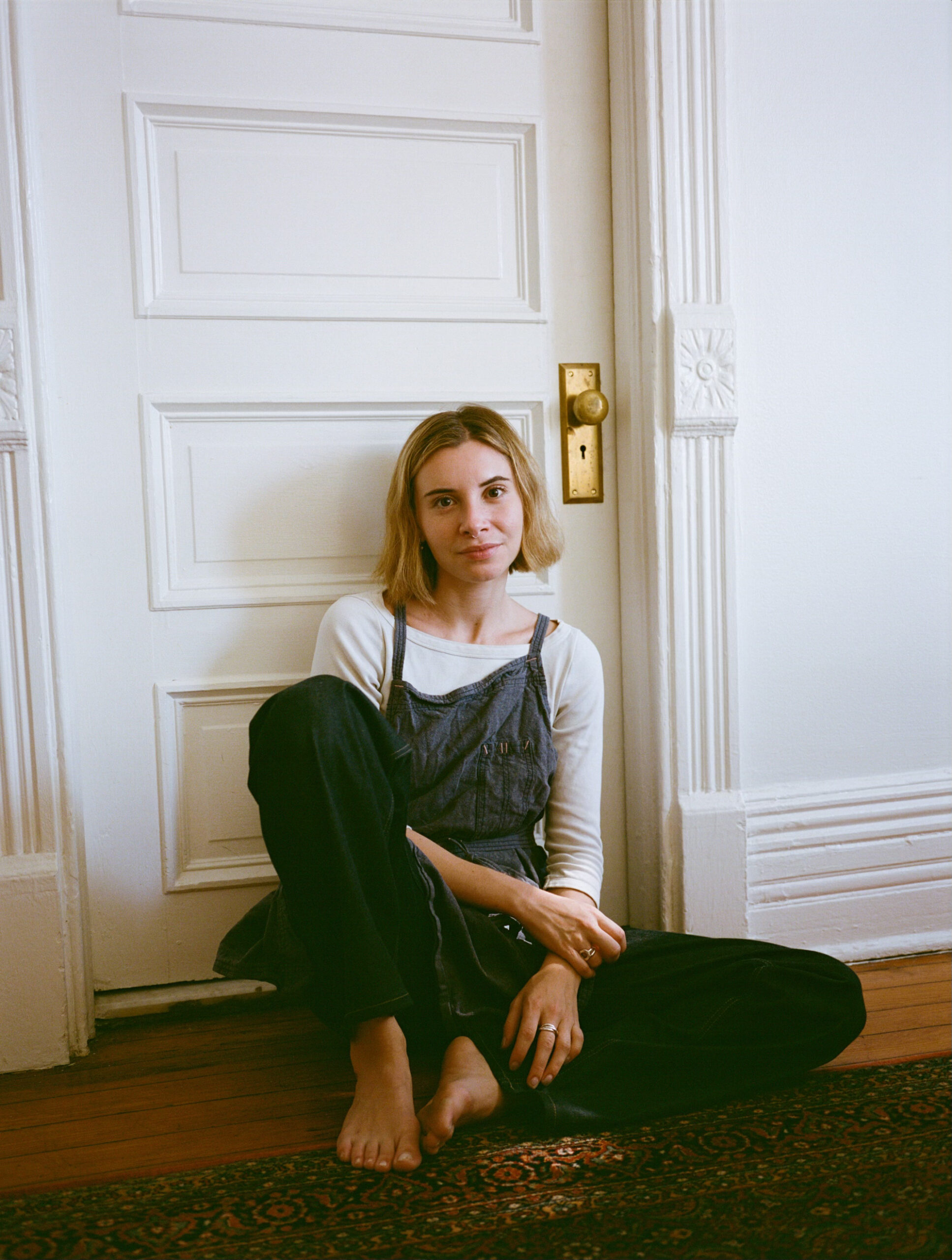
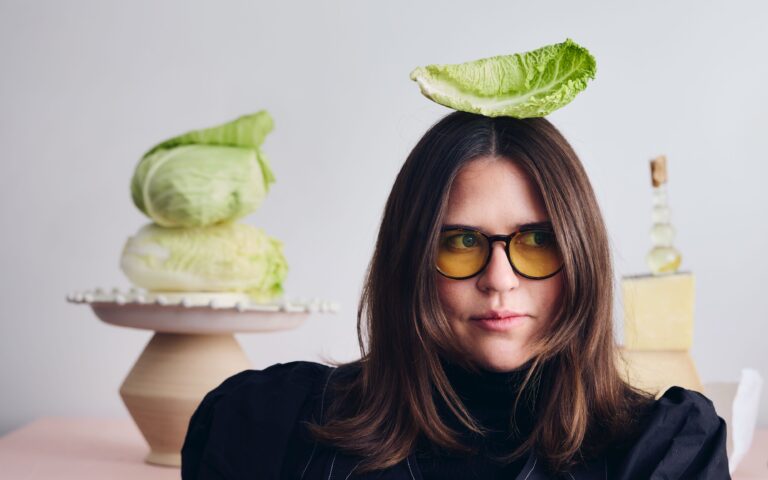
At 23, Tanya Bush found herself unemployed and in a long-term relationship that felt unsatisfying. Depressed and adrift, she decided to bake a cake.
“I didn’t start baking to change my life,” she says now. “I started baking because I was desperate. I just wanted to make something.”
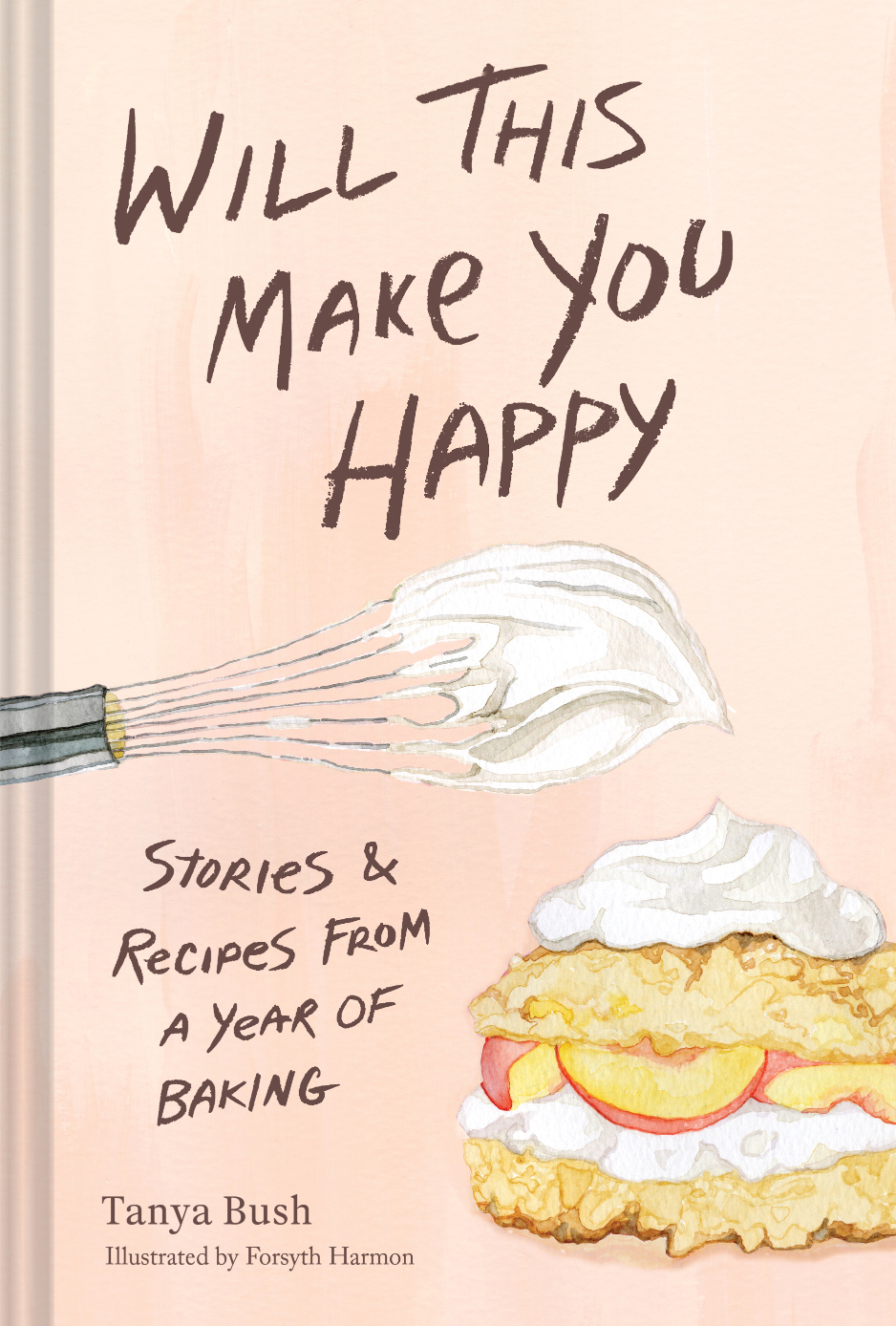
That cake set her on a yearlong journey that she has chronicled in her first book—part memoir, part cookbook—with a relatable title: Will This Make You Happy. In a quest to teach herself a new skill and rediscover her love of baking, Bush—the co-founder of the literary magazine Cake Zine—travels from her modest apartment, to an Italian agriturismo, to the bustling Brooklyn restaurant Little Egg, where she is now pastry chef.
In between passages on mental health and self-discovery are 50 baking recipes you’ll want to make the second you see them. There’s cinnamon swirl banana bread, roasted pecan scones with maple glaze, and brown butter hazelnut chocolate chunk cookies (and that’s just a small sample). As a skilled writer and baker, Bush has nailed titling recipes with mouth-watering “I-want-to-make-this-now” appeal.
Yet Bush’s book, which is out March 3, is also a love letter to learning—and all the mistakes that come along with it. Rather than perfection, her goal is transformation—like when you whisk eggs, butter, sugar, and flour to create something delicious and new. After reading and baking from this book, I bet you’ll be able to leave the kitchen and say, “Yeah, that did make me happy.”
Where are you, and what is in your system? What did you eat this morning?
I’m in Brooklyn. I have been on an oatmeal kick. I recently did a week sans sugar for a piece that I was writing because I have sort of lost my sweet tooth in the process of becoming a baker. I was wondering if omitting it entirely would help me fall back in love with dessert. For that week, I was eating my oatmeal without maple syrup or brown sugar. But this morning, I drowned my steel cut oats in so much maple syrup and butter. It was delightful. My appetite for sugar is alive and well.
Tell me about your new cookbook and its title, Will This Make You Happy.
The book is a narrative cookbook: the recipes and the story are meaningfully intersecting. It’s a marriage of food, education, and narrative. It’s organized over the course of a year. The recipes use seasonal ingredients and they get more difficult as the narrator is progressing in her skill set. This book is very much about trying to teach yourself.
[I wrote it during] a moment in my life when I needed to fall in love with my own abilities and try to make sense of how to find happiness when the world was feeling unbearably difficult. I wanted to show the journey to arrive at some semblance of competence while also showing the failures and yearnings that proceeded. Cookbooks, to me, are a snapshot of a moment in time. I wanted a book that was following someone in real time, trying to understand the question, will this make me happy?
Could you talk about cooking and its connection to mental health ?
A lot of the cookbooks I was encountering were glossy, aspirational—the author had everything figured out. It was not at all the experience that I was having while I was learning how to bake. I was in my pajamas and sort of languishing at home, trying to claw my way to happiness.
It felt important to articulate and give life to the failures, miseries and humiliations that are a part of learning something new. I was turning to baking in a moment when I was desperate. I was unemployed, unmoored, and confused about what was going to make me feel any semblance of rootedness. The process of beginning to bake, be in motion and make something, anything—you start to come to life a little bit more. It was really a way to try on a new identity and feel a sense of purpose in the world.
And it seemed like it was some form of healing?
Baking is really such a beautiful thing because it brings you into a community with other people. You have to give it away. I ended up giving away a bunch of pastries in the park because I just had too many cookies on my hands.
Can you tell me something you learned while you spent a year in Italy, that you maybe keep in your back pocket?
It was extraordinarily helpful in clarifying what I did and didn’t like about pastry. A lot of the food being made in this agriturismo [a farm and inn] was very persnickety and showy and there were like eight components on the plate. But precision and fastidiousness was not what I was attracted to in baking. I like that there are constraints. But within those constraints, there’s a lot of room for experimentation. Once you know the central tenets of baking, you can get your hands dirty and play around.
Can you talk about the idea of transformation, in the mind and in food?
I thought a lot about how baking makes sense for narrative because it is literally all about transformation. This is a coming-of-age story. Ideally that puddle of batter is going to transform into this beautiful, lofty cake. Transformation felt like a really important theme, but it’s not going to all be wrapped up neatly: Oh yes, and now through this one skill she has been transformed. The narrator and I continue to contend with the same questions.
Time for some rapid-fire questions. Breakfast, lunch, or dinner, and why?
Dinner, always. It is the meal I will never skimp on. I just love an opulent dinner. And I love an early bird special, like 5:30 or 6 p.m., especially in the winter when the sun has already gone down. My husband often cooks something really delicious. He made a Japanese curry last night that was utterly delightful.
Is there a kitchen etiquette rule you live by?
Taste as you go—noticing and smelling and touching and involving your senses.
What’s the kitchen utensil or tool you use the most?
I’m a big bench scraper girl. I love it for cutting butter into flour. I love it for sweeping away the detritus on my workstation. I use it when I’m frosting a cake. It is multi-purpose, multi-utility, and it costs like seven dollars.
Can you draw a parallel between your relationship to food and baking and a way of looking at the world?
In both living and baking, the first version is rarely the right one. You’re going to have to experiment and get in touch with your own sense of desire and what actually feels right. It is not just abiding by the recipe on the page.
More of our favorite stories from CULTURED
A Movie Deal Is a Writer’s Dream—or Is It? 5 Authors Get Real About the IP Machine
Shrinking Actors Sherry Cola and Jessica Williams Talk Therapy (On Screen and Off)
The Pitt’s Shawn Hatosy Is an Emmy Winner, a TikTok Star, and a Secret Literature Nerd
Why Are Artists So Interested in Making Playgrounds?
Sign up for our newsletter here to get these stories direct to your inbox.


 in your life?