Downtown New York restaurants serve up scenes as readily as they sling entrees out the kitchen. Keith McNally mastered the recipe in the ’90s, opening Balthazar, Pastis, Pravda—rooms that were more social infrastructure than simple places to eat. You went for dinner, but you stayed for everything that happened around it.
Tribeca, for all its square footage and expense, hasn’t quite held onto the lineage. There are still anchors like Frenchette, Locanda Verde, and the ever-booked Odeon, but the sense of movement, of one place bleeding into the next over the course of an evening, is hard to come by in the area.
George McNally is ready to change that. The 22-year-old son of the legendary Balthazar restaurateur is opening his first project this June. The restaurant, cheekily named Faux, is an enormous undertaking. But George, who grew up in his father’s restaurants coloring with crayons in booths, hoisting furniture during build-outs, and shaking drinks behind the bar, feels up to the task. He’s so confident, in fact, that he didn’t take a single penny from the family business.
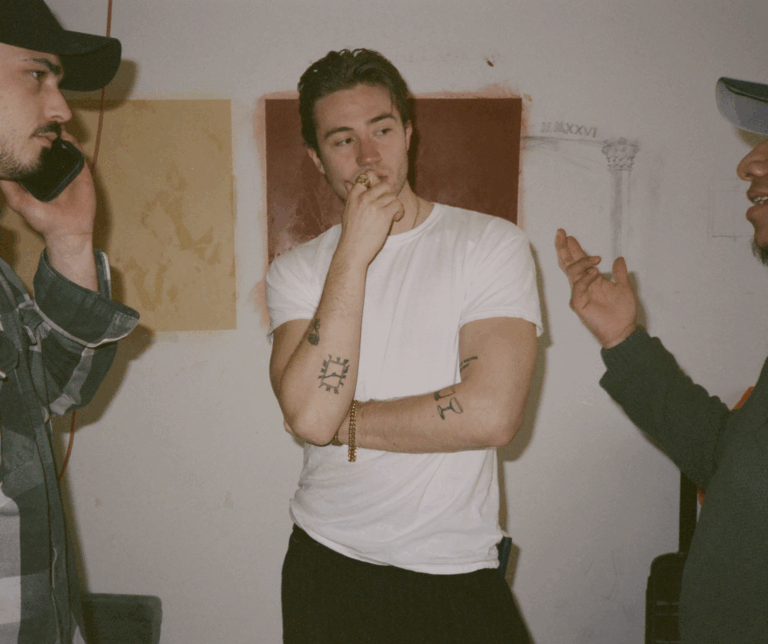
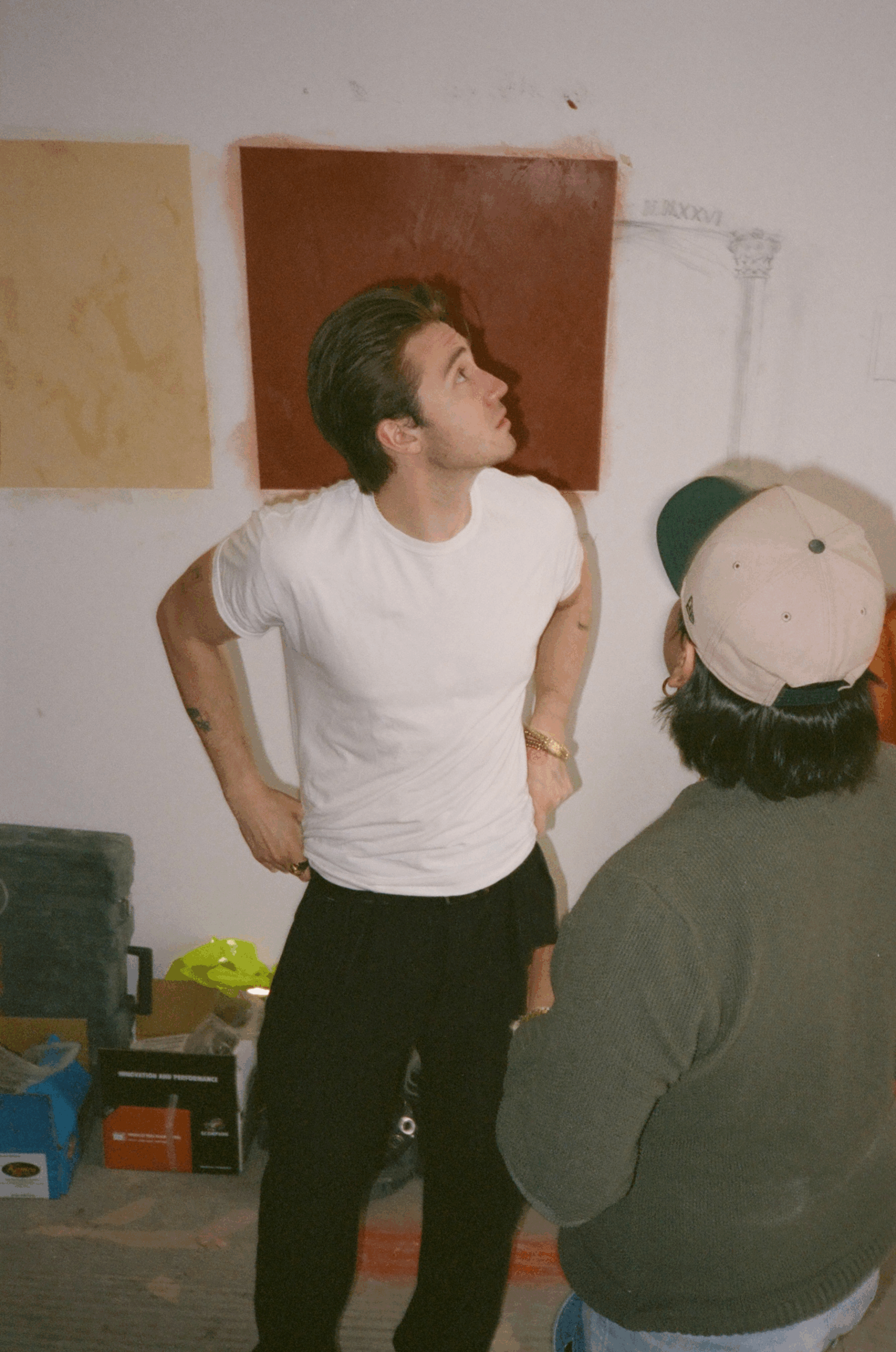
Stretching over two floors on Church Street, Faux’s upstairs dining room will seat 50 to 60 under high ceilings; downstairs will offer a more intimate, vaulted space with its own entrance and a shorter menu for late-night dining. The kitchen will be led by New York-born and raised chef Kristina Ramos, who comes to Faux from the acclaimed kitchens of Eleven Madison Park and Oxalis. Her approach will hew close to the French classics, unpretentious and served to be shared in a social setting. The space itself follows a similar feel, with custom crown moldings and homey salvaged furniture. It’s still under construction, but the shape of it is already becoming clear, sometimes literally sketched on the walls in pencil.
For George, the project is as much about process as it is about outcome. The name is a joke at his own expense—“might as well beat them to the punch,” he says—but it also reflects the awareness of what it means to open a restaurant under the weight of a local legacy, and the decision to do it anyway. Here, he talks us through the thought process.
You walked me through the space earlier. How do you want it to feel when it all comes together?
Upstairs, we’re keeping the high ceilings but restructuring how the room works. When you walk in, you should be able to make eye contact with the bartender straight away. At Balthazar, where I worked at the bar, we used to pull people away from the dining room; if someone was waiting for their table, you’d catch their eye, give them a little wave, and they’d come over for a drink instead. The ceiling upstairs is grand, so we’re leaning into that, installing large lights you’ll be able to see from the street in front of the Roxy. It’ll seat around 50 or 60.
Downstairs is more intimate and will be a clubby bar. We’re lowering and vaulting the ceiling so it curves, which makes it feel slightly cavernous. Have you ever seen photos of Pravda, my dad’s bar from the ’90s? There were multiple ways in. We’re doing something similar. There’s a staircase from the restaurant and a separate entrance from the street. Those pathways are important for how people move through the space. There’ll also be a small pass-through window by the bar, with a shorter menu like those clubs from the ’80s where you’re dancing but still having chips or something. It just makes for a better night, I think.
Why Tribeca?
Tribeca could become great. It used to be cool, but now it’s become more residential, a bit stagnant. It just doesn’t feel like there’s enough happening to make people want to stay out here.
The difference is, if you go out somewhere like Spring Street, around Crosby and Bowery, you see the same faces all night. You pop into one place, then another, step out for a bit, and you’ll run into someone you saw earlier somewhere else. That overlap is what makes it interesting.
Around here, I don’t really see that happening. It’s all quite segmented. No one at Walker’s is going to Paul’s Baby Grand. Frenchette has its own crowd—Macao too. I like all of those places, but they don’t really mix. There isn’t a proper watering hole where everything comes together. I’d like Faux to be somewhere where those different groups all end up in the same room, a sort of go-to place for the area.
What are the things you’ve been super particular about?
Everything. We’re very specific about the plaster work on the walls. Lighting is maybe the most important thing in a restaurant, or at least for the feel. Most of the place is custom millwork. Some of the furniture has been salvaged from antique warehouses or storage units. Even the artworks on the walls are all going to be done on-site by artists. No artwork is outsourced. We’ve put a lot of thought into the sconces as well. They’re inspired by Lucky Strike, originally done by Lynn Wagenknecht, my dad’s ex-wife. They have these collaged elements that gave them a really hands-on feel.
A lot of those crafts are harder to find now. It’s all big companies doing multiple jobs at once. That kind of real expertise feels like it’s disappearing a bit, so I’m trying to find people who are very good at one thing. You can see when someone’s cut corners. Something might look great at first—nice walls, good lighting—but then the bar top feels cheap, and it throws everything off. Once you start building your own, you start noticing it everywhere.
Can you tell me about the name of the restaurant?
It’s going to be called Faux. When you’re doing something like this for the first time—I don’t know if it ever really goes away—but you do feel a bit like a fraud. At the end of the day, what I’ve grown up around is English people making French restaurants in America, and here I am doing the same. It feels natural in one sense, but I still have that feeling. I’m also sure people are going to give me a hard time through this opening, so I thought I might as well beat them to the punch and make fun of it myself.
How did you know Faux was the one?
I just liked how it looked. I like those kinds of letters—X’s, Y’s, things you don’t see that often in names. I’m sure people will pronounce it differently, like “fox,” but that’s sort of the point. No one really knows French anyway.
How would you describe the food, beyond just calling it French?
Unpretentious. Just good food. Something nostalgic, something easy. Everything now feels very out there, almost too out there. A lot of places feel like they have to do something shocking or extreme. It’s better to just do something really well. Maybe you push something slightly, add your own little twist, but you can’t do things with the sole intention of surprising people. Classic recipes exist for a reason. There’s a history to them, and that’s something that should be looked after.
I don’t like tableside performance either. Someone building your tartare for three minutes while you have to stop your conversation is just extremely uncomfortable. If you want someone cooking in front of you, go to Koreatown.
How will it compare to the places you grew up around?
It will be a little lighter than a traditional French bistro. I want it to be very social, shared plates, somewhere that you go to for the atmosphere, but then I want the food to exceed expectations and surprise. I’ve given our chef, Kristina Ramos, a lot of freedom since we’re very aligned on how the food should be. The only thing I really insisted on was having a burger. There should always be a burger. Not a smash burger, a proper one.
Can you tell me a bit about your childhood? What was it like growing up in restaurants?
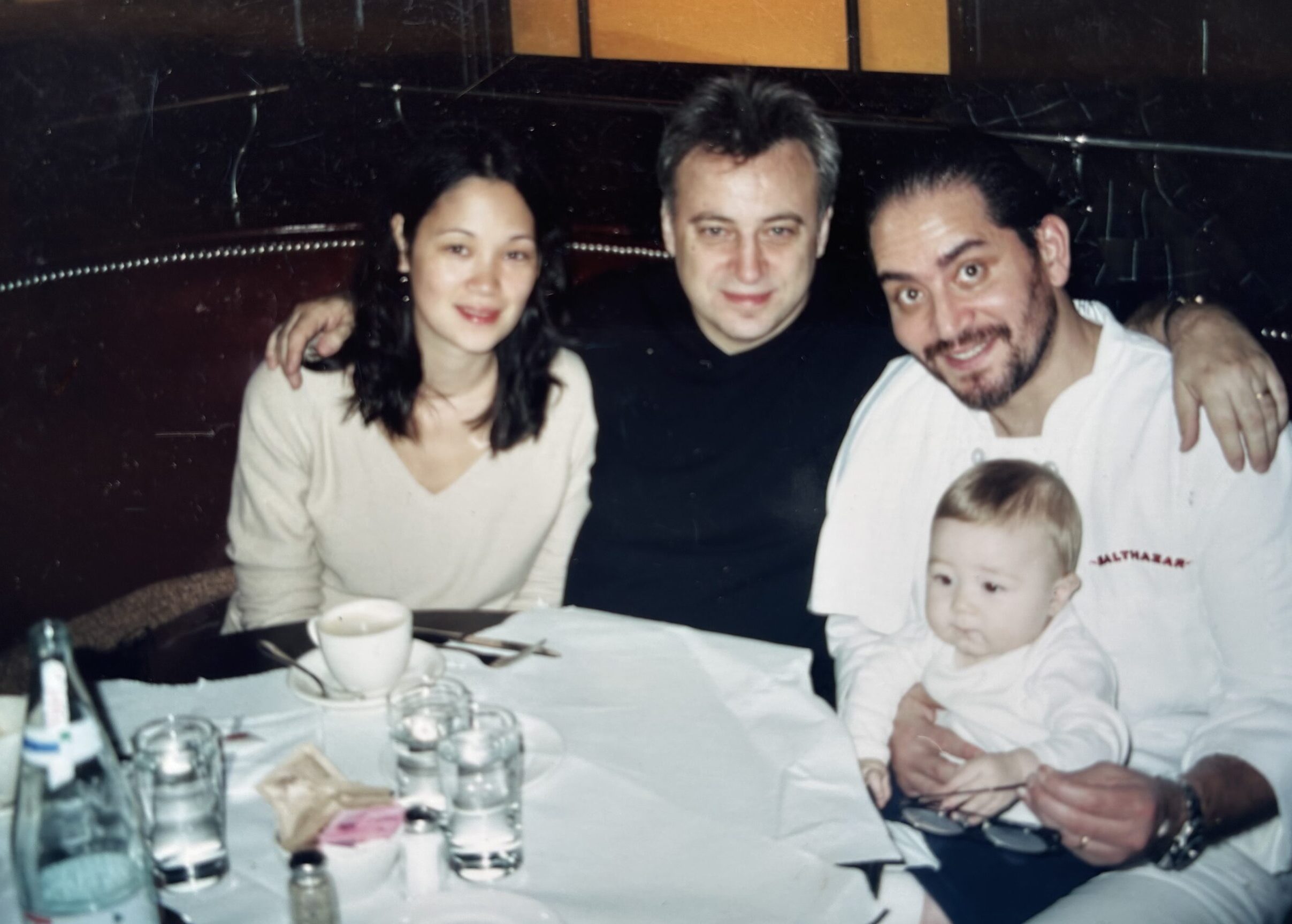
I grew up in restaurant booths with crayons or sitting in on tastings. I’d be given small tasks on site during build out, and you just pick things up that way. There are things that come up now that I realize I know just from having been in those environments. I definitely looked up to my dad but also to the people around him, some of whom I work with now. I always thought Ian McPheely, who co-designed Balthazar and Pastis, was a genius. Now I’m working with him. Richard Lewis was the architect on a lot of my dad’s places, and now I’m working with his son, Zach Lewis, who’s fantastic.
What do you think your dad understands about restaurants that other people don’t?
My dad has a very high attention to detail. It’s also about having a set of principles—how you work, how you deal with people, where you draw the line in different situations. A big part of it is building an illusion that holds together. It’s less about getting everything right and more about not getting anything wrong. One thing that breaks the feeling can undo everything very quickly.
Do you think he’ll criticize the space?
Yeah, definitely. He already has. My dad came by the space and thought it was a bit boring, but one can always find something wrong with everything. He did write something about it on Instagram, though, which I think was his way of saying he’s proud.
How much have you leaned on other people while putting this together?
It’s been quite important to me to do this on my own. The best way to learn anything, at least in my experience, is to actually do it. You try it, struggle with it, and figure it out as you go. Even if this place is a total flop, I’ll have learned the entire process. You don’t really understand something unless you go through every step of it. There’s probably a part of me that wants to prove something as well. People will always say I’m only able to do this because of my background. That’s just how people are. But for the people I actually care about, I want them to see that I’m really trying, and that I’m doing it properly, in my own way.
How did you feel about your dad’s memoir I Regret Almost Everything?
I went through phases. At first, I felt slightly confused by it, but it was important to him so I wasn’t going to criticize it. When it came out, I was still working at the bar, and I was worried people would come in and treat me differently. Some people tried to buy me drinks because they felt bad, which was a bit strange. I also didn’t like that people who didn’t know me would suddenly feel like they did. I didn’t want to be seen as a character from a story. When people really like a book, they start to see things that way.
When you look ahead five years, what kind of restaurateur do you want to be?
I have no idea, honestly. I’ll have to see what actually makes a great owner since there isn’t really one model. Some people are very good at working the room, and others stay more in the background and create a kind of mystery. It’s interesting how people start to associate a space with a person. Sometimes it happens naturally, and sometimes it doesn’t happen at all. You can try to force it, but if you try too hard to make it about you, it won’t work. I’d also like to do other projects, so I’ll probably be here four or five days a week at the beginning, but not forever.
When you picture opening night, what do you see?
We’re planning to do three or four opening nights, staggered. One will be friends and family, another more like a VIP night, and one focused on the people who worked on the project and their families. I’ll be there for all of them. I’m still deciding whether I’ll work the bar or be on the floor. I might try different roles on different nights. I think a couple of them will be packed with really interesting people. It might end up being more scene-y than I’d ideally want, but that’s part of it.
What about the crowd?
Only really attractive people. Kidding! It should be a good mix. I really like the crowd I have at the bar at Balthazar, and I think that will translate. The people who come once or twice a week, I want them to feel like they can do that here as well. I try to keep the ecosystem balanced across different ages. It’s much more fun that way. You never want to go somewhere where it’s all one type of person. Even if it’s a young, hip place, if it’s only young, hip people, it gets a bit dull. What I like is when different scenes come together. When that happens, something actually forms. That’s what I’m hoping for.
More of our favorite stories from CULTURED
How The Pitt’s Patrick Ball Went From Role-Playing Corporate Trainings to Starring on Broadway
The 2026 CULTURED Power Advisor List: Meet the Art Advisors Shaping the World’s Top Collections
A New Book Unearths the Heated Rivalry Between Artists Peter Hujar and Paul Thek
Speed Round! 13 Critics Review 25 NYC Shows Before You Finish Your Morning Coffee
Sign up for our newsletter here to get these stories direct to your inbox.


 in your life?