“The word ’art’ etymologically means to do—not even to make, but to do—and the minute you do something, you are an artist,” Marcel Duchamp said in his first (and last) live TV interview, with the BBC in 1968, the year he died. This sweeping view of who can be an artist, and what art can be, is one reason why Duchamp is among the most influential and enduring figures in contemporary practice. More than a century after he purchased everyday objects like a bicycle wheel or a snow shovel from a commercial shop and displayed them as works of art, he still manages to challenge, incense, and inspire.
“The whole idea, 100 years later, that something is just store-bought still has that shock value,” says Ann Temkin, MoMA’s chief curator of painting and sculpture, who is co-organizing the museum’s monumental retrospective on the artist, opening April 9. The artist’s impact has lasted so long because his work is “not about style. It’s about the underlying concepts and attitude,” she notes. “He identified the ways in which the systems around him, in fact, were very unstable,” adds Michelle Kuo, MoMA’s chief curator at large, who also worked on the exhibition.
The story begins with Duchamp’s fateful submission—a plain white ceramic urinal under the title Fountain signed using the pseudonym R. Mutt—to the 1917 Society of Independent Artists exhibition in New York. Most of the board refused to display the object, calling it “obscene.”
Alfred Stieglitz photographed the original Fountain soon after, and his decisions regarding the urinal’s lighting and position cemented its status as art. Duchamp would continue to push boundaries in the following decades, embracing a drag alter ego known as Rrose Sélavy and developing his own portable retrospective in a box—complete with miniatures of his most famous pieces. He even abandoned art for a stretch to devote himself to chess, while secretly working on an ambitious installation, Étant donnés, which was publicly unveiled by the Philadelphia Museum of Art posthumously.
It is there that generations of artists—starting with celebrated figures like Robert Rauschenberg, Jasper Johns, Jean Tinguely, and John Cage—have discovered Duchamp’s work and ideas. Duchamp’s biographer, the long-time New Yorker writer Calvin Tomkins, called these artists the “children of Duchamp,” also noting that the artist was uncomfortable with the prospect of his own widespread influence. Today, a new generation—Duchamp’s grandchildren, if you will—is reinterpreting and advancing his ideas. Meet four artists who are, yet again, expanding our definition of what art can encompass.
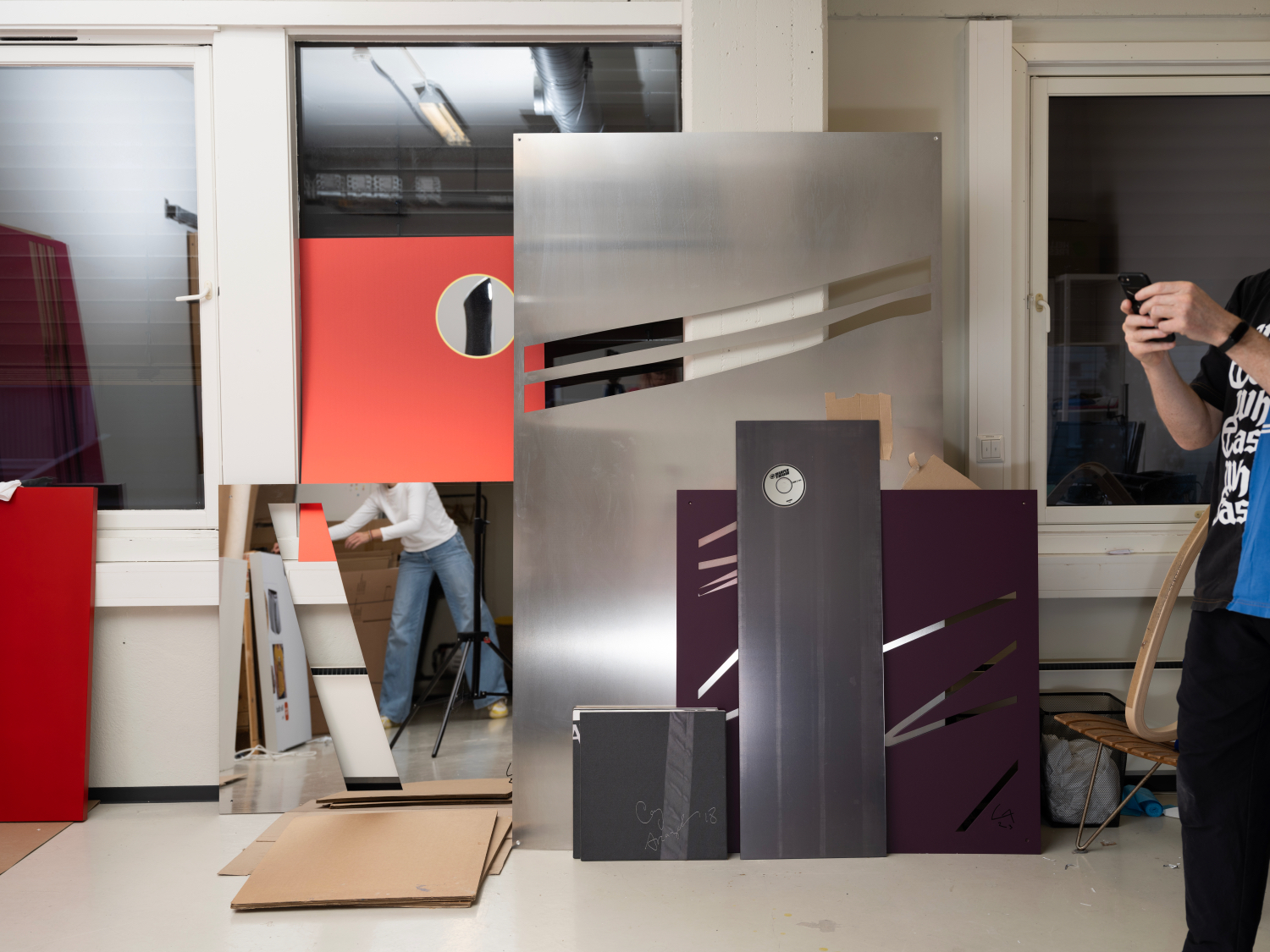
Cory Arcangel, 47, Oslo
A digital art pioneer, Cory Arcangel has brought the concept of the found object into the virtual space, with elements of video games and online culture as his preferred media. In one of his earliest and most famous pieces, Super Mario Clouds, 2002, Arcangel modified a Nintendo game cartridge to remove every animation from the side-scroller, leaving behind an endless series of floating clouds against a blue sky. Like Duchamp, who entertained himself in his studio by spinning Bicycle Wheel, 1913, the banality is the point.
Arcangel recalls, during a long-ago visit to the PMA’s Duchamp collection, being struck by the strangeness and playfulness of the work: “I couldn’t make heads or tails of most of it,” he says. But it was a 2022 exhibition at the MMK in Frankfurt, however, that made Arcangel think about how much Duchamp “really lived a life in the arts.”
In addition to Duchamp’s more well-known readymades—which were hung as the artist often displayed them in his studio, dangling from the ceiling or leaning haphazardly on the floor or against a wall—the show featured archival materials from throughout his career. These included his illustrations and graphic designs, like the bond certificates he produced to finance his attempt to live as a professional gambler in Monte Carlo, or the “rotoreliefs” he tried hawking at an inventor’s fair in Paris, a series of patterned cardboard discs that would create dazzling effects when spun on a turn-table. “I thought, This is a good model,” Arcangel recalls. “You don’t need to make a masterpiece every time, you just stay in the mix.”
“It’s like a game to convince other artists and other people in the know that what you’re doing is art.” —Cory Arcangel
Duchamp’s mutability is what continues to call to Arcangel, whose own varied practice includes electronic music composition, publishing, and a retail line of “surfware”—outfitting the chronically online with products like neckpillows and bedsheets. He has programmed A.I. bots to play chess by dictating their moves through Instagram comments, documenting the endeavor in a video installation.
In almost all he does, Arcangel reframes shards of digital ephemera as objects worth preserving, and brings immersive online experiences into the real world. “It’s like a game,” he says, “to convince other artists and other people in the know that what you’re doing is art.”
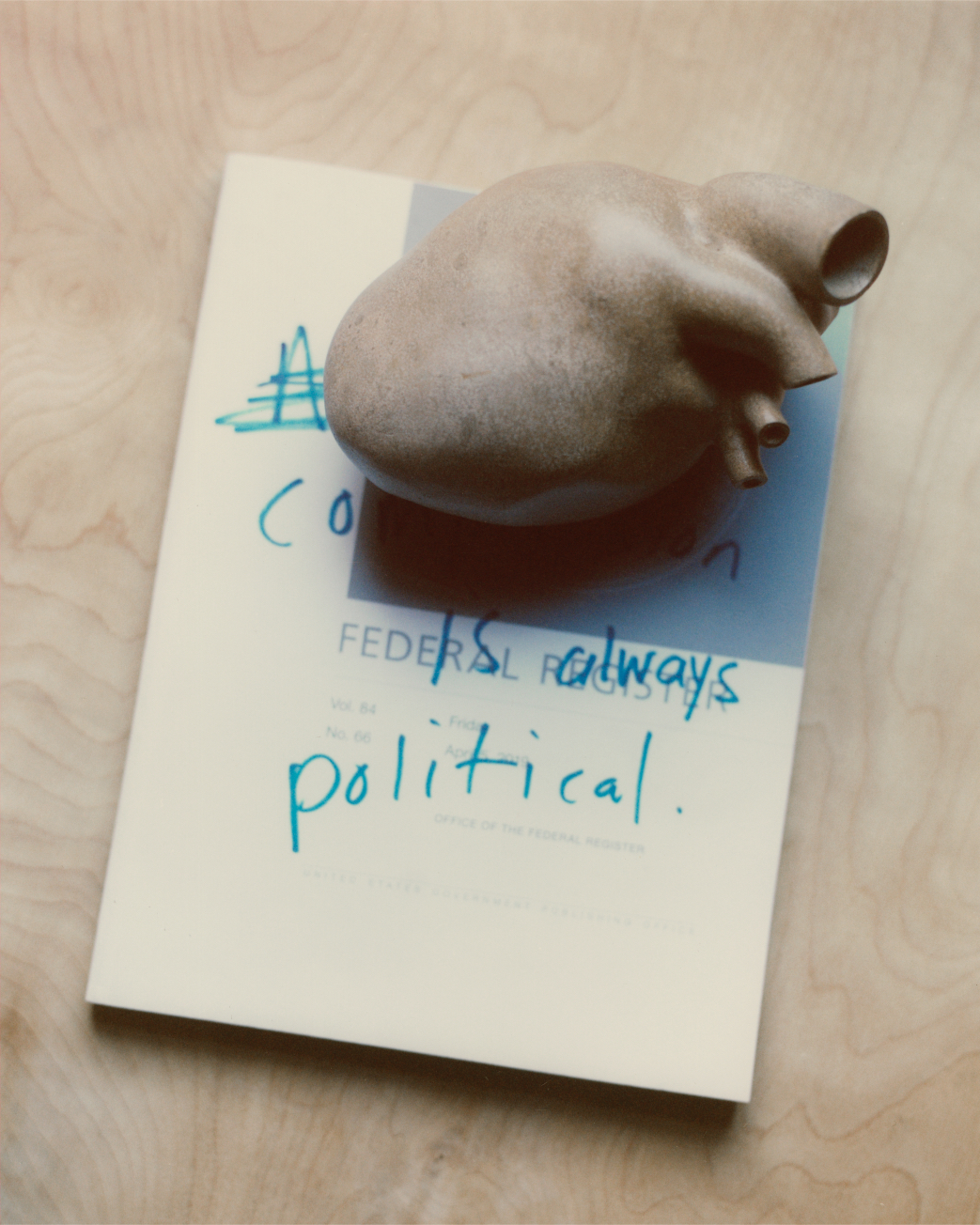
Jill Magid, 53, Brooklyn
For years, Jill Magid has put herself into her work. She convinced the Liverpool police to capture her on CCTV and then requested the footage through legal forms in Evidence Locker, 2004. She devised a contract with a company to transform some of her cremated remains into a diamond after her death in the work Auto Portrait Pending, 2005.
Recently, she has adopted the term “Assisted Nonfiction” to describe her practice. Coined by art historian Gilda Williams, the concept draws on Duchamp’s idea of assisted ready-mades, objects that involve some form of manipulation by the artist. For Williams, “Assisted Nonfiction” involves an artist who “selects, researches, observes, and/or inserts themselves in the first person into a real-life event, circumstance, institution, or system, to stress and expose its operations and purpose from within, usually with little preconception of the outcome.”
“I’m aware that I don’t have full control. That’s part of the work.” —Jill Magid
But Magid is just as circumspect as Duchamp was on the question of influence, asking, “Why saddle my work with this extra responsibility of carrying on his legacy?” She does see in her own practice a kind of “feminist approach” to Duchamp’s ideas. Rather than declaring an existing object art, she infiltrates an external system and develops a new relationship with it. The best-known example might be her exploration of the archives of Mexican Modernist architect Luis Barragán, and the thorny copyright issues surrounding it, which resulted in a number of exhibitions and a feature-length documentary, The Proposal, 2018. “I’m aware that I don’t have full control. That’s part of the work,” Magid says.

Maya Man, 29, New York
Maya Man uses the readymade material of the Internet to create art that probes the boundary between real life and performance. In her digital work, A Realistic Day In My Life Living In New York City, 2024–25, she culled thousands of TikTok videos for real-time “day in the life” content, which took over the Whitney’s website once every hour for a year.
Duchamp posited that “the role of an artist can be to put a frame around something that exists,” prompting people to look at the everyday in a new light, Man notes. “A lot of my work is about zooming in on a subculture or niche of content online, collecting a large number of examples, and manipulating them into a work that asks its audience to look at that phenomenon in this new way.” This reframing, for Man, dovetails with the lifelong punster’s sense of humor—another quality she strives to emulate. Her 2022 “FAKE IT TILL YOU MAKE IT” series is a collection of pastel-hued Instagram-ready graphics that parody the performative confidence of self-care influencers. (Each features a nonsensical proclamation: “I FILL MY MIND WITH NICE AND MAGNETIC ANXIETIES” or “GIRLS WILL SHOP.”)
“A lot of my work is about zooming in on a subculture or niche content online, collecting a large number of examples, and manipulating them into a work that asks its audience to look at that phenomenon in a new way.” —Maya Man
For Glitter Tubes (Waterproof), 2025, she printed the names of makeup products found on Sephora’s website—like Aqua Resist® or Lights, Camera, Splashes™—onto a collection of inflatable pool floats. Silly on the surface, the installation highlights the pressures on women to maintain a flawless appearance, even in moments of leisure.
“My practice is very digitally native, which goes against the grain of a lot of structures that are set up for contemporary art,” she says. Man finds figures like Duchamp—who, ever since his painting Nude Descending a Staircase (No. 2) was rejected for display at the 1912 Salon des Indépendants in Paris, spent most of his life pushing against the authority of established art critics and institutions—to be useful guides. “Duchamp was so serious about his work, but there’s a built-in light-heartedness in everything he made that I find so desirable,” Man says. “It’s an attitude I want to adopt in how I make work and live my life around making work.”
Darren Bader, 47, New York
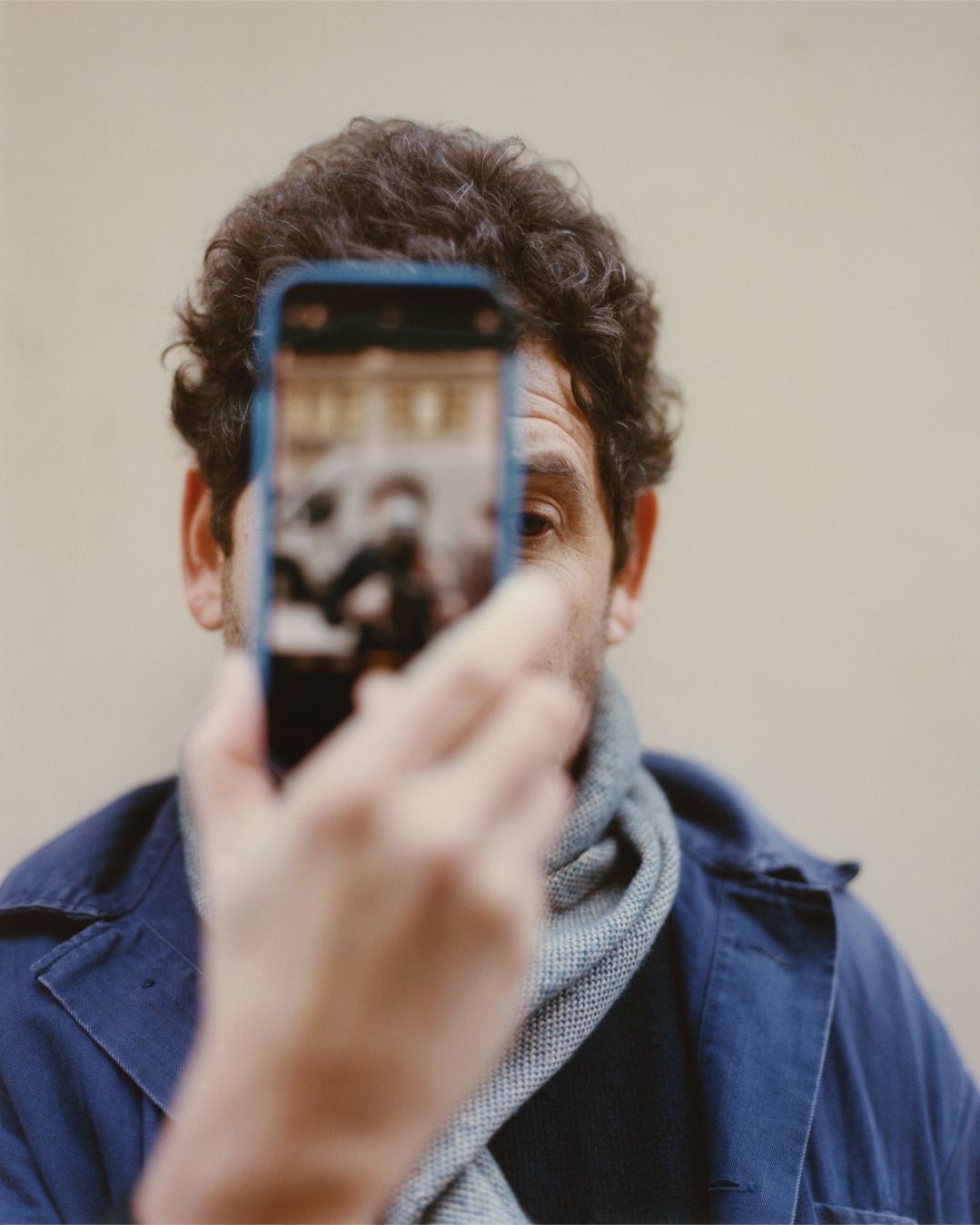
“I’m a little nervous because I have an ambivalent relationship to him,” Bader admits at the start of our interview. It’s a sentiment Duchamp would likely understand. “My approach to found objects comes from a very different source,” Bader says. Duchamp made a point of rejecting aesthetic considerations when choosing his readymades. (He said, at a MoMA talk in 1961, that he chose his objects “based on a reaction of visual indifference, with at the same time a total absence of good or bad taste.”) Bader, dissimilarly, is drawn to what he describes as an object’s “aura, for lack of a better term.”
“That’s where I come from: this ultra-serious, almost metaphysical relationship to objects,” Bader says. His 2012 show “Images” at MoMA PS1, for example, featured a gallery of fruits and vegetables set on waist-high wooden plinths. The produce, rather than being allowed to rot, was regularly replaced; visitors were served salads made with the recently venerated harvest. “For me, everything’s about primary encounters,” Bader says. “When you walk up to a painting, it’s going to hit you or it’s not. That’s what makes art art, right?”
“It’s extremely generous. Duchamp opened up the field almost infinitely.” —Darren Bader
Bader’s exploration of an object’s “aura” was recently on display in the exhibition “Youth” at Matthew Brown, where many of his sculptural assemblages involved celebrity memorabilia or detritus. The undated work CS27 includes Clint Eastwood’s hat, Anne Heche’s sweater, Farrah Fawcett’s pants, Gregory Peck’s membership card, Sophia Bush’s sneakers, Paul Stanley’s mug, Tom Petty’s hockey puck, Jane Fonda’s doily, and Clark Gable’s grapefruit spoon. “I’m interested in capturing the moment where what already exists takes on a different guise for the purpose of an art audience,” Bader adds.
Duchamp’s insistence that whatever an artist chose to do could be considered art might be his greatest legacy for contemporary practitioners. “It’s extremely generous,” Bader says. “He opened up the field almost infinitely.”
More of our favorite stories from CULTURED
How Blue Ribbon Survived a Mob Run-in and Transformed Late-Night Dining
Why Cookbooks Are the Next Frontier for Narrative Writing
You’ve Heard About the New Museum’s New Building. The New Show Is Even Better.
Everyone Was Afraid to Touch Nadav Lapid’s Satire of Israeli Artists. Now, It’s Being Released.
Where 27 Artists Are Hanging Out in New York Right Now
Sign up for our newsletter here to get these stories direct to your inbox.



 in your life?