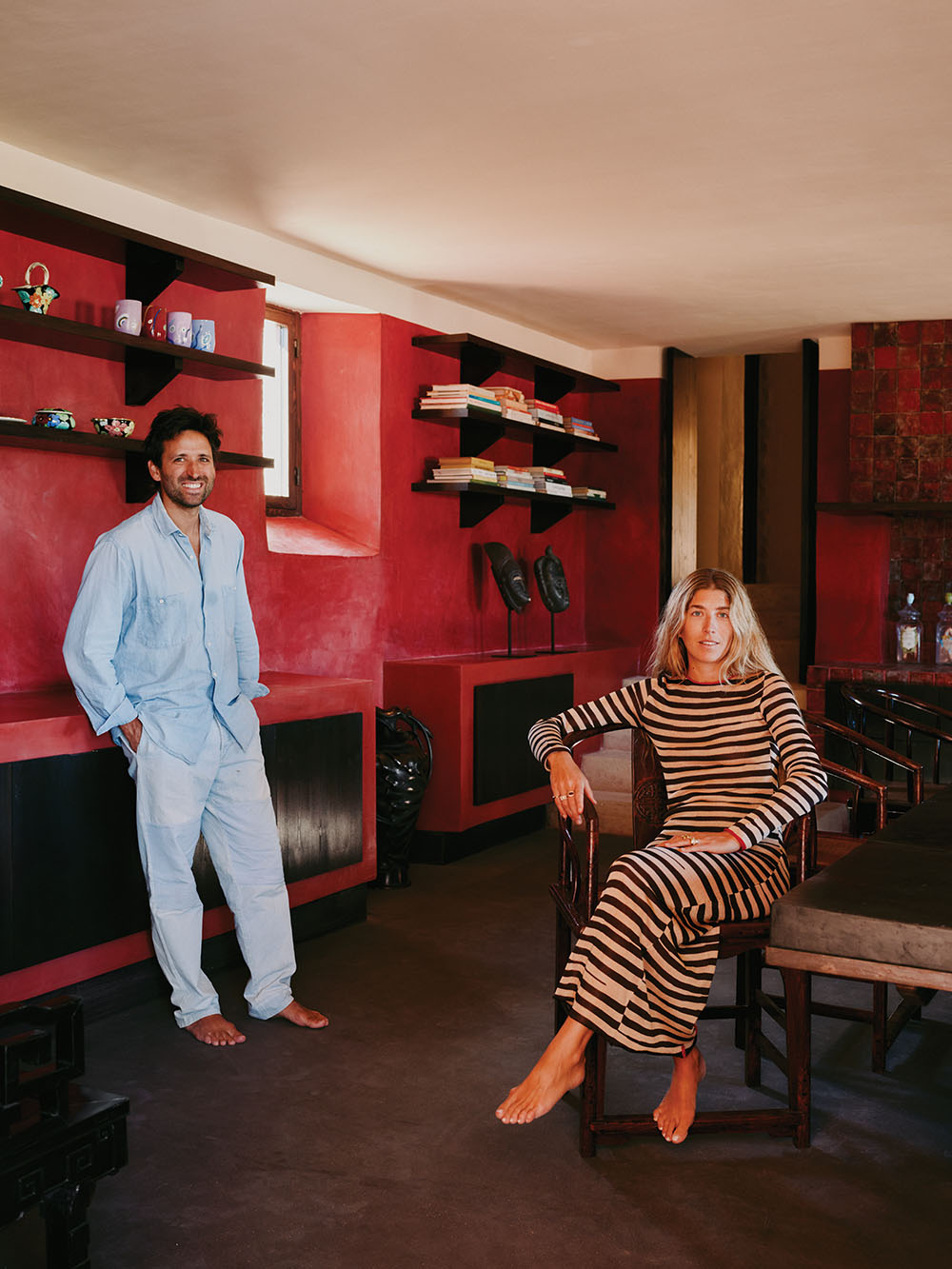
In 1176, the Knights Templar built a compound called Domaine de La Cavalerie. Emanuel Ungaro acquired the crumbling ruin in 1985, immediately setting about refurbishing and replanting the grounds. The French couturier, who experienced 20th-century acclaim dressing bold-faced names including Jacqueline Kennedy Onassis and Catherine Deneuve, had been searching for a sanctuary away from the bustling streets of Paris. La Cavalerie’s bones—which include the original La Commanderie building, as well as the 17th- century Bergerie and 160 acres of rolling hills, olive groves, and forests—fit the bill. After Ungaro’s death in 2019, his daughter, Cosima Ungaro, and her husband, Austin Feilders, who run the creative agency Concept out of the French capital, took the reins.
Filtering their forebear’s design legacy through 21st-century sensibilities, they introduced geothermal power, 1,000 more olive trees, and a vision for multi-purpose hospitality. At the heart of the estate, which can now be booked for stays or events, is a single, guiding principle: “shock and awe.” La Cavalerie’s library, tucked into the Commanderie building, is a living testament to this one–two–punch ethos. As immediately dazzling as it is laden with well-traveled references and hidden facets, the room distills Ungaro’s fearless craftsmanship and magpie-like sensibility. For CULTURED, the Domaine’s new stewards shine a light on a few of the hidden gems it contains—and the sui generis design philosophy they reveal.
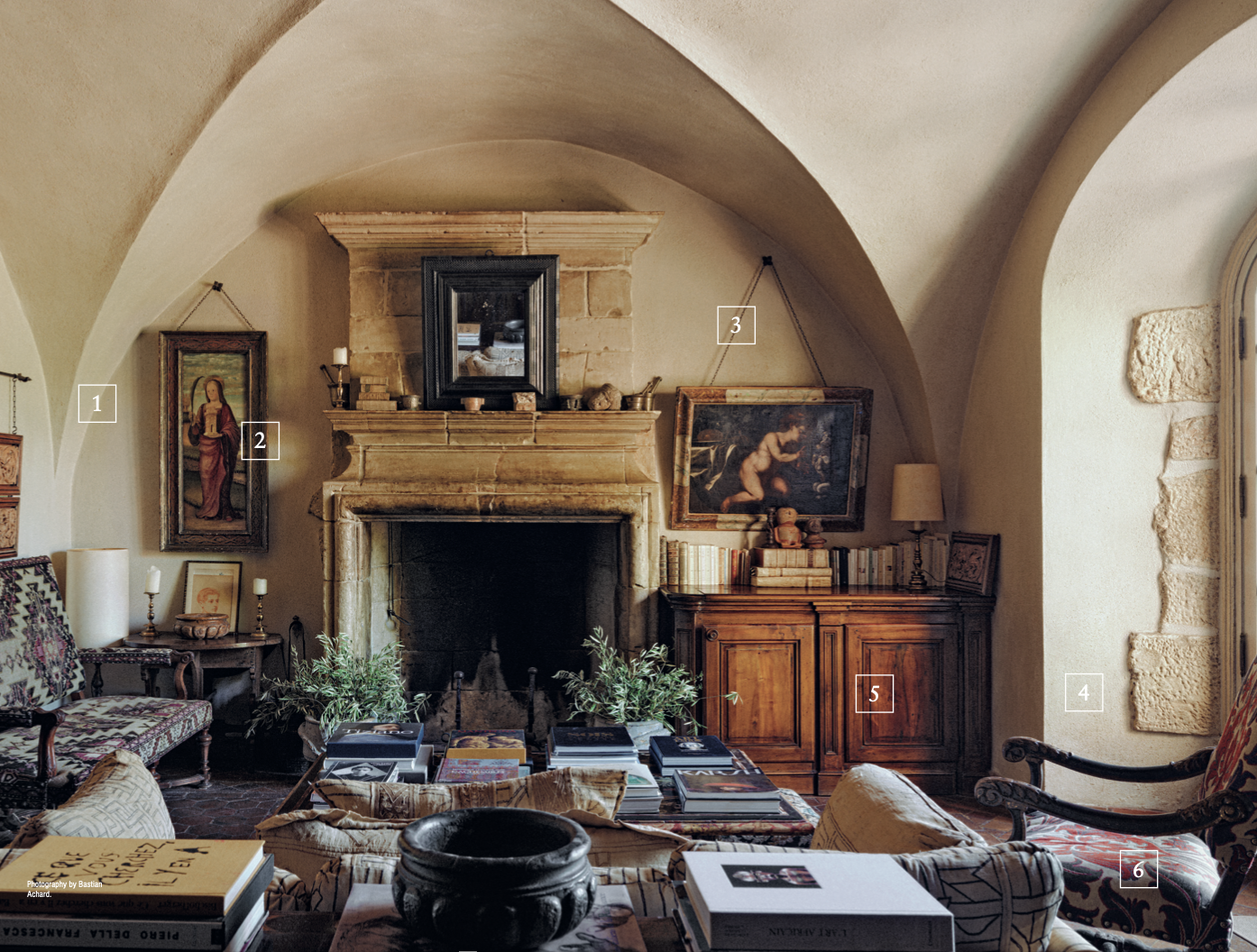
- Ungaro preserved a deep connection with the estate’s medieval roots, from the integration of the aptly-stylized library ceiling to a five-year restoration of the 12th-century chapel on the property, where he and his wife, Laura, were wed.
- La Cavalerie is packed with antiques and artworks collected from trips to Milan and Parma, where antiquarians, fairs, and dealers became key sources of Italian design inspiration for Ungaro.
- The designer obsessed over placement—a chain’s length, an object’s eyeline—and balanced proportions were all given due attention. Even the light switches sat particularly low, positioned so he could flick them with the back of his hand when departing a room. Through the doors to one of the terraces and beneath the night sky, Ungaro once pointed at the moon with a younger Cosima by his side. “Everything I’ve gained in life,” he said, “I asked the moon for it.”
- A television hid behind a bronze-brown wooden cabinet—an example of the designer’s restraint and insistence on discretion. Function never overpowered form.
- Emanuel Ungaro’s preferred seat faced the concealed television. He would settle into this chair with one leg over the arm—a warm break from the composure he maintained in Paris.





 in your life?