In early 2011, Sarah entrusted me to track down the elusive designer Ricky Clifton for CULTURED, her new magazine at the intersection of art and design. Ricky was phoneless, but I knew enough of his friends to find him, eventually, in Williamsburg at model Agyness Deyn’s apartment. He wanted to show me the ceilings he was lacquering and some shapely egg crates he’d rescued from a Trader Joe’s loading dock.
What is it about a designer like Ricky who makes worlds out of sidewalk pickings and paint? Stanley Tigerman has argued that architecture brings “paradise down to earth,” formalizing our existential conditions with its symbolisms; “To be named an architect,” muses John Hejduk, “at least one of your works must have an aura.” Although these distinguished avant-gardists both meant Architecture and Aura with capital A’s, I’d advocate for bringing those atmospheric terms back into the frame of everyday improvisational magic. Less to do with academics, or god, or taste, and more to do with human impulse and the vibration (literally) of light and sound into patterns of energy that move us and, over time, embroider our experience of the world. To place a rose in a vase on the table just so is an opus. It reveals intelligence gained from a lifetime of sensory experience. Only you can do it like that.
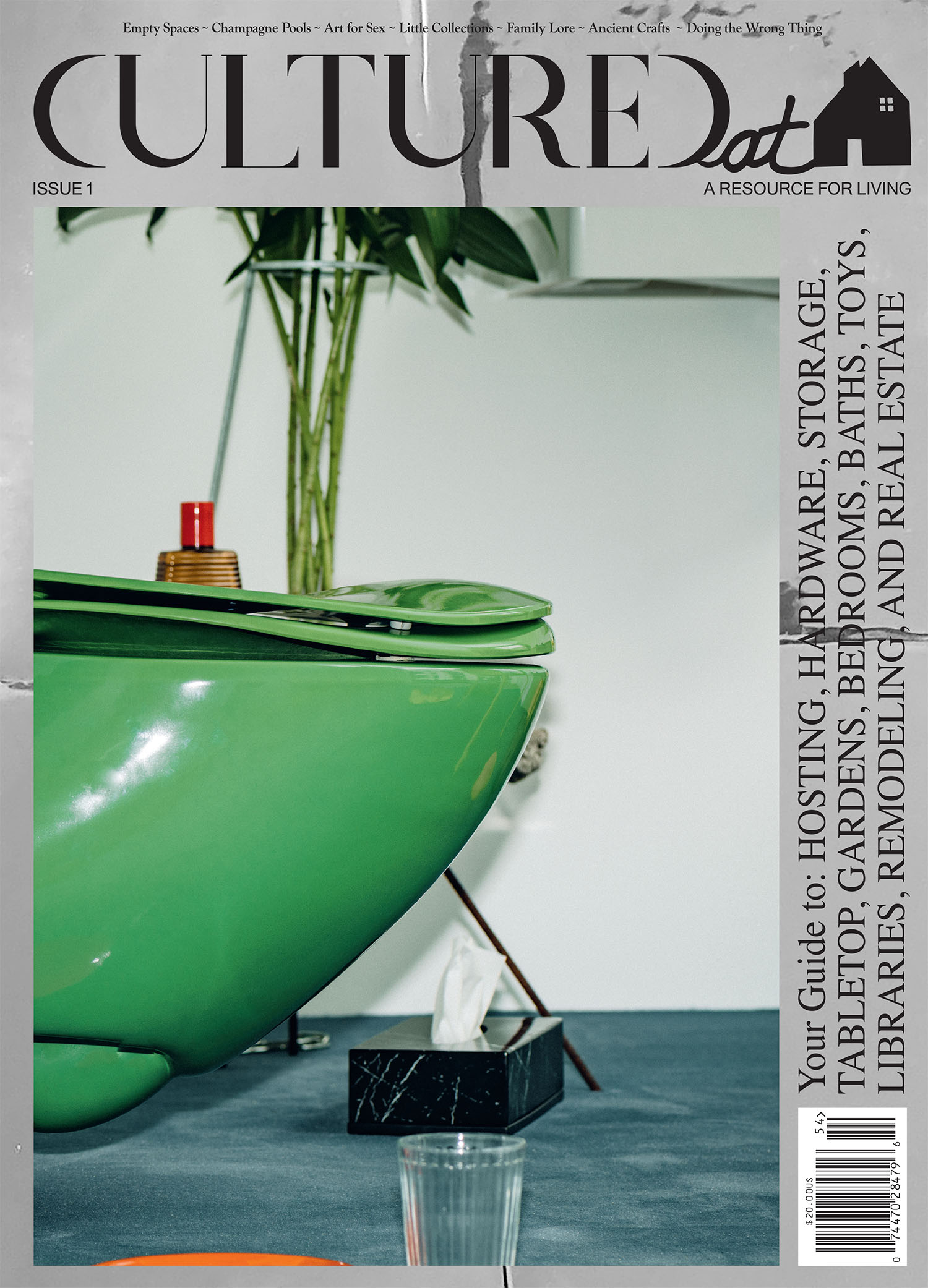
More than a decade after those first issues of CULTURED, the inaugural edition of CULTURED at Home chases that impulse for abundant experience across ruined gardens, calamitous interiors, midnight music, and sancta sanctorum, capturing how artists and designers resist neutrality, inventing new forms of expression; how people act out at home, making spaces, families, and ideas their own; and how the things we stare at, touch, taste, and hear form the foundation of imagination—and beauty—itself. This issue of CULTURED at Home is part resource—mapping landscapes of contemporary design culture—and part reverie—protecting the dreamer in all of us with intimate explorations of domestic space from a cross-spectrum of critics, novelists, filmmakers, performers, and designers themselves. The perspectives in these pages make a case for living life to its edges, and with each other.






 in your life?