Search #cultured on See Saw Gallery Guide anytime to add CULTURED’s picks to your custom map.
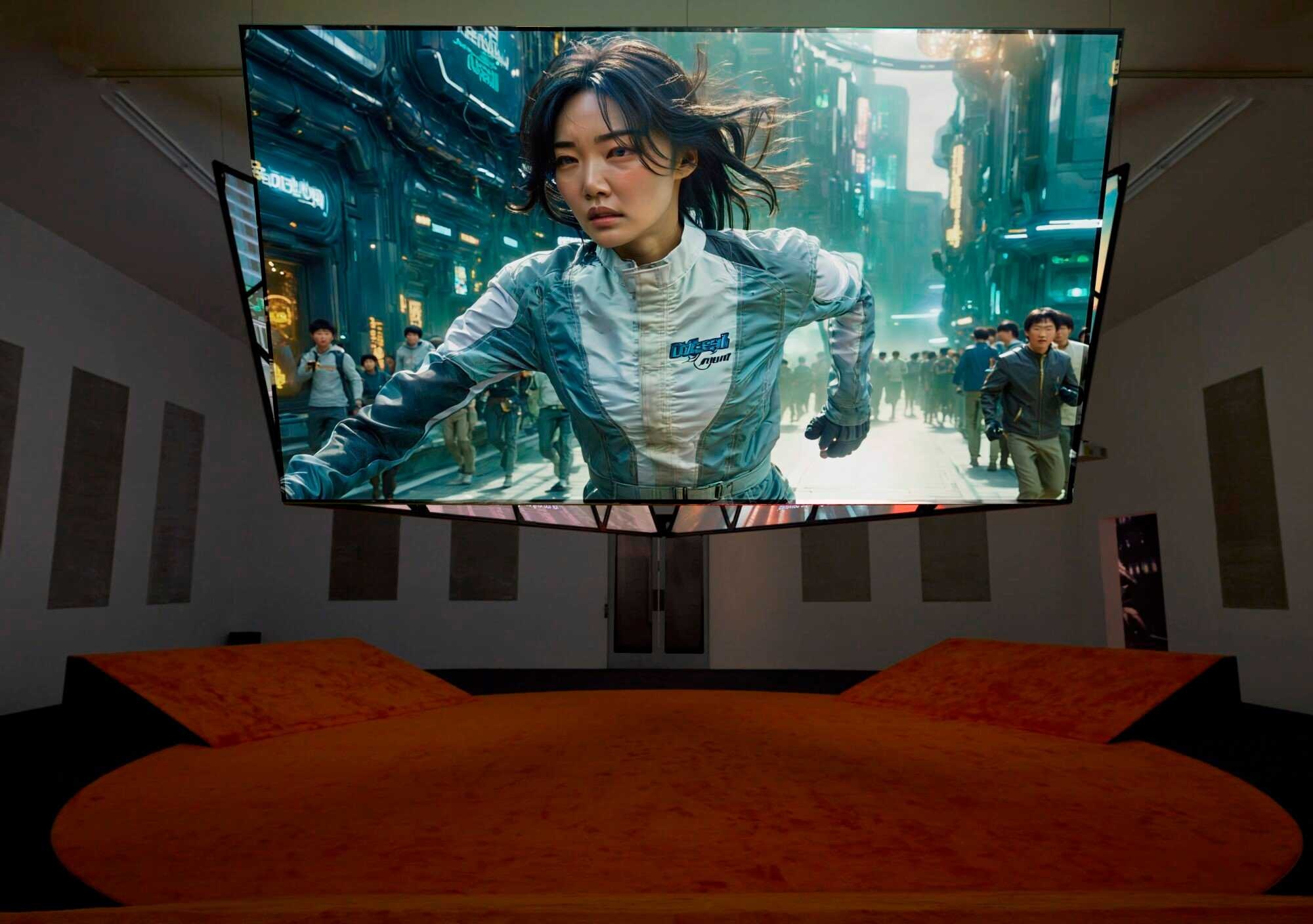
“Delivery Dancer Codex” by Ayoung Kim
Where: MoMA PS1
When: Through March 16, 2026
Why It’s Worth a Look: The Seoul-based Ayoung Kim brings her “Delivery Dancer” trilogy to the U.S. for the first time, crafted with generative A.I., video game engines, and shot footage. These genre-blurring video installations follow two female delivery workers navigating a world that has been transformed by labor uncertainty and technological acceleration.
Know Before You Go: Kim refers to her works as “pandemic fiction,” exploring how short-term labor has increased in Korea and the U.S. in recent years.
“Voice of Space: UFOs and Paranormal Phenomena”
Where: The Drawing Center
When: Through February 1, 2026
Why It’s Worth a Look: Here, 22 artists grapple with UFOs, space-time, and other cosmic mysteries. From religious symbolism to speculative science, these works show how unexplainable situations shape our reality. Those featured include Char Jeré, Pope.L, René Magritte, and Howardena Pindell.
Know Before You Go: Titled after a 1931 Magritte painting, featured in the show, visitors are invited to trace how historical artifacts, contemporary works, and sourced documents have shaped and been shaped by the cultural imagination.
“Ruth Asawa: A Retrospective”
Where: MoMA
When: Through Feb 7, 2026
Why It’s Worth a Look: Featuring nearly 300 works, this posthumous survey highlights Ruth Asawa’s six-decade exploration of form, material, and process. From wire sculptures to drawings, casts, and commissions, the late artist’s work demonstrates how simple materials can propel an expansive curiosity, all while blurring the line between abstraction and figuration.
Know Before You Go: Asawa’s philosophy is partially rooted in her studies at Black Mountain College, where creativity was seen as inseparable from daily life.
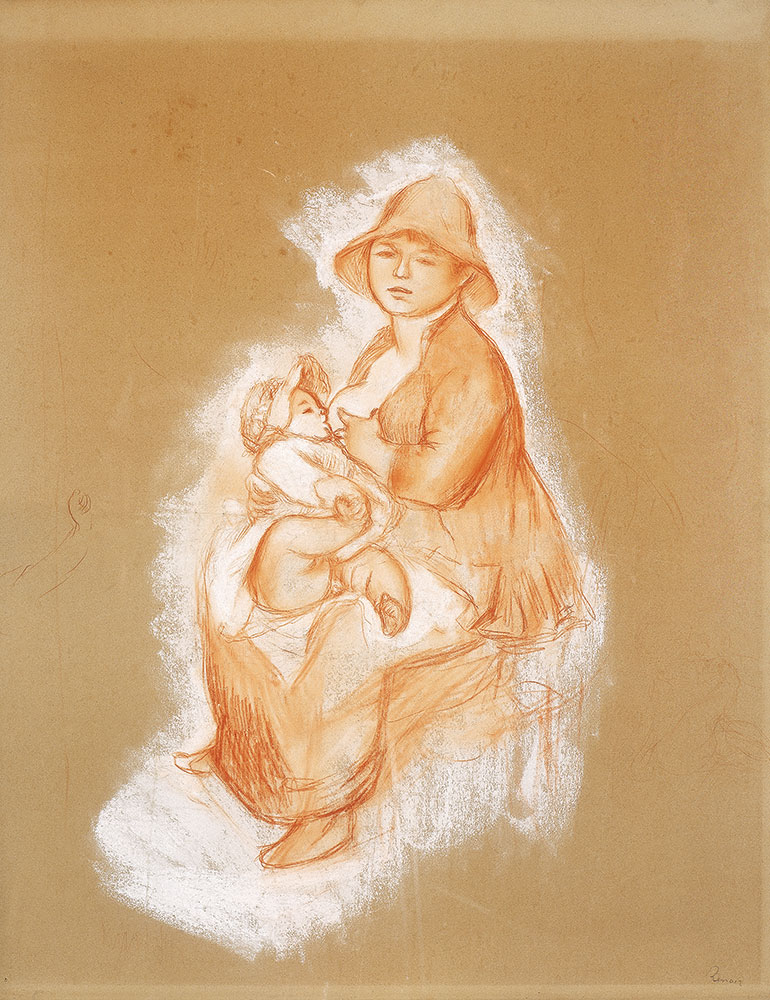
“Renoir Drawings”
Where: The Morgan Library & Museum
When: Through February 8, 2026
Why It’s Worth a Look: Although Pierre-Auguste Renoir is primarily known for Impressionist paintings, this showing reveals the crucial role that drawing has played in his career and the development of more prominent pieces. Bringing together nearly 100 works on paper and paintings, from academic student sketches to intimate portraits, visitors are invited to immerse themselves in the artist’s process.
Know Before You Go: Organized with the Musée d’Orsay, a major catalyst for this exhibition is the Morgan’s recent acquisition of a large preparatory drawing for The Great Bathers.
“Robert Rauschenberg’s New York”
Where: Museum of the City of New York
When: Through April 19, 2026
Why It’s Worth a Look: Marking the centennial of Robert Rauschenberg’s birth, this exhibition focuses on the artist’s inventive photographic approach, which helped define the postwar aesthetic. Exhibited works include a cross-country photographic survey conceived during his days as a student at Black Mountain College, as well as a number of photos taken during his travels abroad.
Know Before You Go: The exhibition is part of the larger Rauschenberg centennial celebrations, which include new publications, shows around the world, and the revival of a few of his theater contributions at the upcoming Dance Reflections festival.
“High Wire: Calder’s Circus at 100”
Where: The Whitney Museum of American Art
When: Through March 9, 2026
Why It’s Worth a Look: A century after Alexander Calder began crafting his Cirque Calder, Whitney revisits the grounding work of the most influential sculptural practices of the 20th century. Calder’s miniature circus captivates modernist luminaries with handcrafted puppetry, engineering ingenuity, and theatrical performance.
Know Before You Go: With related drawings, early wire figures, and archival materials, Calder’s fascination with kinetics evolved into his invention of the mobile, as the artist discovered “thinking in wire.”
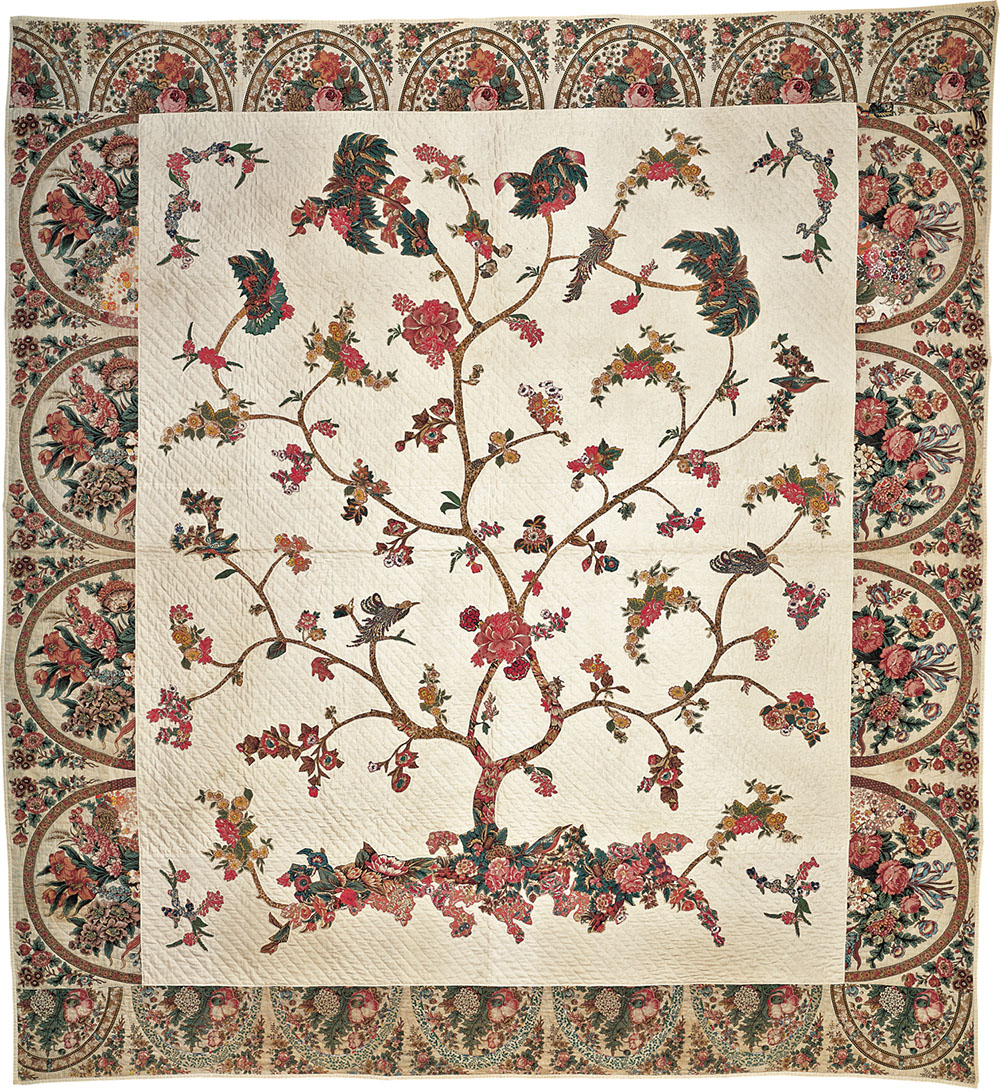
“An Ecology of Quilts: The Natural History of American Textiles”
Where: The American Folk Art Museum
When: Through March 1, 2026
Why It’s Worth a Look: This exhibition shows quilt-making as an ecological art form that maps how environmental resources, global trade, and technological innovation shaped American textiles between the 18th and 20th centuries. Through approximately 30 quilts, pulled from the museum’s collection, visitors can trace the interwoven histories of craft, labor, and the environment.
Know Before You Go: Instead of focusing on the quilt-makers themselves, the exhibition focuses on the raw materials they employed and the networks that carried cotton, dyes, and fibers across continents.
“Seeing Silence: The Paintings of Helene Schjerfbeck”
Where: The Metropolitan Museum of Art
When: Through April 5, 2026
Why It’s Worth a Look: Finnish painter Helene Schjerfbeck remains a revelation for many American audiences. Though she is well-known in Nordic countries for her striking restraint and emotional clarity, this new exhibition introduces the late artist to a global audience. It includes portraits she painted of her mother and neighbors from her first days in a Parisian art school to her final days living in Sweden.
Know Before You Go: Featuring nearly 60 works from Finnish national collections and private lenders, this show follows Schjerfbeck’s evolution from academic realism to a spare, modernist style.
“Made in America: Christopher Payne’s Industrial Photography”
Where: Cooper Hewitt
When: December 12, 2025 – October 4, 2026
Why It’s Worth a Look: With more than 70 large-scale photographs, this exhibition traces American manufacturing from artisanal craft to innovative production. Christopher Payne’s photography captures the choreography of factory floors, the precision of skilled makers, and the beauty of the machines that create the objects we use.
Know Before You Go: This is the museum’s first large-scale photography exhibition, and includes never-before-seen works, including photography of a Herman Miller furniture factory in Michigan, New Balance sneakers being manufactured in Massachusetts, and Alstom high-speed rail trains in action in New York.
![Gabriele Münter, Still Life on the Tram (After Shopping) (Stillleben in der Trambahn [Nach dem Einkauf]), ca. 1909–12. Painting on board, 19 3/4 × 13 1/2 in. (50.2 × 34.3 cm). The Gabriele Münter and Johannes Eichner Foundation, Munich. © 2025 Artists Rights Society (ARS), New York / VG Bild-Kunst, Bonn](https://culturedmag.nyc3.digitaloceanspaces.com/uploads/2025/12/05162317/Munter-Still-Life-on-the-Tram-1912-scaled-1.jpg)
“Erich Heckel”
Where: Neue Galerie
When: Through January 12, 2026
Why It’s Worth a Look: This exhibition traces the evolution of German Expressionist Erich Heckel, who was a founding member of the Brücke Group. It follows from his student years through to World War I, where he served as a medical orderly, and on to later paintings, drawings, and prints that marked the artist’s emotive shift in Berlin-period works.
Know Before You Go: This exhibition also emphasizes Heckel’s pioneering contributions to modern woodcutting, offering the opportunity to compare his prints with related drawings and paintings.
“Gabriele Münter: Contours of the World”
Where: The Guggenheim
When: Through April 26, 2026
Why It’s Worth a Look: While the world veered toward abstraction, this 20th-century, European painter found inspiration in capturing the mundane objects of everyday life, from fruitscapes to women’s handbags. The inclusion of her early photographs taken while traveling to the States further add nuances to the influence of travels on her work and her role in Der Blaue Reiter modernist collective.
Know Before You Go: Across the Guggenheim’s towering rotunda, over 50 paintings by the artist are included, alongside 19 of her photographs.
“June Leaf: Shooting from the Heart”
Where: Grey Art Museum
When: Through December 13, 2025
Why It’s Worth a Look: June Leaf’s practice was part myth, part theater, part psychological portrait. Her dynamic figures and dense drawings show the messy vitality of the human experience, and the show invites viewers to follow her fixations across a career that lasted some 75 years.
Know Before You Go: The exhibition’s installation emphasizes a cross-medium dialogue, as visitors are taken through drawings, paintings, and wired sculptures arranged thematically around the ideas and practices the artist returned to through decades.
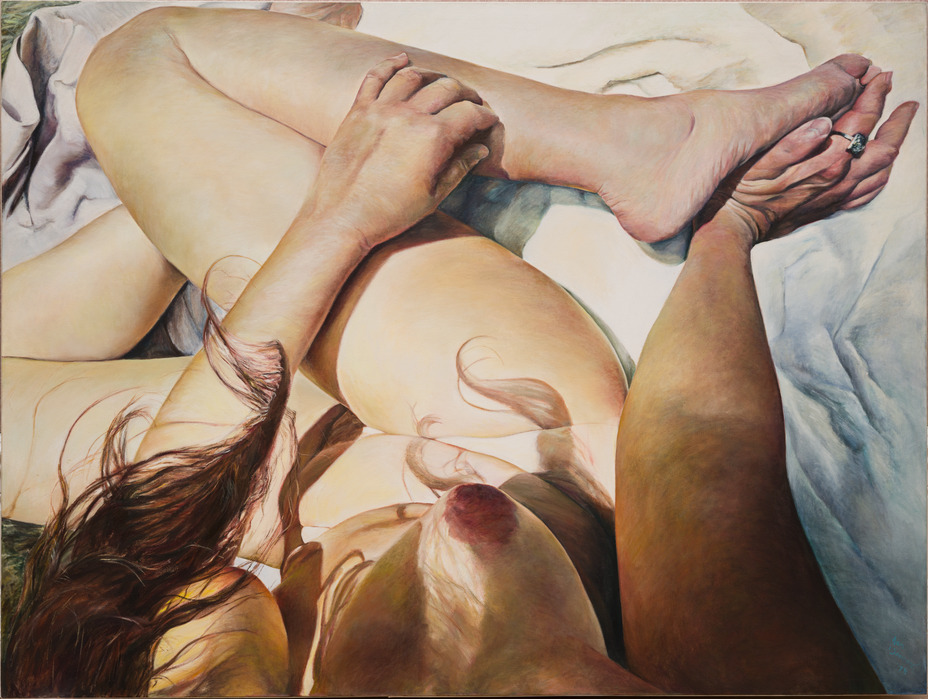
“In the Flesh” by Joan Semmel
Where: The Jewish Museum
When: December 12, 2025 – May 31, 2026
Why It’s Worth a Look: This presentation centers around Joan Semmel’s fiercely declarative nudes. It brings together 16 paintings by the artist and nearly 50 other selected works from the museum’s collection to interrogate intimacy, agency, and self-perception. Semmel has throughout her career reframed the female body as a site for autonomy, resistance, and complex interiority through striking, hyper-realistic compositions.
Know Before You Go: The 50 additional pieces on view were curated by the artist for their reflections on the themes present in her own work, and span painting, sculpture, photography, and works on paper.
“Eternal Flame” by Ana Benaroya
Where: Flag Art Foundation
When: Through January 17, 2026
Why It’s Worth a Look: The works of Ana Benaroya have a graphic power, as she reimagines the feminine body with exaggerated muscularity, tenderness, and erotic charge. These figures are influenced by comic books, art history, and cultural ideas of gender across paintings, works on paper, and monotypes.
Know Before You Go: Flag’s curation spans several of the artist’s series, including “Women In Cars,” “Women In Water,” and “Women With Flowers.”
“I’ve been here all along, I’ve been waiting” by Igshaan Adams
Where: Hill Art Foundation
When: Through December 20, 2025
Why It’s Worth a Look: Igshaan Adams synthesizes community history, spiritual practice, and material innovation in his unique pieces. He traces domestic rhythms and prayer rituals with cotton twine, polypropylene rope, glass, bone, shells, and more in large-scale, wall-hanging works.
Know Before You Go: This exhibition uses vertical space to its fullest potential. Look up often, as wired cloud structures hang overhead.

 in your life?