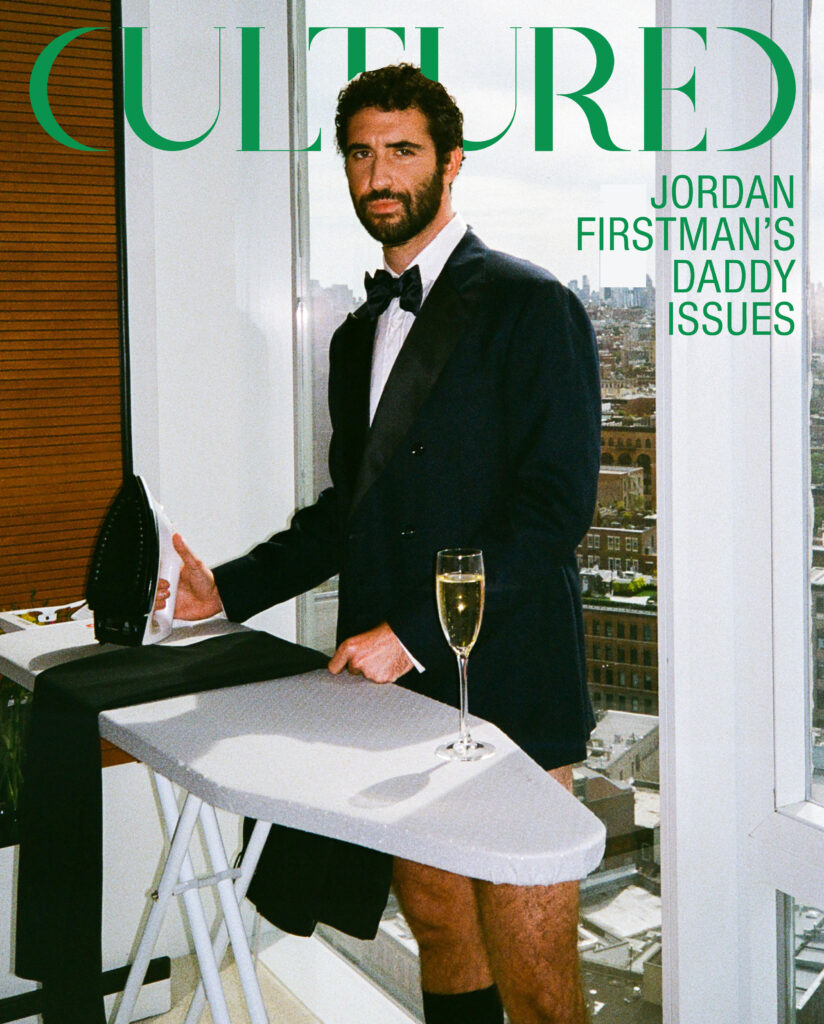
When Jordan Firstman clicks onto Zoom, he’s wearing a black baseball cap emblazoned with the words “Club Kid,” the title of his forthcoming directorial debut. The subtle plug could sum up the last year of Firstman’s life: all in, all the time.
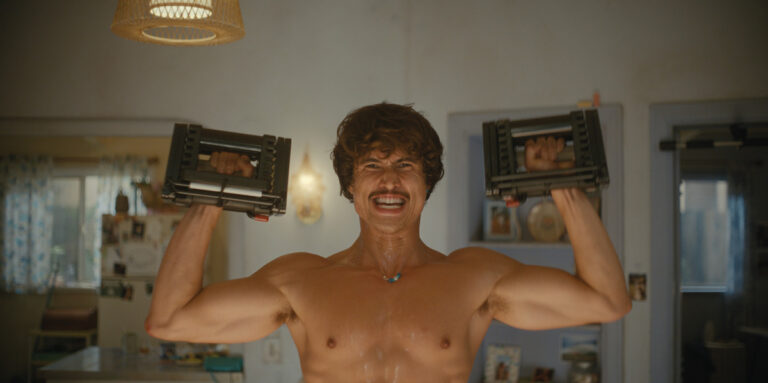
He’s been working up to this moment for a while, breaking into the industry by writing for (and occasionally acting on) cult comedy shows like The Other Two and Search Party. While many took the 2020 lockdowns as an opportunity for self-reflection, Firstman hustled his way to Internet stardom with a flurry of impression videos. “This man is a walking deck of Cards Against Humanity cards,” Ariana Grande wrote on her Instagram story alongside Firstman’s take on “a woman who is not connected to the divine.” When the world opened back up, he pivoted to old-school forms of media, taking a starring role—one that was, bizarrely, also an impression of himself—in Sebastián Silva’s 2023 unfiltered, Robert Pattinson-produced gay epic Rotting in the Sun.
Firstman doesn’t post like he used to, and he seems intent on helping his audience realize he’s not just online or self-referentially funny. Over the last year, he bounced back and forth between filming Brian Jordan Alvarez’s English Teacher (he plays a toxic-lite love interest) and Rachel Sennott’s I Love LA, about a friend group reckoning with the growing pains of adulthood. Up next, Firstman will flex his directorial muscles with Club Kid, the story of a Brooklyn party boy who discovers he has a son, which he also stars in. He also released a debut comedy album, Secrets, somewhere in the mix. It’s almost too much.
To make sense of it all, Firstman sat down with Sennott for a no-holds-barred Artists on Artists conversation. They discuss the film he lost to a breakup, what ayahuasca taught him, and why their work may be difficult to digest—but well worth the effort.
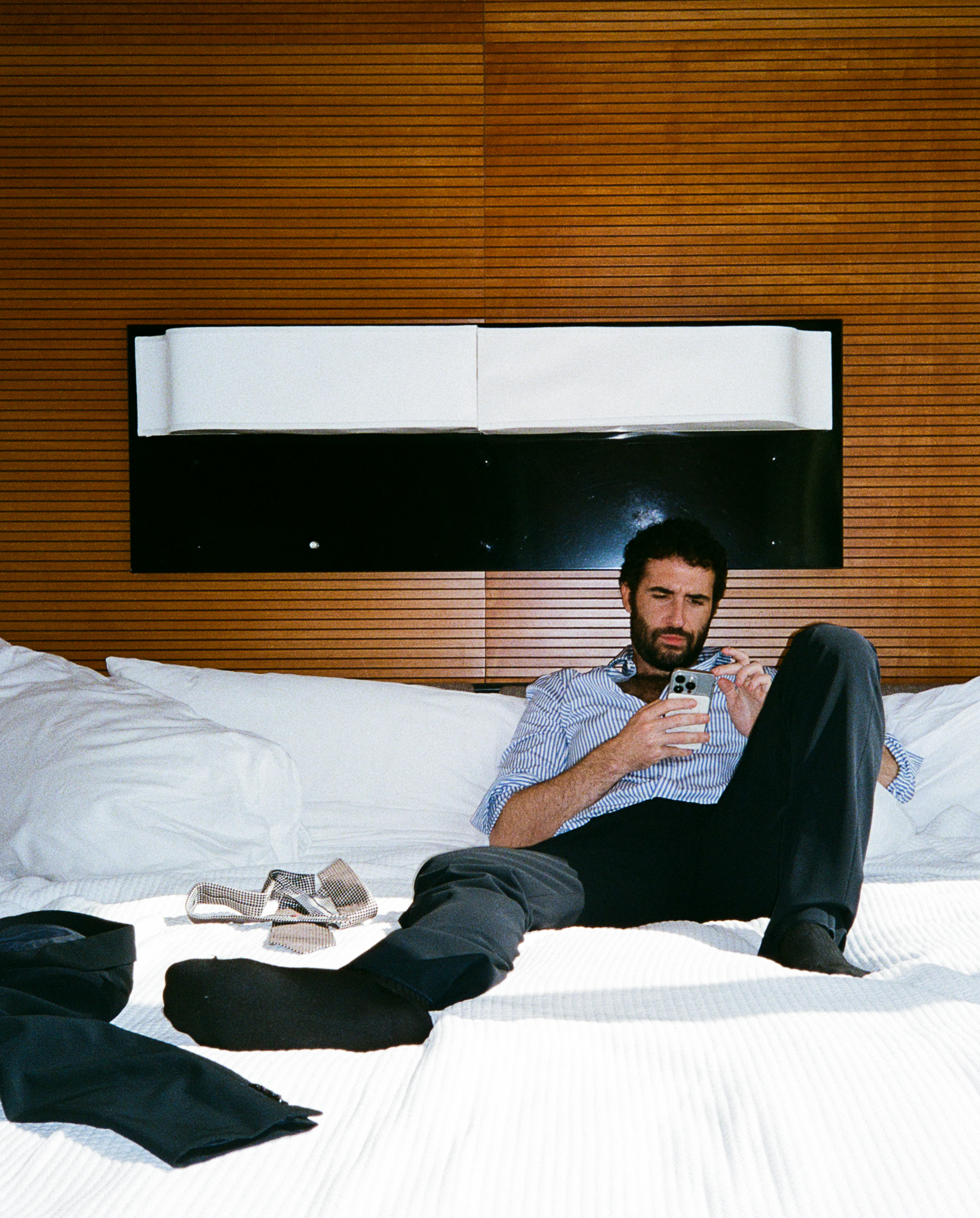
Rachel Sennott: You’ve been going back-to-back. How are you feeling?
Jordan Firstman: The back-to-back of it all has helped me release a lot of pressure. Sometimes I’m watching the episodes [of I Love LA] and I’m like, Damn, I am really free in this. I don’t feel nervous or insecure, even though there’s a lot of pressure. Charlie is my biggest role in a TV show, it’s on HBO, it’s your show…
Sennott: You thought every day, Do a good job or mommy is going to get really angry.
Firstman: Rachel hits when you don’t act well.
Sennott: I do feel that though—you were so free and uninhibited.
Firstman: In terms of my life’s journey, this is a big year in the memoir. Every year you think, Okay, I’m ready for it all to happen now, and I wasn’t. I had two TV shows in my 20s that I had sold but didn’t get made. I wrote a movie with my ex that was about to get financed, then we broke up, so that didn’t happen. All my things didn’t happen. After I had my moment on the Internet, I had another show that I thought surely would happen, and that didn’t. I look back at that now and I’m so glad that wasn’t my first big thing in the world, because it was based on this fleeting, eccentric feeling I was having at that time, and it wasn’t really what I had to say as an artist. I always questioned my work ethic when I was younger. I knew I was passionate, and I knew I was good and getting better, but I wondered if I was a hard worker. This year I proved to myself that I am.
Sennott: You really are. You were shooting English Teacher in Atlanta and would land in LA, come to the table read, and go back. Do you have a ritual for when you’re diving into a new character?
Firstman: This is a bit Jeremy Strong of me to say, but I find a spiritual knowledge of them and go from there. I just have to live it. In English Teacher, I’m happy-go-lucky. I’m an elf, floaty and up. In your show, I’m a baller, I get what I want. I knew this person—I’m a hustler. Even when I don’t get what I want, I bulldoze through it. My character in the project I’m working on now has such a sadness and lack of self-assuredness. All of those things are part of me, which is why I will never beat the “playing himself” allegations, but that’s okay. I have a lot of different selves that need to be explored through character.
Sennott: I maybe have a personality disorder, and that’s what’s making me talented. Do you feel like you learn things about yourself based on the characters you play?
Firstman: I definitely learn things. With writing, it’s impossible not to—we’re mining from real life. With Charlie and with your character, you made me see things in myself that I wasn’t aware of. It’s not the first time someone has written something based on me, but there’s a feeling—which I have to be okay with—that people want to see me humiliated. I’ve always struggled with being the jester. I’ve done a lot of ayahuasca, and during one trip I asked “Am I the lion or the jester?” I realized I am both. The biggest struggle during the pandemic for me was that I was really just the jester. I felt like I had this other side of me that was deeper and more serious that wasn’t being seen. True [Whitaker] said she showed the pilot to some random French guy she met—she shouldn’t be doing that—but he said, “It’s so funny, you just look at him and you laugh.”
Sennott: If I could defend my choice to humiliate you, what I really wanted to show—because of course I wrote the character with you in mind—it’s a side of you, but blown up: the hustler side. You are one of the most deeply sensitive, intuitive, empathetic people I know. You’ve helped me through some of the worst moments of my life, and you made them really fun. What I wanted to see from you in the show—and you give it a million times over—is your more vulnerable, sensitive side, and what happens when the things you lean on are stripped away one by one. In the beginning we see Charlie as his confident, brazen, Ari Gold self, and then what happens when he gets knocked down over and over and is humbled? How does he have that resilience, which you have and have had in your career?
Firstman: Bruce Wagner always says to me, “Everything is a false start.” Every project could be the one that changes your life, but is anything really going to change your life? Especially in this landscape, a Netflix show will come out and feel like the biggest thing ever, and a month later it’s like it never happened. People don’t understand how hard it is to get something made. The way people mix content and media now, it’s easy to see everything as equal, but no, this is years of your life every day. What you go through to get the money, the cast, everything—it’s insane, and it’s a miracle anything gets made. Then people see it and go, “Not watching.”
Sennott: I was in the office working every day for a year and a half. I’d post a TikTok on the weekend and people would comment, “Get to work, mama.” I’d be like, “I am, mama.” It’s a lot to get something made. But that’s why, when something does get made—like Club Kid, which I want to dive into next—it always feels like the thing you were meant to make. Do you believe in fate versus making your own fate?
Firstman: At this point, I have to give it up to the universe a little bit.
Sennott: Let’s give it up for the universe. In your movie—I’ve read the script, it’s incredible, I cried—the protagonist works in the club scene, runs this party with friends, becomes older and tired of it, and finds out he has a kid. This happened after you wrote the script, right? You found out you were going to be a father.
Firstman: They’re finding out within the next 30 minutes if it’s happening tomorrow or the next day. She’s dilated as we speak. One centimeter. This year is crazy. It’s biblical to me.
Sennott: Either you knew deep down you were going to have a kid, or you manifested it.
Firstman: We should probably say it’s not actually my kid—I donated my sperm. But by the time this is out, I’ll have a baby daughter.
Sennott: You’re in the process of acting and directing right now. What has been the craziest day on set?
Firstman: Maybe you were feeling this way but didn’t let me see it while filming I Love LA, but it’s the most vulnerable thing. It takes a village, but ultimately, it’s your thing.
Sennott: I was trying to hide from you how insecure I was the whole time because I knew if I called you being like, “Is this good?” you’d be like, “I don’t know, bitch, you hired me.”
Firstman: Every day you go from thinking, Oh my God, I’ve written the worst thing ever, to thinking, This will change the world. I’m putting my heart on my sleeve with this. This story is real to me. I feel it in my bones. During the pandemic I did an interview where the pull quote was “I just want every part of me to be seen.” For better or worse, I do. Sometimes it’s to my benefit, sometimes it’s a curse, but it’s who I am. Maybe there’s a perception that I’m a dick or annoying or—
Sennott: It feels like they just hate us.
Firstman: We both have this thing—you’re more traditionally hot, but still we both have an unconventional hotness that people are scared of. I remember when you showed me the stuff men have said about you.
Sennott: The Reddits and the Discords, yeah.
Firstman: All the hate I get is from gay guys. When have they ever been right? I don’t think you and I are easy to digest, but we’re more nourishing.
Sennott: To conclude, what, Jordan, do you think art can do?
Firstman: Everything.
Sennott: Period.
For more conversations like this one, pre-order your copy of the State of the Arts issue here.
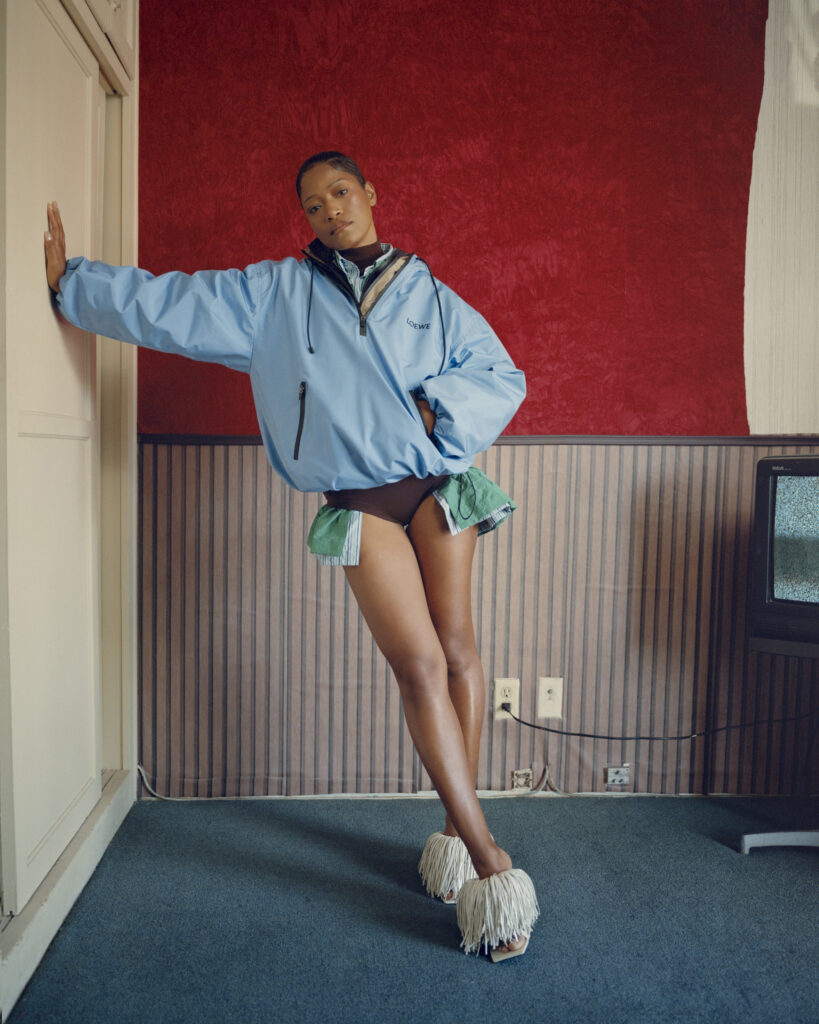
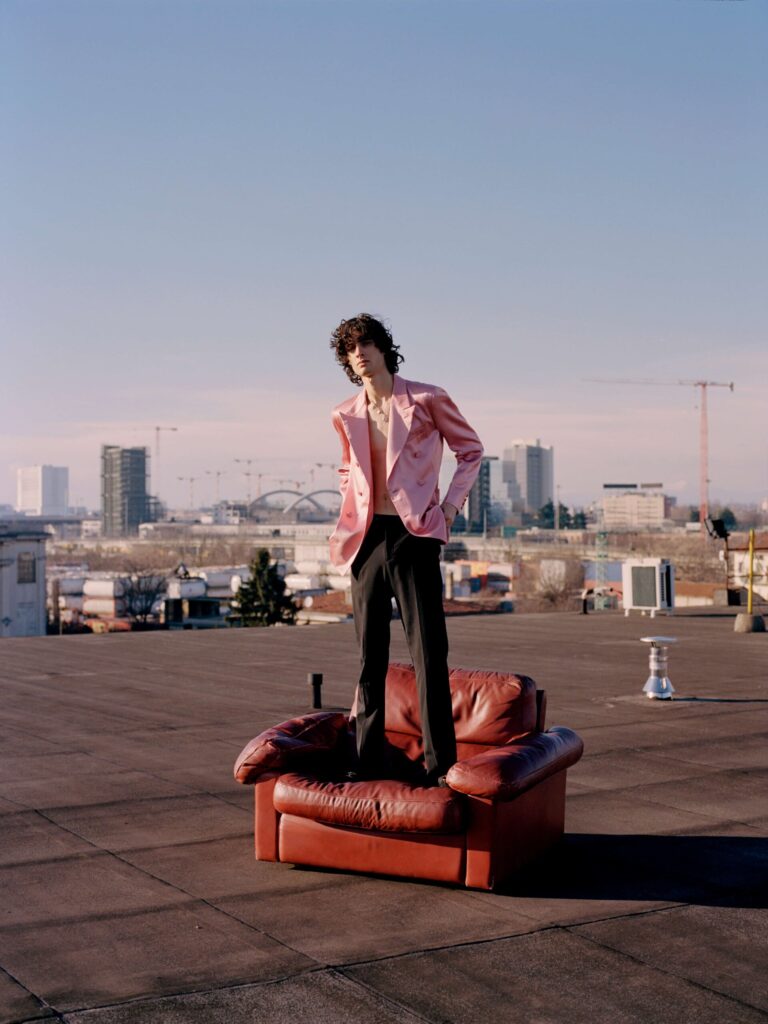
Grooming by Melissa DeZarate
Production by Dionne Cochrane
Modeling by Brayden Jackson and Gustavo Garcia
Styling Assistance by Felicia Disalvo
Production Assistance by Brittany Thompson
Location: The Standard, High Line




 in your life?