Long before “content” became culture, Art21, the nonprofit documentary platform behind Art in the Twenty-First Century (featured and distributed on PBS), was already tracking its rise. As digital and physical worlds converged, Art21 figured out how to tackle urgent issues—protest imagery, climate change, global perspectives—through the lens of artists as their work made its way onto TV and, eventually, iPhone screens. The organization produces both long-form and short-form video and publications, available for licensing in exhibitions or to educators across the country, who can also participate in programming like Art21 Educators, a year-long professional development intensive.
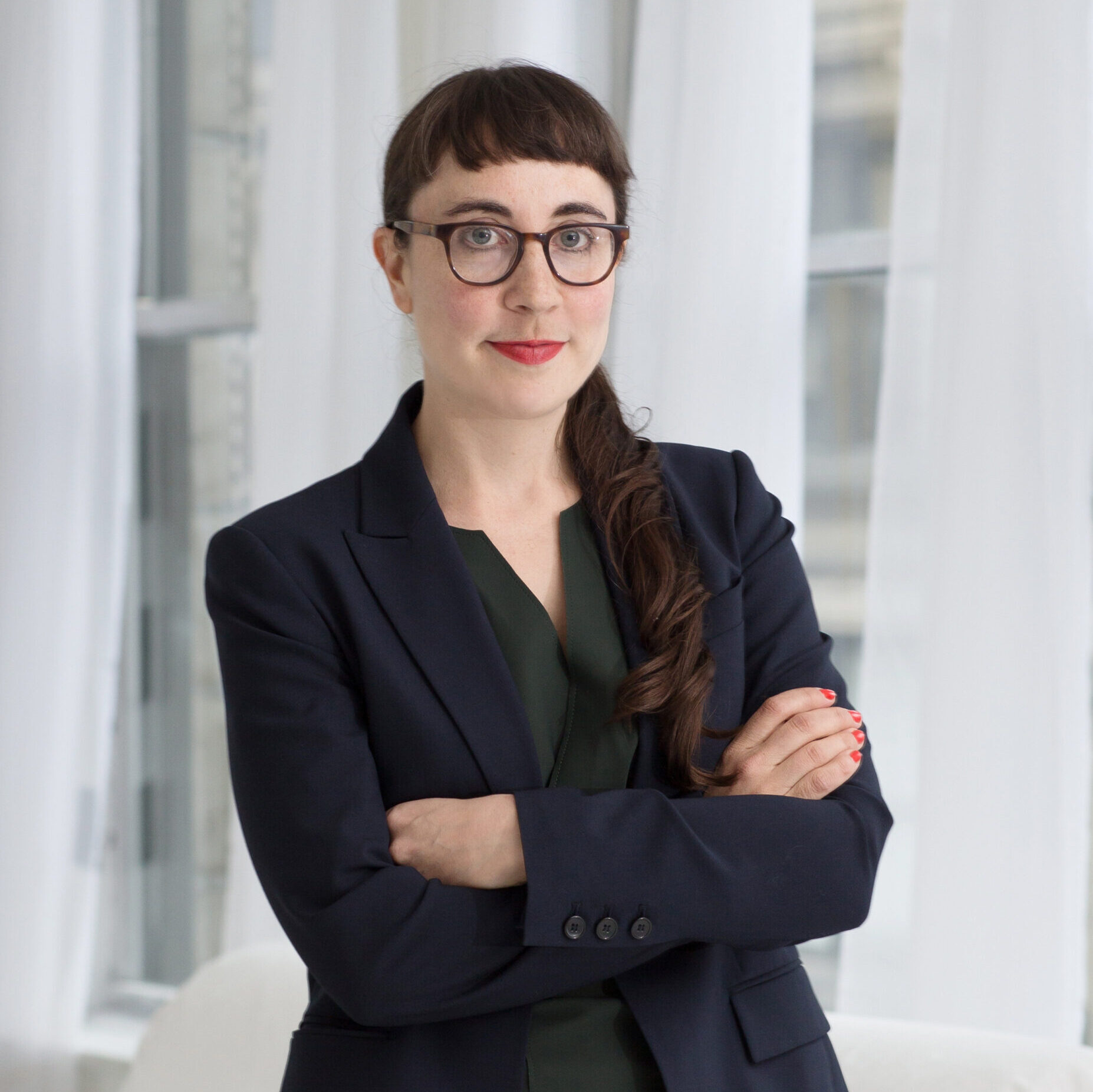
In celebration of its 25th anniversary and the 12th season of Art in the Twenty-First Century—a Peabody Award-winning series that captures artists at work—Susan Sollins Executive Director and Chief Curator Tina Kukielski sat down with CULTURED to discuss how the organization is rethinking portrayals of contemporary art in a digitized media landscape.
CULTURED: Twenty-five years in, how do you think Art21 has shaped public understanding of art and artists?
Tina Kukielski: In 2025, Art21 is reflecting on the closing of the first quarter of the 21st century. This is on our minds, given that our program first aired on public television in 2001. And in this same window of time, over the last 25 years, television has fundamentally changed. For us, this is a 25-year milestone amid a rapidly changing media landscape accelerated by political forces and executive orders. However, we have a long history of embracing change; we began uploading our films to YouTube in 2007, experimenting with its impact. Now we see rapid growth on our channel. We joined TikTok in 2021, which will be a site of further experimentation later this year. In addition to making award-winning films, we are remarkably adept at finding audiences where they are and developing those audiences organically.
Our cameras started rolling in the late 1990s, meaning our films have been chronicling artists in studios, major museums, and exhibition spaces throughout the world ever since. And yet, the world has changed many times over. Art21 gives faces to today’s artists, allowing them to speak directly to audiences worldwide and to speak in real time without narration or commentary. Art21’s singular approach offers intimate access that demystifies contemporary art and presents it in terms that the public can understand, regardless of previous knowledge. We are attracted to what motivates an artist: what influences them and shapes them, how they wrestle with the impossibility of making art, and how they rise to that challenge each day in the studio.
CULTURED: Art21 has become its own archive of the early 21st century. How do you think about the organization’s work across the historical record?
Kukielski: All told, Art21’s film catalogue, or “our collection” as we like to call it, cumulatively records the lives of artists of the last 25 years. We have produced 575-plus films spotlighting 300-plus artists, with another 50-plus artists featured in a written interview format through “READ.” We make this available for free to a global audience of five million. Some compare Art21’s total work to a modern-day Vasari diary, but more trustworthy. As the lead documentarians on contemporary art and artists, the archive captures the trajectories of many artists from their early years, through key milestone projects into global fame, as in the case of Kerry James Marshall, with whom we have documented over 23 years.
We first filmed with Marshall in 2000 for Season 1 of our PBS-broadcast Art in the Twenty-First Century film series, and again in 2014 during his inclusion in Prospect.3 New Orleans for a film series called Artist to Artist that captured Marshall in conversation with other artists. Finally, Art21 had the honor of filming Marshall on the occasion of the 2023 unveiling of his commissioned work at the Washington National Cathedral. In “Now and Forever,” the artist designed stained-glass windows, replacing depictions of Confederate iconography with images of protest, telling the story of the improvement of our nation through struggle. Art21’s anthropological approach to documentary filmmaking emphasizes the value of this archive not only for the diversity and caliber of featured artists but also for the valuable lens through which to understand the broad sociocultural issues of the 21st century, how they are being understood, and, importantly, rewritten.
In her Art21 Extended Play film “Crafting Lineage,” artist Tanya Aguiñiga states, “I think art can offer different ways of getting to an answer. It can offer different possibilities, generative space, and power over your own identity. For a lot of us that are marginalized, or seen as others, we can explore different ways of telling our stories.” Artist Richard Mosse directly tackles issues of climate change in his Art21 Extended Play film “What the Camera Cannot See.” In it, he states, “Climate change exists outside of human perception. It’s bigger than us. We can see local expressions of it, but we can’t see the climate changing, and that’s really the inherent problem… I’m very interested in trying to express extremely, deeply complex things by looking very carefully at these loaded landscapes–bigger subjects that the camera can’t necessarily see.”
CULTURED: How was the curatorial framework for Season 12 developed, and what conversations guided the development of its three episodes?
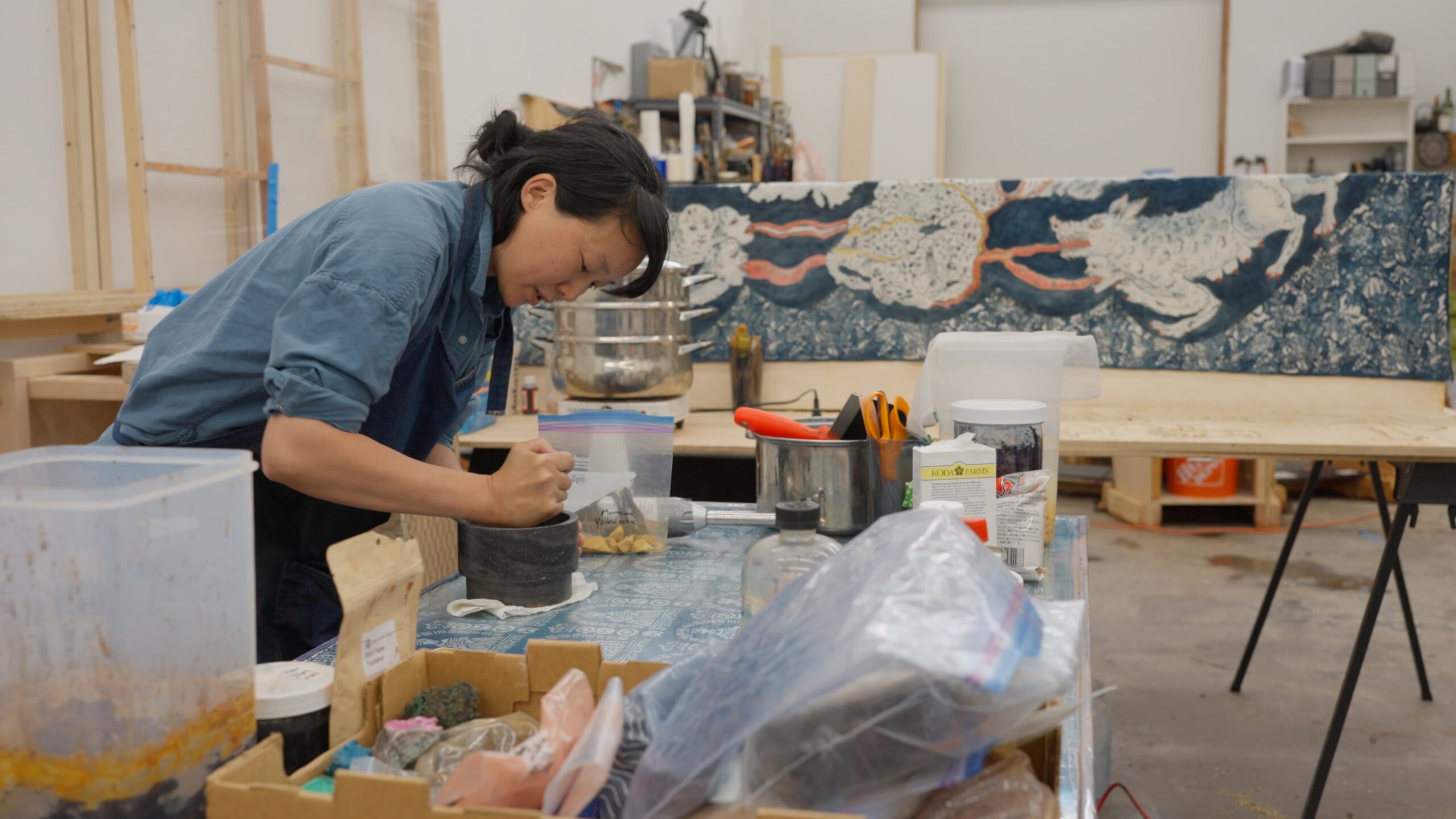
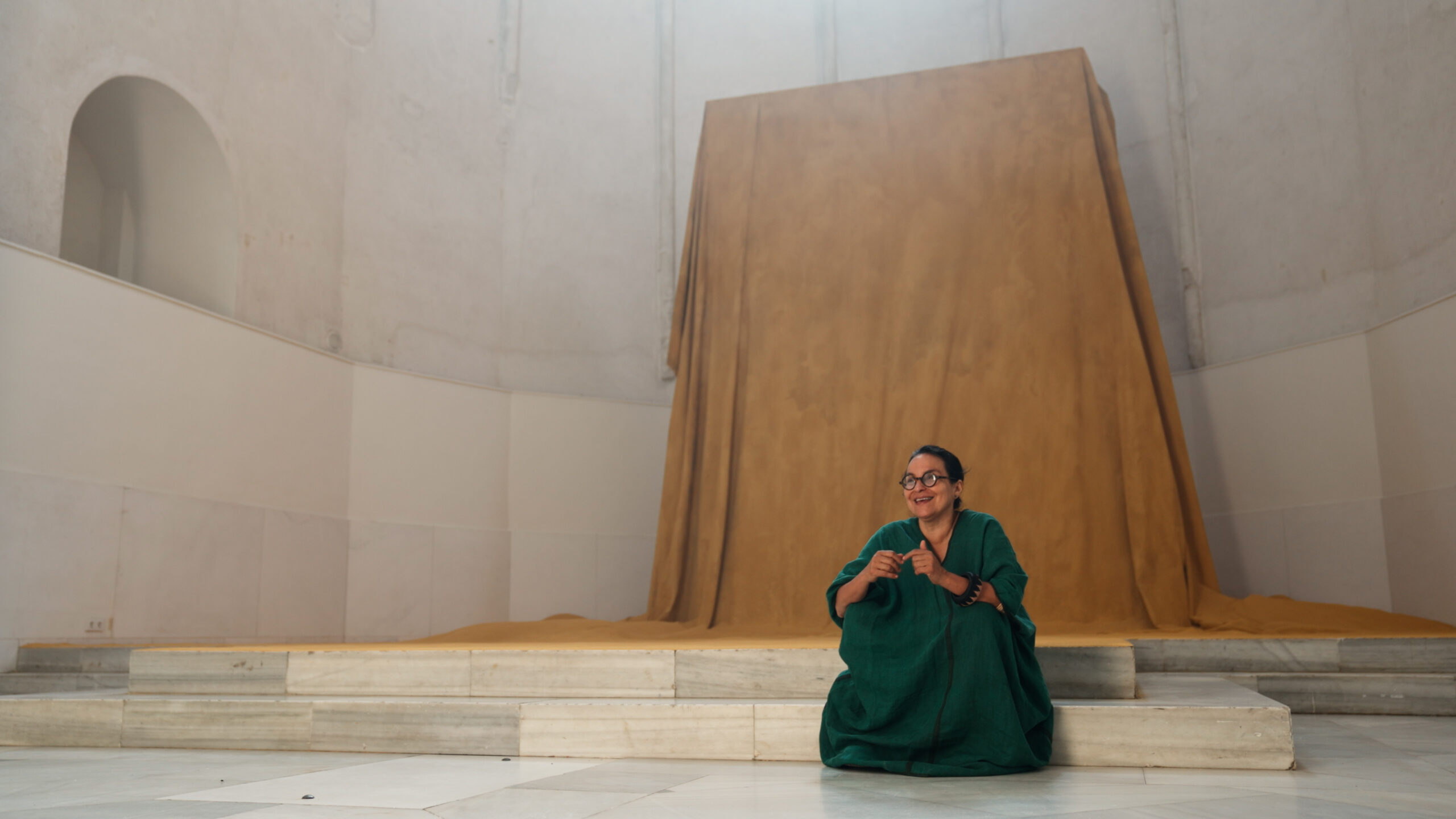
Kukielski: Season 12 of Art in the Twenty-First Century takes a more global approach than the previous season, which we produced during the pandemic and inevitably was set closer to home. By focusing on backgrounds, regions, and stories new to Art21, the season weaves together the stories of artists exploring big subjects: the human experience, the nature of work, our environmental impact, colonial and imperial histories, and the power of fantasy and fiction. Our artists included Sophie Calle, Lenka Clayton, Njideka Akunyili Crosby, Lubaina Himid, Ragnar Kjartansson, Josh Kline, Candice Lin, Delcy Morelos, Tuan Andrew Nguyen, Tomás Saraceno, Sin Wai Kin, and Dyani White Hawk. For this season, we traveled from Paris to Pittsburgh to Ho Chi Minh City, from Berlin, to Reykjavik, to Bogotá, and beyond.
CULTURED: What kinds of artists, themes, and questions are you most excited to explore as Art21 enters its next chapter?
Kukielski: Our social, political, and cultural lives have become increasingly hybridized between digital and physical arenas—between coffee shops and chatrooms, conference rooms and Zoom rooms, the human mind and artificial intelligences. I think many of us are suffering from a split sense of self that is almost unavoidable. Today, artists are embroiled in this dialectic just the same, working across both physical and virtual worlds. The result is a radical reshaping of how we understand identity, community, and creative expression in an increasingly hybridized society. We recognize the expanded ways information is disseminated through social media, and with that we are launching a new series that embraces TikTok and social media’s power as an educational tool. The result will blaze new pathways to connect with developing audiences, especially digitally native audiences where they are. This is core to our mission.
The series is comprised of 35-plus short documentary films, where we see artists produce new kinds of images and artworks using Artificial Intelligence and Augmented Reality, navigate new forms of representation and social life both on and offline, and explore new modes of being and identity in our rapidly advancing world, while contending with what gets lost as a result. We have had the pleasure of working with an incredible group of artists on the development of this series premiering Nov. 12, and rolling out through January 2026: Neïl Beloufa, Jacky Connolly, Julien Creuzet, Sara Cwynar, Ho Tzu Nyen, Xin Liu, Rachel Rossin, and Jacolby Satterwhite.
Called IRL/url, the series reveals the push and pull between the “IRL” (In Real Life) and “url” (Digital Spaces). Grappling with the questions, problems, and possibilities this new reality offers, each of the eight artists tells a story of today’s contemporary condition that we think will resonate with us all. Premiering initially on TikTok, followed by its release on Art21.org, this new series is presented by the Chanel Culture Fund and produced by Art21. So, all this to say, I’m looking forward to sharing the series and the broader topic more widely!
CULTURED: If Art21 had a thesis for its next 25 years, what do you hope it would be?
Kukielski: As a recovering museum curator, I see Art21 as modeling the future potential of cultural institutions. We are multi-platformed first, and in today’s world, this is essential. I cut my teeth on the curatorial team at the Whitney Museum, organizing a retrospective of the post-minimalist artist Gordon Matta-Clark 17 years ago. Matta-Clark brought art into the public realm and brought the public into his art in ways artists hadn’t done before. His actions bridged the gap between art and life, food and art, and collaborators and authors. When I talk about artists as role models, which I do often at Art21, Gordon Matta-Clark was one of my first.
Before coming to Art21 and years after working on that retrospective, I began thinking about how art institutions could embrace some of that Matta-Clark ethos. Instead of being storehouses for art, how could they become transmission centers, fostering connections from the outside in, and vice versa? Simultaneously, I was and still am thinking about how technology can span geographic divides in a time of extreme isolation and extreme disparity. In curating for Art21, those strategies for dissemination wed with the inherent collaborative nature of film production to make a well-honed vehicle for transmission. The final critical piece of the puzzle is the artists themselves, of course. We are always looking for role models, artists who model the future that we want to bring to fruition. If I had a thesis for the next chapter, this sense of possibility for cultural institutions that support a public’s access and education still excites me.
- Sophie Calle, Lubaina Himid, Tuan Andrew Nguyen, and Dyani White Hawk are featured in “Between Worlds,” released October 17, 2025.
- Njideka Akunyili Crosby, Ragnar Kjartansson, Candice Lin, and Tomás Saraceno are featured in “Realms of the Real,” releasing on February 11, 2026.
- Lenka Clayton, Josh Kline, Delcy Morelos, and Sin Wai Kin are featured in “Human Nature,” releasing on June 10, 2026.

 in your life?