From postwar keepsakes to an expansive horticultural collection, bonsai has deep roots at the Brooklyn Botanic Garden.

DATE

SHARE

Twitter
LinkedIn
Facebook
Email
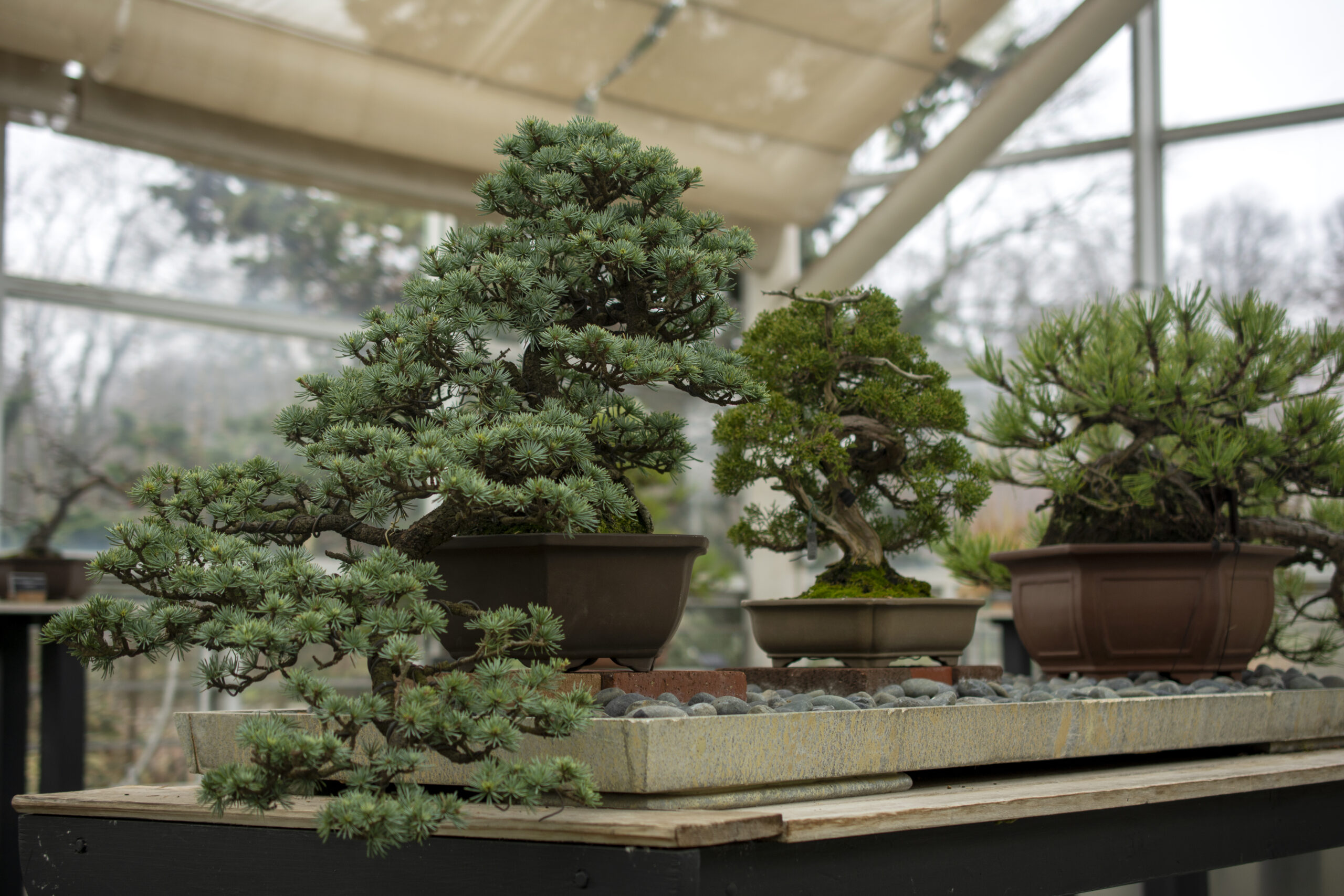
Brooklyn Botanic Garden, Bonsai Collection, 100 Years
Photography by Michael Stewart and courtesy of the Brooklyn Botanic Garden.

Few art collections breathe and grow autonomously; Brooklyn Botanic Garden’s bonsai collection has for 100 years. To highlight this milestone anniversary, the institution and its C.V. Starr Bonsai Museum have launched an expanded offering, added accessible signage, and arranged commemorative activations.

“New Yorkers can gain so much from understanding bonsai. I suppose it’s a bit like taking time to smell the roses,” says the Garden’s Horticulture Director, Shauna Moore, who sees the peculiar trees as an invitation to slow down in the midst of the city’s never-ending bustle. “This patience and quiet contemplation can feel elusive in our metropolis, making bonsai a gateway to a kind of peace.”

When bonsai first landed in the U.S.—as a postwar keepsake from returning GIs—there were few resources for American gardeners. So, they “came to BBG for guidance, community, or even to donate their specimens,” Moore explains. While most Americans still didn’t know what a bonsai tree was, Brooklyn Botanic Garden launched some of the first classes that taught growers how to keep the small plants alive and thriving.
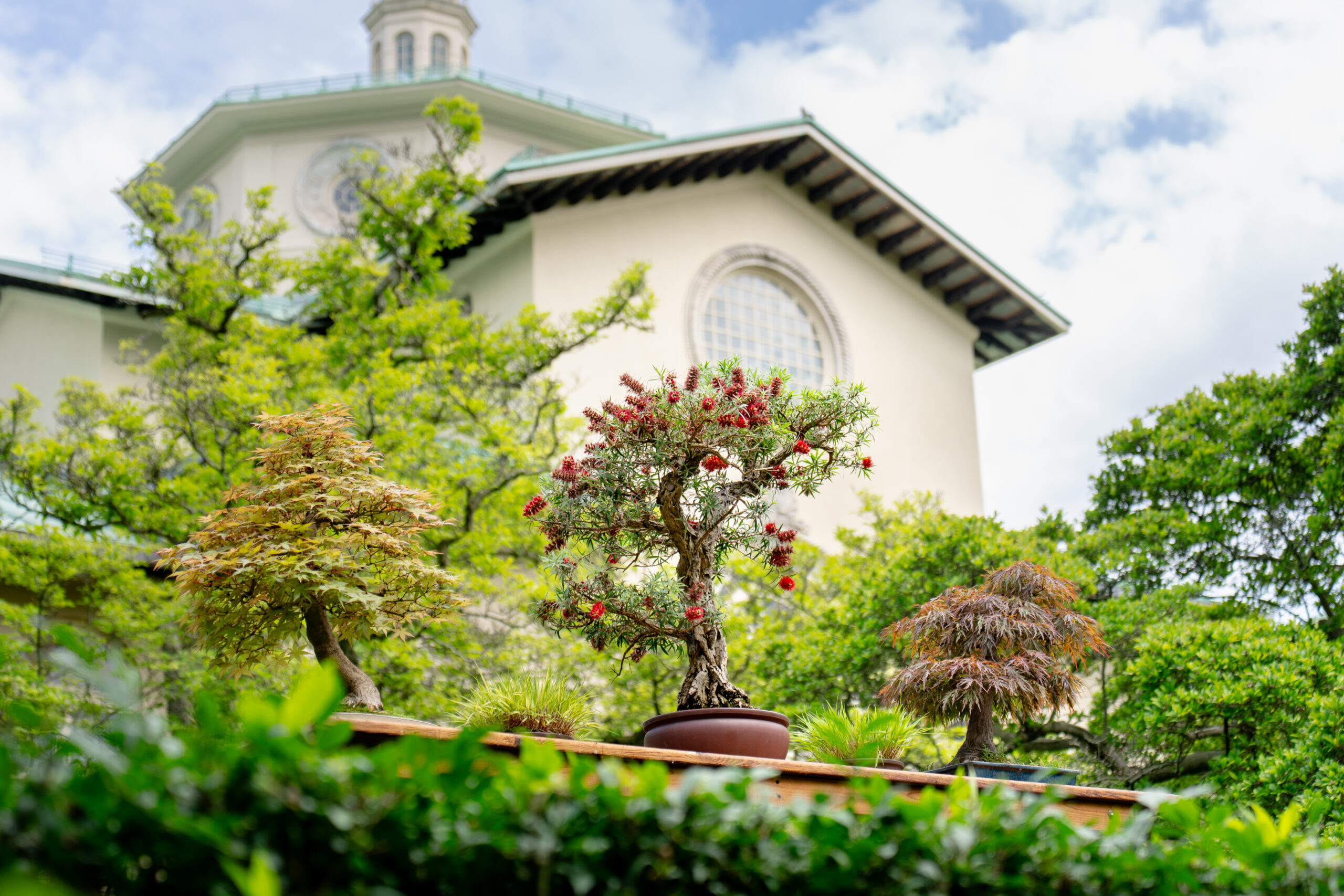
Brooklyn Botanic Garden, Bonsai Collection, 100 Years
Photography by Jeremy Weine and courtesy of Brooklyn Botanic Garden.

BBG flourished during this period under the stewardship of Frank Okamura, who arrived in New York at 13, lost his gardening business during the wartime period of Japanese internment, and relocated to New York post-war, where he saw opportunity for this emerging craft. Over the next four decades, he became one of the most important bonsai masters in the country.

Today, BBG houses one of the oldest and largest collections of bonsai outside of Japan. How big exactly? There are over 400 trees, which need to be meticulously pruned, pinched, wired, and watered, sometimes twice a day. Every other year, the physically-demanding task of repotting the garden’s entire bonsai collection rears its head. Gardener David Castro works on-site solely with the trees, alongside a rotating cast of volunteers. More than a horticultural feat, the collection stands as an archive of resilience and cross-cultural connection—proof that even in the most frenetic places, quiet beauty can endure for a century and more.

To commemorate 100 years of bonsai, visit the Brooklyn Botanic Garden’s website and learn more about the collection and upcoming events.

We’ve Waited All Year For This…

Our 10th annual Young Artist list is here, comprised of 27 names you need to know ahead of 2026.

You’ve almost hit your limit.

You’re approaching your limit of complimentary articles. For expanded access, become a digital subscriber for less than $2 a week.
You’re approaching your limit of complementary articles. For expanded access, become a digital subscriber for less than $2 a week.

Already a Subscriber? Sign in Here

You’re approaching your limit of complementary articles. For expanded access, become a digital subscriber for less than $2 a week.

GET ACCESS

Already a Subscriber? Sign in Here

Want more in your life?

For less than the price of a cocktail, you can help independent journalism thrive.

Pop-Up-1_c
Already a Subscriber? Sign in Here
Pop-Up-1_c

Already a Subscriber? Sign in Here

Want more in your life?

For less than the price of a cocktail, you can help independent journalism thrive.

Pop-Up-1_c
Already a Subscriber? Sign in Here
Pop-Up-1_c

Already a Subscriber? Sign in Here

You’ve almost hit your limit.

You’re approaching your limit of complimentary articles. For expanded access, become a digital subscriber for less than $2 a week.

You’re approaching your limit of complementary articles. For expanded access, become a digital subscriber for less than $2 a week.
Already a Subscriber? Sign in Here
You’re approaching your limit of complementary articles. For expanded access, become a digital subscriber for less than $2 a week.

Already a Subscriber? Sign in Here

This is a Critics' Table subscriber exclusive.

Subscribe to keep reading and support independent art criticism.

Already a Subscriber? Sign in Here

Want more in your life?

For less than the price of a cocktail, you can help independent journalism thrive.

Pop-Up-1_c

Already a Subscriber? Sign in Here

Pop-Up-1_c

Already a Subscriber? Sign in Here

You’ve reached your limit.

Sign up for a digital subscription, starting at less than $2 a week.

Already a Subscriber? Sign in Here

Want a seat at the table? To continue reading this article, sign up today.

Support independent criticism for $10/month (or just $110/year).

Already a subscriber? Log in.