The artist’s artistic trajectory is a slow burn that continues to evolve.

WORDS

DATE

SHARE

Twitter
LinkedIn
Facebook
Email


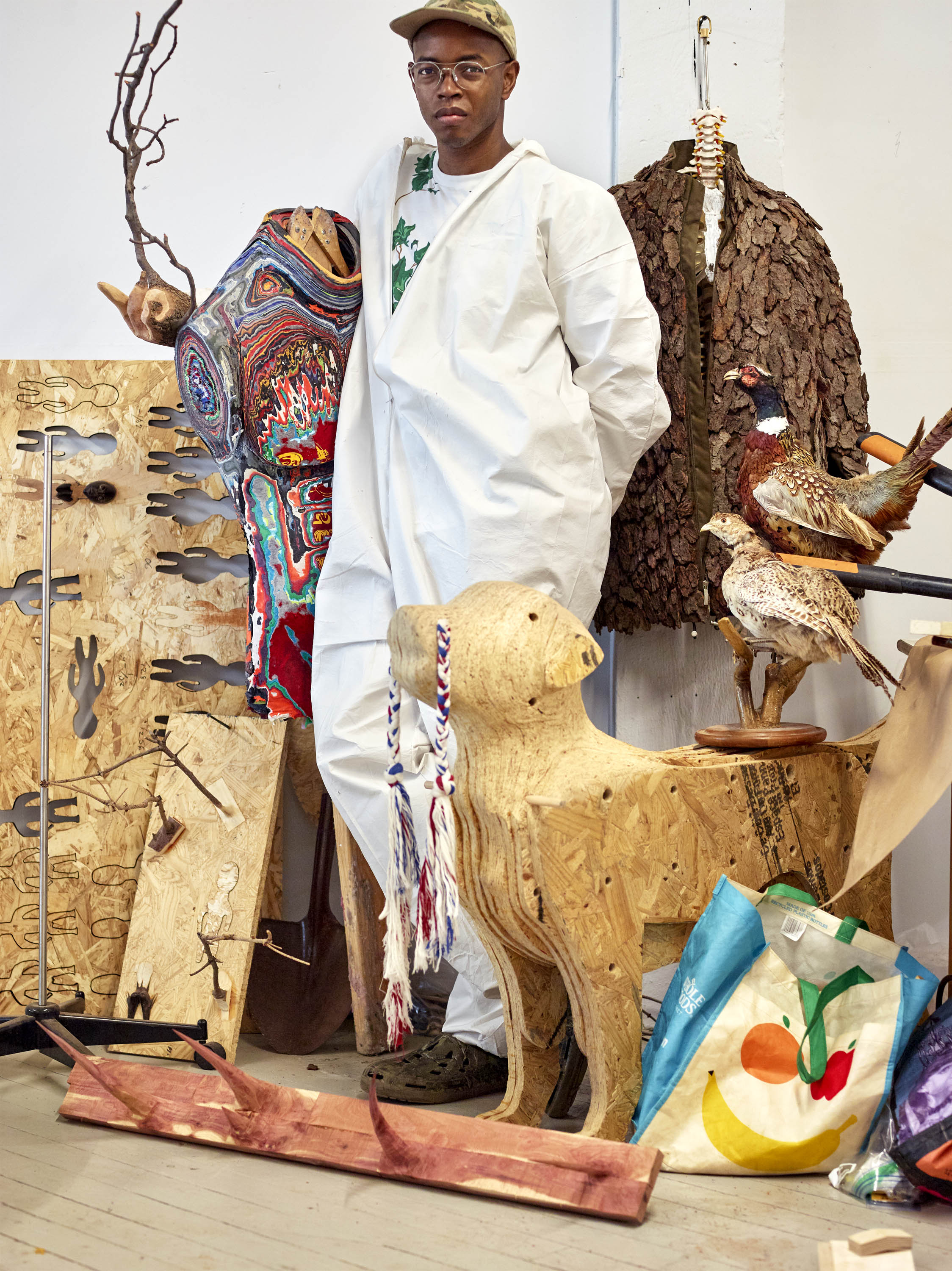
Hugh Hayden in his Bronx studio, 2018.

Hugh Hayden’s artistic trajectory is a slow burn that continues to evolve. An architect by training, the Dallas native continued designing stores for Starbucks while pursuing an MFA in sculpture at Columbia, years into his career. It was risky for Hayden, whose lifelong artistic impulses manifested in a variety of ways, like his “culinary installations,” which remained in the periphery until recently. “A couple of years ago, I didn’t know I would ever show my work, but I believe in what I’m doing, so this moment is full of feeling for me,” Hayden says.
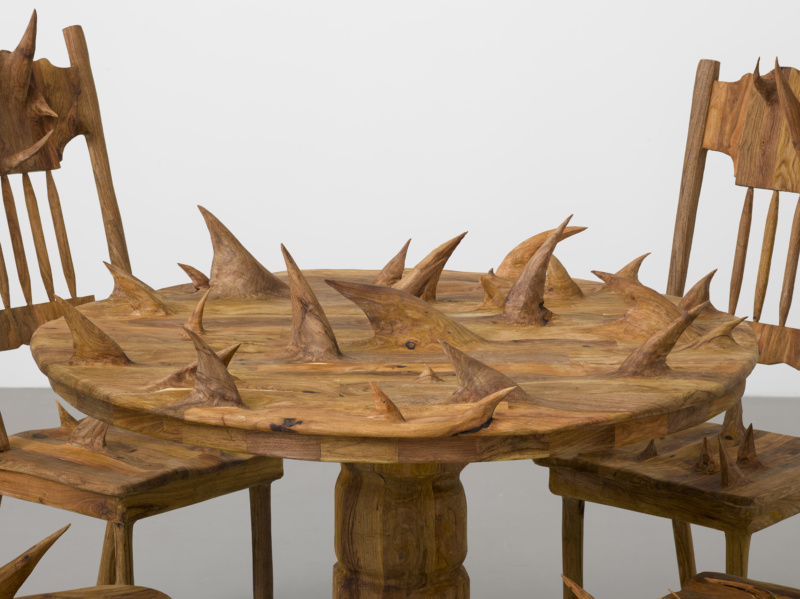
America, 2018. © Hugh Hayden; Courtesy of Lisson Gallery.

Freshly graduated from his MFA, Hayden had a fall solo show, “Border States,” at Lisson Gallery, where the sculptor is represented in New York and London, along with Clearing in Brussels. We met at the show on a fall Saturday and were greeted by a swarm of people—a mix of friends, curious strangers drawn from the street and art world types. Hayden gave an impromptu talk around the sole sculpture in the last room, a dark wood baby crib. Precious and simple from a distance, the interior of the crib reveals what Hayden calls a “terrible constellation” of whittled white thorns, their shape evoking sharp teeth. “I didn’t realize how mouth-like it would turn out,” he says to the bewitched group circling the sculpture.
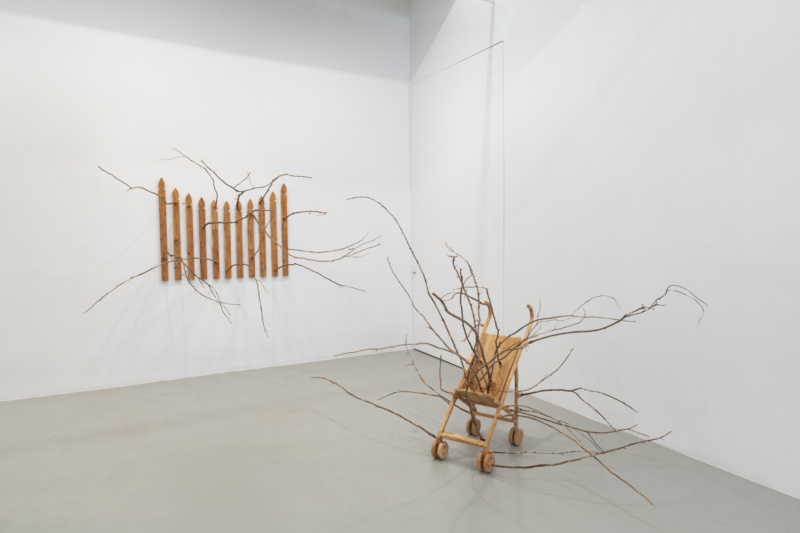
Installation view of “Hugh Hayden: Border States” at Lisson Gallery, New York (15 September – 27 October 2018). © Hugh Hayden; Courtesy of Lisson Gallery.

In “Border States,” the crib is joined by other works that reference American tropes, including a picket fence and dining room table—all with the same aggressively protruding thorns. Fabricated with wood sourced from the Texas and Mexico border, Hayden critiques an America that is putting up walls on the border, becoming a country of increasing divide. The show expands the material gravity put forth in Hayden’s first New York solo show at White Columns earlier this year, with his haunting use of naked Christmas trees found along Park Avenue. Searching for a wood that could convey more personal significance for the Lisson show, the artist found a species of tree called Texas Ebony. “It feels like a play on my own identity,” Hayden says.
We’ve Waited All Year For This…

Our 10th annual Young Artist list is here, comprised of 27 names you need to know ahead of 2026.

You’ve almost hit your limit.

You’re approaching your limit of complimentary articles. For expanded access, become a digital subscriber for less than $2 a week.
You’re approaching your limit of complementary articles. For expanded access, become a digital subscriber for less than $2 a week.

Already a Subscriber? Sign in Here

You’re approaching your limit of complementary articles. For expanded access, become a digital subscriber for less than $2 a week.

GET ACCESS

Already a Subscriber? Sign in Here

Want more in your life?

For less than the price of a cocktail, you can help independent journalism thrive.

Pop-Up-1_c
Already a Subscriber? Sign in Here
Pop-Up-1_c

Already a Subscriber? Sign in Here

Want more in your life?

For less than the price of a cocktail, you can help independent journalism thrive.

Pop-Up-1_c
Already a Subscriber? Sign in Here
Pop-Up-1_c

Already a Subscriber? Sign in Here

You’ve almost hit your limit.

You’re approaching your limit of complimentary articles. For expanded access, become a digital subscriber for less than $2 a week.

You’re approaching your limit of complementary articles. For expanded access, become a digital subscriber for less than $2 a week.
Already a Subscriber? Sign in Here
You’re approaching your limit of complementary articles. For expanded access, become a digital subscriber for less than $2 a week.

Already a Subscriber? Sign in Here

This is a Critics' Table subscriber exclusive.

Subscribe to keep reading and support independent art criticism.

Already a Subscriber? Sign in Here

Want more in your life?

For less than the price of a cocktail, you can help independent journalism thrive.

Pop-Up-1_c

Already a Subscriber? Sign in Here

Pop-Up-1_c

Already a Subscriber? Sign in Here

You’ve reached your limit.

Sign up for a digital subscription, starting at less than $2 a week.

Already a Subscriber? Sign in Here

Want a seat at the table? To continue reading this article, sign up today.

Support independent criticism for $10/month (or just $110/year).

Already a subscriber? Log in.